
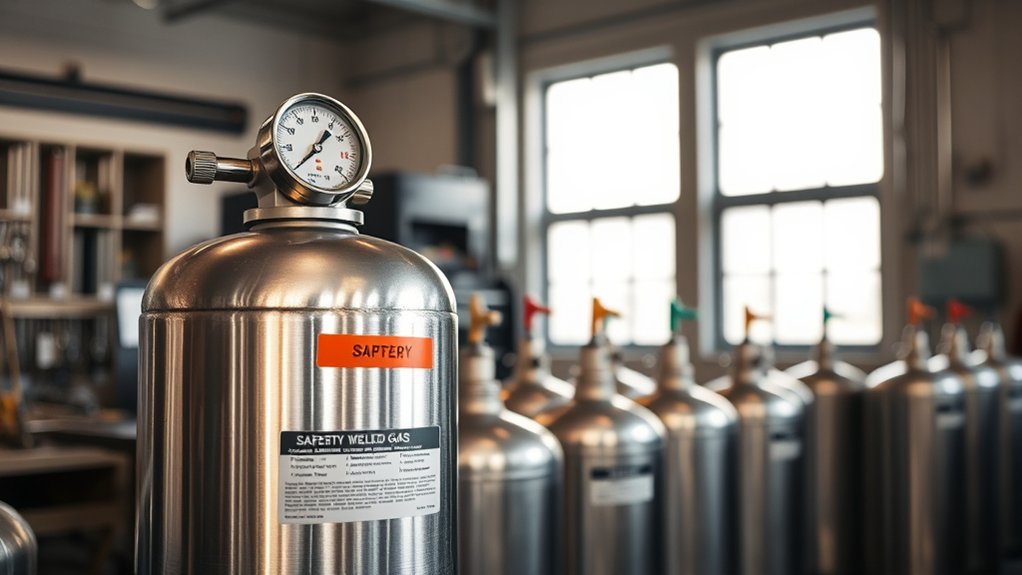
The cost of a welding gas tank depends on size and type. You’ll pay about $230 for a 40 CF tank and roughly $400 for a 125 CF tank. Larger tanks usually give you cheaper refills—around $70 for an 80 CF tank. Smaller tanks need filling more often, which pushes your total expenses higher. Knowing these numbers helps you choose the right setup for your welding jobs, plus there are other factors like how often you weld and what alternatives exist.
Quick Answer
Here’s the bottom line on welding gas tanks:
- A 40 CF tank costs $230–$260 while a 125 CF tank runs $350–$400.
- Refills are typically $60 for a 40 CF tank and $70 for 80 or 125 CF tanks.
- Larger tanks save money over time because you refill less often.
- Argon works best for TIG on aluminum and stainless; argon-CO2 mixes suit MIG on mild steel.
- Tanks last 8 hours or more at 10 CFH—watch the gauge and store upright.
- Gases don’t expire if you store them properly.
Common Welding Gasses and Their Uses
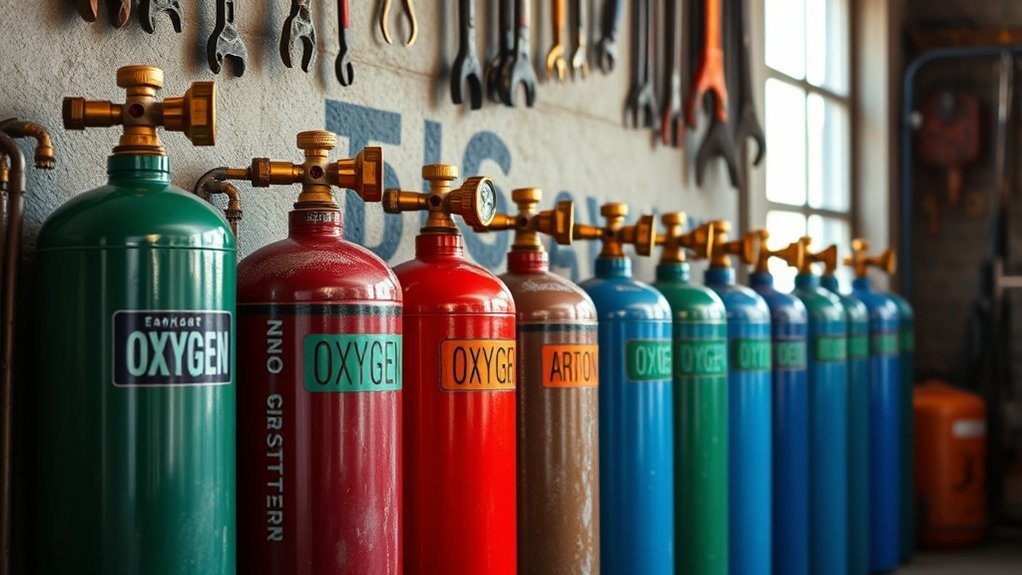
When you weld, the right gas makes a big difference in your results.
Argon is the top choice for TIG welding, especially on aluminum and stainless steel, because it is inert. If you want more heat and deeper penetration in TIG, mix helium with argon.
For MIG welding on mild steel, welders blend carbon dioxide with argon. This reactive mix improves weld quality.
When welding stainless steel, adding a little oxygen to the argon mix raises flame temperature and strengthens the weld.
For oxy-fuel welding, acetylene gives the high heat you need for cutting and brazing.
Selecting the right gas based on your material and technique is essential for achieving the best results in your welding projects. See Miller’s guide on shielding gas for more details.
Tank Cost
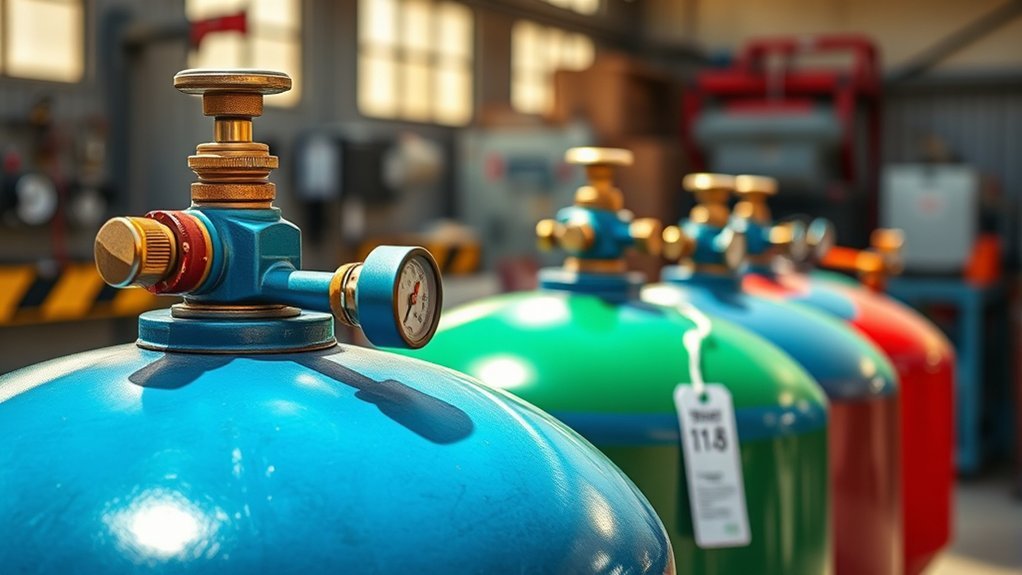
Buying the right tank matters just as much as picking the gas.
A 40 CF tank usually costs $230 to $260. An 80 CF tank runs $290 to $320. A 125 CF tank costs about $350 to $400.
Smaller tanks like the 20 CF look cheap at first but end up costing more because you refill them so often. Renting adds extra fees and deposits that you avoid when you own the tank.
Refill prices also vary by size—about $60 for a 40 CF tank and $70 for 80 or 125 CF tanks. Larger tanks stay more economical in the long run.
Products Worth Considering

All HP cylinders come with a 10 year hydrotest date stamped.

Strong Weight Capacity: Our dual welding cylinder cart supports up to 440 lbs of static weight and 350 lbs of dynamic weight with ease. Whether transporting gas cylinders around the worksite or storing them, it provides stable support, suitable for home garages, workshops, repair shops, etc.
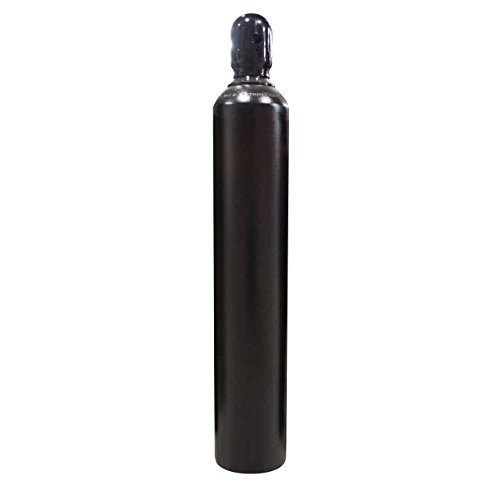
All HP cylinders come with a 10 year hydrotest date stamped.
Refilling Expenses
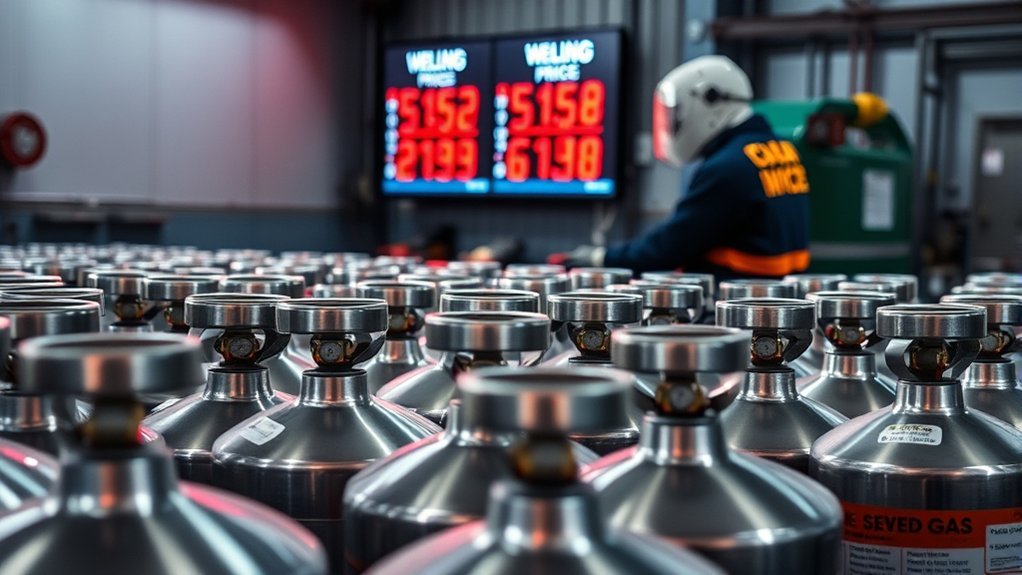
Refills affect your total welding budget more than you might think.
A 40 CF tank refill costs around $60. An 80 CF or 125 CF tank refill runs about $70. Larger tanks give you better value because the labor cost stays similar no matter the size.
Prices differ by supplier and your location, so check local shops for the best deal. In the last few years some welders have seen 100% argon refills for a 125 CF tank climb as high as $90.
Products Worth Considering

Package include: 6 Pcs propane tank caps

ITEMS INCLUDED – Refillable Empty 1LB Propane Tank, Cap, and 2mm (5/64") Allen Key

HIGH QUALITY: Standard Propane with purity > 95%;
Calculating the Real Cost of Welding Gas
The real cost includes the tank you buy plus every refill you’ll need.
Initial Tank Purchase Costs
A 40 CF tank costs $230–$260. An 80 CF tank costs $290–$320. A 125 CF tank costs $350–$400. Bigger tanks usually pay off faster if you weld a lot.
For example, an 80 CF tank plus the first year of refills can total around $660.
Ongoing Refill Expenses
After you own the tank, refills become the main ongoing cost.
A 40 CF refill is about $60. An 80 CF refill is about $70. If you use an 80 CF tank for TIG and refill every two months, your first-year total lands near $660.
A 125 CF tank for MIG with refills every three months comes to about $640 the first year. Larger tanks keep costs lower for regular users.
Total Cost Analysis
Add the purchase price to your expected refills to see the full picture.
An 80 CF TIG setup starts at $300 with $60 refills every two months for a $660 first-year total. A 125 CF MIG setup starts at $360 with $70 refills every three months for a $640 first-year total.
Smaller tanks like a 40 CF oxygen tank need more frequent fills and end up costing more each year. Larger tanks win for most people who weld regularly.
Duration of Welding Gas
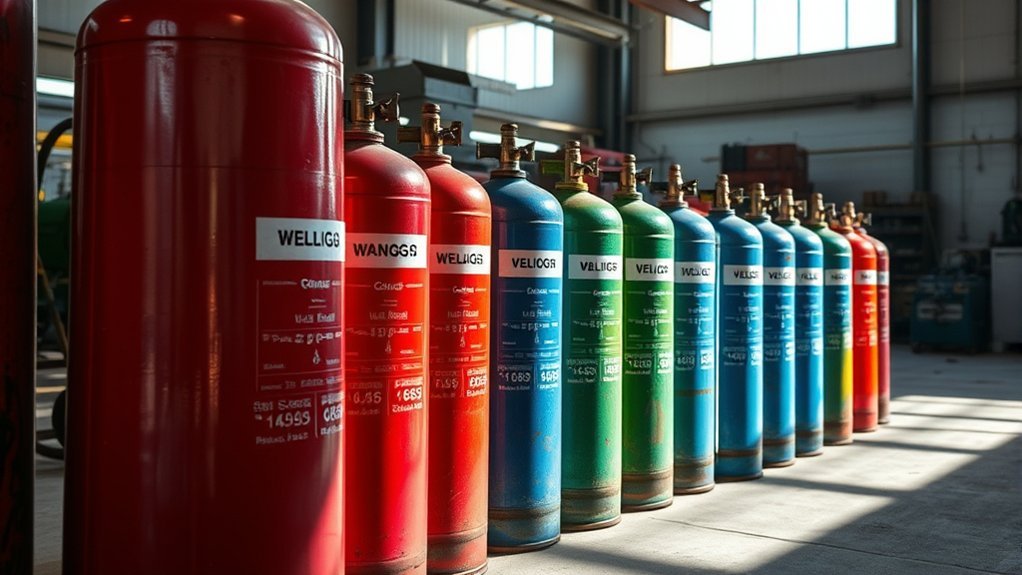
You can figure out how long a tank will last by dividing its volume in cubic feet by your flow rate. Flow rates usually sit between 10 and 40 CFH.
An 80 CF tank at 10 CFH lasts about 8 hours. Check the pressure gauge often—a full tank shows roughly 2015 psi and a half-empty one shows about 1000 psi.
Actual run time changes with your welding style and exact flow setting. Gases themselves don’t expire, but mixtures can separate if left sitting too long. If that happens, lay the tank on its side and roll it gently to remix.
How to Know When You Need More Gas
Watch the pressure gauge. When it drops below 1000 psi on a tank that reads 2015 psi when full, it’s time to refill.
You can also calculate usage: an 80 CF tank at 10 CFH lasts roughly 8 hours. If the arc gets unstable or your welds start to look off, the gas is probably low.
Track how often you refill. If it happens more than you expected, think about stepping up to a bigger tank. For mixed gases stored a long time, roll the tank to check for separation before you start a project.
Products Worth Considering

Application: This Gas Pressure Regulator/Flowmeter Can Be Used with Argon, Helium and CO2 Gas tanks.

Compatible with CGA-580 tanks: Easily attach this Gas Pressure Regulator/Flowmeter to your Argon, Helium, and CO2 tanks with its CGA-580 inlet connector

APPLICATION: It can be used with argon, helium and CO2 gas tanks
Do Welding Gases Expire?
Welding gases don’t expire as long as you store the tanks properly.
Mixed gases can separate over time, which hurts performance. Store the bottle on its side and roll it gently to keep everything mixed. The valve must stay undamaged.
Shelf Life Considerations
You can store welding gases indefinitely if you take care of the tanks. Mixed gases may separate, so lay the tank horizontally and roll it gently. Keep an eye on the gauge—full is about 2015 psi. Good storage and regular checks keep your gas ready to use.
| Condition | Action | Result |
|---|---|---|
| Tank stored upright | Regularly check pressure | Reliable performance |
| Tank stored horizontally | Roll gently | Prevent separation |
| Pressure gauge low | Refill or replace tank | Consistent quality |
Gas Mixture Stability
Gas mixtures can separate after long storage. To avoid problems:
- Store tanks horizontally.
- Roll them gently—don’t damage the valve.
- Check the gauge often (2015 psi full, 1000 psi at half).
- Remix before big jobs.
Proper handling keeps argon-CO2 mixes working like new.
Where to Buy or Refill Your Gas
Local dealers like Northern Tool or AirGas are the usual spots. Most places lease or refill tanks rather than sell them outright, so ask about their policy first.
Some suppliers will refill your own bottle; others want you to buy new. Refill prices stay around $60 for 40 CF and $70 for 80 CF. Bigger tanks stay cheaper per fill.
Larger 300 CF tanks can be harder to find locally—you may need to drive farther. Always call ahead to confirm they can handle your size and gas type.
Products Worth Considering
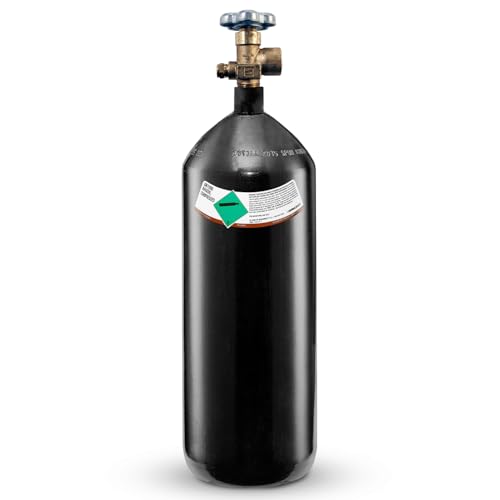
Welding Gas to Your Door - Get PrimeWeld's industrial grade Argon welding gas delivered right to your door. We offer different mixtures for any application, and you can purchase a tank without worrying about costly rental fees or wasted trips out to your local welding supply shop.

All HP cylinders come with a 10 year hydrotest date stamped.

Welding Gas to Your Door - Get PrimeWeld's industrial grade 75 %Argon 25% CO2 gas cylinder delivered right to your door. We offer different mixtures for any application, and you can purchase a tank without worrying about costly rental fees or wasted trips out to your local welding supply shop.
Alternatives to Shielding Gas
You can skip gas tanks completely with a few options that still give solid welds.
- Self-shielded flux-cored wire for MIG—no tank needed.
- Stick welding—simple and no gas required.
- Gasless MIG machines that run flux-cored wire.
- Some plasma cutting setups that work on air alone.
Products Worth Considering

E308LFC-O FLUX CORE WIRE: E308LFC-O is a stainless steel welding wire featuring flu core inside, which is used to stabilize the arc, improve the operating performance and play a protective role.

E308LFC-O FLUX CORE WIRE: E308LFC-O is a stainless steel welding wire featuring flu core inside, which is used to stabilize the arc, improve the operating performance and play a protective role.
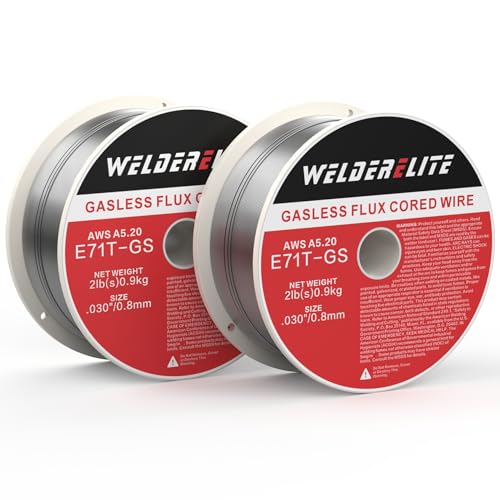
[High-Efficiency Gasless Welding]: WelderElite E71T-GS 0.030'' welding wire is specifically designed for gasless welding, applicable to all positions. It facilitates single or multiple pass welding without the need for shielding gas, ready for use right out of the box, enhancing welding efficiency.
Frequently Asked Questions
How Often Should I Check My Welding Gas Tank Pressure?
Check before every use. This way you know you have enough gas and you catch leaks early.
Can I Transport My Welding Gas Tank in a Car?
Yes, but secure it upright, keep the cap on, and make sure the area has fresh air. Never leave it in extreme heat. Follow your local rules.
Are There Safety Regulations for Storing Welding Gas?
Yes, you must follow them. Store tanks upright in a cool, well-ventilated area away from heat and flammables. This prevents leaks or explosions and keeps you compliant. For the full official rules, see the OSHA guidelines on oxygen-fuel gas welding and cutting.
What Causes Welding Gas Prices to Fluctuate?
Supply issues, demand spikes, production costs, and world events all play a part. Seasonal needs and new rules can move prices too.
Can I Exchange My Tank for a Different Size?
Most suppliers let you exchange. Many welders switch sizes when their projects change—it keeps things efficient and cheaper.
Conclusion
Getting a clear picture of welding gas costs helps you plan your budget. Factor in the tank price plus every refill, and watch how fast you use the gas. Larger tanks usually win for steady work. Stay on top of your supply so you never run out mid-project. With the right info and a bit of shopping around, you can keep your welding going strong without spending more than you need to.
