

Quick answer: The cost of living in Turkey in 2026 depends heavily on rent and city. Wise’s current country benchmark estimates about $596 per month for one person excluding rent and about $2,201 for a family of four excluding rent. Average rent is roughly $565 for a one-bedroom in a city center and $409 outside the center, while Istanbul can be far more expensive. Turkey still costs less than many Western destinations, but high inflation means any fixed budget should be rechecked before you move or sign a lease.
Last updated: August 10, 2026. Prices below are planning benchmarks rather than guaranteed bills. Turkish-lira prices and foreign-currency equivalents can change quickly.
Cost of Living in Turkey 2026: Quick Overview

Housing is usually the biggest variable in a Turkey budget. Current national benchmarks show a large gap between living alone in a central apartment and choosing a smaller city or an outer neighborhood.
| 2026 Cost Benchmark | Typical Amount |
|---|---|
| Single person, excluding rent | About $596/month |
| Family of four, excluding rent | About $2,201/month |
| 1-bedroom rent, city center | About $565/month |
| 1-bedroom rent, outside center | About $409/month |
| 3-bedroom rent, city center | About $952/month |
| 3-bedroom rent, outside center | About $662/month |
| Basic utilities for an 85 m² home | About ₺3,239/month |
| Broadband internet, 60 Mbps+ | About ₺686/month |
| Monthly mobile plan with 10GB+ data | About ₺473/month |
The dollar figures above use Wise’s 2026 Turkey cost-of-living data. The lira utility figures use Numbeo’s June 2026 national dataset. Because the two services use different methodologies, treat the figures as planning benchmarks rather than a single official budget.
A practical monthly budget should include non-rent essentials + housing + utilities + transportation + healthcare or insurance + education or childcare + personal spending + a buffer. That is more reliable than using one national “average” for every household.

Come Eat offers 100 approachable recipes designed to make everyday cooking more enjoyable, nourishing, and sustainable. With a focus on flavorful meals and practical preparation, this hardcover cookbook is ideal for home cooks looking for inspiration for salads, sides, and main dishes. Author Melissa Ben-Ishay shares recipes that encourage consistent, feel-good eating without sacrificing taste.

This daily devotional helps parents pray purposefully for their children through a full year of Scripture readings, reflections, and guided prayer prompts. Written to encourage faithful family discipleship, it offers practical, biblically grounded support for parents who want to shape their prayers around God's Word. A foreword by Sinclair B. Ferguson adds trusted theological insight and encouragement.

This hardcover edition by Eric Metaxas offers a compelling look at the origins of the United States during the Colonial Period. It blends historical narrative with engaging storytelling, making it appealing for readers interested in American history, early nation-building, and the ideas that shaped the country. A strong choice for history enthusiasts, students, and anyone exploring the foundations of the nation.
Currency, Exchange Rates and Inflation
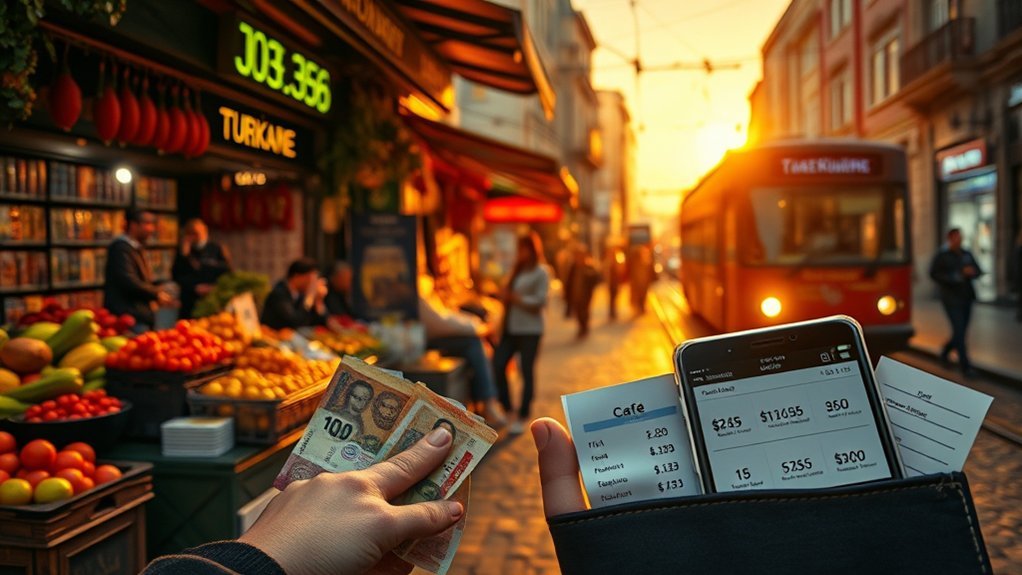
Turkey uses the Turkish lira (TRY or ₺). Budget in lira first and convert to dollars, euros, pounds, or another currency using the live exchange rate when you make a payment. Hard-coding a foreign-currency conversion into a long-term budget is risky because the exchange rate can move substantially.
Inflation matters just as much. According to the Turkish Statistical Institute (TÜİK), consumer prices in June 2026 were 32.11% higher than a year earlier. Food and non-alcoholic beverages were up 35.45%, transportation 31.15%, and housing, water, electricity, gas and other fuels 45.14% year over year.
- Build your budget in TRY: rent, groceries, transport and local bills are best tracked in the currency you actually spend.
- Recheck conversions: use the current exchange rate rather than relying on an old EUR or USD equivalent.
- Leave a price buffer: a budget that only covers today’s bills can become too tight when local prices rise.
- Date every comparison: when comparing apartments or cities, make sure the prices come from roughly the same period.
This is especially important for anyone receiving income in another currency. A favorable exchange rate may improve purchasing power, but it does not stop local rent, food, or utility prices from rising.
Accommodation and Rent Prices by City

Istanbul is the most expensive of the four major cities compared below. Ankara, Izmir and Antalya generally offer lower housing costs, while neighborhood, building age, furnishing and access to transport can move the actual rent well above or below the city average.
| City | 1-Bed Center | 1-Bed Outside Center | 3-Bed Center | 3-Bed Outside Center |
|---|---|---|---|---|
| Istanbul | About $1,066 | About $656 | About $1,978 | About $1,200 |
| Ankara | About $752 | About $532 | About $1,219 | About $824 |
| Izmir | About $637 | About $458 | About $1,188 | About $775 |
| Antalya | About $524 | About $417 | About $865 | About $665 |
These are 2026 planning averages from Wise’s city cost pages, not asking prices for a specific apartment. For a deeper city-level breakdown, see our cost of living in Istanbul guide.
City Center Vs Outskirts
Living outside the center can reduce rent substantially, but the cheapest apartment is not automatically the lowest-cost option. Add commute time, public transport, parking, school access and the services you use regularly before choosing a neighborhood.
For example, the current Istanbul benchmark shows a one-bedroom at about $1,066 in the center versus $656 outside it. In Izmir, the same comparison is roughly $637 versus $458. The size of the saving therefore depends on the city as well as the neighborhood.
- Price the commute: compare monthly transport or car costs with the rent saving.
- Check the building: heating, cooling, maintenance fees and insulation can change your monthly cost.
- Compare similar homes: furnished and unfurnished apartments should not be treated as equivalent.
- Use current listings: national averages are a starting point, not a substitute for neighborhood research.
Average Rental Prices
At the national level, Numbeo’s June 2026 Turkey dataset placed a one-bedroom apartment at about ₺26,428 in a city center and ₺19,579 outside the center. A three-bedroom averaged about ₺44,388 in the center and ₺32,211 outside.
The ranges around those averages are wide. A one-bedroom city-center apartment in the dataset ranged from roughly ₺16,000 to ₺46,143, showing why one countrywide figure cannot predict what you will pay in Istanbul, a smaller inland city, or a coastal resort market.
Before signing a lease, compare the rent with utilities, building fees, transport and any required upfront payments. Those items determine the all-in housing cost.
Buying Vs Renting
Buying can make sense for someone planning to stay long term, but comparing rent with a mortgage payment alone is not enough. You also need to consider financing costs, taxes, fees, insurance, maintenance and how much cash you must commit upfront.
Numbeo’s June 2026 national benchmark placed apartment purchase prices around ₺80,272 per square meter in city centers and ₺49,896 outside centers. Its crowdsourced 20-year mortgage-rate benchmark was about 41.82%, so a financed purchase can look very different from a cash purchase.
- Compare the full cost of renting with the full cost of ownership.
- Do not assume past property-price growth will continue.
- Check current mortgage offers rather than relying on a national average.
- Renting normally gives more flexibility if your job, residency status or preferred city may change.
Grocery, Dining and Food Expenses

Food can remain manageable compared with housing, but 2026 prices are much higher than the figures in older Turkey guides. Current crowdsourced national benchmarks put an inexpensive restaurant meal around ₺400 and a three-course mid-range meal for two around ₺2,000.
Recent grocery benchmarks place one liter of milk around ₺45–₺55, 12 eggs around ₺95–₺106, and chicken fillets roughly ₺215–₺300 per kilogram depending on the dataset and collection date.
Shopping at neighborhood markets, buying seasonal produce and cooking at home can lower the food portion of your budget. Imported brands, alcohol, delivery services and frequent restaurant meals can push it much higher.
Official inflation data also matters here: TÜİK reported that food and non-alcoholic beverage prices were 35.45% higher year over year in June 2026. Recheck grocery assumptions regularly instead of using the same food budget for an entire year.
Transportation and Fuel Costs
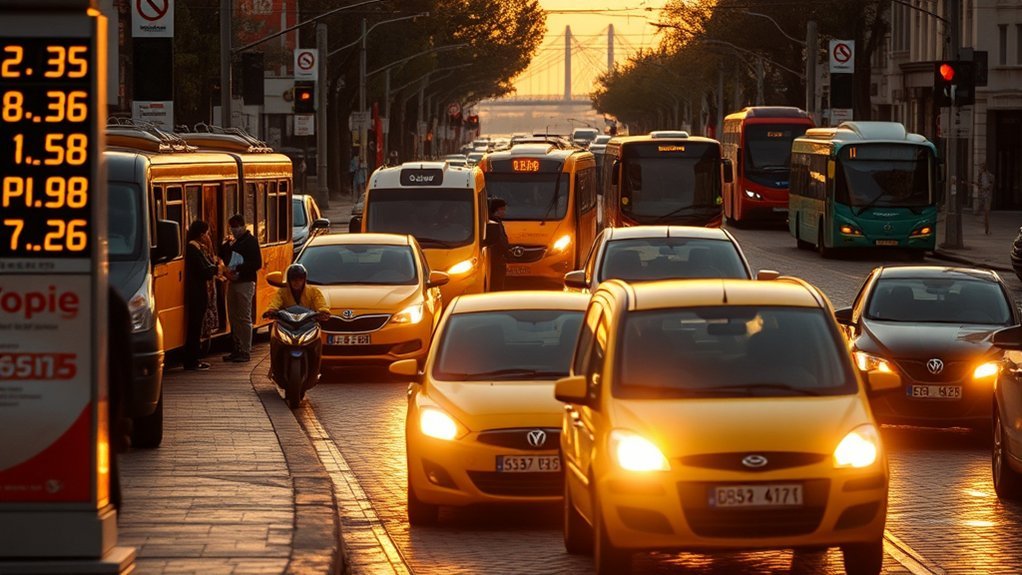
Public transportation is usually much cheaper than owning a car, but fares differ by city, route and transfer system. Numbeo’s June 2026 national benchmark was about ₺35 for a one-way local ticket and ₺2,000 for a regular monthly public-transport pass.
Its national taxi benchmark was about ₺65 for the starting fare and ₺40 per kilometer. Petrol averaged approximately ₺59.77 per liter.
A private car also adds insurance, taxes, maintenance, repairs and parking. Someone living near useful metro, tram or bus routes may therefore spend far less than someone who drives every day.
- Check the fare system for your exact city.
- Compare a monthly pass with the cost of repeated single trips.
- For car ownership, budget beyond fuel alone.
- Factor commute time into any rent saving from living farther out.
Utilities, Internet and Telecommunications

Utilities in Turkey are no longer accurately represented by older estimates of a few hundred lira. Numbeo’s June 2026 national data put basic electricity, heating, cooling, water and garbage for an 85 m² apartment at about ₺3,239 per month.
Broadband of 60 Mbps or faster averaged about ₺686 per month, while a mobile plan with calls and at least 10GB of data averaged about ₺473.
Your bill can differ substantially depending on home size, climate, insulation, heating system, air-conditioning use and provider.

This hardcover cookbook offers fast, approachable recipes designed for busy days and low-energy nights. Caroline Chambers focuses on simple, flavorful meals that help you get dinner on the table without overthinking it. It's a practical pick for home cooks who want quick weeknight inspiration and minimal-fuss cooking.

This heartfelt memoir blends laugh-out-loud honesty with tender reflections on love, loneliness, and the unexpected healing power of rescue dogs. Isabel Klee shares her journey fostering pups in the city while navigating dating and self-discovery, offering an intimate, relatable story for readers who enjoy emotional, character-driven narratives. It is a warm, engaging read about opening your heart and finding connection in surprising places.

This digital kitchen scale makes measuring ingredients simple and accurate for everyday cooking and baking. It features a pull-out display to keep readings visible under large bowls, a zero function for easy taring, and a removable platform for straightforward cleaning. With unit conversion options and a clear digital screen, it helps streamline prep work and improve recipe consistency.
Monthly Utility Costs
A reasonable 2026 national benchmark for an 85 m² home is around ₺3,239 for basic utilities, with a broad reported range of roughly ₺2,000–₺5,464. Heavy heating or air-conditioning use can move a household toward the upper end.
- Ask what rent includes: water, heating or building services may be handled differently from one property to another.
- Check seasonal use: summer cooling and winter heating can change the bill.
- Budget separately for internet and mobile service: they are not included in the basic-utilities benchmark above.
- Compare the all-in housing cost: a lower-rent apartment with high energy or building costs may not save as much as expected.
Home Internet Options
Broadband pricing varies by provider, connection type, speed, contract length and promotions. The June 2026 national benchmark for unlimited broadband at 60 Mbps or faster was about ₺686 per month.
Before choosing a plan, check whether fiber is actually available at the exact address. Advertised national speeds do not guarantee that the same connection is available in every building.
Also compare installation charges, modem fees, contract periods and the price after any introductory promotion ends.
Mobile Plans and SIMS
Turkcell, Vodafone and Türk Telekom are major mobile providers in Turkey. A national crowdsourced benchmark for a plan with calls and at least 10GB of data was about ₺473 per month in June 2026.
Short-term visitors and residents may see different prepaid, tourist and contract options. Check the provider’s current identity, registration, contract and device rules before buying rather than relying on an old SIM-price guide.
- Prepaid: useful when you want spending flexibility.
- Postpaid: compare contract requirements and total monthly cost.
- Tourist packages: convenient but not necessarily the lowest-cost long-term option.
- Coverage: check the places where you actually live, work and travel.
Healthcare, Insurance and Education Costs

Healthcare and education can change a family budget far more than national grocery averages. Public eligibility, private insurance, hospital choice and school type all depend on your circumstances, so avoid treating one national figure as a guaranteed bill.
For private care, Expatistan’s current crowdsourced Turkey benchmark lists a short private-doctor visit at about ₺2,861. Actual consultation, testing and treatment charges can vary widely by hospital and specialty.
Education has an even larger spread. Numbeo’s June 2026 national dataset placed private full-day preschool or kindergarten at about ₺31,687 per month per child, with a reported range of ₺18,000–₺58,333. International primary-school tuition averaged about ₺687,247 per year, with a range of roughly ₺350,000–₺1.3 million.
If residence status is part of your move, check current requirements directly with Turkey’s Presidency of Migration Management. Insurance and documentation rules can depend on the permit type and applicant.
Average Salaries, Taxes and Purchasing Power

Local income needs to be compared with local housing costs. Numbeo’s June 2026 crowdsourced national benchmark put the average monthly net salary at about ₺49,574.
The official 2026 minimum wage is lower. Turkey’s Ministry of Labour and Social Security lists a gross minimum wage of ₺33,030 per month and a net minimum wage of ₺28,075.50, effective from January 1 through December 31, 2026.
That comparison helps explain why a country can look affordable to someone earning foreign income while still feeling expensive to a household paid locally. A national city-center one-bedroom rent benchmark of roughly ₺26,428 is close to the entire official net minimum wage.
Taxes and social contributions depend on gross income, employment status and other circumstances, so do not estimate take-home pay by subtracting one universal percentage. Compare an actual job offer’s net pay with the housing and household costs in the city where you will live.
- Start with expected net income, not the advertised gross salary.
- Compare rent as a percentage of net income.
- Add healthcare, transport and family costs before judging affordability.
- For foreign-currency income, stress-test the budget against both exchange-rate and local-price changes.
Cost Comparison: Turkey Versus Neighbouring Countries

Turkey is not automatically the cheapest country in its region. Using Numbeo’s 2026 country index as one consistent comparison, Turkey scored 39.2 for cost of living, compared with 40.9 for Armenia, 33.1 for Georgia and 30.7 for Azerbaijan. Greece’s current cost-of-living level is higher than Turkey’s in the same broader dataset.
| Country | 2026 Cost-of-Living Index | Local Purchasing-Power Index |
|---|---|---|
| Turkey | 39.2 | 72.8 |
| Armenia | 40.9 | 41.4 |
| Georgia | 33.1 | 43.0 |
| Azerbaijan | 30.7 | 40.3 |
Turkey’s headline prices are higher than Georgia’s and Azerbaijan’s in the 2026 index, but its local purchasing-power score is also substantially higher in that same dataset.
Indexes are useful for broad comparison, not for choosing a specific apartment or household budget. Rent, salary, healthcare, school fees and lifestyle can outweigh a small difference in a countrywide index.
For a closer regional comparison, see our cost of living in Azerbaijan guide.
Frequently Asked Questions
How Much Does It Cost to Live in Turkey in 2026?
Wise’s 2026 benchmark estimates about $596 per month for one person excluding rent and about $2,201 for a family of four excluding rent. Average national rent adds roughly $409–$565 for a one-bedroom or $662–$952 for a three-bedroom, depending on whether the home is outside or inside a city center.
Is Turkey Cheap for US Citizens?
Turkey can be cheaper than many U.S. cities for rent, public transport, local food and some services, especially outside central Istanbul. However, affordability depends on the exchange rate, your income, neighborhood and lifestyle. Use current Turkish prices rather than assuming that a stronger dollar guarantees a permanently low budget.
Can I Live in Turkey as a US Citizen?
Yes, but staying long term requires the appropriate legal basis rather than automatic permanent residence. Turkey’s Presidency of Migration Management says qualifying short-term residence permits may be issued for up to two years at a time. Long-term residence generally requires at least eight years of continuous permitted residence plus other income, insurance and eligibility conditions.
Is It Cheaper to Live in Turkey or the US?
For many common household expenses, Turkey is cheaper than the United States, particularly for rent outside premium Istanbul neighborhoods, local public transport and some services. The exact saving depends on the U.S. city you compare, household size, exchange rate and whether you earn a local or foreign salary.
How Much Is Rent in Turkey?
Numbeo’s June 2026 national benchmark puts a one-bedroom at about ₺26,428 in a city center and ₺19,579 outside the center. A three-bedroom averages about ₺44,388 centrally and ₺32,211 outside. Istanbul is substantially more expensive than the national average in many neighborhoods.
Is Public Transport Expensive in Turkey?
Public transport is generally much cheaper than regular taxi use or owning a car. Numbeo’s June 2026 national benchmark is about ₺35 for a one-way local trip and ₺2,000 for a monthly pass, although exact fares vary by city and transport system.
Sources and Methodology
This guide separates official economic data from crowdsourced cost estimates. Official inflation figures come from TÜİK, and the official 2026 minimum wage comes from Turkey’s Ministry of Labour and Social Security. Residence information comes from Turkey’s Presidency of Migration Management. Cost-of-living, rent and household-price benchmarks come from Wise, Numbeo and Expatistan.
- TÜİK — Consumer Price Index, June 2026
- Turkey Ministry of Labour — 2026 Minimum Wage
- Presidency of Migration Management — Residence Permit Types
- Numbeo — Cost of Living in Turkey
- Wise — Cost of Living in Turkey 2026
- Expatistan — Cost of Living in Turkey
Crowdsourced databases use different contributors, collection periods and calculation methods, so their results will not match perfectly. Use them to estimate a range, then verify current rent, fares, school fees, insurance and service prices before committing money.
Conclusion
The cost of living in Turkey in 2026 is still attractive for many people earning foreign income, but old low-cost estimates can seriously understate today’s bills. Housing is the main variable: Istanbul can cost much more than Ankara, Izmir, Antalya or smaller cities, and moving outside a city center can reduce rent substantially.
Build your budget from current rent first, then add food, utilities, transportation, healthcare or insurance, education or childcare and personal spending. Keep an extra buffer for inflation, and recheck local prices and exchange rates immediately before signing a lease or accepting a job offer.

LIQUI MOLY Cera Tec is a ceramic-based engine oil additive designed to reduce friction and wear in petrol and diesel engines. It mixes easily with compatible motor oils, helps protect against metal-to-metal contact, and can improve smoother engine performance while supporting lower fuel consumption. Suitable for engines, transmissions, pumps, and compressors, it is built to handle extreme temperatures and long service intervals.

Kinder Joy combines a sweet treat and a surprise toy in every egg for a fun, interactive snack experience kids enjoy. The treat side features layers of milky cream with crispy wafer bites and cocoa cream, while the toy side includes themed surprises that inspire imaginative play. Great for gifting, celebrations, and on-the-go moments, it also connects to the Applaydu app for even more discovery and play.

Dr. Seuss's beloved classic inspires readers of all ages with an uplifting message about adventure, perseverance, and self-discovery. This hardcover edition is ideal for gifting, classroom libraries, and family story time, offering timeless encouragement in a playful, memorable format.
