The cost of living in Mauritania in 2026 is about MRU 22,400–26,500 (~$560–$660) a month for a single person living a simple, local-style life in Nouakchott, and about MRU 43,200–48,000 (~$1,075–$1,195) for a foreigner who wants a secure central apartment, air conditioning, imported food, private transport, and international health cover. A couple should plan on roughly MRU 53,600–58,200 (~$1,335–$1,450), and a family of four on about MRU 79,300–100,000 (~$1,980–$2,495) before international school fees. These figures use a mid-market rate of about MRU 40.1 per US dollar in early October 2026. Local food and basic rents are cheap. Security, healthcare, schooling, and imported goods are where costs climb. Price data for Mauritania is thin, so treat every figure as a planning range. Below you’ll find rents, utilities, food prices, transport, healthcare, taxes, visa fees, and sample budgets.
Cost of Living in Mauritania: Quick Answer
- Single person: MRU 22,400–26,500 (~$560–$660) on a lean, local budget; MRU 43,200–48,000 (~$1,075–$1,195) for a comfortable foreign resident.
- Couple: about MRU 53,600–58,200 (~$1,335–$1,450) a month.
- Family of four: about MRU 79,300–100,000 (~$1,980–$2,495) before school fees.
- Rent, one-bedroom in Nouakchott: about MRU 5,500 (~$135) outside the center and MRU 7,700 (~$190) in the center.
- Utilities: about MRU 5,200 (~$130) a month for an 85 m² apartment; home internet adds about MRU 2,400 (~$60).
- Taxes: VAT is 16%; income tax on salaries runs 15%, 25%, and 40%.
- Visa: e-visa only, from €55 ($60) for 30 days for most Western travelers.
Exchange Rate, Inflation, and the Economy in 2026
The exchange rate. Mauritania’s currency is the ouguiya (MRU). The mid-market rate was about MRU 40.1 per US dollar in early October 2026, according to Wise’s USD to MRU converter. Over the previous 30 days it moved only between about 39.95 and 40.19, so the ouguiya has been stable against the dollar. Cash exchange rates at bureaus and banks in Nouakchott can differ slightly. All dollar figures in this guide use 40.1.
Inflation. The IMF projects consumer price inflation of about 4.1% for 2026. The World Bank says inflation accelerated sharply in 2026, driven by higher food, fuel, and transport costs. Mauritania imports much of its food, so world grain and oil prices pass through to shop shelves quickly.
Growth and poverty. The World Bank estimates growth slowed to 3.6% in 2025 and projects 4.6% for 2026. It also expects the poverty rate to rise to about 24.1% in 2026 as higher prices squeeze households. In practice, this means most Mauritanians live on far less than the budgets in this guide.
At about MRU 40 per dollar, $1,000 buys roughly MRU 40,100. That is more than many local families spend in a month, but it is a moderate budget for a foreigner who pays for security, private transport, and imported goods.
Cost of Living by City
Almost all foreign residents live in Nouakchott, the capital, home to about 1.45 million people. Nouadhibou, the port and fishing city in the north, is the second option. Smaller towns such as Rosso on the Senegal River are cheaper but have few services for foreigners.
| City | 1-Bed, City Center | 1-Bed, Outside Center | Data Quality |
|---|---|---|---|
| Nouakchott | MRU 7,700 (~$192) | MRU 5,500 (~$137) | 53 price reports from 9 contributors (June 2026) |
| Nouadhibou | about MRU 2,600–4,000 (~$65–$100) | about MRU 4,000 (~$100) | no new reports since April 2025; very rough |
| Rosso | not reported | not reported | one 2026 model puts overall costs about 5% below Nouakchott |
Rent figures for Nouakchott are crowd-sourced averages. Nouadhibou figures are older and come from very few reports, so use them only as a rough guide. In both cities, ask a local agent or employer for current quotes before you sign.
A few patterns stand out:
- Tevragh Zeina is the main area for embassies, international organizations, and foreign residents in Nouakchott. It is the safest part of the city and also the most expensive.
- Ksar and Las Palmas are other central areas with mid-range housing.
- Outer districts such as Arafat, El Mina, and Riyadh are much cheaper, but US travel guidance says violent crime is common outside Tevragh Zeina.
- Nouadhibou is quieter and centered on fishing and mining, with fewer rentals and services.
Housing and Rent
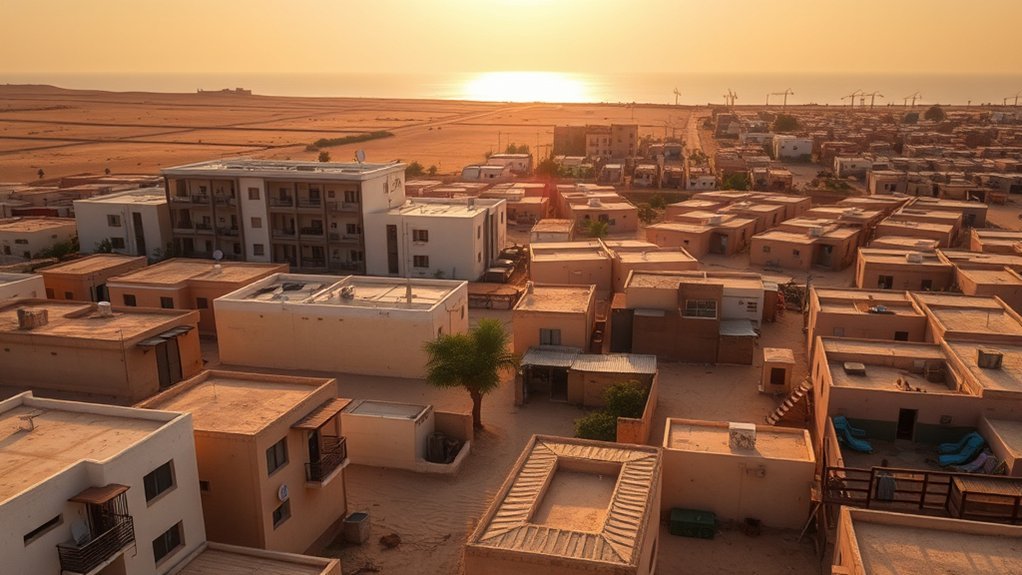
Housing in Nouakchott is mostly low-rise villas and small apartment blocks. Crowd-sourced averages from June 2026 look like this:
| Property | Monthly Rent (MRU) | Approx. USD |
|---|---|---|
| 1-bedroom, city center | 7,700 | $192 |
| 1-bedroom, outside center | 5,500 | $137 |
| 3-bedroom, city center | 29,013 | $724 |
| 3-bedroom, outside center | 11,300 | $282 |
These averages mix local and foreign rentals. A furnished villa in Tevragh Zeina with a guard, a generator, and air conditioning in every room can cost several times the city-center average. Many international employers include housing in their packages for this reason.
Before you sign, check:
- Security: a wall, gate, and night guard are common in foreign-occupied homes. Ask whether the guard is included or paid separately.
- Power and water backup: outages happen. A generator or inverter and a water tank add comfort and cost.
- Air conditioning: summers are very hot. Count the units and check their condition, since they drive your electricity bill.
- Deposit and advance: landlords often ask for several months up front. Clarify this and get a written lease.
Utilities, Internet, and Phone
Basic utilities (electricity, water, and garbage) for an 85 m² apartment average about MRU 5,167 (~$129) a month in crowd-sourced data. A smaller home with careful air-conditioner use can stay closer to MRU 3,000–3,500 (~$75–$85). Electricity is the main variable. Bills rise sharply from May to October, when air conditioning runs most of the day.
| Service | Monthly Cost (MRU) | Approx. USD |
|---|---|---|
| Basic utilities, 85 m² apartment | 5,167 | $129 |
| Home internet, 60 Mbps+, unlimited | 2,400 | $60 |
| Mobile plan, calls + 10 GB+ data | 883 | $22 |
| Bottled water, 1.5 liters | 25 | $0.62 |
Tap water is not safe to drink, so budget for bottled water or a filter. Home internet is costly by regional standards, and speeds and reliability vary by street. If you work remotely, test the connection at the address and keep a mobile data plan as backup.
Food: Groceries and Dining Out
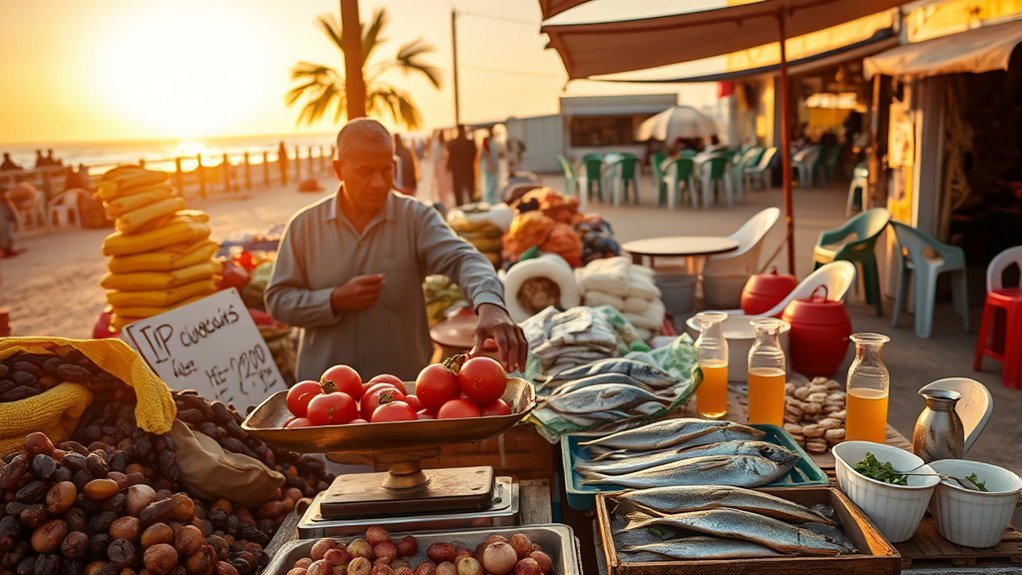
A single person who cooks mostly local food spends about MRU 7,000–8,000 (~$175–$200) a month on groceries. Imported cheese, cereals, snacks, and packaged goods can push that to MRU 10,000 (~$250) or more. Fish is plentiful and cheap along the coast. Rice, bread, onions, and tomatoes are everyday staples.
Average prices in Nouakchott (June 2026, crowd-sourced):
| Item | Typical Cost (MRU) | Approx. USD |
|---|---|---|
| Milk (1 liter) | 58.75 | $1.47 |
| Bread (1 lb loaf) | 9.75 | $0.24 |
| Rice (1 lb) | 23.68 | $0.59 |
| Eggs (12) | 91.20 | $2.27 |
| Chicken fillets (1 lb) | 96.62 | $2.41 |
| Beef (1 lb) | 119.41 | $2.98 |
| Local cheese (1 lb) | 108.86 | $2.71 |
| Tomatoes (1 lb) | 16.10 | $0.40 |
| Potatoes (1 lb) | 15.31 | $0.38 |
| Bananas (1 lb) | 31.52 | $0.79 |
Eating out is cheap at local places and moderate at restaurants that serve foreigners. Common prices:
- Meal at an inexpensive restaurant: about MRU 100 (~$2.50)
- Three-course dinner for two at a mid-range restaurant: about MRU 928 (~$23)
- Fast-food combo meal: about MRU 240 (~$6)
- Cappuccino: about MRU 92 (~$2.30)
- Soft drink (12 oz): about MRU 71 (~$1.75)
Choose freshly cooked food, skip ice in drinks, and wash or peel produce. US travel guidance warns that tap water and ice made from it are not safe.
Transportation and Getting Around
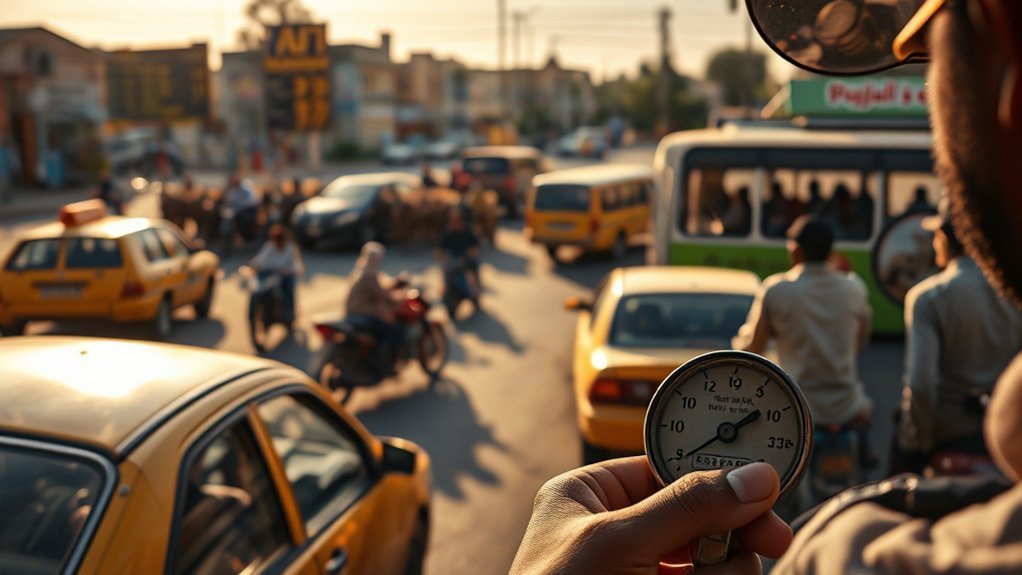
Transport looks very cheap on paper, but most foreigners do not use the cheapest options.
| Item | Cost (MRU) | Approx. USD |
|---|---|---|
| One-way local bus or shared-taxi ticket | 18 | $0.45 |
| Monthly public transport pass | 875 | $21.82 |
| Taxi start fare | 35 | $0.87 |
| Taxi, per mile | 24 | $0.60 |
| Gasoline (1 liter) | 52–59 | $1.31–$1.46 |
The US State Department’s travel advisory says taxis and public transportation are not considered safe for foreign visitors, and that Uber and Lyft are not available. US embassy staff are not allowed to use public transport. Many foreign residents hire a regular driver, use a trusted taxi driver, or drive their own car.
Fuel prices are set by the government. Crowd-sourced data put gasoline at about MRU 52 per liter in June 2026, and other 2026 estimates are closer to MRU 58. Fuel rose in 2026 along with food and transport costs. A foreigner relying on a regular driver or private taxis should budget roughly MRU 4,000–5,000 (~$100–$125) a month for local trips.
Long-distance travel is limited. The Nouakchott–Nouadhibou road is the main route north. Check current travel advice before any trip outside the capital.
Salaries and Purchasing Power
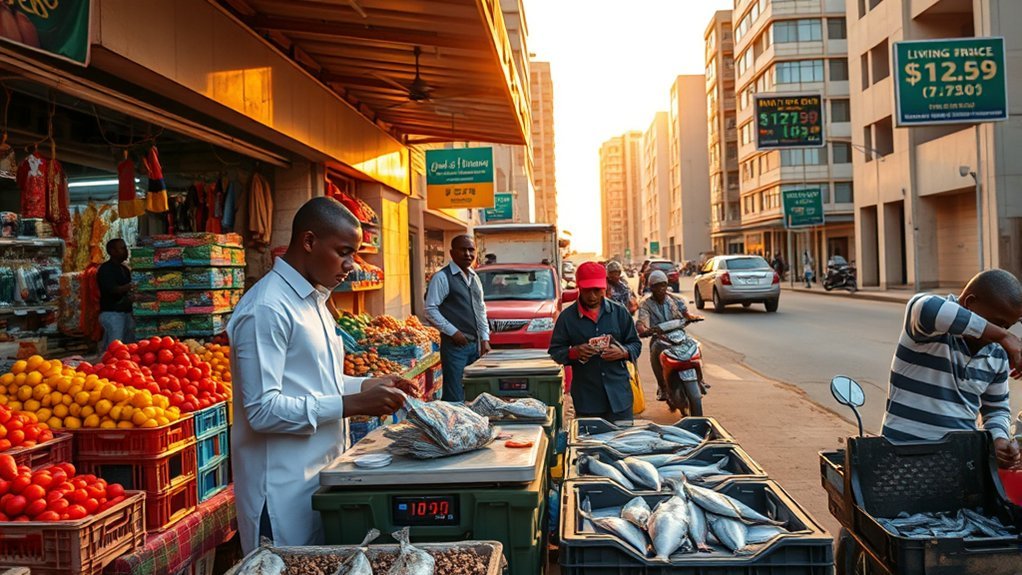
Salary data for Mauritania is thin and inconsistent:
- Crowd-sourced reports for Nouakchott average about MRU 25,400 (~$635) a month after tax, but this comes from very few reports and likely skews toward better-paid jobs.
- One 2026 cost-of-living model puts the average net salary at about $187 (about MRU 7,500).
- Another 2026 estimate puts it at about $570 (about MRU 22,900).
The gap shows that many workers earn far below the comfortable budgets in this guide. A lean local budget of MRU 22,000–26,000 is close to or above what a typical salaried worker takes home. Foreign professionals usually earn much more, often with housing, transport, school, and health benefits included.
If you are weighing a job offer, compare your net pay against rent, a driver or car, health insurance with evacuation cover, school fees, and flights home. Employer-paid housing and transport can matter more than the headline salary.
Healthcare and Insurance
A basic private doctor visit costs around MRU 800 (~$20). The low price does not reflect quality or availability. According to the US State Department:
- Medical care is limited outside major cities and may not meet Western standards.
- Hospitals and doctors usually want payment up front, in cash or through mobile payment apps.
- Some medicines are unavailable, and some sold locally may not be safe.
- Ambulance service is limited. The emergency number is 118.
Foreign residents should carry international health insurance that includes medical evacuation, often to Morocco, Senegal, or Europe. Plans vary widely by age and coverage. As a planning figure, budget about MRU 4,000 (~$100) a month per adult under 40, and much more for older adults or families. Also carry a cash reserve for upfront payments.
Schools and Childcare
Families face the widest cost range, because schooling choices matter so much:
- International primary school: about MRU 301,000 (~$7,505) a year per child in crowd-sourced data. Another 2026 estimate is about $6,800. Fees vary by school and grade, and enrollment fees, transport, and books add more.
- Private preschool, full day: estimates range from about $100 to MRU 17,800 (~$445) a month, depending on the school.
- Public schools: teaching is mainly in Arabic, with some French. Few foreign families use them.
For a family with two children in international school, tuition alone adds about MRU 50,000 (~$1,245) a month. Ask schools for their current fee schedules before you accept a job offer.
Taxes: VAT and Income Tax
- VAT: the standard rate is 16%, according to PwC’s Mauritania tax summary. It is included in shelf prices. Fuel also carries a fixed excise tax per liter.
- Income tax on salaries: PwC lists progressive rates of 15% on taxable pay from MRU 6,000 to 9,000, 25% from MRU 9,000 to 21,000, and 40% above MRU 21,000. These bands apply to monthly pay, so the top rate starts at about $525 a month.
- Social security: employees pay 1% and employers 15%, on salary up to MRU 15,000 a month, according to PwC.
If you are employed locally, your employer withholds tax. If you have foreign income or will stay long term, speak with a local tax adviser and check your home country’s rules too.
Visas, Entry, and Currency Rules
Most foreigners need a visa. Since January 5, 2025, visas on arrival are no longer issued, according to UK government entry requirements. You must apply online through the official ANRPTS e-visa portal before you travel, then pay the fee in exact cash, in euros or US dollars, when you land. No change is given.
The Ministry of Foreign Affairs visa page lists these fees for travelers from outside Africa and the Arab world:
| Length of Stay | Fee (EUR) | Fee (USD) |
|---|---|---|
| 30 days | €55 | $60 |
| 90 days | €95 | $100 |
| 3 months to 1 year | €190 | $200 |
| 1 to 2 years | €270 | $285 |
| 2 to 3 years | €405 | $425 |
Travelers from African and Arab countries pay lower fees, starting at €40 ($45) for 30 days. Your passport must be valid for at least six months after arrival. Yellow fever vaccination is recommended, and proof is required if you arrive from a high-risk country. For a longer stay, you will need a residence card (carte de séjour). Ask your employer or the ministry for the current requirements.
Money rules. Mauritania runs mostly on cash. Cards work only at a few large hotels in Nouakchott and Nouadhibou, usually with high fees, and ATMs that accept foreign cards are limited. You cannot bring ouguiyas into the country or take them out. Large amounts of foreign cash must be declared on arrival.
Safety and Practical Notes
Safety affects your budget as much as prices do. The US rates Mauritania Level 3, Reconsider Travel, in an advisory issued August 18, 2026. It warns of crime and terrorism and says not to travel to military-restricted zones, areas north of the Tropic of Cancer, within 60 miles of the Mali and Algeria borders, or the far east of the country. The UK Foreign Office also advises against all travel to eastern Mauritania and within 25 km of the Mali border.
Other points to plan around:
- Alcohol is illegal for everyone, Muslim or not, and can lead to fines or arrest.
- Demonstrations can happen with little warning. Avoid large gatherings.
- Dress and customs are conservative. Friday is the main day of prayer.
- Heat and dust are intense for much of the year, which raises cooling and cleaning costs.
One-Time Setup Costs
Budget for these before your first month:
- Visa: €55–€190 ($60–$200) for most Western travelers, depending on length of stay.
- Rent deposit and advance: often two to three months of rent, or about MRU 15,000–25,000 (~$375–$625) for a central one-bedroom.
- Furnishing an unfurnished home: roughly MRU 60,000–160,000 (~$1,500–$4,000), depending on air conditioners and appliances.
- Generator or inverter: often needed for reliable power; costs vary widely by size.
- Health insurance: the first premium for an international plan with evacuation cover.
- Cash reserve: because cards are rarely accepted, keep enough euros or dollars for the first weeks.
Sample Monthly Budgets
These budgets combine the averages above for Nouakchott. The lean budget assumes a one-bedroom outside the center and mostly local food. The comfortable budgets assume a central home, a driver or private taxis, imported groceries, and international health cover.
| Expense (MRU) | Single, Lean | Single, Comfortable | Couple | Family of Four |
|---|---|---|---|---|
| Rent | 5,500 | 7,700–10,000 | 7,700–11,300 | 11,300–29,000 |
| Utilities | 3,000–3,500 | 5,200 | 5,200 | 7,000–8,000 |
| Internet + mobile | 900–1,500 | 3,300 | 4,200 | 5,000 |
| Groceries | 7,000–8,000 | 9,000–10,000 | 15,000–16,000 | 25,000–26,000 |
| Eating out + leisure | 1,500–2,000 | 4,000–4,500 | 5,000 | 5,000 |
| Transport | 1,500–2,000 | 4,000–5,000 | 5,000 | 7,000–8,000 |
| Health coverage | 1,500–2,000 | 4,000 | 8,000 | 14,000 |
| Gym | — | 3,500 | — | — |
| Other | 1,500–2,000 | 2,500 | 3,500 | 5,000 |
| Total (MRU) | 22,400–26,500 | 43,200–48,000 | 53,600–58,200 | 79,300–100,000 |
| Total (USD) | $560–$660 | $1,075–$1,195 | $1,335–$1,450 | $1,980–$2,495 |
Family of four: the low end assumes a three-bedroom outside the center and the high end a central three-bedroom. International school for two children adds about MRU 50,000 (~$1,245) a month, which brings the total to roughly MRU 129,000–150,000 (~$3,220–$3,740).
Employer packages: if your employer pays for housing, a driver, and health insurance, a comfortable single budget can fall to MRU 20,000–25,000 (~$500–$625) a month.
Money-Saving Tips
- Negotiate housing in the package. Employer-paid housing and transport save more than any other step.
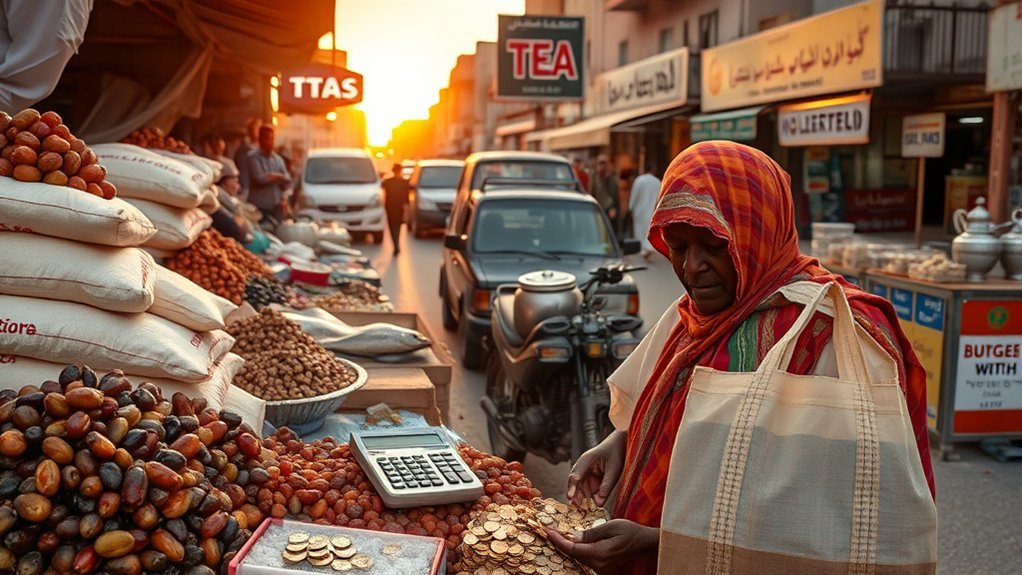
- Buy local food. Fish, rice, local vegetables, and bread are cheap. Imported brands are not.
- Shop at markets. Prices are often lower than in supermarkets that cater to foreigners.
- Manage air conditioning. Cool only the rooms you use and service units before summer.
- Hire a regular driver. A monthly arrangement is safer and often cheaper than ad hoc taxis.
- Carry euros or dollars. Exchange at reliable bureaus and avoid hotel card fees.
- Keep an emergency fund. Medical evacuation, outages, and sudden travel can cost far more than routine bills.
How Mauritania Compares With Nearby Countries
Mauritania is cheap on local goods but costly once you add security and imported comforts. Here is how a simple single-person budget compares with nearby countries, based on our other 2026 guides:
| Country | Single Person, Simple Budget | Notes |
|---|---|---|
| Mauritania | ~$560–$660 | cash economy; high security and health costs for foreigners |
| Mali | ~$360–$580 | US and UK advise against all travel |
| Algeria | ~$645–$680 (Algiers) | cheap fuel and transport; low salaries |
| Cape Verde | ~$730–$945 | stable euro-pegged currency; island import costs |
If you are weighing options in the region, see our guide to the cost of living in Senegal, the closest neighbor with a large foreign community in Dakar, and the cost of living in Morocco to the north, a common choice for residents who want more services. For other neighbors, compare the cost of living in Mali and the cost of living in Algeria. For a calmer Atlantic option, see the cost of living in Cape Verde.
Frequently Asked Questions
How much does it cost to live in Mauritania per month?
A single person living a simple, local-style life in Nouakchott needs about MRU 22,400–26,500 (~$560–$660) a month including rent. A foreigner who wants a secure central apartment, air conditioning, imported food, private transport, and international health cover should budget about MRU 43,200–48,000 (~$1,075–$1,195). These figures use about MRU 40.1 per US dollar (early October 2026).
How much is rent in Nouakchott?
Crowd-sourced averages from June 2026 put a one-bedroom at about MRU 7,700 (~$190) a month in the city center and about MRU 5,500 (~$135) outside it. A three-bedroom costs about MRU 11,300 (~$280) outside the center and about MRU 29,000 (~$725) in the center. Furnished villas in Tevragh Zeina can cost much more.
What is the average salary in Mauritania?
Salary data is thin and inconsistent. Crowd-sourced net salary reports for Nouakchott average about MRU 25,400 (~$635) a month, but other 2026 estimates range from under $200 to about $570. Most local workers earn far less than foreign professionals, so judge affordability from your own job offer.
Do I need a visa for Mauritania, and how much does it cost?
Most foreigners need a visa. Visas on arrival ended on January 5, 2025, so you must register for an e-visa online before you travel. For travelers from outside Africa and the Arab world, the foreign ministry lists €55 ($60) for 30 days, €95 ($100) for 90 days, and €190 ($200) for three months to one year. The fee is paid in exact cash on arrival.
Is Mauritania safe for foreigners to live in?
Nouakchott is home to a small foreign community, but caution is needed. The US rates Mauritania Level 3 (Reconsider Travel) as of August 18, 2026, and says violent crime is common outside the Tevragh Zeina area of Nouakchott. The US and UK advise against travel to the eastern regions and near the Mali border.
Can you use credit cards in Mauritania?
Rarely. Mauritania runs mostly on cash. Cards work only at a few large hotels in Nouakchott and Nouadhibou, often with high fees, and ATMs that accept foreign cards are limited and often out of order. You cannot bring ouguiyas into the country or take them out.
Can you drink alcohol in Mauritania?
No. UK government travel advice says importing or drinking alcohol is illegal for Muslims and non-Muslims alike. Authorities can confiscate it and may fine or arrest people carrying it.
Conclusion
Mauritania can be very cheap if you live like a local, at about MRU 22,400–26,500 (~$560–$660) a month for one person in Nouakchott. Most foreigners spend more, around MRU 43,200–48,000 (~$1,075–$1,195), because security, private transport, imported food, and health insurance with evacuation cover add up. The ouguiya is stable against the dollar, but inflation rose in 2026, and price data is thin. Get real quotes for housing, transport, insurance, and schools before you commit, and check current travel advice for the areas you plan to live and work in.
Note: figures in this guide are planning estimates drawn from the sources listed below and from crowd-sourced price data. Exchange rates, official fees, visa rules, and local prices change often, and individual quotes vary, so confirm current numbers with the official sources before you commit.
Sources
- Wise – USD to MRU mid-market rate
- IMF – Mauritania country page (2026 projections)
- World Bank – Mauritania overview
- US State Department – Mauritania travel advisory
- UK Foreign Office – Mauritania travel advice
- UK Foreign Office – Mauritania entry requirements
- Mauritania Ministry of Foreign Affairs – visa fees
- ANRPTS – official e-visa portal
- PwC – Mauritania personal income tax
- PwC – Mauritania VAT and other taxes
- PwC – Mauritania social security contributions
- Numbeo – Mauritania and Nouakchott (crowd-sourced prices, June 2026)