The cost of living in Italy in 2026 runs about €1,400–€1,600 (~$1,570–$1,795) a month for a single person living simply in a mid-sized or southern city, and about €2,450–€2,900 (~$2,750–$3,255) for a comfortable single life in Rome, Milan, or Florence. A couple should plan on roughly €2,650–€3,000 (~$2,975–$3,370). These figures use the euro reference rate of $1.1225 per euro on October 2, 2026. Rent is the biggest swing factor: a central one-bedroom averages about €1,515 in Milan but about €660 in Palermo. Energy is the other big story this year. Italian inflation jumped to 4.2% in September, driven by electricity and gas, so older budgets now understate utility bills. Below you’ll find city-by-city rents, utilities, food, transport, healthcare, taxes, visas, and sample budgets.
Quick Answer
- Single person: €1,400–€1,600 (~$1,570–$1,795) on a lean budget outside the big cities; €2,450–€2,900 (~$2,750–$3,255) for a comfortable life in Rome, Milan, or Florence.
- Couple: €2,650–€3,000 (~$2,975–$3,370) a month in a one-bedroom outside a big-city center.
- Family of four: about €4,100–€4,700 (~$4,600–$5,275) before private school fees.
- Rent, one-bedroom: about €445–€1,035 (~$500–$1,160) outside the center; €660–€1,515 (~$740–$1,700) in the center, depending on the city.
- Utilities: about €180–€225 (~$200–$255) a month for an 85 m² apartment, with Q4 2026 energy prices pushing bills higher.
- Transit: €1.50 per ride and €35 a month in Rome; about €2.20 per ride and €39 a month in Milan.
- Minimum wage: Italy has no national statutory minimum wage. Pay floors are set by sector-wide collective agreements.
Exchange Rate, Inflation, and Wages in 2026
Three numbers shape what Italy costs you this year.
The exchange rate. The euro reference rate published by the Bank of Italy on October 2, 2026 was $1.1225 per euro. In mid-September it was stronger, at about $1.154. If you earn in dollars, a €2,500 budget cost about $2,885 in mid-September and about $2,805 now. All dollar figures in this guide use the October 2 rate.
Inflation. According to Istat’s preliminary September 2026 release, consumer prices rose 4.2% from a year earlier, up from 3.3% in August. Energy did most of the damage. Regulated energy prices were up almost 26% year over year, and the “shopping cart” index of food and household goods rose 1.7%. Core inflation, which strips out energy and fresh food, was a milder 1.7%.
Wages. Italy has no legal minimum wage. Instead, national collective agreements (contratti collettivi nazionali) set minimum pay for each sector. Crowd-sourced averages put the typical net monthly salary at about €1,690 (~$1,895) nationally, about €1,920 (~$2,155) in Milan, and about €1,480 (~$1,665) in Palermo. Istat put unemployment at 6.2% in August 2026.
An average net salary in Italy covers a central one-bedroom in Milan, but not much else. This is why many Italians in their twenties and thirties share apartments or live with family.
Cost of Living by City
Rents vary far more between cities than any other expense. The table uses crowd-sourced averages from Numbeo (updated September–October 2026). Monthly costs “without rent” cover a single person’s food, transport, utilities, and everyday spending.
| City | 1-Bed, City Center | 1-Bed, Outside Center | Basic Utilities (85 m²) | Single Person, Without Rent |
|---|---|---|---|---|
| Milan | €1,515 (~$1,700) | €1,035 (~$1,160) | €225 (~$255) | €1,050 (~$1,180) |
| Florence | €1,350 (~$1,515) | €895 (~$1,005) | €210 (~$235) | €1,010 (~$1,135) |
| Rome | €1,080 (~$1,210) | €780 (~$875) | €185 (~$205) | €840 (~$945) |
| Bologna | €1,015 (~$1,140) | €780 (~$875) | €220 (~$250) | €960 (~$1,075) |
| Naples | €880 (~$990) | €605 (~$680) | €180 (~$200) | €865 (~$970) |
| Turin | €770 (~$865) | €520 (~$580) | €210 (~$240) | €890 (~$1,000) |
| Palermo | €660 (~$740) | €445 (~$500) | €200 (~$225) | €800 (~$895) |
| Italy average | €720 (~$810) | €565 (~$635) | €200 (~$225) | €1,000 (~$1,125) |
A few patterns stand out:
- Milan is the most expensive city in Italy for renters, by a wide margin. Even outside the center, a one-bedroom averages more than €1,000.
- Florence is almost as pricey as Milan, because tourism and short-term rentals compete with residents for housing.
- Rome is cheaper than many people expect, especially in outer districts, though central rents still top €1,000.
- Bologna has a large student population that keeps demand high, but rents fell in 2026.
- Turin, Naples, and Palermo offer big-city services at roughly half of Milan’s rents.
For a deeper look at the capital, see our Rome monthly budget breakdown.
Housing: Rent and Buying
Asking Rents per Square Meter
Listing portals measure rent per square meter. In idealista’s August 2026 rent report, the national average asking rent was €14.6 per m² a month, down 1.7% from July and 0.8% from a year earlier. City averages were:
| City | Asking Rent (€/m² per month) | 60 m² Apartment (approx.) |
|---|---|---|
| Milan | 22.3 | €1,340 (~$1,500) |
| Florence | 21.7 | €1,300 (~$1,460) |
| Venice | 20.2 | €1,210 (~$1,360) |
| Rome | 19.1 | €1,145 (~$1,285) |
| Turin | 13.1 | €785 (~$880) |
| Italy average | 14.6 | €875 (~$985) |
Asking rents run above the crowd-sourced averages in the city table, because new listings price in today’s market while many existing tenants pay older rents. After years of steep increases, the market is cooling in some places. Immobiliare.it data for the first half of 2026 showed rents down 3.2% in Bologna and 0.9% in Milan from a year earlier, while Florence was flat as the number of listings jumped. For more detail on regional prices, read our guide to average rent across Italy.
Renting as a Foreigner
Foreigners can rent freely, but you’ll need a codice fiscale (tax code), which is free from the Agenzia delle Entrate or an Italian consulate. Common lease types are the 4+4 open-market lease and the 3+2 “canone concordato” lease, which caps rent at locally agreed levels in exchange for tax breaks for the landlord. Transitional leases of 1 to 18 months are also available for work or study.
Expect to pay a security deposit (cauzione). Italian law caps it at three months’ rent, and two or three months is common in big cities. If you rent through an agency, it will also charge a fee, so ask about it before viewing. Condominium fees (spese condominiali) for building cleaning, elevators, and sometimes central heating are often charged on top of rent. Ask whether they’re included.
Buying Property
Crowd-sourced averages put purchase prices at about €3,250 per m² in city centers and about €2,040 per m² outside them nationally, with Milan and Florence far above that and many southern and inland towns far below. Twenty-year fixed mortgage rates average about 3.6%. Foreign buyers from most Western countries can buy property in Italy, but budget for notary fees, registration taxes, and agency fees on top of the price.
Utilities, Internet, and Phone
Basic utilities (electricity, heating, water, and garbage) for an 85 m² apartment average about €180–€225 (~$200–$255) a month in the big cities, based on crowd-sourced data. Treat that as a floor for the coming winter.
Energy prices rose sharply in the second half of 2026. ARERA, the national energy regulator, raised the regulated electricity price for vulnerable customers by 37.3% for the fourth quarter. As reported by Sky TG24 on September 29, 2026, the new price is about €0.43 per kWh including taxes. A typical household on that tariff would pay about €870 a year for electricity at fourth-quarter prices, and the annual gas bill for the same group is about €1,580. Together, that’s roughly €2,450 a year, or about €205 (~$230) a month, for power and gas alone.
Most households buy energy on the free market, where fixed-price offers can cost less than the regulated tariff. Several large suppliers launched discounted fixed offers in late September 2026, so compare plans before you sign.
Heating type matters. An apartment with old electric heaters or an inefficient gas boiler can cost far more to heat than a well-insulated one with a modern heat pump. Ask the landlord for recent bills before you sign a lease.
Other monthly connections:
- Home internet (fiber, 60+ Mbps): about €25–€30 (~$28–$34).
- Mobile plan with data: about €10 (~$12). Italian prepaid plans are among the cheapest in Western Europe.
- Water and garbage: often billed separately. The garbage tax (TARI) is set by each municipality and paid by the tenant.
Food: Groceries and Dining Out
A single person who cooks most meals spends about €300–€380 (~$335–$425) a month on groceries. A couple should plan on about €550–€650. Food prices are rising faster than overall inflation this year. Istat reported that unprocessed food prices were up 5.5% from a year earlier in September 2026.
Average prices in October 2026, based on crowd-sourced data:
| Item | Typical Cost (EUR) | Approx. USD |
|---|---|---|
| Milk (1 liter) | 1.43 | $1.61 |
| Bread (1 lb loaf) | 1.91 | $2.14 |
| Rice (1 lb) | 1.19 | $1.34 |
| Eggs (12) | 3.72 | $4.18 |
| Chicken fillets (1 lb) | 5.05 | $5.67 |
| Beef (1 lb) | 8.21 | $9.22 |
| Local cheese (1 lb) | 6.99 | $7.85 |
| Tomatoes (1 lb) | 1.31 | $1.47 |
| Mid-range bottle of wine | 7.00 | $7.86 |
Wine, pasta, olive oil, and seasonal produce are cheap by US standards. Meat, imported goods, and prepared foods are where bills climb. Discount chains such as Lidl, Eurospin, and MD cost less than central-city supermarkets, and weekly open-air markets are the best place for fruit and vegetables.
Eating out is affordable if you eat like a local:
- Meal at an inexpensive restaurant or trattoria: about €18 (~$20)
- Three-course dinner for two at a mid-range restaurant: about €70 (~$79)
- Fast-food combo meal: about €10 (~$11)
- Cappuccino at a bar: about €1.80 (~$2.00)
- Domestic draft beer (pint): about €5 (~$5.60)
Standing at the bar for coffee is cheaper than sitting at a table, especially in tourist areas, where table service can double the price.
Transportation and Getting Around
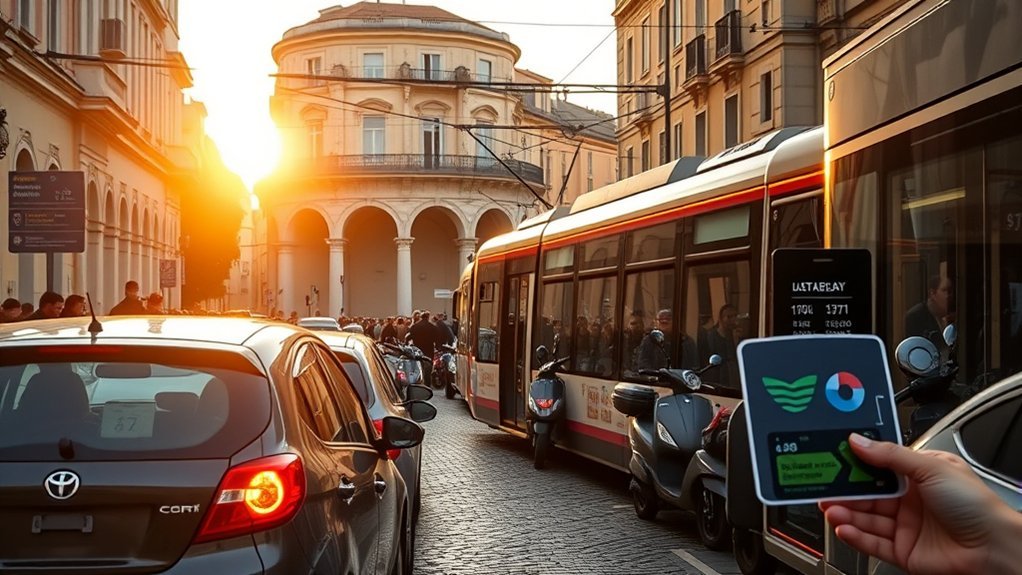
Public transit is cheap in Italian cities, and many residents don’t own a car.
| City | Single Ticket | Monthly Pass | Notes |
|---|---|---|---|
| Rome (ATAC) | €1.50 | €35 | 100-minute ticket; annual pass €250 |
| Milan (ATM) | €2.20 | €39 | urban zones Mi1–Mi3 |
| Bologna | €2.30 | €39 | crowd-sourced average |
| Turin | €1.90 | €38 | crowd-sourced average |
| Naples | €1.50 | €41 | crowd-sourced average |
| Palermo | €1.40 | €32 | crowd-sourced average |
Rome’s fares come from ATAC’s official ticket page. A 24-hour ticket costs €8.50 and a weekly pass €29. Students under 19 can get a €50 annual regional pass for the 2026–2027 school year.
Other transport costs:
- Gasoline: fuel prices climbed sharply this summer. On September 24, 2026, the national average for self-service gasoline was €2.154 per liter and diesel €2.338, according to Ministry of Enterprise data reported by Teleborsa. That’s about $9.15 per gallon for gasoline and $9.93 for diesel.
- Taxis: the meter starts around €5 (~$5.60), plus about €2.40 per mile. City-set supplements apply at night and for luggage.
- Trains: regional trains are cheap and run on fixed fares. High-speed trains between Milan, Florence, Rome, and Naples are fast, and buying a few weeks ahead usually cuts the price.
- Cars: insurance, the annual vehicle tax (bollo), parking, and limited-traffic zones (ZTL) in historic centers make car ownership costly in big cities. In rural areas, a car is usually necessary.
Healthcare and Insurance Costs
Italy’s national health service, the Servizio Sanitario Nazionale (SSN), covers legal residents. How you join depends on your status:
- Employees and the self-employed who pay into the Italian system are enrolled automatically and pay no separate premium. Their contributions come out of payroll and taxes.
- Non-working residents, such as retirees on an elective residence visa or students, can join through voluntary registration. As explained in idealista’s guide to healthcare for expats, the standard contribution is a flat €2,000 (~$2,245) a year per person, about €167 (~$187) a month. Students and au pairs pay a reduced rate.
- Co-payments (ticket): even with SSN coverage, you pay a ticket for specialist visits, diagnostic tests, and non-urgent emergency room visits. These usually run €10–€40, depending on the region and service.
Private options: many people add private insurance for faster specialist appointments. Basic plans can start at a few hundred euros a year, while international policies that cover you in Italy and abroad can cost several thousand. Visa applicants usually need private coverage until they’re enrolled in the SSN.
Schools and Childcare
- Public schools: free for residents, taught in Italian. Families pay for books, supplies, and canteen meals.
- Private preschool or kindergarten: about €495 (~$555) a month, full day, based on crowd-sourced averages. Public nursery (asilo nido) fees are income-based and often much lower, but places are limited.
- International primary school: about €10,365 (~$11,635) a year per child on average. Top international schools in Milan and Rome charge considerably more.
For a family with two children in international school, tuition alone adds about €1,725 (~$1,940) a month.
Taxes: VAT and Income Tax
- VAT (IVA): the standard rate is 22%, included in shelf prices. According to the Agenzia delle Entrate’s VAT overview, reduced rates of 10% and 4% apply to listed goods, including many basic foods.
- Income tax (IRPEF): resident rates for 2026 are 23% on income up to €28,000, 33% from €28,000 to €50,000, and 43% above €50,000. Regional surcharges add 1.23%–3.33% and municipal surcharges up to 0.9%, as summarized in PwC’s Italy tax summary.
- Tax residency: you’re generally an Italian tax resident if you’re registered as a resident or live in Italy for more than half the year. Residents are taxed on worldwide income.
- 7% flat tax for retirees: foreign pensioners who move to qualifying small towns (under 20,000 residents) in southern Italy can elect to pay a flat 7% on foreign income for ten years.
- Lump-sum regime for wealthy newcomers: new residents from January 1, 2026 can pay a flat €300,000 a year on foreign income, plus €50,000 per family member.
Italy has tax treaties with the US and many other countries, but the rules are complex. Talk to an Italian commercialista (accountant) before you move, especially if you have pensions, rental income, or investment accounts abroad.
Visas and Residence
US, Canadian, UK, and Australian citizens can visit Italy without a visa for up to 90 days in any 180-day period under Schengen rules. To live in Italy longer, you need a national (type D) visa from an Italian consulate before you travel, then a residence permit (permesso di soggiorno) within eight days of arrival. The Foreign Ministry’s visa portal lets you check which visa fits your situation.
The main options for people with outside income are:
- Elective residence visa: for people with stable passive income, such as pensions or investments, who won’t work in Italy. Consulates have commonly asked for at least about €31,000 a year for a single applicant, plus more for a spouse and children. You also need accommodation in Italy and health insurance.
- Digital nomad / remote worker visa: introduced in 2024 for highly skilled remote workers employed by or contracted to non-Italian companies. Applicants must show an annual income of roughly €28,000 or more, health insurance, and accommodation.
- Work and study visas: tied to an Italian job offer under the annual quota system, or enrollment at an Italian school or university.
Income thresholds and documents differ slightly between consulates, so confirm the current requirements with the consulate that serves your area before you apply.
One-Time Setup Costs
Budget for these before your first month:
- Visa and residence permit fees: the national visa fee, plus the permesso di soggiorno kit (postal fee, revenue stamp, electronic card, and permit contribution). Check current amounts at the consulate and post office.
- Rental deposit: up to three months’ rent, plus the first month in advance. In Milan, that can reach €4,000–€6,000 for a one-bedroom.
- Agency fee: charged by most rental agencies. Ask for the amount in writing before you commit.
- SSN voluntary registration: €2,000 per person for the calendar year if you’re not working in Italy.
- Furnishing an unfurnished apartment: many Italian rentals come unfurnished, sometimes without a kitchen. Ask what’s included.
- Health coverage gap: private or travel insurance until your SSN registration starts.
Sample Monthly Budgets
These budgets combine the averages above. Health coverage assumes SSN voluntary registration at €167 a person per month. If you work in Italy, you won’t pay that separately.
| Expense | Single, Lean (Turin, Naples, Palermo) | Single, Comfortable (Rome, Milan, Florence) | Couple (outside a big-city center) | Retired Couple (southern city) |
|---|---|---|---|---|
| Rent (1-bed) | 445–605 | 1,080–1,515 | 780–1,035 | 445–660 |
| Utilities | 180–210 | 185–225 | 185–225 | 200 |
| Internet + mobile | 35 | 40 | 50 | 50 |
| Groceries | 300 | 380 | 600 | 550 |
| Eating out + leisure | 150 | 350 | 450 | 300 |
| Transport | 32–41 | 35–39 | 70–78 | 64 |
| Health coverage | 167 | 167 | 333 | 333 |
| Gym + personal + other | 100 | 200 | 200 | 150 |
| Total (EUR) | €1,400–€1,600 | €2,450–€2,900 | €2,650–€3,000 | €2,100–€2,300 |
| Total (USD) | $1,570–$1,795 | $2,750–$3,255 | $2,975–$3,370 | $2,355–$2,580 |
Family of four: crowd-sourced data puts a family of four’s national spending at about €3,180 (~$3,570) a month before rent. Add a three-bedroom outside the center, which runs about €900 in Turin to €1,525 in Rome, and the total is about €4,100–€4,700 (~$4,600–$5,275). International school for two children pushes that to roughly €5,800–€6,450 (~$6,510–$7,240).
Retirees: the retired-couple column assumes an apartment in a city like Palermo, SSN voluntary registration for two, and modest dining out. Retirees who qualify for the 7% flat tax in a small southern town can lower both rent and taxes further.
Salary vs. Cost of Living
Local salaries explain why Italy feels cheap to some newcomers and tight to many residents. The average net salary of about €1,690 a month covers a single person’s lean budget in Turin or Palermo, but leaves little room in Milan, where a central one-bedroom alone takes about 79% of the local average net salary of €1,920. Remote workers and retirees paid in dollars or pounds come out well ahead of local earners, while people who move for an Italian job should check the salary against local rents before accepting an offer.
Money-Saving Tips
- Choose your city carefully. Moving from Milan to Turin cuts average one-bedroom rents by about half.
- Look for a canone concordato lease. These agreed-rent contracts are often below market rates.
- Compare energy offers. Fixed-price free-market plans can beat the regulated tariff, especially with prices rising this winter.
- Buy annual transit passes. Rome’s €250 annual pass works out to about €21 a month.
- Shop at markets and discount chains. Weekly markets and stores like Lidl and Eurospin keep grocery bills down.
- Eat a set lunch. Many trattorias offer a fixed-price lunch menu that costs much less than dinner.
- Skip the car in big cities. Fuel above €2 a liter, parking, and ZTL fines add up fast.
How Italy Compares With Nearby Countries
Italy sits in the middle of the range for Western Europe. Rents in Milan and Florence rival many northern European cities, while the south is one of the cheaper places to live in the eurozone. To the northwest, the cost of living in France is generally higher, especially in Paris. Across the northern border, our Switzerland living cost guide shows why many Swiss shop in Italy. For other Mediterranean options, compare living expenses in Spain, what it costs to live in Greece, and the monthly budget for Malta, an English-speaking island just south of Sicily.
Frequently Asked Questions
How much money do you need to live in Italy per month?
A single person needs about €1,400–€1,600 (~$1,570–$1,795) a month for a simple life in a city like Turin, Naples, or Palermo, and about €2,450–€2,900 (~$2,750–$3,255) for a comfortable one in Rome, Milan, or Florence. A couple should budget about €2,650–€3,000 (~$2,975–$3,370).
Is it cheaper to live in Italy than the US?
For most people, yes. Crowd-sourced data shows everyday costs in Italy about 13% lower than in the US, and rents about half as high. Big exceptions are fuel, which costs more than $9 a gallon, and energy bills, which rose sharply in 2026.
How much is rent in Italy in 2026?
A one-bedroom averages about €565 (~$635) outside city centers and €720 (~$810) in them nationwide. In Milan, central one-bedrooms average about €1,515 (~$1,700), while in Palermo they average about €660 (~$740).
Which Italian city is cheapest to live in?
Among large cities, Palermo has the lowest rents, with one-bedrooms outside the center averaging about €445 (~$500). Turin and Naples are also much cheaper than Milan, Florence, and Rome.
Does Italy have a minimum wage?
No. Italy has no national statutory minimum wage. Minimum pay is set by national collective agreements for each sector. The average net salary is about €1,690 (~$1,895) a month.
How much does healthcare cost for foreigners in Italy?
Residents who work in Italy are covered by the national health service through their contributions. Non-working residents, such as retirees, can register voluntarily for a flat €2,000 (~$2,245) a year per person, plus co-payments of about €10–€40 for specialist visits and tests.
Conclusion
Italy is still affordable by US standards, but where you live decides most of your budget. A single person can live simply for about €1,400–€1,600 a month in Turin, Naples, or Palermo, while a comfortable life in Milan or Florence costs closer to €2,900. In 2026, plan for higher energy and fuel bills than older guides suggest, since inflation jumped to 4.2% in September on the back of electricity and gas prices. Pick your city first, compare energy offers, and check the exchange rate before you commit to a budget.
Sources
- Banca d’Italia – euro reference rates, October 2, 2026
- Istat – consumer prices, preliminary data, September 2026
- idealista – rent report, August 2026
- Milano Finanza – Immobiliare.it rent data, first half of 2026
- Sky TG24 – ARERA Q4 2026 electricity and gas prices
- Teleborsa – MIMIT fuel prices, September 24, 2026
- ATAC Roma – tickets and passes
- idealista – healthcare in Italy for expats
- Agenzia delle Entrate – VAT in Italy
- PwC – Italy individual income tax summary
- Italian Ministry of Foreign Affairs – visa portal
- Numbeo – Italy, Milan, Rome, Florence, Bologna, Naples, Turin, Palermo (crowd-sourced averages, September–October 2026)