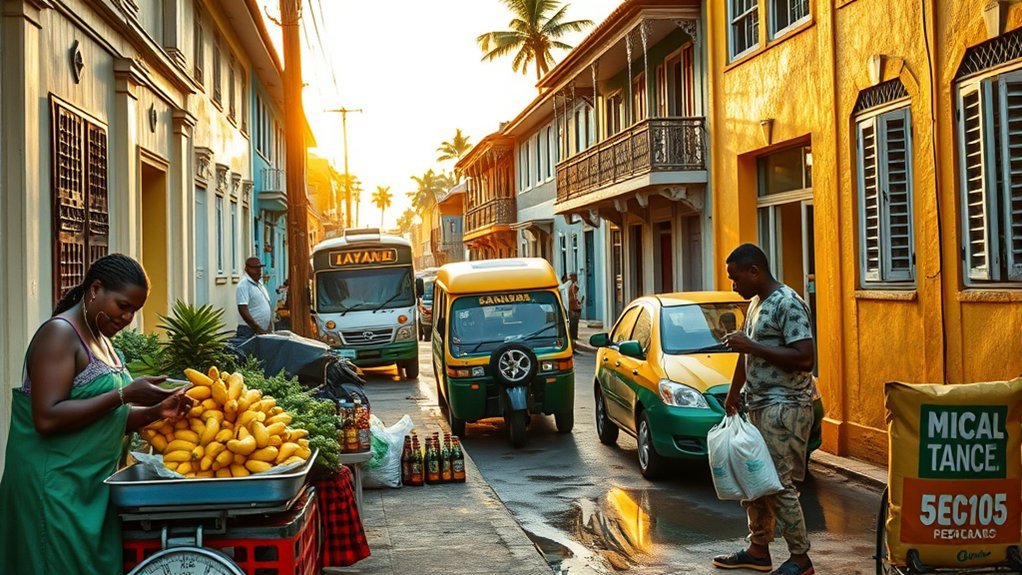
The cost of living in Guyana in 2026 runs about GY$256,000–429,000 (~$1,220–$2,050) a month for a single person in Georgetown, depending on whether you rent outside the center and cook at home or rent a central apartment and eat out often. A couple should plan on roughly GY$533,000 (~$2,550), and a family of four about GY$863,000–1,040,000 (~$4,125–$4,970) before international school fees. These figures use the Bank of Guyana rate of about GY$209 per US dollar (October 2, 2026). Guyana is no longer the low-cost country many older guides describe. The oil boom has pushed up rents in Georgetown, restaurant prices are close to US levels, and imported groceries are expensive. Below you’ll find Georgetown rents, food and utility prices, taxes, cash grants, schools, and sample budgets.
Quick Answer
- Single person: GY$256,000 (~$1,220) on a lean budget; GY$429,000 (~$2,050) for a comfortable one.
- Couple: about GY$533,000 (~$2,550) a month.
- Family of four: about GY$863,000–1,040,000 (~$4,125–$4,970) before private school fees.
- Rent, one-bedroom in Georgetown: about GY$109,000 (~$520) outside the center; GY$201,000 (~$960) in the center.
- Utilities: about GY$25,200 (~$120) a month; internet adds about GY$9,100 (~$44).
- Bus fare: about GY$120 (~$0.57) per minibus ride in Georgetown.
- Income tax: no tax on monthly income up to GY$130,000 (~$620).
Exchange Rate, Growth, and Inflation in 2026
Three numbers shape what Guyana costs you this year.
The exchange rate. The Guyana dollar has been stable against the US dollar for years. On October 2, 2026, the Bank of Guyana listed cambio rates of GY$207.98 (buy) and GY$210.45 (sell) per US dollar. This guide uses about GY$209. Many landlords and car dealers quote in US dollars, especially for housing aimed at foreign staff.
Growth. Oil has made Guyana one of the fastest-growing economies in the world. The government’s Budget 2026 speech reported real growth of 19.3% in 2025, with the non-oil economy up 14.3%. The IMF projects 16.2% growth in 2026. That money has raised demand for housing, services, and skilled workers in and around Georgetown.
Inflation. Prices are rising, but not fast. Twelve-month inflation was about 2.5% at the end of 2025, driven mainly by food prices, which rose 4.4%. The IMF expects consumer prices to rise about 4.1% in 2026.
At about GY$209 per dollar, the GY$130,000 monthly income tax threshold equals roughly $620. The average local net salary is about GY$107,000 (~$515), so most workers pay no income tax.
Housing and Rent in Georgetown
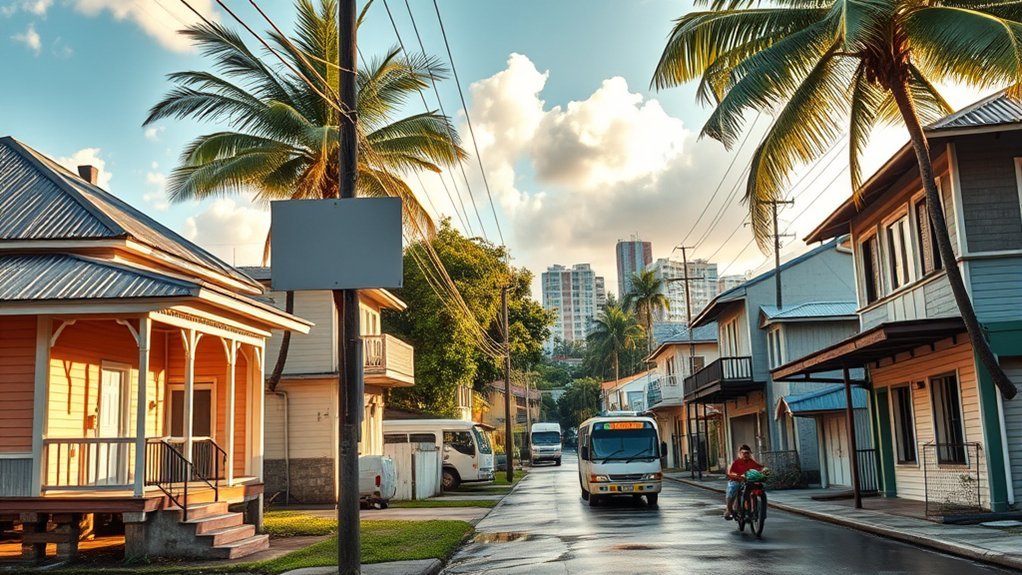
Rent is the biggest cost for most people, and almost all public price data covers Georgetown. Crowd-sourced averages from Numbeo, updated in October 2026 with reports from 15 contributors over the past year, look like this:
| Apartment | City Center | Outside Center |
|---|---|---|
| 1 bedroom | GY$200,833 (~$960) | GY$108,750 (~$520) |
| 3 bedrooms | GY$691,600 (~$3,305) | GY$269,463 (~$1,290) |
Another crowd-sourced data set, LivingCost, puts a central one-bedroom at about $689 and a cheaper one-bedroom at about $380. The gap shows how much prices depend on the exact street and building. The huge spread between central and outer three-bedrooms reflects the market for furnished executive homes rented to oil, mining, and construction companies.
A few patterns stand out:
- Central and northern Georgetown (areas such as Queenstown, Bel Air, Lamaha Gardens, and Prashad Nagar) have the highest rents and most of the newer apartments.
- The East Bank and East Coast corridors, including Providence, Diamond, and Eccles, offer newer housing at lower prices, but traffic into the city can be heavy at rush hour.
- Linden, New Amsterdam, and Berbice towns are much cheaper, but there is very little published price data, so ask locally.
- Flooding is a real factor. Georgetown sits below sea level at high tide, so check drainage and whether the street floods in heavy rain.
Living Outside Georgetown
Life is cheaper in Linden, New Amsterdam, Corriverton, and the villages along the coast, where rents can be a fraction of Georgetown prices. The trade-offs are fewer private clinics, fewer international schools, and longer trips for shopping and paperwork. Most newcomers start in or near Georgetown and move later once they know the country. Interior towns such as Lethem and mining areas have their own price levels, often higher for food and fuel because goods travel long distances by road, river, or air.
Renting Tips
Most landlords ask for one month’s rent as a deposit plus the first month in advance. Some furnished homes for foreign staff ask for several months up front. Use a written lease that states who pays for electricity, water, internet, security, and yard maintenance. Buying property is possible for foreigners, but land titles can be complex, so use a local attorney. Numbeo’s average asking price is about GY$69,000 per square foot in the center (~$330) and GY$31,000 (~$147) outside it.
Utilities, Internet, and Phone

Basic utilities (electricity, water, and garbage) for an 85 m² apartment average about GY$25,200 (~$120) a month. Air conditioning is the main driver, so bills in a large house can be much higher. Power cuts still happen, and many better homes have a backup generator or inverter.
Access to the grid is near universal. World Bank data shows that 93% of the population had electricity in 2024.
- Home internet (60+ Mbps): about GY$9,130 (~$44) a month.
- Mobile plan with 10 GB+ of data: about GY$4,500 (~$21.50) a month.
- Water: usually a small part of the bill. Many homes also keep a storage tank and pump.
Food: Groceries and Dining Out

Local rice, fish, chicken, and produce are reasonably priced. Imported goods, including dairy, cheese, cereal, and branded snacks, cost as much as or more than in the US. Here are crowd-sourced Georgetown averages from October 2026:
| Item | Typical Cost (GY$) | Approx. USD |
|---|---|---|
| Milk (1 liter) | 680 | $3.25 |
| Rice (1 lb) | 193 | $0.92 |
| Eggs (12) | 854 | $4.08 |
| Chicken fillets (1 lb) | 668 | $3.19 |
| Beef (1 lb) | 860 | $4.11 |
| Meal at an inexpensive restaurant | 3,750 | $17.95 |
| Dinner for two, mid-range restaurant | 15,000 | $71.70 |
| McDonald’s-style combo meal | 1,960 | $9.37 |
A single person who cooks most meals and shops at Stabroek or Bourda markets can keep groceries to about GY$70,000–90,000 (~$335–$430) a month. A family of four should plan on about GY$280,000 (~$1,340), more if you buy a lot of imported food.

Eating out is no longer cheap in sit-down restaurants, which now price for oil-sector customers. Local food is still good value: cook-up rice, roti and curry, pepperpot, and Chinese-Guyanese takeout cost far less than hotel restaurants. Street food and food courts keep a lunch budget under control.
Transportation and Fuel
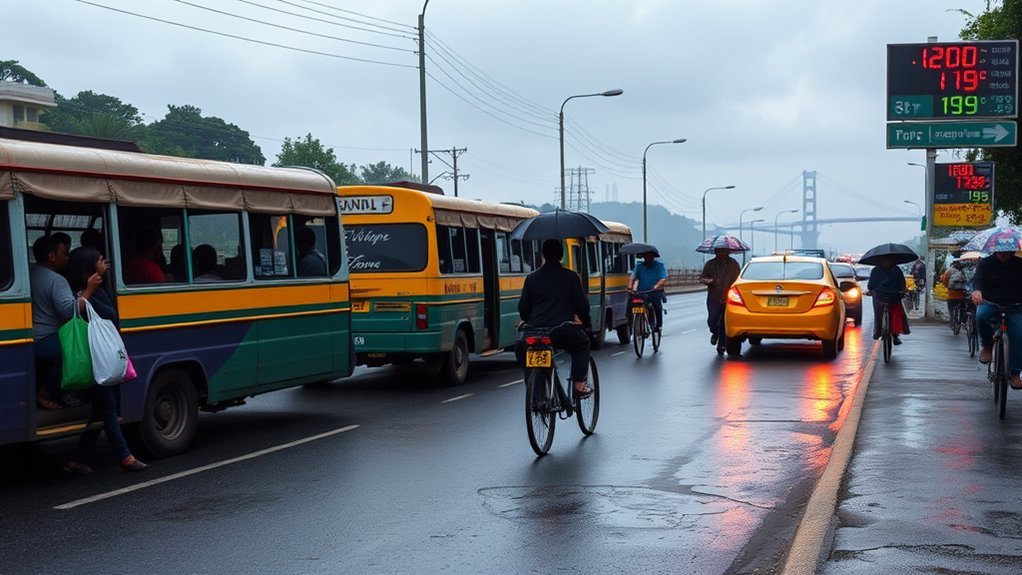
Minibuses are the main public transport. A ride in Georgetown costs about GY$120 (~$0.57), with longer routes to the East Bank or East Coast costing more. Taxis are everywhere and have no meters, so agree the fare first. The flag fare starts around GY$900 (~$4.30), and most trips within the city cost a few thousand dollars.
- Gasoline: about GY$219 per liter (~$1.05, or ~$3.97 per gallon). The government keeps a zero excise tax on petroleum products, which keeps pump prices low.
- Cars: most people with a steady income drive. Used Japanese imports are common. Add insurance, licensing, and frequent maintenance from rough roads.
- Traffic: heavy at peak hours on the East Bank and East Coast roads. New bridges and roads are easing some routes.
A regular commuter on minibuses spends about GY$15,000 (~$72) a month. Someone who uses taxis daily can spend GY$40,000–60,000 (~$190–$290).
Healthcare and Insurance

Guyana has public hospitals and health centers, led by the Georgetown Public Hospital, and a growing number of private hospitals and clinics in Georgetown. Public care is low cost but waits can be long, and services outside the capital are limited. Many foreigners and middle-income families use private clinics and pay cash or carry private insurance.
- Private care: fees vary by clinic. Ask for the consultation price before booking.
- Insurance: local private plans and international plans are both available. Our budgets set aside GY$12,000–70,000 (~$57–$335) a month depending on household size and plan type.
- Serious cases: some complex treatment is done abroad, often in Trinidad, Barbados, or the US, so evacuation cover is worth having.
Schools and Childcare
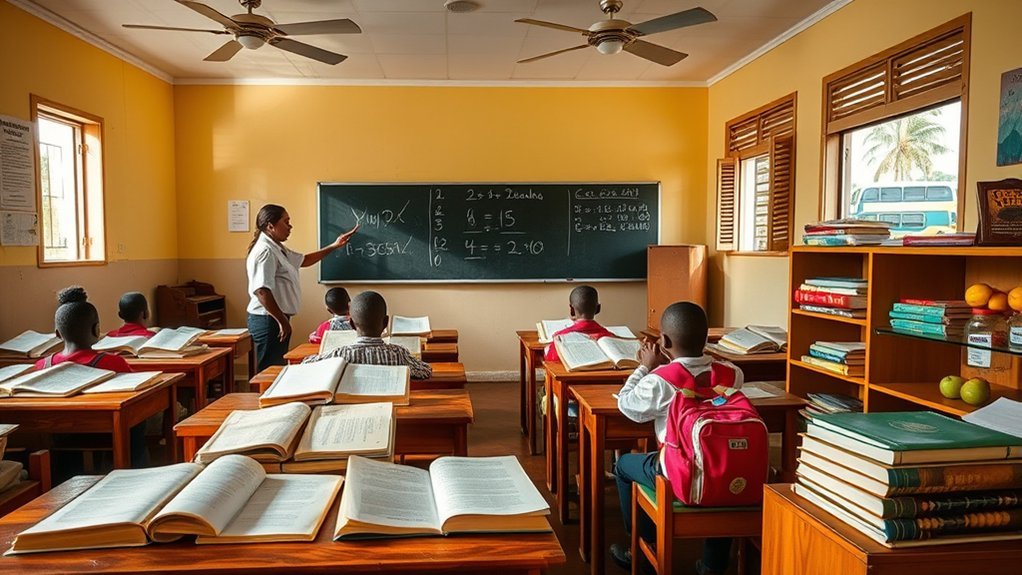
Public schools are free and teach in English. Families with children in school also receive the government’s “Because We Care” cash grant, which rose to GY$50,000 (~$240) per child, plus a GY$5,000 uniform voucher.
Private and international schools cost far more. Crowd-sourced averages put an international primary school at about GY$3.9 million (~$18,730) a year per child and a full-day private preschool at about GY$215,000 (~$1,025) a month. Fees vary widely by school, so ask each one for tuition, registration, books, and bus costs.
Salaries, Taxes, and Cash Grants

Local salaries are much lower than the costs above. The crowd-sourced average net salary in Georgetown is about GY$107,000 (~$515) a month. Oil, gas, engineering, and finance jobs pay far more, and skilled workers are in demand.
Income tax. In 2025 the monthly income tax threshold rose to GY$130,000 (~$620), which took about 22,000 workers out of the tax net, according to the Budget 2026 speech. Income above the threshold is taxed at progressive rates, and employees also pay National Insurance (NIS). Check the current bands on the Guyana Revenue Authority’s tax rates page or with a local accountant before you sign a contract.
Cash grants and pensions. The government pays a GY$100,000 cash grant to citizens aged 18 and older and a GY$100,000 grant for newborns, and the old age pension is GY$41,000 a month. These help local households but do not apply to most foreign residents.
Salary vs. Costs at a Glance
This table puts common incomes next to the budgets in this guide:
| Monthly Amount | GY$ | Approx. USD |
|---|---|---|
| Old age pension | 41,000 | $196 |
| Average net salary (crowd-sourced) | 107,381 | $513 |
| Income tax threshold | 130,000 | $621 |
| Lean single budget (this guide) | 255,600 | $1,222 |
| Comfortable single budget (this guide) | 428,600 | $2,049 |
The gap explains why many Guyanese households share housing, live with family, or rely on more than one income. It also explains why foreign hires usually negotiate a housing allowance on top of salary.
One-Time Setup Costs
Budget for these before your first month:
- Flights and work permit: employers usually handle work permits. Confirm entry rules for your passport before you travel.
- Deposit and first month’s rent: often two months of rent, more for furnished executive homes.
- Furnishing: unfurnished homes need appliances, fans or air conditioners, and water storage.
- Car: a used car is a large upfront cost but saves on taxis.
- Generator or inverter: useful if the home has none.
- Health cover: travel or international insurance until a local plan starts.
Sample Monthly Budgets
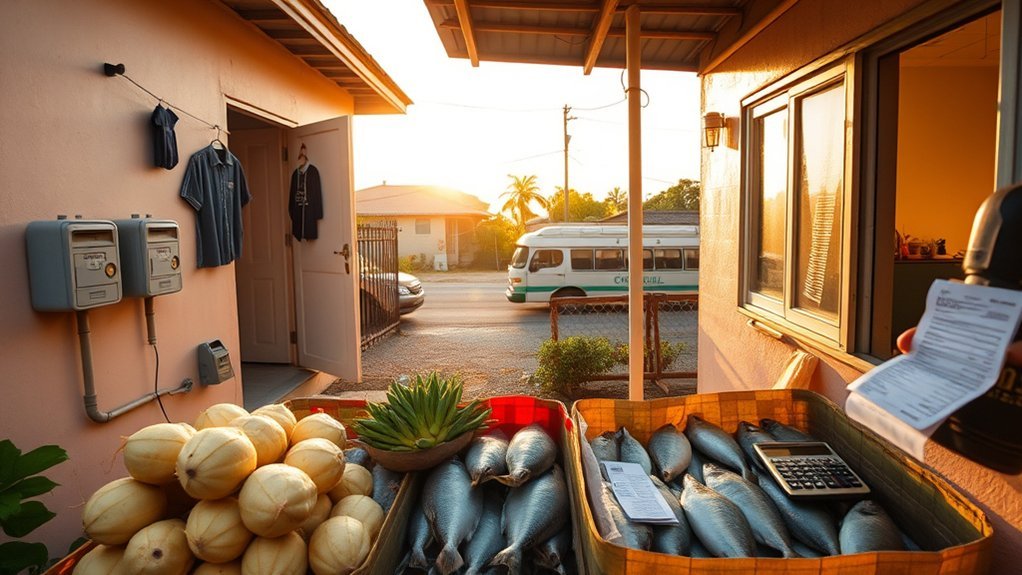
These budgets combine the averages above. Amounts are in Guyana dollars.
| Expense | Single, Lean | Single, Comfortable | Couple | Family of Four |
|---|---|---|---|---|
| Rent | 110,000 (1-bed, outside center) | 200,000 (1-bed, center) | 200,000 (1-bed, center) | 270,000 (3-bed, outside center) |
| Utilities | 20,000 | 30,000 | 35,000 | 45,000 |
| Internet + mobile | 13,600 | 13,600 | 18,000 | 18,000 |
| Groceries | 70,000 | 85,000 | 140,000 | 280,000 |
| Transport | 15,000 | 45,000 | 60,000 | 80,000 |
| Health allowance | 12,000 | 30,000 | 40,000 | 70,000 |
| Eating out + leisure | 15,000 | 25,000 | 40,000 | 60,000 |
| Household help + other | — | — | — | 40,000 |
| Total (GY$) | 255,600 | 428,600 | 533,000 | 863,000 |
| Total (USD) | ~$1,220 | ~$2,050 | ~$2,550 | ~$4,125 |
Family of four: Numbeo’s estimate for a family of four in Georgetown is about GY$768,000 (~$3,670) a month before rent. Add a three-bedroom outside the center and the total is about GY$1.04 million (~$4,970). Our leaner GY$863,000 assumes mostly local food and limited dining out. International school for two children adds roughly GY$650,000 (~$3,120) a month.
Single person: Numbeo puts one person’s costs at about GY$207,000 (~$990) before rent, which lines up with our comfortable budget once you add a central apartment.
Money-Saving Tips
- Rent in local dollars, away from the executive market. Homes marketed to oil companies are priced in US dollars and cost much more.
- Look along the East Bank or East Coast if you don’t mind the commute.
- Shop the markets for produce, fish, and rice, and buy imported items only when needed.
- Use minibuses for routine trips and agree taxi fares before you ride.
- Control air conditioning. It is the main reason power bills climb.
- Negotiate a housing allowance if you are moving for an oil or engineering job. Rents in Georgetown can eat a large share of a local-scale salary.
How Guyana Compares With Nearby Countries
Guyana now costs more than most of its neighbors for a newcomer, mainly because of Georgetown rents. Next door, our guide to the cost of living in Suriname covers Paramaribo, which has lower rents but higher inflation in recent years. Across the Caribbean, compare our Trinidad and Tobago cost breakdown and the monthly costs in Barbados, both common destinations for Guyanese travelers and patients. For a larger South American option, see what it costs to live in Brazil.
Frequently Asked Questions
How much money do you need to live in Guyana per month?
A single person needs about GY$256,000–429,000 (~$1,220–$2,050) a month in Georgetown. A couple should plan on about GY$533,000 (~$2,550), and a family of four about GY$863,000–1,040,000 (~$4,125–$4,970) before international school fees.
Is Guyana expensive to live in now?
Guyana is more expensive than it was a few years ago. The oil boom has pushed up Georgetown rents and restaurant prices, and imported food is costly. Local food, fuel, minibus fares, and rent outside the center are still moderate.
How much is rent in Georgetown, Guyana?
A one-bedroom apartment averages about GY$201,000 (~$960) a month in the center and about GY$109,000 (~$520) outside it. A three-bedroom averages about GY$692,000 (~$3,305) in the center and GY$269,000 (~$1,290) outside it.
What is the average salary in Guyana?
The crowd-sourced average net salary in Georgetown is about GY$107,000 (~$515) a month. Oil, gas, engineering, and finance jobs pay much more.
What is the exchange rate in Guyana?
On October 2, 2026, the Bank of Guyana listed cambio rates of about GY$208 to buy and GY$210 to sell one US dollar. The rate has been stable for years.
How much income is tax-free in Guyana?
Monthly income up to GY$130,000 (about $620) is not subject to income tax. The threshold was raised to that level in 2025. Income above it is taxed at progressive rates, and NIS contributions also apply.
Conclusion
Guyana’s oil boom has changed the cost of living. Georgetown rents, restaurant meals, and imported groceries now cost close to US levels, while local food, fuel, and minibus fares remain moderate. A single person can live on about $1,220 a month with local habits and an apartment outside the center, but a comfortable life in central Georgetown costs closer to $2,050, and a family of four should plan on $4,000 or more before school fees. Settle your housing first, since it drives most of the difference, and negotiate a housing allowance if you are moving for work.
Sources
- Bank of Guyana – exchange rates, October 2, 2026
- Ministry of Finance – Budget Speech 2026
- IMF – Guyana country page (2026 projections)
- Guyana Revenue Authority – income tax rates and thresholds
- World Bank – Access to electricity, Guyana
- Numbeo and LivingCost – crowd-sourced Georgetown and Guyana price averages, 2026