The cost of living in the Bahamas in 2026 runs about B$2,700–$3,900 a month for a single person in Nassau, rent included, and about B$4,540–$5,150 for a couple. A family of four should plan on roughly B$10,600–$11,400 a month before international school fees. The Bahamian dollar is pegged one-to-one to the US dollar, so every B$ figure in this guide equals the same amount in US dollars. Rent and imported goods drive the high costs. A one-bedroom in central Nassau averages about B$1,490 a month, with listings ranging from about B$750 to B$2,700. Electricity, groceries, and eating out all cost more than in most of the US mainland. There is no income tax, but a 10% VAT applies to most goods and services. Below you’ll find island-by-island rents, food and transport prices, healthcare, residence permit fees, sample budgets, and a comparison with nearby countries.
Quick Answer
- Single person, Nassau: B$2,700–$3,900 a month, rent included.
- Couple, Nassau: B$4,540–$5,150.
- Family of four, Nassau: B$10,600–$11,400, before international school fees.
- Rent, one-bedroom: about B$1,490 in central Nassau; about B$990 in Freeport.
- Utilities: about B$400 a month for an 85 m² apartment in Nassau; internet adds about B$110.
- Transit: B$2.50 per jitney (bus) ride in Nassau; B$150 for a monthly pass.
- Minimum wage: B$260 a week (B$6.50 an hour).
- Taxes: no personal income tax; 10% VAT.
Currency, Inflation, and Wages in 2026
Three numbers shape what the Bahamas costs you this year.
The currency. The Central Bank of The Bahamas keeps the Bahamian dollar at par with the US dollar: B$1 equals US$1. US cash is accepted almost everywhere, and you won’t lose money to currency swings if you earn in US dollars. If you earn in euros, pounds, or Canadian dollars, your budget will move with those currencies.
Inflation. Annual inflation was 4.3% in June 2026, down from 4.5% in May, according to Trading Economics. That is well above the 0.4% the World Bank recorded for 2024, so prices have climbed noticeably in the past two years. Most food and fuel is imported, so global shipping and oil prices pass straight through to shelves and power bills.
Wages. The national minimum wage is B$260 a week, or B$6.50 an hour, according to WageIndicator. That is about B$1,125 a month. Crowd-sourced data puts the average take-home salary at about B$2,450 a month nationally and about B$3,350 in Nassau. The Bahamas is a high-income country, with GDP per person of about $39,500 in 2024, but wages vary widely between tourism, finance, and government jobs.
A minimum-wage worker earns about B$1,125 a month, less than the average rent for a one-bedroom in central Nassau. Many local households share housing or live with family.
Cost of Living by Island
About 403,000 people live in the Bahamas, and most of them live on New Providence, the island that holds Nassau. Grand Bahama, home to Freeport, is the second-largest population center. The Family Islands (the Out Islands) are much smaller and more remote.
The table uses crowd-sourced averages updated October 2, 2026. Sample sizes are small: 11 contributors for Nassau, 5 for Freeport, and 23 nationwide. Treat these as rough guides and check current listings.
| Area | 1-Bed, City Center | 1-Bed, Outside Center | 3-Bed, City Center | Basic Utilities (85 m²) |
|---|---|---|---|---|
| Nassau (New Providence) | B$1,490 | B$2,000* | B$4,750 | B$398 |
| Freeport (Grand Bahama) | B$993 | B$924 | B$2,246 | B$273 |
| Bahamas average | B$1,086 | B$1,237 | B$3,585 | B$309 |
*In Nassau, “outside the center” often means western New Providence and gated waterfront communities, which can cost more than downtown. That is why this average sits above the city-center figure.
What to expect on each island:
- Nassau and New Providence: the most jobs, schools, hospitals, and shops, and the highest rents. Western areas such as Cable Beach and Lyford Cay are among the priciest.
- Freeport and Grand Bahama: rents run roughly a third lower than in Nassau, and utilities are cheaper. Job options are narrower, and the island is still rebuilding parts of its economy.
- Family Islands (Exuma, Abaco, Eleuthera, and others): housing can be cheaper or much more expensive depending on the resort market. Groceries, fuel, and building materials usually cost more because they arrive by boat. Reliable price data for these islands is not published.
Housing and Rent
Housing is the biggest expense for anyone renting. Nassau averages in October 2026:
| Apartment | Average Rent (B$/month) | Typical Range |
|---|---|---|
| 1-bedroom, city center | 1,490 | 750–2,700 |
| 1-bedroom, outside center | 2,000 | varies widely |
| 3-bedroom, city center | 4,750 | varies widely |
| 3-bedroom, outside center | 3,920 | varies widely |
Furnished units, ocean views, gated security, backup generators, and air conditioning all add to rent. Older apartments in central and eastern New Providence cost less.
Tips for renting:
- Ask who pays for electricity and water. Air conditioning can make power the second-largest bill after rent.
- Check for hurricane protection. Shutters, impact windows, and a generator matter from June through November.
- Look at security. Gated complexes and alarm systems are common and are reflected in the price.
- Budget for a deposit. Landlords usually ask for a security deposit plus the first month’s rent.
Buying property. Crowd-sourced data puts apartment prices at about B$500 per square foot (about B$5,380 per m²) in central Nassau and about B$300 per square foot (B$3,270 per m²) outside the center. Luxury waterfront homes cost far more. Buyers pay stamp duty, and owners pay annual real property tax. Owner-occupied homes receive a large exemption on the first part of their value.
Utilities, Internet, and Phone
Basic utilities (electricity, cooling, water, and garbage) for an 85 m² apartment average about B$398 a month in Nassau and B$273 in Freeport. Electricity is the main cost. The Bahamas generates most of its power from imported fuel, and household electricity cost about B$0.33 per kWh in mid-2025, roughly double the US average. Bills peak in summer, when air conditioning runs most of the day.
Other monthly connections in Nassau:
- Home internet (60+ Mbps): about B$110.
- Mobile plan with calls and 10+ GB of data: about B$71.
- Bottled water: many residents buy drinking water, which adds a small monthly cost.
Keep air conditioning at a steady, moderate setting and use ceiling fans. Electricity is where most newcomers overspend.
Food: Groceries and Dining Out
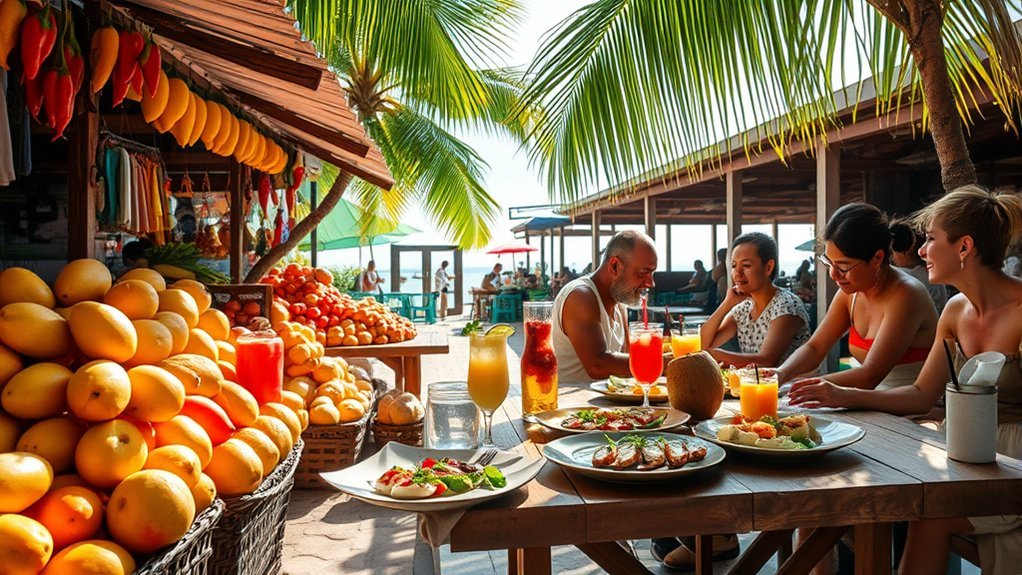
Almost all food is imported, mostly from Florida, so grocery prices run well above US levels. Unprepared food is exempt from VAT, which helps a little. A single person who cooks most meals should plan on about B$500–$600 a month for groceries.
Average Nassau prices in October 2026:
| Item | Typical Cost (B$) |
|---|---|
| Milk (1 liter) | 4.02 |
| White bread (1 lb loaf) | 5.15 |
| Rice (1 lb) | 3.14 |
| Eggs (12) | 7.63 |
| Chicken fillets (1 lb) | 8.25 |
| Beef (1 lb) | 12.26 |
| Apples (1 lb) | 2.55 |
| Mid-range bottle of wine | 34.00 |
Eating out is expensive, especially in tourist areas:
- Meal at an inexpensive restaurant: about B$39 in Nassau (B$49 national average)
- Three-course dinner for two at a mid-range restaurant: about B$200
- Fast-food combo meal: about B$12
- Cappuccino: about B$5.50
- Domestic draft beer (pint): about B$5
Local food is the better deal. Conch, fish, and peas and rice from roadside stands and local takeaways cost less than restaurant meals in the resort areas, and the Potter’s Cay dock market in Nassau sells fresh seafood and produce.
Transportation and Getting Around
Nassau has no rail system. Public transport means jitneys, privately run minibuses on set routes.
- Jitney fare: about B$2.50 per ride; a monthly pass is about B$150.
- Taxis: about B$8 to start plus about B$4.83 per mile. Fares from the airport and between resort areas add up quickly.
- Gasoline: about B$1.51 per liter in Nassau, or about B$5.72 per gallon.
- Cars: import duties make new cars expensive. A compact car costs about B$30,000 and a mid-size sedan about B$43,800.
Jitneys stop running in the evening and don’t serve every neighborhood. The UK government advises against riding local buses at night away from the main tourist areas. Most residents who can afford it own a car, and on the Family Islands a car or golf cart is close to essential.
Healthcare and Insurance
National Health Insurance (NHI). NHI Bahamas is open to all legal residents with a National Insurance (NIB) smart card. It covers primary care, including doctor visits, screenings, some lab work, and prenatal care, with no out-of-pocket cost at the visit. It does not cover dental care, vision care, or advanced treatment for conditions such as cancer, and it does not cover care outside the country.
Private care and insurance. Most expats carry private health insurance. Private hospitals and clinics in Nassau offer good care, but the US State Department notes that most providers expect payment up front, often in cash, and that US Medicare does not apply. Serious cases may need an air ambulance to Miami, which can cost tens of thousands of dollars. The UK government warns that emergency care on the Family Islands is limited.
What this means for your budget:
- Carry health insurance that covers hospital care and medical evacuation.
- Keep an emergency fund for upfront payments.
- Use NHI for routine primary care once you are a legal resident.
Schools and Childcare
School fees are a major cost for families in Nassau.
- Private preschool (full day): about B$880 a month per child in Nassau.
- International primary school: about B$16,450 a year per child in Nassau, or about B$1,370 a month. Fees rise in higher grades, and schools often charge registration and building fees.
- Public schools: free for residents, but many expat families choose private schools.
Two children in international school add about B$2,740 a month to a family budget.
Taxes: VAT and National Insurance
The Bahamas has no personal income tax, capital gains tax, or inheritance tax. The government relies on consumption, import, and property taxes instead.
- VAT: the standard rate is 10%, according to Trading Economics, and it is included in most prices. Unprepared food is exempt.
- Import duties: charged on most imported goods, which is a big reason cars, electronics, and furniture cost more than in the US.
- National Insurance (NIB): employees pay about 3.9% of insurable wages and employers about 5.9%. Self-employed people pay about 9.8%.
- Real property tax: owner-occupied homes get a large exemption on the first part of their value. Rates are higher for vacant land and non-owner-occupied property.
US citizens still owe US tax on worldwide income, so living in the Bahamas does not remove that obligation.
Visas and Residence Permits
US, Canadian, UK, and EU citizens can visit the Bahamas without a visa. US citizens can stay up to 90 days as tourists. Living there longer requires a permit. Fees from the Department of Immigration’s fee scale:
| Permit | Government Fee | Notes |
|---|---|---|
| Annual residence permit | B$3,000 a year | B$300 a year for each dependent; does not allow work |
| Permanent residence | B$15,000 | standard applicant |
| Economic permanent residence | B$20,000–$25,000 | higher fee includes the right to run a business |
| Work permit | B$500–$16,275 a year | set by job category; employer usually applies |
| Spousal permit (spouse of a Bahamian) | B$300 a year | or B$1,500 for five years |
| Processing fee | B$200 | B$400 for 14-day expedited processing |
Permit applications usually require a police certificate, medical exam, proof of funds, and proof of where you will live. Check the current list with the Department of Immigration before applying.
Safety and Hurricanes
The US State Department rates the Bahamas Level 2, “Exercise Increased Caution,” because of crime (July 2026). Most violent crime happens in parts of Nassau and Freeport, and it specifically warns about the “Over the Hill” area south of Shirley Street in Nassau and vacation rentals without security. The Family Islands have much lower crime.
Hurricane season runs from June 1 to November 30, according to the UK government’s travel advice. Budget for home and contents insurance with storm coverage, storm shutters if your rental lacks them, and an emergency supply of water and food.
First-Month Setup Costs
Plan for these one-time costs before your first full month:
- Security deposit and first month’s rent: about B$3,000 for a typical one-bedroom in central Nassau.
- Residence permit: B$3,000 for the first year plus the B$200 processing fee, and B$300 for each dependent.
- Utility connections: power and water accounts usually require a deposit.
- Car: about B$30,000 for a new compact car, or less for a used one.
- Health insurance: private or international coverage from day one.
- Hurricane supplies: water storage, flashlights, batteries, and a generator if your home lacks one.
Sample Monthly Budgets
These budgets combine the Nassau averages above. All amounts are in B$ (equal to US$) per month.
| Expense | Single, Lean | Single, Comfortable | Couple |
|---|---|---|---|
| Rent (1-bed) | 1,200 | 1,490 | 1,490–2,000 |
| Utilities | 300 | 400 | 400 |
| Internet + mobile | 180 | 180 | 250 |
| Groceries | 500 | 600 | 1,000 |
| Eating out + leisure | 150 | 450 | 600 |
| Transport | 150 (jitney pass) | 300 | 300–400 |
| Gym | — | 200 | — |
| Health and other | 200 | 300 | 500 |
| Total (B$ = US$) | 2,680 | 3,920 | 4,540–5,150 |
Family of four: crowd-sourced estimates put a family’s monthly spending at about B$6,660 before rent. Add a three-bedroom in Nassau (B$3,920 outside the center or B$4,750 in the center) and the total is about B$10,600–$11,400. Two children in international school push that to roughly B$13,300–$14,100.
Freeport: with one-bedroom rents near B$990 and utilities near B$275, a single person can save roughly B$600–$650 a month compared with Nassau on housing and power alone.
Salary Versus Cost of Living
The Bahamas is costly for residents on local pay. Here is how common incomes compare with the budgets above:
| Income | Monthly (B$) | What It Covers in Nassau |
|---|---|---|
| Minimum wage (B$260 a week) | about 1,125 | less than a central one-bedroom; needs shared housing |
| Average take-home pay, national | about 2,450 | below the lean single budget |
| Average take-home pay, Nassau | about 3,350 | a lean to moderate single budget |
| Comfortable single budget | about 3,900 | above the average Nassau salary |
For retirees and remote workers with US-dollar income, the lack of income tax and the fixed currency help. The high cost of housing, power, and food still means a comfortable life in Nassau usually needs at least B$3,500–$4,000 a month for one person.
Money-Saving Tips
- Consider Grand Bahama. Freeport rents and utilities run well below Nassau’s.
- Control air conditioning. Power at around B$0.33 per kWh makes cooling the biggest bill you can manage.
- Buy local food. Fish, conch, and local produce from markets and stands cost less than imported supermarket goods.
- Cook at home. An inexpensive restaurant meal costs B$39–$49, so daily eating out adds up fast.
- Buy a used car. Import duties make new cars expensive, and used cars hold their value better.
- Get storm-ready early. Buying hurricane supplies before June avoids pre-storm price spikes and shortages.
How the Bahamas Compares With Nearby Countries
The Bahamas is one of the most expensive places to live in the Caribbean. The table compares crowd-sourced averages for each capital or main city, updated in early October 2026 and shown in US dollars.
| City | Single Person, Excluding Rent | 1-Bed, City Center |
|---|---|---|
| Nassau, Bahamas | ~$1,830 (national) | ~$1,490 |
| Miami, United States | ~$1,456 | ~$2,765 |
| Bridgetown, Barbados | not published | ~$1,185 |
| Kingston, Jamaica | ~$1,037 | ~$965 |
| Santo Domingo, Dominican Republic | ~$652 | ~$730 |
Daily costs in the Bahamas are higher than in Miami, though Miami rents are higher. For cheaper island living, see our guides to the cost of living in Jamaica and the Dominican Republic cost of living guide. Our look at living costs in Cuba covers the Bahamas’ nearest large neighbor. In the Eastern Caribbean, compare what it costs to live in Barbados and our Antigua and Barbuda expense breakdown.
Frequently Asked Questions
How much money do you need to live in the Bahamas per month?
A single person in Nassau needs about B$2,700–$3,900 a month, rent included, depending on lifestyle. A couple should budget about B$4,540–$5,150, and a family of four about B$10,600–$11,400 before international school fees. B$1 equals US$1.
Is the Bahamas more expensive than the United States?
For most everyday costs, yes. Groceries, restaurant meals, electricity, and internet cost more than in most US cities because almost everything is imported. Rent in Nassau is lower than in Miami but higher than in many smaller US cities.
How much is rent in Nassau in 2026?
A one-bedroom in central Nassau averages about B$1,490 a month, with listings from about B$750 to B$2,700. A three-bedroom averages about B$4,750 in the center and B$3,920 outside it. Freeport is cheaper, with one-bedrooms near B$990.
Does the Bahamas have income tax?
No. The Bahamas has no personal income tax, capital gains tax, or inheritance tax. It charges a 10% VAT on most goods and services, import duties, real property tax, and National Insurance contributions on wages. US citizens still owe US tax on worldwide income.
What is the minimum wage in the Bahamas?
The minimum wage is B$260 a week, or B$6.50 an hour, which works out to about B$1,125 a month.
How much does it cost to get residency in the Bahamas?
An annual residence permit costs B$3,000 a year plus a B$200 processing fee, with B$300 a year for each dependent. Permanent residence costs B$15,000 for a standard applicant, and economic permanent residence costs B$20,000–$25,000. Work permits range from B$500 to B$16,275 a year.
Conclusion
The Bahamas is an expensive place to live, but it offers no income tax, a currency pegged to the US dollar, and quick access to Florida. A single person needs about B$2,700–$3,900 a month in Nassau, and families with children in private school can spend well over B$13,000. Rent, electricity, and imported food drive most of the cost. Freeport and the Family Islands can be cheaper for housing, but services are thinner. Price your exact island and neighborhood first, budget for hurricane season and health insurance, and check permit fees before you commit.
Sources
- Central Bank of The Bahamas – exchange rates
- Trading Economics – Bahamas inflation, June 2026
- Trading Economics – Bahamas VAT rate
- WageIndicator – Bahamas minimum wage
- World Bank – The Bahamas country data
- Numbeo – Nassau, Freeport, and Bahamas crowd-sourced prices, October 2026
- NHI Bahamas – frequently asked questions
- Department of Immigration – fee scale
- US State Department – The Bahamas country information
- UK FCDO – Bahamas safety and security