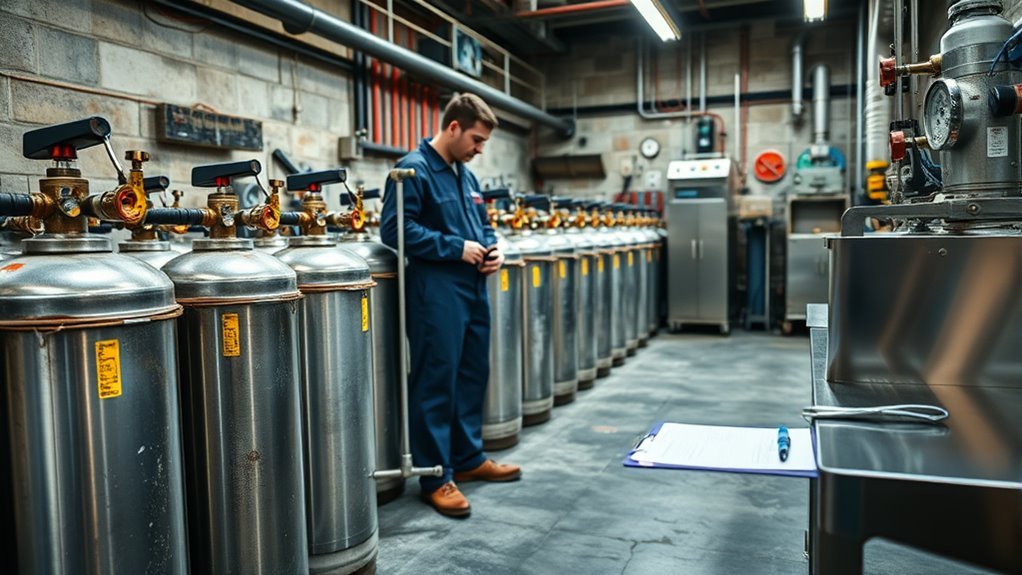
Welding gas cylinder recertification cost is usually far below the price of replacing a serviceable cylinder, but the final price depends on the cylinder specification, testing method, valve condition, finish, and local provider. Two published provider examples list $40 for ultrasonic examination and $60 for hydrostatic testing, so budgeting roughly $40–$60 before repairs, painting, refilling, or disposal is a reasonable starting point.
Quick Answer
Plan to spend $40–$60 to recertify a typical steel or aluminum welding gas cylinder (Argon, C25, Oxygen, or CO2) via hydrostatic or ultrasonic testing. If your cylinder requires valve replacement, internal cleaning, shot blasting, or a gas refill, expect an all-in total of roughly $75–$130 (a rough estimate, not a quoted price). Requalification intervals run every 5 or 10 years depending on DOT specification, service pressure, and star (*) markings.
Key Takeaways
- Published provider examples include $40 per cylinder for ultrasonic examination (UE) at Conroe Welding Supply and a $60 hydrostatic test fee at Phoenix Welding Supply.
- Common DOT 3AA steel and DOT 3AL aluminum cylinders require requalification every 5 years, though eligible DOT 3A/3AA cylinders with a stamped star (★) qualify for a 10-year interval.
- A stamped plus sign (+) authorizes a 10% overfill above marked service pressure; it does not extend the retest duration.
- DOT-8 and DOT-8AL acetylene tanks follow specialized visual and porous-filler inspection rules rather than standard hydrostatic expansion testing.
- Always verify that a testing facility holds an active Requalifier Identification Number (RIN) via the PHMSA portal.
- Never vent, grind, cut, weld, drill, or perform homemade pressure tests on any compressed gas cylinder.
At a Glance
| Time Required | Drop-off is usually quick. Turnaround depends on the provider and on whether testing is done in-house or sent to an off-site facility, so ask for a date. |
| Difficulty | Easy for the owner to arrange; testing, evaluation, and DOT stamping must be completed by a certified RIN holder. |
| Tools Needed | Threaded valve-protection cap, vertical vehicle transport restraints, and clear cylinder ownership records. |
| Cost | $40–$60 for standalone testing; $75–$130+ when adding valve maintenance, refinishing, and fresh gas refill (rough estimates). |
How Hydrostatic Testing Works for Welding Tanks
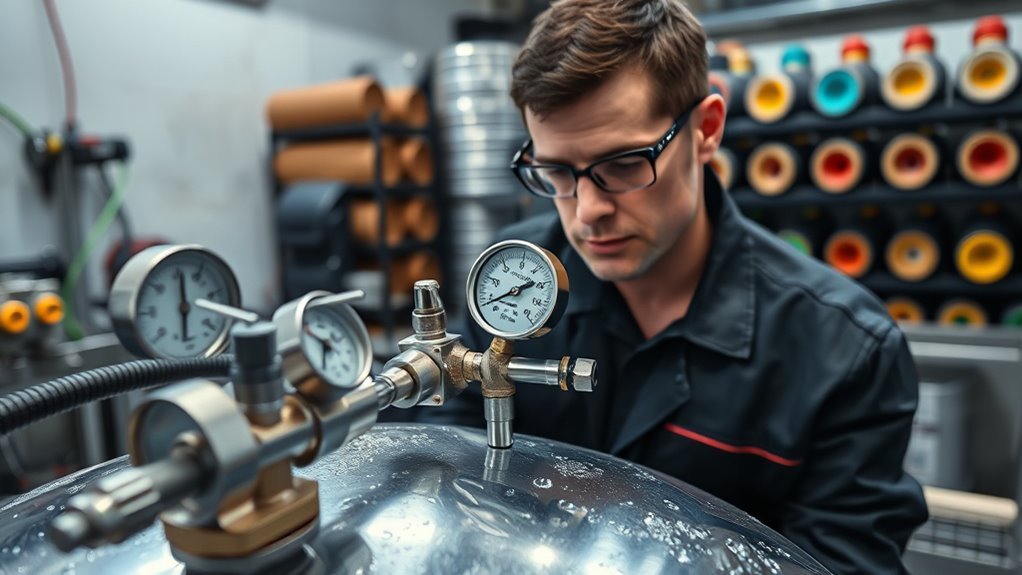
Hydrostatic testing checks whether a compressed gas cylinder can safely withstand its required test pressure without wall leakage or excessive permanent expansion. It is a comprehensive structural elasticity verification, not a simple leak check.
Under the 49 CFR §180.209 requalification table, common DOT 3A, 3AA, and 3AL steel and aluminum cylinders are hydrostatically tested at a minimum of five-thirds (5/3) of their stamped service pressure (for example, a 2,015 psi cylinder is pressurized to at least 3,360 psi). Select specifications also permit ultrasonic examination (UE) as a dry, non-destructive alternative.
- Identification: The technician records the DOT specification, serial number, stamped service pressure, original manufacture date, and prior test markings.
- External Visual Inspection: The shell is examined for structural dents, cuts, gouges, bulges, arc burns, corrosion pitting, heat damage, and unauthorized weld repairs.
- Preparation & Degassing: Certified personnel safely evacuate residual gas and remove the valve. The cylinder owner must never vent or disassemble the valve assembly at home.
- Internal Inspection: An internal inspection light and borescope check the interior walls for moisture damage, pitting, scale, and neck-thread cracking.
- Water-Jacket Pressure Test: The cylinder is filled with water, sealed in a water-filled test jacket, and pressurized to 5/3 service pressure. Total expansion is measured via water displacement in a calibrated burette tube.
- Elastic vs. Permanent Expansion Evaluation: When pressure is released, the cylinder contracts. If permanent expansion exceeds the allowable rejection threshold (typically 10% of total expansion for DOT-3AA), the cylinder is condemned.
- Bake Drying & Reassembly: Passing cylinders are inverted, thoroughly heated and dried with dry air, fitted with a rebuilt or new valve, and torqued to specification.
- Permanent Stamp Marking: The requalifier hand-stamps or roll-marks the test month, their Requalifier Identification Number (RIN), the 2-digit year, and any authorized modifier symbols (such as a star or plus sign).
For standard DOT 3AA steel and 3AL aluminum welding cylinders, the hydrostatic test pressure is generally five-thirds (1.67x) of marked service pressure—not a generic 1.5x rule.
A passing cylinder receives permanent stamp markings on its shoulder or collar. Requalifiers are legally required to retain certified test logs detailing elastic expansion, permanent expansion, test pressure, and pass/fail determinations.
Warning: Never perform a homemade pressure test or drill, cut, weld, grind, heat, or intentionally vent a compressed gas cylinder. Stored energy and residual flammable, oxidizing, or inert gases present severe explosion and asphyxiation hazards even when a pressure gauge reads zero.
Welding Gas Cylinder Recertification Cost: Typical Fees and Price Ranges
Because there is no federally regulated retail pricing for cylinder recertification, rates are established independently by local gas distributors, welding supply companies, and independent hydro-test facilities.
Two published provider examples show the range: Conroe Welding Supply lists ultrasonic examination at $40 per cylinder, while Phoenix Welding Supply lists a $60 hydrostatic test fee per cylinder for out-of-date cylinders. Prices vary by provider and region, so $40–$60 is a rough starting point for uncomplicated testing, not a national average.
| Service Component | Typical Cost | Scope / Notes |
| Hydrostatic Expansion Test | $40 – $60 | Standard volumetric water-jacket test and DOT stamp. |
| Ultrasonic Examination (UE) | $40 (one published example) | Dry, non-destructive test where the cylinder specification allows it. |
| CGA Valve Rebuild / Replacement | $25 – $45 | Required if valve threads, burst disc, or stem fail inspection. |
| Internal Cleaning & Shot Blasting | $15 – $30 | Applies to heavily oxidized, contaminated, or weathered shells. |
| Failed / Condemnation Processing | $15 – $35 | Labor fee applied even if tank fails expansion criteria. |
| Complete Retest + Gas Refill Bundle | $75 – $135 | Combines test, valve check, and fresh gas fill (Argon/C25/CO2). |
Only the $40 ultrasonic example (Conroe Welding Supply) and the $60 hydrostatic fee (Phoenix Welding Supply) come from named provider pages. The other rows are rough planning estimates, so get a written quote before you commit.
Your total out-of-pocket invoice will increase when the service requires:
- CGA valve stem rebuilding or replacement (CGA 580 for Argon/Helium/Nitrogen, CGA 320 for CO2, CGA 540 for Oxygen, CGA 510/300 for Acetylene)
- Safe recovery and disposal of hazardous or unidentified remaining contents
- Internal tumble-cleaning, de-scaling, or drying
- Exterior shot blasting, color repainting, and hazard stenciling
- Freight or courier delivery fees if the local welding shop sends tanks to an off-site regional test plant
- Post-test gas refilling or instant tank exchange
Pro Tip: Request an itemized “out-the-door” quote before handing over your tank. Specifically confirm whether the testing fee is due if the cylinder fails, and ask whether the valve replacement cost includes the CGA pressure-relief assembly.
Which Tanks Require Retesting and When
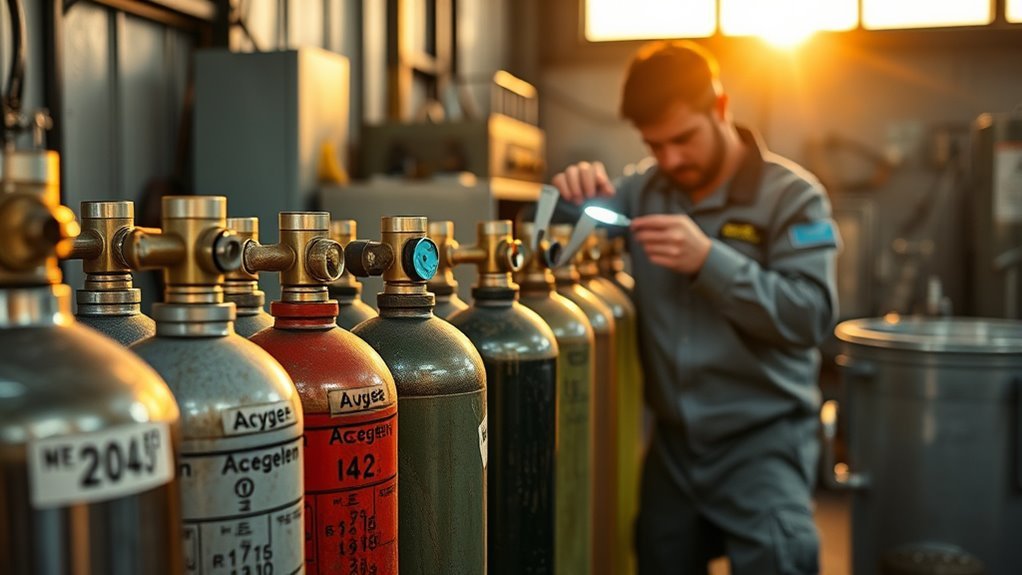
The type of gas inside does not establish the retest interval by itself. The legal retest cycle is governed by the permanent DOT specification stamped into the shoulder or collar of the vessel.
Under 49 CFR §180.205, a compressed gas cylinder must be requalified before it can be refilled and transported in commerce. Crucially, a cylinder filled prior to its expiration date remains 100% legal to keep, use, and transport until it is empty. The retest requirement activates only when you bring the empty bottle in for a refill.
Physical damage mandates immediate re-inspection regardless of the stamp date. Immediate disqualifiers include deep gouges, corrosion pitting, torch burns, arc strikes, bulges, fire exposure, or leaking neck threads.
Note: Steel welding cylinders do not possess a mandatory 50-year federal expiration date. A DOT-3AA cylinder manufactured in 1945 remains fully legal for commercial refill as long as it passes visual and hydrostatic expansion tests. However, individual gas distributors maintain the right to enforce private fleet acceptance limits.
Recertification Intervals for Different Cylinder Types
Retest frequencies depend on cylinder metallurgy and DOT construction specifications:
| Cylinder Specification & Gas Service | Standard Interval | Regulatory Conditions & Key Details |
| DOT 3A / 3AA Steel (Argon, C25, Nitrogen, Oxygen, CO2) |
5 Years (10 Years with Star ★) |
Qualifies for a 10-year retest interval under 49 CFR §180.209(b) if stamped with a 5-point star (★), indicating compliance with wall-stress, non-corrosive gas, and internal inspection rules. |
| DOT 3AL Aluminum (Argon, CO2, Specialty Shielding Mixes) |
5 Years | Requires 5-year water-jacket expansion testing. Aluminum cylinders do not qualify for 10-year star markings. The §180.209 table also lists a 12-year option for DOT 3AL under specific conditions, and 6351-T6 aluminum cylinders in SCUBA, SCBA, or oxygen service need an extra sustained-load-cracking inspection under 49 CFR §180.205(f). |
| DOT 8 / 8AL Steel (Dissolved Acetylene Service) |
10 Years (Visual/Shell) Special Filler Rules |
Acetylene tanks contain porous calcium-silicate mass and solvent (acetone). They are evaluated via external visual inspection and porous filler checks (FS), not volumetric hydrostatic testing. The §180.209 table lists 10 or 20 years for DOT 8 and 8AL depending on conditions. |
| DOT Special Permit (SP / E) (Carbon Fiber / Composite Wrap) |
Set by permit (check the permit) |
Governed by the active PHMSA special permit document, which sets the interval and any maximum service life. Check the permit for the exact terms. |
For DOT 3A and 3AA cylinders, a ten-year star interval is only granted if the cylinder meets strict regulatory conditions (noncorrosive gas service, moisture-free drying, and dedicated testing procedures). A star mark is cylinder-specific and not an automatic blanket exemption.
Reading Test Stamps and Certification Dates
Permanent requalification markings are stamped on the shoulder, neck collar, or top dome of the tank. Under 49 CFR §180.213, a standard requalification mark places the test month first, followed by the facility’s unique RIN in a square pattern, and finishes with the 2-digit test year.
For example, a cylinder tested in September 2026 by a facility with RIN “A123” appears as:
- 9 = Month of test (September)
- A 1 / 2 3 = RIN stamped in a square pattern
- 26 = Year of test (2026)
- ★ (Five-point star): Designates an approved 10-year retest interval (valid until September 2036).
- + (Plus sign): Designates that the steel cylinder may be overfilled by 10% above stamped service pressure (e.g., a 2015 psi cylinder can be filled to 2216 psi). A plus sign does not extend test duration.
- E: Five-year external visual inspection under 49 CFR §180.209(g).
- S: Proof-pressure test method designation.
- FS: DOT-8 acetylene cylinder shell and porous filler inspection passed.
- UE: Ultrasonic examination used in place of hydrostatic water-jacket testing.
Never rely on stick-on adhesive labels, collar collar tags, or paint codes to establish test validity. Always read the permanent metal stamped markings.
Where to Get Your Tank Recertified
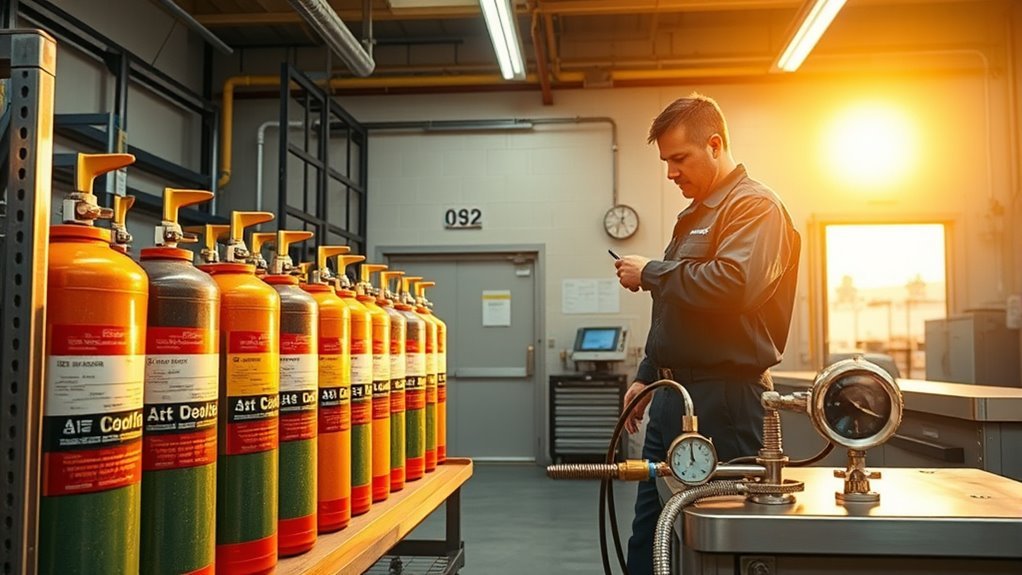
Valid requalification can be performed by industrial gas suppliers (such as Airgas, Praxair/Linde, Matheson, or independent local welding distributors), commercial fire-suppression service shops, and dedicated DOT hydro-testing facilities.
To verify if a facility is legally authorized, check the PHMSA Cylinder Requalifiers Portal and search the official PHMSA RIN/VIN Locator. This database verifies whether a facility’s registration is active and lists the specific cylinder specifications and test methods (Hydrostatic, UE, Visual) they are licensed to perform.
When calling local providers, ask these key screening questions:
- Do you hold an active DOT RIN for this specific cylinder specification (e.g., DOT 3AA or 3AL)?
- Is hydrostatic/ultrasonic testing completed in-house, or do you batch-ship cylinders to a regional plant?
- What is the total fee, and what is your policy if the cylinder fails expansion limits?
- Do you require the tank to be dropped off with residual pressure, or should it be completely empty?
- Does your quoted price include valve inspection, cleaning, burst-disc servicing, or painting?
- What is the expected turnaround time for customer-owned cylinders?
- Will you return my exact cylinder, or will it be converted into your exchange pool?
How to Prepare and Transport a Cylinder for Testing
Never attempt to empty, de-valve, or modify a cylinder prior to transport unless given specific instructions by your certified testing provider. Compressed gas cylinders must be handled in strict accordance with OSHA 29 CFR §1926.350 safety standards.
- Photo Documentation: Take clear photos of all shoulder markings, serial numbers, DOT specs, and ownership collars before leaving the tank at a facility.
- Valve Caps: Ensure the threaded steel valve-protection cap is hand-tightened completely over the valve assembly.
- Remove Regulators: Disconnect flowmeters, regulators, torches, and hoses before transport.
- Vertical Orientation: Secure cylinders vertically in an upright position using ratchet straps, chains, or purpose-built cylinder racks. Never let cylinders roll loose in a truck bed.
- Ventilation: Transport cylinders in open-bed pickup trucks or service trailers whenever possible. If hauling inside an enclosed vehicle, ensure adequate cross-ventilation and never leave tanks in direct sunlight or closed hot vehicles.
- Segregation: Keep fuel gases (Acetylene/Propane) separated from oxidizing gases (Oxygen) during transit.
Ownership, Exchanges, and Deposit Policies
Understanding cylinder ownership is vital before paying for recertification. Gas distributors classify cylinders into two categories: Customer-Owned (“Customer-Owned Bottles” or COBs) and Distributor-Owned (Leased/Rented Fleet).
If a cylinder’s neck ring carries a stamped company name (e.g., “Airgas,” “Linde,” “Matheson,” or “National Welders”), the cylinder is proprietary fleet property. Third-party requalifiers and fillers generally need the owner’s authorization before testing or filling proprietary cylinders. Never purchase or attempt to recertify a cylinder with proprietary corporate shoulder stamps unless accompanied by a signed bill of sale or proof of release.
For customer-owned cylinders (plain neck rings or stamped “Customer Owned”), retain your purchase receipt. While private suppliers cannot confiscate legally owned COBs, they reserve the right to decline fills based on non-standard valves, cylinder size limitations, or internal fleet liability policies.
Cost-Saving Alternatives: Exchanging, Buying New, or Scrapping
Recertifying an existing tank is not always the most economical path. Evaluate whether recertification, exchange, or replacement offers the lowest overall cost and fastest turnaround. For related prices, see our guides to welding gas cylinder cost, welding gas refill cost, and welding gas bottle rental cost.
Exchange vs. Recertify
Choose Recertification ($40–$60 + refill) when:
- You have indisputable ownership of a clean, premium cylinder and want to retain your exact bottle.
- You own an aluminum, specialty, or customized cylinder that an exchange program would downgrade.
- The total cost of testing and filling ($75–$125) remains far below buying a new replacement.
Choose a Supplier Exchange (exchange fee plus gas fill; the amount varies by supplier) when:
- You need immediate gas and cannot wait for off-site hydro testing.
- Your local welding supply branch accepts out-of-date customer bottles into their exchange fleet (some charge a separate hydro exchange fee; others absorb it into gas pricing).
- You want to eliminate future retest liability by shifting cylinder maintenance to the distributor’s fleet.
Buy New vs. Scrapping
The Economic Breakeven Framework: A brand-new customer-owned welding cylinder (80–125 cu ft) costs between $200 and $350 filled. A recertification, valve replacement, and refill package averages $90 to $130. If your existing cylinder requires extensive rust removal, a new CGA valve, and neck-thread repairs that exceed $150, purchasing a new cylinder with a fresh 10-year stamp provides superior value. These cylinder, valve, and repair figures are rough planning estimates rather than quotes, so compare local prices first.
If a cylinder fails testing, do not attempt to scrap it with standard household metal recyclers. Scrap yards will reject pressurized vessels unless they have been professionally de-valved and rendered incapable of holding pressure. Authorize the certified RIN test facility to safely condemn and recycle the scrap metal.
What Happens If a Cylinder Fails Requalification?
Under DOT 49 CFR §180.205, tested cylinders receive one of three regulatory determinations:
- Approved: The cylinder passes visual, internal, and hydrostatic expansion metrics. It receives a fresh stamp and returns to active commercial service.
- Rejected: The cylinder fails a repairable item (such as damaged external paint, minor valve thread wear, or removable surface contamination). It may be re-inspected after authorized servicing.
- Condemned: The vessel exhibits excessive permanent expansion, wall thinning below minimum design thickness, structural cracks, arc burns, or internal pitting. The facility must permanently mark the cylinder as CONDEMNED (by stamping or defacing threads) and issue written notification to the owner. Condemned cylinders can never return to compressed hazardous materials service.
Frequently Asked Questions
Can welding tank recertification affect my business insurance premiums?
Maintaining active hydrostatic recertification records ensures commercial liability compliance and prevents claims denials related to compressed gas incidents. While recertification does not automatically reduce standard premiums, operating expired or non-compliant pressure vessels can void coverage during a fire or workshop accident.
Do welding suppliers charge for testing customer-owned tanks during an exchange?
Policies vary by supplier. Some industrial gas distributors absorb out-of-date recertification costs into their standard exchange fees, while others apply a separate recertification surcharge when swapping an expired customer-owned bottle.
Is transportation or shipping included in the recertification fee?
No. A $40–$60 recertification quote typically covers testing at the facility only. Route pickups, commercial hazardous materials shipping, or third-party transfer fees are usually extra and vary by provider, so ask for the amount in writing.
Are there disposal fees if my welding tank fails inspection?
Yes. Many facilities charge a condemnation and disposal fee (the amount varies, so ask first) to cover residual gas evacuation, valve removal, cylinder defacing, and scrap material handling when a tank fails testing.
Does a cylinder recertification stamp transfer if I sell the tank?
Yes. The permanent stamped requalification date remains legally valid for the physical cylinder regardless of ownership transfers, provided the cylinder maintains legible markings and suffers no physical damage.
Can I legally use a welding cylinder after its retest date has passed?
Yes. Under 49 CFR §180.205(c), a cylinder filled prior to its retest expiration date may remain in service until empty. However, once emptied, it cannot be legally refilled or transported in commerce until it has been requalified.
How long does welding cylinder hydrostatic testing take?
Turnaround depends on the provider. The provider pages cited in this article do not list turnaround times, so ask for a date when you drop off. In-house testing is usually faster than batch-shipping cylinders to a regional test plant.
Can I perform hydrostatic testing on a welding cylinder at home?
No. Federal DOT requalification requires calibrated water-jacket testing equipment, documented expansion metrics, and a licensed RIN stamp. DIY pressure testing is illegal for commercial refill and creates severe explosion risks.
Conclusion
Budgeting roughly $40–$60 covers standard hydrostatic or ultrasonic testing for a typical customer-owned welding cylinder, with total costs reaching roughly $75–$130 when bundling valve servicing, shot blasting, and a gas refill. Always check the permanent shoulder stamp to determine whether your cylinder operates on a 5-year or 10-year (★) retest cycle.
Recertification provides the greatest economic value when you own a sound cylinder and want to keep your specific bottle. For fast turnaround, standard supplier exchange programs eliminate downtime, while purchasing a new cylinder (roughly $200–$350) is the best choice when repair fees exceed the economic breakeven threshold. Use the PHMSA RIN Locator to choose an approved testing facility and transport all compressed cylinders vertically and securely.
Sources
- 49 CFR §180.205 — General Requirements for Cylinder Requalification — Legal requirements for due dates, inspection triggers, rejection, condemnation, and commercial transport.
- 49 CFR §180.209 — Requalification Requirements and Intervals — Prescribed test pressures (5/3 rule), 10-year star allowances, and DOT 3AA, 3AL, and DOT-8 inspection tables.
- 49 CFR §180.213 — Requalification Markings — Federal formatting specifications for month, year, RIN, star (★), plus (+), FS, and UE symbols.
- PHMSA Cylinder Requalifiers Portal — Official regulatory approval processes and public access to the active RIN/VIN database.
- OSHA 29 CFR §1926.350 — Gas Welding and Cutting — Workplace safety standards for valve protection caps, vertical vehicle transit restraints, and cylinder segregation.
- Phoenix Welding Supply Cylinder Testing Pricing — Published hydrostatic test fee for out-of-date cylinders.
- Conroe Welding Supply Testing Services — Published price for ultrasonic examination (UE) testing.