By Logan Barrett
Last updated: August 10, 2026. Public dealer pricing and Miller specifications were rechecked.
As of August 10, 2026, public U.S. dealer listings for the Miller OptX 2kW Complete Package (951000109) are about $47,048 to $53,986.96. That is the handheld 2,000 W laser package with the wire feeder, torch, hardware, and accessory kit—not a complete enclosed cell. Miller also sells the Ready-to-Weld OptX 2kW with 8 ft x 8 ft Class 1 enclosure (951000240), but the current price is quote-based in current manufacturer and dealer sources. Do not confuse that enclosed handheld package with a custom robotic laser welding cell, which requires separate integration pricing.
Quick Answer
Budget roughly $47,000–$54,000 for the publicly listed Miller OptX 2kW handheld package before local taxes, freight, facility work, or extra equipment. For Miller’s ready-to-weld 8 ft x 8 ft enclosed package, request a current written quote. Compare quote scope carefully: the welder package, enclosure, electrical work, extraction, fixtures, installation, training, service, and any automation may be priced separately.
| Miller configuration | Stock number | Current price signal | What it includes |
|---|---|---|---|
| Miller OptX 2kW Complete Package | 951000109 | $47,048–$53,986.96 in public dealer listings checked August 10, 2026 | 2kW handheld welder, wire feeder, torch, hardware kit, and accessory kit; enclosure not included |
| Ready-to-Weld OptX 2kW with 8 ft x 8 ft enclosure | 951000240 | Request current quote | OptX 2kW package plus Miller’s 8 ft x 8 ft Class 1 enclosure |
Key Takeaways
- The OptX 2kW Complete Package is a handheld laser system; the ready-to-weld 951000240 package adds Miller’s 8 ft x 8 ft Class 1 enclosure.
- Miller lists the OptX 2kW at 2,000 W, 1070 nm, 240 V single-phase, with sheet-metal welding capability up to 5/16 in.
- Public dealer prices for stock 951000109 are currently around $47,000–$54,000, but availability and selling price can change.
- For total ownership cost, include facility work, extraction, shielding gas, optics, nozzles, PPE, service, fixtures, and downtime. See our laser welding cost calculation guide for per-hour and per-part budgeting.
- Get a written quote for stock 951000240 and any automation so you can compare equal scopes.
What’s in This Article
- Understanding Laser Welding Technology
- Key Features of the Miller OptX 2kW
- Factors Influencing the Cost of Laser Welding Cells
- Comparison of Miller OptX With Other Laser Welders
- Customization Options and Their Impact on Price
- Financing Options for Purchasing a Laser Welder
- Cost-Benefit Analysis of Investing in Laser Welding
- Maintenance and Operating Costs to Consider
- Future Trends in Laser Welding Technology
- Where to Purchase the Miller OptX 2kW
- Frequently Asked Questions
- Conclusion
Understanding Laser Welding Technology
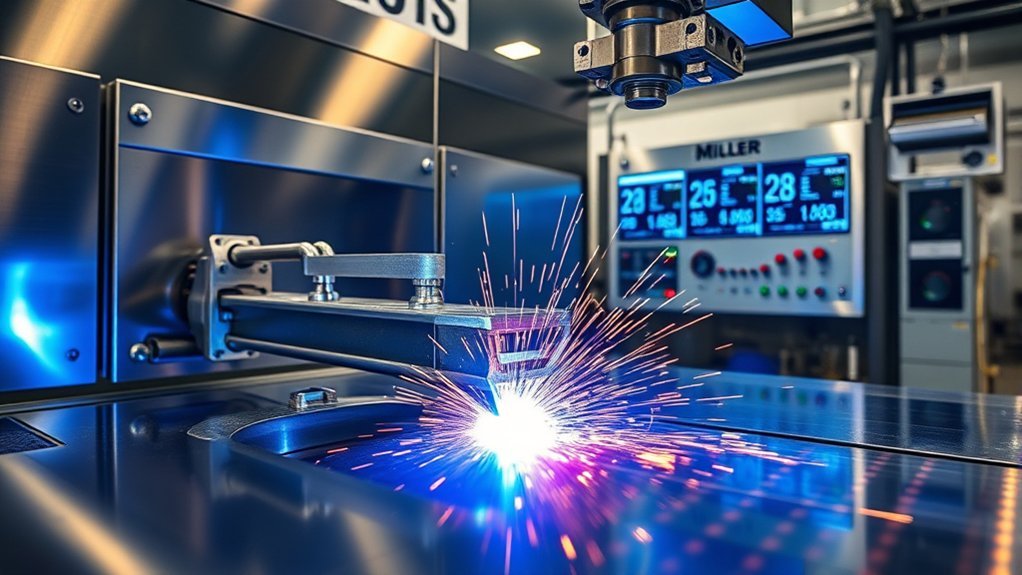
Laser welding uses a concentrated beam to join metal with a narrow heat-affected zone. On suitable sheet-metal joints, that can reduce distortion and post-weld finishing compared with processes that put more heat into the surrounding material.
Miller’s current OptX 2kW specifications list 2,000 W output at 1070 nm, 240 V single-phase input, a 30 ft torch, and a 5–80 IPM wire-feed range. Miller rates the system for sheet-metal welding up to 5/16 in., but the usable thickness depends on material, joint type, fit-up, filler use, shielding gas, and the selected program.
The OptX supports spot, autogenous, and wire welding plus a cleaning function. Treat manufacturer speed claims as application-dependent: Miller says the system can weld up to four times faster than TIG, but your actual cycle time should be proven on representative parts before purchase.
Warning: High-power laser work requires wavelength-appropriate eye protection, controlled access, training, and engineering controls. OSHA notes that Class 4 industrial lasers can present immediate eye and skin hazards from direct or reflected beams and may also present a fire hazard. Follow Miller’s safety and activation procedures and your facility’s laser-safety program.
Key Features of the Miller OptX 2kW
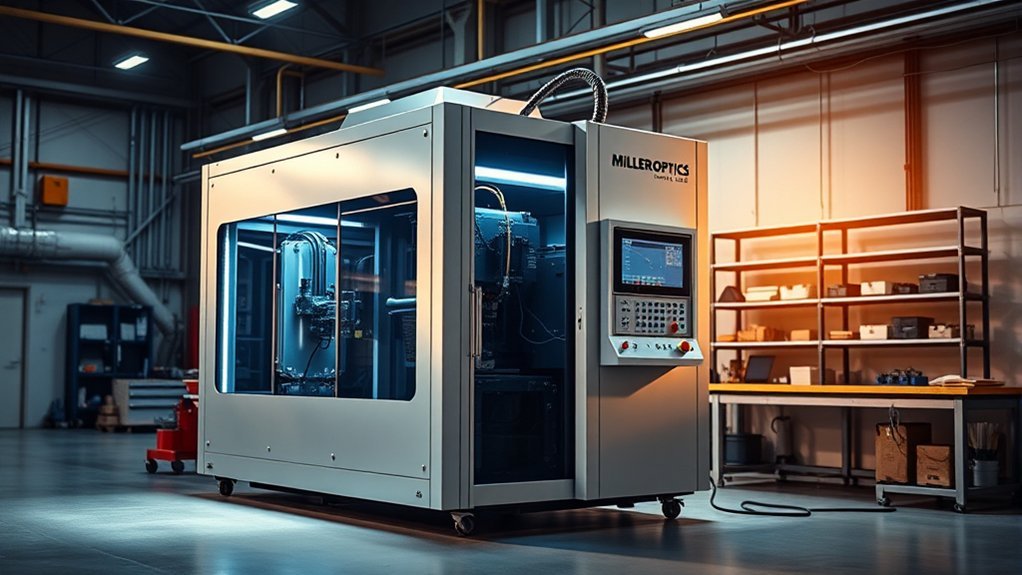
The Miller OptX 2kW is a handheld fiber-laser welding and cleaning system aimed at sheet-metal production. The current complete package includes the OptX 2kW welder, wire feeder, laser torch, a hardware kit, and an accessory kit with laser PPE, nozzles, protective windows, contact tips, and setup components.
The buying decision is not only about the 2,000 W rating. The larger questions are whether your parts fit the process window, whether your facility can support the required safety controls, and whether the included wire feeder, presets, service network, and enclosure options reduce setup time enough to justify the premium over lower-cost handheld systems.
Advanced Laser Technology
Miller specifies a 1070 nm fiber-laser system with 2,000 W output, pre-built programs, and controls for welding and cleaning. The 951000109 package runs from 240 V single-phase input; the wire feeder uses 120 V input.
Miller lists sheet-metal capability up to 5/16 in. and supports steel, stainless, aluminum, and other metals depending on the application. Confirm the exact joint, material grade, thickness, and shielding gas through an application test rather than treating the maximum thickness as a universal rating.
For shops that want a defined enclosure package, Miller’s stock 951000240 combines the 2kW system with an 8 ft x 8 ft Class 1 enclosure rated to 2,500 W/cm².
Versatile Welding Applications
The OptX 2kW is best suited to repeatable sheet-metal work where tight fit-up, lower distortion, and reduced finishing can improve throughput. Its built-in welding and cleaning programs support:
- Autogenous welding where the joint can be fused without filler wire.
- Wire-assisted welding when the joint needs filler metal or gap support.
- Spot welding and laser cleaning functions supported by Miller presets.
Integrated hardware does not replace a site-specific laser safety plan. Review controlled-area access, enclosure/interlock requirements, ventilation or extraction, laser-rated PPE, operator training, and maintenance procedures before installation.
What Changes the Cost of a Miller Laser Welding Cell?

The first cost driver is which Miller package you are actually buying. Stock 951000109 is the handheld 2kW complete package. Stock 951000240 adds Miller’s 8 ft x 8 ft Class 1 enclosure. A custom robotic cell is a different project again and may require a robot, positioner, guarding, sensors, programming, integration, and acceptance testing from an integrator.
After the base package, the largest quote differences usually come from facility and production requirements: electrical work, fume or particulate extraction, shielding-gas delivery, fixtures, material handling, additional enclosure panels, safety interlocks, training, installation, and service coverage.
Do not compare a bare handheld-laser price with an enclosed or automated cell price. Ask every vendor to identify what is included, what is excluded, who installs each component, and what must be purchased separately before the system can legally and safely enter production.
Miller OptX 2kW vs. Other Handheld Laser Welders
The closest comparison is another industrial 2kW handheld system, not a generic robotic cell. For example, IPG’s LightWELD 2000 XR is also a 2,000 W handheld welding and cleaning platform. Its manufacturer lists steel capability up to about 0.313 in., while Miller lists OptX sheet-metal capability up to 5/16 in.
| System | Published laser power | Published thickness signal | Public price signal checked Aug. 10, 2026 | Buying note |
|---|---|---|---|---|
| Miller OptX 2kW (951000109) | 2,000 W | Up to 5/16 in. sheet metal | $47,048–$53,986.96 | Includes Miller wire feeder, torch, hardware kit, and accessory kit; enclosure is a separate configuration |
| IPG LightWELD 2000 XR | Up to 2,000 W | Steel up to 0.313 in. on IPG’s published capability chart | $38,900 at one authorized dealer | Compare included accessories, wire-feed configuration, safety package, warranty, and local service before comparing price alone |
The price gap does not prove that one system is a better value. Run the same sample parts on both systems and compare accepted-part cycle time, fit-up tolerance, finishing time, consumables, safety setup, training, warranty, and local service response.
Customization Options and Their Impact on Price
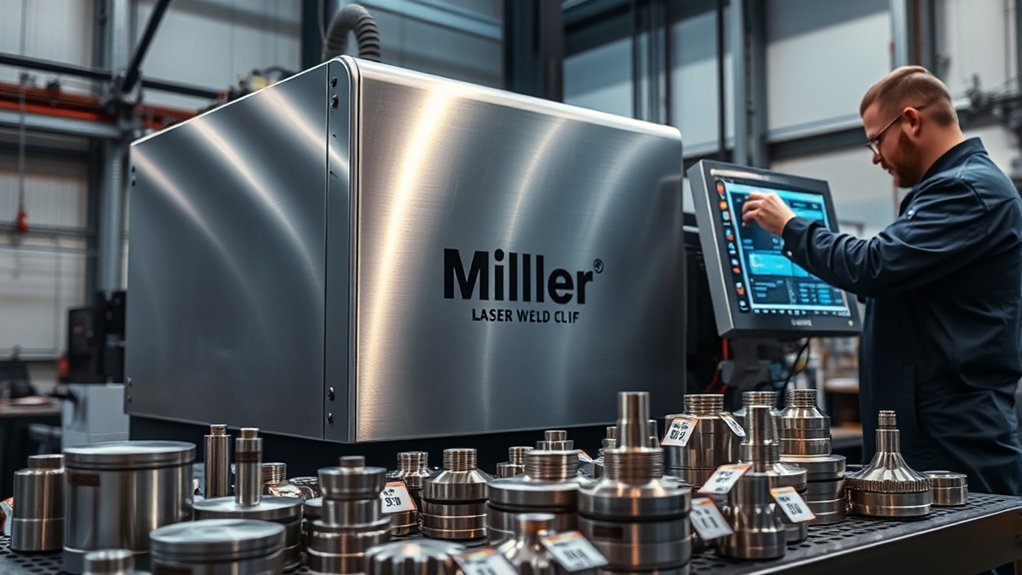
Customization can change the project cost more than the laser source itself. Start with the stock package, then add only the equipment needed to make your parts safely and repeatably.
Useful upgrades can include enclosure expansion, application-specific fixtures, extraction, part handling, positioners, sensors, and automation. Each should be justified by a measurable effect on cycle time, scrap, rework, ergonomics, or safety.
What Comes With the Standard OptX 2kW Package?
Miller’s current 951000109 complete package includes the 2kW handheld laser welder, OptX wire feeder, OptX laser torch, hardware kit, and accessory kit. The accessory kit includes laser PPE, welding and cleaning nozzles, protective windows, contact tips, and setup components.
The standard package does not equal the 8 ft x 8 ft enclosed configuration. If you want Miller’s ready-to-weld enclosure package, quote stock 951000240 so the seller is pricing the same scope.
Optional Accessories and Facility Costs
Budget separately for any items not included in your quote, such as enclosure expansion, extraction, gas delivery, electrical work, fixtures, replacement optics, nozzles, additional PPE, material handling, and service plans. Prices vary too much by facility and application to use one national allowance responsibly.
Ask the distributor to provide both the initial purchase list and the recommended first-year spare-parts list. That makes it easier to estimate downtime risk and recurring cost.
When Does Automation Make Sense?
Automation is easier to justify when parts repeat, fit-up is controlled, volume is high, and cycle-time savings can be measured. It is harder to justify when every job is different or when operators spend more time loading, fitting, or correcting parts than welding.
For robotic integration, request separate line items for the robot or cobot, positioner, fixtures, sensors, guarding, programming, process development, commissioning, training, and acceptance testing. This prevents a low base-system quote from hiding the real turnkey cost.
Financing Options for Purchasing a Laser Welder
Financing can help you manage a $47,000-plus equipment purchase, but the monthly payment is not the same as total cost. Compare the cash price, down payment, interest or lease charges, fees, insurance requirements, tax treatment, early-payoff rules, and end-of-lease terms.
Dealer financing availability and terms can change, so use the table below as a decision framework rather than a promise that every option is available for every OptX package.
| Financing Option | Benefits | Considerations |
|---|---|---|
| Equipment Leasing | Lower upfront cost | May cost more over time |
| Dealer Financing | Simple purchase process | Terms vary by dealer |
| Equipment Loan | You can own the machine | Requires credit approval |
| Trade-In Programs | Can reduce cash required | Availability and value depend on the dealer and equipment |
Note: Confirm current rates, fees, buyout terms, collateral requirements, and tax treatment with the lender, dealer, and your accountant before signing.
Cost-Benefit Analysis of Investing in Laser Welding
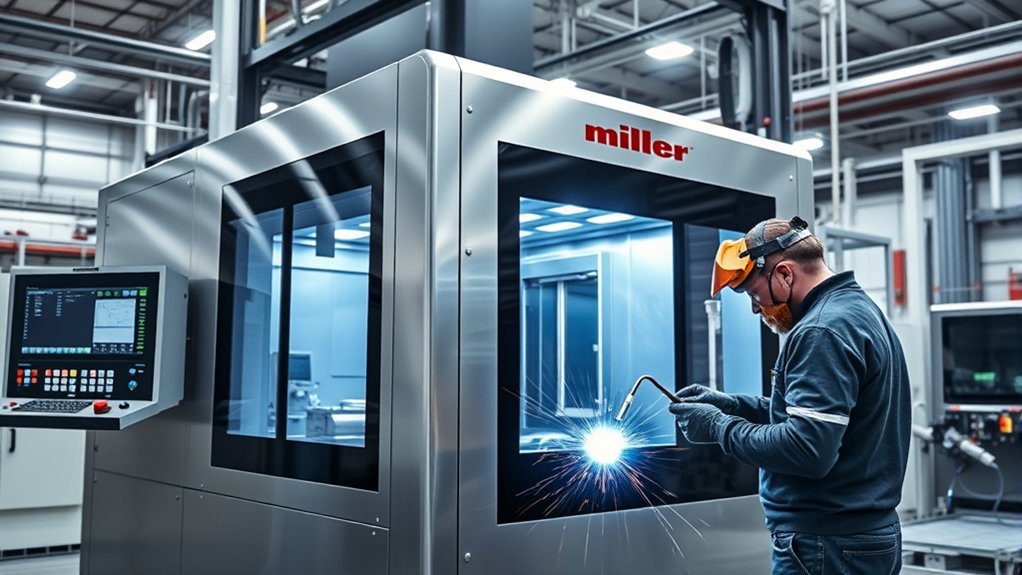
The purchase only makes financial sense if it lowers the cost per accepted part or creates enough new capacity to pay for itself. Do not base ROI on welding speed alone.
Measure the full process: fit-up, tack or fixture time, welding, filler use, grinding, straightening, cleaning, inspection, rework, and operator labor. Miller says OptX can weld up to four times faster than TIG in suitable applications, but your own part trial should determine the number used in your ROI model.
Initial Investment Considerations
Start with the quoted equipment price, then add every one-time cost required to enter production: enclosure or controlled-area work, electrical installation, extraction, gas setup, fixtures, material handling, training, commissioning, and initial spares.
If this machine is part of a larger shop expansion, compare it with your broader welding shop startup and expansion budget so equipment spending does not consume working capital needed for payroll, materials, rent, or receivables.
Long-Term Savings Potential
Potential savings can come from faster welding, less grinding, lower distortion, fewer rejected parts, and reduced filler use. The value of those savings depends on your labor rate, part volume, current rework rate, and how many hours the laser actually runs.
For a defensible estimate, calculate an hourly ownership cost and then convert it to cost per accepted part. Our laser welding cost calculation guide shows how to combine depreciation, electricity, labor, maintenance, consumables, facility cost, and cycle time.
How to Prove the Productivity Gain Before Buying
Bring representative parts to a demo and time the full job, not just the arc-on or laser-on portion. Record setup, fit-up, welding, cleaning, finishing, inspection, and any rework for both your current process and the OptX trial.
- Cycle time: Compare total minutes per accepted part.
- Quality: Track distortion, rework, rejected parts, and finishing steps.
- Labor: Record operator and helper time, including setup and cleanup.
- Consumables: Compare filler, gas, optics/nozzles, abrasives, and other recurring items.
Use those measurements—not a generic percentage—to estimate payback.
Maintenance and Operating Costs to Consider
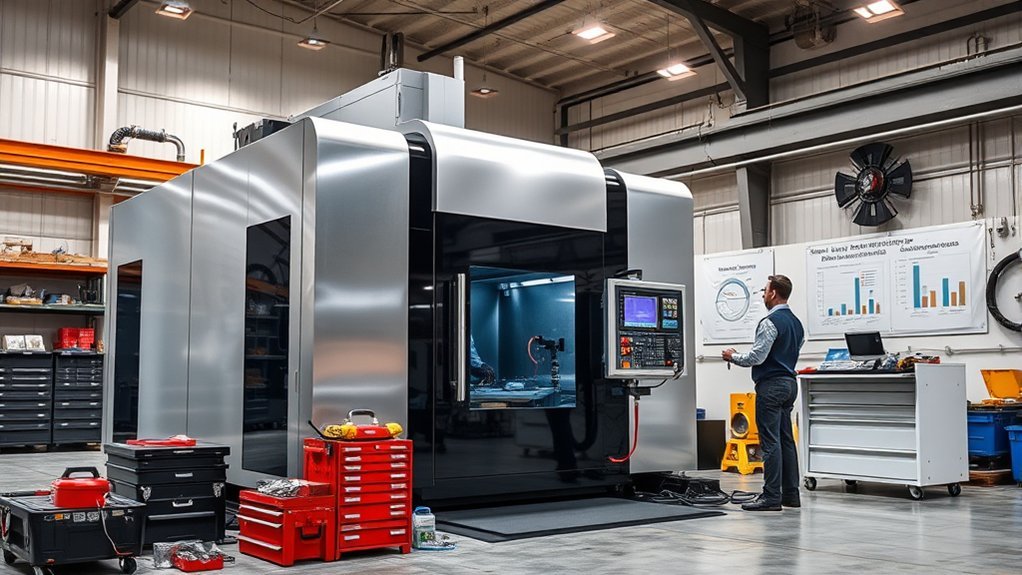
Recurring costs include electricity, shielding gas, protective windows and other optics, nozzles, contact tips, cleaning supplies, PPE replacement, planned maintenance, and service. Your actual cost per hour depends on duty cycle and how often consumables are replaced.
Miller publishes setup, safety, error-code, and maintenance resources for the OptX line. Build a preventive-maintenance schedule around the manufacturer instructions and keep common consumables on hand so a damaged protective window or nozzle does not stop production.
The OptX 2kW complete package is specified for 240 V single-phase laser input, while the wire feeder uses 120 V. Have a qualified electrician confirm the branch circuit, disconnects, grounding, and any facility changes required for your installation.
Future Trends in Laser Welding Technology
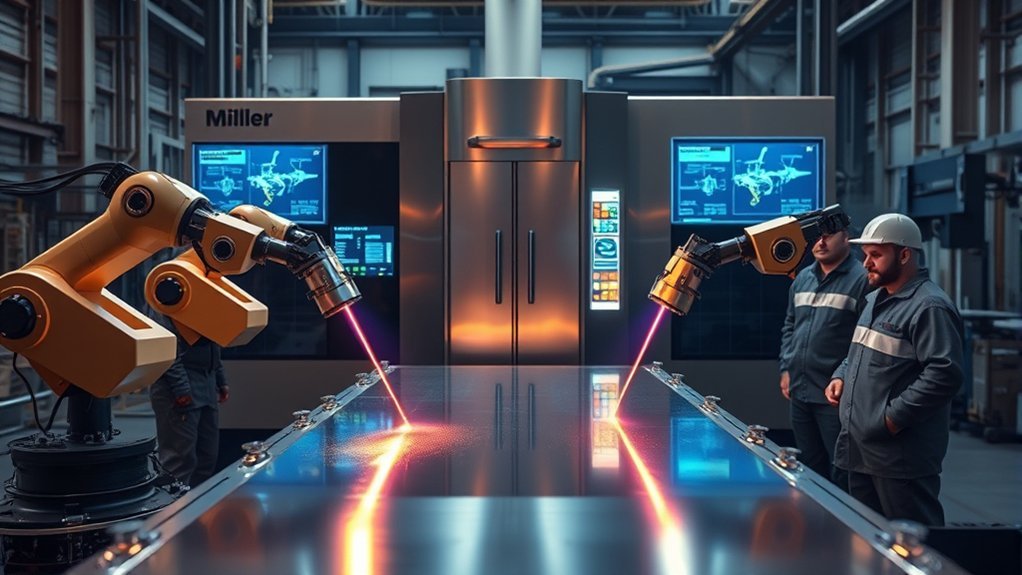
For buyers, the most relevant trend is not simply higher laser power. Manufacturers are combining handheld laser welding with better presets, cleaning functions, wire feeding, enclosure options, and process controls that reduce setup time and make production results easier to repeat.
Automation and in-process monitoring are also expanding in high-volume manufacturing. Those features can improve consistency, but they add integration cost and should be justified by the part volume and quality requirements of the application.
When comparing a 2026 purchase, prioritize serviceability, safety integration, software support, consumable availability, and the ability to prove the process on your own parts over speculative future features.
Where to Purchase the Miller OptX 2kW
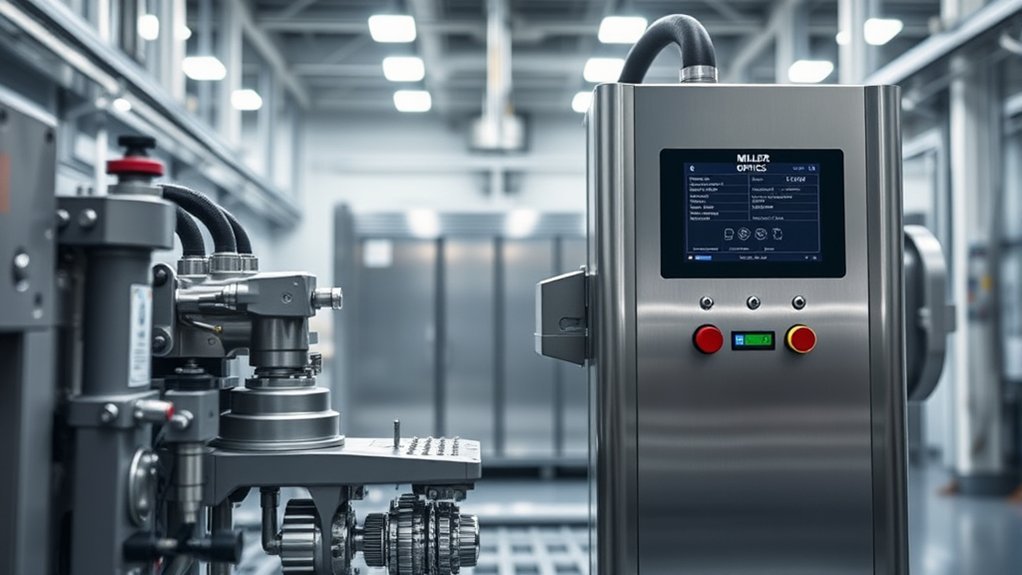
Miller directs buyers to authorized distributors for the OptX line. Public listings show stock 951000109 at $47,048 from Welding Supplies from IOC and $53,986.96 from Baker’s Gas & Welding. Price, stock status, freight, taxes, and promotional discounts can change.
For the ready-to-weld 8 ft x 8 ft enclosure package, ask specifically for Miller stock 951000240. Request an itemized quote that separates equipment, enclosure, delivery, installation, electrical work, extraction, training, service, fixtures, and any automation.
Also ask for a sample-part demo and written acceptance criteria. A small difference in purchase price matters less than whether the system meets your weld quality, cycle time, safety, and service requirements.
Pro tip: Bring your own sample parts to the demo and record total cycle time, weld quality, distortion, finishing time, and rework so you can compare the laser against your current process with real numbers.
Frequently Asked Questions
How Much Does the Miller OptX 2kW Cost?
Public U.S. dealer listings checked August 10, 2026 put the Miller OptX 2kW Complete Package (951000109) at about $47,048 to $53,986.96. Those prices can change and do not represent the separate ready-to-weld enclosure package.
Does the Miller OptX 2kW Come With an Enclosure?
The standard 951000109 complete package does not include the 8 ft x 8 ft enclosure. Miller’s Ready-to-Weld OptX 2kW package, stock 951000240, combines the 2kW system with a Class 1 enclosure rated to 2,500 W/cm².
What Thickness Can the Miller OptX 2kW Weld?
Miller lists the OptX 2kW for sheet-metal welding up to 5/16 in. Actual capability depends on the material, joint design, fit-up, filler wire, shielding gas, and selected parameters, so validate your application with sample parts.
What Is the Warranty Period for the Miller OptX?
Miller currently advertises a 3-year warranty for the OptX handheld-laser line. Confirm the written warranty for the exact machine, enclosure, accessories, and dealer package before purchase because coverage can differ by component.
Can I Get a Demo Before Purchasing a Miller Laser Welder?
Miller invites buyers to request a demo, and authorized distributors can help with application review. Use your own material and joints so the test shows real weld quality, cycle time, fit-up sensitivity, and finishing requirements.
Conclusion
For budgeting in August 2026, the Miller OptX 2kW Complete Package is publicly listed around $47,000–$54,000. If you want Miller’s 8 ft x 8 ft Class 1 enclosure, request a quote for stock 951000240 rather than assuming the enclosure is included in the handheld package price.
The best buying process is simple: define the exact package, test your own parts, compare equal quote scopes, and calculate cost per accepted part. That gives you a defensible answer on whether the OptX saves enough labor, finishing, rework, or capacity to justify the investment.
About the Author
Logan Barrett is a manufacturing cost analyst at Get Cost Idea who focuses on welding and fabrication equipment, helping buyers understand equipment pricing, project scope, and investment trade-offs.
References
- Miller OptX 2kW Complete Package — official specifications and package contents
- Miller Ready-to-Weld OptX 2kW with 8 ft x 8 ft Laser Enclosure — official enclosure package and specifications
- Miller Handheld Laser — warranty, safety, setup, and demo information
- Welding Supplies from IOC — Miller OptX 2kW — public dealer price snapshot
- Baker’s Gas & Welding — Miller OptX 2kW — public dealer price snapshot
- IPG LightWELD — manufacturer specifications used for comparison
- Iron Line — LightWELD 2000 XR — authorized-dealer price snapshot used for comparison
- OSHA Laser Hazards — laser hazard classifications and control context
- OSHA Laser Standards — ANSI Z136 laser-safety standards context