
Arkansas does not issue a saltwater fishing license because the state has no marine or Gulf Coast waters. For fishing inside Arkansas, anglers generally need an Arkansas Game and Fish Commission license. For a saltwater trip to Louisiana, Texas, or Mississippi, you must follow that destination state’s license rules and buy its required saltwater privilege.
Quick Answer
There is no Arkansas saltwater fishing license. Arkansas anglers age 16 or older generally need an Arkansas fishing license for state waters: $10.50 for residents, or $15 for one day, $30 for three days, or $60 annually for nonresidents. Saltwater trips require the coastal state’s license.
Key Takeaways
- Arkansas is landlocked, so it has no state saltwater fishing license.
- Most anglers age 16 or older need an Arkansas fishing license unless a listed exemption applies.
- Current base fees are $10.50 for a resident license and $15, $30, or $60 for nonresident one-day, three-day, or annual licenses.
- A separate trout permit is required to keep trout or fish in certain designated trout waters.
- An Arkansas license does not replace a Louisiana, Texas, or Mississippi saltwater license.
At a Glance
| Time Required | Usually 5–10 minutes online |
| Difficulty | Easy |
| Tools Needed | Phone or computer, identification details, and payment method |
| Cost | From $10.50 for an Arkansas resident license; coastal-state saltwater fees vary |
Overview of Fishing Licenses in Arkansas
The Arkansas Game and Fish Commission requires anglers age 16 or older to carry a valid fishing license when taking or attempting to take aquatic wildlife in Arkansas. The main exception listed by AGFC is fishing in a licensed put-and-take pay lake.
Arkansas does not divide its standard recreational license into freshwater and saltwater categories. Its regular fishing licenses cover eligible fishing in state waters with sport-fishing tackle. The state offers resident, nonresident, senior, disability, combination, and lifetime choices, but short-term one-day and three-day licenses are nonresident options.
Note: Effective July 1, 2026, a person age 16 or older using an AGFC-owned wildlife management area or lake must hold a valid hunting license, fishing license, or $10.50 WMA/Lake Conservation Permit, subject to listed transit and roadway exceptions.
Products Worth Considering
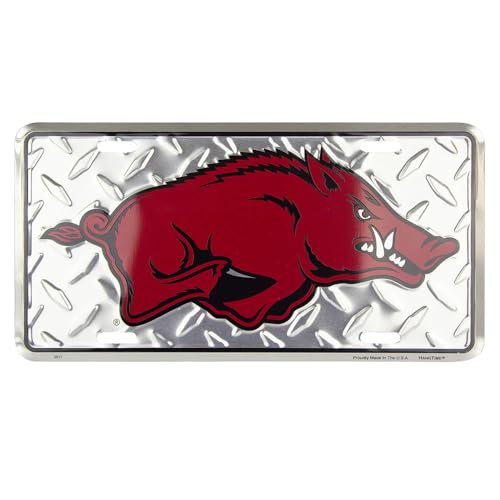
Embossed aluminum license plate in team colors
Comes with pre-drilled holes for easy installation

Durable and long-lasting license plate measures a standard 6-inches by 11.5-inches
Saltwater Fishing Rules for Arkansas Residents
There are no saltwater fishing waters regulated by Arkansas and no Arkansas saltwater endorsement to buy. If you travel to the Gulf Coast, your Arkansas fishing license does not authorize you to fish in another state’s marine waters.
Buy the license required by the state where you will fish, and check that state’s current seasons, size limits, bag limits, gear rules, and any species-specific permits before the trip. The correct license may depend on your age, trip length, fishing location, target species, and whether you are fishing from a licensed charter.
Warning: Do not rely on an Arkansas freshwater license for a coastal trip. Carry the destination state’s required license or charter-passenger credential before fishing.
The license follows the water you fish—not the state where you live.
Arkansas Fishing License Requirements
If you are 16 or older, you generally need an Arkansas fishing license to fish in the state’s public waters. Anglers under 16 do not need the standard license, but all anglers must still follow seasons, daily limits, length limits, tackle restrictions, and area-specific rules.
A trout permit is also required to keep trout from any Arkansas waters or to fish in certain designated trout waters. The current permit costs are $10 for residents and $20 for nonresidents, in addition to the required base fishing license.
Some fishing activities need more than a basic license. For example, special rules apply to certain commercial gear, trophy alligator gar, paddlefish snagging, and border-water privileges. Check the current AGFC guidebook before targeting regulated species or using anything beyond ordinary sport-fishing tackle.
Current Arkansas Fishing License Prices
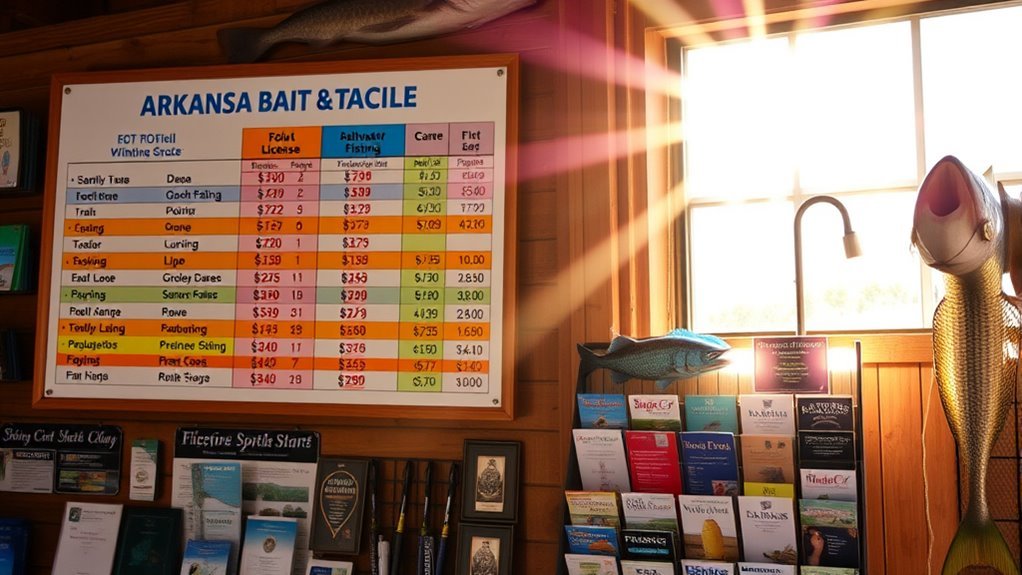
The article’s earlier nonresident prices of $25, $30, $35, and $50 were inconsistent. The official AGFC fee schedule lists the following base prices as of July 30, 2026:
| License or Permit | Price | Who It Fits |
| Resident Fisheries Conservation License | $10.50 | Arkansas residents who fish with sport tackle |
| Nonresident 1-Day Fishing License | $15 | One specified fishing day |
| Nonresident 3-Day Trip Fishing License | $30 | A 72-hour trip from the selected start time |
| Nonresident Annual Fishing License | $60 | Frequent nonresident anglers |
| Resident Trout Permit | $10 | Required to keep trout or fish in certain trout waters |
| Nonresident Trout Permit | $20 | Added to a valid nonresident fishing license |
| 65-Plus Lifetime Fishing License | $10.50 | Qualifying residents age 65 or older |
Pro Tip: Choose the license based on the actual trip length and species. A three-day nonresident license costs less than two separate one-day licenses, but trout fishing may still require the additional $20 permit.
Products Worth Considering

Material :High-Quality Metal Aluminum With High Gloss Stamped Metal License Plate.Lightweight, Waterproof,Anti-Rust And Very Durable.

College Team Pride - Represent your alma mater with this uniquely designed license plate tag from Decorvo

Arkansas Razorbacks Fans! A Fan Favorite 12" x 6" Car/Truck Frame - This auto accessory is perfect for the casual and everyday fan. The antique pewter finish gives it an old-fashioned feel. Whether it is game day at the stadium or a home game with friends, this license plate frame will be the highlight of the drive.
Obtaining a Fishing License in Arkansas

Buying an Arkansas fishing license is straightforward. First identify your residency, trip length, target species, and fishing location. Then select the matching license and any required permit.
Products Worth Considering

FISHING LICENSE HOLDER W/ZIP CLOSURE


Officially licensed product
License Requirements Overview
- Check your age and exemption status: Anglers under 16 generally do not need the standard Arkansas fishing license. A licensed put-and-take pay lake is another listed exception.
- Choose the correct residency category: Owning property in Arkansas does not by itself make a person a resident for licensing purposes.
- Add required permits: Buy a trout permit when keeping trout or fishing in designated trout waters.
- Carry proof while fishing: Keep the valid license available for inspection and check its printed expiration date.
Active-duty military status does not create a blanket fishing-license exemption. Some service members qualify for resident licensing privileges, while qualifying disabled veterans and other groups may be eligible for special licenses.
Pricing and Options
Residents commonly use the $10.50 Resident Fisheries Conservation License. Nonresidents can choose a $15 one-day license, $30 three-day license, or $60 annual license. Qualifying residents age 65 or older may purchase a $10.50 lifetime fishing license, and other disability or lifetime options have separate eligibility rules.
Arkansas does not sell a saltwater add-on. For a coastal trip, purchase the correct Louisiana, Texas, or Mississippi license instead.
Application Process Steps
- Select the license: Use the official fee descriptions to match your residency, trip length, and fishing plans.
- Purchase it: Buy through the AGFC licensing system, an authorized license agent, or an AGFC regional office.
- Save your proof: Keep the license where you can present it while fishing and review the expiration date.
- Read the current regulations: Confirm daily limits, length limits, special-area rules, and permit requirements before casting.
Why Fishing Licenses Matter for Conservation
A fishing license is more than legal permission to fish. License revenue helps state fish and wildlife agencies manage fisheries, restore habitat, improve public access, support aquatic education, and collect the data needed for responsible regulations.
Funding Conservation Efforts
Fishing-license sales work alongside federal Sport Fish Restoration funding. The U.S. Fish and Wildlife Service explains that license fees contribute to state conservation and outdoor-access programs, while federal excise-tax funds support fisheries restoration, research, habitat work, education, and boating access.
Sustainable Fishing Practices
Licensing also gives agencies a practical way to manage fishing pressure. Anglers support sustainable fisheries by following daily limits, length limits, seasonal closures, legal-tackle rules, and catch-and-release requirements. These rules can change by waterbody and species, so the current guidebook matters as much as the license itself.
Nearby States for Saltwater Fishing Licenses
Arkansas anglers commonly travel south to Louisiana, Texas, or Mississippi for Gulf Coast fishing. Each state defines its own license age, license zone, duration, and charter rules.
| State | Common Nonresident Choice | Important Detail |
| Louisiana | Five-day Basic Fishing $30 plus five-day Saltwater $30, for a $60 total; annual total is $128 | Anglers age 18 or older generally need Basic Fishing, plus Saltwater when required. A three-day charter-passenger saltwater license is $20. |
| Texas | One-day all-water license $16 or nonresident saltwater package $63 | Nonresidents under 17 are exempt. Annual packages run from the sale date through August 31 of the same license year. |
| Mississippi | Three-day saltwater license $15 or annual saltwater license $30, before listed agent and processing fees | Mississippi uses freshwater and saltwater license zones, so confirm where the trip will take place. |
Note: The Louisiana $17 amount sometimes quoted online is not the normal complete saltwater cost for an Arkansas resident. It applies to a special nonresident-native Basic Fishing option and still does not represent the ordinary Basic-plus-Saltwater total.
Resources for Fishing License Information
Use official agency pages rather than third-party summaries when planning a trip. License prices, season dates, fish limits, and access rules can change, and a state may add a species permit or reporting requirement even when the base license fee stays the same.
For Arkansas, start with the AGFC license descriptions and the 2026–27 regulation changes. For coastal fishing, use the destination state’s wildlife or marine-resources agency before buying.
Frequently Asked Questions
Can I fish in saltwater without a license while visiting Arkansas?
Arkansas has no saltwater fishing area because it is landlocked. For fishing inside Arkansas, follow Arkansas freshwater rules. For a Gulf Coast trip, follow the destination state’s saltwater license requirements.
Does Arkansas offer saltwater fishing charter services?
No. Arkansas guides and charters operate on inland lakes and rivers, not marine saltwater. Saltwater charters are available in coastal states such as Louisiana, Texas, and Mississippi.
Are seniors exempt from Arkansas fishing-license requirements?
Age 65 does not create a blanket exemption. Qualifying Arkansas residents age 65 or older can purchase a $10.50 lifetime fishing license and may need a separate lifetime trout permit for designated trout waters.
What happens if I fish without the required saltwater license?
Penalties depend on the coastal state and the violation. Possible consequences include citations, fines, loss of fishing privileges, and additional penalties for illegal harvest. Check the destination state’s current regulations before fishing.
Can I fish in Gulf saltwater with an Arkansas fishing license?
No. An Arkansas fishing license covers eligible fishing in Arkansas. Buy the required Louisiana, Texas, Mississippi, or other destination-state license for Gulf saltwater fishing.
Do I need an Arkansas trout permit?
You need a trout permit to keep trout from any Arkansas water or to fish in certain designated trout waters. The current fee is $10 for residents and $20 for nonresidents, in addition to the required base license.
Conclusion
Arkansas does not have a saltwater fishing license. For fishing within the state, most anglers age 16 or older need the appropriate AGFC fishing license, with a trout permit added when required. For Gulf Coast fishing, buy the license required by Louisiana, Texas, Mississippi, or the other coastal state where you will actually fish. Check the official rules before every trip because fees, seasons, limits, and special permits can change.
Sources
- Arkansas Game and Fish Commission — Fishing License Descriptions and Fees — Arkansas age rules, license types, prices, and trout permits.
- Arkansas Game and Fish Commission — 2026–27 Fishing Regulation Changes — July 1, 2026 rule changes and the WMA/Lake Conservation Permit.
- Louisiana Department of Wildlife and Fisheries — Recreational Fishing Licenses — Louisiana Basic, Saltwater, short-term, and charter-passenger fees.
- Texas Parks and Wildlife Department — Fishing Licenses and Packages — Texas saltwater, all-water, age, and validity rules.
- Mississippi Department of Wildlife, Fisheries, and Parks — License Prices — Mississippi resident and nonresident saltwater license fees.
- U.S. Fish and Wildlife Service — Purchase a Fishing License — how license revenue supports conservation and public access.
