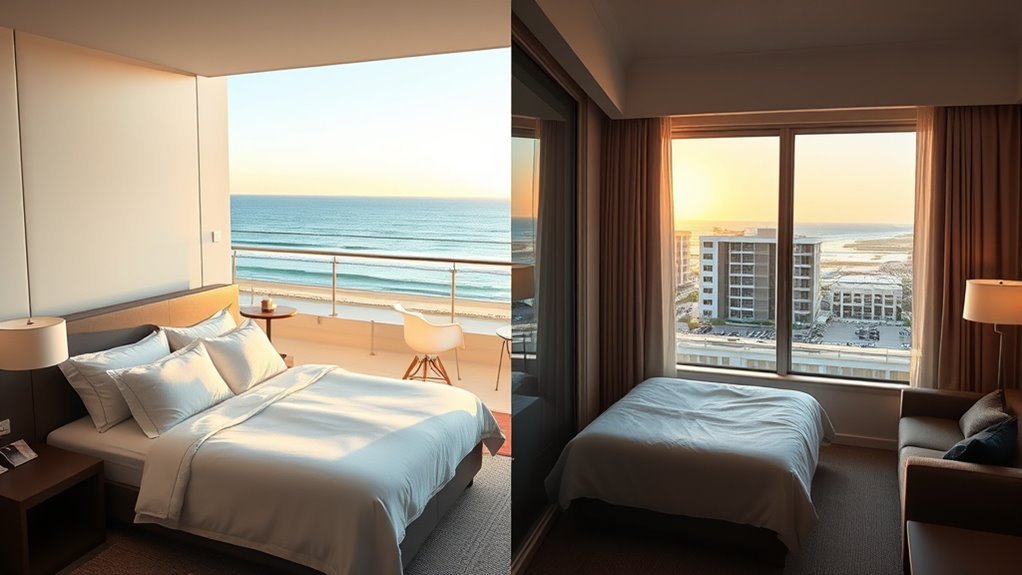
Oceanfront rooms usually cost more than standard rooms at the same hotel because you are paying for the view and room location. There is no reliable universal oceanfront premium: the difference can be small on a low-demand date and much larger when ocean-facing inventory is limited. The best way to compare oceanfront vs standard hotel room cost is to price both categories at the same property for the same dates, occupancy, cancellation terms, and included benefits. If you expect to spend meaningful time on the balcony or in the room enjoying the water, the upgrade may be worth it. If the room is mainly a place to sleep between beach days and sightseeing, a standard room often gives you better value.
Last updated: August 11, 2026.
Author: Ethan Calloway
| Factor | Standard Room | Oceanfront Room |
|---|---|---|
| View | May face the city, garden, parking area, courtyard, pool, or another part of the property | Generally faces the ocean directly, although the exact view and possible obstructions depend on the hotel |
| Price position | Usually one of the lower-priced room categories at the same hotel | Usually carries a view/location premium |
| Shared hotel amenities | Often the same pools, restaurants, fitness areas, and public beach access as other guests | Often the same shared facilities unless the room category includes extra benefits |
| Best for | Sightseeing-heavy trips, shorter stays, and travelers prioritizing budget | Relaxing resort stays, special occasions, balcony time, sunrises, sunsets, and travelers who value the view |
| Main risk | Less memorable outlook or less desirable room location | Paying a large premium for a view you rarely use |
What’s the Difference Between Oceanfront and Standard Rooms?
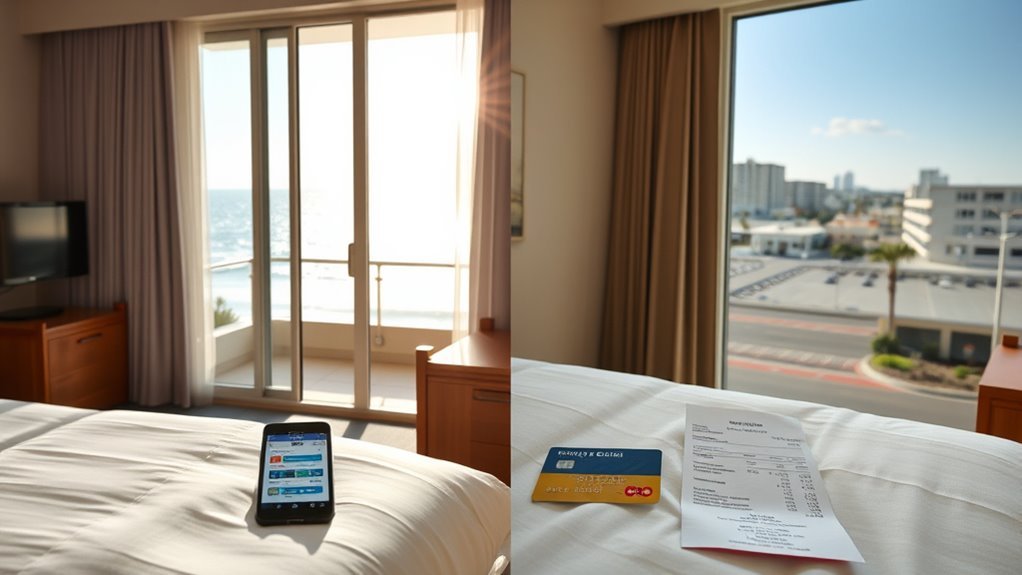
The main difference is usually room location and view. A standard room is a hotel’s base or regular room category and may face an interior area, street, garden, pool, parking area, or another building. An oceanfront room generally faces the ocean more directly and is priced as a premium category.
Do not assume that oceanfront, ocean view, partial ocean view, and beachfront mean the same thing. Hotels can define room categories differently. An ocean-view room may provide some visible water without directly facing it, while an oceanfront room is generally positioned to face the ocean. A beachfront property or room describes proximity to the beach, but it does not automatically guarantee a specific unobstructed view.
Compare the hotel’s exact room-category description, not just the word “ocean” in the room name.
Before paying for an upgrade, check the hotel’s room photos, floor plan or property map when available, balcony orientation, floor, building location, and recent guest photos. If the view is important, contact the hotel and ask whether the selected category directly faces the water and whether trees, roofs, other buildings, or lower floors can obstruct it.
When’s the Best Time to Book an Oceanfront Room?
There is no single booking window that produces the lowest rate at every beach hotel. Prices depend on the destination, dates, events, weather patterns, occupancy, cancellation terms, and how many rooms remain in each category.
Hotels.com’s 2026 U.S. Hotel Price Index found that, across its booking data, the average savings sweet spot was about 8 to 14 days before travel. It also reported that travelers booking closer to arrival saved on average compared with those booking four or more months ahead. That is broad market data, however, and does not guarantee that a particular oceanfront category will remain available.
If the oceanfront view is essential to your trip, a practical strategy is to reserve a refundable or flexible rate when you find an acceptable price, then recheck the same room category as the trip approaches. Before switching reservations, compare the cancellation deadline, room type, included benefits, and total price to make sure the new offer is genuinely better.
For holiday weekends, school breaks, major events, and destinations with limited oceanfront inventory, availability may matter more than chasing the lowest possible last-minute price.
Oceanfront vs Standard Hotel Room Cost: How to Compare the Premium
There is no trustworthy universal nightly price range for an oceanfront room. A coastal motel, an all-inclusive resort, and a five-star Hawaii property can have completely different rate structures. Instead of using a generic national price, calculate the oceanfront premium at the exact hotel you are considering.
Use this formula:
Oceanfront premium per night = oceanfront room total price − standard room total price
Then calculate the trip-level difference:
Total oceanfront premium = premium per night × number of nights
Compare the two rooms with the same dates, guest count, bed configuration, cancellation policy, meal plan, and payment terms. A cheaper listing is not comparable if it is nonrefundable while the other can be cancelled, or if one category includes breakfast, parking, club access, or another valuable benefit.
For destination-level budgeting, use location-specific hotel data rather than a generic oceanfront estimate. GetCostIdea’s guides to Waikiki hotel prices and Panama City Beach hotel prices, for example, show why local market and season matter when setting a lodging budget.
What Do Standard Hotel Rooms Offer at Lower Costs?
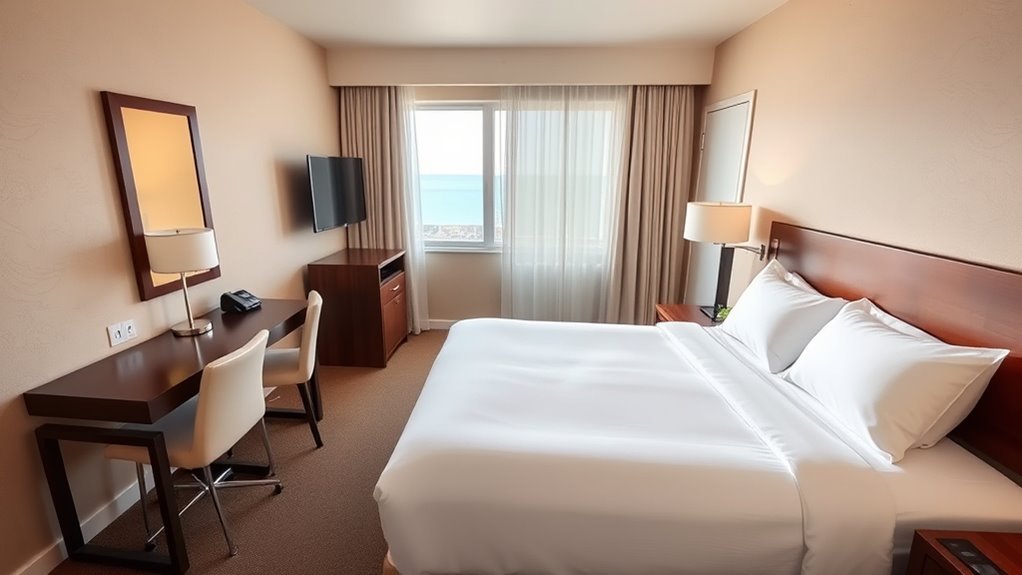
A standard room can provide most of the practical value of the hotel without charging you for its most desirable view. At many properties, guests in standard and oceanfront rooms use the same lobby, pool, restaurants, fitness areas, elevators, common spaces, and public beach access. What changes may be primarily the room’s location and outlook.
Do not assume every standard room has the same inclusions. Wi-Fi, breakfast, parking, housekeeping schedules, refrigerators, microwaves, balconies, and other amenities vary by hotel and rate plan. Compare the specific booking terms rather than relying on the room-category name.
Which Amenities Are Actually Included?
Check the property’s room description for the features that affect your stay. Useful comparison points include:
- Room size and beds: Confirm square footage or room dimensions when listed, bed type, occupancy limit, and whether a sofa bed or rollaway is available.
- Balcony or patio: An oceanfront label does not necessarily mean you receive a private balcony. Verify it separately.
- Food and connectivity: Check whether breakfast and Wi-Fi are included in your rate rather than assuming they are standard.
- In-room conveniences: Refrigerators, microwaves, kitchenettes, coffee makers, and laundry facilities can matter more on a longer stay than the view.
- Accessibility: Travelers who need an accessible room should compare the actual accessible-room category and view rather than assuming every premium room has the required layout.
When Is a Standard Room Better Value?
A standard room is often the stronger value when your itinerary keeps you outside most of the day. If you plan to spend your time swimming, hiking, sightseeing, eating out, or exploring nearby attractions, paying a large room-view premium may add little to the trip.
| Question | Standard Room May Be Better | Oceanfront Room May Be Better |
|---|---|---|
| How much time will you spend in the room? | Mostly sleeping and getting ready | Several waking hours each day |
| Is the view a main reason for the trip? | No | Yes |
| Is it a special occasion? | View is not important | Honeymoon, anniversary, birthday, or relaxing escape |
| Does the standard room keep the same resort access? | Yes, making the cheaper category attractive | Upgrade may add meaningful room or access benefits |
| Would the premium reduce your activity or food budget? | Yes | No, and the view is a priority |
The right comparison is therefore not simply “Which room is cheaper?” It is “What am I receiving for the extra money, and will I use it?”
Compare the Booking Terms, Not Just the Room Name
Room-category prices can look misleading when the rate conditions differ. Compare the following before deciding that one option costs less:
- Cancellation terms: A prepaid, nonrefundable standard room is not equivalent to a flexible oceanfront booking.
- Payment timing: Check whether payment is due now, before arrival, or at the hotel.
- Meals and credits: Breakfast, food-and-beverage credits, or resort credits can change the effective value.
- Occupancy: Confirm whether the displayed price covers the same number of adults and children.
- Stay restrictions: Minimum-night requirements can affect the total cost during high-demand periods.
What Extra Charges Should You Compare?
For U.S. hotel stays, the phrase hidden mandatory hotel fee needs careful handling in 2026. The Federal Trade Commission’s Rule on Unfair or Deceptive Fees, effective May 12, 2025, requires covered short-term lodging sellers to include mandatory fees in the prominently displayed total price.
The rule does not ban resort, destination, amenity, or similar mandatory charges. It changes how required charges must be presented. Government-imposed taxes and genuinely optional add-ons can be treated differently, so travelers should still review the final booking summary before paying. Outside the United States, pricing-display requirements vary by jurisdiction.
Mandatory Charges
If a resort, destination, facility, or amenity charge is required for the stay, it affects the true room cost even if you do not expect to use every bundled benefit. When comparing a standard room with an oceanfront room, use the displayed total for each category rather than comparing only a base-rate figure.
For a deeper explanation of these charges, see GetCostIdea’s guide to resort fees and hotel pricing in 2026.
Optional and Usage-Based Charges
Some expenses depend on what you choose to use rather than which room category you book. Possible examples include parking, valet service, spa treatments, room service, pet charges, premium activities, rental equipment, early check-in, late checkout, and upgraded food or beverage packages.
| Cost to Check | What to Verify |
|---|---|
| Mandatory hotel charges | Whether they are included in the displayed total and what benefits they cover |
| Government taxes | Final tax amount before payment |
| Parking | Self-parking, valet, off-site options, and whether parking is optional |
| Breakfast | Included, discounted, or separately charged |
| Pet charges | Per night or per stay, plus deposits if applicable |
| Activities and rentals | Which activities are included and which require separate payment |
Compare the Final Stay Total
The cleanest cost comparison is the amount you expect to pay for the entire stay. Compare both room categories immediately before booking, using identical dates and options.
Standard-room total should include the selected room rate, mandatory property charges, applicable taxes, and any optional expenses you know you will use.
Oceanfront-room total should be calculated the same way.
The difference between those two totals is the real cost of upgrading the view. This approach is more useful than relying on a generic claim that oceanfront rooms cost a particular percentage more.
What Amenities Should You Expect for Your Money?
Do not assume an oceanfront room automatically includes more amenities. At some hotels, the premium buys little more than the room’s position and view. At others, a higher category can add a balcony, more space, a better floor, club access, upgraded furnishings, breakfast, or another benefit.
Read the two room descriptions side by side and identify every actual difference. If the only meaningful change is the view, you can make a clean decision about what that view is worth to you.
For longer stays, practical features may have more financial value than scenery. A refrigerator, microwave, kitchenette, breakfast inclusion, free parking, laundry access, or larger sleeping arrangement can reduce other trip expenses.
For a short romantic or resort-focused trip, the opposite may be true. A private balcony facing the water can be a central part of the experience even if it does not reduce another expense.
How to Decide Whether the Oceanfront Premium Is Worth It
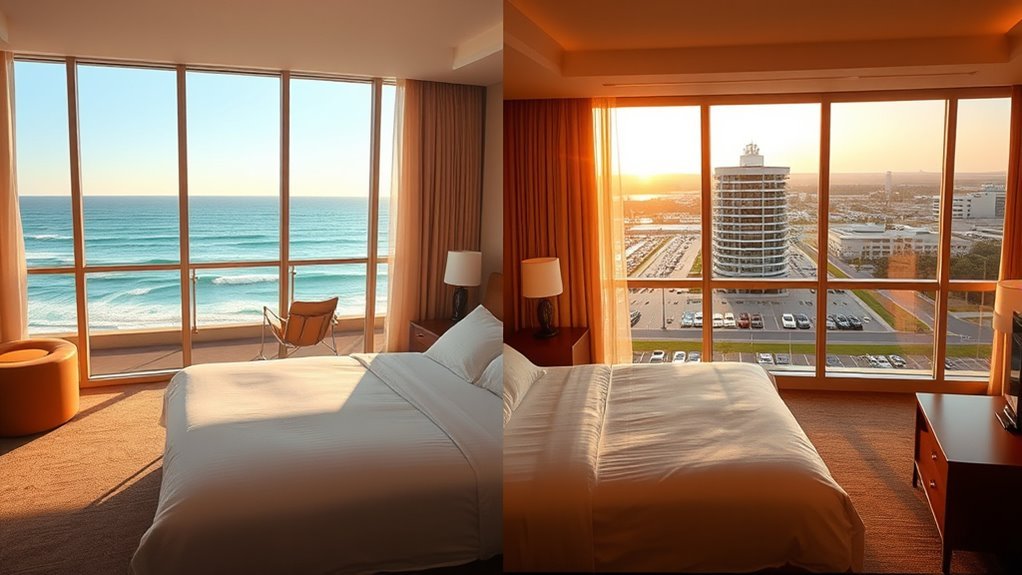
Instead of comparing unrelated hotels or vacation rentals, compare the two room categories at the same hotel. That isolates the cost of the upgrade more accurately.
The useful number is not the hotel’s overall nightly rate. It is the difference between the final standard-room total and the final oceanfront-room total for your exact stay.
Use this three-step test:
- Calculate the premium: Subtract the standard-room total from the oceanfront-room total.
- List the additional benefits: Note whether the upgrade adds only the view or also a balcony, larger room, preferred floor, breakfast, club access, or another feature.
- Match the upgrade to your itinerary: Decide how much time you will realistically spend enjoying those benefits.
An oceanfront upgrade is easier to justify when the room itself is part of the vacation. It is harder to justify when you will leave after breakfast, return after dark, and spend most waking hours elsewhere.
Making the Right Choice for Your Vacation Budget
Choose an oceanfront room when the water view is one of the experiences you are traveling for. This is especially relevant for slow resort stays, anniversaries, honeymoons, birthdays, trips with planned balcony time, or vacations where you want to enjoy sunrise, sunset, storms, or changing ocean conditions from the room.
Choose a standard room when your budget has more useful jobs to do. The savings can stay available for dining, excursions, transportation, an extra night, or other experiences. A standard room can also make sense when the hotel provides the same pool and beach facilities to every overnight guest.
Before booking, answer four questions:
- What is the total upgrade cost for the whole stay?
- Exactly what does the premium room add besides the word “oceanfront”?
- How many waking hours will you realistically spend enjoying the room?
- Would spending the difference elsewhere make the trip better?
If the view is a central part of the vacation and the premium fits comfortably within your budget, oceanfront can be worth paying for. If not, a standard room can deliver nearly the same destination experience at a lower lodging cost.
Frequently Asked Questions
How Much More Does an Oceanfront Room Cost Than a Standard Room?
There is no reliable universal percentage or nightly premium. Compare the standard and oceanfront categories at the same hotel for the same dates, occupancy, cancellation policy, and included benefits. The difference between the two final totals is the actual oceanfront premium for your stay.
What Determines the Price Difference Between Oceanfront and Standard Rooms?
The difference can reflect the view, room location, floor, balcony, room size, demand, remaining inventory, travel dates, cancellation terms, and any extra benefits attached to the higher room category. Compare the complete room descriptions rather than assuming the premium pays only for the view.
Is Oceanfront the Same as Ocean View?
Not necessarily. An oceanfront room generally faces the ocean more directly, while an ocean-view room may simply provide some visible water from the room or balcony. Because hotels can use category labels differently, check the property’s description, photos, map, and room location before booking.
Does Oceanfront Mean You Get Direct Beach Access?
No. A room can face the ocean without offering direct access from the room to the sand. Beach access depends on the property’s layout, location, paths, elevators, buildings, and local shoreline conditions. Verify beach access separately from the room view.
Are Resort Fees Still Added Separately to U.S. Hotel Prices?
Mandatory resort and similar fees can still exist, but covered U.S. lodging sellers must include mandatory charges in the prominently displayed total price under the FTC rule effective May 12, 2025. Government charges and genuinely optional extras may be handled separately, so review the final booking summary before paying.
When Should I Book an Oceanfront Room?
No booking window guarantees the lowest price. Hotels.com’s 2026 U.S. data found that 8 to 14 days before travel produced the best average hotel savings in its dataset, but premium oceanfront categories can sell out on popular dates. If the view is essential, consider reserving a flexible rate earlier and rechecking the same category later.
Conclusion
The choice between an oceanfront and standard hotel room comes down to the price of the upgrade and how much you will use it. Do not rely on a generic claim that oceanfront rooms cost a fixed amount or percentage more. Price both categories at the same hotel for your exact dates and compare their final totals, booking conditions, room features, and views.
If enjoying the ocean from your room is part of the vacation, an oceanfront upgrade can add real value. If most of your time will be spent on the beach, sightseeing, dining, or exploring, a standard room may leave more of your budget for the parts of the trip you will enjoy most.