

You’ll typically pay about $250 to $1,875 per month for welding school, depending on program length, credential level, and school type. Community college programs spread costs over two years and run toward the lower end, while short certificate or specialty courses push monthly bills higher. Expect extra monthly costs for PPE, consumables, and living expenses. Scholarships, grants, and payment plans can lower what you actually pay each month. Keep reading to see program-by-program examples and financing tips.
Quick Answer
- Most welding programs cost $5,000 to $15,000 total, or roughly $250 to $1,875 per month.
- Community college routes are cheapest per month; short certificate programs cost more upfront.
- Budget an extra $100 to $500 per month for supplies, gear, and living costs on top of tuition.
- Scholarships, federal grants, and school payment plans can meaningfully reduce monthly payments.
- Average welders earn about $47,540 per year, making program costs a reasonable investment for most students.
Average Monthly Tuition Breakdown for Welding Programs

On average, total welding program costs land between $5,000 and $15,000. That breaks down to roughly $625 to $1,875 per month for an 8-month course.
Expect welding programs to cost about $5,000 to $15,000 total, or roughly $625 to $1,875 per month for eight months.
Community colleges often have the lowest monthly rates, around $250 to $625 when costs spread across a two-year associate program. Certificate tracks typically cost $3,000 to $10,000 total, which works out to about $375 to $1,250 per month over several months.
Advanced specialties like underwater welding can exceed $15,000, pushing monthly tuition toward $1,875 or more.
Compare total cost against program length before enrolling. Prioritize programs that match your timeline and budget so you don’t overcommit financially.
Additional Monthly Expenses: Gear, Materials, and Living Costs

Tuition gets you into class, but you’ll also pay monthly for gear, materials, and living expenses. These extras can add several hundred dollars to your budget.
Safety gear and material costs vary: personal PPE (boots, long pants, goggles) often runs $100 to $500 upfront, course supplies add another $100 to $500 monthly, and a practice welding machine can run $500 to $2,000 if you finance it over time.
- PPE and safety gear: budget $100 to $500 upfront, replace as needed.
- Material costs and supplies: plan $100 to $500 monthly for consumables and books.
- Housing and living: room and board average $417 to $1,250 monthly depending on location.
Cover essential safety gear first, then spread machine payments or extra material costs across your monthly budget.
Products Worth Considering

Premium Eye Protection – These welding goggles provide exceptional shielding against harmful radiations, intense light, and splashes during welding tasks. The durable plastic welding glasses meet safety standards, ensuring reliable eye protection for welders in industrial environments.

✅Fire-Resistant Tag: Each face mask features a sewn-in FR tag clearly indicating its fire-resistant properties, making it suitable for use in special hazardous work environments.
![KwikSafety - Charlotte, NC - PATROL Safety Jacket [NO FUZZ Balls] Class 3 ANSI Tested OSHA Compliant Reflective Mens Fleece Hoodie/Yellow 3XL](https://m.media-amazon.com/images/I/41xrhGtFfxL._SL500_.jpg)
NO MORE FUZZ BALLS | FLEECE SAFETY HOODIE - High vis hoodie featuring: (2) external front pockets large enough to hold phones/tools/keys, (1) adjustable drawstring & (1) heavy duty reflective zipper hoodie closure to keep you warm day & night while staying seen. The anti-pill polyester exterior won't leave any fabric shavings (pilling) if properly washed & dried. Men's work hoodie includes elastic wrist cuffs & waistband that allows you to move freely w/ a more comfortable fit.
Monthly Cost Differences by Program Type and Length
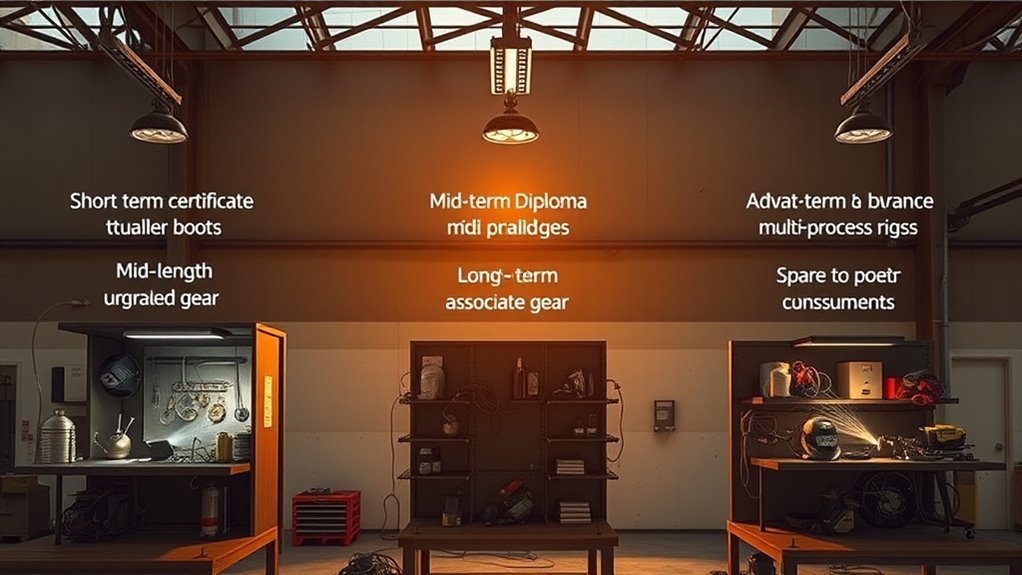
Program type and length change how much you pay each month, so it’s worth comparing monthly costs alongside total tuition.
Short certificate programs pack higher monthly bills, often $375 to $1,250, because you’re paying $3,000 to $10,000 over weeks to months. Diploma programs spread $5,000 to $15,000 across about a year, which comes out to $417 to $1,250 per month. Community college routes dilute costs over longer terms, roughly $5,000 over two years or about $208 per month. Advanced specialties like underwater welding can push monthly costs above $1,250 when the total exceeds $15,000 on a condensed timeline.
Map your costs to your schedule and goals before committing. List program length, total tuition, and expected monthly outlay so you can choose the option that fits both your budget and timeline.
Products Worth Considering

Professional Grade Scientific Calculator With 240 Scientific Functions.

Dual power ways: Solar power or 1 AA battery (Battery Included) , energy saving and convenient.

2 in 1 with Calculator,Notepad,Stylu: This basic calculator comes with a LCD writing pad and stylus, so you can jot down steps or notes while calculating. Suit for school or office use, it’s a great office desk accessories for both calculations and writing.⚠Note: The erase button work only once the lock key is unlocked
How to Lower Your Monthly Payments: Aid and Financing Options

To lower your monthly payments, combine aid and flexible financing so the program fits your budget. You can reduce tuition by targeting scholarship opportunities from trade associations and employers, applying for federal grants that don’t require repayment, and choosing student loans with manageable repayment terms. The American Welding Society scholarships program is one well-known source worth checking early.
Combine scholarships, grants, and low-interest loans plus school payment plans to lower tuition and reduce monthly payments.
Use school payment plans to spread costs during training.
- Prioritize scholarships first to cut principal and monthly payment size.
- Add federal grants when eligible, then supplement with low-interest student loans.
- Use school payment plans for short-term cash flow while you finish the program.
Good financial planning means combining these sources strategically so you minimize total cost and keep monthly payments affordable without sacrificing program quality.
Products Worth Considering

Fit all Occasions — The personalized labels are great for Wedding FavorsBridal Shower Favor,Drive By Bridal Shower,Graduation Thank You,Retirement Party,Thank You...
Estimating Return on Monthly Investment: Job Prospects and Earnings

One practical way to judge whether welding school fits your budget is to compare monthly training costs against likely earnings after graduation.
The average welder earns about $47,540 per year, or roughly $3,962 per month, according to the Bureau of Labor Statistics welder outlook. Entry-level pay ranges from $13 to $40 per hour depending on industry and location. Welding employment is projected to grow steadily, and certifications boost hiring odds while opening access to higher-paying specialized roles.
To estimate your ROI, divide total program cost by expected net monthly income gain. That tells you how many months it takes to recoup your tuition.
Also factor in long-term gains. Experience plus additional certifications typically raise income over time, making reasonable monthly school payments a practical investment.
Frequently Asked Questions
Are Weekend Welding Classes More Expensive per Month?
Yes. Weekend class pricing is often higher per month because fewer sessions spread overhead across less time. Shorter, concentrated weekend schedules tend to raise monthly rates compared to longer weekday programs.
Do Online Welding Theory Courses Lower Monthly Costs?
Usually, yes. Online courses offer lower tuition, no commute, flexible scheduling, and cheaper materials. A cost comparison typically shows reduced monthly expenses, though hands-on labs may still add extra fees.
Is Equipment Insurance Included in Monthly Tuition?
Usually not. You’ll likely need separate equipment coverage. Some schools offer insurance options for purchase. Check program details, ask about third-party insurers, deductible amounts, and whether loaner gear or repair plans are included.
Are There Monthly Scholarship Programs for Welding Students?
Yes. Monthly scholarship programs for welding students do exist. Check eligibility through your school or trade organizations, and combine scholarships with financial aid to cover tuition, tools, and living expenses.
Can Employers Reimburse Monthly Training Expenses?
Yes, in many cases. Check your company’s policy, submit receipts or invoices, confirm eligible courses, and ask about repayment caps, tax treatment, and required documentation before enrolling to make sure coverage applies.
Conclusion
Monthly welding school costs vary, but smart planning keeps them manageable. Compare program lengths, look for scholarships and subsidized supplies, and consider splitting costs with part-time work. Steady skills lead to steady pay increases, and with the right financial strategy, your monthly training investment becomes a straightforward step toward a well-paying trade career.
