

A welding certificate can be an affordable path into metal fabrication, construction, manufacturing, repair, and related trades, but there is no single national price. Your total depends on the school, program length, residency status, lab fees, required equipment, certification testing, and whether you must pay for transportation or housing while you train.
Quick Answer
Current published U.S. examples range from about $2,700 for a short public-college welding certificate to more than $27,000 for a private career-school certificate. Your bill may also include lab fees, books, protective equipment, consumables, certification tests, transportation, and living expenses.
Key Takeaways
- Public community and technical college certificates may cost a few thousand dollars, while private career-school programs can exceed $20,000.
- A school certificate is not the same as an AWS or employer-issued welder qualification.
- Compare total program cost, not tuition alone. Books, lab fees, PPE, testing, transportation, and housing can materially change the final price.
- Federal aid is available only to eligible students enrolled in eligible schools and programs.
- Welding theory can be taught online, but practical shop training and performance testing require hands-on work.
Overview of Welding Certificate Costs
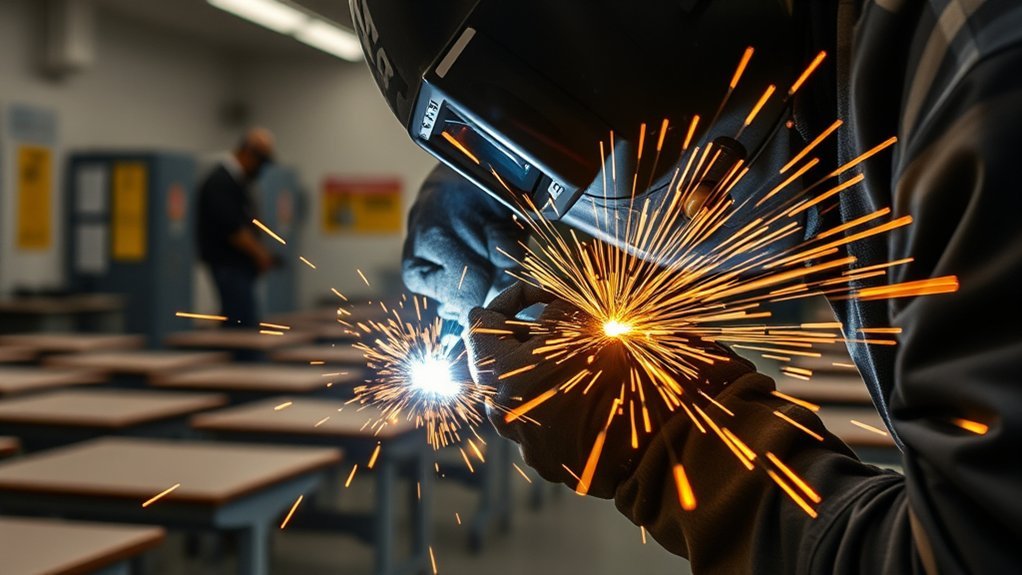
The price of a welding certificate varies widely because schools use the word “certificate” for programs of very different lengths. One college may offer an 11-credit introductory certificate, while another school may offer a 10-month or 40-week career program covering several welding processes.
Current published examples show why a single national average is not very useful. A short public-college certificate may cost less than $3,000, a longer public technical certificate may cost around $4,000 to $6,000, and a private career-school certificate can exceed $27,000.
The most useful price is the school’s written total program cost for your residency status, not a broad national tuition estimate.

This daily devotional helps parents pray purposefully for their children through a full year of Scripture readings, reflections, and guided prayer prompts. Written to encourage faithful family discipleship, it offers practical, biblically grounded support for parents who want to shape their prayers around God's Word. A foreword by Sinclair B. Ferguson adds trusted theological insight and encouragement.

Stay organized with a durable 1-subject notebook set designed for school, note-taking, and digital study support. The college ruled pages resist ink bleed, tear out cleanly, and work with the Five Star Study App to create flashcards and sync notes to Google Drive. Tough pockets, a water-resistant cover, and Spiral Lock wire help protect your work throughout the year.

These colorful answer buzzers turn lessons, review games, and family activities into lively game-show style challenges that boost participation and make learning more interactive. Each buzzer has a distinct sound to clearly identify who buzzed in first, while the durable, palm-sized design makes them easy for kids and adults to use in classrooms, homeschools, and group settings.
Welding Certificate Versus Welder Certification
These terms sound similar but refer to different credentials:
| Credential | What It Means | How You Earn It |
| School certificate | Shows that you completed a college, technical-school, or career-school curriculum. | Complete the required classes, labs, assignments, and school assessments. |
| Welder certification or qualification | Shows that you passed a performance test for a particular process, position, material, procedure, or code. | Complete a supervised weld test that is inspected and evaluated under the applicable rules. |
The American Welding Society Certified Welder program, for example, is performance-based. AWS does not require a particular course or previous certification before testing, although beginners normally need substantial shop practice before they are ready.
Note: Graduating from a welding certificate program does not automatically make you an AWS Certified Welder. Ask whether certification testing is included, optional, or charged separately.
Current Welding Certificate Cost Examples

The following official school listings illustrate the range of published costs. They are examples rather than a national average, and prices can change by academic year, campus, residency status, and course selection.
| School and Program | Length | Published Cost | What the Listing Says |
| Kaskaskia College Basic Welding Certificate | 11 credit hours | $2,690.50 | Tuition, student-services fee, lab fees, books, and insurance. |
| Salt Lake Community College Welding Technology | 24 credit hours; about 10 months | $4,737 | Tuition and fees, supplies, and books; third-party certification exams are excluded. |
| Hawkeye Community College Welding Certificate | 20 credit hours | $6,045 | Resident tuition and course fees for 2025–26; books and some other expenses may be additional. |
| UTI Canton Welding Specialist Certificate | 40 weeks; 960 clock hours | $27,421 | Published estimated total for the Canton certificate, effective March 12, 2026. |
These figures show why “tuition” and “total program cost” should not be used interchangeably. A low advertised tuition figure may exclude lab fees, books, equipment, consumables, technology charges, registration fees, insurance, or certification tests.
Pro Tip: Ask each school for an itemized cost sheet showing tuition, mandatory fees, books, PPE, tools, testing, and expected price increases. Compare the same categories across every school.
Additional Expenses for Materials and Equipment
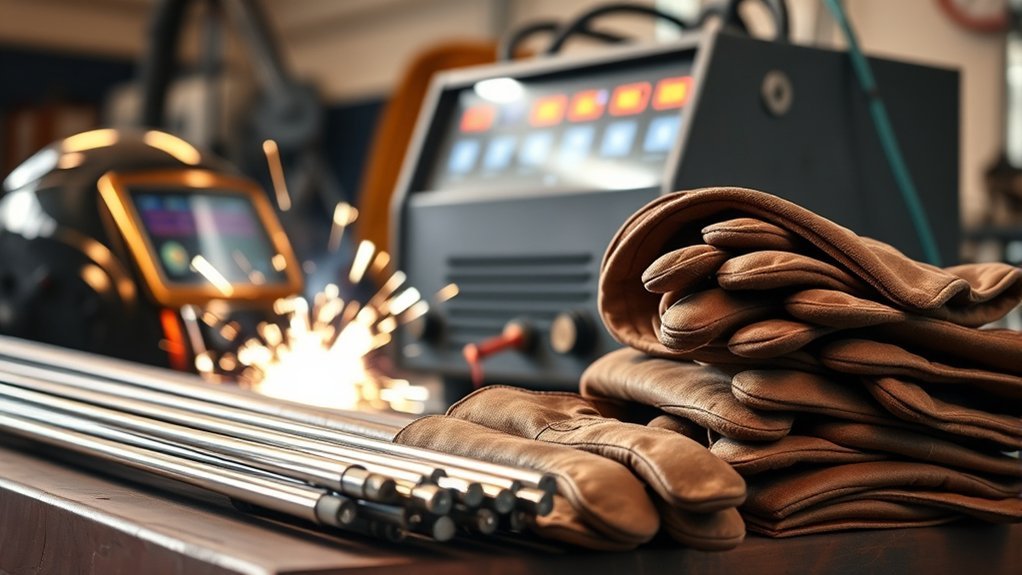
Your final cost may be higher than the advertised tuition. The amount depends heavily on what the school supplies in its welding lab and what students must purchase themselves.
- Application and registration fees: These may be charged before classes begin and are not always refundable.
- Lab and consumable fees: These can cover metal, electrodes, shielding gas, grinding discs, cutting supplies, booth maintenance, and equipment use.
- Books and digital course materials: Some schools include them, while others list them separately.
- Personal protective equipment: A school may provide some items but require students to own a helmet, gloves, clothing, safety glasses, and boots.
- Hand tools: Pliers, a chipping hammer, wire brush, tape measure, soapstone, clamps, or a tool bag may be required.
- Certification testing: Third-party testing may be excluded even when a program says it prepares students for certification.
- Transportation and parking: Welding courses often require regular travel to a physical lab, even when theory classes are online.
- Housing, food, and child care: Use the school’s official cost-of-attendance estimate rather than a generic national allowance.
- Lost income: Daytime lab schedules can reduce the number of hours you are able to work.
Safety Gear Expenses
Required PPE varies by program and welding process. A typical list may include:
- A welding helmet with the appropriate lens shade
- Safety glasses with side protection
- Welding gloves and process-appropriate work gloves
- Flame-resistant jacket, sleeves, or clothing
- Leather work boots that meet the school’s rules
- Hearing protection
- A welding cap and protective footwear covers when required
- Respiratory protection only when selected and used under appropriate safety procedures
The Occupational Safety and Health Administration’s welding standards address PPE, ventilation, fire prevention, hazardous substances, gas welding, and arc welding. Follow your school’s written requirements rather than purchasing gear based only on a general online list.
Warning: Welding exposes people to intense light, hot metal, fumes, fire hazards, electrical hazards, and compressed gases. Do not practice at home without appropriate training, ventilation, fire controls, PPE, and a workspace approved for hot work.
Equipment Purchase Costs
Most welding schools provide the power sources, booths, gas systems, ventilation, tables, and major shop equipment used during class. Students are more commonly responsible for personal PPE and smaller hand tools.
Do not assume that you need to purchase a $500 to $2,000 welding machine before enrolling. A personal machine is normally optional unless the school’s written equipment list specifically requires one. Buying too early can also leave you with a machine that does not support the process, input power, amperage range, or materials used in your program.
If you plan to practice outside school, ask the instructor which process and machine specifications match the curriculum. Include electrical installation, shielding gas, filler metal, ventilation, fire protection, and consumables in the home-practice budget.
Financial Aid and Funding Options
Several funding sources may lower your out-of-pocket cost, but eligibility is not automatic. Confirm that both the institution and the exact welding program qualify before making a deposit.
- FAFSA and federal student aid: The free FAFSA form may provide access to federal grants, work-study, and federal student loans for eligible students attending eligible college, career-school, or trade-school programs.
- State and school grants: States and colleges may use FAFSA information to award additional aid. Deadlines can be earlier than the federal deadline.
- Scholarships: Search the school, local employers, unions, community foundations, and welding-industry organizations. Review whether the award covers tuition only or may also pay for tools and PPE.
- Workforce funding: Eligible students may receive training assistance through the Workforce Innovation and Opportunity Act. Use the CareerOneStop WIOA training-program finder or contact an American Job Center.
- Employer assistance: Some employers reimburse tuition, sponsor testing, or hire entry-level workers while they continue training.
- Veterans and military education benefits: Eligible students should verify whether the specific program is approved for the benefit they plan to use.
- Payment plans: A school payment plan can spread costs across the term, but review enrollment fees, late fees, and refund terms.
Note: A school saying that “financial aid is available” does not mean every certificate or every student qualifies. Ask the financial-aid office to confirm the eligibility of the exact program code in writing.
Types of Welding Institutions
Welding training is offered through community colleges, public technical colleges, private career schools, adult-education centers, unions, employers, and apprenticeship programs. The best choice depends on the credential you need, the industries hiring near you, your schedule, and the total cost after aid.
Private Trade and Career Schools
Private trade schools often offer focused training with frequent start dates and condensed schedules. Programs may emphasize practical welding processes and career services, but the total price can be much higher than at a public college.
Before enrolling, review the complete catalog, refund policy, program outcomes, accreditation status, certification-test policy, and total amount you would borrow. Career services and employer relationships can be useful, but they do not guarantee employment or a particular salary.
Community and Technical Colleges
Public colleges often provide lower resident tuition and several credential levels. A school may offer a short process-specific certificate, a broader technical certificate, a diploma, and a two-year associate degree.
Do not assume every community-college welding program takes two years. The Kaskaskia example is 11 credit hours, while Salt Lake Community College lists a 24-credit technical certificate lasting about 10 months. An associate degree is a separate, longer credential that may add general-education courses and provide more transferable college credit.
Online and Hybrid Programs
Online courses can be useful for blueprint reading, welding symbols, safety concepts, metallurgy, math, codes, and theory. However, an online-only course cannot replace supervised practice with actual equipment.
A job-focused program should provide substantial in-person lab time for setup, fit-up, cutting, joint preparation, welding positions, defect identification, and destructive or visual testing. AWS Certified Welder performance tests are completed at approved testing facilities rather than through an online exam.
Registered Apprenticeships
A Registered Apprenticeship can combine paid work experience, progressive wage increases, mentoring, and classroom instruction. Availability varies by location and employer, and admission may be competitive. Search current opportunities through the Apprenticeship.gov Job Finder.
An apprenticeship may reduce school debt, but it is not necessarily faster. Compare the length, starting wage, classroom obligations, tools, travel, and credential earned at completion.
Program Length and Structure
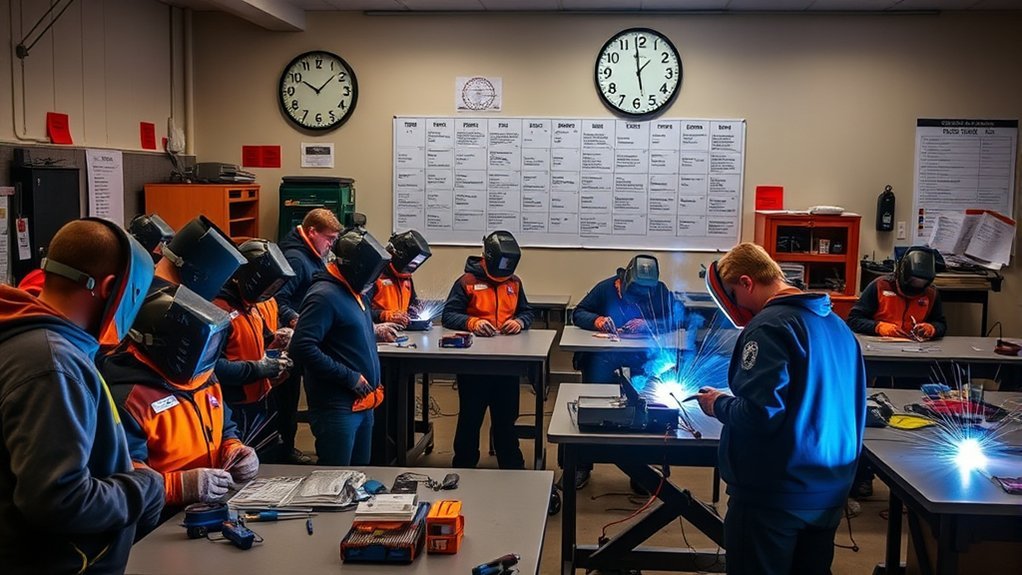
A welding certificate may take one semester, several terms, or roughly 10 months, depending on the number of processes and positions covered. Private career programs may also use clock hours and compressed 36- to 40-week schedules.
Short programs may focus on one process, such as shielded metal arc welding or gas metal arc welding. Broader programs may cover:
- Shop safety and hot-work practices
- Oxy-fuel and plasma cutting
- Shielded metal arc welding (SMAW)
- Gas metal arc welding (GMAW)
- Flux-cored arc welding (FCAW)
- Gas tungsten arc welding (GTAW)
- Blueprint reading and welding symbols
- Welding math, measurement, layout, and fabrication
- Joint preparation, fit-up, and inspection
- Practice for selected welder performance tests
Program length alone does not prove quality. A shorter program with many supervised booth hours may provide more useful practice than a longer program with limited lab access. Ask how many hours students spend welding, how booth time is scheduled, and whether extra practice is available.

BIC Cristal Xtra Smooth Blue Ball Pens deliver dependable everyday writing with a medium 1.0mm point and fluid Easy-Glide System Ink. Designed to create clear, dark lines, these pens are ideal for notes, lists, journaling, schoolwork, and office tasks. The convenient 10-count pack offers reliable performance for home, work, or classroom use.

This interactive sentence building set helps children practice early reading, writing, and grammar through hands-on play. Color-coded word cards, photo cards, and punctuation pieces make it easy to build simple sentences while reinforcing capitalization, parts of speech, and sentence structure. It is a versatile learning tool for homeschool and classroom use, with included game ideas and teaching suggestions to support multiple skill levels.

SET is a fast-paced family card game that challenges players to spot patterns and make matches by color, shape, shading, or number. Easy to learn yet mentally engaging, it works well for solo play, group game nights, travel, and classroom fun. Its quick rounds and educational value make it a favorite for kids, teens, and adults alike.
How to Compare Welding Certificate Programs
Use the following questions before choosing a school:
- What is the total program cost? Request tuition, mandatory fees, books, PPE, tools, consumables, testing, and graduation charges.
- Which welding processes and positions are taught? Match the curriculum to local job postings and the work you want to perform.
- How much hands-on lab time is included? Ask for actual lab or booth hours rather than relying on general descriptions such as “hands-on training.”
- Does the program include a performance test? Find out which code or procedure is used, who administers the test, and whether retesting costs extra.
- Is the exact program eligible for financial aid? Institutional eligibility does not always mean every short certificate qualifies.
- What are the completion and employment outcomes? Ask for documented data and the types of jobs graduates obtain, not only a list of possible careers.
- Will the credits transfer? This matters if you may later pursue a diploma or associate degree.
- Are evening or part-time schedules available? Confirm that required lab courses fit your work and family responsibilities.
- What equipment is provided? Get the required student tool and PPE list before purchasing anything.
- What is the refund policy? Review what happens if you withdraw, fail a course, or cannot complete required lab hours.
Career Prospects After a Welding Certificate
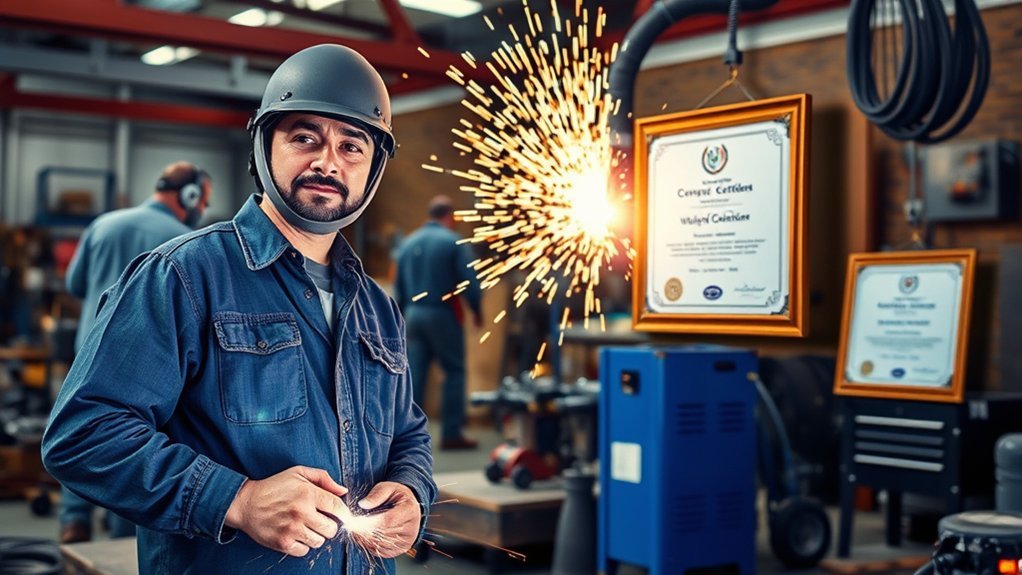
A welding certificate can help you build entry-level skills for manufacturing, fabrication, repair, construction, and related work. It does not guarantee a job, certification, or a specific starting wage.
According to the U.S. Bureau of Labor Statistics May 2025 wage data, welders, cutters, solderers, and brazers had a national median hourly wage of $25.84 and a mean annual wage of $56,760. Pay varies by location, industry, experience, overtime, travel, union status, and the procedures a welder is qualified to perform.
The BLS projects 2% employment growth from 2024 to 2034, which is slower than the average for all occupations. It nevertheless projects about 45,600 openings per year, mainly because workers change occupations or leave the workforce.
Possible entry-level job titles include:
- Production welder: Performs repeatable welds in manufacturing and fabrication environments.
- Welder-fabricator: Reads drawings, measures, cuts, fits, and joins components.
- Structural welder: Works on steel components under applicable procedures and job requirements.
- Welding machine operator: Sets up or monitors mechanized welding equipment.
- Fitter or assembler: Positions and prepares components before welding.
- Repair or maintenance welder: Repairs worn, damaged, or broken metal components.
Specialized work in pipelines, pressure vessels, shipbuilding, aerospace, power generation, or industrial shutdowns often requires additional experience, procedure-specific qualifications, travel, safety training, and employer testing. Higher earnings in these fields should not be treated as an expected result for every new graduate.
Welding Certification and Testing Costs
Certification expenses may be separate from school tuition. Under the AWS Certified Welder program, candidates schedule a performance test with an AWS Accredited Testing Facility. The facility evaluates the completed weld under the applicable procedure and acceptance requirements.
The AWS price list effective January 1, 2026 shows:
- Certified Welder application: $70
- Performance test: Price set by the individual Accredited Testing Facility
- Annual maintenance subscription: $105
Testing facilities may charge for materials, machine time, preparation, inspection, bend tests, or retesting. Ask for the full price before booking an appointment.
Certification is not a single lifetime approval for every welding job. A qualification normally applies to defined variables such as the welding process, position, material, thickness, filler metal, and procedure. Employers may require additional tests under AWS codes, ASME Section IX, API 1104, or company-specific procedures.
Pro Tip: Ask local employers which processes and qualifications they hire for before paying for several unrelated tests. A targeted qualification is usually more useful than collecting credentials without a job goal.
Frequently Asked Questions
How much does a welding certificate cost?
Current published examples range from about $2,690 for a short public-college certificate to more than $27,000 for a private career-school certificate. Your cost depends on program length, residency, school type, included equipment, books, testing, and financial aid.
Is a welding certificate the same as welding certification?
No. A certificate shows that you completed an educational program. Welder certification or qualification shows that you passed a performance test under a particular procedure, process, position, material, or code.
Are online welding certificate programs available?
Online and hybrid courses may cover welding theory, safety, math, blueprint reading, and codes. Practical welding skills require in-person lab work, and AWS Certified Welder performance tests must be completed at an approved testing facility.
Can I earn a welding certificate while working full-time?
Possibly. Many colleges offer evening, part-time, or staggered course schedules. Confirm the required lab times before enrolling because practical courses cannot always be completed online or rescheduled around work.
What prerequisites are needed for a welding program?
School requirements vary. A program may require a high school diploma or equivalent, a minimum age, placement testing, basic math skills, an orientation, or specific PPE. The AWS Certified Welder performance test itself does not require a previous course or certification.
How often are AWS Certified Welder tests offered?
AWS Certified Welder tests are scheduled by appointment with an Accredited Testing Facility rather than offered only on a single national calendar. If you do not pass, AWS permits retesting, but you must arrange a new appointment and pay any applicable facility charges.
Which welding qualifications should I pursue?
Choose qualifications that match the employers and industries you plan to enter. Common variables include SMAW, GMAW, FCAW, or GTAW; plate or pipe; welding position; material; thickness; and the applicable AWS, ASME, API, or employer procedure.
Sources
- U.S. Bureau of Labor Statistics, May 2025 national wage data — median hourly and mean annual wages for welders, cutters, solderers, and brazers.
- U.S. Bureau of Labor Statistics Occupational Outlook Handbook — education, work environment, projected growth, and annual openings.
- American Welding Society Certified Welder Program — performance-test requirements, testing facilities, appointments, and retesting.
- American Welding Society 2026 Program Price List — application and certification-maintenance fees.
- Federal Student Aid, 2026–27 FAFSA guidance — grants, work-study, loans, and career-school aid.
- Occupational Safety and Health Administration welding standards — PPE, ventilation, fire prevention, and welding hazards.
Conclusion
A welding certificate can cost a few thousand dollars at some public colleges or more than $20,000 at a private career school. The best value is not automatically the cheapest or shortest program. Compare total cost, hands-on lab hours, welding processes, testing arrangements, financial-aid eligibility, schedule, and documented outcomes.
Before enrolling, obtain an itemized price sheet and confirm whether PPE, books, consumables, and certification tests are included. A well-matched program can provide valuable entry-level skills, but certification, employment, and earnings will still depend on your demonstrated ability, location, industry, and continued experience.

Experience J.R.R. Tolkien's legendary Middle-earth saga in a compact hardcover boxed set that brings together The Hobbit and The Lord of the Rings. This deluxe collection is ideal for readers who want a portable, collectible edition of the classic fantasy adventures, making it perfect for gifting, re-reading, and building a treasured library. The boxed presentation adds display appeal while the hardcovers offer lasting durability for years of enjoyment.

This hardcover book celebrates the art of gathering with inspiring table settings, thoughtful traditions, and practical ideas for hosting memorable meals. Written by Shea McGee, it offers beautiful design inspiration alongside approachable guidance for creating warm, welcoming spaces for family and friends. It's a charming resource for anyone who loves entertaining, home styling, and making everyday moments feel special.

These Stanley MaxSteel straight aviation snips are built for clean, controlled cutting through sheet metal and other tough materials. Serrated cutting edges help prevent slippage for more accurate results, while the double pivot action delivers increased cutting power with less effort. Designed for dependable performance, they are a practical choice for metalworking, HVAC tasks, and general workshop use.
