

Welding school can be an affordable path into skilled work, but the advertised tuition is only one part of the bill. Your total may include lab fees, protective gear, hand tools, books, certification tests, transportation, and living expenses. Comparing the full program cost—and the aid you may actually receive—gives you a much clearer answer than relying on one national average.
Quick Answer
Welding school typically costs about $3,000 to $30,000 or more before housing and lost wages. Low-cost public certificate programs may stay under $7,000 including tools, while private welding institutes can exceed $25,000. Your price depends on program length, residency, required gear, financial aid, and whether certification testing is included.
Key Takeaways
- Published welding program costs range from a few thousand dollars at some public colleges to more than $25,000 at private institutes.
- Always compare the total program cost, including fees, PPE, tools, books, testing, transportation, and living expenses.
- A school certificate or diploma is not the same as becoming an AWS Certified Welder.
- Federal aid is available only when both the student and the specific school or program meet eligibility rules.
- The latest Occupational Outlook Handbook reports a $51,000 median annual wage for welders, but earnings vary by location, industry, skill, and experience.
At a Glance
| Low-Cost Public Certificate | One current example lists $1,986 in in-district tuition and fees, plus an estimated $1,600 tool kit. |
| Public 12-Month Program | One Tennessee program lists $4,820 in tuition and fees plus $1,589 for books and supplies. |
| Private Welding Institute | Published private-school totals can exceed $22,000; Hobart Institute currently projects $26,485 for its Pathways Welding Program. |
| Associate Degree | Usually about two academic years. Total cost depends on credits, residency, general education courses, fees, tools, and living expenses. |
| Common Extra Costs | PPE, hand tools, books, consumables, testing, transportation, housing, childcare, and income lost while attending class. |
Overview of Welding School Costs
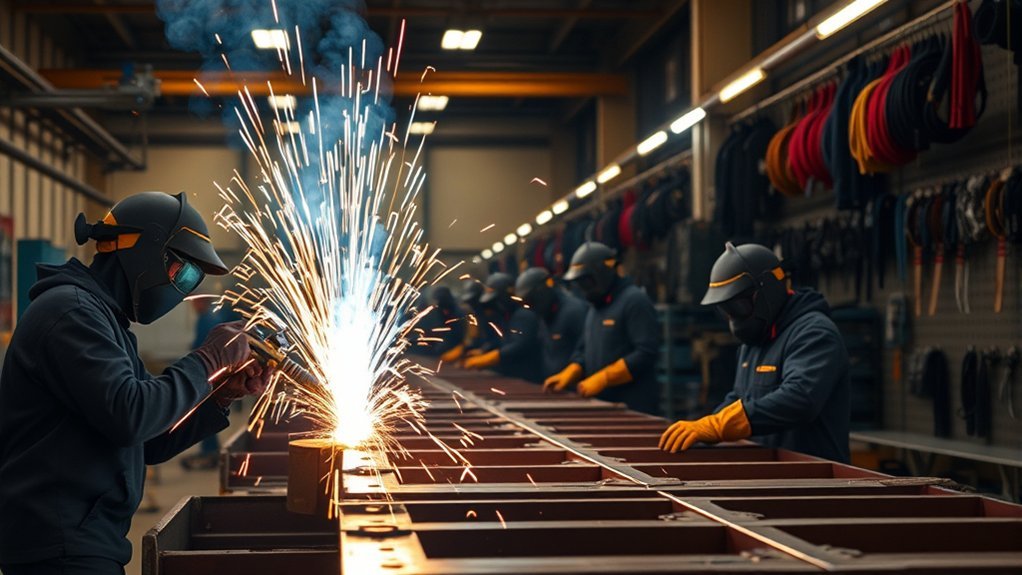
There is no single national welding school price. A short public certificate, a one-year diploma, a private trade-school program, and a two-year associate degree have different lengths, course requirements, and fee structures.
Current official examples show how wide the spread can be. Alvin Community College lists approximately $1,986 in tuition and fees for its in-district Welding Certificate 1, plus an estimated $1,600 tool kit. TCAT Knoxville lists $4,820 in tuition and fees and $1,589 in books and supplies for a 12-month program.
At the higher end, Hobart Institute of Welding Technology lists a projected total of $26,485 for its Pathways Welding Program, including tuition, equipment, and training materials. Tulsa Welding School also publishes program- and campus-specific totals above $22,000 for listed enrollment periods.
These examples do not establish a national average. They show why you should request an itemized cost sheet from every school and confirm the date, campus, residency rate, and supplies included.
Pro Tip: Compare each school’s total program cost, not its monthly payment or tuition alone. A lower advertised tuition can still become expensive after lab fees, tools, transportation, and extra semesters are added.

Stay organized with a durable 1-subject notebook set designed for school, note-taking, and digital study support. The college ruled pages resist ink bleed, tear out cleanly, and work with the Five Star Study App to create flashcards and sync notes to Google Drive. Tough pockets, a water-resistant cover, and Spiral Lock wire help protect your work throughout the year.

This interactive sentence building set helps children practice early reading, writing, and grammar through hands-on play. Color-coded word cards, photo cards, and punctuation pieces make it easy to build simple sentences while reinforcing capitalization, parts of speech, and sentence structure. It is a versatile learning tool for homeschool and classroom use, with included game ideas and teaching suggestions to support multiple skill levels.

These colorful answer buzzers turn lessons, review games, and family activities into lively game-show style challenges that boost participation and make learning more interactive. Each buzzer has a distinct sound to clearly identify who buzzed in first, while the durable, palm-sized design makes them easy for kids and adults to use in classrooms, homeschools, and group settings.
Types of Welding Institutions

The best type of institution depends on how quickly you want to enter the workforce, how much academic study you want, and whether you may transfer credits later.
Private Trade Schools and Welding Institutes
Private trade schools usually focus heavily on shop practice and may offer daytime or evening schedules. Programs can be completed faster than a degree, but the total cost may be higher than at a public college.
Ask whether the published price includes registration, laboratory fees, books, protective gear, tools, consumables, testing, and retakes. You should also review the cancellation and refund policy before signing an enrollment agreement.
Community and Technical Colleges
Public colleges may offer short certificates, one-year diplomas, and two-year associate degrees. In-district or in-state students often pay less than nonresidents, although lab fees, tools, and general education classes can increase the final cost.
An associate degree may provide broader coursework in blueprint reading, math, metallurgy, fabrication, communication, and general education. It also takes longer and may create more transportation and living costs.
Short Certificate and Noncredit Programs
Short programs can teach a specific welding process or prepare students for entry-level work. They may last several weeks or months and can cost less than a full diploma or degree.
However, a narrow course may not include the same range of processes, positions, metals, blueprint skills, or laboratory hours as a longer program. Compare the curriculum with the skills requested in local job postings.
Note: A certificate awarded by a school confirms that you completed its program. It is not automatically the same as an industry certification. The AWS Certified Welder credential requires a hands-on performance test at an AWS Accredited Test Facility.
Program Length and Structure
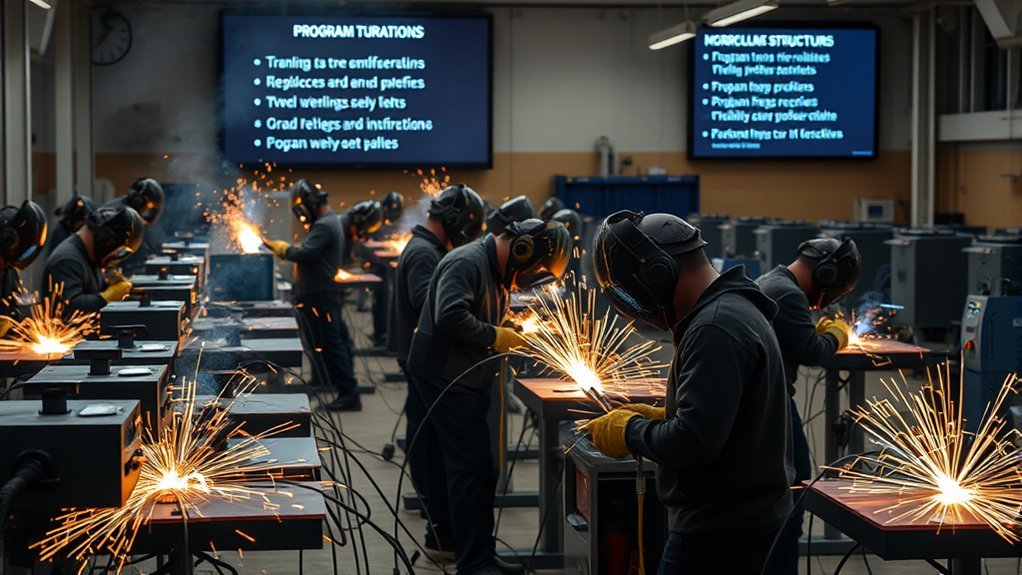
Program length affects both tuition and the amount of time you may spend away from full-time work. The shortest option is not always the least expensive once transportation, repeated courses, and limited job preparation are considered.
- Individual or noncredit courses: Often several weeks to a few months and focused on one process or skill.
- Certificate or diploma programs: Commonly about six to 12 months when attended full time. For example, Tulsa Welding School advertises a seven-month professional welding program, while TCAT Knoxville lists a typical length of 12 months.
- Associate degree programs: Usually about two academic years and may include welding, fabrication, technical math, blueprint reading, and general education.
- Registered Apprenticeships: Multi-year paid programs that combine supervised work and classroom instruction. Participants earn wages while training rather than paying the full cost of a traditional school program.
Evening and part-time programs can make it easier to keep a job, but they usually take longer to finish. Ask how many shop hours you receive each week, how often required classes are offered, and whether missing a course delays graduation.
Additional Costs to Consider
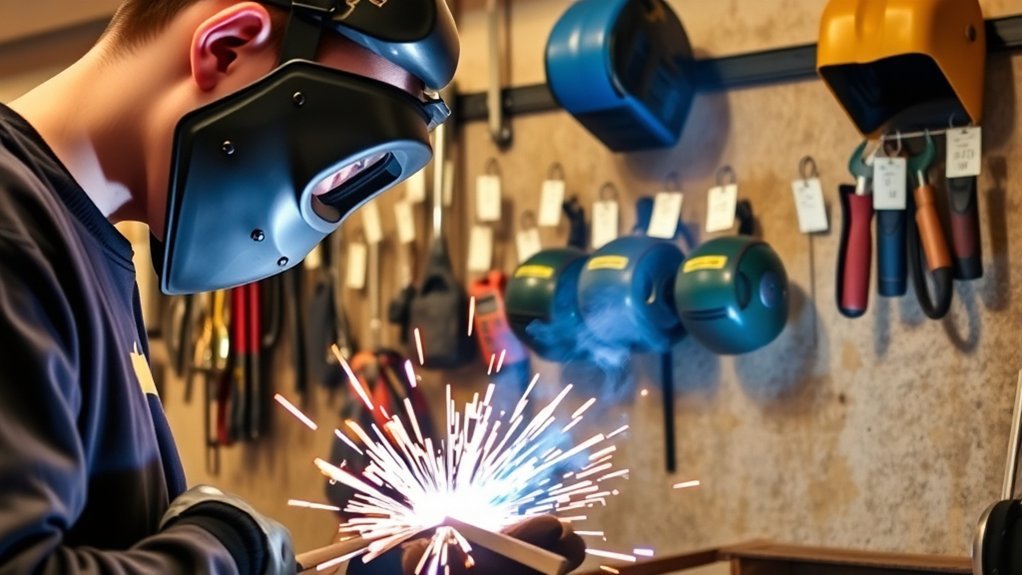
A complete welding school budget should include more than tuition. Request a written list of required purchases before enrolling.
- Registration, laboratory, and technology fees: These may be charged once or each term.
- Personal protective equipment: A helmet, safety glasses, welding gloves, protective clothing, hearing protection, and suitable boots may be required.
- Hand tools: Schools may require pliers, clamps, wire brushes, chipping hammers, soapstone, measuring tools, or a complete tool kit.
- Books and digital materials: Blueprint-reading texts, welding references, online access codes, and codebooks may not be included in tuition.
- Consumables: Electrodes, wire, gas, metal, grinding discs, and practice coupons may be included, partly included, or billed separately.
- Certification or qualification testing: Test fees, laboratory charges, and retakes may be separate from the school program.
- Transportation and housing: Fuel, parking, relocation, and rent can exceed the cost of tools, especially during an intensive full-time program.
- Childcare and lost income: Daytime shop hours or clinical-style attendance rules may reduce the number of hours you can work.
Do not assume you need to buy a welding machine. Most training facilities provide the major shop equipment used in class. Purchase a machine only when the school’s written supply list specifically requires one.
Warning: Welding can expose students to fumes, ultraviolet radiation, burns, electrical shock, eye injuries, fire, and other hazards. Follow the school’s exact PPE and ventilation rules. OSHA explains that proper work practices and protective equipment are needed to control welding hazards.
How to Compare Welding School Costs
Use the same process for every program so that a low headline price does not hide higher fees or weaker training.
- Request an itemized total. Ask for tuition, mandatory fees, books, tools, PPE, testing, and estimated living costs for the full program.
- Confirm the program length. Find out how many terms, credits, clock hours, and hands-on laboratory hours are required.
- Separate grants from loans. A financial aid offer may combine money that does not normally require repayment with money that must be repaid with interest.
- Ask what happens if training takes longer. Determine whether failed or unavailable courses create another term of tuition and living expenses.
- Verify certification preparation. Ask which welding procedures, positions, metals, and qualification tests are included and whether testing fees are separate.
- Review outcomes carefully. Request the school’s completion, withdrawal, placement, and debt information, including how it defines a “placed” graduate.
- Check transferability. If you may continue to an associate or bachelor’s degree, obtain the receiving school’s written transfer policy.
You can use the U.S. Department of Education’s College Navigator and College Scorecard to review institutional costs, completion information, and other consumer data. Noncredit and small private training providers may require additional direct research.
Financial Aid and Funding Options

Financial aid can lower the amount you pay, but not every welding school or short course qualifies for every type of funding.

Die With Zero offers a fresh perspective on personal finance by encouraging readers to use money intentionally to create memorable life experiences instead of simply accumulating wealth. Written by Bill Perkins, this book combines practical guidance with a motivating philosophy to help readers align spending, saving, and life goals for a more fulfilling future.

These Stanley MaxSteel straight aviation snips are built for clean, controlled cutting through sheet metal and other tough materials. Serrated cutting edges help prevent slippage for more accurate results, while the double pivot action delivers increased cutting power with less effort. Designed for dependable performance, they are a practical choice for metalworking, HVAC tasks, and general workshop use.

These Rawlings practice baseballs are built for young players ages 8 and under, offering an easy grip and consistent feel for recreational play. Each ball features a synthetic leather cover with a solid cork and rubber center, plus official size and weight for reliable training. The set includes a durable bucket for convenient storage and transport, making it a smart choice for coaches, parents, and teams.
Federal Student Aid
Eligible students can submit the Free Application for Federal Student Aid. An eligible college or career school may then offer a package containing grants, work-study, and federal loans.
Federal Pell Grants generally do not require repayment and may be used at eligible trade and career schools. Eligibility depends on factors such as financial need, enrollment, the cost of attendance, and the school’s participation.
Do not assume that the institution’s general eligibility covers every course it offers. Confirm the exact welding program in the FAFSA school search and ask the financial aid office for the program’s federal school code.
Welding Scholarships
The AWS Foundation offers national, district, section, and training scholarships. Its national program includes more than 130 donor-funded scholarships, while the separate Welder Training Scholarship is intended for certificate programs shorter than two years.
Also check state workforce agencies, local manufacturers, unions, community foundations, high-school career programs, and the school’s own scholarship page. Deadlines and eligibility rules differ, so applying early matters.
Veterans Benefits, Employer Funding, and Payment Plans
Veterans and other eligible beneficiaries can use the GI Bill Comparison Tool to check whether a school or employer training program is approved.
Some employers reimburse tuition or pay for job-related qualification tests. Schools may also offer installment plans, but a payment plan changes the timing of the bill rather than reducing the total price. Review enrollment fees, late charges, and refund terms.
Pro Tip: Compare aid offers by subtracting grants and scholarships first. List loans separately, because loans reduce today’s payment but still increase the long-term cost of school.
Lower-Cost Alternatives to Welding School
A full-time private program is not the only path into welding. Depending on local employers and your experience, one of these options may lower your upfront cost:
- Registered Apprenticeship: Registered Apprenticeships combine a paid job, progressive wage increases, classroom instruction, mentoring, and an industry-recognized credential.
- Employer-sponsored training: A manufacturer, fabrication shop, shipyard, contractor, or union may train new employees and pay for required qualification tests.
- Public workforce programs: State and local workforce agencies may fund training for eligible job seekers or displaced workers.
- High-school career and technical education: Students may be able to begin welding coursework before graduation at little or no tuition cost.
- Individual community-college courses: Taking one process at a time can cost less initially, although it may not provide the full preparation of a complete program.
An apprenticeship is a paid job rather than a traditional college experience, and openings can be competitive or limited by location. Search current opportunities and compare the work schedule, classroom requirements, wage progression, and travel expectations.
Career Prospects After Welding School
Welding training can lead to work in manufacturing, fabrication, construction, repair, transportation equipment, and specialty trades. A school cannot guarantee a job, and employers may require applicants to pass their own hands-on qualification test.
Job Opportunities Available
Common entry points include production welding, structural fabrication, repair work, sheet-metal fabrication, maintenance, and assembly. Job duties and qualification standards vary by employer, code, welding process, material, and position.
The U.S. Bureau of Labor Statistics states that welders, cutters, solderers, and brazers typically need a high-school diploma or equivalent along with technical and on-the-job training. Many employers value blueprint reading, measurement, fit-up, inspection awareness, and safe shop habits in addition to the ability to produce a sound weld.
BLS projects about 45,600 openings for welders, cutters, solderers, and brazers each year from 2024 to 2034, even though total employment is projected to grow by 2%.
Most projected openings result from workers changing occupations or leaving the labor force, rather than rapid overall job growth. Local demand can still be stronger or weaker than the national outlook.
Potential Salary Earnings
The Bureau of Labor Statistics reports a median annual wage of $51,000 in May 2024. The lowest 10% earned less than $38,130, while the highest 10% earned more than $75,850.
Median wages also differed by major industry. BLS reported $57,310 for specialty trade contractors, $53,300 for repair and maintenance, and $49,740 for manufacturing. These are occupation-wide medians, not guaranteed starting salaries.
Your pay may depend on location, overtime, shift premiums, union coverage, travel, welding process, code qualifications, industry, and experience. Research local job postings and state wage data instead of building a school budget around a rare specialty salary.
Career Advancement Paths
With experience and additional training, welders may move into fitting, fabrication, robotic welding, quality control, supervision, estimating, instruction, or inspection.
- Performance qualifications: Passing tests for specific processes, positions, materials, or codes can qualify you for particular work.
- AWS Certified Welder: This performance-based credential is earned through an AWS Accredited Test Facility rather than through classroom completion alone.
- Welding inspection: AWS welding-inspector credentials have separate education, experience, vision, and examination requirements.
- Commercial diving: Underwater cutting or welding is part of commercial-diving work and requires diving-related education and training in addition to welding ability.
- Leadership and teaching: Experienced welders may advance into lead, supervisory, training, or shop-management positions.
Before paying for an advanced specialty course, search for local employers that hire for that skill and ask what credentials, experience, and qualification tests they require.
Evaluating the Return on Investment for Welding Education
Welding school may offer a good return when the training matches local jobs and the total debt remains manageable. The most expensive program is not automatically the best, and the shortest program is not automatically the cheapest.
Start with your full out-of-pocket cost:
Tuition and fees + tools and supplies + transportation and living costs + lost income − grants and scholarships = estimated out-of-pocket cost
Next, compare that figure with realistic local earnings. As a simple hypothetical example, an $8,000 out-of-pocket program followed by a $500 monthly increase in take-home income would take about 16 months to recover. That estimate changes if you borrow money, pay interest, need longer to find work, or earn overtime.
Before enrolling, consider these questions:
- How many recent graduates completed the program?
- How many found welding-related work, and how does the school define placement?
- What was the median debt among borrowers?
- Do local employers recruit from the program?
- Does the curriculum teach the processes and codes used by those employers?
- Are required qualification tests included?
- Can you complete the program without taking on unaffordable private debt?
Note: Wage figures are national occupational statistics, not promises of employment or pay. Compare local wages, job requirements, and the school’s verified outcomes before borrowing.
Frequently Asked Questions
Are scholarships available for welding school students?
Yes. The AWS Foundation offers several scholarship types, including national scholarships and a Welder Training Scholarship for eligible certificate programs shorter than two years. Schools, employers, unions, workforce agencies, and local foundations may offer additional help.
Can I work while attending welding school?
Many students work, especially when a school offers evening or part-time classes. Welding programs also require scheduled shop practice, so ask for the full weekly timetable, attendance rules, and expected study time before choosing your work hours.
What materials do I need to bring to class?
Requirements vary. Common items include a welding helmet, safety glasses, gloves, protective clothing, suitable boots, measuring tools, pliers, brushes, and a chipping hammer. Obtain the school’s official list before purchasing anything because some equipment may be included.
Are there age restrictions for welding programs?
Age and admission rules differ by school, program, and state. Some high-school career programs accept minors, while adult postsecondary programs may require a diploma, GED, minimum age, placement testing, or parental permission. Check the exact admissions policy.
Do welding schools offer job placement assistance?
Some provide résumé help, interview practice, employer introductions, job boards, or hiring events. Assistance is not a job guarantee. Ask for documented completion and placement data and learn how the school defines welding-related employment.
Does graduating from welding school make me AWS certified?
Not automatically. Graduation may earn a school certificate, diploma, or degree. AWS Certified Welder status requires passing a hands-on performance qualification test at an AWS Accredited Test Facility and completing the certification process.
Can FAFSA help pay for welding school?
It can when the student, school, and program meet federal eligibility requirements. Submit the FAFSA and confirm the exact program with the financial aid office. Short noncredit courses and some private training providers may not qualify.
Is welding school worth the cost?
It may be worth it when the curriculum matches local jobs, the program provides enough hands-on practice, outcomes are credible, and your debt stays manageable. Compare at least three programs and include every cost before deciding.
Conclusion
Welding school can cost about $3,000 to $30,000 or more, but your actual out-of-pocket price depends on the institution, program length, residency, equipment requirements, living expenses, and financial aid. Public certificates and paid apprenticeships may reduce the upfront cost, while private institutes can offer intensive training at a higher price.
Before enrolling, compare itemized totals, hands-on hours, local employer requirements, certification testing, completion results, and debt. A well-matched program can provide useful technical skills, but the best choice is the one that prepares you for real jobs without creating an unmanageable financial burden.
Sources
- U.S. Bureau of Labor Statistics — Welders, Cutters, Solderers, and Brazers — wages, training requirements, employment outlook, and annual openings.
- Federal Student Aid — FAFSA and Federal Pell Grants — federal-aid applications, eligibility, and grant information.
- AWS Foundation Scholarships — welding scholarships for degree and training programs.
- AWS Certified Welder Program — performance-testing and certification requirements.
- Occupational Safety and Health Administration — Welding Hazards and Solutions — fumes, radiation, burns, electrical hazards, and PPE.
- Alvin Community College, TCAT Knoxville, Hobart Institute of Welding Technology, and Tulsa Welding School — official examples of current program tuition, tools, supplies, and total costs.

The STABILO woody 3 in 1 is a versatile all-in-one pencil that works as a colouring pencil, watercolour, and wax crayon. Its chunky shape is designed for a comfortable grip in smaller hands, while the thick lead delivers rich, opaque color on paper, dark surfaces, and even glass. Ideal for large-area coloring and a wide range of creative techniques, it offers bold results with smooth, intensive coverage.

This daily devotional helps parents pray purposefully for their children through a full year of Scripture readings, reflections, and guided prayer prompts. Written to encourage faithful family discipleship, it offers practical, biblically grounded support for parents who want to shape their prayers around God's Word. A foreword by Sinclair B. Ferguson adds trusted theological insight and encouragement.

BIC Cristal Xtra Smooth Blue Ball Pens deliver dependable everyday writing with a medium 1.0mm point and fluid Easy-Glide System Ink. Designed to create clear, dark lines, these pens are ideal for notes, lists, journaling, schoolwork, and office tasks. The convenient 10-count pack offers reliable performance for home, work, or classroom use.
