

If you’re considering welding school, the tuition price is only one part of the decision. Your real cost may also include lab fees, protective equipment, books, certification testing, transportation, housing, and time away from work. Comparing the full cost of attendance—and the results each program produces—will give you a more realistic picture of the investment.
Quick Answer
Welding school can cost under $3,000 at some in-district public colleges and roughly $20,000–$30,000 at private career schools before living expenses. Your total depends on residency, program length, lab fees, gear, books, certification tests, and financial aid. Compare each school’s complete cost of attendance rather than tuition alone.
Key Takeaways
- Public community and technical colleges are often the least expensive options for in-district or in-state students.
- Private career-school programs may package tuition, lab time, gear, books, and technology fees into a total approaching $20,000–$30,000.
- Housing, commuting, childcare, lost work hours, and loan interest can cost more than books or tools.
- A school certificate, an AWS certification, and an employer welding qualification test are different credentials.
- Compare net price, hands-on lab hours, completion data, employer relationships, and local wages before enrolling.
At a Glance
| Typical Training Time | Several weeks to about two years for most certificate, diploma, and associate-degree routes |
| Tuition Range | From a few thousand dollars at some public colleges to roughly $20,000–$30,000 for some private programs |
| Common Extra Costs | PPE, lab fees, books, consumables, certification tests, transportation, housing, insurance, and retesting |
| Current Pay Benchmark | $51,000 national median annual wage in May 2024; this is not a guaranteed starting salary |
Typical Welding School Tuition by Program Type
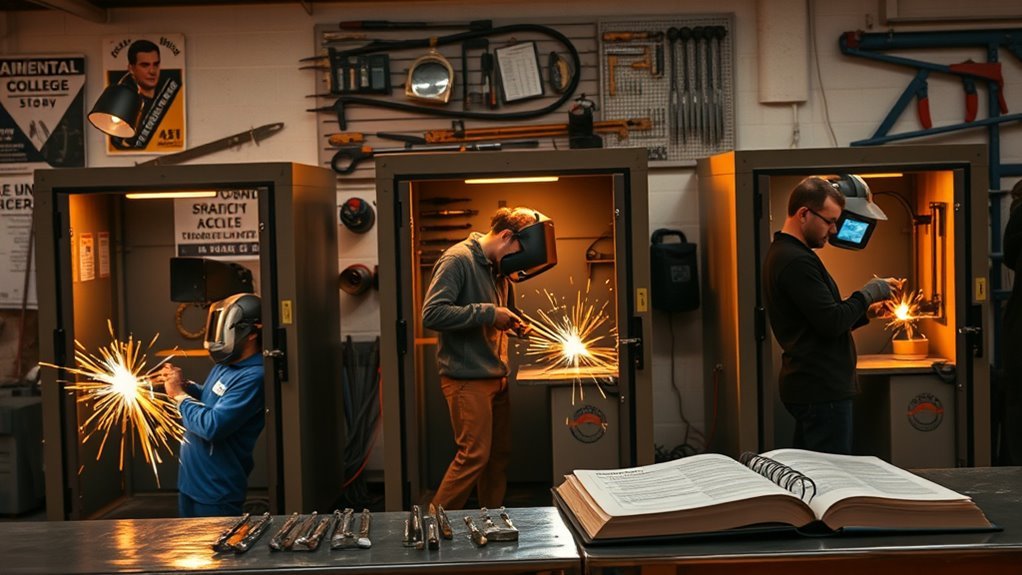
There is no single national price for welding school. Tuition changes according to the school, program length, residency status, number of credit or clock hours, and whether equipment and lab charges are included.
Public community and technical colleges can be especially affordable for local residents. For example, Mt. San Antonio College publishes welding tuition estimates ranging from $1,228 to $1,380 for several 28- to 30-unit in-state programs. The same programs are estimated at $9,352 to $10,020 for nonresidents, and books or materials are not included.
Private career schools often charge more but may provide a condensed schedule, extensive lab access, career services, or bundled equipment. One published Tulsa Welding School cost example lists total tuition and fees of $23,650 for its Welding Specialist program and $29,150 for Welding Specialist with Pipefitting. Because school prices change, confirm the current catalog and enrollment agreement before relying on any published figure.
| Program Route | Common Length | Cost Pattern |
|---|---|---|
| Short course or process-specific class | Several weeks to a few months | Usually the lowest tuition, but may cover only one process or skill level |
| Certificate or diploma | About six months to one year | Often focused on job-ready shop skills and several welding processes |
| Associate degree | About two years | Includes general education and may cost more overall, especially for nonresidents |
| Private career-school program | Often seven months to about one year | Higher sticker price, sometimes with lab, gear, books, or career services bundled |
Pro Tip: Ask every school for the complete cost of attendance in writing. It should separate tuition, registration, lab charges, books, gear, certification tests, housing, transportation, and other required fees.

These Stanley MaxSteel straight aviation snips are built for clean, controlled cutting through sheet metal and other tough materials. Serrated cutting edges help prevent slippage for more accurate results, while the double pivot action delivers increased cutting power with less effort. Designed for dependable performance, they are a practical choice for metalworking, HVAC tasks, and general workshop use.

This daily devotional helps parents pray purposefully for their children through a full year of Scripture readings, reflections, and guided prayer prompts. Written to encourage faithful family discipleship, it offers practical, biblically grounded support for parents who want to shape their prayers around God's Word. A foreword by Sinclair B. Ferguson adds trusted theological insight and encouragement.

Die With Zero offers a fresh perspective on personal finance by encouraging readers to use money intentionally to create memorable life experiences instead of simply accumulating wealth. Written by Bill Perkins, this book combines practical guidance with a motivating philosophy to help readers align spending, saving, and life goals for a more fulfilling future.
Program Lengths and What They Include
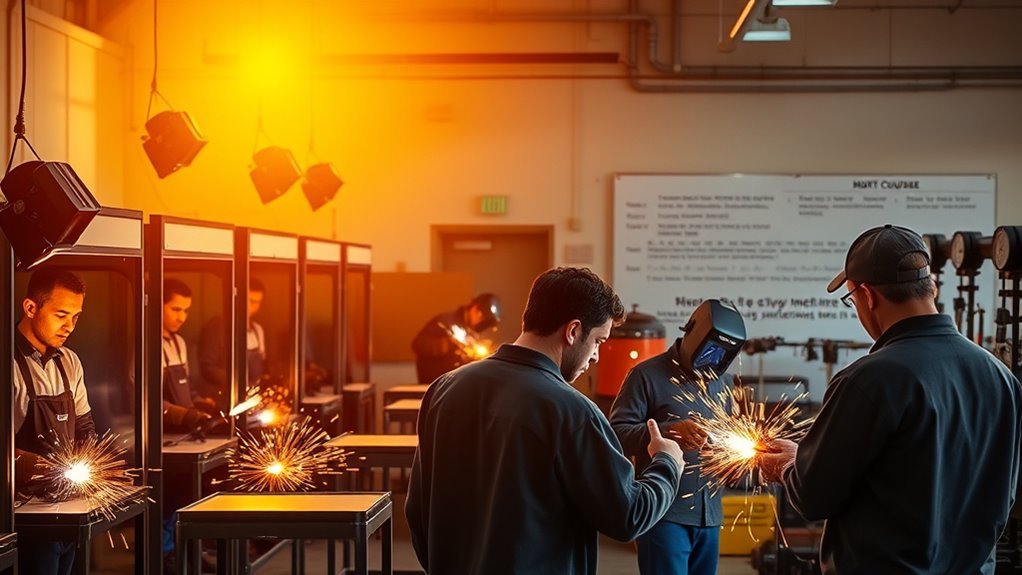
Program length affects both the tuition bill and the amount of time you spend away from full-time work. A shorter program may help you enter the workforce sooner, but it may teach fewer processes, positions, metals, or blueprint-reading skills.
Most entry-level programs combine classroom instruction with supervised shop practice. Curriculum may include shielded metal arc welding, gas metal arc welding, flux-cored arc welding, gas tungsten arc welding, cutting, fitting, blueprint reading, weld symbols, metallurgy, inspection, and workplace safety.
Associate-degree programs normally add general-education courses such as math, communication, or technical writing. Four-year study is less common for production welders and is more likely to focus on welding engineering, welding engineering technology, manufacturing, inspection, or management.
What to Compare Before Enrolling
Do not judge a program by its length or advertising alone. Ask the admissions office for clear answers to these questions:
- How many hours are spent welding in the shop?
- Which welding processes, positions, and metals are covered?
- Are consumables and practice metal included?
- How many students share each booth or machine?
- Does the program prepare students for specific qualification tests?
- Are certification application, testing, and retesting fees included?
- What are the completion, withdrawal, and refund policies?
- Can credits transfer to another accredited institution?
- What recent employers have hired graduates?
- Does the campus publish placement figures, and how are they calculated?
You can check institutional information through the U.S. Department of Education’s Database of Accredited Postsecondary Institutions and Programs. Accreditation does not guarantee a job or make every program eligible for federal aid, so verify both the institution and the exact program.
Additional Equipment, Fees, and Living Costs
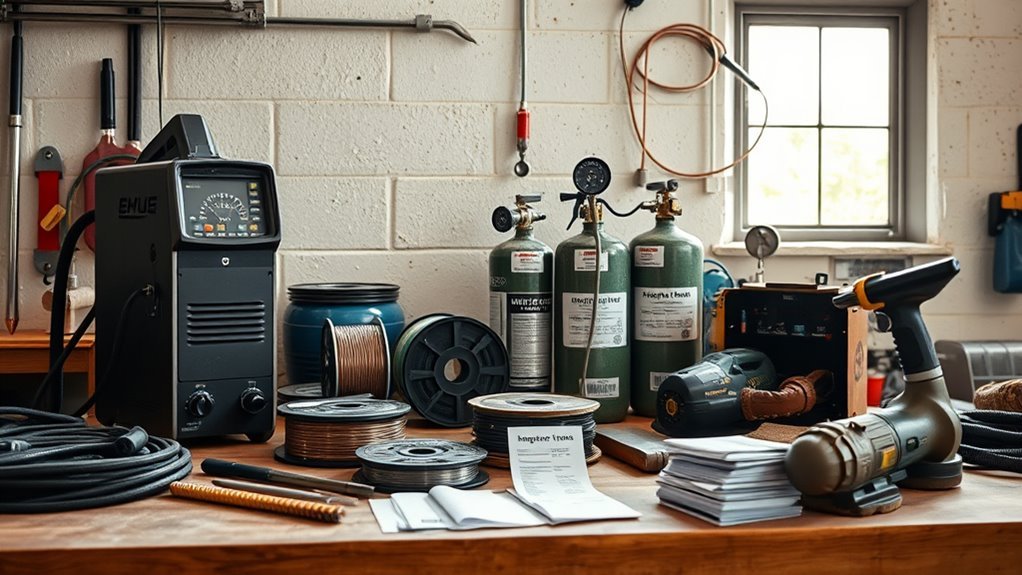
The difference between tuition and the final bill can be substantial. Some schools include lab materials, books, and protective equipment in one package. Others require students to buy those items separately.
| Expense | What to Check |
|---|---|
| Protective equipment | Helmet, safety glasses, gloves, flame-resistant clothing, leather footwear, hearing protection, and any school-specific items |
| Books and digital materials | Whether rentals, used books, access codes, or digital subscriptions are allowed |
| Lab and consumable fees | Whether wire, rods, shielding gas, electrodes, tips, grinding discs, and practice metal are included |
| Testing and retesting | Application fees, test-facility charges, materials, bend tests, maintenance fees, and retest prices |
| Living and transportation | Rent, fuel, parking, public transit, meals, childcare, relocation, and time away from paid work |
| Administrative costs | Registration, technology, graduation, insurance, background-check, drug-screening, or transcript fees |
Protective Gear Essentials
Your school should provide a written PPE list before classes begin. Common items include an appropriate welding helmet, safety glasses with side protection, leather gloves, flame-resistant clothing, sturdy leather footwear, and hearing protection.
Do not buy a helmet based only on price or appearance. Confirm the required lens shade, applicable safety standards, school rules, and whether an auto-darkening helmet is permitted. Comfort also matters because poorly fitting gear can distract you during shop work.
Warning: PPE does not remove welding fumes or make an unsafe area safe. Welding can expose students to metal fumes, ultraviolet radiation, burns, eye injuries, electrical shock, noise, and fire hazards. Follow the school’s ventilation rules, hazard assessment, and respiratory-protection program. Do not select or wear a respirator without proper evaluation, fit testing, and training.
The Occupational Safety and Health Administration provides an overview of welding hazards and controls.
Consumables and Practice Metal
Rods, wire, shielding gas, contact tips, tungsten, grinding discs, and practice metal are used continuously during training. Many programs charge a flat lab fee that covers these materials, while others limit how much practice material is included.
Before enrolling, ask whether additional shop practice creates extra charges. A program with a higher lab fee may still offer better value if it includes generous booth time, gas, filler metal, and test coupons.
- Confirm which consumables are included in tuition or lab fees.
- Ask whether students may practice outside scheduled class hours.
- Find out whether damaged or wasted materials create additional charges.
- Check whether final qualification-test plates and laboratory work are included.
Personal Tools and Optional Equipment
Students may need basic hand tools such as welding pliers, a wire brush, a chipping hammer, soapstone, a tape measure, clamps, and a small tool bag. Buy only the tools listed by the school so you do not spend money on equipment already available in the lab.
A personal welding machine is usually an optional purchase, not a normal admission requirement. Do not spend hundreds or thousands of dollars on a machine unless the program requires one or you have a safe, properly powered, and adequately ventilated place to practice.
Note: The most important “hidden” cost may be lost income. A seven-month full-time program can cost more than its tuition when it requires you to reduce your work hours, relocate, or pay for childcare.
Financial Aid, Scholarships, and Payment Options

Financial aid can reduce the amount you pay, but not every welding school or short course participates in federal aid programs. Verify eligibility before assuming grants or loans will cover the program.
Federal Student Aid
Submitting the Free Application for Federal Student Aid may help eligible students access federal grants, work-study, and federal student loans at participating career schools and colleges. The FAFSA is free, and states, schools, and some private scholarship providers also use its information.
Your FAFSA Submission Summary gives an estimate, but the school’s financial-aid office makes the final aid offer. Ask whether PPE, books, tools, transportation, or living costs are included in the school’s official cost of attendance.
Scholarships and Veteran Benefits
The AWS Foundation offers welding scholarships, including support for some short-term training programs at approved schools and facilities. Local AWS sections, employers, unions, community foundations, workforce agencies, and individual schools may offer additional awards.
Veterans and other eligible students should verify the exact institution and program through the VA’s guidance for choosing a GI Bill-approved school. Approval can differ by campus and program.
Payment Plans and Loans
Some schools divide tuition into monthly or term-based payments. Ask whether the plan charges enrollment fees, late fees, interest, or a large final payment.
Compare grants and scholarships before borrowing. Federal loans generally include borrower protections that private education loans may not offer. Review the total amount borrowed, expected monthly payment, interest, and repayment term—not only the amount due while you are enrolled.
Pro Tip: Use College Scorecard to compare average annual cost, completion information, student debt, and post-enrollment earnings. Sticker price alone does not show what similar students actually paid after grants and scholarships.
Certification, Qualification Tests, and Career Placement
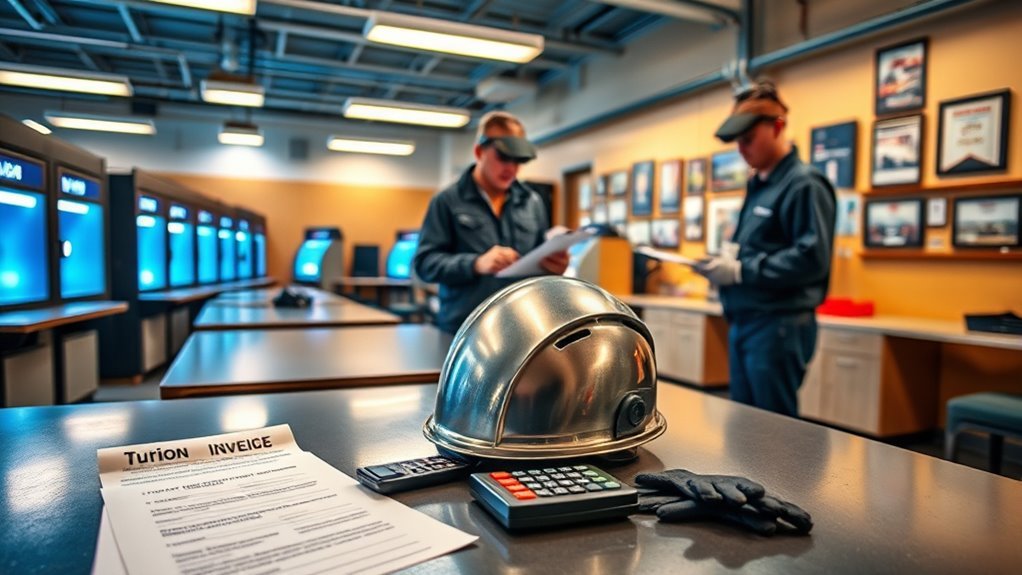
Welding education uses several credentials that sound similar but serve different purposes. Understanding them will help you compare schools and avoid paying for a credential that does not match the jobs you want.

These colorful answer buzzers turn lessons, review games, and family activities into lively game-show style challenges that boost participation and make learning more interactive. Each buzzer has a distinct sound to clearly identify who buzzed in first, while the durable, palm-sized design makes them easy for kids and adults to use in classrooms, homeschools, and group settings.

This heartfelt memoir blends laugh-out-loud honesty with tender reflections on love, loneliness, and the unexpected healing power of rescue dogs. Isabel Klee shares her journey fostering pups in the city while navigating dating and self-discovery, offering an intimate, relatable story for readers who enjoy emotional, character-driven narratives. It is a warm, engaging read about opening your heart and finding connection in surprising places.

Stay organized with a durable 1-subject notebook set designed for school, note-taking, and digital study support. The college ruled pages resist ink bleed, tear out cleanly, and work with the Five Star Study App to create flashcards and sync notes to Google Drive. Tough pockets, a water-resistant cover, and Spiral Lock wire help protect your work throughout the year.
Certificate, Certification, and Qualification Test Differences
- School certificate or diploma: Shows that you completed the school’s curriculum. It does not automatically certify you for every welding code, process, material, or position.
- AWS Certified Welder credential: A performance-based certification earned by completing a test at an AWS Accredited Test Facility under a specific welding procedure.
- Employer qualification test: A practical test required by an employer or project. A new employer may test you even when you already hold a school credential or another certification.
The AWS 2026 certification price list shows a $70 Certified Welder application charge. The practical testing facility sets its own welding-test and retest prices, so the complete cost varies by process, material, position, and location.
AWS states that Certified Welder status remains valid while continuity is maintained. Documentation is required every six months to confirm that the welder continues to use the process covered by the certification. Ask the testing facility about maintenance requirements and current charges before testing.
Note: A credential may help you qualify for certain openings, but it does not guarantee a job, a specific wage, or acceptance by every employer.
Licensing and Job Placement
There is no single nationwide license that every U.S. production welder must hold. Requirements can depend on the state, city, contractor classification, union, employer, project, industry code, or type of work. Verify local rules for the exact occupation and location where you plan to work.
Career services may include resume help, mock interviews, job leads, employer events, and testing preparation. “Placement assistance” is not the same as guaranteed employment.
Ask the school:
- What percentage of graduates found jobs related to their training?
- What dates and graduating classes are included in that figure?
- Are part-time jobs, temporary jobs, or jobs obtained before graduation counted?
- What were the most common job titles and starting wage ranges?
- Which employers hired graduates during the last 12 months?
- Does career assistance continue after graduation?
| Program Feature | Why It Matters |
|---|---|
| AWS Accredited Test Facility access | May make it easier to arrange recognized performance testing, but fees and qualifications still vary |
| Documented employer relationships | Can create interview opportunities and keep training aligned with local needs |
| Published completion and placement methods | Helps you judge whether marketing claims represent typical outcomes |
Apprenticeships and Employer-Sponsored Training
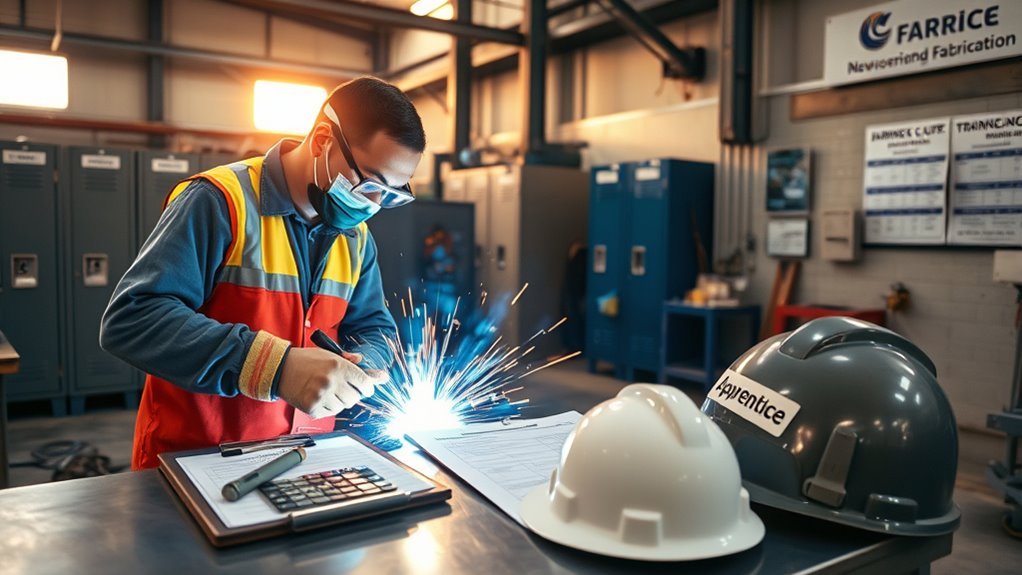
An apprenticeship can reduce or replace the need for full-time tuition-based schooling. Registered Apprenticeship programs combine paid work experience, mentoring, related classroom instruction, progressive wage increases, and an industry-recognized credential.
Program length, entry requirements, classroom costs, union membership, tools, and starting wages vary. Some employers pay all training expenses, while others require apprentices to cover books, dues, tools, or transportation.
Registered apprenticeships let participants earn wages while receiving structured workplace training and classroom instruction.
- Search current openings: Use the official Apprenticeship Job Finder and check local unions, manufacturers, shipyards, utilities, contractors, and workforce agencies.
- Compare total compensation: Look at wages, raises, health coverage, retirement benefits, tool allowances, and tuition assistance.
- Confirm the occupation: Some programs are listed under pipefitting, ironworking, sheet metal, fabrication, maintenance, or another trade that includes welding.
- Review obligations: Ask about probation periods, travel, drug testing, physical requirements, dues, and any repayment agreement for employer-funded training.
Apprenticeship.gov explains the required elements of Registered Apprenticeship, including paid work, progressive wages, mentorship, classroom instruction, and a portable credential.
Evaluating Return on Investment and Job Prospects

Start with the amount you will personally pay after grants and scholarships. Include tuition, required fees, gear, books, transportation, housing changes, loan interest, and income lost while attending school.
Then compare that total with the earnings increase you reasonably expect over your next-best option. Do not divide tuition by a welder’s entire salary because you may already be earning money in another job.
For example, suppose your all-in cost after grants is $12,000. If the training helps you earn $8,000 more per year than your realistic alternative, the simple payback period would be about 1.5 years:
$12,000 total cost ÷ $8,000 estimated annual earnings increase = 1.5 years
This calculation does not include taxes, loan interest, periods without work, overtime, raises, benefits, or the chance that earnings differ from your estimate. It is a planning tool, not a guaranteed outcome.
The U.S. Bureau of Labor Statistics reports a median annual wage of $51,000 for welders, cutters, solderers, and brazers in May 2024.
The U.S. Bureau of Labor Statistics projects 2% employment growth from 2024 to 2034. It also projects about 45,600 openings per year, on average, largely because workers will change occupations or leave the labor force.
The national median is not a starting-wage promise. BLS reports that the lowest 10% earned less than $38,130 in May 2024, while the highest 10% earned more than $75,850. Pay varies by skill, experience, industry, employer, location, shift, overtime, and union coverage.
Specialized fields may require much more than a general welding certificate. Aerospace work can involve strict code, quality, and documentation requirements. Underwater welding is part of commercial diving and requires diving training, medical fitness, and additional safety credentials. Do not enroll based only on claims that one specialization automatically produces a high salary.
Final School Comparison Checklist
- Complete tuition and fee schedule
- Estimated net price after grants and scholarships
- Required gear, tools, books, and testing costs
- Residency and out-of-state tuition rules
- Number of supervised shop hours
- Processes, positions, codes, and metals taught
- Instructor qualifications and industry experience
- Accreditation and federal-aid participation
- Completion, withdrawal, and refund information
- Transfer-credit policy
- Recent employer relationships and placement methodology
- Local entry-level wages and current job postings
- Transportation, housing, childcare, and lost-income costs
Frequently Asked Questions
Can I start welding school with no prior metalworking experience?
Yes. Many entry-level programs begin with shop safety, equipment setup, basic joints, measurements, and simple weld positions. Check the admission requirements because some programs require a high school diploma or equivalent, placement testing, physical capability, or basic math skills.
Are online welding courses accepted by employers?
Online courses can teach theory, safety concepts, blueprint reading, metallurgy, and code basics. They cannot replace supervised hands-on practice or a practical qualification test. Employers commonly want proof that you can produce an acceptable weld under the required process, material, position, and procedure.
What safety gear is normally required on the first day?
The school may require a welding helmet, safety glasses, leather gloves, flame-resistant clothing, leather footwear, and hearing protection. Use the exact list supplied by the program. Respiratory protection, when required, must be selected through an appropriate hazard assessment and respiratory-protection program.
Do welding schools offer night or weekend classes?
Some campuses offer daytime, evening, weekend, part-time, or blended schedules, but availability varies by term and location. Confirm the current shop schedule, required attendance hours, make-up policy, and expected completion date directly with the campus.
Can welding-school credits transfer to another college?
They may transfer, but the receiving institution decides what it will accept. Ask for a written transfer or articulation agreement before enrolling. Noncredit courses and clock-hour career programs may not transfer into an associate or bachelor’s degree.
Is welding school worth the cost?
It may be worthwhile when the program has substantial supervised shop time, reasonable net cost, recognized training, strong completion results, and connections to employers that are hiring locally. Compare the all-in cost with realistic entry wages and the income you could earn without attending.
Do I need to buy my own welding machine for school?
Usually not. Most established programs provide welding machines and booths for laboratory training. Buy a personal machine only when the school specifically requires it or when you have a safe, properly powered, and adequately ventilated practice space.
Conclusion
Welding school may cost only a few thousand dollars at a subsidized public college or approach $30,000 at a private career school. The best comparison is not simply the lowest tuition. Look at the complete cost, supervised shop hours, credentials, safety standards, completion data, employer relationships, local wages, and the amount you will personally owe after aid.
Before signing an enrollment agreement, obtain every required charge in writing, inspect the training facility, speak with recent students when possible, and compare the program with apprenticeships and employer-sponsored options. A careful comparison can help you avoid unnecessary debt while choosing training that matches the welding work available in your area.
Sources
- U.S. Bureau of Labor Statistics — Welders, Cutters, Solderers, and Brazers — national pay, job outlook, education, and occupational data
- Occupational Safety and Health Administration — Welding Hazards and Solutions — welding fumes, radiation, burns, electrical hazards, and protective controls
- Federal Student Aid — Steps for Students Filling Out the FAFSA Form — grants, work-study, loans, and the current FAFSA process
- American Welding Society — Certified Welder Program — testing, facility pricing, retesting, and certification continuity
- Apprenticeship.gov — Registered Apprenticeship Program — paid work, progressive wages, instruction, mentoring, and credentials
- U.S. Department of Veterans Affairs — Choosing a GI Bill-Approved School — program approval and school-comparison guidance for eligible students

This hardcover cookbook offers fast, approachable recipes designed for busy days and low-energy nights. Caroline Chambers focuses on simple, flavorful meals that help you get dinner on the table without overthinking it. It's a practical pick for home cooks who want quick weeknight inspiration and minimal-fuss cooking.

This interactive sentence building set helps children practice early reading, writing, and grammar through hands-on play. Color-coded word cards, photo cards, and punctuation pieces make it easy to build simple sentences while reinforcing capitalization, parts of speech, and sentence structure. It is a versatile learning tool for homeschool and classroom use, with included game ideas and teaching suggestions to support multiple skill levels.

Post-it Super Sticky Easel Pads are designed to keep ideas visible and organized during meetings, training sessions, brainstorming, and project planning. The large premium paper resists marker bleed-through and sticks securely to many surfaces, then repositions without surface damage. A sturdy backcard and portable handle make them easy to move between rooms and use with most easel stands.
