How Much Does It Cost to Weld a Hitch to a Car?
Short answer: The cost to weld a hitch to a car is often moot, because most passenger-car and SUV receiver hitches are bolted to vehicle-specific mounting points rather than welded. U-Haul currently cites roughly $180 to $550 for many conventional hitch installations, while AutoZone lists about $150 to $400 for most receiver hitches plus $75 to $150 for installation labor. A true weld-on or custom-fabricated hitch is a separate specialty job and can cost substantially more.
For example, Torklift Central currently lists custom hitch fabrication starting around $1,200 to $1,500 at its Kent, Washington facility. That is a local starting price, not a national average. The final cost of a welded hitch depends on the vehicle, frame access, hitch design, fabrication, materials, preparation, finishing, and intended towing or carrying use.
Price note: The prices quoted here come from the cited installer, retailer and manufacturer pages and may have changed, so confirm with an installer before you book. For other welding repairs, see our guides to car welding costs and car frame welding costs.
| Hitch setup | Typical installation method | Current pricing signal | What to know |
|---|---|---|---|
| Vehicle-specific receiver hitch | Usually bolt-on | U-Haul: about $180–$550 for many hitch installations | Best first option when a compatible receiver exists for the vehicle |
| Receiver hitch parts + shop installation | Usually bolt-on | AutoZone: about $150–$400 for most receivers plus $75–$150 labor | Wiring, bumper trimming, accessories, and difficult access can add cost |
| Manufacturer-designed weld-on receiver | Welded according to the hitch instructions | Get a vehicle-specific fabrication quote | Commonly associated with specialty or heavy-duty applications rather than normal passenger-car installation |
| Fully custom hitch fabrication | Designed and fabricated for the application | One current specialty shop lists $1,200–$1,500+ as a starting range | Inspection is normally required before final pricing |
Before paying for welding, check whether a properly rated vehicle-specific receiver already exists. Draw-Tite currently describes its Class I, Class II, and Class III/IV custom-fit receivers as bolt-on products that require no welding. CURT separately sells weld-on receivers primarily for specialized heavy-duty applications.
Factors Influencing Welding Costs for Hitches
The biggest cost factor is not the hitch class alone. It is what type of installation your vehicle actually requires.
A vehicle-specific bolt-on receiver is normally the least complicated path. Many use factory mounting holes or existing weld nuts in the vehicle structure. Installation may become more expensive if the bumper or fascia must be trimmed, the exhaust must be lowered, rust blocks access to mounting points, or trailer wiring must be installed.
A true weld-on or fully custom hitch is different. A fabricator may need to inspect the mounting structure, measure clearances, prepare bare steel, fabricate brackets, align the receiver, weld the assembly, protect the finished metal from corrosion, and verify that the completed setup matches the intended use.
Current general welding-cost guides also show why location and project scope matter. HomeGuide currently reports roughly $50 to $125 per hour for many welding services, while Angi reports about $60 to $125 per hour. These are general welding rates, not guaranteed hitch-welding prices.
Your vehicle’s design matters as much as the welder’s hourly rate. Frame access, bumper shape, exhaust location, wiring, corrosion, previous repairs, and the availability of an approved hitch all affect the final quote.
Important: Welding or installing a higher-rated receiver does not automatically increase your vehicle’s towing capacity. The usable towing limit is controlled by the lowest-rated component in the towing system, including the vehicle, hitch, ball mount, hitch ball, trailer, and other applicable components. CURT’s hitch-class guidance makes the same point.
How Much Do Professional Hitch Installation and Welding Services Cost?
Separate a normal receiver-hitch installation from a true welding or fabrication job when comparing prices.
For ordinary trailer hitch installation, U-Haul currently states that hitch installations can average about $180 to $550 depending on the vehicle, parts, accessories, and availability. AutoZone lists about $150 to $400 for most receiver hitches and roughly $75 to $150 for professional installation labor.
This Old House’s 2026 trailer hitch cost guide uses a wider overall range because hitch type, vehicle design, wiring, parts, and specialized installations can change the invoice considerably.
What Does Professional Welding Cost Per Hour?
For work that genuinely requires welding, current U.S. cost guides commonly put general welding labor around $50 to $125 per hour. Some shops charge by the project instead of by the hour, and minimum service charges may apply.
A hitch-specific quote can be higher because structural fabrication involves more than running a weld bead. The shop may charge for inspection, cutting, grinding, metal preparation, brackets, steel, fitting, alignment, welding, finishing, and equipment time.
Do not multiply a generic hourly rate by an assumed number of hours and treat that as a guaranteed hitch price. A custom fabricator normally needs the vehicle and intended use before confirming the scope.
What Can Increase the Final Hitch Quote?
- No vehicle-specific hitch is available: Custom design and fabrication may be needed.
- Rust or damaged mounting points: The shop must determine whether sound metal remains before proceeding.
- Difficult access: Bumpers, exhaust parts, spare tires, wiring, or other components may obstruct the mounting area.
- Fabricated brackets or reinforcement: Measuring, cutting, drilling, fitting, and finishing increase shop time.
- Trailer wiring: A towing setup may need a separate wiring harness, connector, brake-controller system, or other electrical work.
- Finishing: Primer, paint, powder coating, or corrosion protection may be quoted separately.
- Mobile service: Travel and setup charges can make on-site welding more expensive.
Ask for an itemized quote so you can compare the same scope across shops.
Does Hitch Type Determine Whether Welding Is Required?

No. Hitch class and installation method are not the same thing. Receiver classes mainly describe size and capacity ranges. The manufacturer’s instructions for the exact hitch and vehicle determine how it mounts.
| Hitch type | Typical current installation pattern | Welding assumption |
|---|---|---|
| Class I receiver | Many vehicle-specific products bolt to the vehicle | Do not assume welding is required |
| Class II receiver | Many vehicle-specific products use bolt-on installation | Do not add welding unless the instructions specify it |
| Class III/IV receiver | Many current custom-fit products are also bolt-on | Higher class does not automatically mean welding |
| Class V weld-on receiver | Some universal heavy-duty receivers are specifically designed to be welded | Follow the hitch and vehicle manufacturer’s instructions |
| 5th-wheel hitch | Common systems use bed rails and under-bed brackets secured with hardware | Welding is not automatically required |
| Gooseneck hitch | Many vehicle-specific systems bolt below the bed | Several current systems specifically require no welding |
For example, Draw-Tite’s current Class I, Class II, and Class III/IV receiver pages specify bolt-on installation with no welding required.
By contrast, CURT’s weld-on hitch line is designed for permanent welding and is aimed mainly at heavy-duty towing applications such as work trucks and service vehicles.
Fifth-wheel systems are another example. CURT’s current fifth-wheel installation guide describes brackets, rails, drilled mounting holes, bolts, and specified torque rather than treating welding as a default installation step.
How to Reduce Hitch Installation Cost Safely
The easiest way to avoid unnecessary fabrication expense is to check for a vehicle-specific bolt-on receiver before requesting custom welding.
When Does DIY Hitch Installation Make Sense?
DIY can make sense for a manufacturer-designed bolt-on receiver when you have the required tools, safe lifting or working access, and enough mechanical experience to follow the hitch instructions exactly.
AutoZone notes that many direct-fit receiver hitches use existing mounting locations, although some installations require trimming or other vehicle-specific work. If you have doubts about fitment, hardware, torque requirements, wiring, or safe access under the vehicle, professional installation is the safer choice.
Structural hitch welding is different. Do not choose a Class I or Class II hitch because you expect it to require “easier welding.” Many such hitches are specifically engineered to bolt on without welding.
If the exact hitch is designed for welding, follow the manufacturer’s installation requirements and use a fabricator qualified for the work. Do not modify a bolt-on hitch merely to make it permanent.
Compare Complete Quotes, Not Just Hourly Rates
Ask two or three shops to quote the same scope. A useful quote should state whether it includes:
- the hitch or receiver itself;
- inspection and measuring;
- fabricated brackets or steel;
- cutting, drilling, grinding, and preparation;
- welding or bolt-on installation;
- wiring and connector installation;
- primer, paint, powder coating, or other corrosion protection;
- taxes, shop supplies, or mobile-service fees; and
- any required vehicle-specific trimming or component removal.
If your project is a repair or a broader fabrication job rather than a new car-hitch installation, see our hitch welding cost and fabrication guide for that separate topic.
DIY vs. Professional Hitch Installation: What Should You Consider?
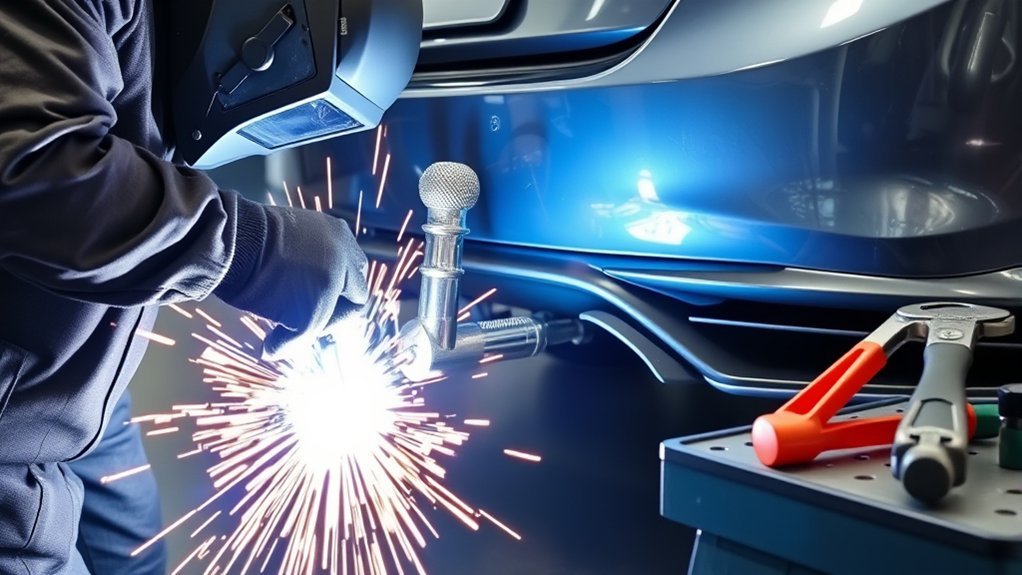
The right answer depends on whether the job is a normal bolt-on installation or actual structural fabrication.
- Confirm the hitch first. Search by vehicle year, make, model, and configuration. A vehicle-specific receiver can eliminate the need for custom welding.
- Read the exact installation instructions. Do not substitute welding for bolts, drilling, brackets, or other hardware unless the product instructions allow it.
- Check the vehicle’s towing limits. The hitch rating does not override the vehicle manufacturer’s towing and tongue-weight limits.
- Assess the working conditions. Proper access under the vehicle, correct tools, secure support, and the ability to tighten hardware to the specified values matter on bolt-on installations.
- Use professional fabrication for custom structural work. A custom hitch must account for mounting structure, load path, clearance, intended use, and the manufacturer’s restrictions.
For a straightforward bolt-on receiver, DIY may save the installation labor. For a genuine welded or custom hitch, the cheapest option is not necessarily the best value. A poor structural installation can create far greater costs than the initial labor charge.
What Should You Ask Before Approving Hitch Welding?
Instead of relying on unsourced customer anecdotes, ask the installer questions that reveal whether the proposed work fits your vehicle and use.
- Is a vehicle-specific bolt-on hitch already available? If yes, ask why custom welding is being recommended instead.
- Does the exact hitch manufacturer permit welding? The installation method should match the hitch instructions.
- Does the vehicle manufacturer place restrictions on frame or body welding? Vehicle-specific service or upfitter guidance should control structural modifications.
- What exactly is included in the quote? Ask about materials, preparation, brackets, welding, wiring, finishing, taxes, and additional labor.
- What is the rated capacity of the completed setup? The final usable limit cannot exceed the lowest-rated applicable towing component.
- What workmanship warranty applies? Get the terms in writing.
For custom work, inspection before pricing is reasonable. Torklift Central, for example, states that its custom projects are reviewed for vehicle structure, receiver requirements, intended use, hardware, fabrication needs, and access before the final price is confirmed.
Frequently Asked Questions
Can I Use a Used Hitch?
A used hitch may be usable if it is the correct part for your exact vehicle and its structure, mounting points, hardware requirements, and rating can be confirmed. Do not weld a used bolt-on hitch simply because the original hardware is missing or the fit is uncertain. Have questionable, damaged, heavily rusted, or previously modified towing equipment inspected before use.
How Long Does Hitch Installation Take?
A standard receiver-hitch installation commonly takes about 30 minutes to three hours, depending on the vehicle and hitch. Custom welding or fabrication can take much longer because inspection, design, preparation, fitting, welding, and finishing may be required. This Old House currently cites roughly 30 minutes to three hours for conventional hitch installation.
Are There Safety Concerns With Welded Hitches?
Yes. A hitch is a load-bearing towing component. Use the installation method specified for the exact hitch and vehicle. Poor mounting, unsuitable welding, damaged metal, incorrect brackets, or ignoring the vehicle’s towing limits can create a failure risk. A welded receiver also does not increase the vehicle’s rated towing capacity.
Will Installing or Welding a Hitch Void My Car’s Warranty?
Installing an aftermarket hitch does not automatically void the entire vehicle warranty. The Federal Trade Commission explains that aftermarket or recycled parts do not automatically cancel warranty coverage. However, if an aftermarket part or improper installation causes damage, coverage for that damage may be denied. Check your vehicle warranty and manufacturer guidance before structural modification.
What Materials Are Trailer Hitches Made From?
Most common receiver hitches are made from steel, although construction details vary by product. For example, CURT lists carbon steel for its heavy-duty weld-on receiver products. Always use the material, hardware, brackets, and installation method specified for the exact hitch.
Can I Install a Trailer Hitch Myself?
Many vehicle-specific bolt-on hitches can be installed by an experienced DIYer who has the required tools and follows the instructions exactly. If the installation involves custom structural fabrication, uncertain mounting points, damaged metal, or welding, use a qualified professional.
Should I Weld a Bolt-On Hitch to the Frame?
Not automatically. If a hitch was engineered to use factory mounting holes and specified hardware, install it according to those instructions. Adding welds does not automatically make the hitch safer or increase its rating.
Does Installing a Hitch Damage a Car?
A correctly fitted vehicle-specific receiver often uses existing mounting points and does not require major structural modification. Some vehicles may require fascia or bumper trimming, exhaust movement, drilling, or other model-specific work. Check the installation instructions before buying the hitch.
Does Welding a Hitch Increase Towing Capacity?
No. Welding, reinforcing, or installing a higher-rated receiver does not automatically increase the towing capacity assigned by the vehicle manufacturer. Your usable towing limit remains controlled by the lowest-rated applicable component in the towing system.
Conclusion
The most important question is not simply, “How much does it cost to weld a hitch to a car?” It is whether the vehicle needs a welded hitch at all.
For many cars, crossovers, SUVs, vans, and trucks, a vehicle-specific receiver is designed to bolt into approved mounting locations. Current conventional hitch-installation pricing commonly falls in the hundreds of dollars, with U-Haul citing roughly $180 to $550 for many setups and AutoZone listing about $150 to $400 for most receivers plus $75 to $150 installation labor.
A true weld-on receiver or fully custom hitch is a different project. It may require inspection, fabrication, structural preparation, welding, finishing, and vehicle-specific engineering considerations. One current specialty fabricator lists custom work starting around $1,200 to $1,500, demonstrating why a custom weld-on quote should not be confused with a normal receiver installation.
Start by checking for a properly rated vehicle-specific bolt-on hitch. If no suitable product exists and the application genuinely requires welding, take the vehicle details, intended load, and hitch specifications to a qualified fabrication shop and request an itemized quote.