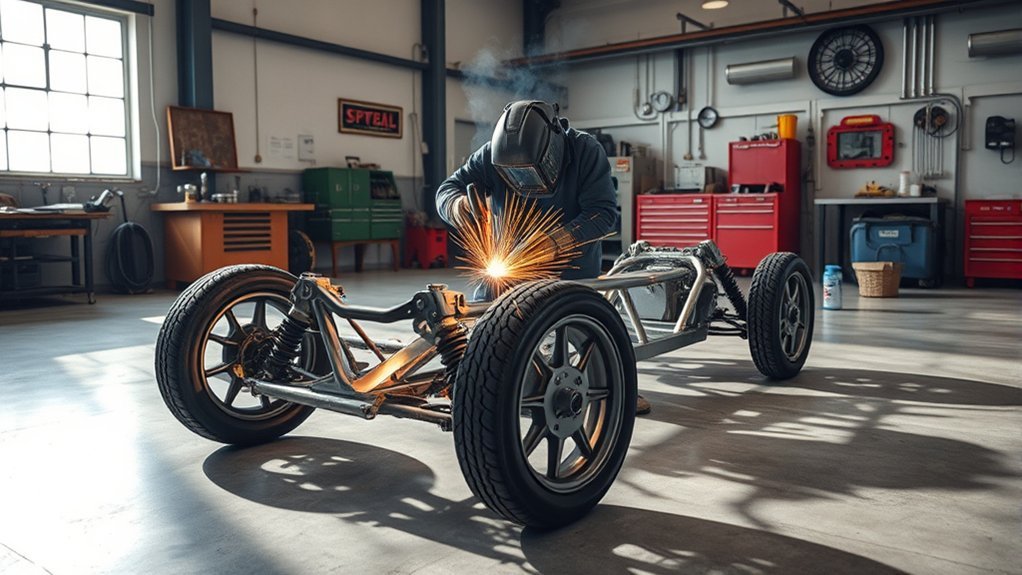
Chassis welding can cost a few hundred dollars for a small, accessible repair, but collision-related structural work can run into the thousands once teardown, measuring, replacement parts, scans, alignment, corrosion protection, and refinishing are included. The correct repair method is not simply a choice between MIG and TIG; it must follow the vehicle maker’s procedure for the exact model and damaged area.
Quick Answer
Budget at least several hundred dollars for a small, OEM-approved chassis repair. Structural replacement, measuring, electronic scans, alignment, calibration, and refinishing can push the bill well into the thousands. A reliable price requires the vehicle identification number, damage inspection, OEM procedure lookup, and often partial teardown.
Key Takeaways
- A $500–$1,000 quote can be realistic for limited work, but it is not a dependable national average for every chassis repair.
- The vehicle maker—not the customer or general welder—determines whether a part may be welded, sectioned, straightened, bonded, riveted, or replaced.
- Modern estimates may include structural measuring, pre- and post-repair scans, wheel alignment, ADAS calibration, corrosion protection, and refinishing.
- DIY or mobile welding is usually a poor fit for safety-critical structural repairs that require controlled equipment and documented procedures.
At a Glance
| Time Required | Several hours for a limited repair; several days or longer when teardown, parts, paint, scans, and calibration are required |
| Difficulty | Advanced structural collision repair; not a beginner welding job |
| Tools Needed | OEM repair information, structural measuring equipment, approved welding or joining equipment, scan tools, PPE, and corrosion-protection materials |
| Cost | Usually several hundred to several thousand dollars, depending on repairability, parts, access, measurements, scans, calibration, and finish work |
Warning: A cracked, rust-perforated, bent, or poorly repaired structural member can affect steering, suspension mounting, crash-energy management, and occupant protection. Do not drive a vehicle that pulls sharply, has shifted suspension mounts, shows severe structural cracking, or cannot hold alignment. Have it towed to a qualified collision-repair facility.
Factors Influencing Chassis Welding Costs

The final price depends less on the length of the weld than on the complete repair plan. A shop must first identify the damaged structure, the metal grade, the approved repair location, and the joining method required by the manufacturer.
- Damage location and severity: A small crack at an approved repair point may be straightforward. Damage near a suspension mount, seat-belt anchor, crush zone, battery enclosure, or safety cage can require extensive measuring and part replacement.
- Vehicle construction: Body-on-frame trucks, unibody cars, aluminum-intensive vehicles, and mixed-material vehicles use different repair methods and equipment.
- OEM repair rules: The vehicle-specific body repair manual may require squeeze-type resistance spot welding, GMA plug welds, MIG brazing, rivets, structural adhesive, or replacement at factory seams. Some locations may not be sectioned or heated.
- Access and teardown: Fuel lines, interior trim, glass, wiring, batteries, modules, undercoating, suspension parts, and exhaust components may need to be removed or protected before hot work begins.
- Measuring and alignment: Collision damage often requires three-dimensional structural measurements before, during, and after the repair.
- Electronics and ADAS: Pre- and post-repair scans, steering-angle resets, wheel alignment, and camera or radar calibration can add labor and equipment charges.
- Corrosion protection and refinishing: Weld-through primer, seam sealer, cavity wax, coatings, paint, and underbody protection may need to be restored after cutting or welding.
- Location and shop capability: Labor rates vary by market. Aluminum-certified or OEM-certified facilities may charge more because they maintain specialized tools, clean work areas, training, and documentation.
I-CAR’s structural sectioning guidance stresses that the vehicle-specific workshop manual determines the required joint and welding method. That is why a general hourly welding quote is not enough for a modern collision repair.

Post-it Super Sticky Easel Pads are designed to keep ideas visible and organized during meetings, training sessions, brainstorming, and project planning. The large premium paper resists marker bleed-through and sticks securely to many surfaces, then repositions without surface damage. A sturdy backcard and portable handle make them easy to move between rooms and use with most easel stands.

This renter-friendly curtain rod bracket lets you hang curtains over outside-mounted vertical blinds without drilling, screws, or wall damage. It clips directly onto rectangular headrails for a fast, secure installation and fits curtain rods up to 1 inch in diameter. Ideal for apartments, condos, sliding glass doors, and rental homes, it offers a clean, damage-free way to add privacy and style in minutes.

The DeLonghi Water Filter helps reduce scale buildup and unwanted impurities that can affect your coffee machine's performance and taste. Its active carbon and ion-exchange technology helps improve brew consistency, maintain flavor, and reduce the need for frequent descaling. Designed as an OEM authorized replacement part, it fits select DeLonghi models for reliable everyday maintenance.
Unibody vs. Body-on-Frame: Why It Changes the Estimate
A unibody vehicle uses the body structure itself to carry loads and manage crash energy. Rails, rockers, pillars, aprons, and crossmembers may all be structural. The body normally does not lift off a separate chassis, so repair access often requires removing nearby panels, trim, glass, mechanical parts, or high-voltage components.
A body-on-frame vehicle has a separate frame under the body. Some frame repairs may be possible, but the manufacturer may restrict drilling, heating, straightening, reinforcement plates, or welding in certain areas. The body may need to be loosened or raised for access, but full removal is not automatic.
Note: “Chassis,” “frame,” and “unibody structure” are often used interchangeably in consumer searches, but they are not identical. Give the shop your VIN so it can identify the exact construction, materials, and repair restrictions.
Average Cost Ranges for Chassis Welding

There is no dependable national flat rate for “chassis welding” because the term can describe anything from a small bracket repair to replacement of a rail or crossmember. A $500–$1,000 budget may cover some localized work, but it should not be treated as a guaranteed average.
The lowest welding price is not the best value if it skips OEM procedures, structural measuring, corrosion protection, scanning, or required calibration.
Use these planning bands instead of relying on a single national number:
- Localized, accessible repair: Often priced in the hundreds when the manufacturer permits the repair and little disassembly or finish work is needed.
- Section replacement or moderate structural repair: Commonly reaches four figures because the job may include measuring, a replacement part, controlled attachment, corrosion protection, and refinishing.
- Major collision damage: Can cost several thousand dollars when multiple structural parts, suspension components, sensors, glass, scans, calibrations, and paint operations are involved.
- Severe rust or widespread damage: Repair may be uneconomical or prohibited. Replacement of the frame, body shell, or vehicle may be safer than welding patches over weakened metal.
An initial estimate may change after teardown reveals hidden buckling, torn spot welds, internal corrosion, damaged reinforcements, or shifted mounting points. Ask whether the quote is preliminary and how supplements will be approved.
Cost Breakdown by Welding and Joining Method
For structural vehicle repair, welding method is not a menu where you simply choose the cheapest option. The correct process depends on the metal, joint design, access, equipment, and OEM procedure.
| Method | Typical Vehicle-Repair Role | Cost Effect |
|---|---|---|
| GMA/MIG plug or seam welding | Used on approved steel or aluminum locations with the specified wire, gas, settings, joint, and weld pattern | Equipment setup, destructive test welds, access, and metal type affect labor more than the arc-on time |
| Squeeze-type resistance spot welding | Often required or preferred to duplicate factory-style spot-weld attachment on modern steels | Requires expensive, capable equipment and correct access to both sides of the flange |
| MIG brazing | Used only where the OEM supports it, often to limit heat input on specific high-strength-steel joints | Special wire, training, fit-up, and procedure control can raise labor and material costs |
| GTA/TIG welding | Used for certain aluminum, stainless, custom, or manufacturer-approved applications; not a universal upgrade | Slower deposition and higher skill requirements can increase labor when the procedure calls for it |
| Rivets and structural adhesive | Common on aluminum and mixed-material vehicles, sometimes combined with welding | Approved rivets, adhesive, applicators, cure time, and surface preparation add cost |
Stick welding may be useful in heavy fabrication, agricultural equipment, and some older frame applications, but it is generally not the default process for modern unibody collision repair. Use it only when the vehicle maker’s repair information specifically permits it.
I-CAR warns against using MIG brazing where there is no supporting OEM documentation. Likewise, Ford and Lincoln collision position statements direct repairers to vehicle-specific procedures for structural repairs, fasteners, adhesives, scans, and aluminum work.
When Welding Is Not an Approved Repair
Some structural parts lose critical properties when heated, straightened, or welded outside approved zones. Ultra-high-strength and press-hardened steels can have strict limits. Aluminum castings, crush initiators, bumper reinforcements, battery enclosures, and safety-system mounting areas may also require replacement rather than repair.
A qualified shop should answer four questions before welding:
- Is the damaged part identified correctly by VIN and repair manual?
- Does the manufacturer permit repair or sectioning at that exact location?
- What joint, attachment method, consumables, weld count, and corrosion protection are required?
- How will the shop verify dimensions, weld quality, electronics, alignment, and calibrations afterward?
The Honda and Acura collision-repair information portal, for example, publishes vehicle-body repair guidance, approved high-strength-steel welding wire information, corrosion-protection instructions, and welding or sectioning updates. Other manufacturers provide similar model-specific information.
Pricing Based on Metal Type

Material type affects repairability, shop requirements, consumables, contamination control, and labor. Per-inch welding prices such as $0.50 to $4.00 are not a reliable way to estimate structural vehicle repairs because most of the bill comes from diagnosis, access, preparation, joining, verification, protection, and finish work.
Mild Steel and High-Strength-Steel Cost Factors
Conventional mild steel is often easier to straighten and weld than advanced high-strength steel, but modern vehicles can contain several steel grades in nearby parts. A technician must identify the material before applying heat or selecting a weld process.
- Thickness and strength: Thick frame sections require more preparation and heat control, while thin high-strength panels may have strict repair limits.
- Joint access: Factory seams can require drilling, panel removal, flange preparation, and access for a spot welder.
- Test welds: Technicians may need to make and destructively test sample welds before working on the vehicle.
- Corrosion restoration: Weld-through primer, epoxy primer, seam sealer, cavity wax, and undercoating may be required after attachment.
Do not assume a steel chassis can be safely patched because the metal looks weldable. The specific rail, reinforcement, or mounting area may be a replace-only part.
Aluminum Welding Cost Factors
Aluminum structural repair often costs more because it can require a dedicated clean work area, aluminum-only tools, specialized welders, approved rivets and adhesives, dust control, and technicians trained for the vehicle brand. Steel contamination can contribute to corrosion and weld problems, so tool separation matters.
Some aluminum damage can be repaired, while other castings, extrusions, or structural panels must be replaced. The procedure may require riveting and bonding rather than TIG welding. That is why a generic aluminum hourly rate or per-inch price does not provide a complete estimate.
Stainless Steel and Mixed-Material Structures
Stainless steel is less common as a primary passenger-vehicle chassis material than conventional steel, high-strength steel, or aluminum. It appears more often in exhaust components, custom fabrication, specialty vehicles, and selected reinforcements. When present, the alloy, filler metal, heat input, and finishing requirements affect cost.
Mixed-material vehicles may combine steel, aluminum, magnesium, composites, rivets, and adhesives. Carbon-fiber-reinforced plastic is a composite and is not repaired by ordinary metal welding. Damage must be evaluated under the manufacturer’s composite repair or replacement procedure.
Estimating Your Chassis Repair Costs
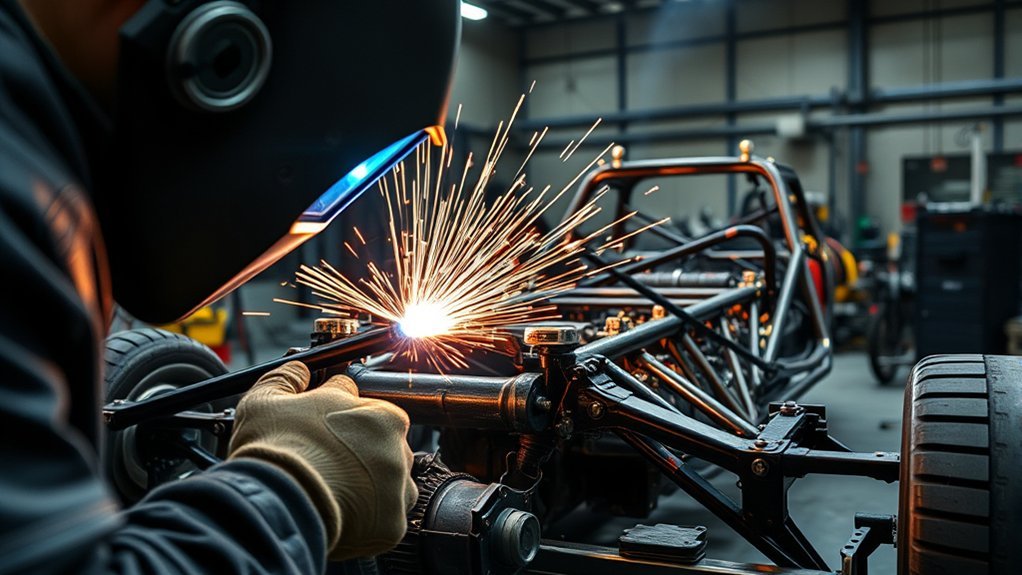
A useful estimate should explain the complete repair, not just quote an hourly welding rate. Ask the shop to itemize the work and identify which charges may change after teardown.
Understanding Pricing Structures
Depending on the vehicle and damage, an estimate may include:
- Initial inspection, photos, measurements, and repair planning
- OEM repair-information research by VIN
- Teardown and removal of trim, glass, suspension, drivetrain, battery, fuel-system, or electrical components
- Frame-rack or bench setup, anchoring, pulling, and three-dimensional measuring
- Replacement structural parts, brackets, fasteners, adhesives, welding wire, shielding gas, and shop supplies
- Welding, brazing, spot welding, bonding, riveting, grinding, and fit checks
- Corrosion protection, seam sealing, undercoating, and refinishing
- Pre- and post-repair diagnostic scans, wheel alignment, programming, initialization, and ADAS calibration
- Quality-control checks, road test, and final measurements
Labor rates may be separated into body, frame, mechanical, aluminum, electrical, scan, calibration, and refinish categories. Current state labor-rate surveys show that rates differ by region and operation, so national MIG-versus-TIG pricing is too simplistic.
Hidden Damage and Estimate Supplements
Structural damage can hide behind trim, undercoating, suspension parts, carpeting, seam sealer, and outer panels. A preliminary visual estimate may not reveal torn factory welds, buckled inner reinforcements, shifted datum points, damaged wiring, or internal corrosion.
Before authorizing work, ask how the shop handles supplements. A good process documents newly discovered damage, explains the OEM-required repair, updates the insurer or customer, and receives approval before major extra work continues.
Comparing Estimates Effectively
Compare repair plans line by line rather than choosing the lowest total. Two estimates are not equal if one includes the required procedures and the other lists only “weld frame.” Check for:
- The same damaged parts and repair-versus-replace decisions
- OEM procedure research and vehicle-specific joining methods
- Structural measurements before and after repair
- Pre- and post-repair scans and required calibrations
- Wheel alignment and suspension checks
- Corrosion protection and refinishing
- Written workmanship and corrosion warranties
- Documentation of weld tests, measurements, scans, and calibrations
Pro Tip: Send each shop the VIN and the same clear photos, then ask for a written estimate based on the manufacturer’s repair procedure. This makes quotes easier to compare and exposes missing operations before the vehicle is disassembled.
What a Proper Post-Repair Check Should Include
A completed weld is only one part of a safe structural repair. Before delivery, the shop should verify the items required by the repair plan, which may include:
- Final structural dimensions and panel fit
- Weld size, count, penetration, and attachment quality
- Restored primers, seam sealers, cavity wax, coatings, and underbody protection
- Clearance around wiring, fuel lines, brake lines, batteries, and heat-sensitive parts
- Pre- and post-repair scan reports with related faults resolved
- Wheel alignment and steering-angle checks
- Required ADAS calibrations or initializations
- Road test and checks for noises, pulling, warning lights, water leaks, and wind noise
I-CAR’s vehicle-protection guidance for welding calls for protecting electronics and disconnecting systems as required before welding. Those precautions help prevent damage that may not be visible at the weld itself.

This full motion TV wall mount is designed to fit most 32-70 inch TVs and lets you tilt, swivel, and extend your screen for a better viewing angle and reduced glare. Built for standard wood studs with strong articulated arms, it offers stable support, easy installation, and post-install leveling for a clean, adjustable setup.

These Business Source open-ring rubber bands are designed for easy one-handed use, making everyday bundling and organization more efficient. They offer a firm, reliable stretch with quality construction that meets or exceeds federal specifications, and their sustainable design supports practical office and industrial use. The compact box format makes them convenient to store and keep on hand for fast access.

OGX Extra Strength Damage Remedy + Coconut Miracle Hair Oil helps hydrate dry, coarse hair while smoothing frizz and flyaways for a silky finish. This nourishing leave-in treatment blends coconut oil, vanilla bean extract, and tiare essence to add softness, shine, and a pleasant scent. It is paraben-free and designed to support a restorative hair care routine for medium to coarse hair types.
Tips for Saving on Welding Expenses
You can reduce unnecessary costs without cutting safety-critical operations. The goal is to improve the estimate and repair process, not to perform structural preparation yourself.
| Strategy | Action | Benefit |
|---|---|---|
| Improve quote accuracy | Provide the VIN, damage history, photos, warning-light information, and prior repair records | Helps the shop research procedures and spot likely extra operations early |
| Compare complete plans | Get two or three itemized estimates from structural collision-repair facilities | Reveals missing scans, measurements, corrosion protection, or calibration |
| Use insurance correctly | Report covered collision damage promptly and ask how supplements, deductibles, and shop choice work | May reduce out-of-pocket costs and prevent authorization delays |
| Avoid unsafe shortcuts | Do not grind, heat, pull, drill, or weld structural metal before inspection | Preserves evidence, coatings, dimensions, and repair options |
Cleaning and clamping loose fabrication parts can save time in a non-vehicle project, but it is not good general advice for collision-damaged structure. Removing paint, seam sealer, rust, or undercoating before the shop inspects the vehicle can hide cracks, erase evidence, release hazardous fumes, and damage protective coatings.
Insurance and Repair Documentation
The National Association of Insurance Commissioners explains that collision coverage generally pays for damage to the insured vehicle after hitting another vehicle or object, usually subject to the policy terms and deductible. Coverage for rust, fatigue, poor prior repairs, modifications, or normal wear is commonly different or excluded, so review your own policy.
Before work begins, save the estimate, photos, insurer communications, OEM procedure references, measurement reports, scan results, calibration certificates, alignment printout, parts invoices, and final bill. Complete records can support warranty claims, insurance questions, future repairs, and resale disclosures.
Federal safety law also prohibits a commercial repair business from knowingly making inoperative a vehicle safety device or design element installed to meet an applicable safety standard. NHTSA’s interpretation of the “make inoperative” provision explains how this duty can apply to repair businesses.
Can You Weld a Chassis Yourself?
Structural vehicle welding is not a good beginner DIY project. A visually smooth bead does not prove correct penetration, heat input, metallurgy, joint design, dimensions, or crash performance. Modern vehicles may also contain airbags, seat-belt pretensioners, fuel systems, electronic modules, high-voltage batteries, magnesium parts, adhesives, and coated metals that create added hazards.
OSHA identifies welding hazards that include fumes, ultraviolet radiation, burns, eye injury, electrical shock, and fire. Vehicle work adds confined spaces, flammable fluids, hidden insulation, undercoating, and electrical systems.
Warning: Do not weld near a fuel tank, fuel line, battery, high-voltage component, airbag system, or sealed cavity without the exact manufacturer procedure and proper isolation, ventilation, fire protection, and monitoring. A general welding qualification alone does not replace vehicle-specific structural-repair training.
Questions to Ask the Repair Shop
For a chassis or unibody repair, look for a structural collision-repair facility rather than choosing a general mobile welder only by hourly rate. Ask:
- Will you research the vehicle-specific OEM repair procedure by VIN?
- Does the manufacturer permit this part to be repaired or sectioned at the damaged location?
- What welding, bonding, riveting, or replacement method is required?
- Do you have the correct frame bench, measuring system, welder, rivet tools, scan tools, and calibration access?
- Are your technicians trained for this vehicle’s steel, aluminum, composite, hybrid, or EV construction?
- Will the estimate include teardown, measurements, scans, alignment, calibration, corrosion protection, and refinishing?
- How will you document test welds, final measurements, scan results, and calibrations?
- Are you licensed where required, insured, and willing to provide a written workmanship and corrosion warranty?
- What could change the price after teardown, and how will supplements be authorized?
- What is the realistic repair timeline, including parts and calibration scheduling?
Frequently Asked Questions
How long does a typical chassis welding repair take?
A small approved repair may take several labor hours. Collision-related structural work often takes several days because the shop may need teardown, parts, measuring, welding or bonding, corrosion protection, paint, scans, alignment, and calibration. Parts availability and insurer approval can extend the calendar time.
Do I need to remove the chassis from the vehicle for welding?
Usually not as a blanket rule. A unibody does not have a separate removable chassis. A body-on-frame vehicle may need the body loosened or raised for access, while many repairs require only targeted disassembly. The vehicle-specific procedure determines what must be removed, isolated, or protected.
Will insurance cover chassis welding repairs?
Collision coverage may pay for covered crash damage to your vehicle, minus the deductible and subject to policy terms. Rust, fatigue, modifications, poor prior work, or normal wear may not be covered. Report the damage promptly and obtain approval before major repairs when a claim is involved.
Can I perform DIY chassis welding repairs safely?
DIY structural welding is not recommended unless you are trained, equipped, and working from the exact OEM procedure. Even an attractive weld can be unsafe if the joint, heat input, dimensions, metal identification, electronics protection, or corrosion restoration is wrong.
What are the signs that my chassis needs inspection or repair?
Warning signs include visible cracks, rust perforation, torn seams, shifted suspension mounts, uneven body gaps, a vehicle that pulls, repeated alignment problems, steering changes, unusual tire wear, water leaks after a collision, or evidence of a poor prior weld. Severe symptoms call for towing rather than continued driving.
Is a welded chassis safe?
It can be safe when the manufacturer allows the repair and a qualified shop follows the specified procedure, restores dimensions and corrosion protection, protects electronics, and completes required scans and calibrations. A weld in a prohibited location or on weakened rusted metal may not restore the intended performance.
Does chassis welding affect resale value?
Documented structural damage can affect resale value even after a proper repair. The effect depends on the vehicle, damage severity, repair quality, history-report data, local disclosure rules, and buyer expectations. Keep complete repair records to show how the work was performed and verified.
Conclusion
Chassis welding costs cannot be reduced to one national average or a simple MIG-versus-TIG hourly rate. A limited, approved repair may cost several hundred dollars, while structural replacement, measuring, scans, alignment, calibration, corrosion protection, and refinishing can move the total into the thousands. The safest way to control cost is to obtain an itemized repair plan from a qualified collision-repair facility that follows the vehicle maker’s procedures and documents the final results.
Sources
- I-CAR: Structural Sectioning Procedures—Ford/Lincoln — supports the need to follow vehicle-specific welding and sectioning procedures.
- Ford Crash Parts: Ford and Lincoln Collision Position Statements — provides current manufacturer positions on structural repairs, aluminum repair, scans, fasteners, and adhesives.
- Honda and Acura Collision Repair Information — supports manufacturer-specific welding, sectioning, high-strength-steel, and corrosion-protection guidance.
- OSHA: Welding, Cutting, and Brazing Hazards and Solutions — supports welding-fume, radiation, burn, shock, and fire-safety guidance.
- National Association of Insurance Commissioners: Auto Insurance — supports the general explanation of collision coverage and deductibles.
- NHTSA: Make Inoperative Interpretation — explains a repair business’s federal duty not to knowingly disable required safety systems or design elements.

Q-tips Original Cotton Swabs are a versatile everyday essential for home, beauty, and first aid tasks. Made with 100% cotton and soft tips at both ends, they provide gentle care for sensitive skin while helping with makeup touch-ups, small cleaning jobs, and hard-to-reach spaces. Their trusted quality and recyclable packaging guidance make them a practical choice for daily use.

This compact electric kettle quickly boils up to 1 liter of water with 1500 watts, making it ideal for tea, French press coffee, and fast hot water needs. The BPA-free glass carafe features easy-to-read markings, a wide opening for simple cleaning, and a built-in mesh filter to help keep mineral scale out of your cup. With auto shutoff, boil-dry protection, and cordless serving, it offers a convenient and stylish way to heat water for smaller kitchens, dorms, and apartments.

This kid-friendly cookbook helps young chefs build confidence in the kitchen with more than 100 recipes designed for fun, learning, and delicious results. Created by America's Test Kitchen Kids, it offers approachable instructions, helpful guidance, and a wide range of dishes that make cooking and eating an engaging family activity.