Car window tinting typically costs about $100 to $800+ for a full vehicle in the U.S., depending on film type, vehicle size, glass complexity, and installer. Basic dyed film is usually the lowest-cost option, while ceramic tint commonly sits at the premium end. A standard sedan often costs less than an SUV, truck, or vehicle with large or unusually shaped glass.
Last updated: August 10, 2026. Pricing ranges and selected tint-law examples were rechecked against current published sources.
Quick Answer: How Much Does It Cost to Tint Car Windows?
| Tint option | Typical full-car price | Best fit |
|---|---|---|
| Dyed film | $100–$300 | Lowest upfront cost |
| Carbon / mid-range film | $150–$500 | Balance of price, appearance, and heat control |
| Ceramic film | $300–$800+ | Higher heat rejection and premium performance |
| DIY kit and basic tools | About $50–$150 | Experienced DIYers with a clean workspace |
Pricing source note: These ranges are a synthesis of current 2026 U.S. price guides, including ACT Customs and Window Tint Calculator. They are market-planning ranges rather than an official national tariff.
These are broad 2026 U.S. planning ranges, not fixed quotes. Local labor rates, old-tint removal, windshield coverage, film brand, and the amount of glass can move the final price higher or lower. Get an itemized quote that names the film line, windows included, removal charges, and warranty before you book.
- Budget pick: dyed film can work when appearance and glare reduction matter more than maximum heat rejection.
- Best all-around value: carbon or another mid-range nonmetallic film often gives a useful step up without ceramic pricing.
- Premium pick: ceramic film costs more but is designed for stronger heat rejection without relying on a metallic layer.
- Legal check: VLT rules vary by state and by window position, so verify the law before choosing a shade.
Introduction To Car Window Tinting
Car window tinting applies a thin film to vehicle glass to change visible-light transmission and, depending on the film, reduce glare, UV exposure, and solar heat. The International Window Film Association notes that automotive films are sold in different VLT levels and that U.S. states regulate how much light must pass through specific windows. That means the best tint is not simply the darkest film or the most expensive film; it is the film that fits your heat-control goals, budget, vehicle, and local law.
Benefits Of Tinting
- UV protection: Quality automotive films can substantially reduce UV transmission; performance varies by product.
- Heat control: Heat-rejecting films can reduce solar heat entering through the glass and improve cabin comfort.
- Privacy: Darker legal shades can make the cabin less visible from outside.
- Appearance: Tint can give the glass a more uniform, finished look.
- Glare reduction: The right film can reduce bright sunlight and reflections, although very dark tint can also reduce visibility at night.
For general film-performance guidance, see the International Window Film Association’s automotive window-film guide. Manufacturer performance varies, so compare published specifications for the exact film line you are considering.
Legal Considerations
Window-tint laws vary by state, window position, vehicle type, and exemption. VLT means Visible Light Transmission: a higher percentage lets more visible light through. Do not choose film by a generic “legal tint” chart alone, because the final reading can depend on the combination of factory glass and aftermarket film.
| Example | Current rule to know | What to verify before installation |
|---|---|---|
| California | Clear, colorless aftermarket material on the front side windows must meet specific transmittance conditions: the film itself must have at least 88% VLT and the glazing-plus-film combination must meet the federal 70% minimum. | Windshield placement, front-window film certification, medical exceptions, and mirror requirements for rear glazing. |
| Texas | The front side windows must have 25% or more light transmission when measured with the original glass. Windshield film is restricted to the area above the AS-1 line (or top five inches if no AS-1 line), subject to additional color, reflectance, and VLT rules. | Rear-window mirror conditions, medical exceptions, reflectance limits, and the exact measured VLT after installation. |
Check the current rule before paying for film. See the California Vehicle Code window provisions, the Texas Department of Public Safety tint standards, and your own state’s current motor-vehicle rules. NHTSA explains that FMVSS No. 205 requires at least 70% luminous transmittance in glazing areas required for driving visibility.
Types Of Window Tint Films
Film categories differ in price, appearance, heat rejection, signal behavior, and warranty. The category name is only a starting point: two products both called “ceramic” can have different performance specifications, so compare the exact series before buying.
Dyed Window Film
Dyed window film is a popular budget-friendly choice. It provides a dark appearance and reduces glare.
- Cost-effective
- Blocks sunlight
- Offers privacy
Metalized Film
The metalized film uses tiny metallic particles. These particles reflect heat away from your car.
- High durability
- Effective heat reduction
- Can have a more reflective appearance than nonmetallic films
Carbon And Other Nonmetallic Mid-Range Films
Carbon and other nonmetallic mid-range films sit between basic dyed film and premium ceramic film in many shops. They are commonly chosen by drivers who want a better balance of appearance, heat control, and price without moving to the highest-cost ceramic package.
- Mid-range pricing
- Nonmetallic options avoid the reflective look associated with some metalized films
- Performance varies widely by brand and product line, so compare published specifications rather than the category name alone
Ceramic Film
Ceramic film is usually the premium option. It uses nonmetallic ceramic technology to target heat while maintaining optical clarity. For example, LLumar publishes ceramic film lines that block more than 99% of UV rays. The exact heat and UV performance depends on the film line and shade.
- Strong UV protection on quality products
- Nonmetallic construction on ceramic products
- High clarity with premium heat-rejection options
Factors Influencing Tinting Costs
The final quote depends on more than the tint shade. Film technology, vehicle size, glass shape, the number of windows, local labor rates, whether old film must be removed, and whether the windshield is included can all change the price.
Quality Of Tint Material
The film type and product line play a major role in pricing. Options range from basic dyed tint to mid-range nonmetallic films and premium ceramic products. Higher-priced films may add stronger heat rejection, better color stability, or broader warranty coverage, but compare the published specifications for the exact film rather than assuming price alone equals performance.
Vehicle Type And Window Size
The make and model of your vehicle affect the cost. Larger vehicles or those with complex window shapes require more material and labor. For instance, tinting a small sedan may be less expensive than a large SUV. The size and shape of the windows directly impact the price.
Number Of Windows
The number of windows changes both material and labor. A two-front-window job costs less than a full-car package, while adding a large rear windshield or a legal windshield film can increase the quote. Ask the installer to list exactly which panes are included.
Old Tint Removal And Glass Complexity
Removing failed film, adhesive, or multiple old layers adds labor. Curved rear glass, small quarter windows, tight trim, and oversized panoramic glass can also make the job slower. If your car already has tint, ask whether removal is included or charged separately.
Location, Film Brand, And Warranty
Labor prices vary by city and shop. Premium film lines can also cost more than entry-level products within the same broad category. Compare quotes by the exact film brand or series, warranty coverage, windows included, and removal charges—not only by the words “carbon” or “ceramic.”
| Factor | Impact on Cost |
|---|---|
| Film type and product line | Premium ceramic and high-performance films usually cost more than basic dyed film. |
| Vehicle type | Larger vehicles usually require more film and labor. |
| Glass size and shape | Large, curved, or complex panes can increase labor time. |
| Number of windows | More covered glass raises the total cost. |
| Old tint removal | Adhesive cleanup and film removal can add labor. |
| Location and warranty | Local labor rates and warranty-backed premium film packages can increase the quote. |
- Quality material ensures longevity and protection.
- Vehicle specifics dictate material and labor requirements.
- Choosing specific windows to tint can affect the price.
The best comparison is an itemized quote. Ask each shop to name the film series, panes included, old-tint removal charge, warranty, and total installed price. That makes it much easier to compare value instead of shopping by one headline number.
Average Car Window Tint Cost by Film Type
For 2026 budgeting, a full-car tint can span roughly $100 to $800+ in the U.S. Published guides commonly place dyed film at the bottom, carbon or similar mid-range film in the middle, and ceramic at the top. The table below is a planning guide; actual shop quotes can fall outside these ranges.
Economy Tinting Options
Budget professional packages often use dyed film. A broad 2026 planning range is about $100 to $300 for a full vehicle, although location and vehicle size matter. Choose this tier when low upfront cost is the priority and you do not need the strongest heat-rejection performance.
Premium Tinting Services
Premium packages usually center on ceramic film. Current published U.S. guides commonly place full-car ceramic tint around $300 to $800+, with larger vehicles, premium film lines, windshield coverage, or difficult glass pushing higher. Ceramic is most compelling when heat control matters and you plan to keep the vehicle long enough to value the upgrade.
| Film tier | Typical full-car range | What usually changes the quote |
|---|---|---|
| Dyed | $100–$300 | Vehicle size, shop labor, number of panes |
| Carbon / mid-range | $150–$500 | Film series, glass area, warranty |
| Ceramic | $300–$800+ | Film brand, SUV/truck size, windshield coverage, complex glass |
Factors Influencing Cost:
- Type of tint film
- Number of windows
- Car model and size
- Service provider’s expertise
Choose by your real priority: budget, heat rejection, appearance, warranty, or legal shade. Ask for the exact film series and a written, itemized quote so you can compare like with like.
DIY vs. Professional Window Tinting: Which Costs Less?
Choosing between DIY and professional window tinting is key. It affects both cost and quality. Let’s explore the differences.
Cost Comparison
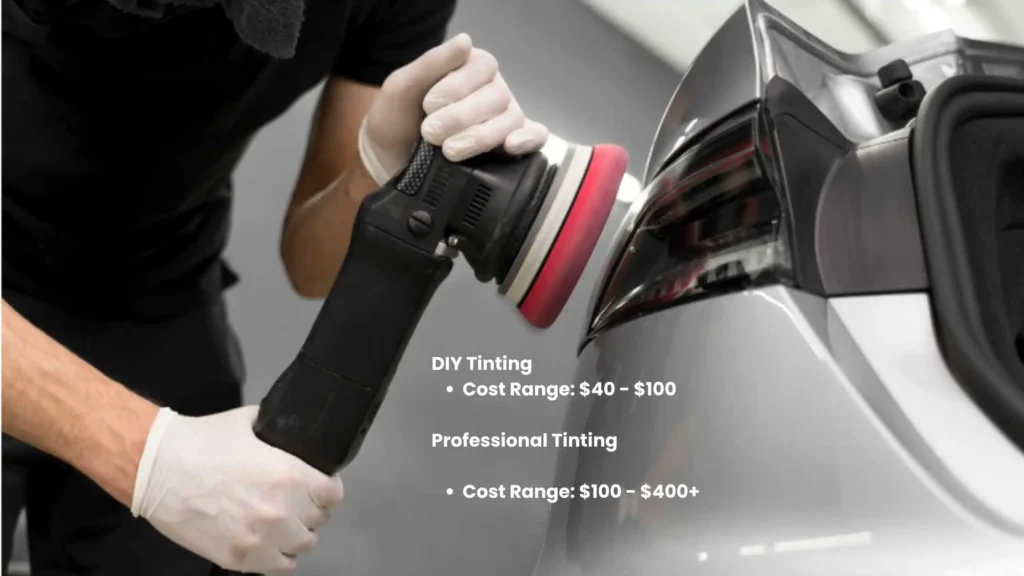
DIY tinting can cost about $50 to $150 for film and basic tools, while professional full-car installation commonly ranges from about $100 to $800+ depending on film and vehicle. DIY saves labor cost, but curved rear glass, dust control, trimming, and heat shrinking make a clean first-time result difficult.
| Type | Cost Range |
|---|---|
| DIY Tinting | $50 – $150 |
| Professional Tinting | $100 – $800+ |
Pros And Cons
DIY tinting saves labor cost, but installation quality depends heavily on surface preparation, dust control, accurate cutting, and heat-forming curved glass. A mistake can waste film and turn the project into a removal-and-redo job.
Professional tinting costs more because you are paying for installation skill, shop conditions, tooling, and usually some form of warranty coverage. A reputable installer should also explain the legal VLT limits that apply to your vehicle and location.
- DIY Pros:
- Less costly
- Satisfying project
- DIY Cons:
- High error risk
- Limited or no installation warranty
- Professional Pros:
- High-quality results
- Installer can explain local VLT limits and measure the finished glass
- Many professional packages include film or installation warranty coverage
- Professional Cons:
- More expensive
Additional Costs To Consider
When tinting your car windows, think beyond the initial installation price. Old-film removal, replacement film, and damaged glass can change the total ownership cost. If the glass itself is cracked or broken, compare that separately in the car window replacement cost guide before paying for new tint.
Warranty And Durability
Window tint quality varies. Better tints last longer but cost more upfront. Consider this:
- Warranty coverage: Compare what the warranty actually covers, who backs it, and whether it transfers to a new owner.
- Film construction: Longevity varies by film line, exposure, installation quality, and care; do not assume every film in one category lasts the same amount of time.
A strong warranty can add value if it clearly covers defects such as bubbling, peeling, cracking, or discoloration. Read the exclusions and keep the installation paperwork.
Maintenance And Repairs
Tints need care to last. Here’s what to keep in mind:
- Cleaning methods: Follow the film maker’s care instructions and use cleaners that are labeled safe for aftermarket tint.
- Damage: Scratches, peeling, or failed adhesive may require partial or full film replacement rather than a simple spot repair.
Regular, gentle cleaning helps protect the film surface. For product options, see the car window cleaner guide and confirm the cleaner is labeled safe for aftermarket tint.
How to Save Money on Car Window Tinting
Saving money on window tinting is easier than you think. You don’t have to break the bank to get your car windows tinted. There are smart ways to save money while still getting high-quality tinting. Let’s explore some of these strategies.
Seasonal Discounts And Deals
Many tinting shops offer seasonal discounts. These can be a great way to save money. Look for deals during:
- Slower periods: Some shops run promotions when appointment demand is lower, but the timing varies by climate and local market.
- Holiday promotions: Some installers advertise limited-time discounts around major shopping periods. Compare the final itemized price, not just the advertised percentage off.
If a local installer publishes email or social promotions, subscribing can help you catch a sale. Still compare the exact film series, warranty, and windows included before deciding that a discounted package is the better value.
Long-term Benefits
Investing in window tinting can save you money over time. Here are some long-term benefits:
- Lower cabin heat load: Heat-rejecting film can reduce solar heat entering through the glass, which may reduce air-conditioning demand. Actual fuel or EV-range savings vary by vehicle, climate, parking, and driving conditions.
- Interior protection: Quality film can reduce UV exposure and solar load that contribute to fading and heat stress on interior materials. Keep the existing repair-cost guide for broader vehicle-damage budgeting.
Do not assume the most expensive tint automatically saves the most money. Compare the exact film specifications, warranty, installer reputation, and how long you expect to keep the vehicle. A mid-range film can be the better value when premium heat rejection is not a priority.
Frequently Asked Questions About Car Window Tint Cost
How Much Does It Cost To Tint A Car All Around?
A full-car tint usually costs about $100 to $800+ in the U.S. Basic dyed film is often near the lower end, while ceramic film, large vehicles, windshield coverage, and difficult glass can push the price higher.
What Is The Darkest Legal Tint?
There is no single darkest legal tint for the U.S. States set different VLT limits by window position and may have separate rules for windshields, reflectance, medical exemptions, and vehicle types. Check your current state rule before installation.
What Is Texas Window Tint Law?
Texas DPS states that the front side windows must have 25% or more light transmission when measured with the original glass. Windshield film must stay above the AS-1 line, or within the top five inches if no AS-1 line is present, and must also meet color, reflectance, and light-transmission rules. Rear-window rules depend in part on whether the vehicle has qualifying outside mirrors.
How Much Is Window Tinting In Texas?
There is no single statewide service price for window tinting in Texas. A practical planning range is similar to the broader U.S. market—about $100 to $800+ for a full vehicle—because film type, vehicle size, installer, city, glass complexity, and removal work all affect the quote.
How Much Does Ceramic Window Tint Cost?
Current 2026 U.S. pricing guides commonly place professional full-car ceramic tint around $300 to $800+, with premium film lines and larger vehicles sometimes costing more. Ask which ceramic series is included because performance and warranty differ by product.
How Long Does It Take To Tint Car Windows?
Many professional full-car appointments take roughly one to four hours, but vehicle size, the number of panes, rear-glass complexity, and old-film removal can extend the job. Ask the shop for its expected installation and curing instructions for your exact film.
Is Ceramic Tint Worth The Extra Cost?
Ceramic tint is most worth considering when heat rejection is a priority, you want premium film performance without a metallic layer, or you plan to keep the vehicle for years. Consumer Reports found ceramic tint generally more effective than traditional tint for heat and UV performance, while noting that it costs more. If your main goal is appearance or basic glare reduction on a tight budget, dyed or mid-range film may be enough.
Conclusion
For most drivers, the useful 2026 budget is wider than the old $100–$400 rule of thumb: plan on roughly $100 to $800+ for a full-car professional tint, then narrow the quote by film tier, vehicle size, glass complexity, removal work, and warranty. Dyed film keeps cost low, mid-range film balances price and performance, and ceramic makes the most sense when heat rejection is a priority.
Before booking, get two or three itemized quotes, confirm the exact film series and windows included, and verify your state’s VLT rule. The cheapest quote is not always the best value if it leaves out old-film removal, warranty coverage, or the film performance you actually want.