
It usually costs about $500 to $3,500 to start welding at home with a complete beginner setup, depending on the process and the tools you already own. A bare-minimum flux-core or stick setup can fit around $500 to $800 when suitable 120V power is already available. A more capable home setup with gas-shielded MIG or multiprocess equipment, stronger workholding, and possible electrical or ventilation upgrades often lands around $1,000 to $3,500. Regular side work commonly needs $3,000 to $12,000, while a commercial shop can exceed $20,000 before rent, vehicles, payroll, and working capital.
Last updated: August 11, 2026 — manufacturer listings, AWS fees, OSHA/NIOSH/EPA guidance, and the cost tiers below were rechecked.
How these estimates were built: This guide separates machine-only prices from the cost of a complete working setup. Current manufacturer listings were checked for equipment examples, while OSHA, NIOSH, AWS, SBA, EPA, BLS, Apprenticeship.gov, and IRS sources were used for safety, training, certification, business, and tax context. Local electrical, gas, insurance, permit, freight, tax, and used-equipment prices can still move the total.
Quick Answer
Starting welding at home can cost about $500 to $800 for a bare-minimum practice setup when suitable power and some basic workspace are already available. A more capable complete home setup often runs about $1,000 to $3,500. Regular side work often runs $3,000 to $12,000, while a commercial shop can exceed $20,000 before rent, vehicles, payroll, and working capital. Machine price is only one part of the total: PPE, prep tools, workholding, gas, power, ventilation, and training can materially change the budget.
Key Takeaways
- A bare-minimum home setup can fit around $500 to $800, while a more capable complete home setup often lands around $1,000 to $3,500 once the machine, PPE, tools, and initial consumables are included.
- Machine price is only part of the budget. Electrical work, ventilation, gas cylinders, metal stock, clamps, grinders, and training can cost as much as the welder.
- Flux-core and stick welding usually have the lowest entry cost. TIG and premium multiprocess systems cost more and require additional accessories.
- Respirators, hearing protection, ventilation, and fire controls must match the actual hazards rather than a one-size-fits-all shopping list.
- Business setups also need permits, zoning review, insurance, working capital, and possibly environmental compliance.
At a Glance
| Lowest-Cost Path | Flux-core or stick welding on suitable existing power, with the PPE, prep tools, workholding, consumables, and fire controls needed for the actual work |
| Difficulty | Moderate; process selection and safety planning matter more than buying the most expensive machine |
| Core Purchases | Welder, helmet, safety glasses, gloves, protective clothing, workholding, metal-preparation tools, and consumables |
| Typical Startup Cost | About $500–$800 for a bare-minimum home setup; $1,000–$3,500 for a more capable home setup; $3,000–$12,000 for regular side work; $20,000 or more for a commercial shop before major facility and operating costs |
How Much Does It Cost to Start Welding? Budget by Setup Type
Your realistic welding startup cost depends on what you mean by “start welding” and whether you already own usable tools. A machine-only price is not the same as a complete setup. Learning in a garage requires a different budget from taking paid mobile-repair jobs or opening a fabrication shop.
| Setup Level | Planning Range | Usually Includes | Common Exclusions |
|---|---|---|---|
| Bare-minimum practice | $500–$800 | Compact flux-core or stick welder, basic PPE, grinder or prep tools, simple clamps or workholding, and starter consumables | Assumes suitable existing electrical service and no major ventilation upgrade; excludes gas cylinder, formal training, rent, vehicle, and business insurance |
| Capable home or hobby | $1,000–$3,500 | Gas-capable MIG or multiprocess welder, better PPE and workholding, more prep tools, starter stock and consumables, and possibly a gas setup | Formal training, a major circuit or service upgrade, rent, vehicle, and business insurance |
| Regular side work | $3,000–$12,000 | Higher-duty machine, gas setup, stronger workholding, cutting tools, screens, stock, and training | Commercial lease, employee PPE, payroll, and major extraction systems |
| Commercial shop | $20,000+ | Multiple machines, industrial power, ventilation, workstations, inventory, permits, and insurance | Building purchase, vehicle fleet, payroll, and several months of working capital unless specifically budgeted |
Note: These are planning ranges, not national price guarantees. The low-end tiers assume you already have suitable space and electrical service. Machine brand, input power, local electrical rates, gas-cylinder policies, ventilation needs, taxes, shipping, and used-equipment availability can move the total substantially.
What the Startup Estimate Includes
A complete beginner budget should cover more than the welding machine. Include the following categories:
- Power source: MIG, TIG, stick, flux-core, or multiprocess welder.
- Personal protective equipment: Welding helmet, safety glasses, gloves, suitable clothing, and protective footwear.
- Metal preparation: Grinder, grinding wheels, wire brushes, files, and cleaning supplies.
- Workholding: Welding table or safe non-combustible surface, clamps, magnets, and fixtures.
- Consumables: Wire, electrodes, filler rod, contact tips, cups, tungsten, shielding gas, and practice metal.
- Infrastructure: Suitable electrical service, ventilation, screens, lighting, and fire protection.
- Training: Lessons, school tuition, certification tests, books, and practice materials where applicable.
Example Home Welding Budget
A practical, better-equipped home setup might include a $1,200 MIG welder, $400 in PPE, $800 in tools and workholding, $500 in initial consumables and metal, and $600 for electrical or ventilation improvements. That totals $3,500 before formal training. This example sits near the upper end of the home range rather than representing the cheapest way to begin. A gasless flux-core setup using existing 120V power may cost much less, while an AC/DC TIG setup with a cylinder and upgraded circuit may cost more.
Types of Welding Machines and Price Ranges
Choose the welding process before choosing the brand. The right process depends on your materials, thickness range, joint quality, work location, available power, and how often the machine will run. For a separate machine-only comparison, see our welding machine price guide.
| Process | Typical Machine Budget | Best Fit | Extra Costs |
|---|---|---|---|
| Flux-core | $200–$700 | Low-cost repairs, outdoor work, and beginners | Wire, tips, nozzles, and cleanup tools |
| MIG | $400–$2,000+ | General fabrication, auto work, steel, and production | Gas cylinder, regulator, wire, tips, and possibly a spool gun |
| Stick | $250–$1,000+ | Outdoor repairs, thicker steel, farm work, and less-clean surfaces | Electrodes, holder, leads, chipping hammer, and rod storage |
| TIG | $650–$4,000+ | Thin metal, stainless steel, aluminum with AC capability, and high-control work | Argon, torch parts, tungsten, filler rod, pedal, and water cooling on some systems |
| Multiprocess | $400–$5,000+ | Shops that regularly switch among MIG, flux-core, stick, and TIG | Process-specific torches, guns, pedals, gas systems, and accessories |
Current manufacturer listings show why package contents matter. On August 11, 2026, Forney’s multiprocess lineup included the Easy Weld 140 MP-i at $419.99, the X-Series 140 MPx at $529.99, and the Easy Weld 140 MP at $659.99. By contrast, the Miller Multimatic 220 AC/DC is a 120–240V machine that supports MIG, flux-cored, stick, and AC/DC TIG and includes multiple process-specific accessories. Compare the complete package, supported processes, input power, and required add-ons rather than the headline machine price alone.
Products Worth Considering
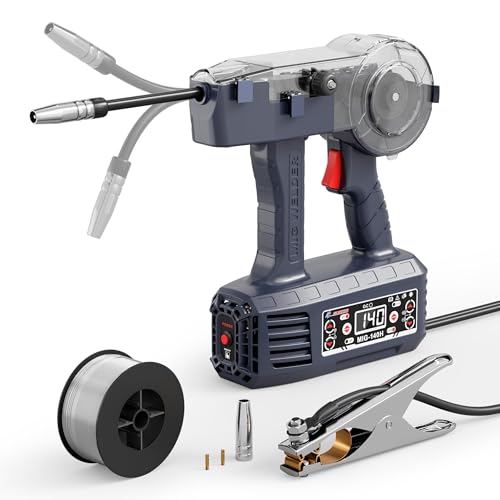
【Upgrade 360° Rotatable Torch】GZ GUOZHI MIG welder torch comes with a 360° rotatIing mig torch neck, enabling free movement in all directions. It easily reaches corners, edges and overhead welds, reduces wrist strain and delivers better maneuverability for long welding sessions.
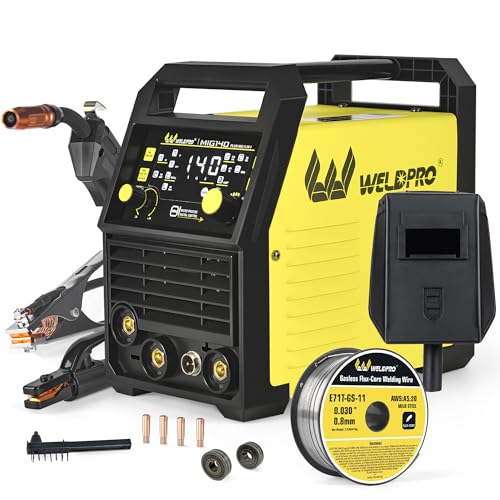
VERSATILE 5-IN-1 WELDING SOLUTIONS & INTELLIGENT CONTROL: This multifunctional welder combines SYN MIG, THI MIG, MMA (Stick), Lift TIG, and Spot Welding capabilities, making it compatible with a variety of materials including steel, stainless steel, cast iron, and mild steel. The advanced MCU intelligent control automatically adjusts voltage and wire feed speed based on material and thickness, perfect for newcomers and allowing experienced welders to fine-tune voltage with precision (±3V) for all types of DIY projects, home repairs, and workshop tasks
MIG Machine Costs
MIG welding is a common starting point because wire feeds continuously and settings are relatively easy to learn. A compact 120V machine can handle light repair and thin material, while a 240V model offers more output and a better duty cycle for thicker work.
Do not assume the advertised package is complete. Check whether it includes a regulator, gas hose, drive rolls, work lead, gun, contact tips, cart, and spool-gun capability. Aluminum MIG work may require a spool gun or push-pull system that adds hundreds of dollars.
For general fabrication, a $500 to $2,000 machine budget covers many capable options. That price does not make the resulting work code-compliant. Structural, pressure, pipe, and other governed work may require qualified procedures, approved materials, welder qualification, and inspection.
TIG Machine Pricing
Choose TIG when you need fine heat control and clean welds on thin material. Entry-level DC TIG or TIG-stick machines can begin around $650, but welding aluminum normally requires AC output. AC/DC systems, pulse controls, higher duty cycles, and water-cooled torches increase the cost.
For comparison, Miller’s portable Maxstar 161 STH is a 13 lb, 120/240V DC TIG-and-stick machine. Miller’s standard-package listing does not include the TIG torch, remote control, regulator/flow gauge, or gas hose, so those items belong in the startup budget. Aluminum TIG buyers also need to confirm that a machine provides AC output; the Maxstar 161 STH is a DC machine.
Budget separately for argon, a regulator or flowmeter, filler rod, tungsten electrodes, cups, collets, back caps, torch consumables, and a foot pedal if it is not included.
Multiprocess and Stick Welder Costs
A multiprocess welder can combine MIG, flux-core, stick, and TIG functions. It saves floor space and may reduce the number of power sources you need, but the advertised process list can be misleading. Some machines offer only lift-start DC TIG, exclude the TIG torch or pedal, or cannot TIG-weld aluminum.
Stick welders remain one of the simplest choices for field repair, thicker steel, and outdoor work. The machine may be inexpensive, but include suitable leads, an electrode holder, ground clamp, chipping hammer, wire brush, and dry electrode storage in your budget.
Pro Tip: Buy for the work you expect to perform during the next year. Paying for five processes provides little value if nearly every project uses the same wire, gas, and material.
120V Versus 240V Power
A 120V welder is easier to use in a home garage, but its output and duty cycle may limit material thickness and production time. A 240V machine normally provides more capacity, but the outlet, breaker, conductor size, plug, grounding, and circuit must match the manufacturer’s manual and local electrical code.
Do not use household extension cords unless the welder manufacturer permits them and the cord is correctly sized for the load and length. When a new circuit is required, obtain a quote from a licensed electrician and include permits or inspection fees where applicable.
Essential Personal Protective Equipment Costs
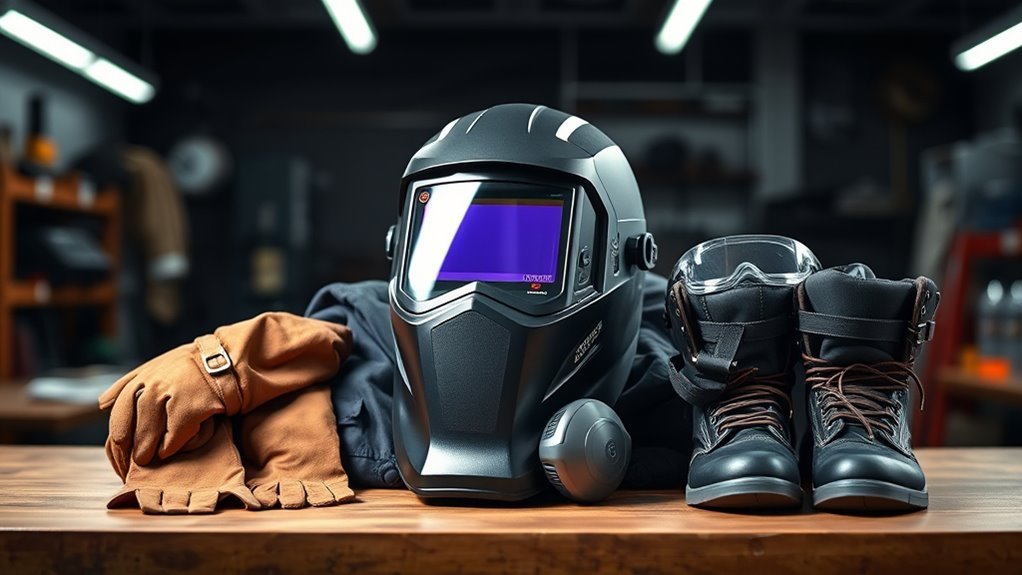
Plan about $250 to $800 for a solid personal welding PPE kit. The exact equipment must match the welding process, amperage, surrounding work, fumes, noise, sparks, and materials.
Products Worth Considering

Lens Technology- IR 5.0 Filter Green Lens are ANSI & CSA compliant, with 99% protection from UV rays to reduce eye fatigue and prevent damage.

2 Lenses - Double Protection One frame, two types of safety protection! Includes clear lenses (for daily shop inspections) and professional IR 8.0 blackout lenses (for welding).
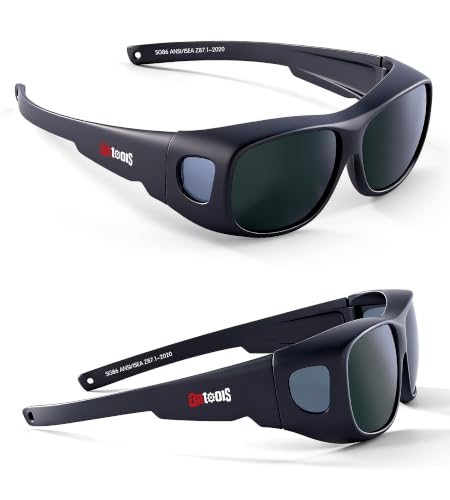
Strong & Durable Design: Thanks to their tough polycarbonate wraparound construction, these anti-fog safety goggles offer superior protection from both direct and peripheral threats.
Basic PPE Items
- Safety glasses with side protection: Commonly $10 to $30. Wear suitable primary eye protection under the welding helmet to protect against grinding debris, slag, and particles when the hood is raised.
- Welding helmet: Roughly $50 to $350 or more. Select a properly marked helmet and the correct filter shade for the operation and amperage.
- Welding gloves: About $20 to $60. MIG and stick gloves normally prioritize heat protection, while TIG gloves place more emphasis on dexterity.
- Protective clothing: About $50 to $250 for suitable shirts, jackets, sleeves, pants, or leather protection. Avoid clothing that can melt onto the skin. Cotton and wool do not melt, but untreated fabric can still ignite.
- Protective footwear: About $75 to $250. Choose footwear suited to falling objects, hot material, sparks, and the walking surface.
OSHA’s eye and face protection standard provides minimum filter-shade guidance for welding and cutting operations. Start with a shade that is too dark to see the weld zone, then move lighter without going below the required minimum.
Warning: A welding helmet is not a substitute for safety glasses, ventilation, suitable clothing, or a hazard assessment. Arc radiation, sparks, hot metal, fumes, electrical shock, and nearby grinding can create separate hazards at the same time.
Respiratory and Hearing Protection
Do not choose a respirator only by price. First identify the base metal, filler, coating, cleaner, process, ventilation, work area, and potential contaminants. Welding stainless steel, galvanized metal, painted material, plated parts, or confined-space components can create hazards that are different from welding clean mild steel in an open shop.
OSHA’s welding standard emphasizes ventilation and other controls. A respirator may be required when engineering and work-practice controls do not adequately control exposure or when a specific standard requires one. Tight-fitting respirators used under an employer’s required respiratory program may require medical evaluation, fit testing, training, maintenance, and cartridge-change procedures under 29 CFR 1910.134.
| Item | Planning Cost | Important Limitation |
|---|---|---|
| Disposable particulate respirator | $1–$5 each | Does not protect against gases or vapors; suitability depends on the identified hazard |
| Reusable half-mask respirator | $30–$100 before filters | Requires compatible filters or cartridges and a proper face seal |
| Powered or supplied-air system | Several hundred dollars or more | Used for specific hazards and work conditions; professional selection may be necessary |
| Earplugs or earmuffs | $5–$50+ | Select from measured or reasonably anticipated noise exposure and required attenuation |
The National Institute for Occupational Safety and Health notes that welding fumes contain metals and commonly include some manganese. Control fumes at the source where practical, keep your head out of the plume, and follow the safety data sheets and process-specific guidance.
Consumables and Material Expenses
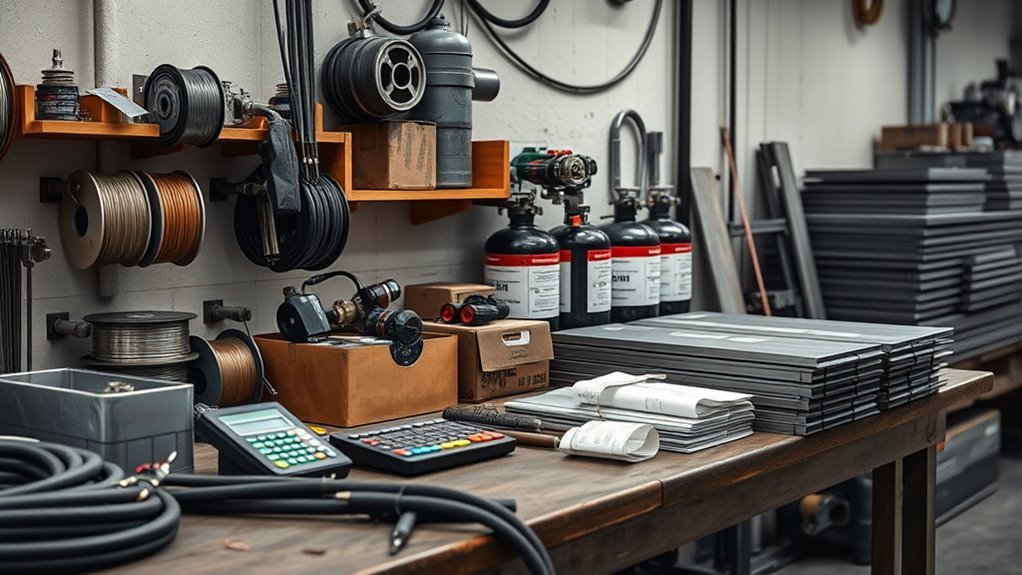
Initial consumables commonly add $150 to $600 to a new setup, but the amount depends on the process and whether you must obtain a shielding-gas cylinder. A small flux-core setup may need only wire, tips, grinding wheels, and practice steel. A TIG setup may require argon, a regulator or flowmeter, filler rod, tungsten, cups, collets, and torch parts.
The best consumables budget is based on quantity used per job—not a flat national allowance.
Shielding-Gas Cylinder Costs
Gas suppliers may sell cylinders, lease them, exchange customer-owned cylinders, or require a deposit. Policies vary by supplier and cylinder size. Your first transaction may include the cylinder or lease, gas fill, regulator or flowmeter, hose, and delivery or handling fees.
Before buying a cylinder online or secondhand, confirm that a local supplier will fill or exchange it. Keep cylinders secured upright, protect valves, separate them from heat and damage, and follow the supplier’s handling instructions.
How to Calculate Consumable Cost
Use this formula for each project:
Consumable cost = quantity used × current unit price + waste allowance + gas used + disposable torch and grinding items.
- Record the weight or length of wire, rod, or electrodes used.
- Estimate shielding-gas consumption from flow rate and arc time.
- Add contact tips, nozzles, cups, tungsten, grinding wheels, cut-off wheels, and anti-spatter products.
- Add a reasonable allowance for test pieces, starts, rejects, and rework.
- Price base metal by its exact alloy, form, dimensions, and supplier quote.
A statement such as “14-gauge steel costs a certain amount per stick” is incomplete because sheet, tube, angle, channel, and other profiles use different dimensions and pricing. Record the full specification on every estimate.
Tools and Accessories You Will Need
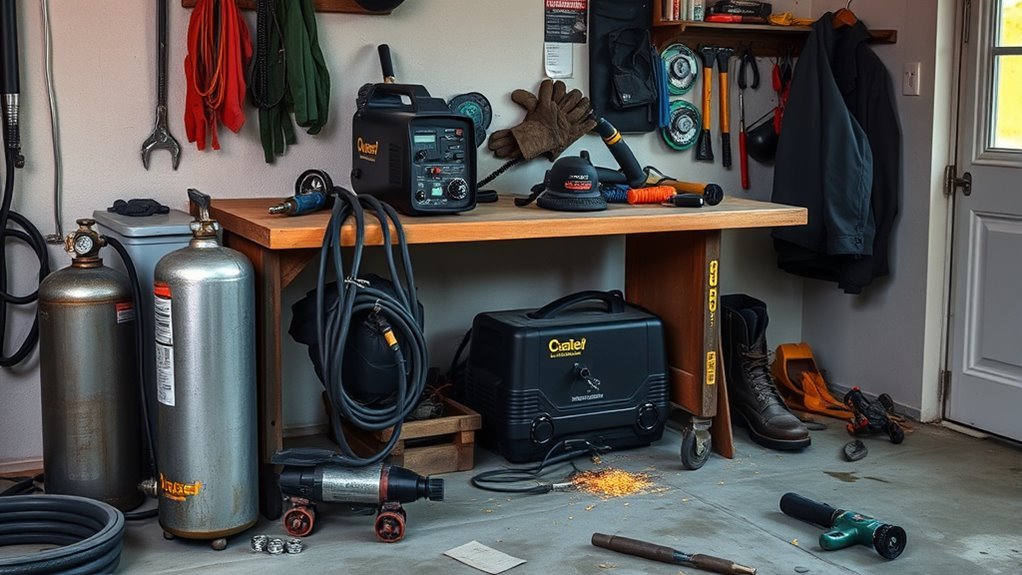
A welder cannot produce consistent work without preparation and workholding tools. A basic accessory allowance may be $300 to $1,500, while a better-equipped fabrication area can cost several thousand dollars.
- Angle grinder and wheels: Used for cleaning, beveling, cutting, and finishing.
- Wire brushes and cleaning tools: Keep separate brushes for stainless steel and aluminum to reduce contamination.
- Clamps and magnets: Include C-clamps, locking clamps, corner clamps, and fixtures suited to the work.
- Welding table or non-combustible work surface: It must be stable and suitable for hot work.
- Measuring and layout tools: Tape, square, scribe, level, calipers, soapstone, and markers.
- Cutting equipment: Cut-off saw, bandsaw, plasma cutter, oxyfuel equipment, or hand tools as the projects require.
- Welding screens and blankets: Protect nearby people and combustible surfaces from arc radiation and sparks.
- Cart and cylinder restraint: Keep the machine, leads, and gas cylinder organized and secure.
- Process-specific accessories: MIG tips and drive rolls, TIG torch parts and pedals, or stick leads and holders.
Match each accessory to the machine’s rated output, connector type, polarity, gas requirements, and manufacturer instructions. A bargain accessory that overheats, leaks, or fits poorly can create downtime and safety problems.
Products Worth Considering

Wide Application Range: Shade 3.5/9-13 supports TIG, MIG, MMA/ARC and Grind, and the helmet accommodates magnifying lenses for close-up and detailed work.

【FASTER AUTO-DARKENING】Features high-end auto-darkening lenses with 4 premium arc sensors, switching from light to dark in 1/25000 sec. Easily adjust the shade and sensitivity of the lenses for different working environments, perfect for TIG/MIG/ARC welding. Dark state level: 4/9-13.
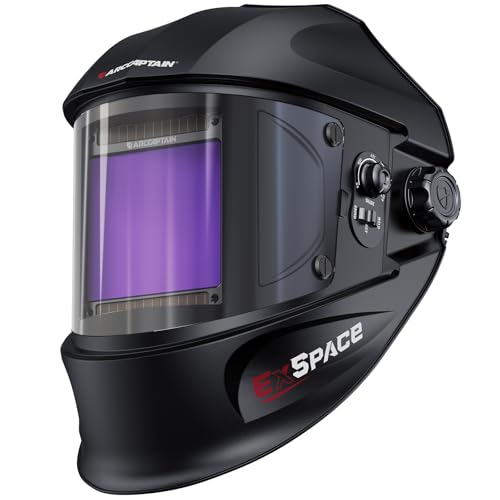
FASTER AUTO DARKENING - Equipped with high-end auto-darkening lenses and four premium arc sensors, the switching time from light to dark is 1/25000 seconds. The lens brightness and sensitivity can be easily adjusted for different working environments, making it ideal for TIG/MIG/ARC welding and grinding. DIN4 on light state, DIN5-9/9-13 on dark state.
Buying Used Welding Equipment
Used equipment can reduce startup cost, but inspect it before purchase. Verify the data plate, input voltage, duty cycle, output range, serial number, lead condition, connectors, cooling fans, controls, gas fittings, and availability of replacement parts.
Ask to test the machine under load rather than confirming only that it powers on. Check whether the torch, gun, pedal, regulator, cables, and proprietary accessories are included. The cost of replacing missing parts can erase the savings.
Training, Certification, and Skill Development Costs
Training costs range from low-cost community classes and employer instruction to full technical-school programs. There is no reliable national tuition figure that fits every program, so compare the full local price and what it includes. For a tuition-focused breakdown, see our welding school cost guide.
The U.S. Bureau of Labor Statistics says welders typically enter the occupation with a high school diploma or equivalent plus technical and on-the-job training. Training may come from vocational schools, community colleges, private schools, employers, the military, or apprenticeship programs.
Training Costs to Compare
- Tuition and registration fees.
- Books, online modules, and classroom materials.
- PPE, tools, filler metal, gas, and practice coupons.
- Lab fees and booth time.
- Certification test fees and test plates or pipe.
- Retesting, travel, lodging, and renewal costs.
- Income lost while attending a full-time program.
Apprenticeships can combine paid on-the-job learning with technical instruction. Search current opportunities through Apprenticeship.gov.
AWS Certification Costs
The American Welding Society is a widely recognized U.S. welding certification organization. Its 2026 price list shows a $70 Certified Welder application fee. That is not the complete test cost: AWS directs candidates to contact an Accredited Test Facility for the exam price. For a broader breakdown of testing and credential expenses, see our welding certification cost guide.
Certification is not automatically required for every hobby project or entry-level job. Employers, contracts, governing codes, customers, and project specifications determine which qualifications are needed.
Workshop Setup and Safety Infrastructure
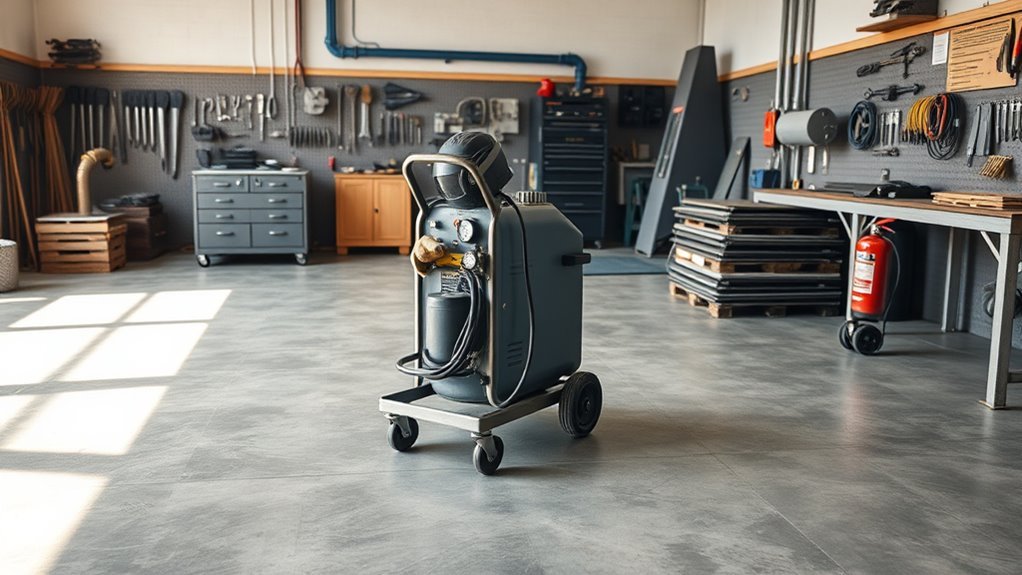
A safe welding area needs suitable power, ventilation, lighting, work surfaces, cylinder storage, fire controls, and separation from people who are not protected from the arc. Commercial operations may also need permits, inspections, documented procedures, employee training, and exposure assessments.
Ventilation and Fume Control
General room airflow is not always enough. Local exhaust ventilation captures fumes closer to the arc and can provide better control than relying only on dilution ventilation. The required system depends on the process, metals, coatings, work position, enclosure, production rate, and contaminants.
For covered workplaces, OSHA 29 CFR 1910.252 requires mechanical ventilation for general welding in certain conditions, including spaces under 10,000 cubic feet per welder, rooms with ceilings under 16 feet, and confined or obstructed spaces. Material-specific requirements and exposure limits can require additional controls.
Do not place a fan so that it disrupts shielding gas and causes weld defects. A qualified industrial hygienist, ventilation professional, or safety specialist may be needed for stainless steel, coated metal, confined spaces, high production, or other higher-risk work.
Fire and Cylinder Safety
Remove or protect combustible materials, contain sparks and slag, and keep suitable fire-extinguishing equipment ready. For covered workplaces, OSHA 29 CFR 1910.252 requires a fire watch when specified conditions exist, including appreciable combustible material within 35 feet in some situations, and requires the watch to continue for at least 30 minutes after welding or cutting is finished. A Class D extinguishing agent is required for certain combustible-metal powder, flake, shaving, and similar hazards; it is not automatically required merely because a solid aluminum or stainless-steel part is being welded.
Secure compressed-gas cylinders upright and protect them from impact, heat, electrical circuits, and damage. Follow the gas supplier’s separation, transport, storage, and valve-protection instructions.
Warning: Never weld, cut, or heat a drum, tank, pipe, or closed container that held a flammable, combustible, or unknown substance until it has been properly cleaned, vented, tested, and approved for hot work. Residue or vapor can explode even when the container appears empty.
Zoning, Permits, and Insurance
A home garage does not automatically qualify as a legal welding-business location. The U.S. Small Business Administration notes that zoning ordinances can restrict or prohibit particular businesses, including home-based operations. If you are budgeting a fixed business location rather than learning or doing occasional side work, use our welding shop startup cost guide for a facility-focused budget.
Check applicable city, county, and state requirements for business licensing, zoning, noise, fire inspection, electrical work, compressed gases, signs, parking, waste, and customer traffic. Requirements and fees vary by location and activity.
Insurance premiums also vary too much for one dependable national range. A welding operation may need some combination of general liability, tools and equipment coverage, commercial property, workers’ compensation, commercial auto, product or completed-operations coverage, and coverage for rented premises. Obtain quotes based on your actual work, revenue, payroll, vehicles, limits, and subcontractor use.
Environmental Requirements
Environmental rules depend on the metals, coatings, chemicals, emissions, dust, wastewater, and wastes your operation generates. Certain metal fabrication and finishing facilities are covered by federal air-pollution requirements, while state and local rules may impose additional obligations.
Review applicability before welding or grinding coated metals, using solvents, painting, plating, generating metal dust, or disposing of contaminated materials. The U.S. Environmental Protection Agency provides information on federal requirements for covered metal fabrication and finishing source categories.
Ongoing Operating and Maintenance Expenses
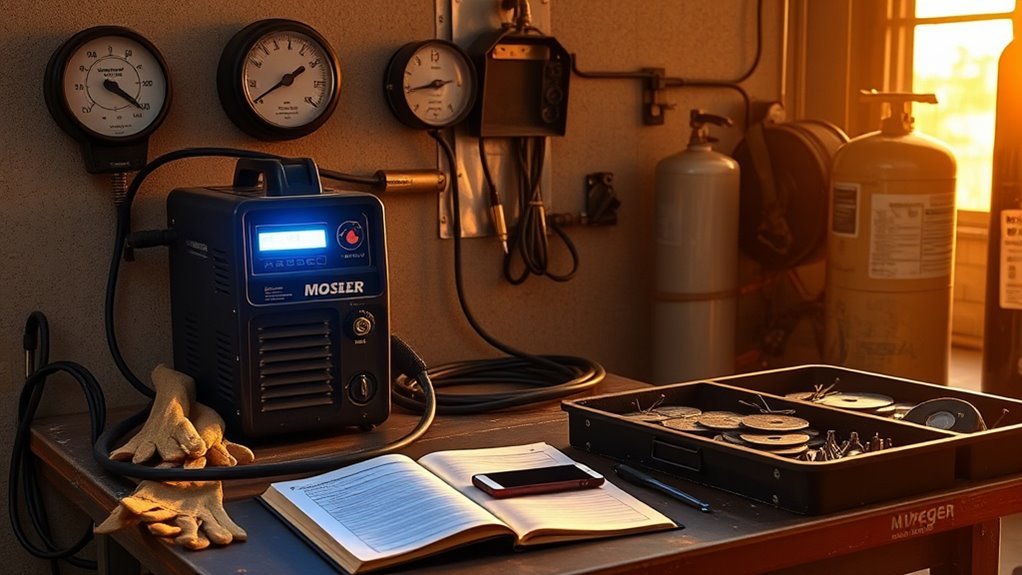
Startup spending receives the most attention, but recurring costs determine whether welding work remains profitable. Track expenses by month and by job instead of relying on a flat consumables allowance.
Monthly operating cost = electricity + gas + filler metal + base metal + disposables + maintenance reserve + insurance + rent + waste costs + administrative overhead.
- Electricity: Estimate input power from the machine manual and record actual operating time. The rated welding output is not the same as wall power consumption.
- Consumables: Track wire, rods, electrodes, tungsten, tips, nozzles, cups, grinding wheels, gases, and cleaning products.
- Maintenance: Clean wire-feed paths, inspect leads and connections, replace liners and consumables, service cooling systems, and follow the manufacturer’s schedule.
- PPE replacement: Replace damaged gloves, scratched lenses, contaminated respirator parts, worn clothing, and damaged footwear.
- Ventilation: Include filter replacement, duct cleaning, inspection, and fan maintenance.
- Business overhead: Add software, bookkeeping, phones, advertising, permits, insurance, rent, and vehicle costs where applicable.
Note: OSHA requirements generally apply to employers and employees. A hobbyist may not have the same regulatory duties, but electrical shock, fire, fumes, radiation, hot metal, and cylinder hazards still exist.
Budgeting Tips and Cost-Reduction Strategies
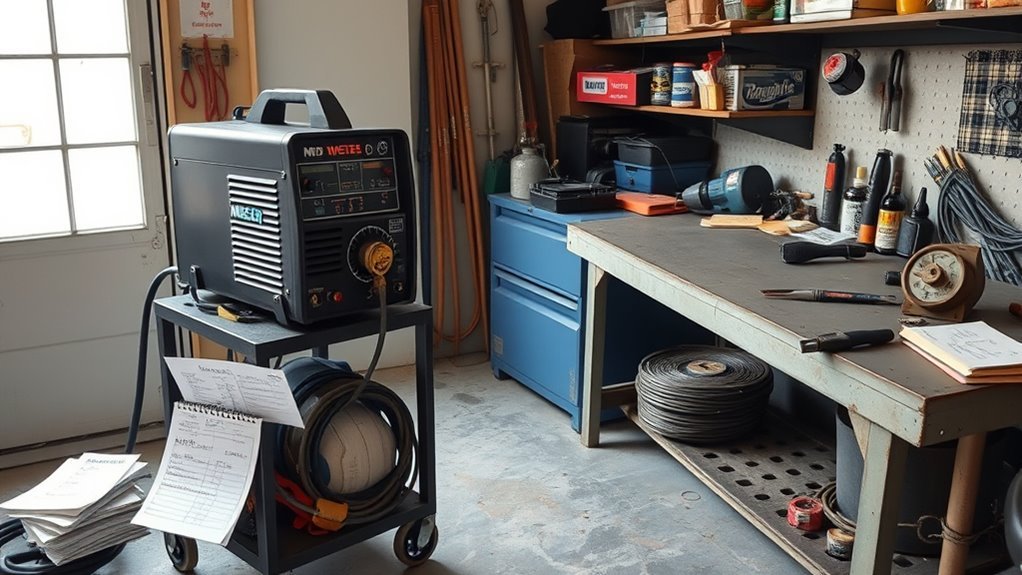
- Choose one primary process first. Standardizing around common wire, gas, and metal reduces unused accessories and changeover costs.
- List every required accessory. Compare complete packages rather than the advertised machine price.
- Check input power before purchase. A low-priced 240V welder is not a bargain if the required electrical upgrade exceeds your budget.
- Price local gas policies. Ask about cylinder ownership, leases, exchanges, deposits, fills, and delivery.
- Buy used equipment carefully. Test it under load and confirm that proprietary accessories and replacement parts remain available.
- Rent specialized equipment. Renting can make sense for occasional high-amperage, engine-driven, plasma, or specialty work.
- Track material by exact specification. Record alloy, profile, gauge, dimensions, quantity, and supplier.
- Calculate consumables per job. Include preparation, test pieces, waste, grinding, and rework.
- Separate personal and business spending. Use organized records and retain invoices, receipts, equipment details, and mileage records.
- Keep working capital. Do not spend the entire startup budget on equipment if you will need cash for material, gas, insurance, and customer payment delays.
Financing and Leasing
Financing spreads the purchase cost over time and may preserve working capital, but interest and fees raise the total cost. Leasing can provide predictable payments or easier upgrades, but you may not own the equipment at the end.
Compare the cash price, down payment, annual percentage rate, total payments, term, early-payoff rules, maintenance responsibility, insurance requirements, purchase option, and tax treatment. Do not choose financing based only on the monthly payment.
How to Calculate Breakeven
Use cash available after variable and recurring fixed operating costs rather than gross sales:
Monthly cash available for startup payback = monthly contribution margin − recurring fixed operating costs.
Breakeven months = startup investment ÷ monthly cash available for startup payback.
Contribution margin is the money left after job-specific materials, consumables, subcontractors, card fees, travel, and similar variable costs. After calculating it, subtract recurring fixed costs such as rent, insurance, software, and other overhead that would continue even in a slow month. Taxes and financing costs may also need separate treatment.
For an illustration, suppose you spend $1,200 on a MIG welder, $400 on PPE, $800 on tools, $500 on initial consumables, and $2,500 on training. Your startup investment is $5,400. If the work produces a $75 contribution margin per billable hour and you complete 12 billable hours per month, the monthly contribution margin is $900. Dividing $5,400 by $900 gives six months only if no additional recurring fixed operating costs are allocated to this work. If recurring fixed costs apply, subtract them from $900 first; the payback period will be longer. This is a mathematical example, not a promise of demand or profit.
Frequently Asked Questions
What is the cheapest way to start welding?
A compact flux-core or stick setup usually has the lowest entry cost because it can avoid a shielding-gas cylinder. You still need a proper helmet, safety glasses, gloves, suitable clothing, workholding, metal-preparation tools, fire controls, and safe electrical service.
Can I start welding for under $500?
Sometimes, especially if you already own a grinder, clamps, suitable protective clothing, and a safe 120V circuit or you buy used equipment. For an all-new setup, $500 is a tight floor because the welder, helmet, safety glasses, gloves, workholding, prep tools, consumables, and fire-safe workspace all have to fit inside the same budget.
Do I need a 240V outlet to start welding?
Not always. Many small welders operate on 120V power, but they have lower output and may reach their duty-cycle limit sooner. Thicker material and sustained work often benefit from 240V. Match the circuit to the machine manual and use a licensed electrician when a new circuit is required.
Do I need welding certification for hobby or repair work?
Certification is not automatically required for every personal project. Employers, customers, contracts, project specifications, and governing welding codes determine when qualification is required. Structural, pressure, pipe, aerospace, and other regulated work commonly has stricter requirements.
Do welding businesses need insurance beyond general liability?
Often, yes. Depending on the operation, you may need tools and equipment coverage, commercial property, workers’ compensation, commercial auto, product or completed-operations coverage, and coverage required by a landlord or customer. Premiums depend on the actual business exposures.
Can I finance or lease welding equipment?
Yes. Financing may lead to ownership, while leasing may lower the initial payment or simplify upgrades. Compare total payments, interest, fees, maintenance responsibility, insurance, early-payoff terms, and the end-of-lease purchase option.
How do zoning laws affect a home welding shop?
Local rules may restrict industrial activity, noise, fumes, customer traffic, signs, outdoor storage, parking, compressed gases, and operating hours. Contact the city or county responsible for zoning, business licensing, building permits, and fire inspection before accepting work from home.
Are there environmental rules for welding fumes and waste?
Potentially. Applicability depends on your metals, coatings, chemicals, emissions, dust, wastewater, paint, solvents, and waste. Federal, state, and local requirements may differ. Commercial facilities should determine which air, waste, and reporting rules apply before beginning operations.
What tax deductions may apply to welding startup costs?
Eligible business expenses may include equipment, supplies, training, insurance, rent, utilities, and vehicle costs, but treatment depends on business use and tax rules. Section 179 and depreciation may apply to qualifying property. Keep detailed records and consult current IRS guidance or a qualified tax professional.
Conclusion
A bare-minimum home welding setup can fit around $500 to $800 when suitable power and some workspace are already available. A more capable complete home setup often lands around $1,000 to $3,500, while regular side work may require $3,000 to $12,000. A commercial welding operation can exceed $20,000 before rent, vehicles, payroll, and working capital.
Start by choosing the process and material range you will actually use. Then price the complete system: machine, power, PPE, ventilation, gas, consumables, metal-preparation tools, workholding, training, and recurring expenses. For business use, add zoning, permits, insurance, environmental requirements, and cash reserves.
This guide provides general cost and safety information. It does not replace the equipment manufacturer’s instructions, a site-specific hazard assessment, applicable welding codes, local authorities, an industrial hygienist, a licensed electrician, an insurance professional, or qualified legal and tax advice.
Sources
- OSHA 29 CFR 1910.252: Welding, Cutting, and Brazing — welding ventilation, PPE, fire-prevention, and operating requirements
- NIOSH: Welding Fumes and Manganese — occupational welding-fume hazards
- American Welding Society Certification and Education Price List — current AWS application and certification-program charges
- U.S. Small Business Administration: Pick Your Business Location — zoning and location considerations
- U.S. Environmental Protection Agency: Metal Fabrication and Finishing Source Categories — federal air-pollution requirements for covered facilities
- IRS Publication 946: How to Depreciate Property — depreciation and Section 179 guidance
