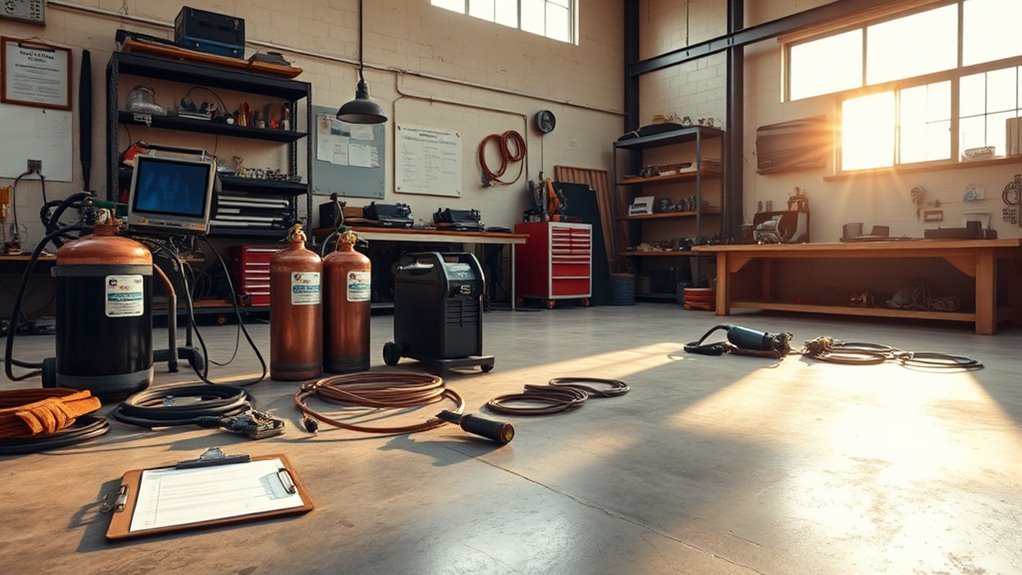
The cost to start a welding business is usually lower than the cost of a full fabrication shop, but one person’s garage-conversion budget is not a dependable baseline. Your real total depends on whether you already own a suitable vehicle or workspace, which welding processes you offer, local zoning and fire rules, electrical and ventilation upgrades, insurance, and how much working capital you keep for the first few months.
Quick Answer
A lean owner-operated mobile welding setup using an existing vehicle may require roughly $10,000–$36,000 in planned startup funds. Buying a service vehicle can push the model to $25,000–$85,000 or more, while a small fixed shop may need about $30,000–$130,000+ after deposits, power, ventilation, equipment, insurance, and working capital.
Key Takeaways
- There is no reliable nationwide startup-price average. Build your total from local quotes and the exact services you plan to sell.
- The business model matters most: an existing-vehicle mobile operation usually needs less capital than a leased fabrication shop.
- Electrical service, ventilation, fire protection, gas-cylinder storage, insurance, and working capital are easy to underestimate.
- Buy only the welding processes and cutting tools required for your first jobs, then add specialized equipment from revenue.
- Price from billable hours, direct job costs, overhead, owner pay, debt service, and profit instead of copying a competitor’s hourly rate.
At a Glance
| Planning Time | Usually 2–8 weeks for quotes, licensing, insurance, equipment selection, and financing; facility buildout can take longer. |
| Difficulty | Moderate to high because business, electrical, ventilation, fire, insurance, and welding-code requirements can overlap. |
| Core Purchases | Welder, leads and torch, cutting and grinding tools, clamps, PPE, ventilation or fume control, fire protection, gas handling, consumables, and secure storage. |
| Modeled Startup Cost | About $10,000–$36,000 for a lean mobile setup with an existing vehicle; $25,000–$85,000+ with a vehicle purchase; $30,000–$130,000+ for a small fixed shop. |
Note: All dollar figures below are planning allowances, not national averages or vendor quotations. Prices, taxes, permit fees, rent, insurance, utility upgrades, and wages vary sharply by location and risk profile.
Cost to Start a Welding Business: A Budget Breakdown
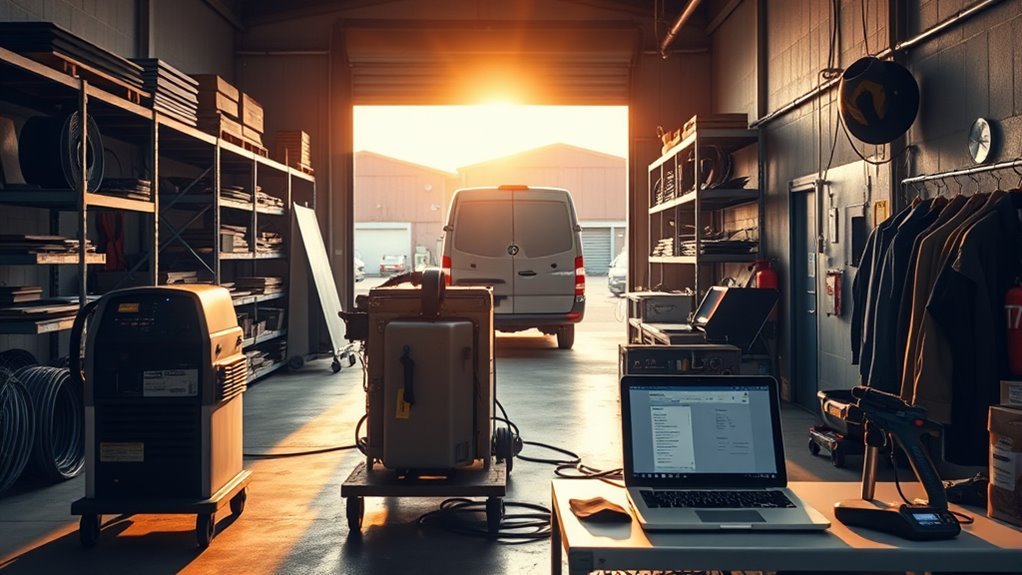
Plan the budget like a shop blueprint. Separate one-time startup purchases, monthly fixed costs, job-related variable costs, and working capital. The U.S. Small Business Administration recommends calculating startup costs before seeking financing so you can estimate funding needs and the path to profitability.
A universal “$15,000 to $50,000” answer is too narrow. A part-time mobile repair service using an existing truck is very different from a leased shop performing structural fabrication. Your own total should come from written local quotes, not a neighbor’s build or a national-looking estimate.
Sample Startup Budget Models
| Business model | Modeled startup range | What the model assumes |
| Lean mobile, existing vehicle | $10,000–$36,000 | Owner-operator, one primary welding process, basic cutting tools, vehicle storage, insurance, permits, and a modest cash reserve. |
| Mobile with vehicle purchase | $25,000–$85,000+ | Used or newer service vehicle, racks and locks, portable power, core tools, safety equipment, commercial auto coverage, and working capital. |
| Small fixed fabrication shop | $30,000–$130,000+ | Lease deposits, electrical work, ventilation, fire controls, multiple machines, material handling, insurance, permits, and several months of operating cash. |
These models are deliberately broad. Heavy structural work, pipe welding, aluminum production, automated cutting, coded fabrication, employees, cranes, forklifts, or a new vehicle can push the total much higher. For a fixed-location build, see our welding shop startup breakdown; for insurance, see welding liability insurance costs; and for machines, see welding machine prices.
One-Time, Monthly, and Job-Related Costs
- One-time: welders, cutting tools, benches, clamps, racks, electrical upgrades, ventilation, vehicle buildout, initial PPE, formation fees, and deposits.
- Monthly fixed: rent, software, bookkeeping, insurance installments, vehicle payments, phone, internet, minimum utility charges, and salaried labor.
- Variable: filler metal, shielding gas, electrodes, abrasives, tips, nozzles, fuel, freight, subcontracting, disposal, and hourly labor.
- Working capital: cash that covers payroll, materials, fuel, insurance, taxes, and overhead while customers take time to pay.
Your startup cost is not only what it takes to open the doors. It is the equipment and setup cost plus enough cash to operate until customer payments reliably cover the bills.
Track each expense from day one. Review the budget monthly and cash flow weekly. Delay nonessential purchases, adjust material orders, and avoid adding payroll until demand supports it.
Essential Welding Equipment and Price Ranges

Your first equipment list should match the jobs you can sell now. A portable MIG or engine-driven welder may be central to mobile repair, while a TIG machine may be essential for stainless or aluminum work. A plasma cutter, CNC table, positioner, pipe beveler, or forklift is not automatically a startup requirement.
Core Welding Machines
Compare input power, output range, duty cycle, process capability, portability, service support, consumable availability, and generator compatibility. A machine that is cheap but frequently overheats or lacks local service can cost more through lost production.
- Entry-level stick or compact multiprocess machine: allow roughly $300–$1,500 for a basic startup purchase.
- Professional portable MIG or multiprocess unit: allow roughly $1,000–$4,000.
- Professional AC/DC TIG setup: allow roughly $1,500–$6,000+ after torch, pedal, cooler, regulator, and accessories.
- Engine-driven welder/generator: allow roughly $5,000–$15,000+ before leads, fuel system, and vehicle mounting.
- Plasma cutter: allow roughly $800–$5,000+ depending on clean-cut capacity, power, air supply, and duty cycle.
Do not buy MIG, TIG, stick, and plasma equipment merely to look complete. Start with the process that covers the greatest share of your expected work, then rent or subcontract unusual jobs until demand justifies another machine.
Cutting and Grinding Tools
Cutting, fit-up, and finishing tools often determine productivity as much as the welder. A practical starter allowance may be $800–$4,000, excluding a large compressor or CNC table.
- Angle grinders: keep at least two so cutting and grinding wheels can remain mounted separately.
- Portable band saw or cold saw: useful for controlled, repeatable cuts and reduced cleanup.
- Bench grinder and belt sander: useful for tungsten preparation, deburring, and shaping.
- Oxy-fuel or plasma cutting: choose according to material thickness, portability, consumable cost, fire risk, and available power or gases.
- Fit-up tools: squares, levels, tape measures, magnets, strongbacks, clamps, jigs, and a solid welding table.
Pro Tip: Price productivity, not only purchase cost. A better saw, table, fixture, or material rack may save more labor than a second premium welding machine.
Safety Gear and Accessories
A basic personal set may include a welding helmet, safety glasses with side protection, process-appropriate gloves, hearing protection, flame-resistant clothing, boots, and face protection for grinding. Plan roughly $300–$1,200 per person for initial personal gear, then budget replacements.
Respirators are not a substitute for controlling fumes at the source. When respirators are required for employees, OSHA rules can require a written respiratory protection program, medical evaluations, fit testing, training, maintenance, and NIOSH-certified equipment. That makes respiratory protection a managed safety system, not a one-time mask purchase.
Power, Gas, Consumables, and Material Handling
Budget for the items that make the machine usable: leads, ground clamps, torches, regulators, hoses, cylinders or cylinder leases, wire, rods, electrodes, tungsten, cups, tips, nozzles, anti-spatter products, abrasives, extension cables, and dry storage.
For a shop, verify the building’s electrical capacity before signing a lease. Panel upgrades, receptacles, disconnects, grounding, three-phase service, permits, and licensed electrical work can exceed the cost of the first welder. Mobile operators should also calculate generator output, duty cycle, fuel use, noise, weight, and secure mounting.
Facility, Mobile Shop, and Workspace Expenses
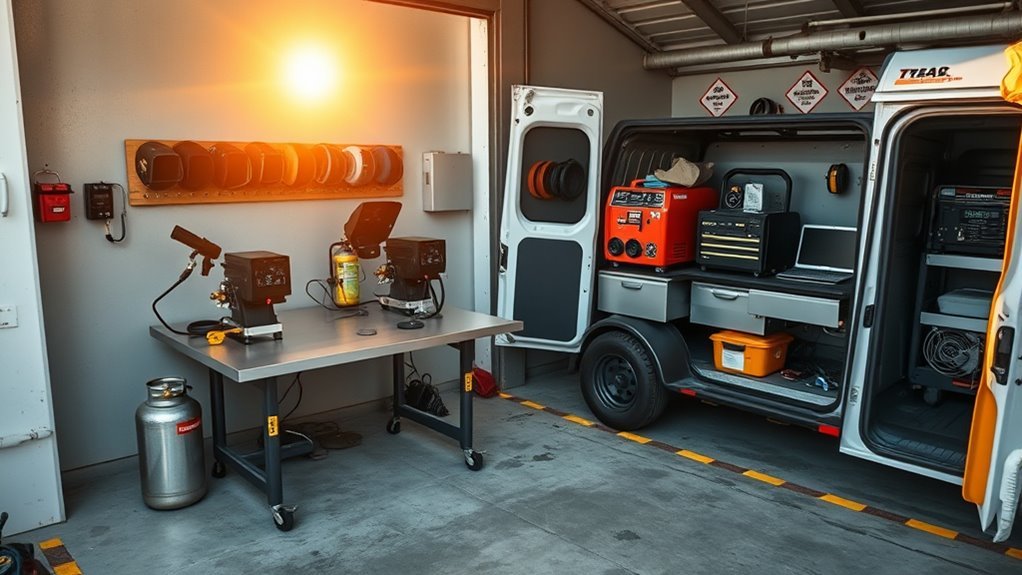
Choose the workspace only after checking what customers need and what the property legally supports. A low-rent unit can become expensive if it lacks adequate power, ventilation, fire separation, secure gas storage, loading access, noise tolerance, or permission for hot work.
Fixed Shop Overheads
Monthly shop overhead is location-specific, so avoid a blanket $1,000–$5,000 estimate. Request written figures for base rent, common-area charges, deposits, utilities, waste service, alarm monitoring, internet, insurance, property tax pass-throughs, and required maintenance.
- Lease and zoning review: confirm fabrication, welding, customer traffic, outdoor storage, signage, delivery vehicles, and operating hours before signing.
- Electrical: obtain a licensed-electrician quote for service capacity, circuits, outlets, disconnects, and permits.
- Ventilation: design fume capture around the metals, coatings, processes, volume, and worker exposure rather than selecting a fan by price alone.
- Fire protection: plan hot-work controls, extinguishers, combustible separation, cylinder storage, alarms, and any authority-having-jurisdiction requirements.
- Material flow: account for steel racks, carts, lifting aids, scrap bins, loading space, and secure storage.
Revisit overhead quarterly and adjust pricing when rent, insurance, wages, utilities, or material-handling needs change.
Mobile Setup Costs
A mobile operation can avoid shop rent, but it replaces that expense with a vehicle, commercial auto insurance, fuel, maintenance, secure storage, weather delays, travel time, and jobsite coordination. A mobile build may include:
- a reliable truck, van, or trailer with adequate payload and towing capacity;
- an engine-driven welder/generator or a jobsite-compatible power plan;
- lockable racks, cases, cylinder restraints, cable reels, lighting, and fire extinguishers;
- portable screens, ventilation or fume controls where applicable, and housekeeping tools;
- cones, barriers, permits, and traffic or site controls when work affects public areas.
Track travel as a cost. Unbilled driving, loading, setup, teardown, and material pickup can consume a large part of the day even when the welding time is short.
Home Garage and Residential Workspace
A home garage may reduce rent, but you must confirm zoning, home-occupation rules, fire code, electrical permits, insurer approval, noise limits, customer traffic, gas-cylinder storage, ventilation, and waste handling. Do not assume that owning the property allows commercial hot work.
Warning: Never weld or cut on a tank, drum, pipe, or container that held a flammable or unknown substance until it has been properly identified, cleaned, isolated, and made safe under an approved procedure. Hot work can ignite residue or vapor and cause a fatal explosion.
Licenses, Certifications, and Legal Fees

Licenses and fees depend on the work, location, and customer requirements. The SBA notes that state, county, and city licensing rules and fees vary by business activity and location. Welding itself may not have one universal business license, but construction, structural work, mobile operations, environmental handling, signage, sales tax, and local fire or occupancy rules can trigger separate requirements.
Business Formation and Administrative Setup
- Choose a sole proprietorship, LLC, corporation, or other structure based on taxes, liability, ownership, and state rules.
- Register the business and trade name when required.
- Obtain tax identification numbers and set up payroll, sales-tax, and employer accounts where applicable.
- Open a separate business bank account and bookkeeping system.
- Use written estimates, change orders, payment terms, warranties, and customer acceptance documents.
- Ask a qualified attorney and CPA about contracts, lien rights, tax treatment, and local compliance.
Do not use a national $500–$2,500 “legal setup” figure as a promise. Filing fees can be modest in one state and higher in another, while attorney, accounting, registered-agent, publication, and annual-report costs depend on the structure and location.
Welder Qualifications and Professional Certifications
Separate a welder performance qualification from a professional credential such as Certified Welding Inspector. AWS Certified Welder testing is performance-based and completed through an Accredited Test Facility. As of the AWS price list effective January 1, 2026, the Certified Welder application is $70, while the test facility sets the exam price. Initial CWI/CAWI examination fees are much higher, listed at $1,255 for AWS members and $1,520 for nonmembers before optional training and travel.
Your customer, contract, code, engineer, manufacturer, or employer may require a specific process, material, position, procedure, continuity record, inspection credential, or quality system. Do not advertise “AWS certified” without identifying what person, process, or facility credential you actually hold.
PPE, Safety Systems, and Compliance Costs

Safety costs depend on hazards, headcount, processes, metals, coatings, workspace, and exposure. Budget for the full control system, not only helmets and gloves. OSHA welding rules address PPE, ventilation, confined spaces, fire prevention, compressed gases, hazardous materials, and related training.
Core Safety Budget Categories
- Hazard assessment and written programs: PPE, hazard communication, respiratory protection when required, emergency response, and hot-work procedures.
- Engineering controls: local exhaust ventilation, general ventilation, screens, guards, noise control, and safe electrical installation.
- Fire controls: suitable extinguishers, combustible removal or shielding, fire watch when conditions require it, and post-work inspection.
- Compressed gases: secure upright storage, valve protection, ventilation, separation, transport procedures, and leak checks.
- Training and records: task training, SDS access, labels, fit-test and medical records where required, inspections, and refresher training.
- Housekeeping and waste: scrap control, trip-hazard removal, oily-rag or solvent management, spill supplies, and authorized disposal.
OSHA requires employers using hazardous chemicals to maintain labels and safety data sheets and train exposed workers. If tight-fitting respirators are required, fit testing is required before use, when the facepiece changes, and at least annually.
Note: This article provides business-planning information, not an engineering design or legal determination. Use the applicable OSHA standard, local fire and building officials, your insurer, and qualified ventilation and electrical professionals for your specific operation.
Marketing, Branding, and Online Presence Expenses

A new welding business does not need a $5,000 website or a large monthly advertising contract to look credible. Start with the channels customers use to verify local contractors and fabricators, then measure calls, quote requests, booked jobs, gross profit, and repeat work.
- Basic identity: business name, simple logo, consistent phone and email, estimate template, invoice, and vehicle or jobsite identification.
- Website: a fast mobile-friendly site with services, service area, qualifications, project photos, insurance information, and clear contact options.
- Local search: a complete Google Business Profile, accurate hours, service areas, photos, and legitimate customer reviews.
- Direct outreach: property managers, farms, contractors, equipment owners, manufacturers, fleet operators, and maintenance departments.
- Proof of capability: before-and-after photos, material and process details, safe-work practices, and project outcomes without exposing customer-confidential information.
Use a modest test budget first. Track the source of every lead and stop campaigns that produce low-quality inquiries or unprofitable work. Marketing spend should grow after you know your close rate, average gross profit, and customer acquisition cost.
Payroll, Insurance, and Ongoing Overhead
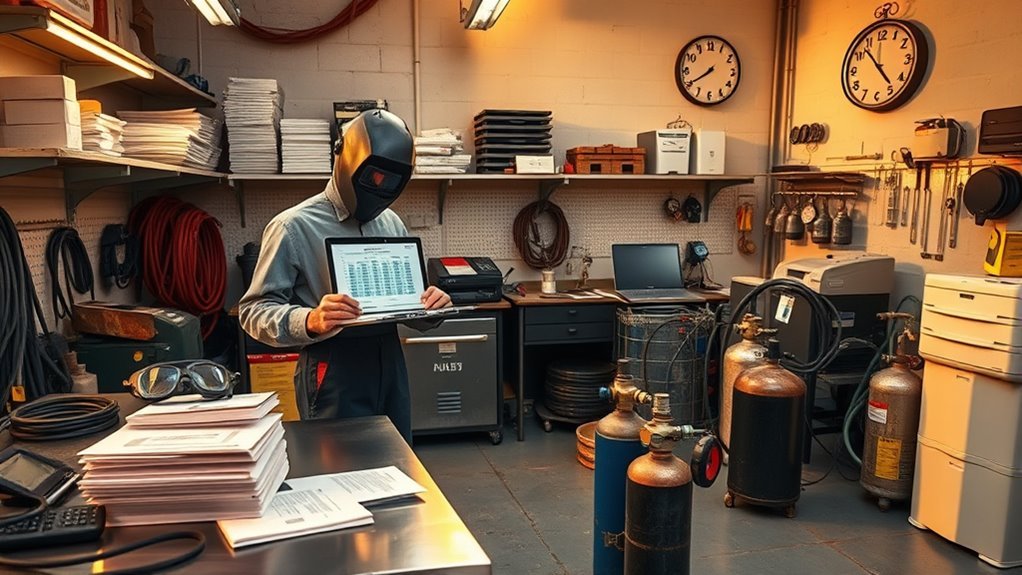
Payroll can become the largest monthly cost, but a fixed percentage such as “20–40% of operating costs” is not reliable for every welding business. Model each employee’s wage, overtime, payroll taxes, workers’ compensation, paid time, training, PPE, recruiting, supervision, and benefits.
Payroll and Benefits
The latest national Occupational Employment and Wage Statistics available in July 2026 report a May 2025 median wage of $25.84 per hour and mean wage of $27.29 per hour for welders, cutters, solderers, and brazers. Local wages can be much higher or lower based on skill, code work, shift, industry, travel, and labor market.
Do not confuse wage with total employer cost. BLS data for March 2026 show that private-industry benefits averaged about 30% of total compensation across all occupations, but your small shop’s actual mix will differ. Build a labor burden rate from real payroll-tax, insurance, leave, benefit, and workers’ compensation quotes.
- Budget regular wages, expected overtime, and nonbillable setup or cleanup time.
- Include employer payroll taxes, unemployment costs, workers’ compensation, and payroll-service fees.
- Add PPE, tools, medical evaluations, fit testing, training, certifications, and paid travel.
- Measure billable efficiency rather than assuming every paid hour can be invoiced.
Business Insurance Costs
Annual insurance cannot be accurately reduced to one $500–$3,000 range. Premiums change with payroll, sales, location, vehicle use, hot work, structural or field work, claims history, subcontractors, limits, deductibles, equipment value, and customer contract requirements.
Ask an agent familiar with welding or metal fabrication to quote the coverage that applies to your operation, which may include:
- general liability and completed-operations coverage;
- commercial property and tools/equipment coverage;
- commercial auto and trailer coverage;
- workers’ compensation and employer’s liability;
- inland marine for tools and materials in transit;
- umbrella or excess liability;
- professional, pollution, cyber, or installation-related coverage when the exposure exists.
Review exclusions carefully. A cheap policy that excludes the work you perform, the locations you visit, or completed operations may not protect the business when a claim occurs.
Recurring Operational Overheads
Build a monthly forecast with separate lines for payroll, rent, utilities, insurance, vehicle costs, debt payments, software, accounting, phones, marketing, maintenance, gas, consumables, materials, freight, disposal, and taxes.
Equipment maintenance should be based on manufacturer schedules, duty cycle, age, environment, and service history rather than a generic 2–10% rule. Keep an equipment reserve for repairs and replacement, especially when one machine or vehicle can stop revenue.
Pro Tip: Separate the owner’s wage from business profit. If the business only appears profitable because the owner works without paying themself, the pricing model is not sustainable.
Financing Options, Grants, and Budgeting Tips

You do not have to fund every purchase in cash, but match the financing term to the useful life of the asset. Long-lived machinery or a vehicle may fit term financing; daily consumables and payroll should not depend on expensive long-term debt.
- SBA-backed 7(a) loans: may support working capital, equipment, supplies, and other eligible business purposes through participating lenders.
- SBA microloans: are made through intermediary lenders and can be up to $50,000 for eligible uses such as working capital, supplies, machinery, and equipment.
- Equipment financing: may preserve cash, but compare total interest, fees, liens, down payment, insurance requirements, and early-payoff terms.
- Vendor terms or leasing: may help cash flow, but calculate the total cost and end-of-term ownership.
- Personal savings or partner capital: avoids loan payments but still requires written ownership and repayment terms.
Be cautious with grants. The SBA states that it does not provide grants for starting or expanding a typical business. Limited programs may support research, exporting, training organizations, or specific local economic-development goals, but they should not be the foundation of your opening budget.
Set a cash reserve from your actual monthly burn rate and payment cycle. “Six to twelve months” may be ideal for some owners but unrealistic for others. A better method is to model slow sales, delayed invoices, equipment failure, seasonal demand, and tax payments, then choose the reserve that keeps the business solvent under that scenario.
Revenue Projections and Expected Return on Investment

Do not assume that small welding jobs universally sell for $50–$150 per hour. Rates depend on location, process, certifications, risk, urgency, travel, equipment, material, and customer type. Calculate the rate your business requires, then compare it with the market and adjust the service mix.
How to Calculate a Required Shop Rate
- Add monthly owner compensation, employee labor burden, fixed overhead, debt service, equipment reserve, tax reserve, and target profit.
- Estimate realistic monthly billable hours after travel, estimating, purchasing, maintenance, setup, cleanup, administration, and unpaid rework.
- Subtract expected contribution from material markup or other revenue only if it is dependable.
- Divide the remaining monthly revenue target by billable hours to find the required labor rate.
- Add direct job costs, travel or mobilization, special equipment, subcontracting, inspection, permits, and contingency to each quote.
Modeled example: If owner compensation, overhead, debt, reserves, and target profit total $12,000 per month and you expect 100 billable hours, the labor component must average $120 per billable hour before job-specific materials, travel, taxes, and risk. This is a pricing example, not a recommended national rate.
Break-Even Example
The SBA expresses unit break-even as fixed costs divided by selling price minus variable cost. If monthly fixed costs are $8,000, the average job sells for $900, and direct variable cost averages $300, each job contributes $600 toward fixed costs. The monthly break-even point is $8,000 ÷ $600, or about 13.3, so the business needs at least 14 similar jobs to cover those modeled costs.
- Build conservative, expected, and strong-demand scenarios.
- Forecast invoice timing, not only booked revenue.
- Track gross profit by job type, customer, and crew.
- Include warranty work, callbacks, bad debt, and unbillable time.
- Calculate return on invested cash separately from the owner’s wage.
A full schedule does not guarantee profit. The work must cover direct costs, nonbillable time, overhead, owner pay, taxes, equipment replacement, and a true profit margin.
Common Cost-Saving Strategies and Buying Advice
Stretch startup funds by buying capability, not status. A reliable welder, grinders, clamps, measuring tools, PPE, fume control, and organized storage can produce more revenue than a showroom full of specialty machines.
- Start with a narrow service list: choose profitable work that fits your skills, equipment, and insurance.
- Buy used equipment carefully: verify serial numbers, ownership, input power, output under load, arc quality, cooling, cables, torch condition, parts support, and repair history.
- Rent or subcontract specialty work: test demand before buying CNC, large-positioning, machining, or heavy-lifting equipment.
- Standardize consumables: reduce duplicate wire sizes, tips, nozzles, electrodes, and spare parts where the work allows.
- Negotiate material purchasing: compare delivered cost, minimums, cut fees, credit terms, returns, and scrap value.
- Protect tools: lockable storage, inventory records, maintenance, and controlled checkout reduce theft and downtime.
- Invoice promptly: deposits, progress billing, clear change orders, and card or electronic payment options improve cash flow.
Pre-Opening Checklist
- Define services, target customers, service area, and jobs you will decline.
- Confirm qualifications and contract-specific welding requirements.
- Verify zoning, lease use, occupancy, fire, environmental, and business permits.
- Obtain electrical, ventilation, vehicle-buildout, and insurance quotes.
- List equipment, accessories, consumables, PPE, spares, and storage.
- Create a hazard assessment, SDS system, hot-work controls, and required safety programs.
- Set pricing, deposit rules, payment terms, warranty language, and change-order procedures.
- Calculate startup cash, monthly burn rate, billable hours, and break-even.
- Open bookkeeping, banking, tax, payroll, and recordkeeping systems.
- Launch a simple website and local business profile with accurate service information.
Frequently Asked Questions
What zoning restrictions affect welding businesses in residential areas?
Rules vary by city and county. Common limits involve commercial activity, noise, fumes, fire hazards, gas-cylinder storage, customer traffic, signs, employees, outdoor work, and operating hours. Contact planning, zoning, building, and fire officials and obtain written approval before converting a garage or signing a lease.
Can I specialize in underwater or aerospace welding?
Yes, but these are not simple add-on certificates. Underwater work can require commercial-diving training, medical fitness, employer procedures, and project-specific qualifications. Aerospace work may require employer or customer approvals, procedure qualifications, inspection controls, traceability, and quality-system requirements. Research the exact contracts before buying specialized equipment.
How do I price a weld or complete project accurately?
Estimate material, filler metal, gas, abrasives, labor, travel, setup, fit-up, finishing, inspection, subcontracting, freight, disposal, and contingency. Add allocated overhead and profit. Use written assumptions and change-order terms, then compare estimated hours and materials with actual results after every job.
What environmental disposal rules apply to welding waste and solvents?
Identify each waste stream, including solvents, contaminated rags, paint or coating residue, spent chemicals, used oil, metal dust, and certain filters. Federal hazardous-waste duties depend partly on how much hazardous waste the business generates each month, and states may impose stricter rules. Label and store waste correctly and use authorized recycling or disposal facilities.
Are there liability issues when hiring independent contractor welders?
Yes. A contract label does not automatically make a worker an independent contractor. Federal tax analysis considers behavioral control, financial control, and the relationship, while wage-and-hour and state tests may differ. Misclassification can create tax, wage, insurance, and penalty exposure. Verify classification, qualifications, insurance, scope, safety responsibilities, and contract terms with qualified advisors.
Do I need every major welding process at startup?
No. Buy the process that covers your expected jobs and rent, subcontract, or decline work outside that capability. Additional machines make sense when documented demand, margin, power, floor space, safety controls, and operator skill support the purchase.
How much working capital should a welding startup keep?
Use a cash-flow forecast rather than a fixed rule. Add monthly overhead, payroll, taxes, material deposits, fuel, debt payments, and expected repair costs, then model slow sales and delayed customer payments. Keep enough accessible cash to survive that realistic downside case without relying on high-cost emergency credit.
Sources
- OSHA: Welding, Cutting, and Brazing Standards — welding safety, PPE, ventilation, fire prevention, and compressed-gas requirements.
- U.S. Small Business Administration: Calculate Your Startup Costs — startup-cost planning and funding preparation.
- American Welding Society: 2026 Certification and Education Price List — current AWS application and examination fees.
- U.S. Bureau of Labor Statistics: May 2025 National Wage Data — current published national wage data for welders, cutters, solderers, and brazers.
- U.S. Environmental Protection Agency: Managing Your Hazardous Waste — federal small-business hazardous-waste guidance.
- Internal Revenue Service: Independent Contractor or Employee — federal tax classification factors and misclassification warning.
Conclusion
A welding business becomes resilient when the budget reflects the work you will actually perform. Start lean, buy reliable equipment where downtime would stop revenue, and do not underestimate power, ventilation, fire controls, gas storage, insurance, taxes, and working capital. Price from real costs and realistic billable hours, track every job against the estimate, and reinvest only where proven demand supports the upgrade. With disciplined safety, records, quoting, and cash-flow management, a small mobile service or fabrication shop can grow without being buried by unnecessary equipment and fixed overhead.