

In the U.S., the cost to open a salon suite depends first on what you mean by “open.” A beauty professional renting one private suite may spend roughly $5,000–$30,000 to get started, depending on the deposit, furnishings, equipment, products, insurance, licensing, and marketing. Building and operating a multi-suite facility is a much larger real-estate project and can require six figures. Franchise facilities cost substantially more: Sola Salons currently lists an estimated initial investment of $950,214–$1,748,296, while MY SALON Suite lists $994,971–$1,820,417.
By Weston Harrison · Originally published February 12, 2024 · Last updated August 10, 2026
The key is to compare the right business model. A stylist moving into a ready-made private suite usually does not pay for an entire commercial build-out. An entrepreneur developing a building full of suites must budget for construction, plumbing, electrical work, HVAC, common areas, permits, furnishings, lease costs, and working capital.
Use the figures below as planning benchmarks rather than guaranteed quotes. Local rent, construction costs, state licensing rules, lease terms, and the condition of the space can materially change the final investment.
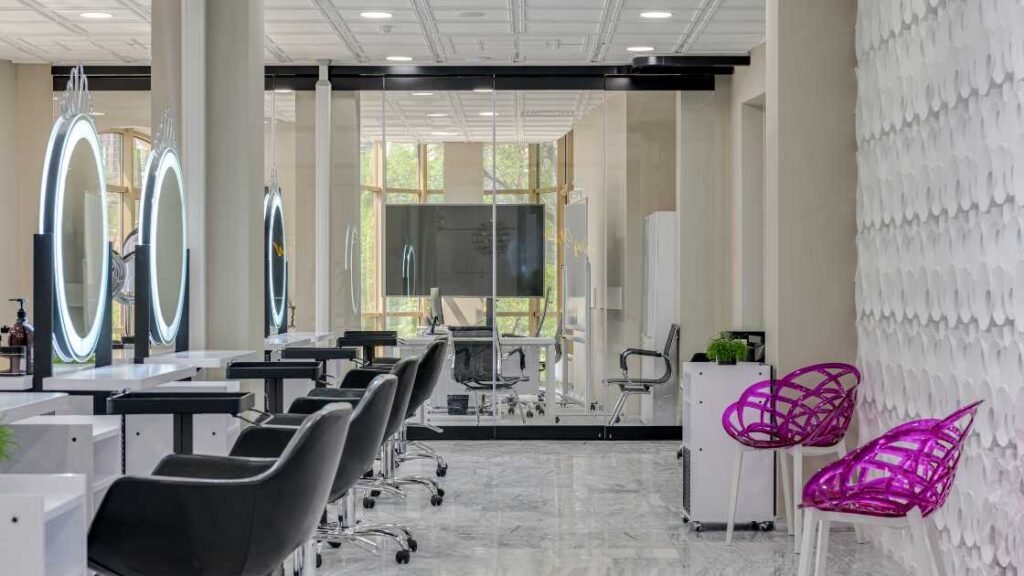
How Much Does It Cost to Open a Salon Suite?
The following ranges separate three very different ways to enter the salon-suite business:
| Salon Suite Model | 2026 Planning Benchmark | Main Costs |
|---|---|---|
| Rent one private suite as a beauty professional | About $5,000–$30,000 in one current salon-equipment industry guide | Deposit, first rent payment, equipment not included by the operator, products, insurance, licensing, software, branding, and cash reserve |
| Develop an independent multi-suite facility | Often a six-figure project; one current 18-suite planning model estimates about $150,000–$400,000 | Commercial lease, construction, plumbing, electrical, HVAC, fixtures, common areas, permits, marketing, and working capital |
| Sola Salons franchise | $950,214–$1,748,296 estimated initial investment | Franchise fee, improvements, furniture and fixtures, permits, real estate, signage, insurance, software, and initial operating funds |
| MY SALON Suite franchise | $994,971–$1,820,417 estimated initial investment | Franchise fee, building improvements, fixtures, operating supplies, real estate, and other startup expenses |
The private-suite estimate comes from a current salon-equipment industry guide and should not be treated as a national average. The independent-facility figure is also a planning model rather than government data. By contrast, the franchise figures come directly from current franchisor investment pages. Review Sola Salons’ current investment information and MY SALON Suite’s current investment information before making a franchise decision.
The Salon Suite Concept
A salon suite is a private room or studio within a larger beauty facility. A licensed beauty professional may rent one suite and operate an independent business inside it. A different type of entrepreneur may lease or own the larger commercial property, build multiple suites, and collect rent from individual beauty professionals.
Defining A Salon Suite

Salon suites are private workspaces designed for independent beauty and personal-care professionals. Depending on the operator and service type, a suite may already include core furnishings, plumbing, storage, utilities, Wi-Fi, laundry access, security, or other shared amenities.
- Rental Costs: Depend on market, suite size, included amenities, and lease terms.
- Lease Terms: Review the required term, deposit, renewal rules, increases, and early-exit provisions before signing.
- Equipment Included: Confirm exactly what the operator provides instead of assuming every suite is fully furnished.
Advantages For Beauty Professionals
For an independent stylist, barber, esthetician, nail technician, or other licensed professional, a suite can provide more control than a commission-based salon while avoiding the cost of building an entire storefront.
- Autonomy: Control your services, schedule, products, and pricing within applicable laws and lease rules.
- Customization: Build your own brand and personalize the space where the lease permits it.
- Private Client Experience: Serve clients in a dedicated room instead of a shared salon floor.
- Shared Infrastructure: Some operators bundle utilities, common areas, security, laundry, or furnishings into rent.
Note: Costs, amenities, lease terms, and licensing requirements vary by location and operator. Verify current details before signing a lease or paying a deposit.
Initial Costs Breakdown
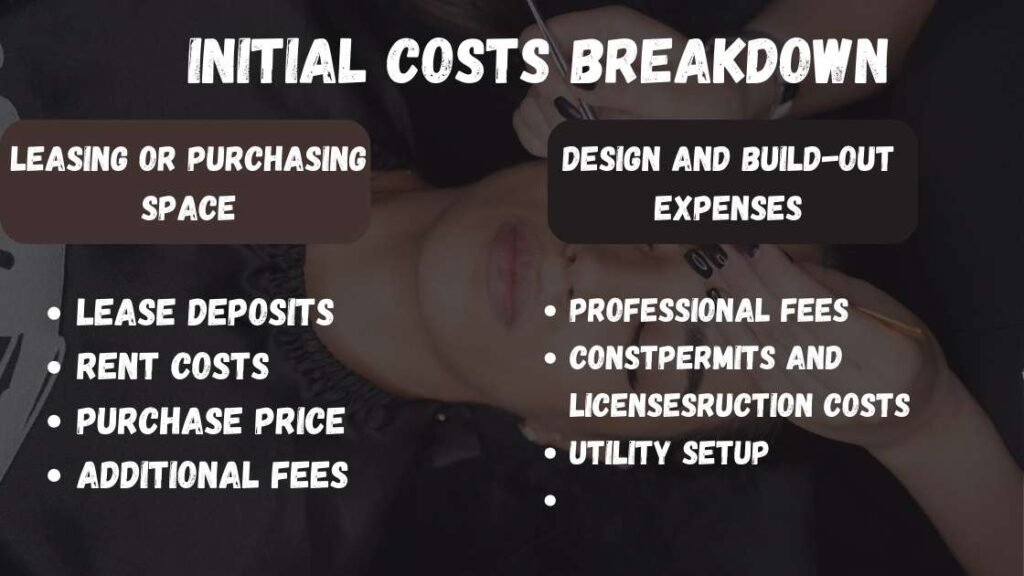
Before spending money on opening a salon suite or salon business, list your one-time startup costs separately from monthly operating costs. The U.S. Small Business Administration recommends accounting for items such as space, equipment, utilities, licenses, insurance, professional fees, inventory, salaries, advertising, and a website when estimating startup capital.
Leasing Or Purchasing Space
The correct real-estate budget depends on your model:
- Single-suite renter: Price the deposit, first rent payment, recurring rent, mandatory fees, and anything the suite operator does not include.
- Multi-suite facility operator: Price the commercial lease or purchase, security deposit, tenant-improvement obligations, common-area costs, taxes where applicable, and the period before all suites are occupied.
- Franchise investor: Review the current Franchise Disclosure Document as well as the franchisor’s current investment page. The Federal Trade Commission explains that FDD Items 5–7 cover important initial and ongoing franchise costs.
For franchise due diligence, see the FTC’s Consumer’s Guide to Buying a Franchise.
Design And Build-out Expenses
A renter moving into a turnkey private suite may need little construction. A facility operator can face a much larger build-out because individual rooms may require walls, doors, electrical capacity, plumbing, ventilation, fire-code work, lighting, flooring, and shared areas.
- Professional services: Architects, engineers, designers, contractors, attorneys, or other specialists where required.
- Construction: Demolition, framing, finishes, cabinetry, flooring, electrical, plumbing, HVAC, and accessibility work.
- Permits and approvals: Building, occupancy, signage, fire, health, or cosmetology-related approvals as applicable locally.
- Utility infrastructure: Water, hot-water capacity, electricity, internet, drainage, and climate control.
Do not sign a commercial lease based only on the advertised rent. Obtain contractor estimates and determine what tenant-improvement allowance, if any, the landlord provides before calculating the true occupancy cost.
Furniture And Equipment Investments
What you need to buy depends heavily on what the suite operator or facility already provides.
| Item | Budget Question |
|---|---|
| Styling chairs | Is the correct chair already included for your service type? |
| Shampoo stations | Is plumbing already installed, or will the project require new water and drain lines? |
| Mirrors and stations | Are these included, or are you responsible for furnishing and installation? |
| Professional tools | Budget only for the tools required by the services you actually provide. |
A facility operator may also need reception or waiting-area furniture, laundry equipment, common-area furnishings, security/access systems, signage, storage, and other building-wide equipment.
Operating Expenses
Startup cost is only half the calculation. Your monthly expenses determine how much revenue you need before the business becomes sustainable.
Utilities And Maintenance Fees
If you rent one private suite, ask which operating costs are included before comparing two advertised rents. Review:
- Electricity and water: Confirm whether usage is bundled into rent or billed separately.
- Heating and cooling: Ask who controls the temperature and whether HVAC charges are included.
- Wi-Fi and technology: Confirm whether internet access is included and adequate for payments and booking.
- Laundry and cleaning: Determine whether towel service, washer/dryer access, suite cleaning, or common-area cleaning is included.
- Maintenance: The lease should state who repairs plumbing, equipment, fixtures, and damage inside the suite.
A multi-suite facility operator generally carries the building-wide utility, maintenance, common-area, security, and repair obligations unless the lease allocates them differently.
Staffing And Employment Costs
A solo beauty professional renting one suite may have no employees at all. A larger facility may use a manager, receptionist, cleaner, maintenance provider, or other support services.
| Business Model | Staffing Cost To Consider |
|---|---|
| Solo suite renter | Often none unless the practitioner hires an assistant or employee |
| Multi-suite facility | Management, cleaning, maintenance, administration, or other support as needed |
| Employer | Wages plus applicable payroll taxes, insurance, benefits, and employment-law obligations |
Do not add payroll to a salon-suite budget automatically. Base it on the actual operating model.
Insurance And Licensing

Insurance needs vary with the business, lease, employees, property, and services offered. Policies may include:
- General or professional liability coverage
- Business property coverage
- Workers’ compensation or other employer coverage when legally required
Licensing is state- and locality-specific. Do not rely on a generic national checklist. Depending on the jurisdiction and services offered, you may need individual professional licensing, establishment licensing, local business registration, zoning approval, building permits, fire approval, or other permits.
Texas provides a useful example of why local verification matters: its regulator distinguishes between full establishments and “mini-establishments” operating inside another licensed establishment. Review your own state board’s rules before signing a lease. See the Texas Department of Licensing and Regulation establishment guidance as an example, not as a nationwide rule.
Marketing Your Salon Suite

A salon-suite marketing budget should focus first on attracting the people who generate revenue. For a beauty professional, that means clients. For a multi-suite facility operator, it means qualified beauty professionals who will rent the suites.
Branding And Online Presence
Build the minimum brand and online presence needed for customers or tenants to find, evaluate, and contact the business:
- Choose a clear business name that is easy to search and remember.
- Create consistent branding for the website, social profiles, signage, and booking pages.
- Publish a professional website with services or suite availability, location details, contact information, and clear next steps.
- Maintain the social platforms your actual customers or tenants use.
- Use original images of the finished suite, services, or facility when available.
- Optimize local business listings and pages so nearby searchers can find the location.
Advertising And Promotional Strategies
Set a measurable objective for each promotion rather than spending because a channel is popular.
| Strategy | Best Use | Budget Treatment |
|---|---|---|
| Local Flyers | Nearby awareness and opening promotions | Set a fixed test budget and track responses |
| Social Media Ads | Target local clients or prospective suite tenants | Set a daily or campaign cap |
| Referral Offers | Encourage introductions from existing clients or tenants | Include the full discount or reward cost |
| Email Campaigns | Retention, openings, offers, and availability updates | Include software and creative costs |
Track bookings, inquiries, signed leases, or another meaningful conversion instead of judging a campaign only by views or followers. Retention matters as much as acquisition because replacing clients or suite tenants creates additional marketing cost.
Additional Financial Considerations

Your full startup budget should include more than the room and furniture. Separate costs that occur once before opening from recurring expenses that continue every month.
Inventory And Product Costs
A beauty professional should budget inventory around the services actually offered instead of buying products for every salon category. Possible expenses include:
- Hair-care products used or sold during hair services
- Nail products and disposables if nail services are offered
- Skin-care products and consumables if esthetic services are offered
- Professional tools, sanitation supplies, towels, gloves, capes, and other service-specific items
Estimate normal product usage per appointment, reorder frequency, minimum supplier orders, shipping, waste, and retail stock separately. Bulk purchasing only saves money when the inventory can be used or sold before it becomes obsolete or unusable.
Technology And Software Tools

Technology costs change frequently, so use current provider quotes rather than relying on a fixed national price range.
| Tool | Use | What To Price |
|---|---|---|
| Payment/POS System | Transactions | Hardware, processing fees, subscriptions, chargebacks, and optional add-ons |
| Scheduling Software | Appointments | Monthly plan, reminders, deposits, client messaging, and payment integration |
| Inventory or Business Management | Stock or operations | Subscription tier, number of users or locations, reporting, and integrations |
Choose software only after identifying the features you need. Paying for overlapping booking, payment, marketing, and inventory systems can unnecessarily increase monthly overhead.
Unexpected Costs And Budgeting
Common surprises can include:
- Emergency repairs or equipment replacement
- Permit, inspection, or professional-service costs not included in the original quote
- Higher insurance, utility, or maintenance expenses
- Construction changes caused by plumbing, electrical, HVAC, accessibility, or code requirements
- Slower-than-expected client growth or suite occupancy
Instead of applying one universal reserve percentage, calculate your actual one-time startup expenses and recurring monthly expenses, then decide how much cash runway the business needs while revenue ramps up. The U.S. Small Business Administration startup-cost framework is a useful starting point.
Profitability And Break-even Analysis
Break-even means revenue has covered the relevant fixed and variable costs for the period. The calculation differs depending on whether you earn money from beauty services or from renting salon suites.
Estimating Revenue Streams
For a beauty professional renting one suite, forecast revenue from services and any retail products. Use your own prices and realistic appointment capacity rather than generic national examples.
- Service price – What you actually charge.
- Appointments – The number of realistically bookable and completed services.
- Variable cost per service – Product, disposable, payment-processing, or other costs that rise with each service.
- Retail sales – Product revenue and the corresponding product cost.
For a multi-suite facility operator, revenue is primarily driven by suite rent and occupancy:
| Input | What To Enter |
|---|---|
| Number of rentable suites | Your completed, legally rentable suite count |
| Average rent per occupied suite | Your actual lease rate after recurring discounts or concessions |
| Expected occupancy | Your realistic number of occupied suites, not maximum capacity |
| Other recurring revenue | Only charges the lease actually allows you to collect |
| Property and operating costs | Rent or debt service, utilities, maintenance, insurance, software, marketing, management, and other facility expenses |
This separation prevents a common planning mistake: using a stylist’s service-revenue model to evaluate a facility whose income comes mainly from tenant rent.
Calculating Break-even Points
The break-even point is the level at which revenue covers costs. The U.S. Small Business Administration gives the basic unit formula as:
Break-Even Units = Fixed Costs / (Price Per Unit - Variable Cost Per Unit)
For a beauty professional, one “unit” can be a service when the calculation uses an appropriate average service price and variable cost.
For a facility operator, the same contribution-margin logic can be adapted to occupied suites:
Approximate Occupied Suites Needed = Monthly Fixed Costs / (Average Monthly Suite Rent - Variable Cost Per Occupied Suite)
This simplified calculation is a planning tool. Mixed suite sizes, different rental rates, concessions, vacancies, collection losses, percentage-based expenses, financing, and taxes can require a more detailed model. See the SBA break-even guidance for the underlying method.
Long-term Financial Planning
Track the variables that actually determine whether your salon-suite model remains sustainable:
- Revenue growth – Monitor appointments and average ticket for a practitioner, or occupancy and effective rent for a facility.
- Reinvestment – Plan for equipment, repairs, remodeling, technology, and future expansion.
- Cash reserves – Maintain enough liquidity for slow periods and unexpected costs based on your actual monthly obligations.
- Lease exposure – Know when your own commercial rent, tenant leases, or suite-rental agreement renews and how increases can affect margins.
Update the forecast whenever rent, occupancy, pricing, staffing, product costs, or financing changes.
Frequently Asked Questions For How Much Does It Cost To Open A Salon Suite
Are Salon Suites A Good Investment?
A salon suite can be a viable business model, but profitability is not automatic. A beauty professional must earn enough from services to cover suite rent and operating costs. A facility investor must collect enough rent from occupied suites to cover real-estate, financing, utilities, maintenance, insurance, marketing, management, and other expenses.
How To Start Up A Salon Suite Business?
First decide whether you are renting one suite as a beauty professional or developing a multi-suite facility. Then verify licensing and zoning, calculate startup and monthly costs, review the lease, arrange insurance, buy only the equipment and inventory you need, establish booking or tenant-management systems, and calculate break-even before committing capital.
What’s The Average Size Of A Salon Suite?
There is no single national salon-suite size that applies to every operator. Suite dimensions depend on the facility, service type, local code, accessibility requirements, furniture, plumbing, and whether the room is designed for one or multiple professionals. Use the actual floor plan and licensing requirements for the location you are considering.
How Much Money Do You Need To Invest In A Salon Suite?
A beauty professional renting one private suite may plan around roughly $5,000–$30,000 according to one current salon-equipment industry guide, although the real amount can be lower or higher. Developing an independent multi-suite facility can become a six-figure project. Current franchisor figures are much higher: Sola Salons lists $950,214–$1,748,296 and MY SALON Suite lists $994,971–$1,820,417 in estimated initial investment.
What Costs Are Usually Included In Salon Suite Rent?
Included amenities vary by operator. Some salon-suite facilities provide core furnishings, utilities, Wi-Fi, laundry access, common areas, security, or other shared services, while others charge separately. Review the lease line by line and confirm what is included before comparing weekly or monthly rent.
Do You Need A License To Open A Salon Suite?
Licensing depends on the state, locality, business structure, and services offered. A practitioner may need an individual professional license, while the suite or facility may also be subject to establishment, business, zoning, building, fire, or other requirements. Check the relevant state board and local authorities before signing a lease or starting construction.
Conclusion
The cost to open a salon suite cannot be reduced to one national number because a single rented room and a 20- or 30-suite facility are fundamentally different businesses. Start by choosing the model, then build a budget from the actual lease, equipment list, licensing requirements, insurance quotes, marketing plan, and operating expenses.
For a private suite, focus on how many appointments and how much contribution margin you need to cover rent and overhead. For a multi-suite facility, focus on construction cost, effective rent per suite, realistic occupancy, and the cash required during lease-up. If you are considering a franchise, verify the latest FDD and current franchisor investment figures before committing funds.


2 thoughts on “How Much Does It Cost to Open a Salon Suite?”
Pingback: How Much Does A Perm Cost? A Comprehensive Guide
Pingback: How Much Does A 200 Person Wedding Cost?