
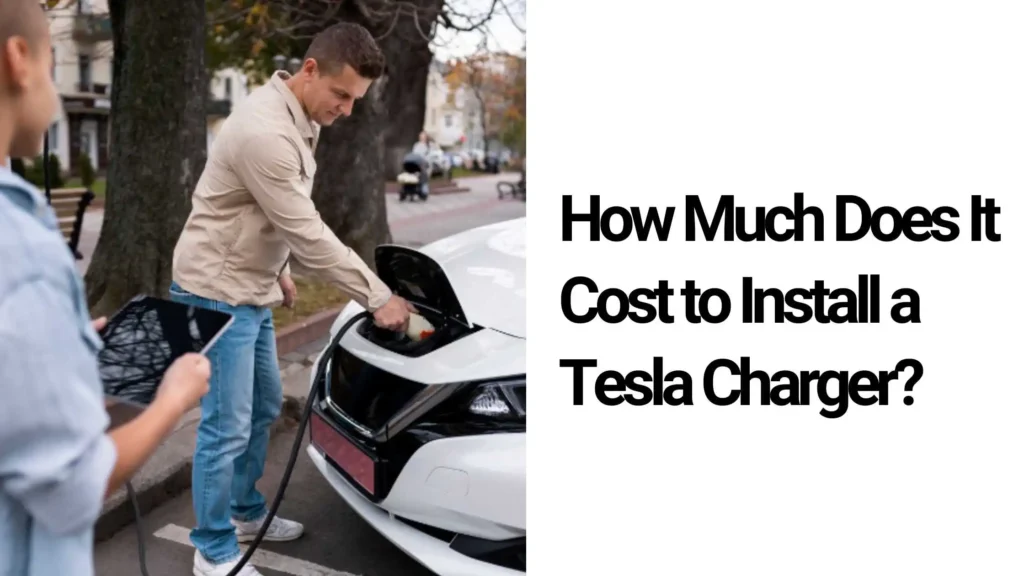
As of August 10, 2026, Tesla lists the Wall Connector at $535 and estimates a typical home installation at $750 to $1,500. That puts the basic equipment-plus-installation budget at about $1,285 to $2,035 before major extras such as a long wire run, trenching, an additional panel or a main electrical-panel upgrade.
Tesla’s Universal Wall Connector currently costs $600, putting the same basic equipment-plus-installation calculation at about $1,350 to $2,100. Tesla says a standard installer quote can include professional installation, materials, the electrical permit, inspection and an installation warranty, while more complex electrical or construction work can raise the price. See Tesla’s current home charging guidance before budgeting.
Last updated: August 10, 2026.
How Much Does It Cost to Install a Tesla Charger?
The right budget depends on which charging option you choose and how difficult it is to get power from your electrical panel to the parking space. A short, accessible run with enough panel capacity is usually much simpler than a job that needs trenching, concealed wiring or electrical-service work.
| Charging Option | Current Tesla Hardware Price | Installation Planning | Best Fit |
|---|---|---|---|
| Tesla Wall Connector | $535 | Tesla estimates $750-$1,500 for installation | Tesla owners who want permanent Level 2 home charging |
| Universal Wall Connector | $600 | Tesla estimates $750-$1,500 for installation | Homes that need both NACS and J1772 compatibility |
| Mobile Connector | $300 | No new installation if you already have an approved outlet; a new 240V outlet can add significant cost | Portable charging or homes with a suitable existing outlet |
These are planning figures, not guaranteed contractor quotes. Taxes, local labor rates, permit rules and your home’s electrical layout can change the final total.
What Does the Installation Price Include?
Tesla says a standard Certified Installer quote can include professional installation and materials, an electrical permit, inspection and an installation warranty. Additional work can include a long wire run, another electrical panel, trenching, a main-panel upgrade, a pedestal or concealed cabling.
- Lower-complexity job: charger close to the electrical panel with available circuit capacity.
- Higher-complexity job: long wiring path, difficult wall access, outdoor trenching or concealed cable routing.
- Potential major add-on: electrical panel or service work when the existing system cannot support the planned charging load.
Which Tesla Home Charger Makes Sense?
If your main goal is permanent, fast home charging for a Tesla, the Wall Connector is the straightforward choice. If your household also charges an EV that uses J1772, the Universal Wall Connector adds an integrated J1772 adapter. If you already have an electrician-approved 240V outlet and your daily mileage does not require the fastest home charging, the Mobile Connector can avoid the cost of installing another permanent charger.
For a broader product comparison, see our guide to the best home EV chargers.
Types Of Tesla Chargers
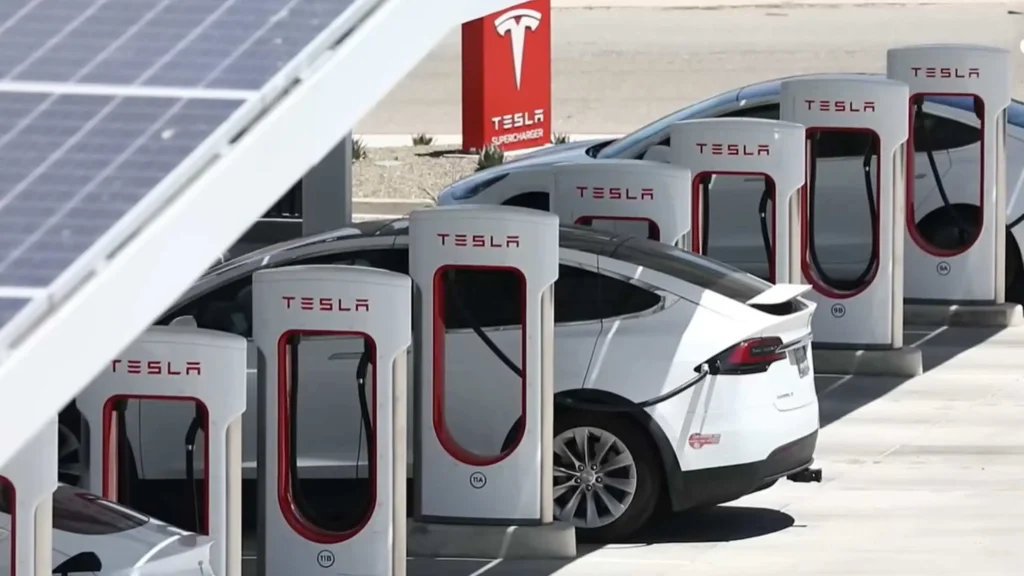
Tesla offers several charging options, but they serve different jobs. Wall Connectors are permanent Level 2 home chargers, the Mobile Connector is portable, and Superchargers are public DC fast-charging stations rather than equipment you normally install at a house.
Products Worth Considering

【All-Weather Proof Box】Effectively blocks rain, snow, frost, intense sunlight, and dust, providing year-round protection to extend your charger’s lifespan

Level 1+Level 2 EV Charger for Tesla-The Seguma level 1 NACS car charger includes a NEMA 6-20 plug for Level 2 charging (240V, 16A, 3.68kW, 9-12 miles/hr) and a NEMA 5-15 adapter for Level 1 charging (120V, 12A, 1.44kW, 3-5 miles/hr)
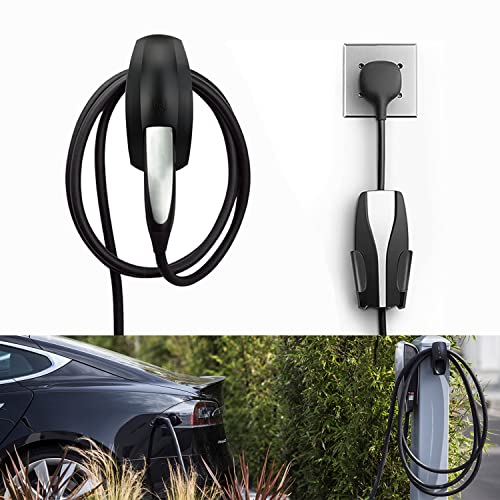
COMPATIBLE WITH TESLA MODEL 3/MODEL Y/MODEL X/MODEL S CHARGER: Seven Sparta Charging Cable holder is a perfect holder to hang your charging cable from in the garage.
Tesla Wall Connector
The Tesla Wall Connector is a hardwired Level 2 home charger. Tesla currently rates it for up to 48 amps / 11.5 kW and up to 44 miles of range added per hour, depending on the vehicle. It has a 24-foot cable, Wi-Fi connectivity, Tesla-app controls and an indoor/outdoor design.
- Maximum output: Up to 48A / 11.5 kW
- Maximum advertised Tesla charge rate: Up to 44 miles of range per hour, depending on vehicle
- Current U.S. hardware price: $535
- Installation: Tesla says it must be installed by a qualified electrician
See Tesla’s current Wall Connector specifications and charging-speed table for vehicle-specific limits.
Mobile Connector
The Mobile Connector is a portable option for Tesla vehicles. Tesla currently sells it for $300. With a standard 120V household outlet, charging is much slower; with a compatible 240V outlet and adapter, Tesla says it can provide up to 30 miles of range per hour depending on the vehicle.
- 120V charging: About 2-3 miles of range per hour, depending on vehicle
- Compatible 240V charging: Up to 30 miles of range per hour, depending on vehicle
- Current U.S. hardware price: $300
- Cost advantage: An existing electrician-approved outlet can avoid a new charger installation
Superchargers
Tesla Superchargers are public DC fast chargers for road trips and charging away from home. They should not be confused with the Wall Connector installed in a garage or driveway.
| Charging Speed | Cost | Locations |
|---|---|---|
| Up to 200 miles in 15 minutes on supported Tesla models; actual speed varies by vehicle and conditions | Varies by site and time | Tesla public charging network |
Supercharger pricing is shown in the vehicle and Tesla app. Tesla’s current U.S. support information also shows that the maximum 15-minute range addition varies by vehicle model.
Key Factors Affecting Installation Cost
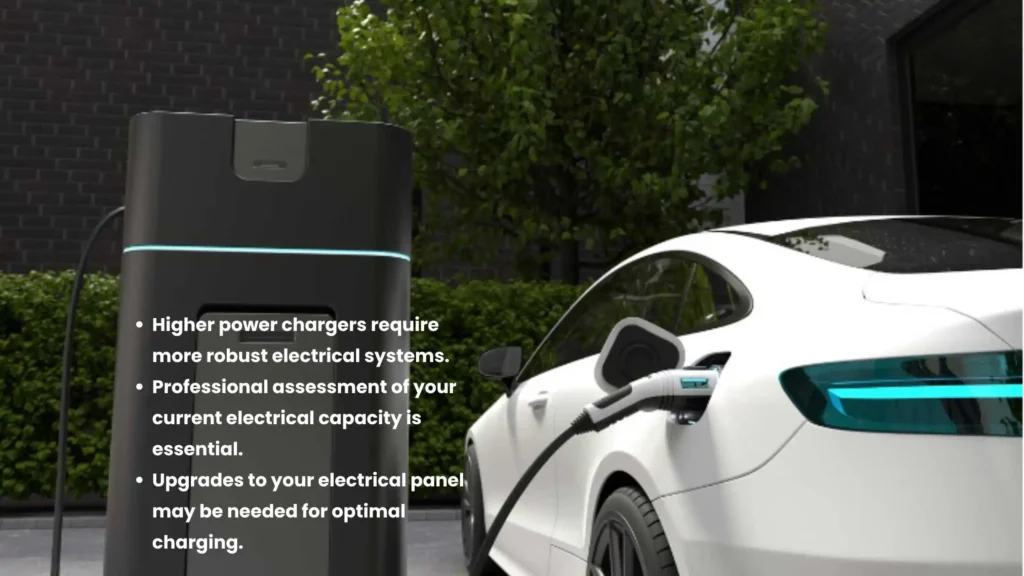
The largest cost differences usually come from electrical capacity and the physical path between the electrical panel and the charger. A charger mounted a few feet from a suitable panel is a very different project from one that requires a long exterior run, trenching or service work.
Power Requirements
The Wall Connector does not have to run at its full 48A output. Tesla supports several breaker and output settings, allowing an installer to match the charger to the electrical system and the vehicle’s onboard charging capability.
| Circuit Breaker | Maximum Output | Power at 240V |
|---|---|---|
| 60A | 48A | 11.5 kW |
| 50A | 40A | 9.6 kW |
| 40A | 32A | 7.7 kW |
| 30A | 24A | 5.7 kW |
| 20A | 16A | 3.8 kW |
| 15A | 12A | 2.8 kW |
For maximum Wall Connector output, Tesla specifies a 60A double-pole breaker. However, the vehicle can still be the limiting factor. Tesla currently states that Model 3 Rear-Wheel Drive and Model Y Rear-Wheel Drive have a 32A maximum AC charge rate, so a 40A circuit can provide their maximum supported home rate. Confirm your vehicle’s maximum amperage before paying for electrical capacity you cannot use.
Location And Accessibility
Distance from the electrical panel to the parking spot directly affects the amount of conductor, conduit and labor required. Wall construction, outdoor routing and underground work can also make a job more complicated.
| Installation Condition | Likely Cost Effect |
|---|---|
| Wall mount close to an accessible panel | Usually lower complexity |
| Long wire run or concealed cabling | More material and labor |
| Outdoor trenching or pedestal | Additional construction and materials |
| Additional panel or main-panel upgrade | Can raise the project well above the basic installation range |
Tesla rates the Wall Connector for indoor and outdoor use, so an outdoor location is not automatically a problem. The cost difference comes from the wiring route, fittings, trenching, mounting method and other site-specific work.
Permitting And Regulations
Electrical permits and inspections depend on the local authority, but Tesla includes both among the standard items homeowners can expect in a Certified Installer quote. The Wall Connector should be installed and commissioned according to Tesla’s instructions and applicable electrical codes.
- Have the electrician evaluate the existing electrical panel and charging load.
- Confirm the breaker size and Wall Connector output that match your vehicle and available capacity.
- Confirm who is responsible for the permit and inspection before work starts.
Tesla says Wall Connector must be installed by a qualified electrician. A Tesla Certified Installer is a convenient option because Tesla specifically trains that network for its charging equipment.
Tesla Wall Connector Installation Costs
Separate the project into hardware, normal installation and site-specific extras. That makes contractor quotes easier to compare and shows why one homeowner can receive a much higher quote than another.
Products Worth Considering

【Dimensions & Incompatible with J1772 Chargers】 Due to the number of accessories, please refer to the images for detailed dimensions. Additionally, our holder is designed exclusively for the original NACS interface charger with identical dimensions (as shown in the picture), and it is not compatible with any J1772 interface chargers

【Complete Weather Protection】- Safeguard Your EV Charger Year-Round Protect your charging station from rain, snow, and sun damage. Our cover ensures your equipment stays dry and functional in all weather conditions, extending its lifespan and maintaining charging safety.

Works Great For Your Tesla Power Cord: Charger holder for tesla model 3 /model Y /model X /model S. Made of high quality ABS plastic, not easy to deform, strong bearing capacity
Hardware Expenses
Tesla’s current U.S. charging catalog lists the standard Wall Connector at $535, the Universal Wall Connector at $600 and the Mobile Connector at $300. Prices can change, so verify the current Tesla Shop price immediately before ordering.
Professional Installation Charges
Tesla currently publishes an estimated $750 to $1,500 installation range for both the Wall Connector and Universal Wall Connector. That estimate is most useful as a baseline. A long cable route, panel work, trenching or other non-standard electrical work can push the final quote higher.
What Should Be Included in the Quote?
Before comparing prices, make sure each electrician is quoting the same scope. Ask for the following items to be identified in writing:
- Charging hardware: whether you or the installer supplies the Wall Connector.
- Circuit: breaker size, commissioned charger output and dedicated electrical work.
- Wire route: approximate path, conduit, wall access and any concealed cabling.
- Permits and inspection: who files and pays for them.
- Panel work: any subpanel, main-panel or service changes.
- Outdoor work: trenching, pedestal or other construction.
- Commissioning: setup, Wi-Fi connection and final charging test.
- Installation warranty: what workmanship coverage the installer provides.
A detailed quote makes a low bid easier to evaluate because you can see whether important work has simply been excluded.
Why Installation Costs Vary by Location
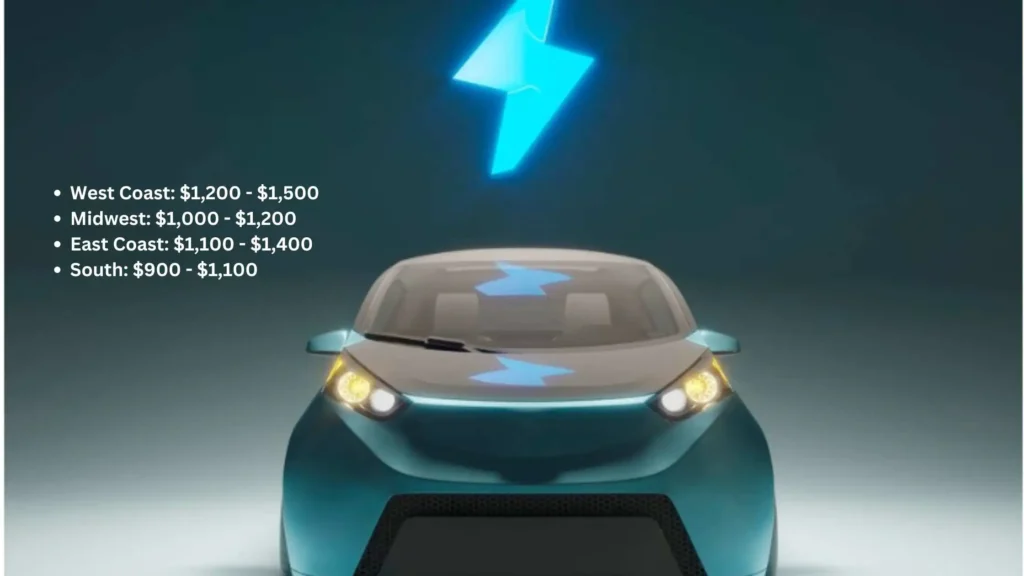
The cost of installing a Tesla charger varies by location, but broad regional averages are less useful than a local written quote. Electrician rates, permit processes, construction methods and electrical-service conditions can change significantly even within the same state.
Urban Vs. Rural Settings
An urban project may face higher labor rates, difficult parking access or stricter permitting. A rural project can still become expensive if the charger is far from the electrical service or requires a long exterior or underground run. Geography alone does not determine the price.
- Labor market: local electrician rates affect the quote.
- Permit process: requirements and fees depend on the authority having jurisdiction.
- Construction: wall type, parking location and underground work change labor and materials.
- Electrical service: available capacity can matter more than ZIP code.
Get Local Quotes Instead of Using Regional Averages
For a useful comparison, ask multiple qualified electricians to quote the same charger location, breaker/output target and electrical scope. A quote that includes permits, inspection, commissioning and all required materials is easier to compare than a low headline labor price with exclusions.
Potential Additional Expenses
The basic Tesla installation estimate does not mean every home will fit inside that range. Electrical capacity and construction work are the main reasons a project can cost more.
Products Worth Considering

Complete Kit for up to 48 Circuits – Directory sheet, numbered tabs (1–48) with extra blanks, round number dots, panel/room markers, ON/OFF & safety labels plus a microfiber cleaning cloth to prep surfaces for better adhesion.

【Product Compatibility】This Interlock Kit Compatible with Square D for Homeline Meter Main 150 or 200 amp Breaker

Ch Main Breaker Kit 150Amp
Upgrading Electrical Panels
An electrical-panel upgrade is not automatically required just because you want a Wall Connector. The electrician should first evaluate the home’s load, available breaker capacity and the charging rate your vehicle can actually accept.
- Full-output option: 60A breaker for up to 48A / 11.5 kW Wall Connector output.
- Lower-output option: Tesla supports lower breaker and charger-output settings when appropriate.
- Vehicle limitation: paying for 48A output has no charging-speed benefit if the vehicle’s onboard charger accepts less.
- Power Management: ask the installer whether Tesla’s power-management options are suitable when available capacity is limited.
If the existing electrical system still cannot safely support the planned load, the electrician can explain whether a subpanel, panel replacement or service upgrade is necessary.
Trenching, Long Wire Runs and Other Add-Ons
Tesla specifically lists long wire runs, additional electrical panels, trenching, main-panel upgrades, pedestal installation and concealed cabling as items that can be added to a more complex installation. These items should be priced in the written quote rather than estimated with generic national line-item prices.
The Wall Connector itself currently carries a four-year warranty for normal residential use. Installer workmanship coverage is separate, so check the installation warranty included in your contractor’s proposal.
Cost-saving Tips
The cheapest safe installation is usually the one that avoids unnecessary electrical and construction work while still meeting your daily charging needs.
Incentives And Rebates
The federal residential Alternative Fuel Vehicle Refueling Property Credit applied to qualifying equipment placed in service only through June 30, 2026. For a new residential charger placed in service after that date, do not budget around the former federal credit.
State, municipal and utility programs can still reduce charging-equipment or installation costs in some locations. Tesla maintains a current state, local and utility incentives page, but always confirm eligibility and funding directly with the program sponsor before buying equipment.
Choose the Charging Rate You Actually Need
A 48A Wall Connector is useful when both the vehicle and electrical system can take advantage of it, but maximum output is not necessary for every driver. If your vehicle is limited to 32A or your overnight mileage can be replaced at a lower charging rate, a lower-amperage installation may reduce the amount of electrical work required.
- Check your Tesla’s maximum AC charging amperage before choosing the circuit.
- Mount the charger near the electrical panel when the parking layout allows it.
- Ask whether lower amperage or Power Management can avoid unnecessary upgrades.
- If you already have a suitable 240V outlet, compare the Mobile Connector option before installing new equipment.
- Compare multiple written quotes using the same installation scope.
Why DIY Is Not the Right Cost-cutting Shortcut
The Wall Connector is hardwired electrical equipment, and Tesla says it must be installed by a qualified electrician. Saving money by skipping proper circuit sizing, permitting, grounding or commissioning is not a sensible tradeoff.
If installation cost is the concern, reduce the scope instead: consider a lower supported charging rate, a shorter wire route or a Mobile Connector with an existing electrician-approved outlet.
Long-term Benefits And ROI
A home charger is primarily a convenience upgrade, but it can also reduce dependence on public charging. Whether it produces a direct financial payback depends on your electricity tariff, public charging prices, monthly driving and the final installation cost.
Energy Cost Savings
Charging at home can be cheaper than relying on public fast charging, especially when your utility offers lower off-peak electricity rates. Do not use a generic national dollar figure to calculate your savings; use your own rates.
A simple planning formula is:
Estimated monthly home charging cost = electricity used for charging × your home electricity rate.
Then compare that figure with what you would have paid for the same charging at your usual public station. Tesla displays current Supercharger pricing in the vehicle and Tesla app, so you can use your actual local rate instead of a national estimate.
For a rough payback calculation, divide the extra amount you spent on the home installation by your estimated monthly savings versus the public charging you would otherwise use. If you already charge cheaply elsewhere, the financial payback may be small even though home charging remains more convenient.
Convenience And Property Value
A Wall Connector lets you plug in where you normally park and schedule charging from the Tesla app. For many owners, avoiding routine charging stops is the main benefit.
An installed Level 2 charger may also make a home more attractive to some EV-owning buyers, but do not assume it will add a guaranteed amount to the sale price. Any resale effect depends on the local housing market and the buyer.
Frequently Asked Questions
How Much Does It Cost To Get A Tesla Wall Charger Installed?
Using Tesla’s current U.S. figures, a $535 Wall Connector plus Tesla’s $750-$1,500 installation estimate gives a basic planning range of about $1,285-$2,035. Long wire runs, trenching, additional panels or main-panel upgrades can push the final quote higher.
Does a Tesla Wall Connector Need a 60-Amp Breaker?
A 60A breaker is used for the Wall Connector’s maximum 48A / 11.5 kW output, but Tesla supports lower settings. For example, a 40A breaker supports a 32A / 7.7 kW output. The right circuit depends on your electrical system and the vehicle’s maximum AC charging rate.
Can A Regular Electrician Install A Tesla Charger?
Tesla says Wall Connector must be installed by a qualified electrician. A Tesla Certified Installer is one option, but the key requirement is an electrician qualified to perform the work, follow the installation instructions and meet applicable local electrical and permit requirements.
Is the Tesla Wall Connector Hardwired?
Yes. Tesla’s current North American installation instructions specify hardwired branch circuits and state not to install a cord-and-plug connection for Wall Connector.
Is There Still a Federal Tax Credit for a Home EV Charger in 2026?
For individuals, the federal Alternative Fuel Vehicle Refueling Property Credit applied to qualifying home charging property placed in service through June 30, 2026. A new residential charger placed in service after June 30, 2026 does not qualify under that expired federal window. State, local and utility incentives may still be available.
Is a Mobile Connector Cheaper Than a Wall Connector?
It can be if you already have an electrician-approved outlet where you park. Tesla currently lists the Mobile Connector at $300, and using an existing suitable outlet can avoid a new permanent Wall Connector installation. If you need a new 240V circuit or outlet, that electrical work adds to the cost.
How Much Does It Cost To Plug Into A Tesla Supercharger?
Supercharger pricing varies by site and time. Tesla shows the current rate in the vehicle and Tesla app, so check the specific station before charging rather than relying on a national per-session estimate.
Conclusion
For a straightforward U.S. home installation, start with Tesla’s current numbers: $535 for the Wall Connector plus an estimated $750-$1,500 installation cost. Treat roughly $1,285-$2,035 as a baseline planning range, not a guaranteed quote. Long wiring routes, trenching and electrical-panel work can increase the total.
Before hiring an installer, check your vehicle’s maximum AC charging rate, choose the parking location, and ask each electrician to quote the same breaker/output and installation scope. Then check current state or utility incentives before ordering the equipment.

1 thought on “How Much Does It Cost to Install a Tesla Charger?”
Pingback: How Much Does It Cost To Replace Hvac System?