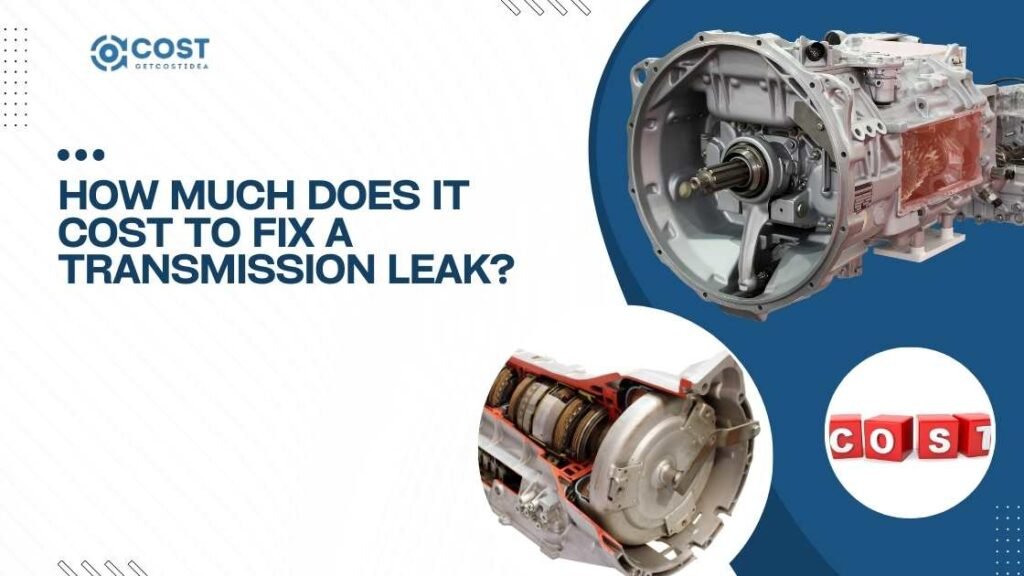
Last updated: August 11, 2026. In the U.S., two common transmission-leak repairs currently average about $362 to $440 for transmission cooler-line replacement and $499 to $645 for a transmission pan gasket, according to RepairPal. A deeper seal leak that requires transmission removal can cost substantially more, while a complete transmission replacement averages about $6,003 to $6,525.
The final transmission leak repair cost depends mainly on where the fluid is escaping and how much labor is needed to reach that component. An accessible cooler line or pan gasket is very different from an input-shaft or front-pump seal that may require removing the transmission. If low fluid has already caused internal damage, the repair can escalate from a leak repair to a rebuild or replacement.
If you notice fluid under the vehicle, delayed engagement, slipping, or slow shifting, have the leak diagnosed before continuing to drive normally. Follow your owner’s manual before checking or adding fluid because transmission-fluid specifications and checking procedures vary by vehicle. If your concern is a drivetrain warning rather than a visible leak, see our BMW drivetrain malfunction cost guide.

The Basics Of Transmission Leaks
A transmission leak allows the fluid used for lubrication, cooling, and—in many automatic transmissions—hydraulic operation to escape. The repair price depends less on the size of the puddle than on which component is leaking and how difficult that component is to access.
2026 U.S. Transmission Leak Cost Snapshot
| Repair | Current Cost Benchmark | What Drives The Cost |
|---|---|---|
| Transmission cooler-line replacement | $362 – $440 average RepairPal, updated June 18, 2026 |
Line price, routing, corrosion, fittings, fluid and labor access |
| Transmission pan-gasket replacement | $499 – $645 average RepairPal, updated July 25, 2026 |
Vehicle design, pan access, fluid/filter requirements and labor |
| Transmission rebuild | About $2,000 – $3,500 for some simpler units; newer or more complex transmissions can cost more ConsumerAffairs, updated February 27, 2026 |
Internal damage, transmission design, electronic components and labor |
| Complete transmission replacement | $6,003 – $6,525 average RepairPal, updated June 18, 2026 |
Vehicle, transmission type, replacement unit and installation labor |
Identifying A Transmission Leak
A red or pink oily spot can suggest automatic-transmission fluid, but color alone does not prove that the transmission is leaking. Fluid appearance varies with formulation, age, and contamination. Some modern vehicles also do not have an owner-accessible transmission dipstick.
Check the procedure in your owner’s manual before opening a fill point, checking the level, or adding fluid. Ford, for example, documents transmissions without a dipstick and instructs owners to seek service if the transmission slips, shifts slowly, or shows signs of leakage. See Ford’s owner-manual guidance.
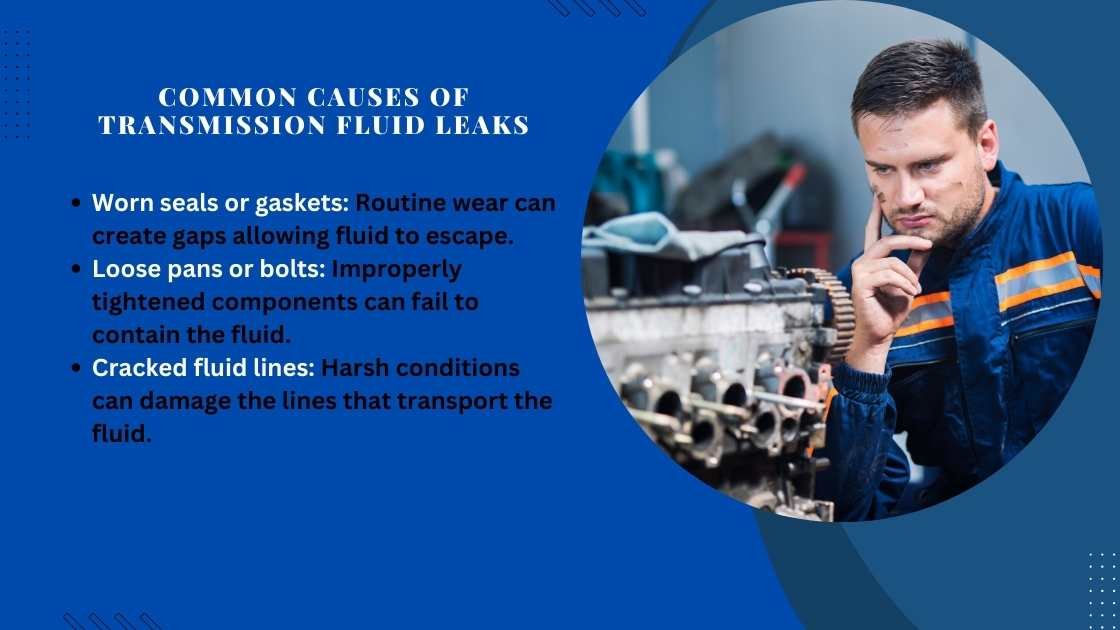
Common Causes Of Transmission Fluid Leaks
- Pan gasket: The seal between the transmission case and fluid pan can deteriorate or leak after damage or service.
- Cooler lines and fittings: Lines can corrode, crack, loosen, or leak at their connections. RepairPal notes that transmission cooler lines carry fluid between the transmission and its cooler.
- Axle or output-shaft seals: These dynamic seals can leak where a shaft enters or exits the transmission.
- Input/front-pump seals: These can be expensive to repair because access may require separating the transmission from the engine.
- Damaged pan or housing: Road impact, corrosion, or other physical damage can create a leak that a new gasket alone will not solve.
- Incorrect fluid level or service: Using the wrong fluid or an incorrect fill procedure can cause transmission problems. RepairPal recommends using the exact fluid specified in the owner’s manual.
The key cost question is therefore not simply “How large is the leak?” but “Where is it leaking from, and what must be removed to reach it?”
Impact Of Ignoring Transmission Leaks
A transmission leak should be inspected promptly because the transmission depends on the correct fluid level and fluid specification. A small external leak can remain a relatively contained repair; continued fluid loss can create shifting, lubrication, and heat problems that make the final repair much more expensive.
Risks To Vehicle Performance
Possible warning signs include:
- Slipping gears: The transmission may fail to hold or apply a gear normally.
- Delayed or slow engagement: The vehicle may hesitate before moving after you select Drive or Reverse.
- Erratic shifting: Shifts may become inconsistent as the problem worsens.
- Overheating: Insufficient or degraded fluid can reduce the transmission’s ability to manage heat.
When Should You Stop Driving?
Do not treat every puddle as safe to ignore. If the transmission is slipping, engaging slowly, losing a significant amount of fluid, overheating, or no longer shifting normally, arrange professional diagnosis rather than continuing normal driving. If you cannot safely verify the fluid level or the vehicle requires a temperature-specific service procedure, follow the owner’s manual instead of guessing.
Long-term Damage Considerations
Delaying diagnosis can increase the repair scope:
- Higher repair costs: A leak repair can become an internal transmission repair if the unit operates with insufficient fluid.
- Rebuild or replacement: Internal damage may eventually require disassembly or complete replacement rather than an external gasket or line repair.
- Vehicle downtime: A simple external repair is generally easier to schedule than a transmission rebuild or replacement.
RepairPal’s June 2026 estimate places the average complete transmission replacement at $6,003 to $6,525, which is why early diagnosis matters. See RepairPal’s transmission replacement estimate.
Diy Vs. Professional Repair
A DIY transmission-leak repair makes sense only when the leak source is accessible, the correct service procedure is available, and you have the equipment to support the vehicle safely and follow the required fluid and torque specifications. A leak that requires removing an axle, driveshaft, transmission, or torque converter is usually a professional-level job.
When To Tackle Transmission Leak Yourself
DIY may be reasonable for an experienced home mechanic when all of the following are true:
- The leak source is confirmed: Do not replace a pan gasket simply because fluid appears near the pan; fluid can travel from a higher leak point.
- You have the correct procedure and torque specifications: Guessing at pan-bolt torque can create another leak or damage components.
- You know the exact fluid specification: Transmission fluids are not universally interchangeable.
- You can refill or level-check the transmission correctly: Some vehicles require a specific fluid-temperature procedure and some have no dipstick.
- You are not relying on a stop-leak product as a substitute for diagnosis: Do not use a supplemental transmission additive unless the manufacturer specifically permits it. Ford states that it does not recommend aftermarket additives unless they meet an explicitly defined Ford specification and are being used for a Ford-identified concern. See Ford’s additives and flushes guidance.
Benefits Of Professional Assessment And Repair

A qualified repair shop can help when the source is uncertain or access requires major drivetrain work:
- Leak-source diagnosis: The technician can clean and inspect the area to identify where the fluid actually originates.
- Vehicle-specific procedures: The shop can follow the correct fluid, temperature, torque, and refill requirements.
- Access to heavy equipment: Transmission removal requires lifting and support equipment that most owners do not have.
- Repair warranty: Ask whether parts and labor are covered if the repair leaks again.
- Written estimate: You can compare the diagnosed leak source, labor time, parts, fluid, and shop charges before authorizing work.
| Repair Type | DIY Suitability | Professional Cost Benchmark |
|---|---|---|
| Transmission Pan Gasket | Possible for an experienced DIYer with the correct procedure, lifting equipment, torque specification and refill method | $499 – $645 average (RepairPal, July 2026) |
| Transmission Cooler Line | Possible for experienced DIYers on some vehicles; routing, fittings and corrosion can complicate the job | $362 – $440 average (RepairPal, June 2026) |
| Stop-Leak/Additive | Use only when the vehicle manufacturer specifically permits the product/specification; it is not a substitute for diagnosing a failed seal, gasket, line or housing | No universal repair benchmark |
| Transmission Rebuild | Not advisable for ordinary DIY repair | About $2,000 – $3,500 for some simpler four-speed units; complex/newer units can cost more (ConsumerAffairs, February 2026) |
| Complete Transmission Replacement | Not advisable for ordinary DIY repair | $6,003 – $6,525 average (RepairPal, June 2026) |
Bottom line: A pan or line repair can be approachable for an experienced DIYer on the right vehicle, but guessing at the leak source, fluid specification, torque, or fill procedure can turn a small repair into a repeat leak or transmission problem.
Cost Factors Of Transmission Leak Repair
The biggest transmission-leak cost factor is access to the failed component. A cheap seal can still create a large bill when several hours of drivetrain removal are required to reach it.
Type Of Vehicle And Transmission
The make, model, drivetrain layout, and transmission design affect both parts and labor.
- FWD, RWD, AWD or 4WD layout: Nearby axles, driveshafts, transfer-case components and crossmembers can change access time.
- Transmission design: Conventional automatics, CVTs, dual-clutch units and manuals use different fluids, seals and service procedures.
- Brand-specific parts: OEM assemblies and model-specific lines or pans can cost more than common service parts.
- Accessibility: A leak that requires transmission removal costs much more in labor than an externally accessible line or pan.
Leak Source And Extent Of Damage
The leak location matters more than the visible puddle size.
- External pan or line leak: Usually easier to reach.
- Axle/output seal: May require axle or driveshaft removal.
- Input/front-pump area: May require transmission removal.
- Secondary internal damage: Driving with insufficient fluid can turn a leak repair into an internal repair, rebuild, or replacement.
Replacement Parts And Fluids
Parts and fluid requirements vary by vehicle.
- OEM vs. aftermarket parts: Part choice can change the invoice.
- Fluid specification: Use only fluid that meets the vehicle manufacturer’s required specification.
- Fluid quantity: The amount lost or drained during repair affects material cost.
- Related service items: Some repairs may involve a filter, pan, hardware, fittings, or additional seals.
Labor Rate And Diagnosis
Regional labor rates and shop type also affect the quote. Ask for a written estimate that identifies the confirmed leak source, labor hours, parts, transmission fluid, diagnostic charge, taxes, and shop supplies. This makes two quotes much easier to compare.
Price Range For Common Repairs

Transmission leak repair prices span a wide range because the failed part may be a relatively accessible cooler line or pan gasket, or a seal that requires major drivetrain disassembly. Use current national averages as a planning benchmark, then get a vehicle-specific diagnosis.
Transmission Pan Gasket
RepairPal currently estimates the average U.S. transmission pan-gasket replacement at $499 to $645, including approximately $313 to $459 in labor and about $187 in parts before taxes, fees, location adjustments, or related repairs. Source: RepairPal, updated July 25, 2026.
Transmission Cooler Lines
RepairPal currently estimates the average transmission cooler-line replacement at $362 to $440, with estimated labor of $169 to $248 and parts around $193 before taxes, fees, location adjustments, or related work. Source: RepairPal, updated June 18, 2026.
Shaft, Input And Front-Seal Leaks
A shaft or front-area seal may cost considerably more than the seal itself because the repair can require removing an axle, driveshaft, or the transmission. There is no single national price that accurately represents every one of these seal locations, so ask the shop to identify which seal is leaking and what must be removed to reach it before comparing the quote.
Full Transmission Rebuild Or Replacement Costs
| Repair Level | Current Benchmark | What It Means |
|---|---|---|
| Rebuild | About $2,000 – $3,500 for some simpler four-speed units; newer and more complex units can cost more | The transmission is disassembled, inspected, cleaned and refurbished rather than replaced as one complete unit. |
| Replacement | $6,003 – $6,525 average | The transmission assembly is replaced; the actual price varies significantly by vehicle. |
Sources: ConsumerAffairs (February 2026) and RepairPal (June 2026).
Do not approve a rebuild or replacement solely because fluid is leaking. RepairPal notes that other vehicle problems can mimic transmission failure, so the underlying fault should be diagnosed before replacing the unit.
Saving On Transmission Leak Repairs
The best way to control transmission leak repair cost is to get the leak source diagnosed before comparing prices. Two shops are not quoting the same job if one plans to replace a cooler line while another plans to remove the transmission for a front seal.
Shopping Around For Service
- Request a written diagnosis and estimate.
- Ask which exact gasket, seal, line, fitting, or housing is leaking.
- Compare labor hours as well as the final dollar amount.
- Confirm whether fluid, filter, hardware, taxes, diagnostic charges, and shop supplies are included.
- Ask about the parts-and-labor warranty.
- For a proposed rebuild or replacement, consider a second opinion from a transmission specialist.
Considering Warranties And Insurance
A factory warranty, extended warranty, or service contract may cover some transmission failures when the repair meets the contract terms. Read the exclusions for seals, gaskets, maintenance, pre-existing conditions, and consequential damage.
Standard auto insurance generally does not pay for ordinary mechanical breakdown or wear. Coverage may be different when transmission damage results directly from a covered collision, vandalism, or another insured event. ConsumerAffairs makes the same distinction in its 2026 transmission-cost guidance: see the coverage discussion.
Preventive maintenance also matters. Follow the fluid type, checking procedure, and service interval specified by the vehicle manufacturer rather than using a universal interval or additive.
Frequently Asked Questions Of How Much Does It Cost To Fix A Transmission Leak
Is It Worth Fixing A Transmission Leak?
Yes, a transmission leak is usually worth diagnosing and repairing before fluid loss causes additional damage. An accessible pan gasket or cooler line can cost hundreds of dollars, while a complete transmission replacement currently averages $6,003 to $6,525 according to RepairPal.
How Much Does It Cost To Stop A Transmission Leak?
There is no single price for every transmission leak. Current U.S. RepairPal averages are $362 to $440 for transmission cooler-line replacement and $499 to $645 for transmission pan-gasket replacement. A deeper seal that requires major disassembly can cost more, and a complete transmission replacement averages $6,003 to $6,525.
How Long Does It Take To Fix Transmission Leak?
Many accessible transmission-leak repairs take a few shop hours, but repair time depends on the source. A pan gasket may take roughly 1 to 2 hours, cooler lines about 1 to 3 hours, and a front-pump or torque-converter-area seal can take several hours because transmission removal may be required. See the current repair-time breakdown from HowLongFor, updated July 2026.
Can You Drive With A Transmission Leak?
Do not continue normal driving if the transmission is slipping, shifting slowly, engaging late, overheating, or losing a significant amount of fluid. Ford instructs owners to seek service when they notice leaking transmission fluid, slipping, or slow shifting. If the vehicle has no dipstick or requires a special level-check procedure, follow the owner’s manual instead of guessing at the fluid level.
What To Do If Transmission Is Leaking?
Confirm that the fluid is coming from the transmission, note the leak location and symptoms, and follow the owner’s manual before checking or adding fluid. Use only the specified transmission fluid, and do not use a stop-leak additive unless the manufacturer specifically permits it. Arrange professional diagnosis if the leak is substantial or the transmission is slipping, shifting slowly, overheating, or engaging abnormally.
Conclusion
The cost to fix a transmission leak depends primarily on where the leak is and how difficult the failed component is to reach. Current U.S. benchmarks put cooler-line replacement at about $362 to $440 and pan-gasket replacement at $499 to $645, while a complete transmission replacement averages $6,003 to $6,525.
Get the source diagnosed before authorizing repairs, use the exact transmission fluid and service procedure specified for your vehicle, and compare written estimates when the repair is expensive. Early diagnosis gives you the best chance of fixing the leak before it develops into an internal transmission problem.