
You might think that friction stir welding equipment is prohibitively expensive, but costs vary widely depending on the type of machine, weld length, and accuracy you need. From dedicated gantry systems to versatile robotic cells and CNC FSW heads, understanding the investment required is essential for confident budgeting.
As of 2026, friction stir welding equipment typically ranges from under €100,000 for CNC FSW heads to about €400,000 for robotic workstations and roughly €600,000 to €2 million for large dedicated machines. Final pricing depends on weld length, thickness capacity, axis count, automation level, and custom engineering.
Key takeaways
- Dedicated friction stir welding machines start at about €600,000 and can exceed €2 million for long, custom gantry systems.
- Robotic FSW cells and CNC-mounted FSW heads give you a lower entry cost, especially when you reuse existing robots or machining centers.
- Weld thickness, accuracy, 3D capability, and delivery time matter just as much as the list price when you choose an FSW solution.
Investment cost and delivery time
When you plan your investment in friction stir welding (FSW) equipment, look at both the capital cost and the delivery time.
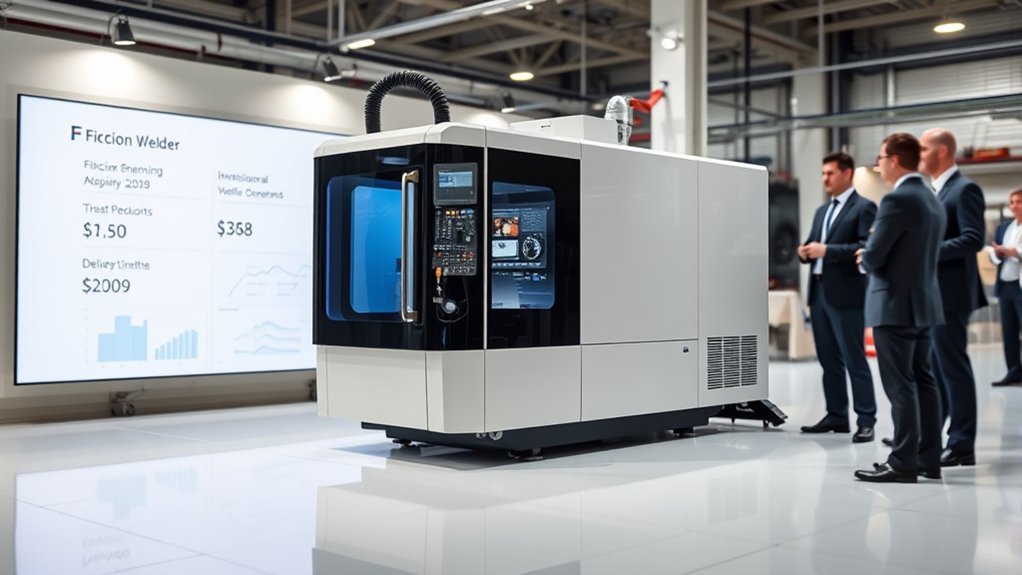
Dedicated FSW machines usually start around €600,000 for weld lengths of about 2 meters. Custom gantry systems longer than 10 meters can reach €2 million.
Robotic FSW solutions cost less to start if you already run industrial robots. A typical FSW-capable robot arm runs around €100,000, and a complete robotic workstation sits near €400,000. You will still need integration and fixturing to get full FSW performance.
Alternatively, Stirweld FSW heads and similar CNC-mounted solutions offer a cost-effective route. Many heads stay under €100,000. Because they are mass-produced and mount on existing machining centers, they often arrive faster and keep total project costs lower than dedicated systems.
Delivery timelines vary. Dedicated machines commonly need 12 to 18 months for design, manufacture, and commissioning. Robotic FSW cells usually arrive in about 6 months. Standard CNC FSW heads can ship in roughly a month when in stock. Building these lead times into your schedule helps you avoid production bottlenecks.
FSW welding thickness and accuracy
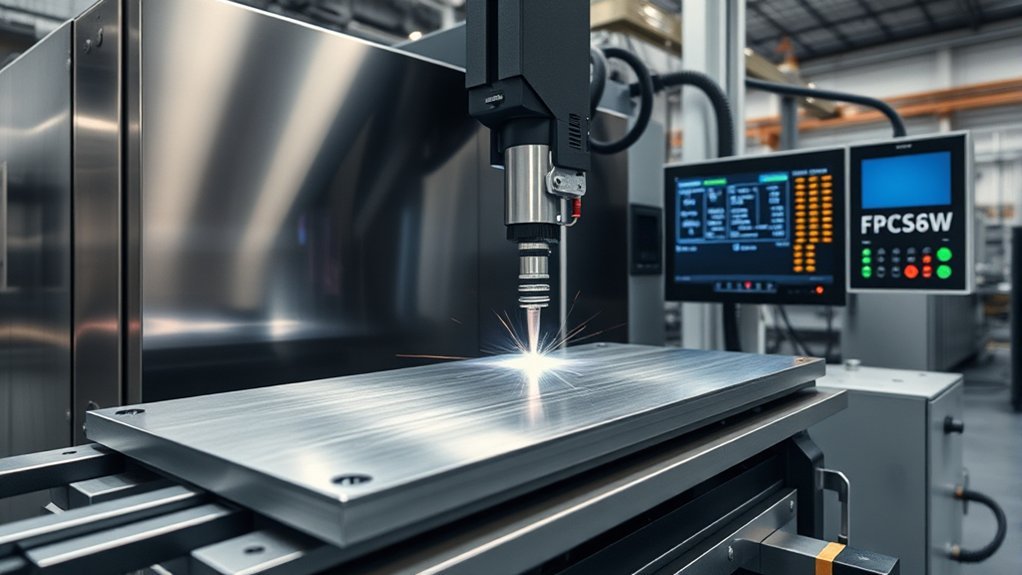
Welding thickness and positioning accuracy go hand in hand when you pick friction stir welding equipment.
Dedicated FSW machines reach weld thicknesses up to around 30 mm with axial forces near 60 kN. They deliver high-quality joints with accuracy on the order of 0.01 mm when properly tooled and fixtured.
Many robot-based FSW systems target thinner sections. Standard industrial robots with around 10 kN of usable process force handle thicknesses up to roughly 5 mm in aluminum. You see them often in EV battery trays and lightweight structures. Joint flexibility and arm compliance reduce static positioning accuracy, so process control must compensate for deflection.
CNC-mounted FSW heads sit in the middle for versatility. They typically weld up to 12 mm single-sided and about 20 mm double-sided while holding the same ~0.01 mm precision as dedicated machines. Modern machining centers supply the needed stiffness.
Your choice of FSW equipment decides the thicknesses you can weld reliably and the tolerances you can hold. Match machine rigidity, process force, and control accuracy to your joint design so you get both strength and dimensional accuracy.
Footprint and work envelope of FSW machines
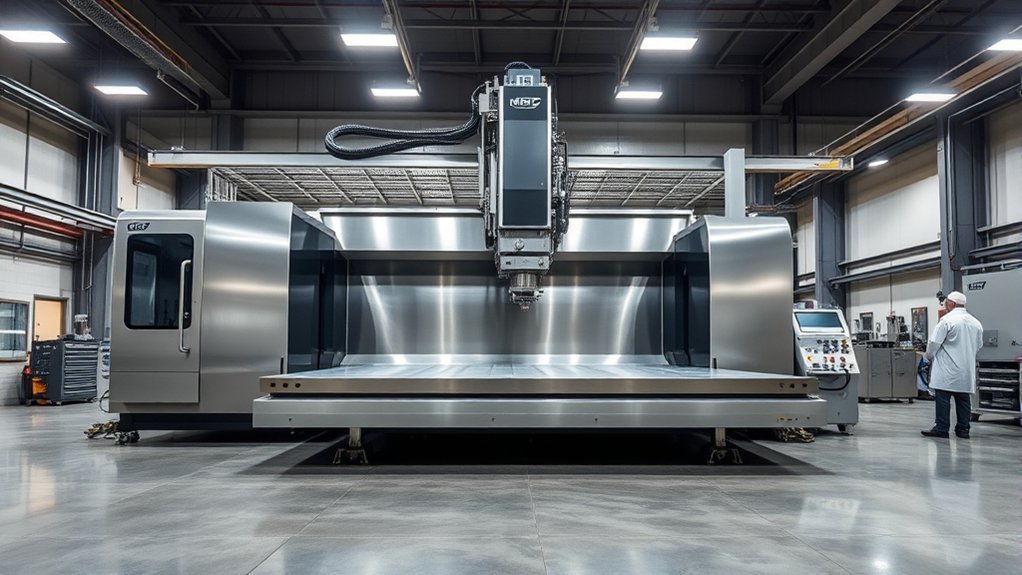
Footprint and work envelope matter as much as price when you choose FSW equipment.
Dedicated FSW machines need plenty of floor space because of long beds, gantry structures, and heavy clamping systems. They suit large panels and extrusions but can be hard to move or reconfigure.
FSW robots are more compact. You can set them up as cells that fit existing production lines, though you still need space for guards, fixtures, and material handling. Reach comes from the robot arm plus any rails or positioners.
CNC-mounted FSW heads add almost no extra footprint. They simply attach to machines you already own. Because FSW is solid-state, you skip filler wire, shielding gas, and gas-cylinder storage.
Robotic stations adapt easily to different workshop layouts and can extend reach with floor or overhead rails. CNC-head performance scales directly with the host machine’s travels and rigidity. Map out space needs early so installation goes smoothly and workflow stays efficient.
3D welding capabilities and welding speed
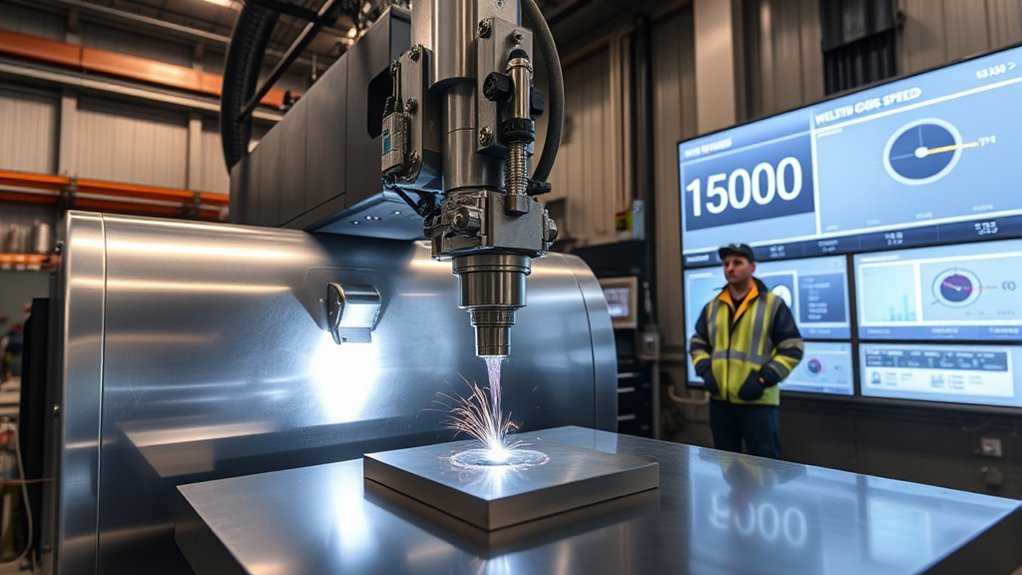
Dedicated FSW gantries work best for long, straight or gently curved seams on flat surfaces. Robotic FSW stations shine on complex 3D shapes because the tool can tilt and follow intricate paths.
3D welding versatility
Robotic systems give full 3D welding on horizontal, vertical, or even overhead joints. This flexibility helps with EV battery housings, stiffened panels, and structural castings. You adapt the process to the part instead of redesigning the part for a flat bed.
Speed performance consistency
Most industrial FSW systems reach maximum welding speeds of around 3 m/min on suitable aluminum joints. Actual speed depends on alloy, thickness, tool design, and quality targets, but 3 m/min gives a solid planning benchmark.
Key points to remember:
- Uniform speed capability: Good systems hold steady travel speed once parameters are set, so takt times stay repeatable.
- Surface compatibility: Most production FSW jobs are still on fairly flat seams, which suits gantries and CNC heads.
- 3D adaptability: Robots handle changing orientation and attack angle.
- Orientation limits: Dedicated machines usually stay horizontal; robots can weld in multiple directions if fixtures are solid.
Axis count impact
More CNC axes let the tool keep correct lead and tilt angles on complex paths.
| Axis count | Typical capabilities |
|---|---|
| 3-axis | Horizontal, vertical, and simple reverse welding with limited angle changes |
| 4-axis | Added rotary axis for angled welds and more complex geometries |
| 5-axis | Full 3D welding flexibility and more consistent tool orientation |
| Dedicated gantry | Optimized for 2D surfaces with excellent rigidity and long welds |
Many FSW jobs stay on flat surfaces, so a 3-axis CNC or dedicated gantry often does the job. If you expect complex 3D joints or tight access, 4- or 5-axis or a robotic cell reduces fixtures and improves coverage.
Selecting the right FSW solution
Choosing the right friction stir welding solution means looking past the sticker price. Factor in accuracy needs, available space, and how fast you need to start production.
- Investment cost: Dedicated FSW machines generally start at about €600,000, while CNC-mounted FSW heads stay under €100,000 if you already own a suitable machining center.
- Accuracy: Both dedicated machines and quality FSW heads reach ~0.01 mm precision with rigid fixturing and tuned parameters—exactly what high-performance joints need.
- Delivery time: Dedicated gantries take 12–18 months, robotic solutions arrive in around 6 months, and standard FSW heads can ship in roughly a month if in stock.
- Modularity and footprint: FSW heads add almost nothing to your existing CNC footprint, while dedicated gantries and robot cells need their own space, guarding, and handling systems.
Match these factors to your part mix, volumes, and growth plans. Some shops start with a CNC FSW head for prototypes and low volumes, then scale to a dedicated or robotic system for full production. This staged approach balances risk and payback.
Contacting Stirweld for FSW solutions

When you need FSW solutions matched to your project, specialist suppliers such as Stirweld can supply detailed guidance and priced proposals. They offer CNC heads, dedicated machines, and robotic workstations across different budgets and volumes.
Their applications team runs feasibility studies, weld trials, and joint-design advice for new users. You also get a technical hotline, remote help, and on-site support for troubleshooting and optimisation.
Many suppliers provide training and prototyping services so teams build confidence quickly. Contact an FSW expert early. You will get accurate specs, pricing, and schedules and avoid later redesigns.
Glossary
- Friction stir welding (FSW)
- A solid-state welding process that uses a rotating, non-consumable tool to join materials without melting them. See the TWI guide to friction stir welding for more details.
- Dedicated FSW machine
- A purpose-built gantry or portal system designed specifically for friction stir welding, usually optimized for long, straight welds.
- FSW head for CNC
- An add-on spindle or head that mounts to an existing CNC machine, enabling friction stir welding without buying a standalone gantry.
FAQs
What is the maintenance cost for friction stir welding equipment?
Many manufacturers budget roughly 5–10% of the equipment purchase price per year for planned maintenance, spare parts, and inspections. Actual costs depend on usage, environment, and service contracts, so request a maintenance plan when you get quotes.
How long does it take to set up friction stir welding machines?
Once the machine is installed, a typical production setup or changeover takes just a few hours. This includes tool loading, program selection, clamping, and trial welds. Complex multi-axis systems may need extra time during initial commissioning.
What types of materials can be welded with friction stir welding?
FSW works especially well on aluminum and magnesium alloys. It can also join some copper, steel, and dissimilar-metal combinations when you use the right tools and parameters. Aerospace, automotive, rail, and marine shops use it when they need lightweight, high-strength joints.
Are there any safety concerns with using friction stir welding equipment?
Yes. Protect operators from rotating tools, hot parts, and flying chips with guards, PPE, and secure clamping. Good ventilation, interlocks, emergency stops, and clear procedures reduce burn, pinch, and entanglement risks.
What training is required to operate friction stir welding machinery?
Most operators complete vendor or third-party training on FSW basics, machine controls, parameter selection, and safety. Courses last one to several days and are followed by supervised practice on real production parts.
Related articles
Conclusion
In advanced manufacturing, choosing the right friction stir welding solution makes a big difference. Whether you want the precision of dedicated gantry machines or the flexibility of robotic and CNC-based systems, knowing the costs, capabilities, and lead times sets your project up for success.
Just like a sculptor pairs tools to a specific material, match your parts, volumes, and quality requirements to the FSW equipment that fits best. With clear specs and expert guidance, you can bring friction stir welding on line in a way that is technically solid and financially sound.
