
TIG welding can produce precise, clean-looking welds, but that control often comes with more labor, preparation, and equipment expense than faster welding processes. A useful estimate must account for the shop rate, minimum charge, metal, filler, shielding gas, joint preparation, access, finishing, travel, and any inspection requirements.
Quick Answer
Professional TIG welding commonly budgets at about $75 to $125 per hour, with current general welding marketplace data near $100 to $105 per hour. Your quote may also include a minimum charge, metal, filler, argon, cleaning, fit-up, travel, and inspection. Complex aluminum, stainless, thin-wall, or code work usually costs more.
Key Takeaways
- A planning rate of $75 to $125 per hour is reasonable for many TIG jobs, but location, skill, overhead, and project requirements can move the rate outside that range.
- Do not rely on a generic price per inch. Joint size, number of passes, fit-up, access, position, preparation, and inspection affect the time required.
- A complete setup costs more than the power source alone because you may also need a torch, pedal, regulator, gas cylinder, filler, tungsten, PPE, and suitable electrical service.
- Aluminum, stainless steel, titanium, thin material, and appearance-critical work often require extra cleaning, shielding, heat control, or specialized skill.
- The most reliable quote clearly separates labor, materials, setup, consumables, travel, finishing, inspection, and possible extra work.
At a Glance
| Professional Labor | Common planning range: about $75–$125 per hour; local and specialized rates vary. |
| Common Quote Methods | Hourly, fixed-project, minimum charge, mobile callout, or production pricing. |
| Machine-Only Cost | From under $1,000 for some compact machines to several thousand dollars for branded AC/DC and industrial systems. |
| Common Added Costs | Metal, filler rod, argon, tungsten, cleaning, fit-up, grinding, travel, inspection, finishing, and rework. |
TIG Welding Labor Rates and Quote Methods
TIG, formally called gas tungsten arc welding or GTAW, gives the operator close control over the arc and filler metal. That control is useful for thin material, visible welds, precise assemblies, and many stainless-steel and aluminum jobs. It can also make the work slower and more skill-intensive than some wire-fed processes.
For early budgeting, many customers use $75 to $125 per hour as a TIG welding labor range. That is not a national tariff. A 2026 welding marketplace benchmark places general professional welding near $100 to $105 per hour, but a specialized TIG shop may quote above or below that figure.
A dependable TIG estimate is labor hours multiplied by the shop rate, plus materials, filler, shielding gas, preparation, setup, travel, finishing, inspection, and any required rework.

The DeLonghi Water Filter helps reduce scale buildup and unwanted impurities that can affect your coffee machine's performance and taste. Its active carbon and ion-exchange technology helps improve brew consistency, maintain flavor, and reduce the need for frequent descaling. Designed as an OEM authorized replacement part, it fits select DeLonghi models for reliable everyday maintenance.

This hardcover cookbook offers fast, approachable recipes designed for busy days and low-energy nights. Caroline Chambers focuses on simple, flavorful meals that help you get dinner on the table without overthinking it. It's a practical pick for home cooks who want quick weeknight inspiration and minimal-fuss cooking.

Post-it Super Sticky Easel Pads are designed to keep ideas visible and organized during meetings, training sessions, brainstorming, and project planning. The large premium paper resists marker bleed-through and sticks securely to many surfaces, then repositions without surface damage. A sturdy backcard and portable handle make them easy to move between rooms and use with most easel stands.
How TIG Welding Is Commonly Priced
| Pricing Method | When It Is Used | What to Confirm |
| Hourly rate | Repairs, prototypes, uncertain damage, and one-off fabrication | Whether setup, cleaning, fitting, grinding, and finishing are billable |
| Fixed-project quote | Well-defined work with drawings, known materials, and clear acceptance criteria | Scope exclusions, change-order rules, finish, tolerance, and delivery date |
| Minimum charge | Small jobs that still require scheduling, machine setup, gas, and administration | Minimum billable time and whether materials are included |
| Production pricing | Repeat parts with stable fit-up and a verified process | Quantity, tooling, inspection frequency, scrap allowance, and packaging |
| Mobile callout | Work that cannot be brought to a shop | Travel, mileage, site access, power, weather protection, and minimum hours |
Note: A welder’s employee wage is not the same as a shop’s customer rate. The shop rate must also support equipment, insurance, utilities, consumables, administration, training, unbillable time, and business overhead.
TIG Welding Equipment and Setup Expenses
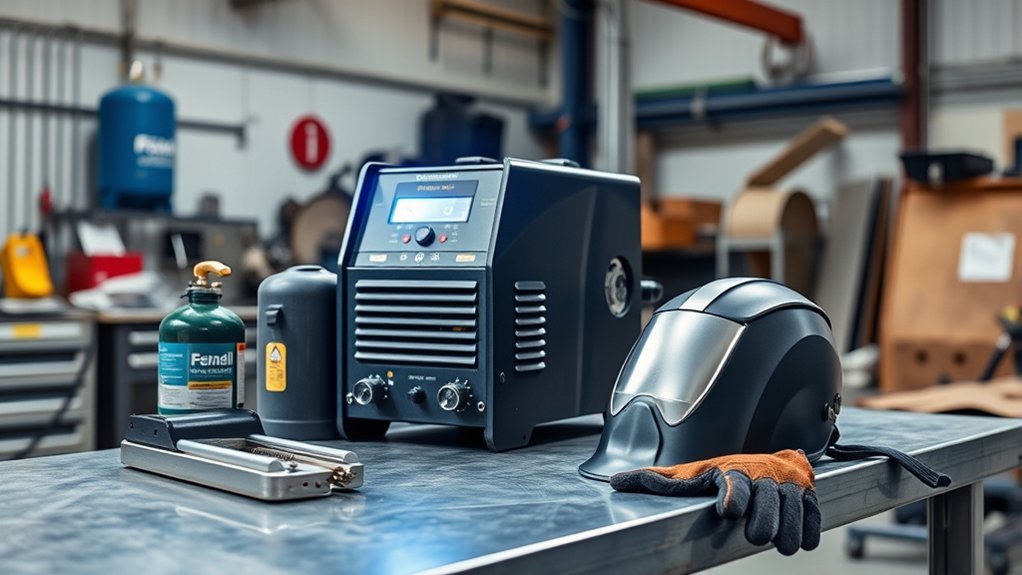
The power source is only one part of a complete TIG setup. The required machine depends on the metals you plan to weld. DC TIG is commonly used for carbon steel, stainless steel, titanium, bronze, and many other metals. Aluminum is commonly welded with an AC-capable TIG machine. Manufacturer guidance provides more detail on TIG equipment, tungsten, current, and compatible materials.
Current manufacturer pricing illustrates why one broad “basic setup” figure is unreliable. As of July 2026, Lincoln Electric listed its Square Wave 205 at $1,599 MSRP and its Square Wave TIG 200 at $2,779.99 MSRP. Prices, packages, rebates, and availability can change, and industrial systems can cost substantially more.
What a Complete TIG Setup May Include
- Power source: DC-only or AC/DC, with the amperage, duty cycle, pulse controls, and input voltage needed for the work.
- Torch and work lead: Air-cooled or water-cooled torch, correct connectors, ground clamp, cups, collets, and gas lenses.
- Amperage control: Foot pedal, fingertip control, or machine-panel control.
- Shielding-gas system: Cylinder, regulator or flowmeter, hose, and secure cylinder cart or restraint.
- Consumables: Tungsten electrodes, filler rods, cups, collets, gas lenses, O-rings, and cleaning supplies.
- Safety equipment: Suitable helmet lens, safety glasses, TIG gloves, flame-resistant clothing, footwear, screens, ventilation, and fire-control equipment.
- Shop infrastructure: Suitable electrical circuit, workbench, clamps, lighting, ventilation, grinders, saws, and material-preparation tools.
Pro Tip: Compare complete packages rather than machine prices alone. A lower-priced power source may not include the torch, pedal, regulator, leads, plugs, or AC capability needed for your project.
Shielding Gas, Consumables, and Operating Costs
Recurring TIG expenses depend more on usage and application than on one fixed percentage. The largest variable items are usually shielding gas, filler metal, tungsten, torch parts, preparation supplies, electricity, and labor spent correcting contamination or poor fit-up.
Shielding Gas
Miller’s TIG shielding-gas guidance identifies 100% argon as the common all-around choice. Helium and argon-helium blends may be used when an application needs different heat characteristics. Typical TIG flow can fall between about 10 and 35 cubic feet per hour, depending on the cup, gas lens, joint, torch position, and surrounding airflow.
You can estimate theoretical arc-on time with this formula:
Cylinder capacity in cubic feet ÷ gas flow in cubic feet per hour = theoretical arc-on hours
For example, a 125-cubic-foot cylinder used at 15 cubic feet per hour provides about 8.3 theoretical arc-on hours. Actual working time will be lower because pre-flow, post-flow, tack welding, purging, leaks, and unused residual pressure also consume gas.
Note: Argon prices are local. Ask whether the quoted amount is for a refill, exchange, rental, lease, cylinder purchase, deposit, or contents only, and confirm the cylinder’s cubic-foot capacity.
Other Recurring Expenses
| Expense | What Changes the Cost |
| Filler rod | Alloy, diameter, package size, certification, deposition amount, and waste |
| Tungsten | Diameter, alloy type, amperage, accidental dipping, grinding method, and contamination |
| Cups, collets, and gas lenses | Torch model, heat, breakage, thread damage, and specialty access requirements |
| Cleaning and preparation | Oil, paint, oxide, corrosion, plating, joint condition, and required surface finish |
| Electricity and cooling | Amperage, arc time, duty cycle, input efficiency, and use of a water cooler |
| Maintenance | Dust, operating environment, fan and cooler condition, cable wear, gas leaks, and torch damage |
Correct setup can save more than the price of a consumable. Excessive gas flow may create turbulence and pull air into the shielding envelope, while low flow or drafts can leave the puddle unprotected. Either problem can cause contamination and rework.
Project Factors That Change TIG Welding Cost
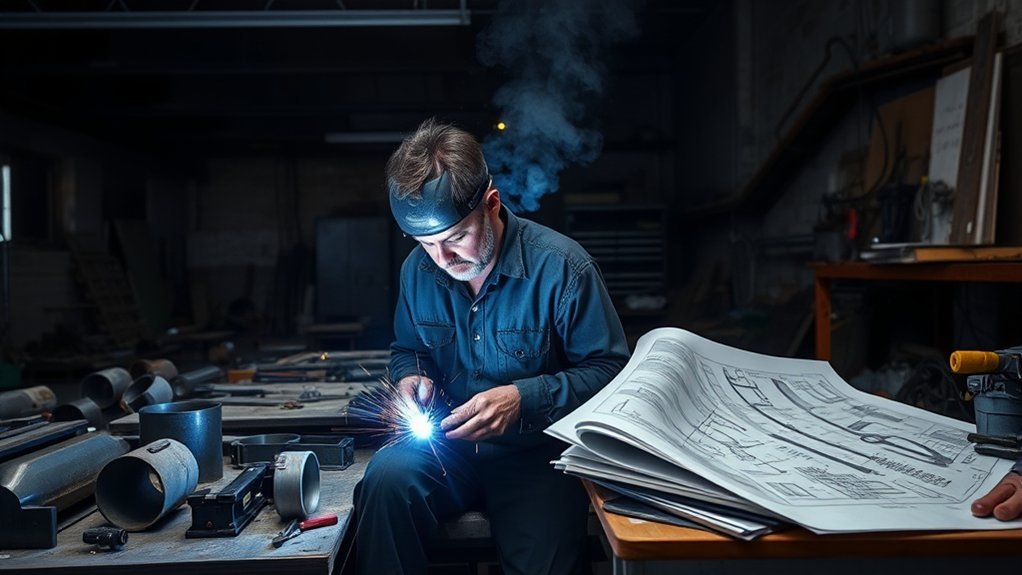
The length of the finished bead is only one small part of a TIG estimate. A short, difficult weld can cost more than a long production seam when the job requires careful cleaning, awkward access, repeated tacking, distortion control, purging, inspection, or cosmetic finishing.
Material Type
- Mild steel: Often the most straightforward option when the material is clean, the joint fits well, and no special inspection is required.
- Stainless steel: May require stricter cleanliness, careful heat control, dedicated tools, and back purging on certain full-penetration tube or pipe welds.
- Aluminum: Commonly requires an AC-capable machine, oxide removal, clean filler and base metal, and close control of heat and contamination.
- Titanium and nickel alloys: Can require specialized filler, controlled shielding or trailing coverage, documented procedures, and a welder experienced with the alloy.
- Unknown or coated metal: Identification, coating removal, contamination, and unsafe fumes can add time or make the job unsuitable until the material is properly evaluated.
Joint Design, Thickness, and Number of Passes
A small autogenous seam on thin sheet is not priced like a beveled, multi-pass joint. Thicker metal can require beveling, root preparation, preheat, multiple filler passes, interpass cleaning, and more distortion control. Joint type also matters: butt, fillet, lap, corner, socket, tube, and pipe joints do not require the same setup or welding time.
Fit-Up and Preparation
Gaps, misalignment, damaged edges, paint, oil, corrosion, oxide, and old weld metal slow the job before the final bead begins. A shop may charge for cutting, grinding, machining, clamping, tacking, straightening, and cleaning separately from arc time.
Position and Access
Bench work with clear access is usually easier to estimate than welding underneath equipment, inside a frame, around existing components, or in a restricted position. Difficult access can also require torch changes, mirrors, purging equipment, heat shields, or removal of nearby parts.
Quality, Documentation, and Inspection
Cosmetic work, leak-tight assemblies, sanitary tubing, pressure components, structural connections, aerospace parts, and code-controlled welds can require qualified procedures, certified personnel, material records, inspection, testing, or repair documentation. These requirements should be stated before the shop quotes the work.
Travel, Scheduling, and Site Conditions
Mobile welding may include a callout, mileage, travel time, site induction, permits, power arrangements, weather protection, and a higher minimum charge. Rush, weekend, or after-hours work can also cost more.
Illustrative TIG Welding Estimate
The following example shows how a quote may be assembled. It is an illustration, not a national price for a specific repair.
| Estimate Item | Example Calculation | Example Amount |
| Labor | 2.5 hours × $105 | $262.50 |
| Setup and preparation | Cleaning, fit-up, and tacking | $50.00 |
| Material and filler | Small material allowance and matching filler | $40.00 |
| Gas and consumables | Argon, tungsten use, and torch consumables | $25.00 |
| Finishing | Light blending and cleanup | $35.00 |
| Illustrative Total | Before tax, travel, testing, or change orders | $412.50 |
How to Budget for TIG Welding
A detailed request helps a welder estimate the job without building a large uncertainty allowance into the price. Send the same information to each shop so you can compare the scope rather than comparing totals that include different services.

This heavy-duty foam coil cleaner quickly dissolves grease, oil, stains, and dirt from air conditioner coils, fan blades, reusable filters, and other HVAC components. Its self-rinsing, low-VOC formula helps neutralize odors, leaves a fresh lemon scent, and includes corrosion inhibitors to protect metal surfaces while cleaning. Designed for convenient aerosol application, it reaches tight spaces and helps restore efficiency without the need for rinsing in most uses.

This versatile Cuisinart cookware set provides essential pots and pans for everyday cooking, from sauces and soups to sautéing, simmering, and frying. The aluminum-encapsulated base promotes fast, even heating, while cool-grip handles and tight-fitting glass lids support comfortable, efficient cooking. Designed for broad compatibility, it is dishwasher safe and oven safe for flexible use across many recipes.

This versatile cookware set equips home cooks with essential pots, pans, and a steamer insert for everyday meals and larger gatherings. The aluminum-encapsulated base promotes quick, even heating, while Cool Grip handles and tight-fitting glass lids support comfortable, controlled cooking. Designed for stovetop, oven, broiler, and dishwasher use, it offers reliable performance across a wide range of recipes.
Information to Include With a Quote Request
- Clear photos of the complete part and the damaged or welded area
- Metal type or alloy, if known
- Material thickness and key dimensions
- Joint type, weld size, and weld length when specified on a drawing
- Quantity and whether the parts are identical
- Required appearance, finish, tolerance, and leak-tightness
- Whether paint, plating, oil, corrosion, or an old weld must be removed
- Whether the work is structural, pressure-containing, sanitary, automotive, aerospace, or controlled by a code
- Shop or mobile location, access limits, available power, and working conditions
- Required completion date and whether inspection or documentation is needed
Questions to Ask Before Approving the Work
- Is the quote fixed, hourly, or subject to a minimum charge?
- Are cleaning, cutting, fit-up, tacking, grinding, and finishing included?
- Who supplies the base metal and filler?
- Are travel, pickup, delivery, tax, testing, and inspection included?
- What conditions would trigger a change order?
- What warranty or correction policy applies to the completed work?
Pro Tip: Batch several small parts when practical. Setup, paperwork, gas checks, and machine configuration take time even when each weld is short, so combining compatible work may reduce the effective cost per part.
You may be able to reduce labor by supplying accurate drawings, clean and correctly identified material, and parts that fit properly. Do not grind, bevel, chemically clean, or alter a safety-critical part without the welder’s approval. Incorrect preparation can increase repair time or make the part unsafe to use.
Warning: TIG welding creates intense arc radiation, hot metal, electric-shock risk, fire hazards, compressed-gas hazards, and potentially harmful fumes and gases. Follow OSHA welding and hot-work requirements, use task-appropriate PPE and ventilation, secure cylinders, protect nearby people, remove or shield combustibles, and never weld a closed or previously used container unless it has been evaluated and prepared by qualified personnel.
DIY TIG Welding vs. Hiring a Professional
Buying a TIG welder can make sense when you expect repeated projects and are prepared to invest in training, practice material, a gas system, PPE, preparation tools, and suitable workspace. The machine purchase alone does not guarantee an economical or safe result.
TIG is learnable, but it has a steeper learning curve than several common alternatives. The operator must control arc length, torch angle, travel speed, heat, and filler placement at the same time. A foot pedal or fingertip control may add another coordinated movement. Manufacturer guidance describes TIG as comparatively complex, slower, and harder to master.
Hiring an experienced welder is usually the safer choice for:
- Structural or load-bearing parts
- Pressure vessels, pressurized lines, and fuel systems
- Vehicle suspension, steering, frames, roll cages, or other safety-critical components
- Unknown, cast, heat-treated, coated, or contaminated alloys
- Titanium, nickel alloys, sanitary tubing, or appearance-critical stainless steel
- Work requiring a qualified procedure, certified welder, inspection, testing, or code documentation
- Repairs where failure could cause injury, fire, leakage, or major property damage
Frequently Asked Questions
What materials can be welded with TIG?
TIG can weld many metals, including carbon steel, stainless steel, aluminum, magnesium, copper alloys, titanium, nickel alloys, and chromoly. The correct current type, shielding gas, tungsten, filler, cleaning method, and procedure depend on the alloy and application.
How long does a typical TIG welding project take?
A simple bench repair may take less than a few hours, while fabrication, multi-pass welding, difficult access, purging, distortion correction, finishing, or inspection can extend the work to several days. Ask whether the estimate includes preparation and finishing as well as arc time.
Can TIG welding be done outdoors?
Yes, but only when the work area is dry, safe, and protected from wind and drafts. Moving air can blow away the shielding gas and contaminate the weld. Use suitable wind barriers without blocking safe ventilation. Stick or self-shielded flux-core may be more practical in windy conditions.
Is TIG welding suitable for beginners?
Beginners can learn TIG, but it usually takes more coordination and practice than MIG welding. Starting on clean mild steel in a comfortable flat position can make learning easier. Formal instruction and supervised practice are strongly recommended before attempting safety-critical work.
What safety gear is needed for TIG welding?
Use a welding helmet with a suitable filter shade, safety glasses with side protection, TIG gloves, flame-resistant clothing, covered footwear, and any additional hearing or respiratory protection required by the hazard assessment. The work area also needs appropriate ventilation, screens, fire-control measures, and secure gas-cylinder handling.
Why can TIG welding cost more than MIG welding?
TIG is often slower and may require more manual control, surface preparation, fitting, shielding, and operator skill. It can still be the better value when the project needs precise heat control, clean appearance, thin-material capability, or a high-quality weld with little spatter.
Can a TIG welding job be priced by the inch?
Production shops may develop a per-inch or per-part rate for a repeatable, documented weld. A generic per-inch rate is unreliable for one-off work because joint size, position, number of passes, fit-up, cleaning, access, material, purge requirements, and inspection can change the labor substantially.
Do welders charge a minimum for small TIG jobs?
Many shops use a minimum charge because even a short weld requires scheduling, inspection, machine setup, gas checks, material preparation, paperwork, and cleanup. Ask for the minimum billable amount and confirm whether consumables and preparation are included.
Conclusion
A realistic TIG welding cost estimate includes much more than the visible bead. Start with the shop rate and expected labor, then account for metal, filler, shielding gas, cleaning, fit-up, access, setup, travel, finishing, testing, and inspection. Treat $75 to $125 per hour as an early planning range rather than a guaranteed price.
For the best comparison, give each welder the same photos, dimensions, material details, quantity, finish requirements, and deadline. A clear written scope makes it easier to compare quotes, avoid change orders, and choose a qualified professional for the work.
Sources
- Thumbtack Welding Cost Guide — current marketplace context for professional welding labor rates.
- Lincoln Electric TIG Welding Equipment — current machine models, capabilities, and manufacturer pricing.
- Miller Guide to TIG Welding Basics — TIG process, materials, tungsten, and equipment guidance.
- Miller TIG Shielding Gas Best Practices — shielding-gas types, flow rates, and contamination control.
- OSHA 29 CFR 1910.252 — welding, cutting, hot-work, PPE, ventilation, and fire-prevention requirements.
- NIOSH Welding Fumes and Manganese — occupational health information about welding-fume exposure.

The Cuisinart Mini-Prep Plus Food Processor is a compact kitchen helper designed for quick chopping, grinding, and small-batch prep. Its powerful motor and reversible stainless steel blade make it easy to process herbs, vegetables, hard cheese, nuts, and more, while the lightweight design and dishwasher-safe parts simplify everyday use and cleanup.

This practical guide brings together traditional skills and self-sufficiency knowledge in one accessible reference. It helps readers learn time-tested home, craft, and survival techniques with clear guidance suited for beginners and hobbyists alike. Ideal for anyone interested in homesteading, DIY living, or preserving old-fashioned know-how.

OGX Extra Strength Damage Remedy + Coconut Miracle Hair Oil helps hydrate dry, coarse hair while smoothing frizz and flyaways for a silky finish. This nourishing leave-in treatment blends coconut oil, vanilla bean extract, and tiare essence to add softness, shine, and a pleasant scent. It is paraben-free and designed to support a restorative hair care routine for medium to coarse hair types.
