

Updated on 2026-02-26
Planning MIG work on mild steel? Here’s what C25 (75% argon / 25% CO₂) will really cost you. I’ll cover refill options, typical settings, and some safety notes too.
As of February 26, 2026 (U.S.), a new 125 CF C25 cylinder typically runs in the mid-$300s when purchased filled. Contents-only refills or exchanges often fall around $75–$80. Actual prices vary by supplier, region, and fees like hazmat or handling. Owning larger cylinders reduces long-term cost per cubic foot.
Key takeaways
- Expect mid-$300s for a filled 125 CF C25 cylinder. Refills or exchanges run about $75–$80, but prices vary by region.
- Typical indoor flow rate with C25 is 20–25 CFH. Many guides suggest 25–35 CFH for short-circuit mode. Bump it up to 30–35 CFH if you notice drafts or porosity.
- Policies vary. Some spots refill your tank, others do exchanges. Check before you buy one.
The Cost of 75/25 Welding Gas
When you look at the cost of 75/25 welding gas, think about both the initial purchase and the refill or exchange expenses.
A filled 125 CF C25 cylinder is commonly priced in the mid-$300s range. Refills or contents-only exchanges are often around $75–$80 for a #4/125 CF bottle. Prices vary locally, and you might see hazmat or handling fees.
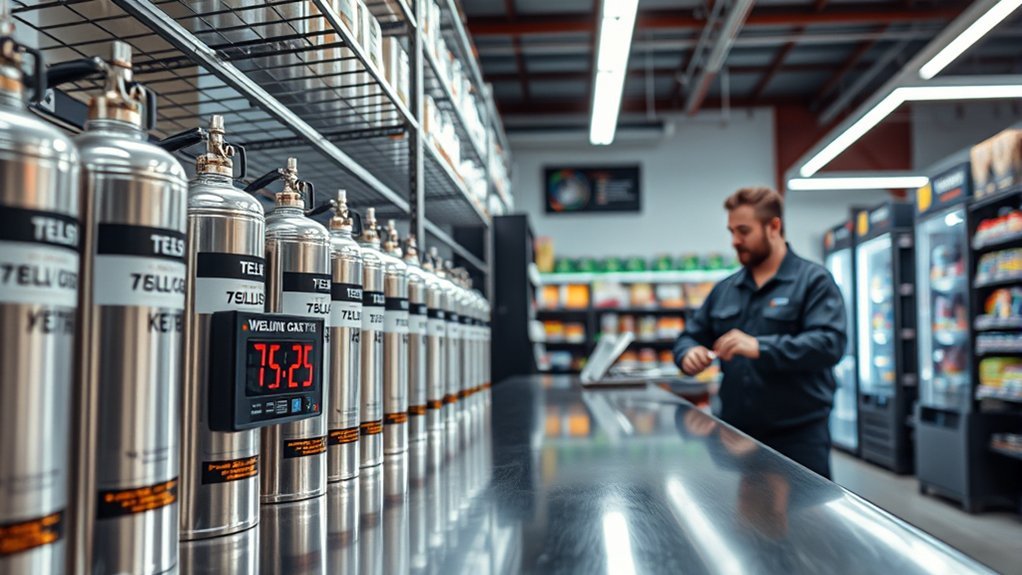
If you compare with smaller tanks like 40 CF, you’ll notice that similar refill fees mean larger tanks usually deliver better long-term value on a cost-per-CF basis.
Products Worth Considering

All HP cylinders come with a 10 year hydrotest date stamped.

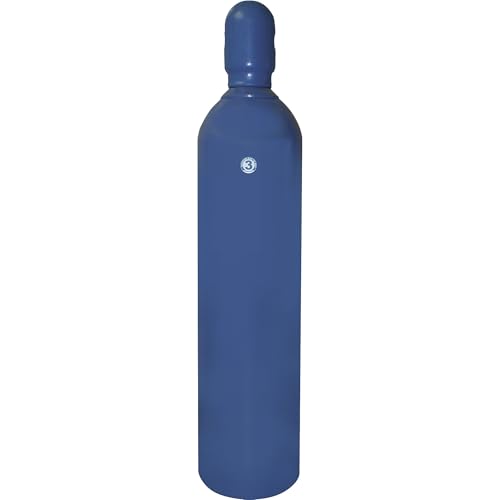
75 cu. ft. Steel Acetylene Cylinder
Common Welding Gases and Their Uses
The 75% argon / 25% CO₂ gas blend, known as C25, is widely used for MIG welding on mild steel. Argon provides an inert atmosphere and smoother arc for cleaner welds. CO₂ increases heat and penetration versus pure argon. Compared with straight CO₂, C25 typically reduces spatter and improves bead appearance. For more details, see Lincoln Electric’s guide on shielding gases.
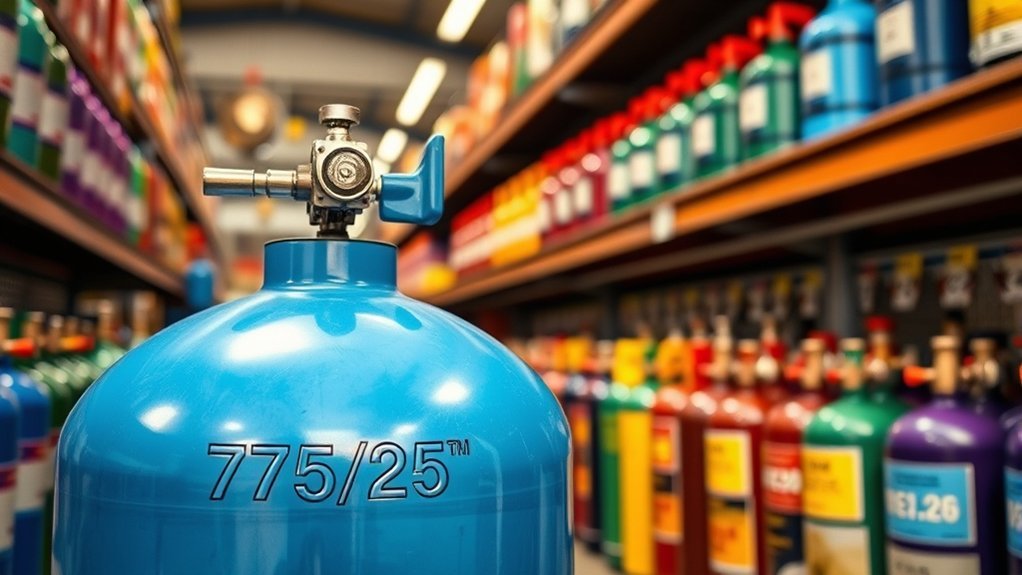
Typical flow rate: start around 20–25 CFH indoors. Many manufacturer guides recommend 25–35 CFH for short-circuit. Increase toward 30–35 CFH if you see porosity or feel drafts. Check out Miller Electric’s MIG welding basics for more on settings.
Products Worth Considering

Compatible with CGA-580 tanks: Easily attach this Gas Pressure Regulator/Flowmeter to your Argon, Helium, and CO2 tanks with its CGA-580 inlet connector

Wide Application: Effortlessly connect to Argon, Helium, and Argon/CO2 mixed gas tanks with the CGA-580 inlet nut. No adapters are necessary, ensuring a secure and leak-free setup right out of the box. Ideal choice for MIG TIG welding, chemical, industrial applications and electronics industry

Application: This Gas Pressure Regulator/Flowmeter Can Be Used with Argon, Helium and CO2 Gas tanks
Tank Costs and Refill Expenses
Initial tank prices vary by brand and vendor. Refills and exchanges are highly regional. Call ahead for local quotes and fees.
| Tank Size | Typical Initial Cost (filled) | Refill/Exchange (contents) |
|---|---|---|
| 125 CF (#4) | $350–$370 | $75–$80 |
| 80 CF | $300–$450 | $60–$75 |
| 40 CF | See supplier | ≈$60 |
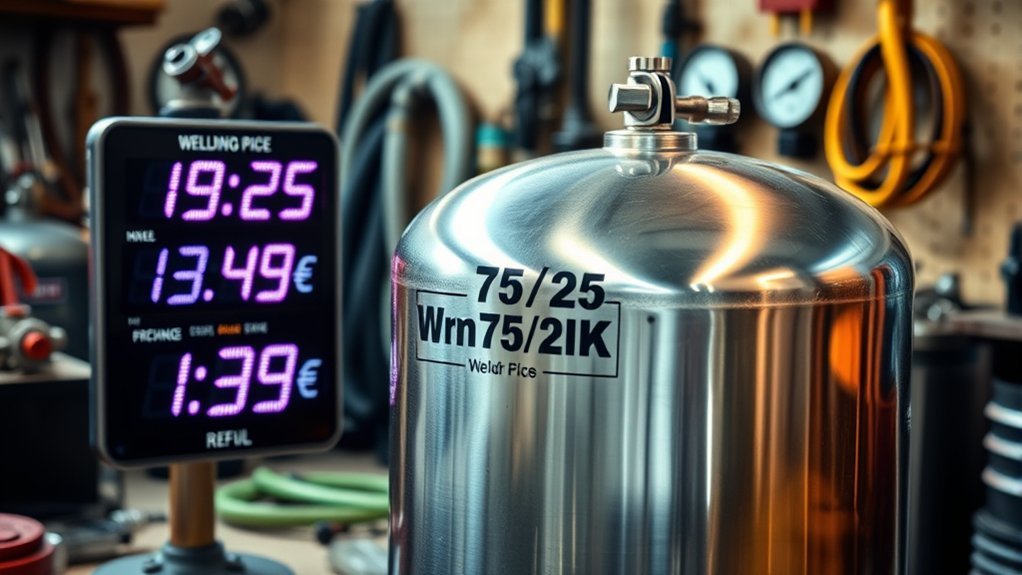
Policy note: many suppliers now prefer exchange over on-the-spot refills, and some are strict about hydrotest dates and markings. Verify their practice before buying a cylinder online.
Example price: 125 CF C25 cylinder (filled) · Example contents price: #4/125 CF exchange
Products Worth Considering

All HP cylinders come with a 10 year hydrotest date stamped.
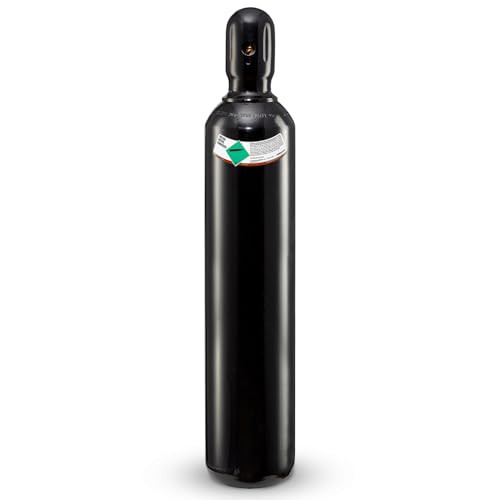
Welding Gas to Your Door - Get PrimeWeld's industrial grade Argon welding gas delivered right to your door. We offer different mixtures for any application, and you can purchase a tank without worrying about costly rental fees or wasted trips out to your local welding supply shop.

TESTED AND CERTIFIED: Certification/hydro test within 12 months and DOT Approved
How to Calculate the Real Cost of Welding Gas
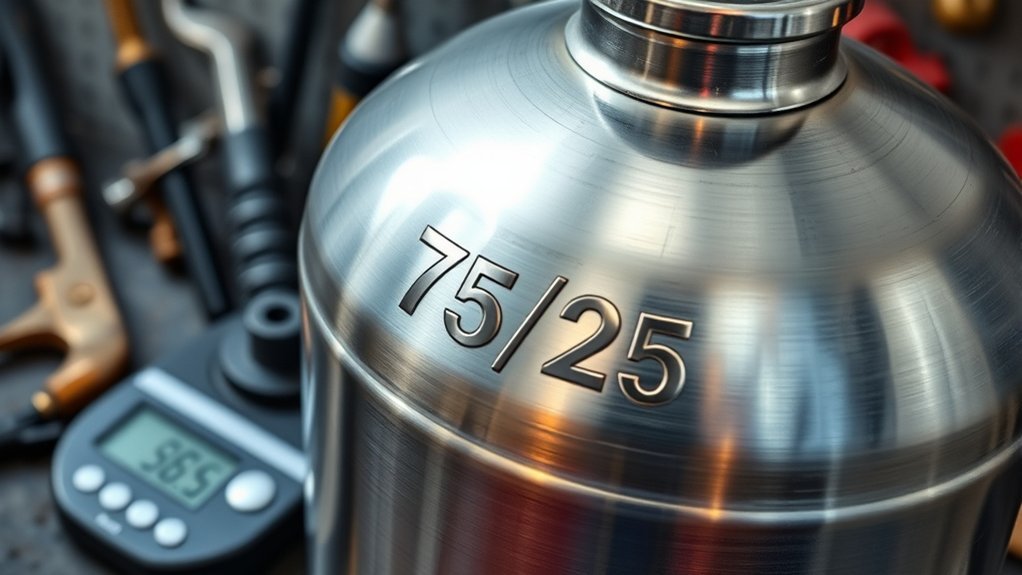
- Initial tank cost: budget mid-$300s for a 125 CF C25 cylinder (filled).
- Refill frequency: estimate a contents-only exchange around $75–$80 per cycle for 125 CF.
- Annual total: first year ≈ tank + (refills × price); following years ≈ refills × price.
- Local variation & fees: add for hazmat/handling and hydrotest recert when due.
Quick burn-time math: hours ≈ tank CF ÷ CFH. Example: 125 CF at 20 CFH ≈ ~6.25 hours; at 15 CFH ≈ ~8.3 hours.
Products Worth Considering

Comes with a CGA-580 valve for Argon, Nitrogen, Argon/CO2, Helium

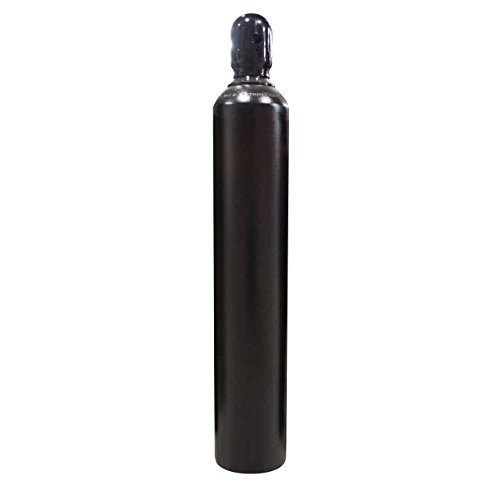
All HP cylinders come with a 10 year hydrotest date stamped.
Where to Buy or Refill Your Gas
| Method | Typical Cost Pattern | Convenience |
|---|---|---|
| Local suppliers | Contents/exchange fees; cylinder leases or swaps | Fast turnaround; check refill vs. exchange policy |
| Online retailers | Pay once for cylinder (often filled) | Delivery to door; later refill/exchange locally |
Safety tip: store and secure cylinders upright and away from heat/sun. See OSHA guidance on upright storage.
Products Worth Considering
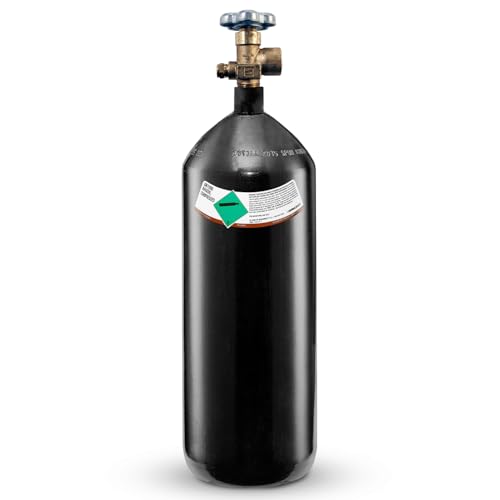
Welding Gas to Your Door - Get PrimeWeld's industrial grade Argon welding gas delivered right to your door. We offer different mixtures for any application, and you can purchase a tank without worrying about costly rental fees or wasted trips out to your local welding supply shop.

All HP cylinders come with a 10 year hydrotest date stamped.

Welding Gas to Your Door - Get PrimeWeld's industrial grade 75 %Argon 25% CO2 gas cylinder delivered right to your door. We offer different mixtures for any application, and you can purchase a tank without worrying about costly rental fees or wasted trips out to your local welding supply shop.
Glossary
- C25
- A shielding gas blend of 75% argon / 25% CO₂ for MIG on mild steel.
- CF / CFH
- Cubic feet of gas in a cylinder / cubic feet per hour flow rate.
- Contents exchange
- Swap your empty cylinder for a filled one of the same size/type.
FAQs
How long does a 300 CF tank of C25 last?
Use volume ÷ flow: 300 ÷ CFH. At 15–20 CFH you’ll get about 15–20 hours; at 25–30 CFH expect roughly 10–12 hours. Actual results vary with technique, leaks, and draft conditions.
Can I mix different welding gases in one tank?
No. Cylinders should be filled by qualified suppliers using certified blends. Never attempt to mix gases yourself; it’s unsafe and can damage equipment or violate regulations.
Is C25 better than other MIG gas mixes?
For mild steel, C25 is a versatile, budget-friendly choice with smooth arc and reduced spatter versus straight CO₂. Other blends (e.g., 90/10) may suit thicker sections or specific transfer modes.
How should I store my welding gas tank safely?
Keep cylinders upright, secured from tipping, in a ventilated area away from heat and sunlight. Close valves and fit caps when not in use.
What should I do if my tank runs out during a project?
Stop, close the valve, and swap to a full cylinder or schedule an exchange. Check for leaks, reset flow to your usual CFH, and make a short test bead before resuming.
