
Professional welding services for small residential repairs and fabrication projects commonly fall in the $50 to $125 per hour range, but the final bill depends on more than arc time. Minimum charges, travel, setup, metal type, joint preparation, finishing, permits, inspections, and the need for code-qualified work can all change the price.
Quick Answer
Most small residential welding jobs are billed at about $50 to $125 per hour, while many complete home projects land around $250 to $900. A minimum service charge, mobile travel, difficult access, specialty metal, surface preparation, finishing, or structural requirements can raise the total. Get two or three itemized local quotes.
Key Takeaways
- Published consumer cost guides place typical residential welding rates near $50 to $125 per hour.
- Small jobs may still cost $100 to $250 because many welders use a one- or two-hour minimum.
- Mobile welding can add travel or mobilization charges, while shop work may be cheaper for portable items.
- TIG, aluminum, stainless steel, cast iron, structural work, and hard-to-reach repairs often require more time or specialized skill.
- For load-bearing, vehicle-safety, pressure, fuel, or code-regulated work, hire a properly qualified and insured professional.
Welder Hourly Rates
Current consumer pricing guides do not show one official national rate, but they do provide a useful budgeting range. HomeGuide reports about $50 to $125 per hour for smaller residential projects. Angi’s 2026 cost guide reports roughly $60 to $125 per hour and about $250 to $900 for many complete home welding projects.
Use these figures as planning estimates, not guaranteed prices. Local demand, the welder’s business costs, the jobsite, and the work specification can move a quote below or above the published ranges.
| Pricing item | Typical planning range | What it may include |
| Residential hourly service | $50-$125 per hour | Labor, normal equipment use, and some overhead; inclusions vary by contractor |
| Small repair | About $100-$250 | A short repair that may still trigger the minimum charge |
| Many home welding projects | About $250-$900 | Repair or light fabrication with labor and common materials |
| Mobile travel fee | Often $25-$100 | Travel, truck, generator, gas cylinders, and equipment transport |
The hourly service rate is not the welder’s take-home wage. It must also cover equipment, consumables, insurance, vehicle costs, setup, administration, and unbillable time.
For context, the U.S. Bureau of Labor Statistics’ May 2025 wage data lists a mean hourly employee wage of $27.29 and a median of $25.84 for welders, cutters, solderers, and brazers. A contractor’s customer-facing rate is normally higher because it covers business expenses that an employee wage does not.

Post-it Super Sticky Easel Pads are designed to keep ideas visible and organized during meetings, training sessions, brainstorming, and project planning. The large premium paper resists marker bleed-through and sticks securely to many surfaces, then repositions without surface damage. A sturdy backcard and portable handle make them easy to move between rooms and use with most easel stands.

This ROCKBROS bicycle front frame bag gives riders convenient storage and easy phone access on every ride. It features a high-sensitivity TPU touchscreen window, waterproof construction, reflective details, and a secure multi-strap fit to help keep essentials organized and visible while cycling. Designed for phones up to 7 inches with slim cases, it also includes a hidden earphone hole and quick-release installation for everyday commuting and long-distance riding.

This all-purpose cleaner spray delivers a powerful clean that cuts through grease and grime while leaving a streak-free finish on everyday surfaces. The French lavender scent brings a fresh, calming floral aroma, and the gentle formula is made without harsh additives while remaining cruelty-free. It is designed for versatile whole-home use on counters, tiles, stone, sealed wood, glass, and other non-porous surfaces.
Factors Affecting Welding Costs
The hourly rate is only one part of a welding estimate. The following factors often have a larger effect on the final total:
- Minimum service charge: A five-minute weld may still require travel, unloading, setup, surface cleaning, testing, and cleanup. One- or two-hour minimums are common in consumer cost guides.
- Shop or mobile service: Bringing a portable item to a shop can avoid a travel fee. Large, fixed, or disabled equipment may require mobile welding.
- Metal type and thickness: Mild steel is usually easier and faster to weld than aluminum, stainless steel, cast iron, or specialty alloys. Thick metal may need beveling, preheating, multiple passes, or more powerful equipment.
- Joint condition: Rust, paint, grease, galvanizing, cracks, old filler, and poor fit-up add preparation time.
- Welding process: MIG, TIG, stick, and flux-cored welding differ in speed, equipment, consumables, and suitable applications.
- Access and position: Overhead, vertical, confined, elevated, or hard-to-reach welds can take longer and may require extra safety controls.
- Fabrication time: Measuring, cutting, drilling, bending, fitting, clamping, grinding, and finishing can take longer than the weld itself.
- Code and inspection requirements: Structural, pressure, pipeline, or other regulated work may require a qualified procedure, a welder qualified for that procedure, permits, inspection, or engineering.
- Finish: Grinding, blending, polishing, painting, rustproofing, or powder coating may be separate line items.
- Timing: Emergency, weekend, after-hours, or rush service may cost more.
Note: A lower hourly rate does not always produce a lower total. An experienced welder with the correct equipment may finish the work faster and reduce rework, setup time, and material waste.
Materials Required for Welding
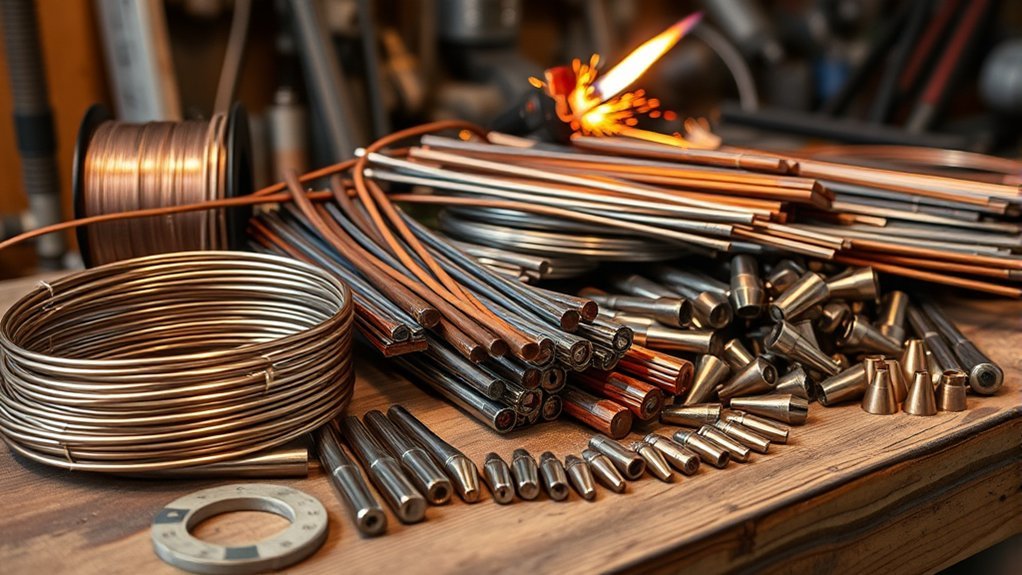
Welding quotes can include the base metal, filler metal, shielding gas or flux, abrasives, cutting supplies, fasteners, and protective coatings. Ask whether these items are included in the hourly rate or listed separately.
Essential Welding Supplies
Common supplies include welding wire or rods, shielding gas, flux-cored wire, contact tips, tungsten electrodes, grinding wheels, flap discs, sanding materials, anti-spatter products, cutting discs, primer, and paint. The exact list depends on the metal, process, joint, finish, and jobsite.
There is no dependable universal weekly cost for wire, gas, or abrasives. A shop doing daily production work will consume far more than a contractor completing one small repair. Brand, wire diameter, alloy, cylinder ownership or rental, local refill prices, and the amount of preparation all matter.
Material Cost Considerations
Mild steel often gives the lowest overall cost because it is widely available and compatible with fast welding processes. Stainless steel and aluminum may cost more per unit and can require tighter cleaning, better heat control, different filler, or more specialized experience. Cast iron repairs may need careful crack preparation, preheating, controlled cooling, or an alternative repair method.
Metal market prices change, so the safest estimate uses the current supplier cost for the exact grade, thickness, dimensions, and quantity. Also ask whether the contractor adds a material-handling markup. A markup can cover pickup time, delivery, storage, waste, and the risk of ordering the wrong quantity.
Pro Tip: Before buying your own metal, send the welder a photo of the material label or a supplier specification. Unknown alloys, coated metal, warped pieces, and mismatched thicknesses can cost more to correct than the material savings.
Types of Welding Projects
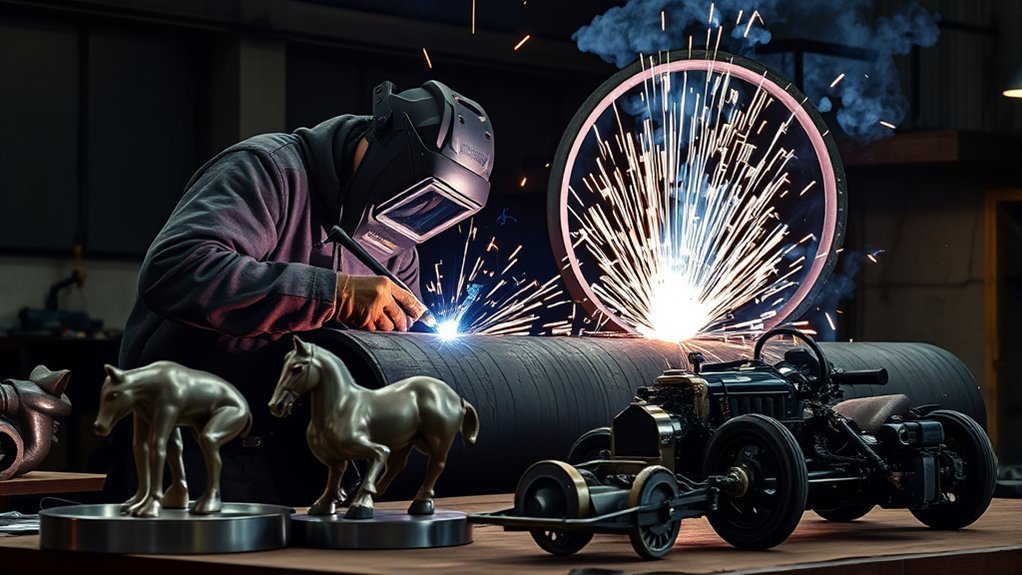
Project pricing varies widely, but published 2026 consumer data offers useful starting points. The ranges below are budgeting estimates for common home and repair work, not fixed quotes.
| Project | Planning range | Main cost drivers |
| Small single repair | $100-$250 | Minimum charge, setup, access, and cleanup |
| Fence repair | $150-$350 | Rust removal, replacement sections, access, and finish |
| Automotive welding repair | $100-$600 | Vehicle disassembly, thin metal, corrosion, access, and safety-critical location |
| Decorative metalwork | $200-$900 | Design, fitting, visible weld finish, polishing, and coating |
| Gate fabrication | $400-$1,200 | Material, hinges, alignment, posts, locks, finish, and installation |
| Structural steel work | $500-$2,500+ | Engineering, permits, qualified procedures, inspection, access, and load requirements |
A bracket repair may be inexpensive when the clean part is carried into a shop. The same repair can cost much more when it is attached to heavy equipment in the field, covered in paint and oil, difficult to reach, or needed after hours.
Different Kinds of Welding
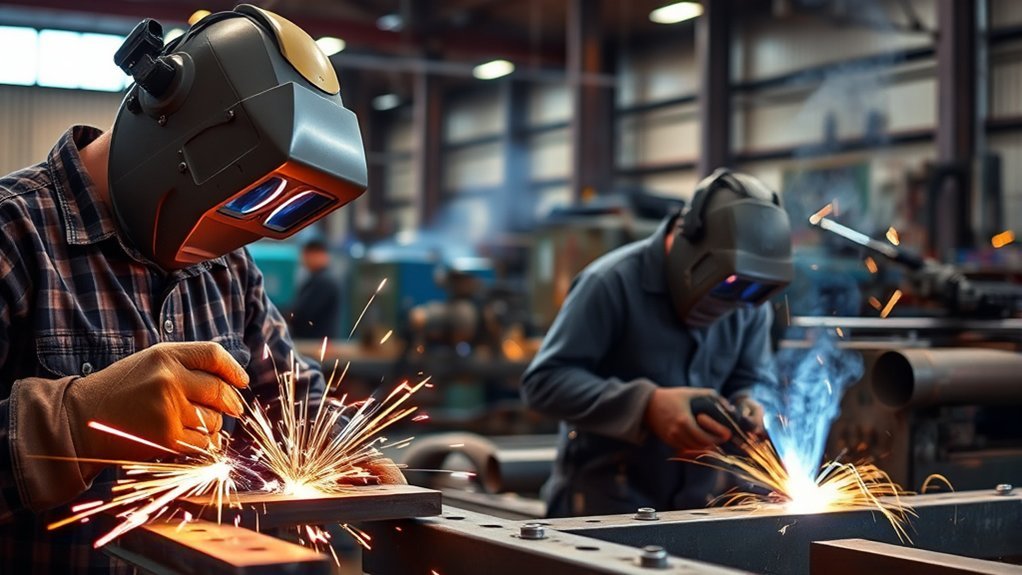
The welding process affects speed, appearance, portability, and suitable materials. These method-specific ranges come from HomeGuide’s residential cost data and should not be treated as a universal rate card.
- Shielded Metal Arc Welding (Stick Welding): $50-$75 per hour. Stick equipment is portable and useful for outdoor repairs, thicker steel, and less controlled conditions. Cleanup and slag removal can add time.
- Gas Metal Arc Welding (MIG): $65-$90 per hour. MIG uses continuously fed wire and shielding gas. It is fast for many shop fabrication and repair jobs when the metal is clean and wind is controlled.
- Gas Tungsten Arc Welding (TIG): $75-$125 per hour. TIG gives precise heat and puddle control, which is useful for thin material, stainless steel, aluminum, and visible welds. The process is often slower and more skill-intensive.
- Flux-Cored Arc Welding (FCAW): about $55-$90 per hour. FCAW uses tubular wire containing flux and is useful for heavier work or outdoor conditions. Some applications use additional shielding gas.
The contractor should select the process based on the base metal, thickness, position, service conditions, required appearance, and applicable welding procedure. Choosing a process only because its advertised hourly range is lower can lead to slower work or an unsuitable weld.
Shop Welding vs. Mobile Welding
Shop welding is often the economical choice for a portable chair, bracket, bicycle frame, mower deck, or small machine part. The welder has stable power, fixtures, ventilation, cutting equipment, and supplies ready to use.
Mobile welding is useful when the item cannot be moved, such as a gate, fence, trailer, farm implement, fixed railing, heavy equipment, or installed structural component. The quote may include travel, a service vehicle, generator use, cylinder transport, weather delays, and extra setup.
| Option | Best for | Possible extra costs |
| Welding shop | Portable parts and planned fabrication | Your transport, disassembly, pickup, or reinstallation |
| Mobile welder | Fixed, oversized, disabled, or field equipment | Travel, mobilization, generator use, weather, and site controls |

OGX Extra Strength Damage Remedy + Coconut Miracle Hair Oil helps hydrate dry, coarse hair while smoothing frizz and flyaways for a silky finish. This nourishing leave-in treatment blends coconut oil, vanilla bean extract, and tiare essence to add softness, shine, and a pleasant scent. It is paraben-free and designed to support a restorative hair care routine for medium to coarse hair types.

This versatile cookware set equips home cooks with essential pots, pans, and a steamer insert for everyday meals and larger gatherings. The aluminum-encapsulated base promotes quick, even heating, while Cool Grip handles and tight-fitting glass lids support comfortable, controlled cooking. Designed for stovetop, oven, broiler, and dishwasher use, it offers reliable performance across a wide range of recipes.

Come Eat offers 100 approachable recipes designed to make everyday cooking more enjoyable, nourishing, and sustainable. With a focus on flavorful meals and practical preparation, this hardcover cookbook is ideal for home cooks looking for inspiration for salads, sides, and main dishes. Author Melissa Ben-Ishay shares recipes that encourage consistent, feel-good eating without sacrificing taste.
Tips for Hiring a Welder
Start by sending the same project details to at least two or three welders. Include clear photos, dimensions, metal type if known, thickness, crack or damage location, access limits, required finish, and whether the item can be moved to a shop.
Ask each welder for a written estimate that explains:
- The hourly rate, flat price, or unit price
- The minimum labor charge
- Travel or mobilization fees
- What materials and consumables are included
- Preparation, cutting, grinding, and finishing charges
- Permit, engineering, or inspection responsibilities
- The expected start date and duration
- Cleanup and disposal
- Payment schedule and change-order process
- Workmanship warranty and exclusions
Verify experience with the exact process and application. An AWS Certified Welder has passed a performance test for a particular procedure, process, material, and position. That credential is meaningful, but it does not prove that every welder is qualified for every job. For code work, confirm the qualification matches the required welding procedure and code.
Also check business licensing where applicable, liability insurance, references, reviews, and photographs of comparable work. A certification, license, or good review does not guarantee a perfect result, so the written scope and acceptance criteria still matter.
Warning: Do not treat a low-cost cosmetic repair as suitable for a load-bearing structure, vehicle frame, suspension part, pressure vessel, gas line, fuel tank, lifting device, or safety railing. These jobs may require engineering, permits, a qualified welding procedure, inspection, or a specialist. Never weld a container that held flammable or toxic material unless it has been professionally cleaned, ventilated, tested, and made safe.
OSHA’s construction welding fire-prevention standard requires nearby fire hazards to be moved or protected, suitable extinguishing equipment to be ready, and containers that held flammable or toxic substances to be cleaned, ventilated, and tested before hot work. OSHA also identifies welding fumes, arc radiation, burns, electric shock, and fire as major hazards.
Estimating Your Welding Project Costs
A useful estimate separates every major cost instead of multiplying weld length by an hourly rate. Use this formula:
Estimated total = labor minimum or estimated hours + materials + travel + preparation + finishing + permits, engineering, or inspection + tax.
For hourly work, calculate labor as the greater of the minimum charge or the expected time:
Labor estimate = hourly rate x billable hours, subject to the contractor’s minimum.
Example: A welder quotes $85 per hour with a two-hour minimum, $60 in materials, and a $50 mobile fee. Even if the arc work takes less than one hour, the starting estimate is $280 before tax or unforeseen repairs: $170 labor + $60 materials + $50 travel.
Note: Ask whether diagnosis, measuring, drawing, sourcing, travel time, setup, grinding, painting, and cleanup are billable. These tasks can exceed the actual welding time on a small project.
Ways to Lower Welding Costs
- Carry small, portable items to a shop when safe and practical.
- Combine several small repairs into one service visit.
- Provide clear photos and measurements before the welder travels.
- Clear safe access to the work area and remove unrelated obstacles.
- Choose a standard design and common material when performance allows.
- Ask the welder before cleaning coated or unknown metal; grinding certain coatings can create hazardous dust or fumes.
- Compare itemized quotes, not hourly rates alone.
- Avoid emergency scheduling when the repair can safely wait.
Frequently Asked Questions
What qualifications should I look for in a welder?
Look for documented experience with the same metal, process, position, and type of project. For regulated or structural work, ask whether the welder is qualified to the required welding procedure and code. AWS certification is performance-based and applies to specific tested qualifications, so confirm that the credential matches your job.
How can I check the quality of welding services?
Review comparable past work, references, insurance, and qualifications. Put the material, dimensions, finish, applicable code, inspection method, and acceptance criteria in writing. A smooth-looking bead alone does not prove penetration, fusion, strength, or code compliance.
Are warranties or guarantees common for welding work?
Policies vary. Ask for the workmanship warranty in writing, including its length, covered defects, exclusions, and who pays for removal, transport, refinishing, or reinstallation. Material warranties and workmanship warranties may be separate.
How long does a welding project take?
A clean, accessible repair may take less than a day, while custom fabrication or structural work can take days or weeks. Design approval, material ordering, disassembly, preparation, fit-up, multiple weld passes, inspection, coating, and cure time may control the schedule.
Can I provide my own materials?
Often, but get approval first. The welder may need proof of alloy, grade, thickness, condition, and traceability. Unknown, coated, contaminated, warped, or unsuitable metal can increase labor, reduce weld quality, affect the warranty, or be rejected.
Is mobile welding more expensive than shop welding?
It can be. A mobile welder may charge for travel, mobilization, generator use, equipment transport, and extra setup. Shop work can be cheaper for portable items, but transporting or disassembling a large item may erase the savings.
Do welding projects require permits or inspections?
Some do, especially load-bearing, structural, commercial, pressure, fuel, gas, or public-safety work. Requirements vary by location and project. Ask the contractor and the local authority having jurisdiction who is responsible for permits, engineering, procedure qualification, and inspection before work begins.
Sources
- Angi: How Much Do Welding Projects Cost? (2026 Data) — residential hourly rates, project ranges, travel fees, and major cost factors.
- HomeGuide: How Much Does Welding Cost? — residential hourly ranges, minimum charges, project examples, and method-specific estimates.
- U.S. Bureau of Labor Statistics: May 2025 National Employment and Wage Data — employee wage context for welders, cutters, solderers, and brazers.
- American Welding Society: Certified Welder Program — performance-based certification and qualification scope.
- Occupational Safety and Health Administration: Welding, Cutting, and Brazing — welding hazards and applicable safety standards.
- OSHA 29 CFR 1926.352: Fire Prevention — fire controls and precautions for containers and hot work.
Conclusion
Welding services commonly cost about $50 to $125 per hour for small residential work, but the final price should be based on the complete scope. Compare itemized quotes that include the minimum charge, travel, preparation, materials, welding process, finishing, permits, and inspection. For structural or safety-critical work, choose verified qualifications and code compliance over the lowest price.

Nature Made Burp Less Fish Oil provides omega-3 support for heart health in easy-to-take softgels designed to help reduce fish burps. Each serving delivers concentrated EPA and DHA from purified fish oil sourced from wild-caught ocean fish, with no artificial colors, flavors, or preservatives. This gluten-free, dairy-free supplement is a trusted daily option for adults looking to support overall cardiovascular wellness.

Mo-Deck Non-Stick Mower Deck Spray helps reduce grass clipping buildup and clogging on mower blades, decks, and grass catchers. Its polymer coating creates a slick surface that minimizes adhesion, reduces scraping, and can help extend equipment life. Easy to apply and fast to use, it is ideal for push mowers, lawn tractors, commercial mowers, and reel mowers.

Drop Stop provides complete coverage for the gap around your seat belt catch, helping keep keys, phones, and other small items from slipping into hard-to-reach spaces. Designed to move with your seat, it installs easily and stays in place without constant readjustment. This original, patented seat gap filler comes with bonus accessories for added convenience and a cleaner, safer driving experience.
