Camping can cost less than a hotel in the United States, but the cheapest choice depends on how you travel. Tent camping, car camping, an owned RV, a rented RV, and a hotel have very different cost structures. For a fair 2026 comparison, add every trip expense—including gear, fuel, fees, food, taxes, and cancellation risk—instead of comparing only the advertised nightly rate.
Last updated: August 10, 2026
Quick Answer
Tent or car camping is usually the lowest-cost option once you own basic gear. For a current 2026 benchmark, a private-campground pricing study found median nightly rates of $45 for tent sites and $62 for RV sites, while CoStar reported a June 2026 U.S. hotel average daily rate of $173.76 per occupied room. Those figures are planning benchmarks—not direct substitutes—because campground type, hotel class, location, taxes, amenities, and trip transportation differ. RV travel may beat hotels for families or longer trips, but rental, fuel, mileage, insurance, and campground charges can erase the savings. Compare complete trip totals for the same dates and destination.
Key Takeaways
- Tent camping usually wins on price when the campsite is inexpensive and you reuse your gear.
- Hotels may be better for short urban stays when camping requires a long detour, equipment purchases, or poor-weather backup.
- RVing is not the same as tent camping. Include fuel, rental or ownership costs, mileage limits, hookups, insurance, maintenance, and cleaning fees.
- Hotel mandatory fees must be displayed upfront under the FTC rule effective May 12, 2025, although taxes and optional services may still appear separately.
- Use national benchmarks carefully. A 2026 study of private campgrounds found medians of $45 for tent sites and $62 for RV sites, but it excluded federal lands, state park systems, and properties without online booking.
2026 data note: This comparison uses official federal campground rates, Recreation.gov fee policies, current EIA fuel data, CoStar hotel performance data, a large private-campground pricing dataset, and a CBRE-modeled RV vacation study. National figures are treated as benchmarks, while the trip-cost examples are clearly labeled illustrations.
How to Compare Camping and Hotel Costs Fairly
Start with the same destination, travel dates, number of people, and comfort level. A primitive tent site should not be compared with a full-service resort hotel, and an owned travel trailer should not be compared with a rented motorhome unless all ownership or rental expenses are included.
| Travel Style | Costs to Include |
|---|---|
| Tent or car camping | Campsite, reservation fee, entrance fee, gear allocation, fuel, groceries, ice, firewood, showers, and weather backup. |
| Owned RV | Campground, fuel, insurance, registration, maintenance, repairs, storage, depreciation or finance cost, propane, dumping, and food. |
| Rented RV | Daily rental, taxes, insurance, mileage, generator use, preparation or cleaning charges, fuel, campground, deposits, and food. |
| Hotel | Displayed mandatory-price total, taxes, parking, optional Wi-Fi or breakfast, meals, pet charges, transportation, and deposits. |
Note: Use prices shown on the final review screen before payment. Save screenshots of the rate, included amenities, cancellation terms, and any mileage or generator limits.
For a hotel-only benchmark before you compare trip styles, see this guide to average hotel cost for three nights in the USA.
What You Need to Spend on Camping Gear vs. Hotels
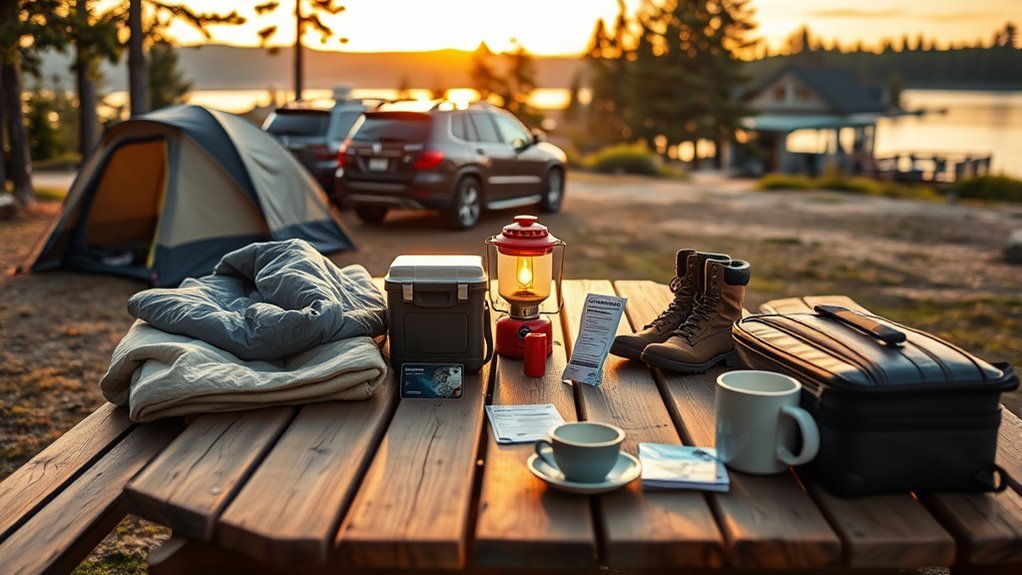
There is no dependable nationwide starter-gear total because equipment needs change with climate, trip length, group size, and what you already own. A mild-weather car-camping trip may require only a tent, sleeping gear, lighting, and basic cooking supplies. Cold, wet, or remote trips may require more expensive shelter, insulation, safety equipment, and water treatment.
Basic Tent-Camping Costs
Build your first-trip budget from actual product or rental quotes. Include:
- Shelter: tent, groundsheet, stakes, and rain protection.
- Sleep system: sleeping bags or blankets, sleeping pads, and pillows.
- Cooking: stove where permitted, fuel, cookware, cooler, utensils, and food storage.
- Lighting and power: headlamps, lanterns, batteries, or power banks.
- Safety and comfort: first-aid kit, weather-appropriate clothing, insect protection, water containers, chairs, and repair supplies.
Renting, borrowing, or buying used gear can reduce the first-trip cost. Quality equipment may also be reused for years, but resale value and lifespan vary, so they should not be treated as guaranteed savings.
Camping-Gear Break-Even Formula
Use this simple calculation:
Break-even trips = net gear cost ÷ savings per trip
Net gear cost equals the purchase price minus any realistic resale value. Savings per trip equals the complete hotel-trip total minus the complete camping-trip total, excluding the gear purchase already counted. For example, if your net gear cost is $600 and camping saves $150 per trip, the estimated break-even point is four similar trips. This is an illustration, not a national average.
RV Costs That Gear Budgets Often Miss
RV travel adds transportation and lodging costs into one vehicle, but it also adds expenses that tent campers do not face. Owners should allocate insurance, registration, maintenance, storage, depreciation, financing, and repairs across the number of nights they actually use the RV. Renters should check mileage allowances, generator charges, insurance, deposits, cleaning, preparation fees, and fuel requirements.
Pro Tip: Before buying gear or an RV, test the travel style with borrowed or rented equipment. One trial trip can reveal whether the expected savings justify the setup time, storage space, and maintenance.
Food and Accommodation Costs: How RVing Can Save Money
Access to a campsite stove or RV kitchen can lower food spending when travelers buy groceries and prepare meals instead of relying on restaurants. The savings are not a fixed amount per meal; they depend on grocery prices, group size, dietary needs, equipment, and how much food is wasted.
Cooking access creates an opportunity to save, but the real comparison is your grocery receipt plus cooking supplies versus the restaurant meals you would otherwise buy.
- Price the meal plan: List every breakfast, lunch, dinner, snack, beverage, and restaurant stop.
- Use food you will finish: Plan overlapping ingredients so leftovers do not become waste.
- Count cooking supplies: Add stove fuel, ice, charcoal where permitted, disposable items, and storage bags.
- Compare convenience: A hotel with included breakfast or a kitchenette may narrow the food-cost gap.
Campground rates may be lower than hotel rates, but that is not universal. A primitive public campsite can be inexpensive, while a private full-hookup RV resort may approach or exceed a nearby budget hotel after taxes and add-ons.
What Extra Costs Should You Expect at Hotels?
Since May 12, 2025, the Federal Trade Commission’s Rule on Unfair or Deceptive Fees has required short-term lodging sellers to display the total price including known mandatory fees more prominently than other pricing. Taxes, government charges, and genuinely optional services may still be shown separately before payment.
Warning: “All-in” does not always mean every possible trip expense. Parking, pet services, premium internet, meals, damage deposits, and charges caused by your choices may remain outside the first displayed price.
Parking Fees
Parking varies widely by property and location. Some hotels include self-parking, some charge by night, and some offer only valet service. Check whether the charge covers one vehicle, includes in-and-out privileges, and adds tax. Also compare nearby public parking, transit, and rideshare costs.
- Confirm the exact nightly charge for your dates and vehicle type.
- Check whether parking is optional or effectively required at the property.
- Ask about oversized vehicles, trailers, and height limits.
- Include parking on arrival and departure days if the billing window extends beyond room nights.
Resort and Destination Fees
A mandatory resort or destination fee should be included in the prominently displayed total price under the FTC rule. The fee can still exist, so compare the final total—not an older base-room-rate figure or a crossed-out promotional rate.
| Charge | How to Budget It | What to Verify |
|---|---|---|
| Mandatory resort fee | Use the displayed total price | Included amenities and whether the fee applies per room or per night |
| Taxes and government charges | Add the amount shown before payment | Tax rate, tourism assessments, and occupancy taxes |
| Optional parking | Add only if you will use it | Self-park, valet, taxes, and in-and-out access |
| Pet charge | Add the full stay charge | Per-pet, per-night, cleaning, size, and breed rules |
| Deposit or incidental hold | Treat as a cash-flow need, not a final cost unless retained | Amount, release timing, and debit-card policy |
Wi-Fi Charges
Many properties include standard Wi-Fi, while others charge for premium speed or limit free access to loyalty members or common areas. Do not assume a nationwide daily price. Check the room-rate terms and add only the service you expect to use.
- Standard access: Confirm whether it is included in the booked rate.
- Premium access: Check the device limit, speed tier, and daily or stay-based billing.
- Work requirements: Read recent connectivity reviews and consider a mobile backup.
- Campground comparison: Campground Wi-Fi may be included, paid, slow, or unavailable, especially in remote areas.
Campground and RV Extra Fees
Camping also has add-ons. Recreation.gov states that recreation fees vary by location and activity. Its current site-wide policy lists an $8 online or app reservation service fee for many campsites, day-use sites, group sites, cabins, lookouts, and yurts; facility-specific rules can differ and supersede the general policy. Individual facilities may also charge for electricity, water, extra vehicles, showers, firewood, pets, dumping, changes, cancellations, or no-shows.
- Reservation, change, cancellation, or no-show fees
- Park entrance or timed-entry permits separate from the campsite
- Electric, water, sewer, or premium-site charges
- Extra-person, extra-vehicle, pet, shower, or dump-station charges
- RV rental mileage, generator, insurance, cleaning, and refueling charges
How Seasonal Pricing Trends Affect Your Budget
There is no universal rule that every campground raises prices by the same percentage on weekends, holidays, or in peak season. Public campgrounds may publish one rate for an operating season, while private campgrounds may use dynamic pricing. A 2026 private-campground dataset found only a 2.4% average RV weekend premium and an 8% national seasonal swing, but those results apply to its sampled online-bookable private properties—not to every U.S. campground. Availability can matter as much as price because popular sites may sell out months ahead.
2026 Private-Campground Price Benchmark
The 2026 Outdoor Hospitality Pricing Report analyzed 609,863 price points from 2,110 private campgrounds across 48 states. It reported a $45 median tent-site price and a $62 median RV-site price; average prices were $52.16 for tent sites and $69.72 for RV sites. The data was collected during a two-week period in January 2026 from major online booking platforms. The study excludes federal lands, state park systems with separate reservations, and properties without online booking, so use it as a private-campground benchmark rather than a universal U.S. campsite rate.
Current 2026 Campground Price Examples
Official 2026 rates show why a single national campground average is misleading:
- Rocky Mountain National Park lists $30 for summer tent-only sites, $35 for standard non-electric sites, and $55 for electric sites.
- Yellowstone National Park lists several NPS-operated campgrounds at $20 to $25 per night, concessioner campgrounds at $38 to $45 plus tax, and Fishing Bridge RV Park at $94 plus tax.
- Other federal, state, county, municipal, tribal, and private campgrounds set their own rates, amenities, booking windows, and cancellation policies.
Seasonal Price Fluctuations
Compare the exact dates you plan to travel. In the 2026 private-campground dataset above, the national seasonal swing was about 8%, or roughly $5 per night, but warm-weather snowbird states behaved differently: Florida winter rates averaged higher than summer rates in that sample. A public campground may charge the same site rate throughout its season but offer fewer services during shoulder months, while a private property may raise prices for summer, local festivals, fall foliage, or school holidays. Weather closures can also change the real cost if you need a last-minute hotel.
Weekend Premiums Impact
Weekend pricing is property-specific. The 2026 private-campground study found an average RV weekend premium of 2.4%—about $1.62 per night—but that figure should not be applied to public campgrounds or every private park. Search Thursday through Monday one date at a time to see whether Friday and Saturday differ from weekdays. A two-night minimum, premium-site requirement, or stricter cancellation rule may cost more than the nightly increase itself.
Holiday Rate Increases
For Memorial Day, July Fourth, Labor Day, and major local events, compare both price and availability early. Public campsites may keep a fixed posted fee but fill quickly, while nearby hotels and private RV resorts may raise prices as demand increases.
Pro Tip: Price the same trip for weekday, weekend, and shoulder-season dates. Moving a trip by one or two nights can change lodging, minimum-stay, parking, and cancellation costs at the same time.
How Do Tent Camping, RVing, and Hotels Compare on Costs?
Tent camping is commonly the lowest-cost choice, especially for travelers who already own gear and can stay near their planned activities. RVing can provide value for groups, longer stays, and trips that use the kitchen and sleeping capacity well. Hotels often make more financial sense for short trips, city visits, flights, business travel, or bad-weather itineraries.
| Option | Often Best When | Can Cost More When |
|---|---|---|
| Tent camping | You own gear, have mild weather, and find a low-cost site near the destination. | You buy equipment for one trip, need a distant campsite, or require hotel backup. |
| Owned RV | You use it frequently, share it with several travelers, and stay longer in each place. | Annual use is low or storage, repairs, depreciation, and fuel are high. |
| Rented RV | The rental replaces multiple hotel rooms and restaurant meals without excess mileage. | Mileage, insurance, fuel, preparation, and campground charges stack up. |
| Hotel | The stay is short, central location matters, or included services replace other costs. | You need several rooms, paid parking, frequent restaurant meals, or peak-event dates. |
A Simple 2026 Trip Cost Calculator
As a broad hotel benchmark, CoStar reported a June 2026 U.S. average daily rate of $173.76. That is a market-performance average for occupied rooms, not a guaranteed shopping price or an all-in trip total. Your hotel quote may be far lower or higher depending on the destination, dates, room type, hotel class, and local demand.
Use actual quotes and this formula for each option:
Total trip cost = transportation + lodging or campsite + allocated equipment + food + mandatory fees and taxes + optional services + expected incidentals
Fuel-Cost Formula
Fuel cost = trip miles ÷ expected miles per gallon × fuel price per gallon
The U.S. Energy Information Administration reported a U.S. average regular gasoline price of $4.079 per gallon for the week of August 3, 2026, in its August 4 release. Fuel prices change weekly and differ by region, so use the latest EIA gasoline and diesel data or local station prices when you calculate.
Illustrative Four-Night Example
The table below demonstrates the method; it does not represent national averages. It assumes four travelers, a 300-mile round trip, a car that gets 28 mpg, gasoline at $4.079 per gallon, and no paid hotel parking. Replace every figure with your real quotes.
| Expense | Tent-Camping Example | Hotel Example |
|---|---|---|
| Lodging or campsite | $140 | $720 |
| Taxes and booking fees | $8 | $90 |
| Gear allocation | $100 | $0 |
| Food | $200 | $360 |
| Fuel | $44 | $44 |
| Entrance and incidentals | $35 | $35 |
| Illustrative total | $527 | $1,249 |
This example favors camping because it assumes an inexpensive campsite, reusable gear, the same car for both choices, and restaurant-heavy hotel meals. A hotel with included breakfast, a kitchenette, free parking, or a closer location would narrow the gap. New gear purchases, rain backup, or a long campground detour would narrow it from the other side.
How Families Can Save on RV Vacations
A 2023 vacation-cost comparison commissioned by Go RVing and the RV Industry Association and conducted by CBRE Hotels Advisory Group modeled nine destinations and trips of three, seven, and fourteen days. It reported per-day savings ranging from 22% to 60% for four-person RV trips and 9% to 47% for two-person trips, depending on RV and vacation type. The study says its ownership model included published estimates for ownership periods, residual values, annual days of use, insurance, and other ownership costs. Because the research was commissioned by RV industry groups and uses modeled itineraries, treat it as scenario evidence—not a promise that every 2026 RV trip will cost less.
The strongest RV savings usually appear when one vehicle replaces several hotel rooms, travelers cook most meals, and the trip is long enough to spread fixed costs across more nights.
- Share one unit: A family may avoid booking two hotel rooms, depending on occupancy limits.
- Cook more meals: A usable kitchen can reduce restaurant spending.
- Stay longer: Fixed rental, setup, and ownership costs are spread across more nights.
- Drive a compact route: Fewer miles reduce fuel and rental mileage charges.
Savings can disappear when the RV rental has low included mileage, the route is long, fuel economy is poor, campground rates are high, or the group would have fit comfortably in one inexpensive hotel room.
Key Factors to Consider When Choosing Between Camping and Hotels
Price matters, but the cheapest booking is not always the lowest-cost trip after time, transportation, safety, and comfort are included.
A campsite saves money only when its location, required gear, weather risk, and transportation needs do not create larger costs elsewhere.
- Trip length: Hotels can be efficient for one or two nights; reusable gear or RV fixed costs may work better over repeated or longer trips.
- Group size: Camping and RVing may gain an advantage when they replace multiple rooms.
- Location: A central hotel may reduce driving, parking at attractions, and lost time.
- Weather: Heat, cold, smoke, storms, or flooding can require extra equipment or backup lodging.
- Accessibility: Compare restrooms, showers, sleeping surfaces, mobility access, and distance from parking.
- Pets: Check hotel pet charges and campground or park restrictions.
- Cancellation risk: Compare refund windows, no-show charges, and the cost of changing plans.
- Amenities: Breakfast, kitchen access, laundry, showers, hookups, Wi-Fi, and transit can change the total.
Warning: Do not choose a campsite solely because it is cheaper. Follow local fire restrictions, food-storage rules, weather alerts, vehicle-length limits, and campground regulations. Budget for safe shelter and an emergency backup plan.
Making the Most of Your Travel Budget: Camping, RVing, and Hotels
- Fix the itinerary: Use the same dates, destination, party size, and planned activities for every option.
- Collect final-screen quotes: Record all mandatory charges, taxes, deposits, and cancellation terms.
- Calculate transportation: Add fuel, tolls, flights, rental cars, transit, parking, mileage, and detours.
- Allocate equipment honestly: Divide reusable gear or annual RV ownership costs by realistic use, not hoped-for use.
- Plan every meal: Compare groceries, cooking supplies, included breakfast, and restaurant spending.
- Add campground extras: Include reservation, entrance, hookups, showers, extra vehicles, pets, and dumping.
- Price a backup: Consider what a storm, mechanical problem, or closure would cost.
- Compare cost per person and per usable vacation day: This prevents a long setup or remote location from looking cheaper than it feels.
Frequently Asked Questions
Is camping cheaper than a hotel in 2026?
Tent or car camping is often cheaper when you already own gear, find a nearby low-cost site, and do not need backup lodging. A hotel may cost less for a short city stay, bad-weather trip, or itinerary where camping adds gear purchases, long detours, or extra transportation.
How much does a campsite cost per night in the USA in 2026?
There is no single rate for every U.S. campground. A 2026 study of 2,110 online-bookable private campgrounds found median prices of $45 for tent sites and $62 for RV sites. Public campground prices can be lower or higher: Rocky Mountain National Park lists 2026 summer standard non-electric sites at $35, while Yellowstone ranges from $20 at several NPS campgrounds to $94 plus tax at Fishing Bridge RV Park. Always price the exact campground and dates.
How many trips does camping gear take to pay for itself?
There is no fixed number. Divide your net gear cost by the amount a comparable camping trip saves over a hotel trip. If net gear costs $600 and each trip saves $150, the estimated break-even point is four similar trips.
Is renting an RV cheaper than staying in hotels?
Sometimes, especially when an RV replaces multiple hotel rooms and many restaurant meals. Compare the rental’s daily rate, taxes, insurance, mileage, generator use, preparation, cleaning, fuel, campground, and deposit terms against the hotel’s complete trip total.
What is the 200 rule for camping?
The phrase is not one universal national rule. In backcountry ethics, a common Leave No Trace guideline is to camp at least 200 feet from lakes and streams and to keep human waste and washing water at least 200 feet from water, camps, and trails. Local regulations can differ, and designated campgrounds require you to use the assigned site. The original claim that campers should stay one night for every 200 miles traveled is not a recognized nationwide rule.
Are hotel resort fees included in the advertised price?
Known mandatory lodging fees must be included in the prominently displayed total price under the FTC rule effective May 12, 2025. Taxes, government charges, and optional services may be disclosed separately before payment.
Does a campsite fee include park entrance and reservations?
Not always. A park entrance fee, reservation service fee, timed-entry permit, hookups, extra vehicle, or other charge may be separate. Read the individual facility page because its rules override general reservation policies.
Conclusion
Camping can be the most economical choice, especially when you reuse basic gear, cook meals, and stay at a reasonably priced site near your destination. RVing may save families money on some longer trips, but only after every rental or ownership expense is counted. Hotels can still win for short, urban, weather-sensitive, or convenience-focused travel. The reliable answer is to compare complete, date-specific trip totals rather than broad national averages.
Sources
- Federal Trade Commission — Rule on Unfair or Deceptive Fees FAQ — hotel total-price and mandatory-fee requirements effective May 12, 2025.
- Recreation.gov — Rules and Reservation Policies — recreation, reservation, cancellation, change, and no-show fees.
- National Park Service — Rocky Mountain National Park Campgrounds and Yellowstone Campgrounds — official 2026 campsite and RV-site rate examples.
- Insider Perks — 2026 Outdoor Hospitality Pricing Report — 609,863 price points from 2,110 private campgrounds; private-campground medians, averages, and methodology limitations.
- CoStar — U.S. Hotel Performance for June 2026 — June 2026 U.S. hotel ADR benchmark.
- U.S. Energy Information Administration — Gasoline and Diesel Fuel Update — current fuel-price data for trip calculations.
- RV Industry Association — 2023 Vacation Cost Comparison Study — modeled RV-versus-hotel travel savings and study limitations.
- National Park Service — Leave No Trace at Grand Teton — the 200-foot backcountry camping and waste-distance guidance.