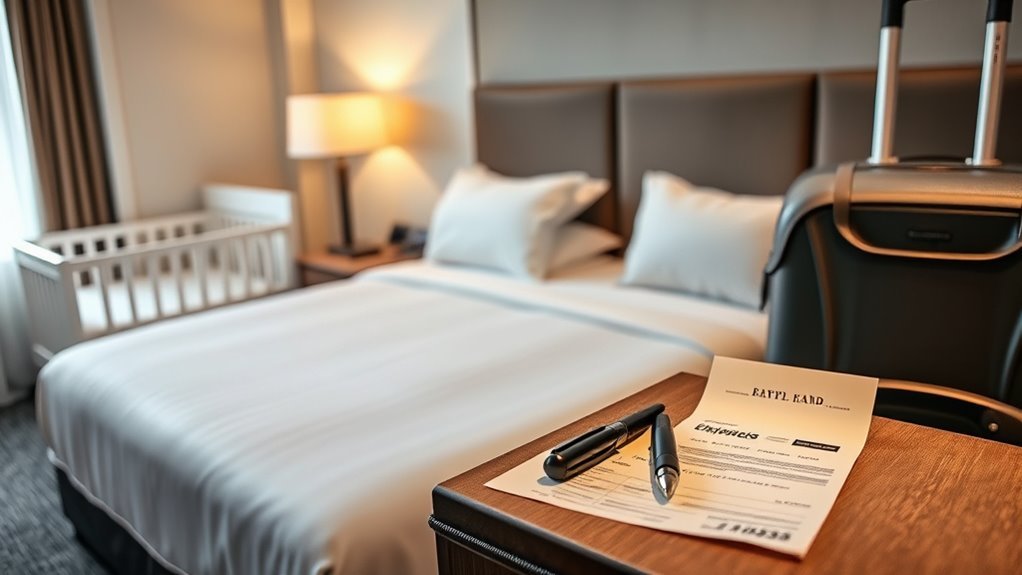
Hotel crib and extra bed fees can change the total cost of a family hotel stay in the USA. Many hotels provide baby cribs or pack and plays for free, but rollaway beds and extra guests may cost more. In 2026, published U.S. hotel policies show different prices, room restrictions, and billing methods. This guide explains the actual costs, what affects them, and how to avoid paying more than necessary.
Quick Answer
Many U.S. hotels offer cribs for free, subject to availability. Rollaway fees vary widely: verified hotel examples range from $20 to $75 per night, while some properties charge once per stay. Extra-person fees may also apply. There is no reliable nationwide average, so compare the complete cost for your exact room and guest count.
Last checked: October 31, 2026. The hotel price examples, FTC pricing rules, and infant-sleep guidance were checked against official sources.
Key Takeaways
- A free crib request does not always mean the hotel guarantees a crib at check-in.
- A rollaway may be allowed in a king room or suite but prohibited in a room with two queen beds.
- Some hotels charge a nightly rollaway fee, while others charge once for several nights.
- Children’s ages and maximum room occupancy can affect the final booking price.
- A room with a sofa bed or two existing beds may cost less than a cheaper room with a paid rollaway.
- An infant’s sleep space should meet current safety standards, regardless of whether the crib is free.
Understanding Hotel Crib Fees and Charges
)
Hotel crib fees depend on the property, the available equipment, and the room you book. A crib is designed for an infant, while a rollaway is a movable extra bed generally used by older children or adults.
Many hotels provide portable cribs or pack and plays instead of wooden cribs. Some offer either option at no charge. Others charge a fee or have a limited supply.
Hotel crib and extra bed policies are property-specific. Two hotels in the same chain can have different fees, equipment, room restrictions, and availability rules.
For example, Hyatt Regency Dallas publishes complimentary cribs upon request. It also charges $20 per night for a rollaway bed, which is permitted only in king rooms.
These details come from the hotel’s official guest FAQ.
Marriott also explains that cribs and rollaway beds are special requests. Its crib and rollaway request guidance says availability and possible daily fees depend on the individual hotel.
Hotels may allow infants to stay in their parents’ rooms without an extra-person charge. However, you still need to enter the correct number of adults and children when booking. A baby may count toward room occupancy even if no additional guest fee applies.
Hotel Bedding Fee Snapshot
| Best For | Families booking U.S. hotels with babies, toddlers, or additional children |
| Typical Crib Cost | Often complimentary, but availability and any fees depend on the hotel |
| Verified Rollaway Costs | $20 to $75 per night in selected official hotel examples; some properties use a one-time fee |
| Best Way to Save | Choose a suitable room, compare all charges, and obtain written confirmation of special bedding requests |
Crib quality can differ. Upscale properties may provide wooden cribs, while other hotels use portable playards. Either can be suitable if it meets current safety standards and is properly assembled.
If the hotel cannot provide suitable equipment, consider bringing your own travel crib or using a local baby gear rental service such as BabyQuip. Confirm the exact crib model and condition before accepting rented equipment.
Warning: A crib request on a booking form is not necessarily a guarantee. If your baby needs a separate sleeping space, get an explicit confirmation from the hotel and have a safe backup plan.
Why Do Hotels Charge for Cribs and Extra Beds?
Hotels may charge for cribs or extra beds because they must purchase, store, clean, maintain, and deliver the equipment. They also need to manage room occupancy and available floor space.
Some properties include these expenses in the room rate. Others charge separately, especially for rollaway beds.
Operational Costs Behind Extra Bedding
A rollaway bed requires more than a mattress. It also needs a frame, bedding, storage space, cleaning, and staff time.
Hotels may account for these costs:
- Buying and replacing cribs, playards, and rollaway beds
- Cleaning and inspecting equipment between guest stays
- Storing bulky beds and portable cribs
- Delivering, setting up, and collecting extra bedding
- Washing sheets, blankets, and other linens
- Maintaining equipment and replacing damaged parts
- Managing higher demand during holidays and school vacations
These costs help explain why a hotel might charge for a rollaway while providing a crib free of charge.
Space and Inventory Limitations
Not every hotel room can safely fit an additional bed. The extra furniture must not block doors, walkways, heating equipment, or emergency exits.
That is why some properties allow a rollaway in king rooms but not in rooms with two queen beds. Suites can offer more floor space, but eligibility still depends on the individual room.
Hotels may also have far fewer cribs than guest rooms. A property with hundreds of rooms might keep only a limited number of portable cribs or cots.
If all available units have already been assigned, the hotel may be unable to fulfill another request, even when the equipment is complimentary.
Extra Guest Fees and Hotel Revenue Strategies
Some hotels use extra-person fees to cover the added costs of accommodating more guests. These charges can be separate from a rollaway fee.
Additional occupants may use more towels, bedding, housekeeping services, breakfast items, and hotel amenities. Other properties include these costs in their room rates.
Consider the difference between these charges:
- Crib fee: A charge for providing a crib or portable playard.
- Rollaway fee: A charge for placing a movable extra bed in the room.
- Extra-person fee: A charge for guests above the number included in the room rate.
- Room upgrade: The additional amount paid for a larger room or suite.
You may face more than one charge. For example, a hotel could allow a third adult but charge both an extra-person fee and a rollaway fee if that guest needs another bed.
That does not automatically mean the charges are duplicate fees. They pay for different things. However, the hotel should clearly explain which charges apply to your reservation.
Tips for Avoiding Hidden Hotel Fees When Traveling
The best way to avoid unexpected hotel charges is to compare the full stay price rather than the advertised nightly rate. Include the exact number of adults and children so the property can calculate any applicable occupancy and bedding charges.
The original planning estimates for some U.S. properties include rollaway fees of around $25 to $100 per night and extra-person charges of about $20 to $50 per person per night. These are illustrative ranges, not verified national averages.
Resort fees in some tourist areas may also cost around $25 to $55 or more per day. The actual amount depends on the property.
Here is how these charges can affect your budget:
| Fee Type | Cost or Policy | How to Save |
|---|---|---|
| Cribs / Pack and Plays | Often free; availability may be limited | Request one in advance and confirm availability |
| Rollaway Beds / Cots | Verified examples include $20, $50, and $75 nightly; other rates vary | Choose a room with enough existing beds |
| Extra Guest Fees | About $20 to $50 per person nightly at some properties; varies by hotel | Use the correct guest count and compare occupancy-inclusive rates |
| Resort Fees | Around $25 to $55 or more per day at some properties | Compare mandatory-fee-inclusive prices |
What Does the FTC Require Hotels to Disclose?
Since May 12, 2025, the Federal Trade Commission has required covered short-term lodging sellers to display the total price, including mandatory fees they know and can calculate upfront.
Under the FTC Rule on Unfair or Deceptive Fees, mandatory resort or destination fees generally must be included in the upfront total price.
Government taxes and genuinely optional services may be excluded from the initial displayed total. However, applicable additional charges must be disclosed before the customer is asked to pay.
This distinction matters for families. A rollaway that you choose as an optional service may not be included in the first advertised price. Once selected during booking, its cost should be reflected in the final payment amount.
The rule does not ban resort fees or set a maximum price for extra bedding. It focuses on accurate and transparent pricing.
Pro Tip: Ask the hotel to confirm whether an extra bed fee applies per night, per bed, or once per stay. Also ask whether taxes and extra-person charges apply. This can change which room is the better deal.
How to Compare Crib and Extra Bed Costs
)
To compare hotel crib and extra bed costs, calculate the total price for the same number of nights and guests. A lower room rate does not always mean a cheaper family stay.
Use these steps:
- Enter the correct guest count. Include every adult and child, along with each child’s age when requested.
- Choose a suitable room. Compare king rooms, double-queen rooms, sofa-bed rooms, and suites.
- Identify the available bedding. Determine whether the hotel provides a crib, pack and play, rollaway, or existing sofa bed.
- Check the extra-bed policy. Find out whether your selected room allows the equipment.
- Calculate the complete price. Add applicable room charges, taxes, mandatory fees, bedding charges, parking, breakfast, and extra-person fees.
- Compare alternative rooms. See whether a larger room costs less than paying for extra bedding.
- Save the written confirmation. Keep the hotel’s reply about fees and bedding availability with your reservation.
Example: Standard Room vs. Larger Room
Consider this illustrative three-night stay. These figures show the calculation method, not live hotel quotes.
- Option A: Standard room at $160 per night, plus a $50 nightly rollaway fee.
- Option B: Larger room with suitable existing beds at $195 per night and no extra-bed fee.
Option A costs $630 before taxes and other charges. Option B costs $585 before taxes and other charges.
In this example, the larger room saves $45 over three nights, even though its advertised nightly rate is higher.
Actual Published U.S. Hotel Rollaway Charges
Official hotel policies show why you should compare the billing method as well as the nightly amount.
Andaz 5th Avenue in New York publishes a one-time $50 rollaway charge for up to seven nights in an eligible room. The hotel’s bedding policy explains the room restriction and longer-stay charges.
Park Hyatt New York publishes a $75 nightly charge plus tax, according to its official rollaway bed policy.
| Hotel | Published Rollaway Fee | Key Restriction |
|---|---|---|
| Hyatt Regency Dallas | $20 per night | King rooms only |
| Andaz 5th Avenue, New York | $50 once for up to seven nights, plus applicable taxes and fees | Eligible deluxe king room only |
| Park Hyatt New York | $75 per night plus tax | Subject to hotel arrangements |
These are published property examples checked in October 2026, not a representative national survey. Hotels can change fees and availability.
The Impact of Location on Crib and Bed Fees
Location can affect extra-bed costs because hotels differ in room size, demand, and operating expenses. However, the property’s individual policy matters more than the city alone.
For example, New York hotels may restrict extra beds to specific larger rooms. Yet two hotels in the same city can charge differently or use different billing methods.
Major Cities and Urban Hotels
Hotels in New York, Chicago, San Francisco, Miami, and Los Angeles may have limited floor space in standard rooms. Some may allow cribs but prohibit rollaway beds in certain layouts.
A larger room or suite may be necessary, even if you are willing to pay an extra-bed fee.
Popular Family Vacation Destinations
Orlando, Anaheim, and Las Vegas have many hotels serving families. Some provide complimentary portable cribs, sofa beds, or family suites.
However, school vacations, major events, and holiday travel can reduce the available crib inventory. Extra beds may also be restricted in smaller rooms.
Secondary Cities and Suburban Hotels
Suburban and extended-stay hotels may offer more room configurations suitable for families. These can include sofa beds, kitchenettes, separate bedrooms, and rooms with two fixed beds.
Some also include breakfast or parking, which can reduce total travel costs.
Do not assume these benefits are free at every property. Compare the actual amenities included in each rate.
Family-Friendly Hotels Offering Free Cribs and Beds
Many family-friendly hotels provide complimentary cribs or portable playards. Free rollaway beds are less consistent, and some hotels do not offer rollaways at all.
Major brands such as Marriott, Hilton, Hyatt, IHG, Wyndham, and Choice Hotels have properties that offer infant bedding. However, a chain’s name alone does not guarantee free equipment.
What Makes a Hotel Family-Friendly?
Look beyond the words “family-friendly” in a hotel’s description. The room should have enough space, an appropriate sleeping arrangement, and clear policies for children.
Useful features include:
- Complimentary cribs or pack and plays upon request
- Two queen beds or a separate sofa bed
- Suites with separate sleeping and living areas
- Kitchenettes or refrigerators
- Breakfast included in the room rate
- Clear maximum occupancy and children’s age policies
- Connecting rooms when more space is needed
- Family reviews describing the quality of supplied cribs
Does a Free Crib Mean a Free Extra Bed?
No. A complimentary infant crib does not mean the hotel also provides rollaway beds without charge.
These are different pieces of equipment. A crib is designed for infant sleep, while a rollaway provides another sleeping surface for an older child or adult.
A property might offer a free crib, charge for a rollaway, and prohibit rollaways in rooms with two queen beds.
The best choice is a room with enough sleeping spaces already included, plus a suitable crib for your baby if needed.
Strategies to Minimize Crib and Extra Bed Expenses
)
You can reduce extra-bed expenses by choosing a room that already fits your family. Direct booking and loyalty benefits may also help, but they do not guarantee lower prices or waived fees.
Focus on the final cost and the sleeping arrangement rather than relying on a single discount.
Booking Directly With Hotels
Booking directly can make communication easier because you deal with the property or its reservations team. You can also ask about available room types and confirm special bedding arrangements.
However, direct rates are not always cheaper than third-party offers. Compare rates with the same cancellation policy, guest count, taxes, and included benefits.
When contacting the hotel, ask for the complete cost of the bedding arrangement, including any tax or extra-person charge.
If the hotel cannot guarantee a crib, ask whether it can offer a suitable alternative room or another safe sleeping option.
Utilize Loyalty Programs
Hotel loyalty programs may provide member rates, upgrades, or other benefits that improve the value of a family stay.
Programs such as Marriott Bonvoy, Hilton Honors, World of Hyatt, IHG One Rewards, Wyndham Rewards, and Choice Privileges can be worth comparing when you book eligible hotels.
However, free membership does not automatically entitle you to complimentary rollaway beds or a suite upgrade. Those benefits may depend on membership level, availability, or the hotel’s policy.
A better room configuration can sometimes save more than a small member discount.
Note: If your infant has special medical or sleep-related needs, discuss the sleeping arrangement with your pediatrician before traveling. Hotel equipment and optional accessories should never replace medical advice or established safe-sleep practices.
What to Expect From Hotel Crib Policies in 2026
Hotel crib policies in 2026 remain property-specific. Many hotels continue to offer free cribs, but a request may depend on equipment availability and the room’s suitability.
There is no universal U.S. hotel rule requiring every property to provide a complimentary crib.
Common differences include:
- Some hotels provide wooden cribs, while others provide portable playards.
- Some list cribs as free, while others may charge a fee.
- Requests may be subject to availability rather than guaranteed.
- Not every room has enough space for an extra crib or bed.
- Children’s ages can affect room pricing and occupancy rules.
- Hotels may have different limits for full-size cribs and portable playards.
Are Cribs Guaranteed After You Request One?
Not necessarily. Hotels may record a crib request without reserving a specific piece of equipment for your arrival.
Ask the property whether the crib is confirmed, guaranteed, or simply noted as a preference. These terms can have different practical meanings.
A written reply from the property is helpful if you arrive and the requested equipment is unavailable.
Will Hotels Provide a Specific Crib Type?
Some hotels provide full-size wooden cribs. Others use folding portable cribs or pack and plays.
If you need a particular size or configuration, explain the reason when making the request.
For example, if you already use a specific crib sheet or travel accessory, you need to know whether it is compatible with the hotel’s equipment.
Never add an incompatible mattress, padding, or loose bedding to make a crib more comfortable.
Finding Hotels With Affordable Crib and Bed Options
The most affordable family hotel is not always the one with the lowest nightly room rate. Look for a property that provides enough suitable sleeping spaces without expensive extras.
When comparing hotels, prioritize these options:
- Rooms with two fixed beds: Suitable for many families with older children, depending on bed-sharing needs and occupancy limits.
- Rooms with sofa beds: Can remove the need for a separate paid rollaway.
- Extended-stay suites: May include extra floor space, kitchens, and separate sleeping areas.
- Hotels offering free cribs: Particularly useful when traveling with an infant who needs a separate sleep space.
- Suites or connecting rooms: Worth comparing when standard rooms cannot safely accommodate everyone.
What If the Hotel Has No Cribs Available?
If your hotel cannot provide a suitable crib, use a safe alternative rather than relying on an adult bed for an infant.
Possible options include bringing your own compliant travel crib, renting suitable baby equipment, or changing to a hotel that can confirm an appropriate sleeping space.
BabyQuip and local baby gear rental providers may offer portable cribs and playards. Check the equipment’s condition, instructions, and suitability before use.
Can You Use a SlumberPod or Blackout Cover With a Hotel Crib?
Compatibility depends on the crib or playard and the accessory’s specific design. Never assume that a blackout cover fits every hotel crib.
The manufacturer’s SlumberPod product guidance lists compatible portable playards and mini cribs, along with size limits.
Follow the applicable product instructions and keep the infant’s sleep space free of loose fabric, extra padding, and other hazards. Pay attention to ventilation and the baby’s temperature.
Do not attach an improvised tent, sheet, blanket, or cover to the crib.
Questions to Ask Before Booking
Before booking a family hotel room, ask questions that establish the actual sleeping arrangement and final price. This is especially useful when traveling with an infant or when your party needs more beds than the room normally provides.
Use this checklist:
- Is a crib or pack and play available for my exact stay dates?
- Is the crib free, or is there a nightly or one-time charge?
- Is the crib guaranteed or only requested?
- What type and size of crib or portable playard do you provide?
- Does my selected room have enough space for the crib?
- Can this room accommodate a rollaway bed?
- What is the complete rollaway charge, including applicable taxes?
- Does my baby or older child count toward maximum room occupancy?
- Is there a separate extra-person fee for any guest?
- Are resort fees, parking, breakfast, and other services included?
- Can the crib or rollaway arrangements be confirmed in writing?
Save the answers with your booking confirmation. If possible, include the room type, children’s ages, requested bedding, and any quoted fees in the same message.
What If the Hotel Charges a Fee You Were Not Told About?
Ask the front desk to explain the charge and compare it with your booking confirmation. If the amount differs from the published or agreed policy, request a correction.
If the issue remains unresolved, contact the hotel manager or the brand’s customer service team. You can also contact the booking platform if you booked through a third party.
For potentially misleading mandatory-fee disclosures, the FTC provides a consumer complaint process. Keep screenshots, receipts, and written communications as evidence.
Crib Safety Checks at Check-In
A hotel crib should provide a firm, flat, and separate sleeping space for an infant. Price and convenience should never take priority over safety.
The U.S. Consumer Product Safety Commission recommends using sleep products that meet federal standards. The American Academy of Pediatrics also advises parents to inspect hotel cribs and portable playards before using them.
The AAP’s hotel safety guidance for parents specifically recommends checking for damage, missing parts, unsafe padding, and nearby hazards.
Hotel Crib Safety Checklist
- Check the frame. Make sure the crib or playard is stable, fully opened, and properly locked.
- Inspect all parts. Look for missing hardware, broken rails, sharp edges, or unstable legs.
- Check the mattress. It should be firm, flat, and designed for the specific crib or playard.
- Use fitted bedding. Use only a properly fitting sheet. Do not add another mattress or padding.
- Remove loose items. Keep pillows, blankets, toys, bumpers, and stuffed animals out of the infant’s sleep space.
- Check the location. Keep the crib away from window cords, lamps, heaters, televisions, and furniture that could fall.
- Place your baby on their back. Follow safe-sleep guidance for every infant sleep.
- Request a replacement. Do not use damaged, unstable, or unsuitable equipment.
Also look around the room for small objects, loose cords, and other hazards at your child’s height.
If the hotel cannot supply a safe crib or playard, arrange a suitable alternative before putting your infant down to sleep.
Frequently Asked Questions
Do hotels charge for extra beds?
Yes, many hotels charge for extra beds, especially rollaway beds and cots. Fees depend on the property and room type. Rooms with existing sofa beds or multiple fixed beds may help you avoid a separate bedding charge.
Do hotels charge for a rollaway bed?
Many hotels charge for rollaway beds. Published U.S. hotel examples include $20, $50, and $75 per night, while some charge once per stay. There is no standard nationwide fee. Room size, occupancy rules, and availability can also limit where rollaways are permitted.
Are hotel cribs usually free?
Many U.S. hotels offer complimentary cribs or pack and plays, but not all do. Availability may be limited, and submitting a request does not always guarantee the equipment. Confirm the policy with the exact hotel before arrival.
What are extra charges in hotels?
Extra charges may include rollaway beds, additional guests, resort or destination fees, parking, breakfast, pets, and optional services. Hotels must disclose applicable charges under relevant pricing rules. Always review the complete stay price before paying.
Can a hotel refuse to add a rollaway bed?
Yes. A hotel can refuse a rollaway if the room is too small, the extra bed would violate safety or occupancy rules, or no beds are available. Some hotels permit rollaways only in certain king rooms or suites.
How much would a 100-room hotel cost?
Building or buying a 100-room hotel can cost millions of dollars, depending on the location, land value, construction expenses, brand, and property class. There is no single reliable price. These operating and investment costs can influence room rates and additional service fees.
Do babies count as extra guests in hotels?
Babies may count toward maximum room occupancy even when they stay free. Hotels use different age definitions and child policies. Enter every child during booking and confirm whether an extra-person charge applies to your reservation.
Conclusion
Hotel crib and extra bed fees vary by property, room type, and sleeping arrangement. Many hotels offer free cribs, but rollaway beds and extra guests can increase your total stay cost. Compare the complete price, choose a room that safely fits your family, and get written confirmation of any requested bedding before booking.
Sources
- U.S. Consumer Product Safety Commission Safe Sleep — supports crib safety, suitable sleep surfaces, and safe bedding recommendations.
- American Academy of Pediatrics Safe Sleep — supports infant sleep position and separate sleeping space guidance.
- Federal Trade Commission Advertising and Online Pricing Guidance — retained original reference; the current lodging-fee rule is explained in the article.
- USA.gov Hotel Complaints — retained original reference; hotel complaint guidance is now available through USA.gov’s travel complaints page.
- Marriott Bonvoy, How Do I Request a Crib or Rollaway Bed? — supports the distinction between a bedding request and confirmed availability.
- Hyatt Regency Dallas, Official FAQs — supports the complimentary crib policy, $20 nightly rollaway charge, and king-room restriction.
- Andaz 5th Avenue, Hotel Policies — supports the one-time rollaway charge and eligible room type.
- Park Hyatt New York, Hotel Policies — supports the published $75 nightly rollaway fee plus tax.
- Federal Trade Commission, Rule on Unfair or Deceptive Fees FAQs — supports the May 12, 2025 effective date and mandatory versus optional fee disclosure requirements.
- American Academy of Pediatrics, Hotel Safety Tips for Parents of Young Children — supports hotel crib inspection and infant safety recommendations.
- SlumberPod, Official Product Guidance — supports the compatibility discussion for blackout covers and portable sleep equipment.