You work on cars because the finish matters. Choosing the right HVLP spray gun affects paint control, overspray, cleanup time, and how consistently you can lay down primer, basecoat, clearcoat, or touch-up material.
This guide focuses on automotive-friendly HVLP options that balance spray performance, repeatability, cleanup, and buyer fit. The goal is to help you choose the right setup for professional workflow, DIY refinishing, general garage work, or small-detail jobs without overstating what any gun can do.
Quick Verdict: Choose the 3M Performance when fast changeovers and low-maintenance workflow matter most in a professional setting. Pick the DeVilbiss StartingLine if you want a two-gun automotive starter kit for priming and finishing. The Campbell Hausfeld is the simpler value-oriented pneumatic option, while the NEIKO Mini makes the most sense for touch-ups, trim, and other small-area work.
Affiliate disclosure: This roundup is reader-supported. When you click an affiliate link and make a qualifying purchase, we may earn a referral commission at no extra cost to you.
Top Picks
|
Category |
Product |
Best For |
|---|---|---|
|
🏆 Best Professional Workflow |
Fast changeovers and easier cleanup |
|
|
🎯 Best DIY Auto Kit |
Separate priming and finishing guns |
|
|
💰 Best Value |
General hobby and light-shop use |
|
|
🔰 Best for Detail Work |
Touch-ups, trim, and small parts |
Selection Criteria
This comparison prioritizes the factors that matter most when choosing an HVLP spray gun for automotive-style work: system type, cup and nozzle setup, intended use, airflow requirements, pattern control, cleanup, included accessories, and how well each option fits common tasks such as primer, finish coats, touch-ups, and small-panel work.
No hands-on testing is claimed here. Product positioning and specifications should be confirmed against the current manufacturer instructions and Amazon listing before purchase, especially for air consumption, inlet pressure, nozzle size, coating compatibility, and included accessories.
Safety Note: Spray finishing can create hazardous vapors, mists, overspray, and fire risks. Use appropriate ventilation and personal protective equipment, follow the coating safety data sheet and equipment instructions, and keep ignition sources away from spraying areas.
3M Performance

The 3M Performance system is built around a workflow-first design. Its replaceable atomizing heads connect with the PPS 2.0 cup system, and paint does not pass through the gun body. That can make changeovers and cleanup faster than a traditional gun that requires more internal cleaning between materials or colors.
It is the strongest fit here for trained professional or occupational users who value repeatable setup, quick nozzle changes, and reduced maintenance downtime. 3M currently positions this system for industrial and occupational use, so consumer or home users should confirm the manufacturer’s current use restrictions and safety requirements before buying.
Who Should Buy This
Professional collision-repair, refinishing, or industrial users who prioritize fast color changes, PPS 2.0 integration, adjustable fan control, and a lightweight spray-gun body.
Who Should Avoid This
Casual users who want the lowest-cost entry setup or anyone who cannot meet the manufacturer’s workplace, air-supply, ventilation, or safety requirements.
What People Say
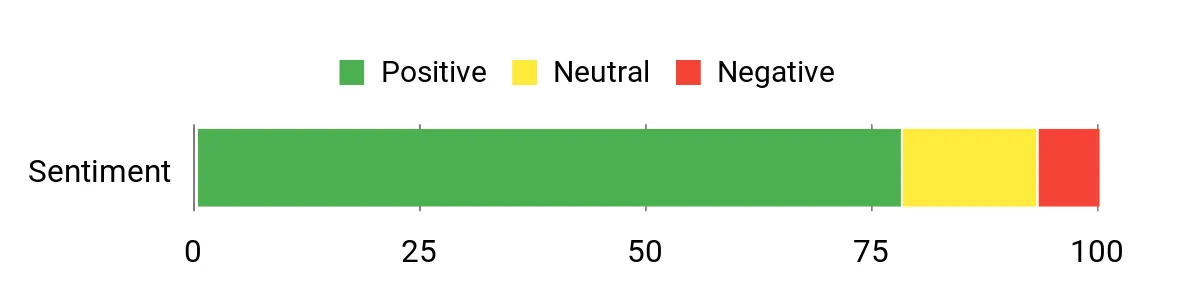
Buyer sentiment is positive, especially around cleanup speed, changeovers, and the light feel of the gun. Because the underlying review sample, date, and analysis method are not documented here, treat the chart below as directional context rather than a live Amazon rating.
Source-Article Sentiment: Positive (methodology not independently verified)
Situational Benefits
|
Situation |
How It Helps |
|---|---|
|
Daily production panels |
Quick-change atomizing heads and adjustable fan control can reduce setup time when you move between jobs. |
|
Color changes and multi-job bays |
The PPS 2.0 system keeps coating material out of the gun body, helping simplify cleanup and reduce cross-contamination risk. |
|
Touch-ups and small repairs |
The lightweight body and adjustable spray pattern can make controlled passes easier in smaller areas. |
|
Shops that want less gun teardown |
Because paint does not pass through the gun body, routine cleanup can involve fewer internal parts than a conventional design. |
Problem Solving Ability
This system addresses a common shop problem: lost time between materials, colors, and jobs. Its cup-and-atomizing-head design is intended to simplify changeovers while keeping the gun body out of the paint path.
Key Benefits
- Quick-change replaceable atomizing heads
- PPS 2.0 cup integration keeps paint out of the gun body
- Lightweight composite gun body
- Adjustable fan pattern for different job sizes
Check Product Details on Amazon
DeVilbiss StartingLine

The DeVilbiss StartingLine kit gives you separate guns for finishing and priming work, which is useful when you do not want to keep changing one gun between lighter finish material and heavier prep coatings. The kit is listed with 600cc metal cups for the setup, giving each full-size gun enough capacity for practical garage projects.
This is the most natural DIY automotive starter kit in the group because the package is built around the two major stages many home refinishing projects require: surface preparation and finish application.
Who Should Buy This
DIY restorers and small garages that want a practical two-gun setup for automotive priming and finishing without moving straight to a higher-cost production system.
Who Should Avoid This
High-volume professional shops that need premium atomization, faster production features, or highly specialized gun setups for specific modern coating systems.
What People Say
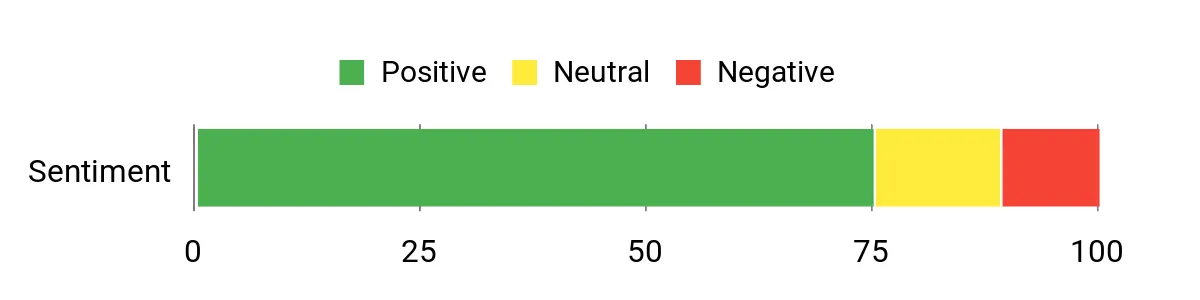
Buyer feedback is generally positive around the two-gun layout, metal cups, and included accessories. Because the review sample and analysis method are not documented here, the chart below should not be treated as a current Amazon rating or independently verified customer study.
Source-Article Sentiment: Positive (methodology not independently verified)
Situational Benefits
|
Situation |
How It Helps |
|---|---|
|
Small full-vehicle projects |
You can dedicate one gun to finish material and the other to primer instead of repeatedly converting one gun between stages. |
|
DIY restorations |
The two-gun format covers common prep and finish tasks in one kit, which can simplify a home-garage setup. |
|
Learning spray technique |
Separate guns let you learn how setup changes between heavier primer work and finer finishing tasks. |
|
Mobile or small shops |
The included case and accessories help keep the kit organized between jobs. |
Problem Solving Ability
The kit reduces the need to make one spray gun handle every coating stage. Keeping primer and finish work on separate guns can make setup more straightforward and help reduce interruptions during a project.
Key Benefits
- Separate guns for priming and finishing tasks
- 600cc metal cups provide practical capacity for primer and finish work
- Includes supporting accessories for setup, cleaning, and storage
- Good buyer fit for DIY automotive refinishing and restoration work
Before You Buy: Confirm the exact included tip sizes, air-consumption requirement, and compatibility with the coating system you plan to spray. Those details matter more than the brand name alone.
Check Product Details on Amazon
Campbell Hausfeld

The Campbell Hausfeld is the straightforward value pick for buyers who want a general-purpose pneumatic gravity-feed HVLP gun without a more specialized cup or turbine system. It is listed with a 600 mL gravity canister and separate fluid, air, and pattern controls, which makes it easier to tune the gun for different garage projects.
It fits hobby and light-shop use better than high-volume professional refinishing. Before purchase, confirm the current listing, nozzle size, required CFM and inlet pressure, and coating compatibility so your compressor and paint system match the gun.
Who Should Buy This
Budget-minded hobbyists who already have a suitable compressor and want a simple gravity-feed gun for occasional automotive or general garage painting.
Who Should Avoid This
Buyers who need clearly documented current professional-refinish specifications, a complete multi-gun kit, or fast disposable-cup changeovers.
What People Say
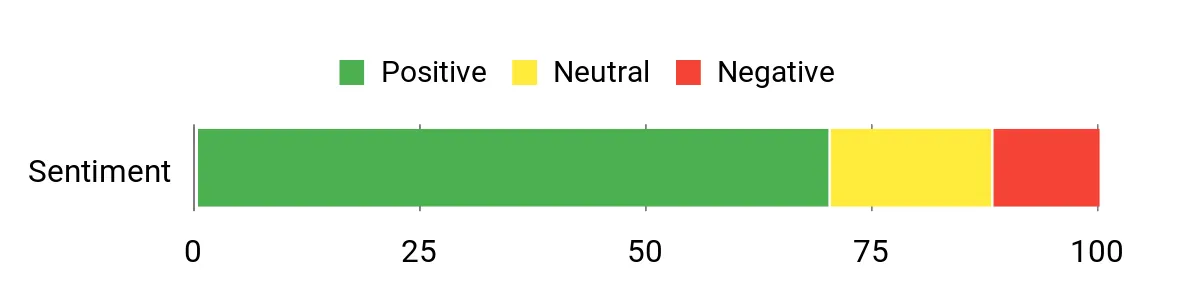
Buyer sentiment is positive around simple controls, cleanup, and general DIY use. Since the underlying review sample and date are not documented here, use the chart below as a historical snapshot rather than a current Amazon rating.
Source-Article Sentiment: Positive (methodology not independently verified)
Situational Benefits
|
Situation |
How It Helps |
|---|---|
|
Weekend restorations |
A larger gravity cup can reduce refill frequency when you are working across multiple small or medium panels. |
|
Beginner projects |
Straightforward air, fluid, and pattern controls give you the basic adjustments needed to learn spray setup. |
|
General garage painting |
The simple gravity-feed layout suits occasional jobs where you do not need a production-focused system. |
|
Occasional auto touch-ups |
It can be a practical choice for small panels or repair work when the nozzle, air supply, and coating are correctly matched. |
Problem Solving Ability
This gun addresses the need for a simple, lower-complexity HVLP setup. It gives you basic spray adjustments and a gravity reservoir without requiring a dedicated turbine or proprietary cup platform.
Key Benefits
- Simple pneumatic gravity-feed layout
- 600 mL gravity canister
- Separate fluid, air, and pattern controls
- Best suited to hobby and light-shop use rather than production refinishing
Check Product Details on Amazon
NEIKO Mini

The NEIKO 31207A is the best fit here for small jobs where a full-size gun is unnecessary. Its 1.0 mm nozzle and 125 cc cup are designed for touch-ups, detail work, trim, and other targeted applications where tighter material control matters more than large-panel coverage.
NEIKO currently lists three adjustments for pattern, fluid volume, and air, along with an air requirement of 8.8 CFM and 50 PSI. That makes compressor capacity an important buying check even though the gun itself is compact.
Who Should Buy This
DIYers, detailers, and small-shop users who need a compact gun for touch-ups, trim, small parts, and controlled spot work.
Who Should Avoid This
Anyone planning full-vehicle coverage or large continuous panels, where the small cup and detail-oriented nozzle would slow the job.
What People Say
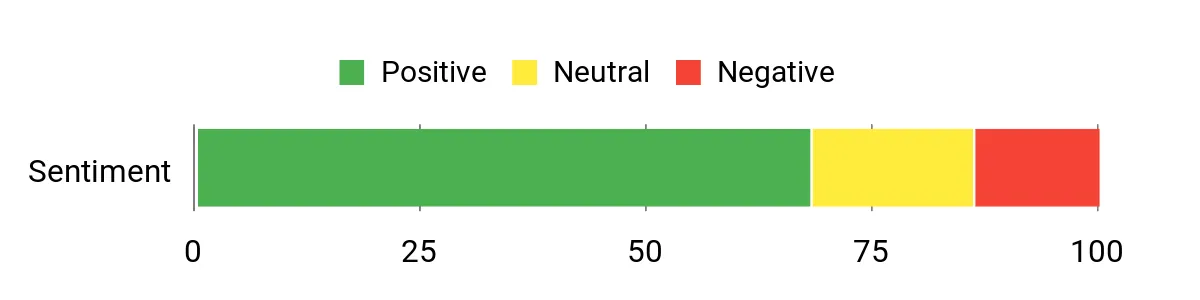
Buyer feedback is positive for small tasks, comfort, and easy cleanup. Because the sample, date, and analysis method are not disclosed here, the chart below is best treated as directional context rather than current review data.
Source-Article Sentiment: Positive (methodology not independently verified)
Situational Benefits
|
Situation |
How It Helps |
|---|---|
|
Precision parts |
The small cup and 1.0 mm nozzle are better suited to targeted applications than a full-size gun. |
|
Touch-ups and trim |
The compact spray setup can make it easier to control material on badges, trim pieces, and small repair areas. |
|
Short workshop jobs |
The small reservoir reduces the amount of material you need to load for a limited-area job. |
|
Beginner detail work |
Pattern, fluid, and air adjustments let you practice basic spray setup on small projects. |
Problem Solving Ability
This mini gun solves the problem of using an oversized spray setup for small tasks. It gives you a compact cup, fine nozzle, and adjustable spray controls for jobs where precision and low material volume matter most.
Key Benefits
- Compact mini HVLP design for small-area work
- 1.0 mm stainless-steel nozzle
- 125 cc gravity cup
- Manufacturer lists 8.8 CFM air consumption and 50 PSI air pressure
Check Product Details on Amazon
FAQ
Which Spray Gun Is Right for Me?
Match the gun to the job you do most. Choose the 3M Performance when professional workflow, fast changeovers, and PPS 2.0 cleanup are the priority. Pick the DeVilbiss StartingLine if you want separate guns for primer and finish work in one automotive-focused kit. Choose the Campbell Hausfeld when you want a simpler general-purpose pneumatic gun, and use the NEIKO Mini for touch-ups, trim, and other small-area work.
How Should I Maintain and Clean an HVLP Spray Gun?
Clean the gun as soon as practical after spraying and follow the gun maker’s instructions for the specific coating you used. Flush or replace the cup system as directed, clean the air cap and fluid path with suitable tools, avoid damaging precision openings, and do not soak seals or assemblies unless the manufacturer permits it. Replace worn nozzles, needles, seals, or disposable atomizing heads when needed.
What Air Supply and Settings Do I Need?
Do not use one universal PSI number for every HVLP gun. Match your compressor to the gun’s required CFM and inlet pressure, then set the gun according to the manufacturer instructions and the coating’s technical data sheet. Air volume is especially important because a compressor that cannot sustain the required CFM can cause poor atomization and inconsistent spray patterns. For the NEIKO 31207A, the manufacturer currently lists 8.8 CFM and 50 PSI; verify the exact requirements for every other gun before use.
Do I Need Different Nozzle Sizes for Primer, Basecoat, and Clearcoat?
Often, yes. Different coatings can require different fluid-tip sizes and spray settings. Use the coating manufacturer’s technical data sheet together with the spray-gun manual instead of assuming one nozzle is correct for every material. This is especially important for high-build primers, modern basecoats, and clearcoats.
Customer Preferences
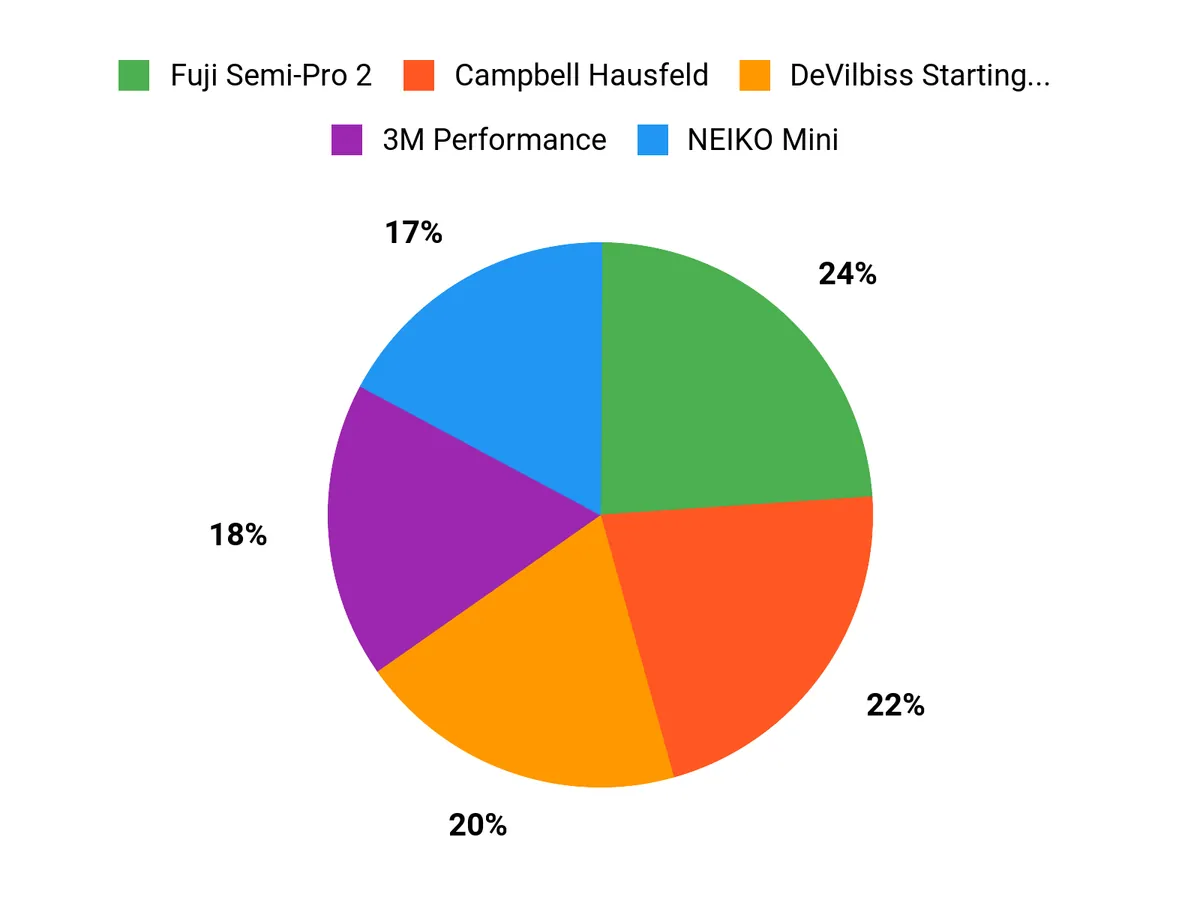
Buyer priorities split clearly across these four options. The 3M Performance is the workflow pick for professional users who want faster changeovers and PPS 2.0 integration. The DeVilbiss StartingLine makes more sense when a DIY automotive buyer wants separate primer and finish guns in one kit. The Campbell Hausfeld is the simpler value-oriented choice, while the NEIKO Mini is the specialist pick for detail and touch-up work.
Chart note: The image below is provided for context. Its underlying sample and methodology are not provided here, so it should not be interpreted as live market-share or current customer-survey data.
Wrapping Up
If you prioritize a professional workflow with fast nozzle changes, PPS 2.0 integration, and less paint traveling through the gun body, the 3M Performance is the strongest overall choice in this lineup for appropriate occupational use. If you are building a DIY automotive setup and want separate guns for primer and finish work, the DeVilbiss StartingLine is the more practical starter kit.
The Campbell Hausfeld remains the value-oriented general-purpose option for hobby or light-shop users who already have a suitable compressor, while the NEIKO Mini is the clear choice for small touch-ups, trim, and detail work. Whichever gun you choose, confirm the current air requirement, nozzle size, coating compatibility, included accessories, and safety instructions before you spray.
| Product Name | Image | Best For | Tank Volume | Recommended Uses | System Type |
|---|---|---|---|---|---|
| 3M Performance Spray Gun Starter Kit |
|
Professional workflow and fast changeovers | 650 Milliliters |
|
Pneumatic HVLP with PPS 2.0 system |
| DeVilbiss StartingLine HVLP Complete Auto Painting and Priming Kit |
|
DIY auto priming and finishing | 600 Milliliters |
|
Two-gun pneumatic HVLP kit |
| Campbell Hausfeld HVLP Gravity Feed Pneumatic Spray Gun |
|
Budget hobby and light-shop use | 600 Milliliters |
|
Pneumatic gravity-feed HVLP |
| NEIKO 31207A HVLP Mini Gravity Feed Air Spray Paint Gun |
|
Detail work and touch-ups | 125 Milliliters |
|
Mini pneumatic HVLP, 1.0 mm nozzle |
This roundup is reader-supported. When you click through affiliate links, we may earn a referral commission on qualifying purchases.