
Air tools can speed up repairs, improve finish work, and reach jobs that are awkward for larger electric tools. The key is choosing the right pneumatic tool for the task and pairing it with a compressor that can actually supply the tool’s required airflow.
This guide compares four practical garage options: a quiet portable compressor, an air reciprocating saw, a sheet-metal nibbler, and a high-speed die grinder. Use the recommendations by task rather than assuming every featured tool is a direct match for the featured compressor.
Affiliate disclosure: This article contains Amazon affiliate links. If you buy through them, we may earn a commission at no extra cost to you.
Quick Verdict: Choose the Campbell Hausfeld DC080500 for quiet, light-duty garage air needs. Choose the Ingersoll Rand 429 for detailed reciprocating cuts, the 325B for controlled sheet-metal cutting, and the 3107G for grinding, porting, and finishing.
Compressor compatibility matters: The Campbell unit is listed at 2.4 CFM and is best treated as a light-duty compressor. The featured Ingersoll Rand tools require more airflow for sustained operation, so check each tool’s CFM requirement before buying a compressor for it.
Top Picks
|
Category |
Product |
Best For |
|---|---|---|
|
🔇 Best Quiet Compressor |
Inflation, blow cleaning, and light intermittent air-tool use |
|
|
🎯 Best for Precision Cutting |
Detailed cuts in tight automotive and fabrication spaces |
|
|
✂️ Best for Sheet Metal |
Controlled cuts in thin sheet metal |
|
|
🚀 Best High-Speed Grinder |
Porting, light weld grinding, polishing, and edge finishing |
Selection Criteria
For garage air equipment, the most useful comparison points are delivered CFM at working PSI, duty cycle, tank size, noise, portability, maintenance needs, tool speed, air consumption, ergonomics, and task fit. Those factors matter more than tank size or motor horsepower alone when you are trying to keep a pneumatic tool supplied with enough air.
We also considered practical buyer concerns such as hose and fitting requirements, ease of handling, serviceability, and whether the tool is suited to intermittent DIY use or sustained shop work. Product claims below are kept to specifications and use cases that can be supported; changing prices, star ratings, and review counts are intentionally omitted.
Ingersoll Saw

The Ingersoll Rand 429 is a compact air reciprocating saw built for controlled cutting in tight spaces. Its published specifications list 10,000 strokes per minute, a 3/8-inch stroke, an inline body, and a weight of about 1.33 pounds. A lock-out lever helps reduce accidental throttle activation, while the blade guide is designed to support blade life.
Air demand is the main buying consideration. The 429 is rated at about 8 CFM average air consumption and 9 CFM under load, so a small 2–3 CFM compressor is not a good match for sustained cutting. If you already have a compressor with adequate delivered airflow, this saw makes sense for bodywork, exhaust work, light fabrication, and other jobs where a compact blade is easier to control than a larger saw.
Best for: Detail cutting, automotive bodywork, exhaust work, and confined spaces.
Skip it if: Your compressor cannot meet the saw’s airflow requirement or you need a cordless tool for work away from an air supply.
What People Say
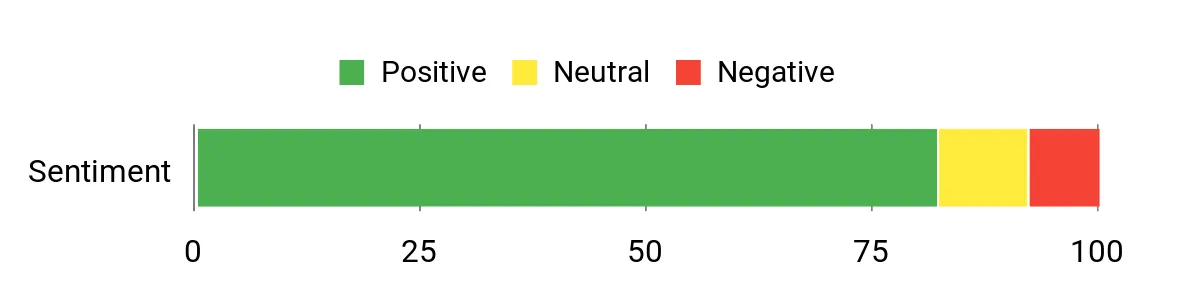
Buyers are generally positive about the saw’s control, compact size, and cutting performance. Because Amazon ratings and review totals can change, exact star ratings and review counts are not used here as fixed buying claims.
Overall Sentiment: Positive in the source review snapshot
Situational Benefits
|
Situation |
How It Helps |
|---|---|
|
Automotive Body Repair |
The compact inline body helps you guide a narrow blade through panel and patch work where access is limited. |
|
Exhaust and Muffler Work |
Its small profile is useful around tight exhaust runs where a larger reciprocating saw can be awkward. |
|
Small Fabrication Projects |
High stroke speed supports quick detail cuts when you use the correct blade for the material. |
|
Tight Space Trimming |
At about 1.33 pounds with an inline configuration, it is easier to maneuver in confined areas. |
Indoor/Outdoor Use
You can use this saw in a garage or outdoors when you have a suitable air supply, but do not treat it as a quiet tool. The manufacturer’s published sound-pressure figure is 87.3 dBA for the 429, so use appropriate hearing and eye protection and follow the tool manual. Keep the tool and air connections protected from rain, moisture, and heavy contamination.
Key Benefits
- 10,000 strokes per minute for fast reciprocating cutting
- Compact inline design for access in tight spaces
- Lock-out lever to help prevent accidental throttle operation
- About 1.33-pound tool weight for easier maneuvering
Key verified specs: 10,000 SPM; 3/8-inch stroke; about 1.33 lb; 8 CFM average air consumption; 9 CFM at load; 1/4-inch air inlet; 3/8-inch minimum hose size.
Check Product Details on Amazon
Campbell Compressor

The Campbell Hausfeld DC080500 is an 8-gallon, 120V, oil-free portable compressor aimed at quieter garage and household work. Its current Amazon listing gives a 65 dB noise level, 125 PSI maximum pressure, 2.4 CFM airflow, and a 67-pound item weight. Wheels and a steel handle make it easier to move around a garage than a stationary compressor.
Its biggest limitation is airflow. A 2.4 CFM compressor is useful for tire inflation, blow cleaning, nailers, airbrushing, and other light or intermittent tasks, but it is not a strong match for sustained use with the three Ingersoll Rand tools in this roundup. If your main goal is continuous cutting or grinding, choose a compressor based on the tool’s CFM requirement rather than tank size alone.
Best for: Quiet garage inflation, cleanup, nailers, and other light intermittent pneumatic jobs.
Skip it if: You need continuous airflow for high-demand saws, nibblers, grinders, sanders, or multiple air tools.
What People Say
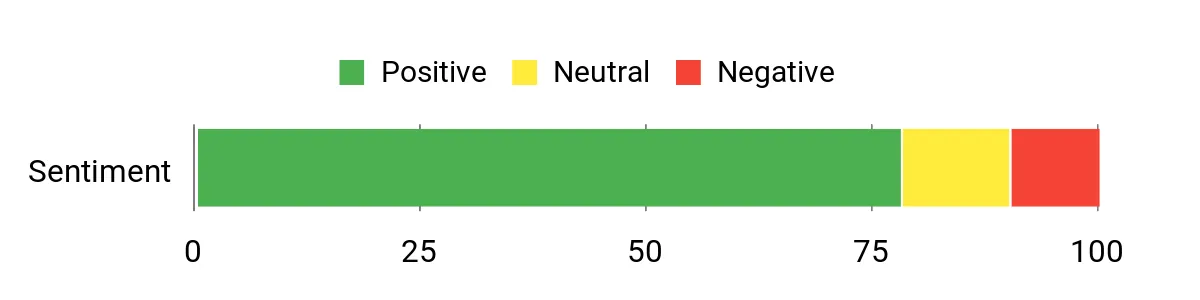
Buyers are generally positive about the unit’s low noise and convenience for everyday garage tasks. Exact star ratings and review totals are omitted because those figures can change over time.
Overall Sentiment: Positive in the source review snapshot
Situational Benefits
|
Situation |
How It Helps |
|---|---|
|
Tire Inflation |
The 8-gallon tank and 125 PSI maximum pressure make it practical for routine vehicle and equipment inflation. |
|
Light Air-Tool Work |
It can support tools whose airflow needs fit within its output, especially when the tool is used intermittently rather than continuously. |
|
Shop Cleanup |
A blow gun can handle quick dust and debris cleanup while the 65 dB rating keeps compressor noise relatively restrained. |
|
Nailers and Airbrushing |
These lower-demand, intermittent applications are a better fit than sustained grinding or cutting. |
Indoor/Outdoor Use
This compressor is well suited to a garage because of its 65 dB listed noise level and portable format. For outdoor jobs, keep the unit dry, use it on a stable surface, and follow the electrical and ventilation instructions in the owner’s manual.
Before You Buy
- Check the CFM requirement of every pneumatic tool you plan to run.
- Do not assume an 8-gallon tank can compensate for low continuous airflow.
- Confirm your hose diameter, fittings, and regulator can supply the tool without excessive restriction.
- For sustained cutting or grinding, choose a compressor with enough delivered CFM and duty cycle for the specific tool.
Key Benefits
- Listed 65 dB operation for a quieter garage environment
- Oil-free pump for lower routine maintenance
- Wheels and handle for easier movement
- 8-gallon tank and 125 PSI maximum pressure
- Useful for inflation, blow cleaning, and light intermittent air-tool work
Key verified listing specs: 120V; 8-gallon tank; 65 dB; 2.4 CFM; 125 PSI maximum pressure; oil-free pump; 67 lb.
Check Product Details on Amazon
Ingersoll Nibbler
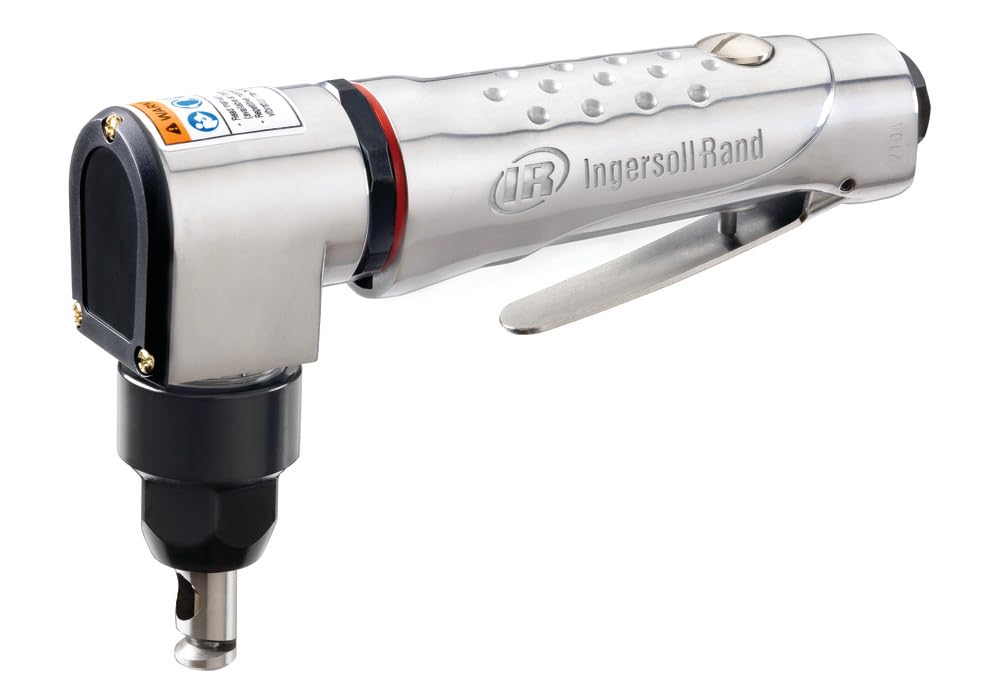
The Ingersoll Rand 325B is a specialized air nibbler for controlled cutting in thin sheet materials. Ingersoll Rand lists it for cold-rolled steel up to 18 gauge (1.2 mm), with cutting speed above 6 feet per minute and up to 4,200 strokes per minute. Because a nibbler removes small chips instead of using an abrasive wheel, it can make clean cuts without the heat of abrasive grinding.
This is a better fit for body panels, trim work, and light fabrication than for heavy plate. Air supply is important: Ingersoll Rand lists about 4 CFM average air consumption and 17 CFM under load, so a small portable compressor may force frequent pauses.
Best for: Thin sheet-metal cutting, panel work, center cuts, and controlled fabrication.
Skip it if: You mainly cut thick stock, need extremely tight curves, or do not have enough compressor airflow.
What People Say
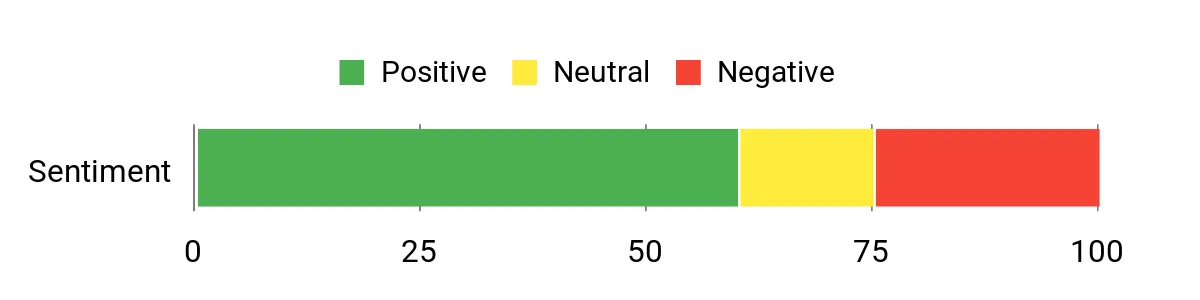
Buyer feedback includes praise for cutting quality on thin metal, with some buyers mentioning setup and fitting issues. Exact star ratings and review totals are omitted because they can change and are not reliable as fixed specifications.
Overall Sentiment: Mixed-to-positive in the source review snapshot
Situational Benefits
|
Situation |
How It Helps |
|---|---|
|
Panel Patching |
Controlled chip-removal cutting can help you shape thin replacement panels without relying on an abrasive wheel. |
|
Aluminum and Thin Metal Work |
The tool is designed for clean cutting in thin sheet materials when the material thickness stays within its rated capability. |
|
Long Straight Cuts |
A guide or marked cut line can help maintain a consistent path across longer sections. |
|
Center Cuts |
Ingersoll Rand specifically lists center-cut capability, allowing cuts to begin within the workpiece without distorting the surrounding edge. |
Indoor/Outdoor Use
The 325B can be used in a garage or outdoors with a suitable compressor. Wear appropriate eye and hearing protection, keep sharp metal chips away from hands and finished surfaces, and protect the pneumatic tool from moisture and contamination.
Key Benefits
- Cuts cold-rolled steel up to 18 gauge (1.2 mm)
- Up to 4,200 strokes per minute
- Center-cut capability for starting inside sheet material
- Compact 2.1-pound design
Key verified specs: 4,200 SPM; over 6 ft/min cutting speed; 2.1 lb; 4 CFM average air consumption; 17 CFM at load; 1/4-inch air inlet; 3/8-inch minimum hose size.
Check Product Details on Amazon
Ingersoll Grinder

The Ingersoll Rand 3107G is a compact 1/4-inch straight air die grinder built for grinding, porting, polishing, light weld cleanup, and edge finishing. Ingersoll Rand lists a 0.33-horsepower motor, 27,000 RPM free speed, 1-pound tool weight, ball-bearing construction, rear exhaust, and a self-locking lever throttle.
Do not size the compressor from the tool’s average consumption alone. The manufacturer lists about 3 CFM average air consumption but 18 CFM under load, so sustained grinding needs significantly more compressor capacity than a light-duty 2.4 CFM unit can provide. Also make sure every burr, wheel, or accessory is rated for the grinder’s maximum speed.
Best for: Porting, deburring, light weld grinding, polishing, and detail finishing.
Skip it if: Your compressor is undersized or your accessories are not rated for high-speed die-grinder use.
What People Say
Buyers are generally positive about power, durability, grip comfort, and the simple design. Exact star ratings and review totals are omitted because they change over time.
Overall Sentiment: Positive in the source review snapshot

Situational Benefits
|
Situation |
How It Helps |
|---|---|
|
Porting and Cylinder Work |
The 27,000 RPM free speed supports fast material removal with suitable carbide burrs and careful control. |
|
Weld Grinding |
The compact 1-pound body can reach areas that are awkward for a larger angle grinder. |
|
Finishing and Polishing |
A 1/4-inch collet accepts common compatible accessories for detail finishing and polishing tasks. |
|
Detail Trimming |
Low tool weight and a compact straight body help with controlled shaping in small areas. |
Indoor/Outdoor Use
This grinder works well at a garage bench or in mobile shop work when a suitable air supply is available. Use eye and face protection as appropriate, hearing protection, and only accessories rated for at least the tool’s operating speed. Keep the tool dry and keep the rear exhaust clear.
Key Benefits
- 27,000 RPM free speed for high-speed material removal
- 0.33-horsepower motor and 1/4-inch collet
- 1-pound body for easier detail control
- Ball-bearing construction, rear exhaust, and self-locking lever throttle
Key verified specs: 27,000 RPM; 0.33 hp; 1 lb; 3 CFM average air consumption; 18 CFM at load; 1/4-inch air inlet; 3/8-inch minimum hose size.
Check Product Details on Amazon
FAQ
Which Compressor Do I Need?
Start with the pneumatic tool’s required CFM at its working PSI. Choose a compressor that can deliver at least that airflow with some practical headroom, especially for tools that run continuously. Tank size helps reduce cycling and smooth short bursts, but it does not increase the compressor’s continuous CFM output.
For inflation, nailers, airbrushing, and other intermittent jobs, a smaller portable compressor can be convenient. For sustained grinding, sanding, nibbling, or reciprocating cutting, prioritize delivered airflow and duty cycle over tank size alone.
Can the Campbell Compressor Run the Featured Ingersoll Rand Tools?
Not well for sustained use. The Campbell Hausfeld DC080500 is listed at 2.4 CFM, while the Ingersoll Rand 429 lists about 8 CFM average air consumption, the 325B about 4 CFM average, and the 3107G about 3 CFM average, with much higher consumption under load for the nibbler and grinder. The small compressor may provide short bursts, but frequent pressure drop and recovery pauses are likely. For regular use, size the compressor to the specific tool.
How Do I Match Tools And Compressor?
Match the compressor’s delivered CFM at the tool’s required PSI. If you plan to run more than one tool at the same time, account for combined demand or stagger usage. Also check hose diameter, couplers, regulators, filters, and any lubricator requirements because restrictive fittings can reduce airflow at the tool.
How Do I Maintain Air Tools And Compressors?
Follow the owner’s manual for both the compressor and each pneumatic tool. Drain tank moisture at the interval the compressor manufacturer specifies, inspect hoses and fittings for leaks or damage, keep intake filters clean, and lubricate pneumatic tools only as directed. Keep blades, burrs, and other consumables in good condition, store tools dry, and disconnect the air supply before changing accessories or servicing a tool.
Customer Preferences
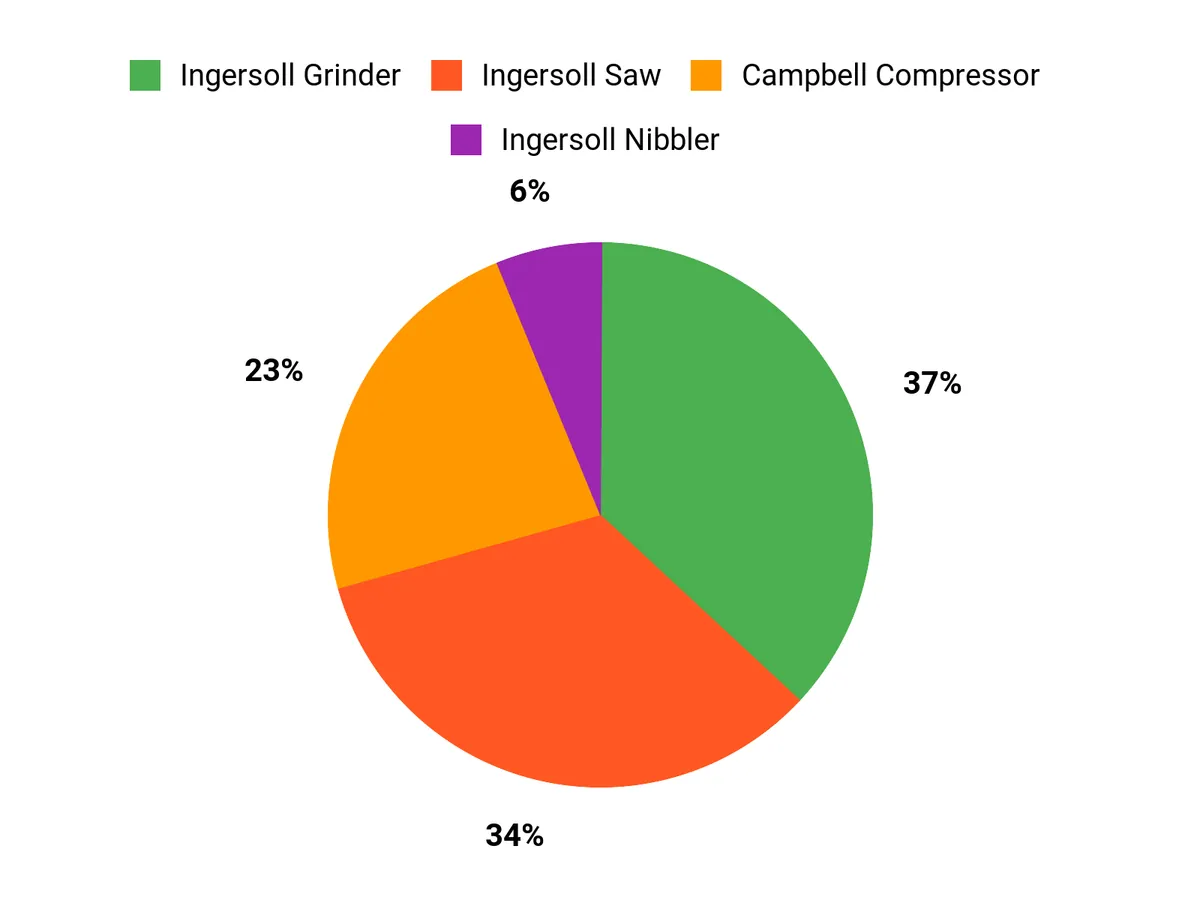
Your best choice depends on the job, not on a single overall score. Prioritize low noise, portability, and low maintenance for light-duty compressor work; compact access and adequate airflow for the reciprocating saw; thin-sheet cutting capacity and control for the nibbler; and compressor capacity, accessory speed rating, and ergonomics for the die grinder.
Decision shortcut: If you are buying a compressor and tool together, choose the pneumatic tool first, note its working PSI and CFM requirement, then select a compressor that can supply it without constant recovery pauses.
Wrapping Up
Pick the Campbell Hausfeld DC080500 if your priority is a quieter, portable, oil-free compressor for inflation, cleanup, nailers, airbrushing, and other light intermittent jobs. Choose the Ingersoll Rand 429 when you need a compact reciprocating saw for controlled cutting in tight automotive or fabrication spaces.
The Ingersoll Rand 325B is the strongest fit here for thin sheet-metal work, while the 3107G is the better choice for high-speed grinding, porting, deburring, and finishing. None of those three air tools should be paired with a compressor based on tank size alone: compare the tool’s required CFM and PSI with the compressor’s delivered airflow and duty cycle before you buy.
Use the correct hose and fittings, follow the manufacturer’s maintenance and safety instructions, and use blades, cutters, burrs, and other accessories that are appropriate for the material and rated for the tool’s speed.
Final Recommendation: For a light-duty garage compressor, the Campbell is the easiest fit. For cutting thin sheet, choose between the 429 saw for reciprocating detail work and the 325B nibbler for controlled chip-removal cuts. For grinding and finishing, the 3107G is the purpose-built option. If you plan to run any Ingersoll Rand tool continuously, budget for a higher-CFM compressor.
| Product Name | Image | Best For | Power Source | Key Output / Speed | Item Weight |
|---|---|---|---|---|---|
| Ingersoll Rand 429 Reciprocating Air Saw |
|
Detail cutting and tight spaces | Pneumatic | 10,000 SPM; 8 CFM average | 1.33 lbs |
| Campbell Hausfeld 8 Gallon Portable Air Compressor |
|
Inflation and light intermittent air-tool use | Electric | 2.4 CFM; 125 PSI max | 67 lbs |
| Ingersoll Rand 325B Air Nibbler |
|
Thin sheet-metal cutting | Air Powered | 4,200 SPM; over 6 ft/min | 2.1 lbs |
| Ingersoll Rand 3107G 1/4-Inch Straight Air Die Grinder |
|
Grinding, porting, deburring, and finishing | Pneumatic | 27,000 RPM; 3 CFM average | 1 lb |
This article contains Amazon affiliate links. If you buy through them, we may earn a commission at no extra cost to you.