
For many trips, start by putting 25% to 40% of your total travel budget toward hotels or other lodging, but treat that as a planning range rather than an industry standard. The right share depends on your destination, number of nights, travel style, transportation cost, and spending priorities. Use the percentage for a first pass, then calculate the highest all-in nightly price your actual budget can support after protecting the rest of the trip.
Last updated: September 7, 2026. We rechecked the FTC lodging-fee rule, Airbnb’s current service-fee structure, GSA FY 2026/FY 2027 lodging guidance, CoStar’s Q3 2026 U.S. hotel forecast, and its latest available monthly U.S. hotel performance report.
Quick Answer
There is no universal hotel percentage. For this guide, 25% to 40% of the total trip budget is a practical first-pass planning range, based on the all-in stay price rather than the advertised nightly rate. Raise the share when the property is a major part of the experience; lower it when airfare, activities, road-trip costs, or other fixed expenses consume more of the budget.
Key Takeaways
- Treat 25% to 40% as a planning range, not a fixed rule or industry standard.
- Define your total trip budget consistently. In this guide, it includes long-distance transportation such as flights or fuel.
- Compare the final stay total, including required fees and estimated taxes, rather than the headline nightly rate.
- Calculate both cost per night and cost per traveler before choosing a hotel or vacation rental.
- Keep a separate contingency fund so a hotel bill does not consume money needed for food, transportation, or emergencies.
Method note: The percentage bands in this guide are planning heuristics, not official industry standards. Use them for a first-pass budget, then rely on the residual-budget calculation and real prices for your dates before booking.
At a Glance
| Planning Range | Start around 25%–40% of the total trip budget, then adjust to your actual trip |
| Budget Definition | Include the entire trip budget, including long-distance transportation, food, activities, and lodging |
| Better Calculation | Subtract protected trip costs and your contingency fund, then divide the remaining lodging amount by the number of nights |
| Price to Compare | Use the final checkout total for the same dates, occupancy, room terms, and selected extras |
How Much of Your Travel Budget Should Go to Hotels?

First, define the denominator. In this guide, total trip budget means everything you expect to spend on the trip, including flights or other long-distance transportation. Other sources may calculate accommodation only as a share of in-destination spending. For example, a 2025 SAGE Open study of 20,574 international visitors to Taiwan found that accommodation averaged 30.42% of recorded visitor spending, but the underlying survey excluded prepayments. That makes it useful context, not a universal hotel-budget rule and not directly comparable with the total-trip percentages used here.
A useful starting point is to place your trip in one of three planning bands. These percentages are budgeting guidelines, not industry standards. Always adjust them after checking real prices for your dates.
| Travel Style | Starting Lodging Share | When It Fits |
|---|---|---|
| Budget-focused | 20%–30% | Hostels, camping, road trips, or trips built around paid activities |
| Balanced | 30%–40% | Typical city breaks, family vacations, and moderate-comfort travel |
| Comfort or resort-led | 40%–55% | Luxury stays, resorts, high-cost cities, or trips where the property is a main attraction |
A percentage is only a first draft. The more reliable method is to calculate the amount left after protecting your other trip priorities.
Lodging budget formula: Total trip budget − transportation − food − activities − insurance and travel documents − contingency fund = maximum lodging budget.
All-in nightly cap: Maximum lodging budget ÷ number of nights = the most you can spend per night after required fees and estimated taxes.
For example, suppose your trip budget is $3,000. You set aside $900 for transportation, $500 for food, $350 for activities, $150 for insurance and other costs, and $300 for unexpected expenses. That leaves $800 for lodging. On a five-night trip, your all-in cap is $160 per night, or about 27% of the total budget.
When Does the Hotel-Budget Percentage Rule Break Down?
| Trip Situation | What to Do |
|---|---|
| Expensive airfare | Ignore the percentage if necessary and calculate lodging from the money left after flights and other protected costs. |
| Resort-led trip | A higher lodging share can make sense when the property itself replaces some activities, transportation, or meals. |
| Group trip | Compare both the property total and the per-person, per-night cost rather than the headline nightly rate. |
| Road trip | Protect fuel, tolls, parking, and frequent one-night-stop costs before increasing the hotel budget. |
| Long stay | Compare weekly or extended-stay pricing and spread one-time rental fees across the full number of nights. |
After calculating your hotel cap, check the money that remains for food, local transportation, and activities. If the remaining per-person daily budget cannot realistically cover those categories, lower the lodging cap even if the hotel percentage looks normal.
Remaining daily spending test: (Total trip budget − lodging − long-distance transportation − other protected fixed costs) ÷ number of travelers ÷ trip days = money left per traveler per day for food, local transportation, and activities.
If you already know your nightly cap and want a U.S.-specific benchmark, see the guide to a nightly hotel budget for budget travelers in the USA. For a higher-comfort baseline, compare the nightly hotel budget for mid-range travelers in the USA.
Pro Tip: Search with the exact number of guests, rooms, beds, and nights. A rate shown for one guest or one room may change when you add children, extra adults, parking, or a pet.
What Affects Hotel Prices in 2026?
Hotel prices move with local demand, not just general inflation. Destination, neighborhood, season, day of week, major events, room type, cancellation terms, and booking pace can all change the final price.
The August 2026 CoStar and Tourism Economics Q3 outlook raised its full-year 2026 U.S. forecast to 4.4% RevPAR growth, with demand up 1.7% and average daily rate up 3.1%. CoStar’s July 2026 U.S. hotel report later recorded a $171.74 average daily rate and $119.77 RevPAR for that month. These are industry performance measures, not promises about the all-in price of your room. Your actual rate can move much more because of destination, hotel class, events, occupancy, and exact dates. For a quick benchmark of typical nightly rates, see this guide to the average price for one night in a hotel in US dollars.
National hotel-performance data can show the direction of the market, but it should not replace a live search for your exact city, dates, occupancy, and room terms.
For a location-based benchmark, review the U.S. General Services Administration lodging rates. GSA rates are reimbursement limits for federal travel, not guaranteed consumer prices, but the city and monthly tables show how lodging costs can vary by destination and season. The lodging figures generally exclude taxes. GSA has already published FY 2027 rates for travel starting October 1, 2026, while FY 2026 rates remain the relevant federal benchmark for earlier September 2026 travel, so select the fiscal year that matches your trip dates.
Price Factors to Check Before Booking
- Exact dates: Concerts, conventions, school breaks, holidays, and sports events can raise rates.
- Neighborhood: A cheaper property may cost more overall if it requires long rides or daily parking.
- Refundability: A flexible rate often costs more than a prepaid, nonrefundable rate.
- Room configuration: Two rooms may cost more than a suite or rental, but may provide better privacy.
- Length of stay: A one-time cleaning charge has a larger per-night effect on a short rental.
- Currency: International bookings may change in cost because of exchange rates or card fees.
How to Calculate an All-In Hotel Budget
The safest hotel budget comes from subtracting the costs you need to protect first, not from forcing every trip into the same percentage.
- Set the total trip budget. Include money already paid, such as flights or event tickets.
- Protect fixed costs. Subtract transportation, food, activities, insurance, visas, and other required expenses.
- Add a contingency fund. A 5% to 10% buffer is one practical planning range for price changes and small emergencies; increase it when your trip has more financial uncertainty.
- Divide the lodging amount by the number of nights. This gives your all-in nightly cap.
- Compare the final checkout totals. Use the same dates, occupancy, room type, cancellation policy, and included amenities.
- Check the location cost. Add expected parking or transit between the property and the places you plan to visit.
For group trips, calculate both the property total and each traveler’s share. A $2,000 rental split equally among eight people is $250 per person, but only if the $2,000 figure includes required fees and taxes and all eight travelers pay an equal share.
Per-person lodging cost: Final stay total ÷ number of paying travelers.
Per-person, per-night cost: Final stay total ÷ travelers ÷ nights.
Note: A security deposit or card authorization hold may temporarily reduce your available credit even when it is refundable. Check the amount and release timeline before arrival.
Hotels or Vacation Rentals: Which Is Better for Your Budget?
Neither hotels nor vacation rentals are always cheaper. Compare the complete stay cost, the number of travelers, and the value of what is included. Hotels often work well for short stays, solo travelers, and people who value front-desk support or housekeeping. Vacation rentals may work well for groups, longer stays, or travelers who need a kitchen and shared living space.
| Cost Factor | Hotel | Vacation Rental |
|---|---|---|
| Pricing unit | Usually per room, per night | Usually per property, per night |
| Best fit | Short stays, solo travelers, couples, and service-focused trips | Groups, families, longer stays, and travelers who need more space |
| Food options | Breakfast may be included; full kitchens are less common | A kitchen may reduce restaurant spending if you actually cook |
| Service | Front desk, luggage storage, and housekeeping may be available | Service level and on-site support vary by host and property |
| Extra charges | Taxes, parking, pet charges, deposits, and optional services | Taxes, cleaning, platform fees, pet charges, and deposits |
| Rules | Standard check-in policies and occupancy limits | House rules, chores, visitor limits, and local rental rules may apply |
Platform fee structures also differ. Airbnb currently lists two fee structures for stays. Under the split-fee structure, the guest service fee is generally 14.1% to 16.5% of the booking subtotal, although Airbnb says the fee can be higher or lower for some bookings. Airbnb is also moving certain hosts away from split fees to its single-fee structure. Review the current price breakdown for the exact listing rather than applying one percentage to every rental.
What Hotel Fees and Extra Costs Should You Include?
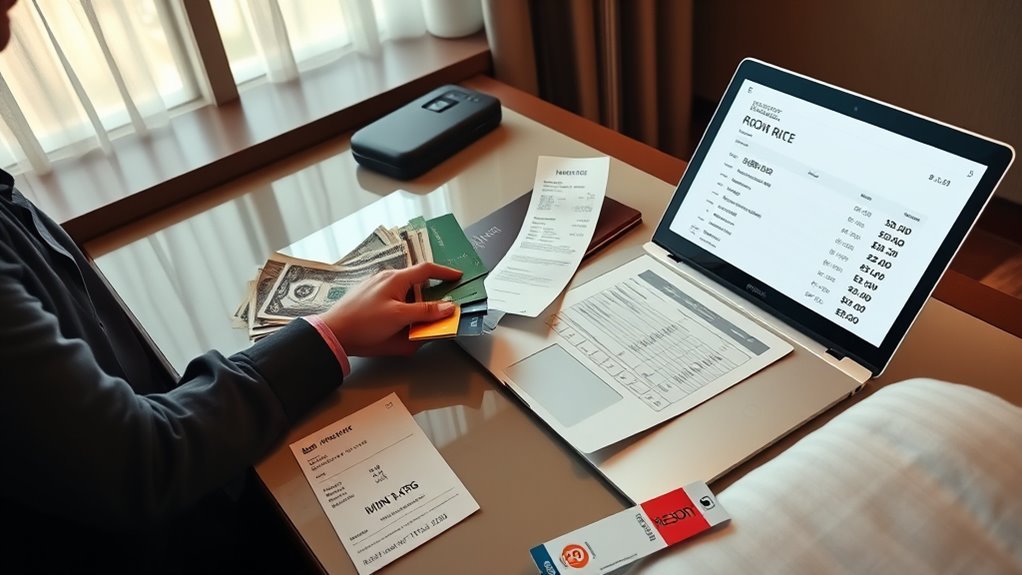
In the United States, the FTC Rule on Unfair or Deceptive Fees took effect on May 12, 2025. Businesses that advertise short-term lodging prices must display a total price that includes mandatory fees they know and can calculate upfront. Taxes, government charges, and optional products may be disclosed later, but the final payment amount must be shown before the customer is asked to pay.
This means a required resort, destination, or cleaning fee must be included in the prominently displayed total price for a covered U.S. lodging offer when the business knows and can calculate it upfront. Your final payment amount can still be higher because taxes, government charges, and optional add-ons may be disclosed later in the transaction, but they must be shown before you are asked to pay. Rules outside the United States vary.
| Charge | How to Budget for It | What to Check |
|---|---|---|
| Taxes and government charges | Use the final checkout total | Whether taxes are included in search results |
| Required resort, destination, or cleaning fee | It must be included in the displayed total price when it is mandatory and calculable upfront | What the fee covers and whether it is refundable |
| Parking | Multiply the daily charge by the number of parked nights | Self-parking, valet, in-and-out access, and nearby alternatives |
| Pet or extra-guest charge | Enter the correct occupancy and pet details before comparing | Per-stay versus per-night pricing and refundable deposits |
| Security deposit or card hold | Leave enough available credit or cash | Amount, payment method, and release timing |
| Currency or foreign transaction cost | Allow room for rate changes and card fees | Billing currency and your card’s fee policy |
Warning: Be cautious if a travel seller says the only way to pay is by wire transfer, gift card, payment app, or cryptocurrency. The FTC identifies that demand as a travel-scam warning sign because these payments can be difficult to recover.
Smart Ways to Reduce Accommodation Costs
- Compare identical terms. Match room type, guest count, cancellation policy, breakfast, parking, taxes, and required fees.
- Check direct and third-party prices. Direct booking is not always cheaper, and an online travel agency is not always cheaper. Compare the same all-in product.
- Price nearby dates. Moving a trip by one or two nights can avoid an event peak or expensive weekend pattern.
- Consider the total location cost. A central hotel may reduce rental-car, parking, or transit expenses.
- Use flexible bookings when plans may change. A slightly higher refundable rate can cost less than losing a prepaid reservation.
- Recheck before the cancellation deadline. When rates fall, you may be able to cancel and rebook a refundable stay.
- Use loyalty benefits that matter. Free breakfast, parking, late checkout, or waived fees can be more valuable than a small rate difference.
- For rentals, spread fixed fees across enough nights. A cleaning charge has a smaller nightly effect on a longer stay.
- Document the booking. Save the confirmation, final price, cancellation terms, and included amenities.
The FTC’s travel-shopping guidance recommends confirming the details of an offer, researching the seller, and understanding cancellation and refund terms before paying.
Sample Lodging Budgets for Different Trip Totals
The following examples use a 30% to 40% lodging range. They are starting estimates, not promises that suitable rooms will be available at those prices. They also assume that the percentage is being calculated from the entire trip budget, including long-distance transportation.
| Total Trip Budget | 30%–40% for Lodging | Example Nightly Cap |
|---|---|---|
| $2,000 | $600–$800 | $150–$200 for four nights |
| $3,000 | $900–$1,200 | $150–$200 for six nights |
| $5,000 | $1,500–$2,000 | About $214–$286 for seven nights |
| $20,000 | $6,000–$8,000 | Depends heavily on trip length and number of travelers |
Before using these numbers, subtract major fixed costs. A $5,000 international trip with $2,000 airfare cannot support the same hotel rate as a $5,000 road trip with $300 in fuel.
Frequently Asked Questions
What percentage of a travel budget should go to hotels?
For this guide, 25% to 40% of the total trip budget is a useful planning range, not a fixed rule. Budget-focused trips may fall closer to 20% to 30%, while resort-led or luxury trips can go above 40%. Your final hotel budget should come from actual trip costs rather than the percentage alone.
Is 40% of a travel budget too much for hotels?
Not necessarily. A 40% lodging share can work for a city break, resort stay, or trip where the property is part of the experience. It is too high if the remaining 60% cannot comfortably cover transportation, food, activities, insurance, and a contingency fund.
How much should I spend on a hotel per night?
Subtract transportation, food, activities, insurance, travel documents, and your contingency fund from the total trip budget. Divide the amount left for lodging by the number of nights. The result is your all-in nightly cap, so compare it with final stay totals rather than base room rates.
Do flights count in your total travel budget?
Yes, when using the percentages in this guide. The total trip budget includes flights or other long-distance transportation. If you use a budgeting method that excludes airfare, its accommodation percentage will not be directly comparable with the ranges used here.
Should a hotel budget include taxes and fees?
Yes. Your hotel budget should use the final amount you expect to pay, including required fees, taxes, parking, pet charges, and other costs that apply to your stay. A base room rate is not enough for a reliable trip budget.
How much emergency money should I keep outside the hotel budget?
A 5% to 10% trip buffer is one practical starting range. Consider increasing it for international travel, long trips, remote destinations, uncertain weather, or bookings with large deposits and limited cancellation rights.
Conclusion
For many trips, 25% to 40% of the total travel budget is a useful starting range for accommodation, but the percentage should never override the actual math. Define your total budget consistently, protect transportation, food, activities, travel documents, insurance, and a contingency fund, then divide what remains by the number of nights. Compare that all-in nightly cap with final booking totals for your exact dates. Before booking, run the remaining daily spending test as well; if the hotel leaves too little money for the rest of the trip, lower the lodging budget.
Sources
- Federal Trade Commission: Rule on Unfair or Deceptive Fees FAQ — U.S. requirements for upfront short-term lodging prices and mandatory fees.
- Federal Trade Commission: Avoid Scams When You Travel — travel-offer, payment-method, cancellation, and scam-prevention guidance.
- CoStar and Tourism Economics: U.S. Hotel Forecast Assumptions, Q3 2026 — updated 2026 U.S. hotel demand, RevPAR, and ADR forecast.
- CoStar: U.S. Hotel Performance for July 2026 — latest available monthly ADR, occupancy, and RevPAR benchmark.
- U.S. General Services Administration: Per Diem Rates — location- and date-based lodging reimbursement benchmarks.
- Airbnb Help Center: Service Fees — current split-fee and single-fee structures for stays.
- SAGE Open: How Travel-Related Factors and the Socioeconomic Characteristics of Tourists Shape Tourism Demand? — observed accommodation spending share for international visitors to Taiwan, with the survey scope and exclusions noted in the article.