

You’ll need a sport fishing license in Alaska if you’re a resident 18+ or a non‑resident 16+. A standard resident annual license is $29 (low‑income $5); non‑resident options run $25 (1‑day) to $145 (annual). Targeting King (Chinook) salmon requires an additional stamp; fees vary by residency and duration. Licenses are available online, at vendors, or Fish & Game offices, with discounts for veterans and active military — continue for full fee, stamp, and compliance details.
Who Needs a Fishing License in Alaska in 2025
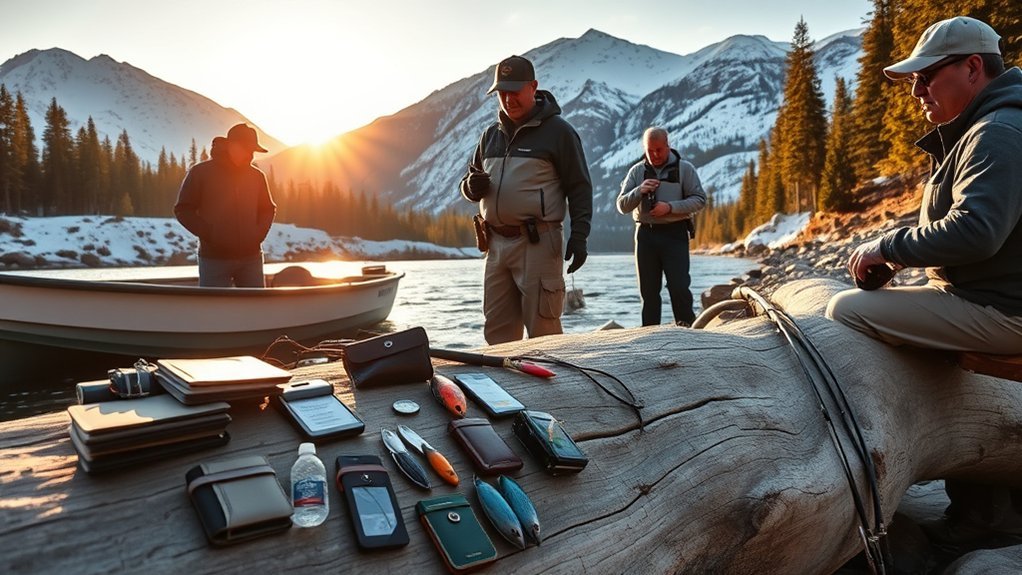
If you plan to fish in Alaska in 2025, you must follow clear age- and residency-based license rules: residents 18 and older and non-residents 16 and older are required to hold a valid sport fishing license, with targeted exceptions that allow some residents to fish without a license for specific species or in designated areas.
You’ll need an additional King Salmon Stamp if you target King Salmon unless you’re a resident under 18 or a non-resident under 16.
Policy mandates a free Sport Fishing Harvest Record Card in certain fisheries to document annual catch limits; it’s typically available to residents and disabled veterans.
Licenses, stamps, and record cards are issued online, at Fish and Game offices, and through licensed vendors statewide.
For compliance, understand local fishing regulations and carry proof of purchase.
License enforcement focuses on age, residency, species targeted, and possession of required stamps or harvest cards; inspectors may verify documentation during routine checks to ascertain regulatory adherence.
Products Worth Considering

PREMIUM QUALITY: Give your vehicle a new look and more personality with our high quality 100% heavy duty zinc metal license plate frame that will last for years.

Collectible Tag
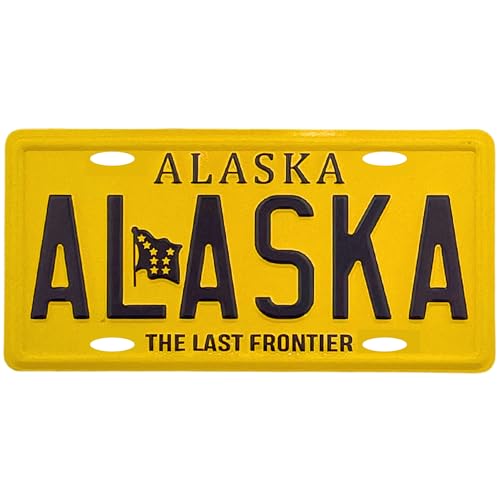
Features a replica of an Alaska license plate, capturing the unique beauty and spirit of the state in a miniaturized form.
Resident License Types and Eligibility Requirements
While Alaska requires residents 18 and older to hold a sport fishing license, the state provides several cost and eligibility variants to reflect age, income, and disability status: the standard annual resident license is $29, a low-income option is $5, a special blind license is $0.50, permanent senior ID cards (for those 60+) permit license-free fishing, and qualifying disabled veterans may receive licenses at no cost.
Children under 18 are exempt from licensing but must carry a free Harvest Record Card where required. You should assess resident fishing regulations against your status: age, income, disability, or veteran designation determine which fee or exemption applies.
Eligibility criteria require proof of residency and supporting documentation for low-income, veteran, blind, or senior claims. Follow department procedures to secure the correct credential and avoid enforcement penalties.
Keep documentation when you fish and update records if your status changes to remain compliant with resident fishing regulations and guarantee you’re using the appropriate, often reduced-cost, license.
- Age- and income-based fee tiers
- Disability and veteran exemptions
- Senior Permanent ID license-free option
Products Worth Considering

DURABLE IDENTIFICATION: Made from water-resistant Silicone, these luggage tags withstand baggage handling with your contact details clearly displayed.

Personalized Alaska 50 State Plate Replica Keychain

Add a touch of humor and flair to your car with this funny "Weekend Hooker" front license plate. Perfect for the bass fishing enthusiast, this custom car tag is a great gift for men, especially for dads, husbands, or any fishing fanatic. Whether you're an outdoorsman or just enjoy a good laugh, this novelty license plate is sure to bring a smile to your face and enhance your fishing-themed car decor. Let your personality shine on the road with this fun and unique accessory.
Non‑Resident License Options and Pricing
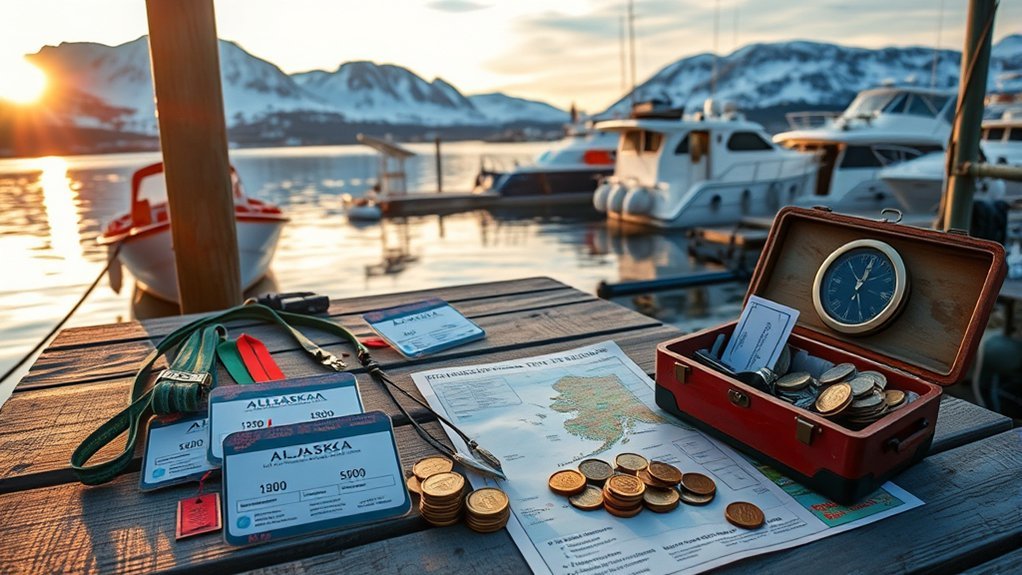
Non‑residents have several short‑term and annual sport‑fishing license choices designed for varying trip lengths and budgets: a 1‑day license is $25, 3‑day $45, 7‑day $70, 14‑day $105, and an annual non‑resident license is $145.
You’ll choose based on trip duration and expected harvest. License fee comparison shows per‑day cost declines sharply with longer options, making the annual best for repeat visitors; e.g., 1‑day $25 vs. annual $145.
Choose by trip length and expected catch — longer licenses cut per‑day cost, with the annual best for repeat visitors.
All non‑resident licenses permit fishing in fresh and saltwater on public lands, but you must follow the fishing regulations overview for area‑specific seasons, gear, and bag limits.
Note special provisions: Yukon Territory residents buy at resident pricing, and non‑resident military get discounted options for certain stamps.
When targeting Chinook, you’ll need an additional King Salmon Stamp (see next section for stamp specifics).
Use the fee table to align cost against trip length, regulatory constraints, and likelihood of repeat visits to determine the most economical permit.
Products Worth Considering

Material :High-Quality Metal Aluminum With High Gloss Stamped Metal License Plate.Lightweight, Waterproof,Anti-Rust And Very Durable.

This Largemouth Bass fishing license plate features a black background with silver design elements. Choose with our without the American flag faded into the background!

"Welcome To Adventure" Alaska License Plate features a beautiful mountains and pine trees background scene.
King Salmon Stamp and Harvest Record Card Rules
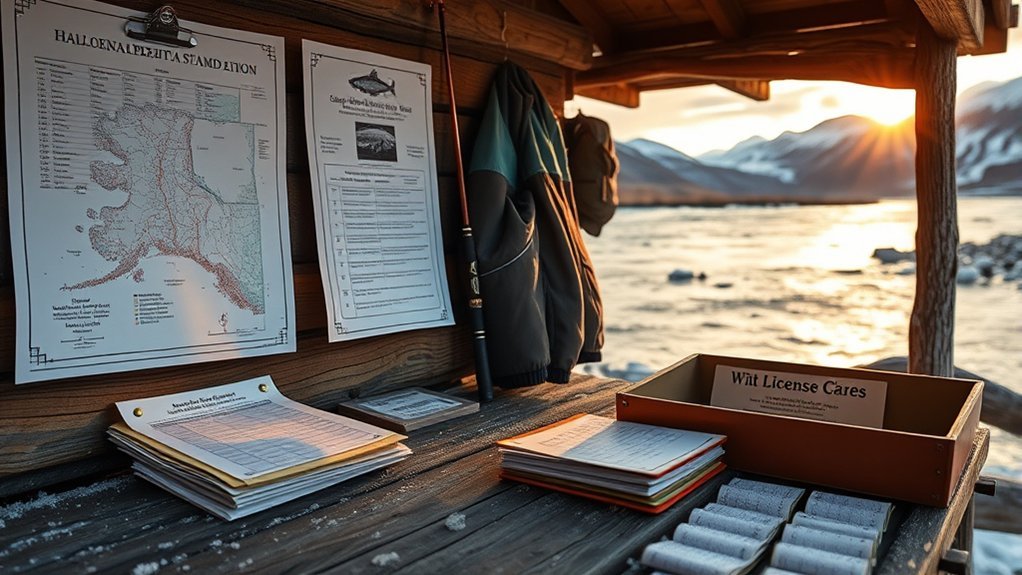
Because targeting King (Chinook) salmon carries additional harvest and reporting requirements, you’ll need a King Salmon Stamp in addition to your sport‑fishing license and a Harvest Record Card to document take under annual limits.
You’re required to purchase the stamp whether resident or non‑resident; residents pay $10. Non‑residents choose a one‑day stamp for $15 or an annual stamp for $100, while military non‑residents pay $30 annually.
The Harvest Card (Sport Fishing Harvest Record Card) is necessary to record fish taken under annual limits and is available online; certain resident anglers and disabled veterans receive it free.
You must carry and complete the Harvest Card when harvesting King Salmon; guides commonly carry cards and will help you complete entries correctly to maintain regulatory compliance.
The card provides verifiable data for managers tracking King Salmon harvests and enforcing limits. Failure to possess and complete the Harvest Card or stamp can result in citations and undermine stock assessment accuracy.
- Buy and carry the King Salmon stamp
- Obtain and complete the Harvest Card online
- Have guides assist with accurate recording
License Purchase Locations and Formats
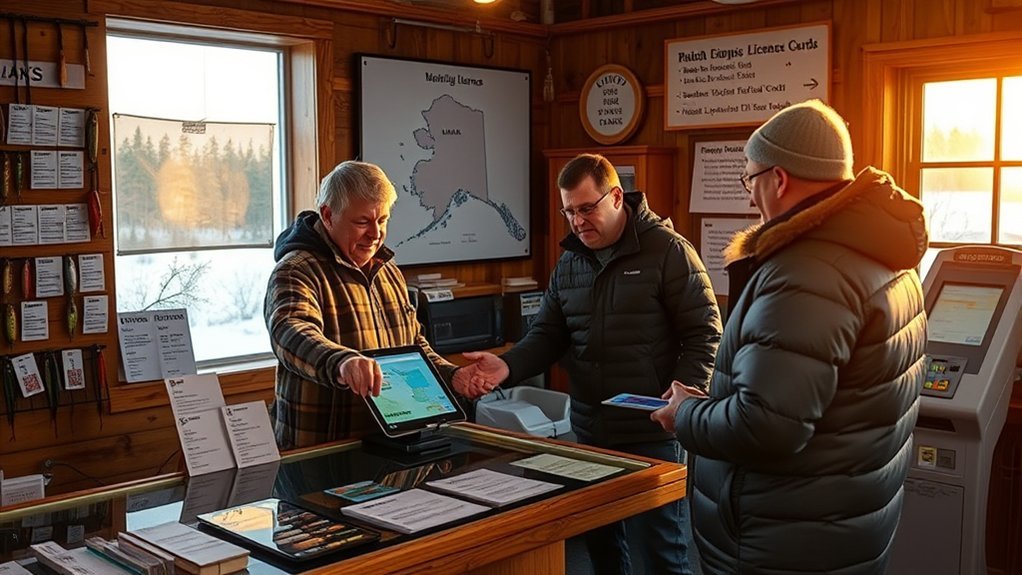
You can buy Alaska fishing licenses online via the Department of Fish and Game site for instant printing or at retailers like Sportsman’s Warehouse, Walmart, and local tackle shops.
You can also visit Fish and Game offices for in-person help. Licenses are issued as electronic/printed versions, eSigned licenses, or carbon copies to meet different compliance needs.
If you lose your license, you can get a duplicate for a $5.00 fee to remain legally compliant.
Products Worth Considering

Personalize with any name or text. Item is custom printed for you. Simple to order, just click on the customize now button and enter the name or text that you want printed on your custom keychain.

PROOF will NOT be sent, so please ensure all spelling is accurate. We COPY and PASTE to avoid mistakes.

Where to Buy
When planning your Alaska trip, buy your fishing license online at the Alaska Department of Fish and Game website to save time and avoid lines; physical copies are sold through Fish and Game offices, major retailers (Sportsman’s Warehouse, Walmart), and local tackle shops across the state.
You’ll find fishing license applications online — use online purchasing tips: confirm residency status, carry ID, and print or save confirmation.
Fish and Game offices give in-person assistance and policy clarification. Retailers and tackle shops provide immediate issuance and local season info.
Keep in mind duplicate licenses cost $5.00 if you lose the original; request one through the agency. Choose the point-of-sale that fits your trip logistics and compliance needs.
- Buy online for speed and records
- Visit Fish and Game for help
- Use local retailers for convenience
Purchase Formats Available
Alongside choosing where to buy, understand the specific purchase formats available so you pick the option that meets record-keeping and enforcement requirements.
You can obtain licenses online via the Alaska Department of Fish and Game website with instant printing and eSigned copies, which meet electronic options expectations for inspections.
Retail outlets — Sportsman’s Warehouse, Walmart and local Fish and Game offices — issue physical printed and carbon-copy licenses for on-the-spot use.
Charters often bundle licenses in trip packages, reducing administrative steps.
Policy-wise, retain whichever format satisfies legal carry requirements; electronic formats are generally acceptable when readable and verifiable.
Keep proof of purchase accessible during enforcement contacts and verify charter-provided licenses cover the species and dates you plan to fish.
Getting Duplicates/Licenses
Recordkeeping matters: Alaska fishing licenses are sold online through the Department of Fish and Game, at licensed retailers (including Trustworthy Hardware, Sportsman’s Warehouse, Walmart, and Ken’s Tackle in the Soldotna/Kenai area), and via charter operators who often include licenses in trip fees; choose electronic, printed, or eSigned formats that meet inspection requirements and keep proof accessible.
You’ll follow a straightforward duplicate license process: if you lose a license, request a duplicate for $5.00 online or at vendors. Use lost license solutions promptly to avoid enforcement issues; carry the format that’s easiest to present during inspections.
Purchasing through charters simplifies compliance because captains commonly handle licensing. Track receipts and screenshots for audit-ready documentation.
- Buy online via ADF&G for instant eSigned proof
- Obtain $5 duplicate at vendors or online
- Charter-included licenses remove individual steps
Special Licenses: Low‑Income, Disability, and Military Options
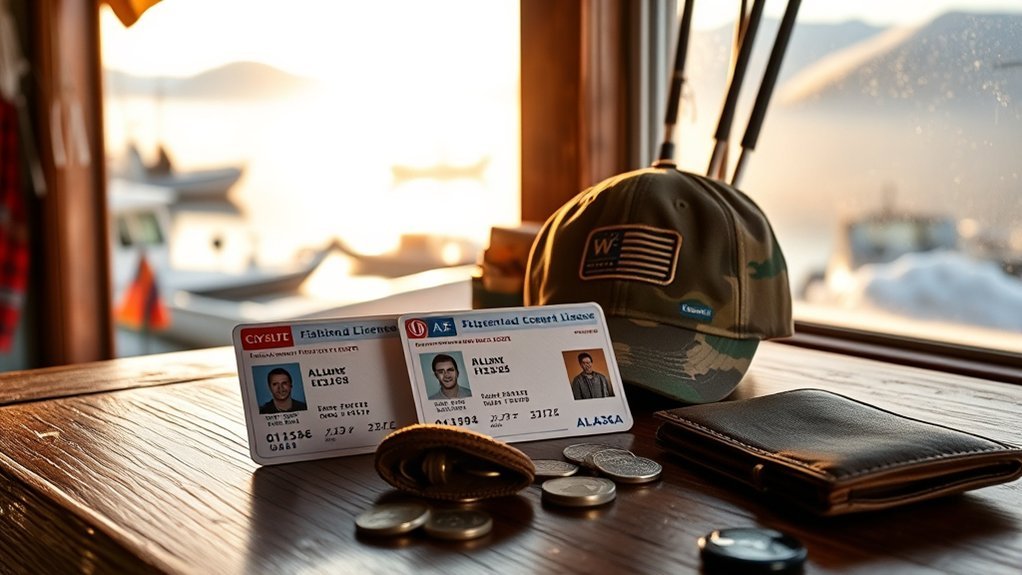
Alaska reduces cost barriers to sport fishing through targeted fee waivers and steep discounts for low‑income residents, eligible veterans, seniors, and military personnel.
You’ll find explicit low income options: Alaska residents who qualify can buy a low-income sport fishing license for $5 versus the standard $29, a clear policy tool to increase access.
Disabled veterans receive a full exemption and get sport fishing licenses at no cost, ensuring equitable participation. Residents 60+ can obtain a free ADF&G Permanent Senior ID Card that removes the standard license requirement.
Disabled veterans get free sport fishing licenses, and residents 60+ can get a free ADF&G senior ID that waives license fees.
For non-resident military personnel, the state provides military benefits by allowing purchase of an annual sport fishing license with a King Salmon Stamp priced at $30, compared with $100 for other non-residents.
These measures lower financial barriers, target vulnerable populations, and simplify enforcement.
If you qualify, follow agency verification rules and documentation requirements to secure the appropriate fee status and confirm entitlement before purchasing.
Products Worth Considering

12"x6" metal embossed plate made from aluminum MADE IN U.S.A.

【MATERIAL】: oFloral License plate frame is made from premium quality aluminum, which can provide long-lasting protection from corroding, rusting and aging, durability for long lasting usage.Personalized Car Frame Can Perfect to Put on Your Front of Car or for Decorative Purposes Around the House Like in Your Bedroom, Garage, Basement, Ect.

Material: Metal
License Validity Periods, Duplicates, and Short‑Term Passes
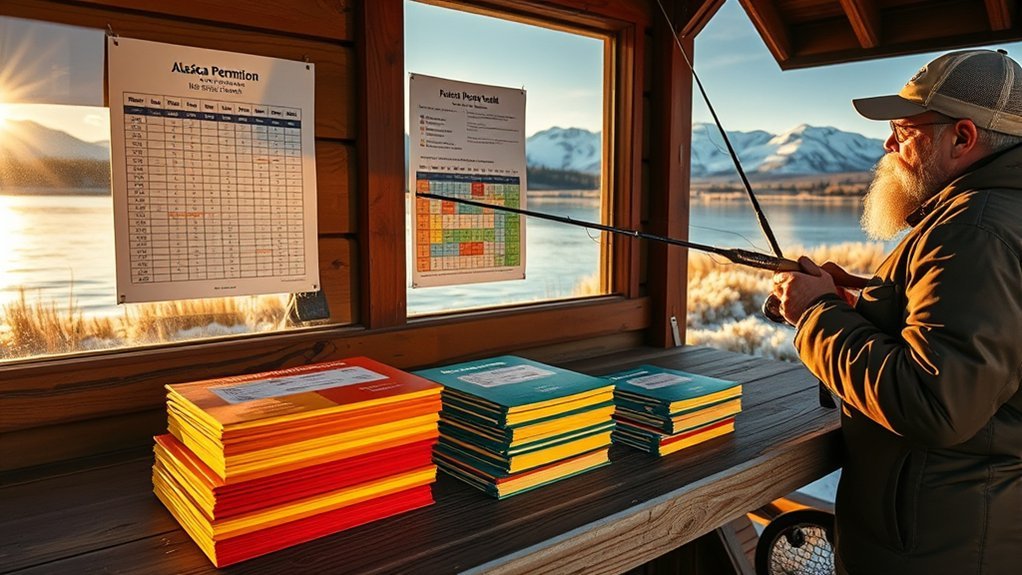
The fee relief options above affect who needs a license, but understanding how long licenses last and how to replace them matters for planning and compliance.
You’ll choose among fishing license types with explicit license duration options: 1-day ($25), 3-day ($45, valid 72 hours from purchase and popular with cruise passengers), 7-day ($70), 14-day ($105), and annual ($145). Purchase is required before fishing, and you must provide valid ID when applying.
You can replace a lost license quickly: duplicates cost $5.00 and restore compliance for the remainder of the original term.
Short-term passes are designed for tourists, giving flexible, legally compliant access during brief stays without buying an annual permit.
- Short-term options cover most visitor itineraries and reduce overbuying.
- The 3-day 72-hour rule aligns with cruise schedules and enforcement windows.
- Duplicate issuance at $5 minimizes downtime while preserving document control.
Penalties for Fishing Without a Valid License
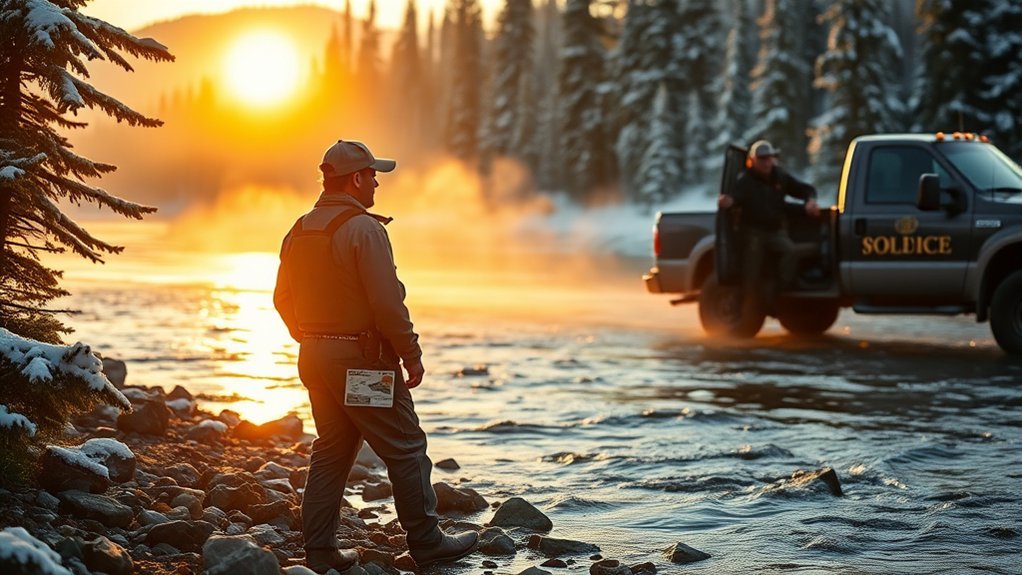
You can expect fines up to $200 for a first offense and additional citations if illegal catch is involved.
Enforcement can also seize your catch and gear for serious violations.
In repeat or egregious cases you may face criminal prosecution, so keep current with regulation changes.
Fines and Citations
Because fishing without a valid license is treated as a serious violation, you can face fines up to $200 for a first offense, with higher penalties possible depending on the nature and value of any illegal catch.
You’ll also encounter additional fines or charges tied to the severity of the violation; enforcement officers use documented case values to set penalties. Stay current with fishing regulations updates to avoid unintentional breaches. Officers patrol high-use areas as part of targeted enforcement strategies.
- Patrols at popular sites increase citation rates and visibility of compliance efforts.
- Penalty outcomes can include monetary fines, citation records, and equipment confiscation.
- Regular regulatory revisions change fine schedules and reporting requirements; check official notices.
Seizure of Catch
If you’re caught fishing without a valid Alaska license, enforcement officers can seize both the illegal catch and the gear used to take it, with first-offense fines reaching up to $200 and additional penalties tied to the value of the catch.
You’ll face confiscation of illegal catches and equipment; fishing enforcement teams patrol popular sites to verify licenses and enforce compliance.
Beyond the initial fine, civil penalties often scale with the species’ market value and quantity seized, creating a financial disincentive to offend.
Policy emphasizes rapid seizure to prevent market diversion and to preserve resource management goals.
Tourists and residents alike must carry proof of authorization; failing to do so risks immediate loss of catch, gear, and mounting administrative penalties under state regulations.
Criminal Prosecution
While administrative fines and seizures handle many infractions, criminal prosecution can follow more serious or repeat instances of fishing without a valid Alaska license and carries heightened legal consequences.
You’ll face criminal implications including fines up to $200 for first-time offenses, and additional charges for illegally caught fish that raise total penalties.
Enforcement measures are active: officers patrol popular sites, confiscate rods and catches, and refer cases for prosecution when violations are severe or repeated.
You should treat licensing as both legal compliance and resource stewardship to avoid escalation.
- First-time monetary penalty: up to $200, plus potential forfeiture of catch and gear.
- Repeat or aggravated cases: additional charges, higher fines, possible court action.
- Active enforcement measures: patrols, documentation, and prosecution referrals.
Frequently Asked Questions
Are Youth Under a Certain Age Always Exempt From Licenses?
No — you aren’t always exempt; youth fishing regulations vary by state and country, and license age exemptions depend on local statutes, residency, and species targeted, so you should check specific regulatory agency rules before fishing.
Can I Transfer My Alaska Fishing License to Someone Else?
No — you can’t transfer your Alaska fishing license to someone else. The license transfer process is prohibited under fishing license regulations; you’ll need the other person to obtain their own permit following state policy and fee requirements.
Do I Need a License to Fish From a Private Boat in State Waters?
About 90% of anglers need a license from a private boat in state waters, so you do need one. You’ll follow private boat regulations, report catches, and comply when fishing enforcement officers check permits and limits.
Are There Combined Hunting and Fishing License Discounts?
Yes — you can get combined license options; check discount eligibility by residency, age, and veteran status. State policy lists combined hunting-and-fishing permits, specific fees, and qualification criteria on the official licensing site for verification.
Are Fishing Licenses Refundable if Plans Change?
No, you usually won’t get refunds; license refund policies typically restrict fishing license cancellations to clerical errors or duplicate purchases, and agencies require documentation and short timeframes, so you should confirm specific state rules before buying.
Conclusion
You’ll need the right Alaska fishing license based on residency, species, and season — think of rules as precise as a tide chart. Check resident versus non‑resident fees, king salmon stamp and harvest card requirements, and special low‑income, disability, or military options before you fish. Buy licenses online, at vendors, or via phone; watch validity periods, duplicates, and short‑term passes. Fishing without a valid license carries fines and enforcement action, so comply.
