
North Carolina uses separate licenses for inland and coastal fishing, so an out-of-state angler must first identify the water classification. Annual and 10-day options are available, and either an inland or coastal license works in joint waters. Fees change on August 1, 2026, and a $5 transaction fee is added to the total order.
Quick Answer
Beginning August 1, 2026, a North Carolina non-resident fishing license costs $56 annually or $29 for 10 days in inland waters, and $40 annually or $15 for 10 days in coastal waters. Non-residents fishing both classifications generally need separate inland and coastal licenses, plus a $5 transaction fee per order.
Key Takeaways
- Anglers age 16 or older generally need a license to fish North Carolina public waters.
- An inland license covers inland and joint waters; a Coastal Recreational Fishing License covers coastal and joint waters.
- North Carolina does not offer a non-resident annual Unified Inland/Coastal fishing-only license.
- Licenses can be bought for immediate use online, by phone, from an agent, or at the Wildlife Resources Commission headquarters.
- Electronic license proof is accepted, but anglers should also carry picture identification.
- Size limits, seasons, closures, and mandatory harvest-reporting rules apply equally to residents and non-residents.
Fee update: The lower prices shown in the “Through July 31, 2026” column remain on North Carolina’s current coastal-license page. The state’s 2026–27 fishing guide lists the higher prices as effective August 1, 2026. Always confirm the final amount in the official purchasing portal before paying.
North Carolina Non-Resident Fishing License Fees
The correct license depends on where you plan to fish and how long you will be in the state. Annual licenses are normally valid for 12 months from the purchase date. Short-term inland and coastal licenses cover the 10-day period shown on the license.
| License | Water Coverage | Through July 31, 2026 | From August 1, 2026 |
| 10-Day Inland Fishing | Inland and joint waters | $28 | $29 |
| Annual State Inland Fishing | Inland and joint waters | $54 | $56 |
| 10-Day Coastal Recreational Fishing | Coastal and joint waters | $14 | $15 |
| Annual Coastal Recreational Fishing | Coastal and joint waters | $38 | $40 |
| Adult Lifetime Coastal Recreational Fishing | Coastal and joint waters only | $630 | $652 |
A $5 transaction fee is added to the total order. When both licenses are purchased in one transaction after August 1, 2026, the license cost is $44 for two 10-day licenses or $96 for two annual licenses, before the single $5 order fee.
For most non-resident visitors, the key choice is simple: buy an inland license for lakes and inland rivers, a coastal license for the ocean and estuaries, or both if the trip includes both water classifications.

This daily devotional helps parents pray purposefully for their children through a full year of Scripture readings, reflections, and guided prayer prompts. Written to encourage faithful family discipleship, it offers practical, biblically grounded support for parents who want to shape their prayers around God's Word. A foreword by Sinclair B. Ferguson adds trusted theological insight and encouragement.

These colorful answer buzzers turn lessons, review games, and family activities into lively game-show style challenges that boost participation and make learning more interactive. Each buzzer has a distinct sound to clearly identify who buzzed in first, while the durable, palm-sized design makes them easy for kids and adults to use in classrooms, homeschools, and group settings.

Stay organized with a durable 1-subject notebook set designed for school, note-taking, and digital study support. The college ruled pages resist ink bleed, tear out cleanly, and work with the Five Star Study App to create flashcards and sync notes to Google Drive. Tough pockets, a water-resistant cover, and Spiral Lock wire help protect your work throughout the year.
Who Needs a Non-Resident Fishing License?
Anyone age 16 or older who uses bait or fishing gear to catch finfish in North Carolina public waters generally needs a valid state fishing license. A license is issued to one person and cannot be lent, assigned, sold, or transferred.
Every adult who is actively fishing normally needs an individual license. One person’s license does not automatically cover a spouse, friend, or other adult aboard a private boat.
Common License Exemptions
- Youth: Anyone younger than 16 is exempt from the state fishing-license requirement.
- Private ponds: An inland license is not required for a qualifying private pond that lies wholly on private property and is isolated from public waters.
- Free Fishing Day: No fishing license is required in North Carolina public waters on July 4, although all seasons, size limits, bag limits, and gear rules still apply.
- Licensed piers and for-hire boats: An individual coastal license may not be needed when fishing from an ocean pier or for-hire vessel that holds the appropriate blanket license. Confirm coverage with the operator before fishing.
- Qualifying students: A non-resident attending a North Carolina university, college, or community college may purchase a resident license and should carry valid student identification.
- Military households: Non-resident members of the U.S. Armed Forces stationed in North Carolina, along with qualifying spouses and children younger than 18, are treated as residents for license-purchasing purposes.
Warning: Owning a vacation home, paying North Carolina property taxes, or receiving utility bills in the state does not automatically make an angler a resident for licensing purposes. Residency can be established in only one state.
Inland, Coastal, and Joint Waters Explained
North Carolina divides public fishing waters into three regulatory classifications:
- Inland waters include most freshwater lakes, reservoirs, streams, and inland rivers. A State Inland Fishing License is required.
- Coastal waters include the Atlantic Ocean, sounds, estuaries, and designated coastal rivers. A Coastal Recreational Fishing License is required to recreationally take finfish.
- Joint waters are managed by both the Wildlife Resources Commission and Division of Marine Fisheries. Either a valid inland fishing license or a Coastal Recreational Fishing License is sufficient in joint waters.
Use the state’s official coastal-license guidance and water-classification resources before buying. The name of a lake, river, sound, or coastal county alone does not always reveal its legal classification.
Pro Tip: Save a screenshot of the water classification and your digital license before leaving reliable cell service. This makes it easier to confirm that you bought the right product and to show your credentials when requested.
Boundary-Water Reciprocity
North Carolina recognizes certain Georgia, Tennessee, and Virginia hook-and-line licenses on specifically defined boundary waters. The agreements do not create statewide reciprocity, and North Carolina does not have a comparable agreement with South Carolina. Review the exact boundaries in the state’s current license information before relying on an out-of-state license.
Where to Purchase a Non-Resident License
A North Carolina fishing license can be purchased for immediate use through any of these channels:
- Online: Use the authorized Go Outdoors North Carolina portal.
- Mobile app: The Go Outdoors North Carolina mobile app can purchase and store digital licenses.
- Phone: Call 833-950-0575, Monday through Friday, 8 a.m. to 5 p.m.
- Wildlife Service Agent: Purchase from a participating tackle shop, sporting-goods store, major retailer, or other authorized agent.
- In person: Visit the Wildlife Resources Commission headquarters at 1751 Varsity Drive in Raleigh or a participating Division of Marine Fisheries office.
A $5 transaction fee is applied to the total order. Some products that require supporting documents may be limited to online, mail, or headquarters processing.
Electronic and Printed License Proof
Online purchases do not need to be mailed before they become valid. Anglers may use an electronic license in their Go Outdoors account or mobile app, the PDF attached to the purchase email, a printed copy, or an optional hard card.
Anyone using an electronic or physical license should carry picture identification showing the correct name, address, and date of birth. A driver’s license or state identification card is normally acceptable.
Rules and Limits for Non-Resident Anglers
Non-resident anglers follow the same seasons, minimum lengths, slot limits, bag limits, possession limits, gear restrictions, and closures as resident anglers. These rules can vary by species, waterbody, and date.
Review the current North Carolina inland fishing regulations and the Division of Marine Fisheries’ coastal recreational size and bag limits before each trip. Emergency proclamations and temporary rules can change a season or possession limit after a printed guide is issued.
Mandatory Harvest Reporting
Since December 1, 2025, recreational anglers must report any of the following fish they catch and keep in covered waters:
- Flounder
- Red drum
- Spotted seatrout, also called speckled trout
- Striped bass
- Weakfish, also called gray trout
The requirement applies in coastal fishing waters, joint fishing waters, and designated inland waters adjacent to coastal or joint waters. Released fish are not reported.
Electronic reports are due when the trip is complete—when a boat reaches shore or a shore-based angler stops fishing and stows the gear. Anglers using a paper report card have until midnight on the following day to complete the online report. Instructions and the reporting form are available through the North Carolina Division of Marine Fisheries.
Warning: A valid fishing license does not guarantee that a species is open to harvest. Check the current season, proclamation, size limit, bag limit, and reporting requirement before keeping any fish.
Bait, Artificial Lures, and Special Gear
A non-resident license does not create separate bait or artificial-lure rules. Gear restrictions depend on the species, water, season, and fishing method.
Ordinary inland and coastal licenses mainly cover recreational hook-and-line fishing and other authorized methods. Commercial-style devices, certain nets, pots, traps, gigs, or special inland devices may require a Recreational Commercial Gear License, Special Device Inland Fishing License, or another permit. Never assume a standard rod-and-reel license covers commercial gear.
Sale of Recreational Catch
Finfish taken under a Coastal Recreational Fishing License are for personal consumption and cannot be sold. A standard recreational license also does not turn a recreational trip into a commercial fishing operation.
Tournament and Exemption Permits
Organized coastal events may use a Coastal Recreational Fishing License Exemption Permit to cover participants who would otherwise need individual coastal licenses. The organizer must submit all required information in writing at least 30 days before the event and receive approval before relying on the exemption.
A recreational tournament that plans to sell fish caught during the event must obtain a Recreational Fishing Tournament License to Sell Fish. Fish taken under an ordinary recreational exemption or standard recreational license cannot simply be sold without the required tournament authority.
- Confirm whether the event is in inland, coastal, or joint waters.
- Apply for any exemption at least 30 days in advance.
- Do not advertise fish sales until the appropriate tournament license is approved.
- Continue to follow all species seasons, size limits, bag limits, possession limits, and reporting rules.
Official permit descriptions and applications are available on the Division of Marine Fisheries recreational-license page.

This Command Variety Pack provides a versatile, damage-free way to organize and decorate homes, dorms, apartments, and offices without tools. It includes a mix of picture hanging strips and hooks designed for smooth surfaces, helping you hang decor, accessories, and everyday essentials with a clean white finish that blends into light-colored spaces. With reusable hardware and replacement strip compatibility, it offers convenient, tidy storage and display solutions.

This bright white cardstock delivers smooth, professional-quality printing for projects at home, school, or the office. Its sturdy 65 lb weight adds durability for covers, signs, table tents, and other creative uses, while acid-free construction helps preserve your work over time. Compatible with inkjet, laser, copier, and offset printing, it provides reliable results across a wide range of applications.

This heartfelt memoir blends laugh-out-loud honesty with tender reflections on love, loneliness, and the unexpected healing power of rescue dogs. Isabel Klee shares her journey fostering pups in the city while navigating dating and self-discovery, offering an intimate, relatable story for readers who enjoy emotional, character-driven narratives. It is a warm, engaging read about opening your heart and finding connection in surprising places.
Lifetime and Special-Rate Licenses
A non-resident may purchase an adult Lifetime Coastal Recreational Fishing License. It covers coastal and joint waters but does not authorize fishing in inland waters. The adult non-resident price is $630 through July 31, 2026 and $652 beginning August 1, 2026.
The fishing-only Unified Inland/Coastal annual and lifetime licenses are resident-only. Non-residents who want ordinary annual access to both classifications should normally buy separate inland and coastal licenses.
North Carolina also offers some lifetime sportsman combinations that include hunting and fishing privileges. These cost far more than a standard fishing license and should be reviewed carefully before purchase.
Resident-Only Reduced Fees
Reduced or free licenses for disabled veterans, people who are totally disabled, legally blind residents, adult-care-home residents, seniors, and qualifying subsistence applicants are generally North Carolina resident programs. The state does not treat another state’s disability license as a substitute.
A visitor who may qualify for resident treatment because of military service or enrollment at a North Carolina school should confirm eligibility before purchasing a non-resident license.
Replacing a Lost Fishing License
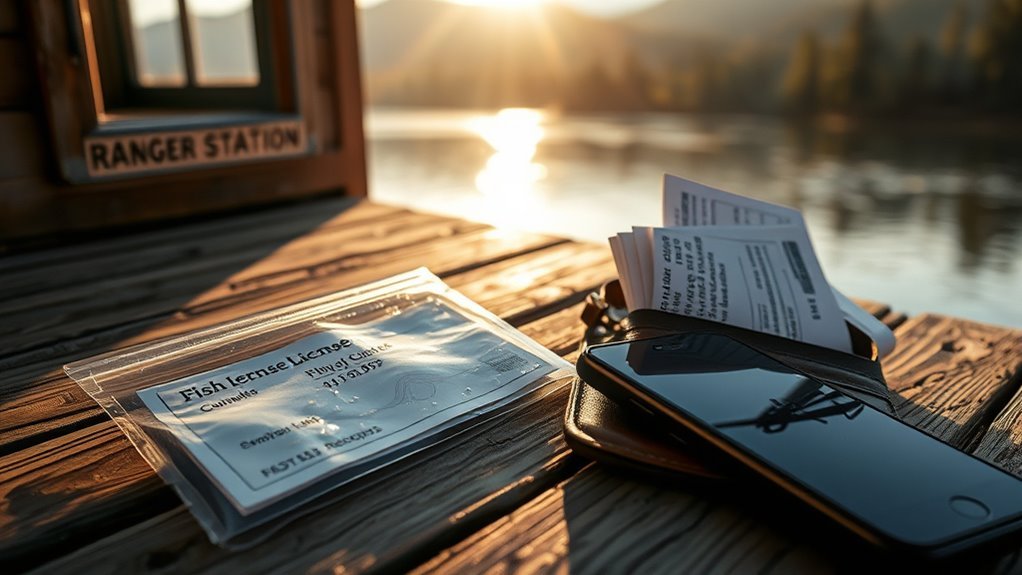
First, sign in to the Go Outdoors North Carolina account or mobile app. A digital copy may still be available even if the printed copy or hard card is lost. The PDF from the purchase-confirmation email may also serve as valid electronic proof.
The Division of Marine Fisheries FAQ states that a lost Coastal Recreational Fishing License may be reissued for a $5 fee. Contact NCWRC customer service at 833-950-0575 when the license cannot be retrieved electronically or when a formal reissue is needed.
Do not purchase an entirely new annual license unless the agency or authorized sales system instructs you to do so.
Frequently Asked Questions
Does one North Carolina non-resident license cover freshwater and saltwater fishing?
No. A State Inland Fishing License covers inland and joint waters, while a Coastal Recreational Fishing License covers coastal and joint waters. A non-resident who plans to fish both inland and coastal waters generally needs both licenses.
Are family or group discounts available for non-resident licenses?
North Carolina does not list a general non-resident family discount. Each adult angler normally needs an individual license. A licensed ocean pier, blanket-licensed for-hire boat, approved event exemption, or qualifying private-vessel license block may cover anglers in limited situations.
Can an out-of-state visitor buy a North Carolina license online before arriving?
Yes. The authorized Go Outdoors North Carolina portal can be used from outside the state. The electronic license can be available for immediate use after the transaction is completed.
Must I carry a printed fishing license?
No. An electronic license stored in the Go Outdoors account or app, the PDF from the confirmation email, a printed copy, or an optional hard card may be used. Carry picture identification and keep the license accessible to an enforcement officer.
Do non-residents have different bait or artificial-lure rules?
Not simply because they are non-residents. Bait, lure, hook, and gear rules depend on the species, waterbody, season, and fishing method. Residents and non-residents fishing the same water must follow the same applicable restrictions.
Does a fishing license include boat registration?
No. Fishing licenses and vessel registrations are separate. North Carolina requires registration for motorized vessels used on public waters and for certain sailboats, while paddle-only canoes, kayaks, rowboats, and rafts are generally exempt.
Do I need a coastal fishing license to catch crabs, oysters, or clams?
The Coastal Recreational Fishing License is primarily required for the recreational taking of finfish. The state FAQ says it is not required solely to catch shellfish or to catch crabs with bait and line, but separate gear, season, size, and harvest rules may still apply.
Conclusion
Choose a North Carolina non-resident fishing license by water classification first and trip length second. Buy an inland license for inland and joint waters, a coastal license for coastal and joint waters, or both for a trip that crosses classifications. Keep electronic proof and picture identification available, check current limits before fishing, and report any covered species that you catch and keep.
Sources
- North Carolina Fishing Licenses — 2026–27 license types, water coverage, and fees.
- North Carolina License Information — purchasing methods, transaction fee, identification rules, residency, exemptions, and reciprocal waters.
- North Carolina Recreational Fishing Licenses — coastal-license requirements, lifetime options, event exemptions, and tournament permits.
- North Carolina Coastal Recreational Size and Bag Limits — current coastal limits, closures, and proclamation guidance.
- Mandatory Recreational Harvest Reporting — reportable species, covered waters, deadlines, and reporting methods.
- North Carolina Vessel Registration and Titling — boat registration requirements and exemptions.

This kid-friendly cookbook helps young chefs build confidence in the kitchen with more than 100 recipes designed for fun, learning, and delicious results. Created by America's Test Kitchen Kids, it offers approachable instructions, helpful guidance, and a wide range of dishes that make cooking and eating an engaging family activity.

These Rawlings practice baseballs are built for young players ages 8 and under, offering an easy grip and consistent feel for recreational play. Each ball features a synthetic leather cover with a solid cork and rubber center, plus official size and weight for reliable training. The set includes a durable bucket for convenient storage and transport, making it a smart choice for coaches, parents, and teams.

Built for demanding outdoor and survival tasks, this Special Forces Shovel combines a medium carbon steel blade with a sturdy hardwood hickory handle for dependable strength and control. Its broad flat blade and sharp edges make it useful for digging, chopping, and field work, while the rugged design supports a wide range of campsite and emergency applications.
