
Alaska fishing license rules can feel simple until age, residency, King Salmon, and harvest records enter the picture. You’ll usually need a sport fishing license in Alaska if you’re a resident 18 or older or a non-resident 16 or older. A standard resident annual license is $29, while non-resident options range from $25 for a 1-day license to $145 for an annual license. If you target King (Chinook) salmon, you may also need a King Salmon Stamp and a harvest record.
What’s in This Article
- Who Needs a Fishing License in Alaska?
- Resident License Types and Eligibility Requirements
- Non-Resident License Options and Pricing
- King Salmon Stamp and Harvest Record Card Rules
- License Purchase Locations and Formats
- Special Licenses: Low-Income, Disability, and Military Options
- License Validity Periods, Duplicates, and Short-Term Passes
- Penalties for Fishing Without a Valid License
- Frequently Asked Questions
Quick Answer
You need an Alaska sport fishing license if you’re a resident 18 or older or a non-resident 16 or older. Residents pay $29 for a standard annual license, while non-residents can buy 1-day, 3-day, 7-day, 14-day, or annual options. You also need a King Salmon Stamp if you target King Salmon, unless an age-based exemption applies.
Key Takeaways
- Alaska requires residents 18 and older and non-residents 16 and older to carry a sport fishing license.
- Non-resident short-term licenses work well for cruise trips, guided charters, and short vacations.
- You need a King Salmon Stamp when targeting King Salmon unless an exemption applies.
- Some residents may qualify for low-income, senior, disability, blind, or veteran license options.
- You should carry proof of your license, stamp, and harvest record while fishing.
Who Needs a Fishing License in Alaska?
If you plan to fish in Alaska, you must follow clear age and residency rules. Residents 18 and older and non-residents 16 and older need a valid sport fishing license.
Some residents can fish without a standard license in limited cases. These exemptions often depend on age, disability, veteran status, or a special Alaska Department of Fish and Game credential.
You’ll need an extra King Salmon Stamp if you target King Salmon, unless you’re a resident under 18 or a non-resident under 16. You may also need a free Sport Fishing Harvest Record Card in fisheries with annual limits.
Licenses, stamps, and record cards are available online, at Fish and Game offices, and through licensed vendors across Alaska. You should carry proof of purchase and check local fishing regulations before you fish.
License checks focus on age, residency, species, fishing area, and required stamps or harvest records. Officers may ask to see your documents during routine patrols.
Resident License Types and Eligibility Requirements
Alaska requires most residents 18 and older to hold a sport fishing license. The standard annual resident license is $29, but the state offers several lower-cost or no-cost options.
A qualifying low-income resident can buy a low-income sport fishing license for $5. A special blind license costs $0.50, and residents 60 or older may use a Permanent Senior ID Card for license-free fishing.
Qualifying disabled veterans may receive sport fishing licenses at no cost. Children under 18 do not need a sport fishing license, but they must carry a free Harvest Record Card where rules require one.
You should match your license to your age, income, disability, veteran status, and residency record. Keep proof with you when you fish, especially if you claim a reduced fee or exemption.
- Standard resident annual license
- Low-income resident license
- Special blind license
- Permanent Senior ID Card for eligible residents 60 and older
- No-cost options for qualifying disabled veterans
Products Worth Considering

12"x6" metal embossed plate made from aluminum MADE IN U.S.A.

DURABLE IDENTIFICATION: Made from water-resistant Silicone, these luggage tags withstand baggage handling with your contact details clearly displayed.

Material: Metal
Non-Resident License Options and Pricing
Non-residents can choose from several sport fishing license options based on trip length. A 1-day license costs $25, a 3-day license costs $45, a 7-day license costs $70, a 14-day license costs $105, and an annual license costs $145.
You should choose your license based on how long you’ll fish and whether you may return later in the license year. The annual license often makes sense for repeat visitors or longer trips.
Choose your non-resident license by trip length first, then add a King Salmon Stamp if you plan to target King Salmon.
Non-resident licenses allow sport fishing in Alaska, but they don’t override local seasons, gear rules, bag limits, or area closures. You must still check the regulations for the exact water you plan to fish.
Some special rules may apply to Yukon Territory residents and non-resident military members. Confirm your status before buying so you don’t pay for the wrong license.
Pro tip: If you fish for more than one week, compare the 14-day and annual license before you buy.
Products Worth Considering

Durable Material: Car license plate is crafted from high-quality ETP (electrolytic tinplate) with 2 layers of clear epoxy lacquer coating making the car tag water-proof, rust-proof, and weather-resistant
Decorative Item Only: This product is a vintage-style decorative license plate, crafted as a replica/artifact. It is NOT a real license plate and cannot be used as such. Please comply with all applicable laws—it must NOT be mounted on any vehicle to replace, cover, or imitate an official license plate. Use only for indoor or outdoor decoration where legally permitted.

Heavy-duty automotive aluminum – Stop settling for thin metal that bends. Crafted from durable aluminum, this plate is built to withstand car washes and harsh weather without denting or rusting, making it a reliable choice for any vehicle.
King Salmon Stamp and Harvest Record Card Rules
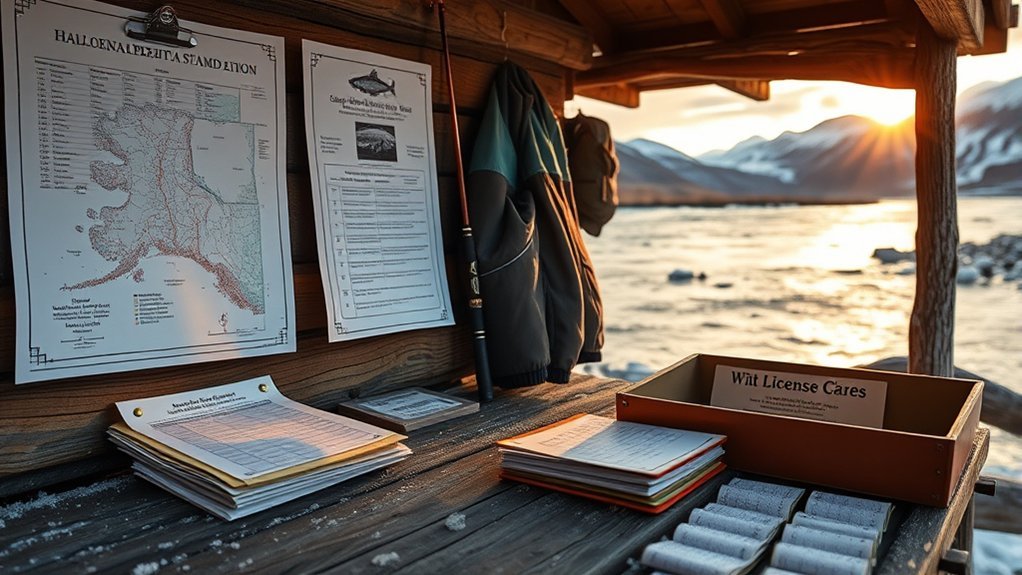
King (Chinook) salmon fishing has extra rules because annual harvest limits matter. If you target King Salmon, you’ll usually need a King Salmon Stamp in addition to your sport fishing license.
Residents pay $10 for a King Salmon Stamp. Non-residents can choose a 1-day stamp for $15 or an annual stamp for $100, while eligible non-resident military members may pay $30 annually.
You may also need a Sport Fishing Harvest Record Card to record fish kept under annual limits. This card helps managers track harvest and enforce catch limits.
You must carry and complete the harvest record when rules require it. A charter captain or guide may help you record entries, but you remain responsible for accurate reporting.
- Buy and carry the King Salmon Stamp when required.
- Get a Harvest Record Card before fishing in covered fisheries.
- Record harvested King Salmon right away.
- Check local King Salmon rules before each trip.
Warning: King Salmon rules can vary by area, so check emergency orders before targeting them.
License Purchase Locations and Formats
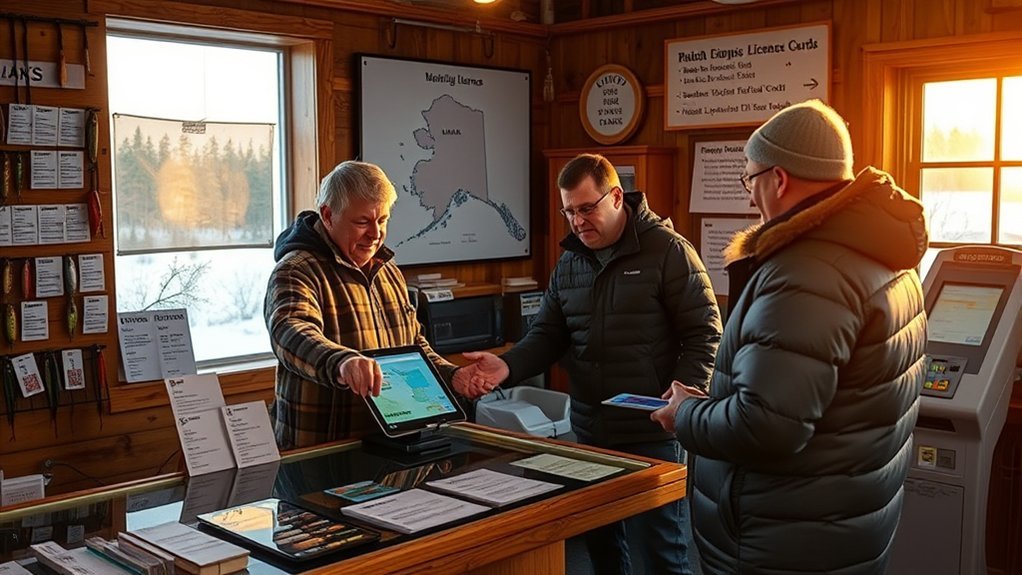
You can buy Alaska fishing licenses online through the Alaska Department of Fish and Game. Online purchases usually let you print or save proof right away.
You can also buy licenses at Fish and Game offices and licensed retailers, including sporting goods stores, local tackle shops, and some large retailers. Some charter operators may help guests handle licenses before a guided trip.
Licenses may come as electronic, printed, eSigned, or carbon-copy versions. Choose the format you can show quickly if an officer asks to check your documents.
If you lose your license, you can request a duplicate for $5.00. A duplicate helps you stay compliant for the rest of the original license term.
Products Worth Considering

PROOF will NOT be sent, so please ensure all spelling is accurate. We COPY and PASTE to avoid mistakes.

"5x3 Inch Standard Size Perfect compact Alaska city sticker size for car bumpers, trucks, laptops, water bottles, coolers, and travel gear."

Where to Buy
Buying online can save time because you can complete the purchase before your trip. Confirm your residency status, license dates, and King Salmon plans before you pay.
Fish and Game offices can help if you need policy guidance or special license support. Local tackle shops and retailers can offer quick issuance plus local fishing tips.
- Buy online for fast access and easy records.
- Visit Fish and Game offices for in-person help.
- Use local retailers when you need a same-day license.
- Ask your charter operator what licensing help they provide.
Purchase Formats Available
You can use online, printed, eSigned, or carbon-copy license formats when they meet inspection rules. The key point is simple: you must show readable proof when asked.
Electronic formats can work well if your phone has battery and service. Printed copies may feel safer in remote areas where screens, weather, or weak signal can cause problems.
Charter trips may include license help, but you should still verify the species, dates, and stamp coverage. Don’t assume a charter license covers King Salmon unless the operator confirms it.
Getting Duplicate Licenses
If you lose your license, request a duplicate before you fish again. The duplicate fee is $5.00 and applies to the replacement copy, not a new license term.
Keep receipts, screenshots, or printed proof in a safe place. This simple habit can reduce stress during a license check.
- Request a duplicate online or through an approved seller.
- Carry the replacement copy for the original license period.
- Keep proof in more than one place when traveling.
Special Licenses: Low-Income, Disability, and Military Options
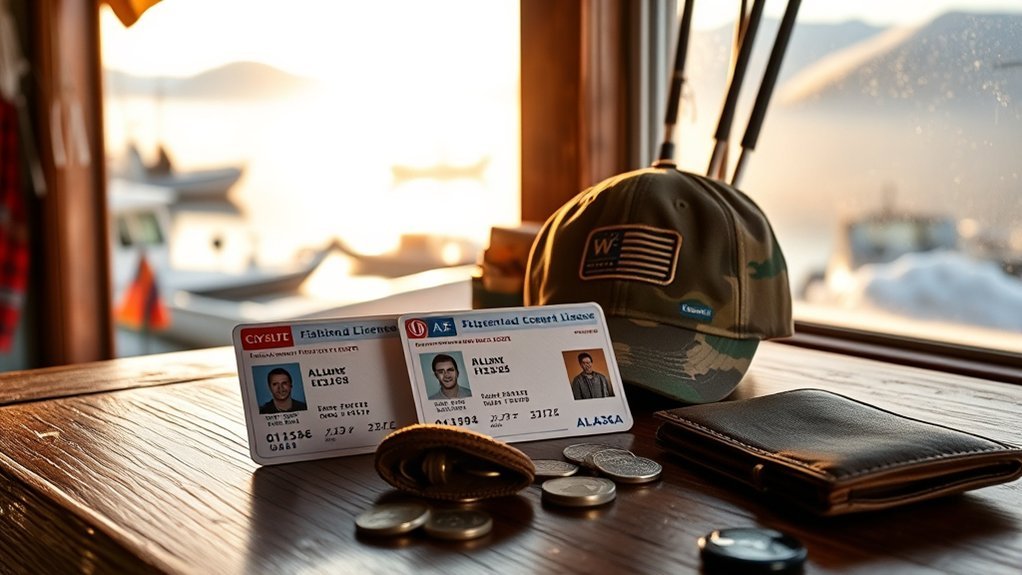
Alaska offers reduced-cost and no-cost fishing options for some residents and military members. These programs can lower the cost of legal sport fishing.
Eligible low-income Alaska residents can buy a low-income sport fishing license for $5 instead of the standard $29 resident annual fee. Residents who qualify for a special blind license may pay $0.50.
Qualifying disabled veterans may receive sport fishing licenses at no cost. Residents 60 and older may qualify for a free Permanent Senior ID Card that removes the standard license requirement.
Disabled veterans, seniors, low-income residents, and some military members may qualify for reduced-cost or no-cost fishing credentials.
Eligible non-resident military personnel may buy an annual King Salmon Stamp at a reduced rate of $30. You should confirm your documents before purchase because special rates require proof.
These options help more people fish legally while keeping enforcement clear. If your status changes, update your records before your next trip.
License Validity Periods, Duplicates, and Short-Term Passes
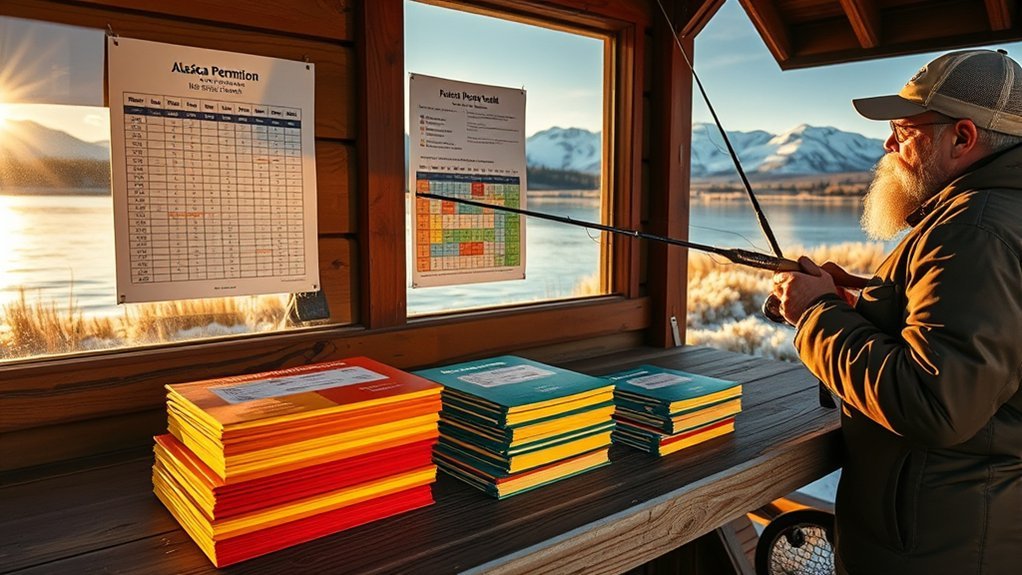
Your license duration affects both cost and compliance. Non-residents can choose 1-day, 3-day, 7-day, 14-day, or annual licenses based on trip length.
A 3-day non-resident license costs $45 and works well for many cruise passengers or short-stay visitors. A 14-day license costs $105, while the annual option costs $145.
Buy your license before you start fishing, not after you reach the water. You should also have valid identification when buying or carrying your license.
If you lose your license, a $5.00 duplicate can restore your proof for the remaining term. This prevents a lost document from turning into a compliance problem.
- Short-term licenses help visitors avoid paying for unused fishing days.
- Annual licenses can save money for repeat trips.
- Duplicate copies keep you covered after loss or damage.
Penalties for Fishing Without a Valid License
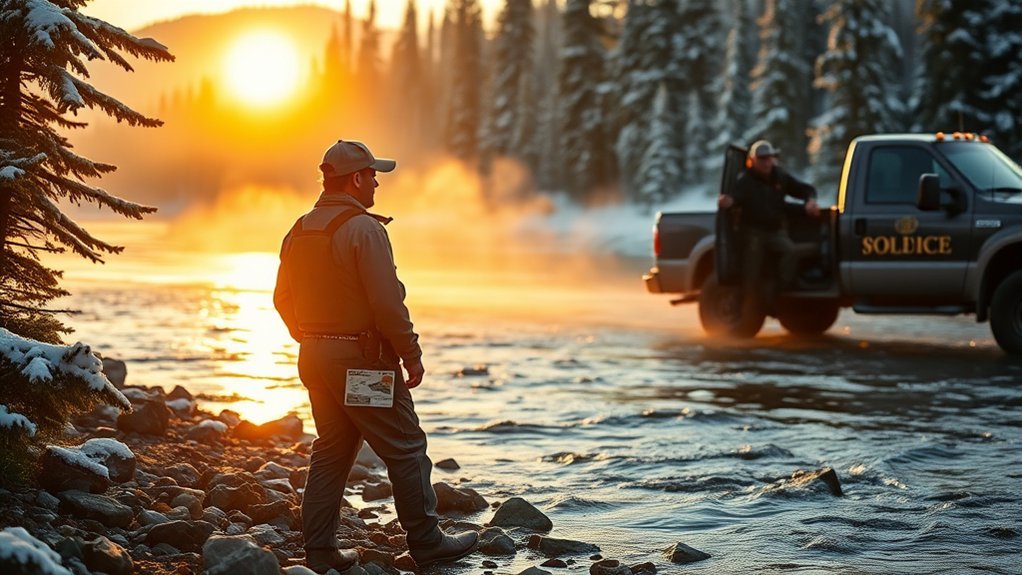
Fishing without a valid Alaska license can lead to fines, citations, and loss of catch. A first offense may result in a fine up to $200, and illegal catch can add more penalties.
Officers may also seize fish and gear in serious cases. Repeat or aggravated violations can lead to court action.
You can avoid most issues by buying the right license, carrying proof, and checking current rules before each trip. Emergency orders and local limits can change fishing access fast.
Fines and Citations
Fishing without a valid license can bring a citation and a fine. The amount can depend on the violation, the species involved, and the value of any illegal catch.
Officers often patrol popular fishing areas during busy seasons. You should expect license checks at boat launches, riverbanks, docks, and charter return points.
- Carry your license and stamp proof every time you fish.
- Check the rules before keeping fish.
- Review emergency orders before targeting salmon.
Seizure of Catch
If you fish without proper authorization, officers may seize your catch. In serious cases, they may also seize gear used in the violation.
Catch seizure helps protect fish stocks and prevents illegal harvest from entering markets or personal freezers. It also creates a strong reason to follow license and reporting rules.
Criminal Prosecution
Most simple license issues may lead to fines or citations, but repeat or serious violations can escalate. Court action becomes more likely when someone ignores rules, keeps illegal fish, or violates orders on purpose.
You should treat licensing as both a legal duty and a conservation step. The safest approach is to buy the right license before you cast.
- First-time violation: Possible fine, citation, and loss of catch.
- Serious violation: Possible gear seizure and more penalties.
- Repeat violation: Possible court action and higher consequences.
What to Check Before You Fish in Alaska
Before you fish, confirm three things: your license, your target species, and the rules for that exact location. Alaska’s sport fishing rules can change by region, river, season, and emergency order.
You should also check whether your trip requires a King Salmon Stamp or Harvest Record Card. This matters most if you plan to target salmon or fish with a guide.
Keep your license proof, stamp proof, ID, and harvest record together. That makes a field check much easier.
Frequently Asked Questions
Are Youth Under a Certain Age Always Exempt From Licenses?
No, youth exemptions depend on residency and age. Alaska residents under 18 and non-residents under 16 generally do not need a sport fishing license, but they may still need a harvest record where rules require one.
Can I Transfer My Alaska Fishing License to Someone Else?
No, you can’t transfer your Alaska fishing license to another person. Each angler must have their own license, stamp, and harvest record when required.
Do I Need a License to Fish From a Private Boat in State Waters?
Yes, you usually need a license when fishing from a private boat in Alaska state waters. Boat ownership does not replace the license requirement for anglers who meet the age and residency rules.
Are There Combined Hunting and Fishing License Discounts?
Yes, Alaska offers combined hunting and fishing license options for some buyers. Your eligibility and fee depend on residency, age, military status, and other qualifying details.
Are Fishing Licenses Refundable if Plans Change?
Fishing licenses are usually not refundable just because your plans change. Before buying, check your dates, residency status, license type, and King Salmon plans carefully.
Legal Disclaimer: This article is for informational purposes only and does not provide legal advice. Always check current Alaska Department of Fish and Game rules or speak with the proper agency before making licensing decisions.
Conclusion
The right Alaska fishing license depends on your age, residency, trip length, and target species. Before you fish, confirm whether you need a sport fishing license, King Salmon Stamp, and Harvest Record Card. Buy your license early, keep proof with you, and check local rules for the water you plan to fish. A few minutes of planning can help you avoid fines and enjoy your Alaska fishing trip with confidence.
