
Planning a fishing trip to Alaska starts with choosing the correct license for your age, residency, trip length, and target species. For 2026, the standard resident annual sport fishing license is $20, while nonresident licenses range from $15 for 1 day to $100 annually. King salmon anglers may also need a separate stamp, and some fisheries have additional permit or harvest-record rules.
Quick Answer
An Alaska resident annual sport fishing license costs $20 in 2026. Nonresident licenses cost $15 for 1 day, $30 for 3 days, $45 for 7 days, $75 for 14 days, or $100 annually. Most anglers targeting king salmon also need a stamp, and some fisheries require extra permits or harvest records.
For a nonresident fishing for king salmon, the combined license-and-stamp cost is $30 for 1 day, $60 for 3 days, $90 for 7 days, $150 for 14 days, or $200 annually. A king salmon stamp is generally not required for king salmon stocked in lakes.
Key Takeaways
- Resident annual license: $20, valid from the purchase date through December 31.
- Nonresident licenses: $15 to $100, depending on whether the license covers 1, 3, 7, 14, or all remaining days of the calendar year.
- King salmon: Most licensed anglers need a separate stamp, but youth, senior ID holders, disabled-veteran ID holders, and certain reduced-fee resident license holders are exempt.
- Harvest recording: Fish subject to annual limits must be recorded immediately using the record required for that fishery, such as the license, ADF&G mobile system, harvest record card, or a fishery-specific permit.
- 2026 Upper Copper River rule: Anyone targeting king salmon in the Upper Copper River drainage needs the free fishery-specific permit and must follow its reporting rules.
- Before fishing: Check the regulations and emergency orders for the exact area because seasons, methods, and limits can change during the year.
Alaska Fishing License Costs for 2026
The following table compares the main sport fishing products listed by the Alaska Department of Fish and Game. The combined total applies only when a king salmon stamp is required.
| License type | Base license | King salmon stamp | Combined cost |
|---|---|---|---|
| Resident annual | $20 | $10 | $30 |
| Resident low-income annual | $5 | Not required | $5 |
| Resident blind annual | $0.50 | Not required | $0.50 |
| Resident National Guard / Military Reserves | $0 | $10 | $10 |
| Nonresident 1-day | $15 | $15 | $30 |
| Nonresident 3-day | $30 | $30 | $60 |
| Nonresident 7-day | $45 | $45 | $90 |
| Nonresident 14-day | $75 | $75 | $150 |
| Nonresident annual | $100 | $100 | $200 |
| Nonresident military annual | $20 | $30 | $50 |
| Yukon reciprocal annual | $20 | $10 | $30 |
Annual sport fishing licenses are valid from the date of purchase through December 31. They do not remain valid for 12 months after purchase. Short-term nonresident licenses cover only their stated 1-, 3-, 7-, or 14-day period.
Who Needs an Alaska Fishing License?
Alaska residents must purchase and possess a sport fishing license beginning at age 18. Nonresidents must have one beginning at age 16. These requirements apply when sport fishing in both fresh and marine waters.
- Alaska residents younger than 18: No sport fishing license required.
- Nonresidents younger than 16: No sport fishing license required.
- Resident seniors aged 60 or older: May fish under a free ADF&G Permanent Identification Card after applying and qualifying.
- Qualifying resident disabled veterans: May fish under a free ADF&G Disabled Veteran Identification Card.
Age or identification-card exemptions do not remove every recordkeeping obligation. An exempt angler fishing in a water with an annual harvest limit may still need to carry a free harvest record card and record retained fish immediately.
Who Qualifies as an Alaska Resident?
For standard resident licensing, a person generally must have maintained a domicile in Alaska for the previous 12 consecutive months, intend to remain in the state, and not claim residency benefits in another state, territory, or country. Special rules apply to active-duty military members, Coast Guard members, and their dependents.
Note: Owning property or a business in Alaska does not automatically make someone eligible for resident fishing-license prices.
Resident License Types and Costs
The standard Alaska resident annual sport fishing license costs $20. It is the base authorization for sport fishing in fresh and salt water, but species stamps, harvest records, permits, annual limits, and area closures may still apply.
- Standard resident annual sport fishing license: $20.
- Resident low-income license: $5 for a combined annual sport fishing, hunting, and trapping license. Applicants must meet Alaska residency and household-income requirements.
- Resident blind sport fishing license: $0.50 annually.
- Resident senior Permanent Identification Card: Free for qualifying Alaska residents aged 60 or older.
- Resident disabled-veteran Identification Card: Free for qualifying residents with a certified service-related disability of at least 50%.
- Replacement standard license: $5.
- Qualifying resident National Guard or military reserve license: Complimentary annual hunting, trapping, and sport fishing license for eligible Alaska residents actively serving in listed Guard or reserve components.
People fishing under a resident low-income license, blind license, senior ID, or disabled-veteran ID do not need to buy a king salmon stamp. The complimentary resident National Guard or military reserve license is not listed among the king-stamp exemptions, so a $10 resident king salmon stamp is still required when applicable. Any angler may also need a harvest record or fishery-specific permit when annual limits apply.
Products Worth Considering

12"x6" metal embossed plate made from aluminum MADE IN U.S.A.

DURABLE IDENTIFICATION: Made from water-resistant Silicone, these luggage tags withstand baggage handling with your contact details clearly displayed.

Material: Metal
Military and Disabled Veteran Discounts
Active-duty members of the U.S. military or Coast Guard who are permanently stationed in Alaska for less than 12 months may purchase a nonresident military annual sport fishing license for $20. Their qualifying dependents may use the same discounted category. The nonresident military annual king salmon stamp costs $30.
Alaska residents actively serving in the Alaska National Guard or the U.S. Army, Air Force, Navy, Marine Corps, or Coast Guard Reserves may qualify for a complimentary annual hunting, trapping, and sport fishing license. This is a separate resident benefit from the discounted nonresident military license.
After being permanently stationed in Alaska for 12 consecutive months, qualifying military members and dependents may purchase resident licenses under Alaska’s military residency provisions. They do not necessarily have to surrender legal residency in another state to use this specific licensing rule.
Resident disabled veterans with a certified service-related disability of 50% or greater may apply for a complimentary permanent ADF&G identification card. Applicants must maintain Alaska residency, and the card becomes invalid if that residency ends.
Nonresident License Options and Pricing
Nonresident anglers can choose a license based on the number of days they expect to fish:
- 1-day license: $15
- 3-day license: $30
- 7-day license: $45
- 14-day license: $75
- Annual license: $100
When a nonresident king salmon stamp is required, its duration and price generally match the base fishing license: $15 for 1 day, $30 for 3 days, $45 for 7 days, $75 for 14 days, or $100 annually.
Qualifying Yukon Territory residents may purchase a special annual reciprocal sport fishing license for $20. The corresponding annual reciprocal king salmon stamp costs $10. This reciprocity does not convert every short-term nonresident product to a resident-priced license.
Pro Tip: Count the days on which you will actually fish, not the total length of your vacation. A 7-day license is cheaper than buying three separate 3-day licenses, while an annual license becomes the better base-license value once multiple trips would cost more than $100.
Products Worth Considering

Durable Material: Car license plate is crafted from high-quality ETP (electrolytic tinplate) with 2 layers of clear epoxy lacquer coating making the car tag water-proof, rust-proof, and weather-resistant
Decorative Item Only: This product is a vintage-style decorative license plate, crafted as a replica/artifact. It is NOT a real license plate and cannot be used as such. Please comply with all applicable laws—it must NOT be mounted on any vehicle to replace, cover, or imitate an official license plate. Use only for indoor or outdoor decoration where legally permitted.

Heavy-duty automotive aluminum – Stop settling for thin metal that bends. Crafted from durable aluminum, this plate is built to withstand car washes and harsh weather without denting or rusting, making it a reliable choice for any vehicle.
King Salmon Stamps and Harvest Record Rules
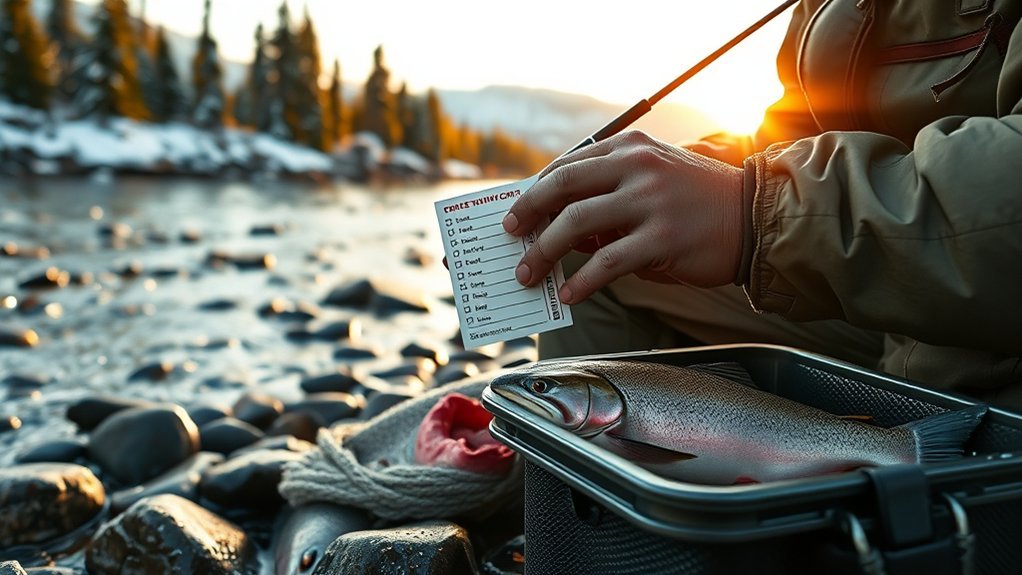
Most licensed anglers who fish for king or Chinook salmon must purchase a king salmon stamp. The stamp is required when attempting to catch king salmon, not only when a fish is retained.
A king salmon stamp is generally not required for:
- King salmon stocked in lakes.
- Alaska residents younger than 18.
- Nonresidents younger than 16.
- Resident senior Permanent Identification Card holders.
- Resident disabled-veteran Identification Card holders.
- Residents using a qualifying low-income license.
- Residents using a blind sport fishing license.
Stamp-exempt anglers are not automatically exempt from annual-limit recording requirements. When the fishery has an annual harvest limit, they may need a free Sport Fishing Harvest Record Card.
How to Record Fish Subject to an Annual Limit
When a retained fish is subject to an annual limit, record the required information immediately under the rules for that fishery. The normal method may be a paper license, electronic license/mobile app, or harvest record card, but a fishery-specific permit can replace the standard record.
- On the back of a paper sport fishing license when that license is the required harvest record.
- In the ADF&G Mobile App or on an electronic license when that method is authorized for the fishery.
- On a separate, nontransferable Sport Fishing Harvest Record Card when one is required.
- On a fishery-specific permit when current regulations or an emergency order require that permit instead.
Free Sport Fishing Harvest Record Cards are available online, through participating license vendors, and at ADF&G offices. Carry the required record while fishing, make entries immediately when required, and retain a harvest record card through the end of the fishing season. Follow any separate reporting deadline printed on a fishery-specific permit.
2026 Upper Copper River King Salmon Permit
In 2026, anyone targeting king salmon in the Upper Copper River drainage must obtain the free Upper Copper River King Salmon Sport Fishery Permit. The permit is required for residents, nonresidents, youth anglers, senior ID holders, and disabled-veteran ID holders. It must be carried while fishing; required harvest must be recorded on the permit, and permit holders must report online by August 31, 2026, even if they did not fish or did not harvest a king salmon.
Note: Upper Copper River king salmon limits and methods have also changed by emergency order during 2026. Check the current order for the drainage before fishing rather than relying only on the permit’s original announcement.
If a fishery has an annual limit, record a retained fish immediately. Waiting until you return to the vehicle, lodge, or dock may violate the applicable recording rule.
Sport, Personal-Use, and Subsistence Fishing Are Different
A standard sport fishing license does not make every type of fishing activity legal. Personal-use fisheries are generally limited to Alaska residents and may require both a valid resident sport fishing license and a separate permit.
Subsistence fishing uses a different regulatory system. A state sport fishing license is not normally required for participation in state subsistence fisheries, but eligibility rules, permits, harvest reporting, and federal subsistence regulations may apply. Confirm which fishery category covers the method and location you plan to use.
Products Worth Considering

FISHING LICENSE HOLDER W/ZIP CLOSURE

6" x 12" aluminum license plate

6" x 12" aluminum license plate
Where and How to Buy Your License
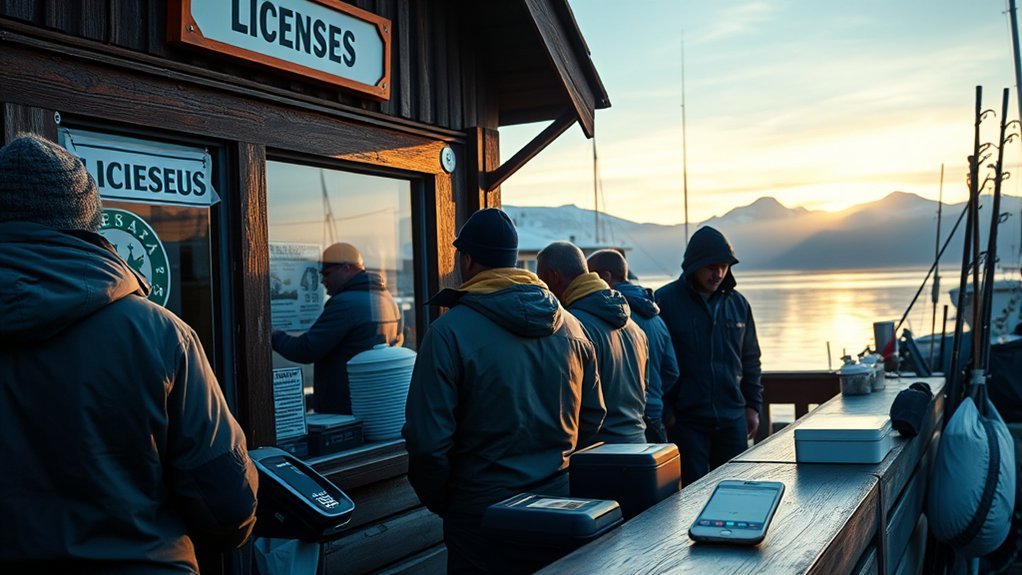
You can purchase licenses and stamps through the official ADF&G Online Store, through participating license vendors, and at ADF&G offices. The ADF&G Mobile App can also display licenses and stamps and supports fishing-harvest recording for supported records and permits.
An eSigned license purchased through your ADF&G account can be stored and displayed on a mobile device, and you may print a copy. Every license format must carry the required physical signature or electronic signature to be valid.
If you rely on a phone, make sure the license is available offline and the battery is charged. A printed backup is sensible for remote trips. If you keep both paper and app-based harvest records for the same permit or fishery, follow ADF&G instructions so required entries stay consistent.
A standard duplicate or replacement license costs $5. Replacement procedures may differ for senior and disabled-veteran identification cards, so contact ADF&G rather than buying an unnecessary new license.
Check Area Regulations and Emergency Orders
Warning: A fishing license does not guarantee that a species, water, or method is open. Emergency orders have the force of law and can supersede published regulations by changing closures, seasons, bag or annual limits, and fishing methods.
Before each trip, review the regulation summary for the management area and check the current ADF&G emergency orders. Emergency orders supplement or replace parts of the normal regulation booklet and have the force of law while in effect.
Charter operators and guides can help explain local requirements, but the individual angler remains responsible for possessing the correct license, stamp, permit, and harvest record.
Frequently Asked Questions
Do I need a license when fishing from a charter boat?
Yes. A charter booking does not replace your personal sport fishing license or king salmon stamp. You must have the required products unless an age or residency exemption applies. Ask the operator whether licenses are sold before departure, but confirm the details yourself.
Are there discounts for seniors or military members?
Qualifying Alaska residents aged 60 or older may receive a free Permanent Identification Card. Active-duty military or Coast Guard members permanently stationed in Alaska for less than 12 months, along with qualifying dependents, may purchase a $20 nonresident military annual sport fishing license.
How long is an annual Alaska fishing license valid?
It is valid from the date of purchase through December 31 of the same calendar year. It does not remain valid for 12 months from the purchase date.
Can I fish on federal land without an Alaska license?
It depends on the federal unit. Many national parks and preserves require an Alaska sport fishing license and apply state rules alongside federal restrictions. Exceptions exist, including the former Mount McKinley National Park portion of Denali. Check the specific park, preserve, refuge, or federal subsistence rules before fishing.
Can I lend my Alaska fishing license to another person?
No. Alaska licenses are issued to a specific person and may not be altered, loaned, transferred, or used by someone else. Each angler who is not exempt must obtain an individual license.
Do I need a license for catch-and-release fishing?
Yes, unless you qualify for an exemption. A license is required to participate in sport fishing, even when you plan to release every fish. A king salmon stamp may also be required when you intentionally fish for king salmon.
Do children need a king salmon stamp?
Alaska residents younger than 18 and nonresidents younger than 16 do not need a king salmon stamp. They may still need a free harvest record card when fishing in a water with an annual limit.
Can I show my Alaska fishing license on my phone?
Yes. A valid eSigned license may be stored and displayed on a mobile device. Make sure it is signed correctly and accessible without cellular service. You must also complete any required harvest entry immediately after retaining a fish subject to an annual limit.
Is there a special Upper Copper River king salmon permit in 2026?
Yes. Anyone targeting king salmon in the Upper Copper River drainage in 2026 must obtain and carry the free Upper Copper River King Salmon Sport Fishery Permit. Permit holders must follow its harvest-record and reporting rules and check current emergency orders for in-season restrictions.
Conclusion
For most Alaska residents, the 2026 annual sport fishing license costs $20. Nonresidents pay $15 to $100 depending on duration. Anglers targeting king salmon usually need the matching stamp unless an exemption or the stocked-lake rule applies, and some fisheries add separate permit or harvest-record requirements.
Before casting, confirm your residency category, age requirement, target species, harvest-record obligation, and the rules for the exact water you plan to fish. In 2026, Upper Copper River king salmon anglers also need the fishery-specific permit. Buy through an authorized source and check current emergency orders immediately before the trip.
Sources
- Alaska Department of Fish and Game License, Stamp, and Tag Prices — official resident, nonresident, military, reciprocal, stamp, and replacement fees.
- ADF&G Sport Fishing Licenses and King Salmon Stamps — age requirements, stamp rules, identification cards, and harvest record requirements.
- ADF&G Resident Low-Income Licensing — eligibility and income requirements for the $5 resident license.
- ADF&G Military Licensing — active-duty, dependent, resident Guard/reserve, residency, and disabled-veteran provisions.
- ADF&G General License Information and eSigned License Guidance — license validity, signatures, paper/electronic formats, and mobile display rules.
- ADF&G Sport Fishing Emergency Orders — current closures and changes to seasons, limits, and fishing methods.
