
If you’re a non-resident fishing North Carolina public waters, you generally need a fishing license once you’re 16. For 2026, a nonresident 10-day inland license costs $29 and an annual inland license costs $56. A 10-day Coastal Recreational Fishing License (CRFL) costs $15, while an annual coastal license costs $40. Inland licenses cover inland and joint waters; coastal licenses cover coastal and joint waters. North Carolina does not offer its annual Unified Inland/Coastal Recreational Fishing License to nonresidents, so visitors fishing both inland and coastal waters normally need separate products.
Quick Answer
- Non-residents age 16 and older generally need the correct fishing license for North Carolina public waters.
- 2026 nonresident inland fees are $29 for 10 days and $56 annually.
- 2026 nonresident coastal fees are $15 for 10 days and $40 annually.
- Either an inland fishing license or a Coastal Recreational Fishing License can satisfy the fishing-license requirement in joint waters.
- The annual Unified Inland/Coastal Recreational Fishing License is not available to nonresidents.
- A $5 transaction fee is applied to the total license order.
- Licenses can be purchased online, through a Wildlife Service Agent, by phone at 833-950-0575, or directly from the N.C. Wildlife Resources Commission.
- If you keep flounder, red drum, spotted seatrout, striped bass, or weakfish in covered waters, North Carolina’s mandatory harvest-reporting rule may apply.
Who Needs a Non-Resident Fishing License in North Carolina
Most nonresident anglers age 16 or older need a valid North Carolina fishing license when using bait or fishing gear to take finfish in public waters. Youth under 16 are exempt from the fishing-license requirement.
Your license must match the water you plan to fish. An inland fishing license covers statewide inland fishing, Public Mountain Trout Waters, trout waters on game lands, and joint waters. It does not cover coastal fishing waters. A Coastal Recreational Fishing License covers coastal and joint waters but does not authorize fishing in inland waters.
North Carolina’s annual Unified Inland/Coastal Recreational Fishing License is available to residents only. A nonresident who plans to fish both inland and coastal waters should therefore compare the separate inland and coastal products before buying.
An inland fishing license is not required in a qualifying private pond. North Carolina defines a private pond more narrowly than simply any pond located on private property, so check the state’s definition if there is any connection to public water.
North Carolina also declares July 4 as Free Fishing Day. A fishing license is not required in public waters, including coastal and trout waters, on that date, although seasons, size limits, creel limits, gear restrictions, and other fishing rules still apply.
Current Non-Resident Fishing License Fees for 2026
The current North Carolina fishing-license table lists four main short-term and annual choices for nonresident recreational anglers. The correct product depends first on whether you will fish inland or coastal waters and then on how long you need coverage.
| License Type | Term | 2026 Nonresident Fee |
|---|---|---|
| Coastal Recreational Fishing | 10 days | $15 |
| Inland Fishing | 10 days | $29 |
| Coastal Recreational Fishing | Annual | $40 |
| State Inland Fishing | Annual | $56 |
| Adult Coastal Recreational Fishing | Lifetime | $652 |
Annual licenses are generally valid for 12 months from the date of purchase. Short-term licenses are valid for the period specified on the license.
For the latest state fee table before checkout, see the current North Carolina fishing-license guide. A $5 transaction fee applies to the total order.
Products Worth Considering
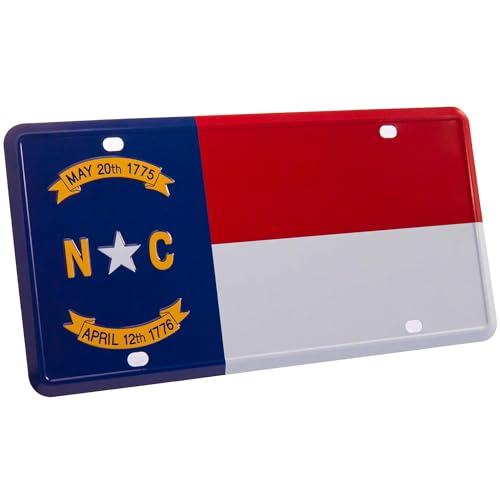
NORTH CAROLINA STATE FLAG DESIGN: Features a textured, raised North Carolina flag design for an authentic, high-end look and feel.

Team Colored License Plate Measures 6-inches by 12-inches
Four universal mounting slots
Which 10-Day Fishing License Should a Visitor Buy?
Choose the $29 nonresident 10-day inland license for inland lakes, rivers, reservoirs, streams, Public Mountain Trout Waters, and joint waters. Choose the $15 nonresident 10-day Coastal Recreational Fishing License for coastal and joint waters.
Each short-term license covers the 10-day period specified on the license. An inland license does not authorize fishing in coastal waters, while a coastal license does not authorize fishing in inland waters.
The current prices also provide a simple break-even check. Two 10-day coastal licenses cost $30 in base license fees, which remains below the $40 annual coastal license. Two 10-day inland licenses cost $58, which is already more than the $56 annual inland license. If you expect a second inland trip during the year, the annual inland license can therefore be the cheaper base-license option.
If your trip includes both inland and coastal fishing, remember that North Carolina does not sell the annual fishing-only Unified Inland/Coastal Recreational Fishing License to nonresidents. Buy the separate products that cover the waters you will actually fish.
Products Worth Considering

6 by 12 inches in size

4 Universal slots for easy mounting.
Where and How Can Non-Residents Buy a North Carolina Fishing License?
North Carolina offers four main ways to purchase a fishing license for immediate use: online through Go Outdoors North Carolina, through a Wildlife Service Agent, by phone at 833-950-0575, or directly from the N.C. Wildlife Resources Commission.
A $5 transaction fee is applied to the total order at the time of purchase. Before paying, confirm your residency status, water type, and license term so you do not buy an inland license for a coastal trip or vice versa.
Anyone exercising privileges under an electronic or physical Wildlife Resources Commission license should also carry picture identification showing the license-holder’s correct name, address, and date of birth and be prepared to show it to a wildlife enforcement officer when requested.
For current purchasing, identification, residency, student, military, and exemption rules, see the North Carolina license information guide.
Products Worth Considering

Deluxe Super Stock Embossed aluminum license plate mirror finish background with imprint in team colors

Team Colored License Plate Measures 6-inches by 12-inches

Decorative Item Only: This product is a vintage-style decorative license plate, crafted as a replica/artifact. It is NOT a real license plate and cannot be used as such. Please comply with all applicable laws—it must NOT be mounted on any vehicle to replace, cover, or imitate an official license plate. Use only for indoor or outdoor decoration where legally permitted.
What Rules Apply After You Buy a Fishing License?
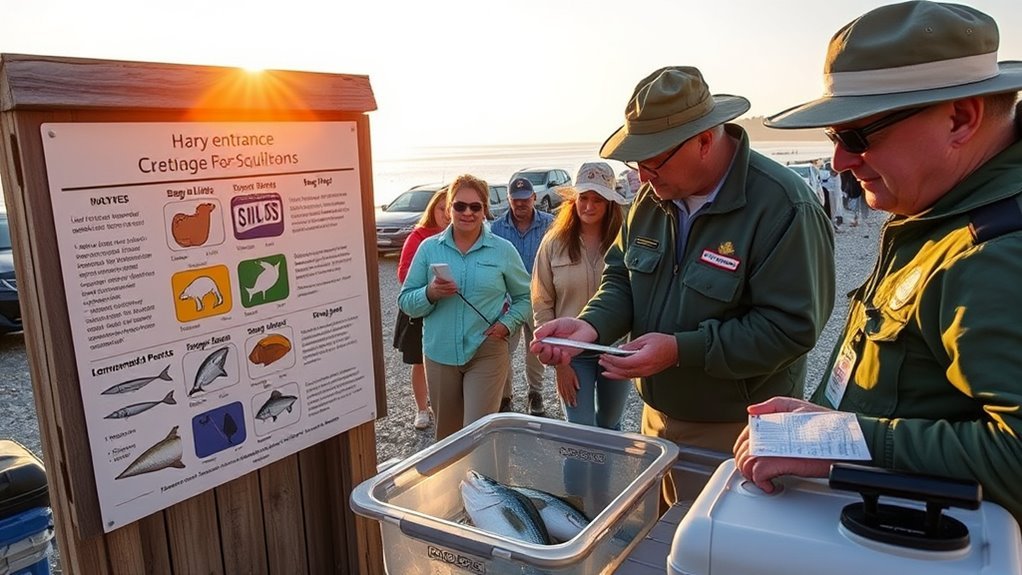
A fishing license gives you permission to fish under the privileges of that license; it does not override seasons, closures, size limits, creel limits, possession limits, gear rules, or species-specific regulations.
Match your license to the water, check the current species regulations before fishing, and verify any harvest-reporting requirement before you leave the water with kept fish.
A Coastal Recreational Fishing License authorizes recreational finfishing in coastal and joint waters during its term but not in inland waters. An inland license covers inland and joint waters but not coastal fishing waters. Recreational finfish taken under the Coastal Recreational Fishing License are for personal consumption and cannot be sold. See the N.C. Division of Marine Fisheries recreational fishing license page for coastal details.
Check current rules for the exact species and waterbody you plan to fish. Limits can differ by species, season, location, and fishing method, and a legal license does not make an otherwise closed or undersized catch legal to keep.
Do You Have to Report Fish You Keep in 2026?
Yes, for five specified species in covered waters. Beginning December 1, 2025, recreational anglers must report kept flounder, red drum, spotted seatrout (speckled trout), striped bass, and weakfish (gray trout) harvested from Coastal Fishing Waters, Joint Fishing Waters, or covered inland waters adjacent to coastal or joint waters.
If you report electronically, the report is due when the fishing trip is completed. Fish that are released are not included in this harvest-reporting requirement. During the period from December 1, 2025 through November 30, 2026, the state’s enforcement phase calls for verbal warnings for non-reporting.
Check the official North Carolina mandatory recreational harvest-reporting page before your trip for the reporting form, covered areas, and current enforcement information.
When Do Tournament or Event Permits Apply?
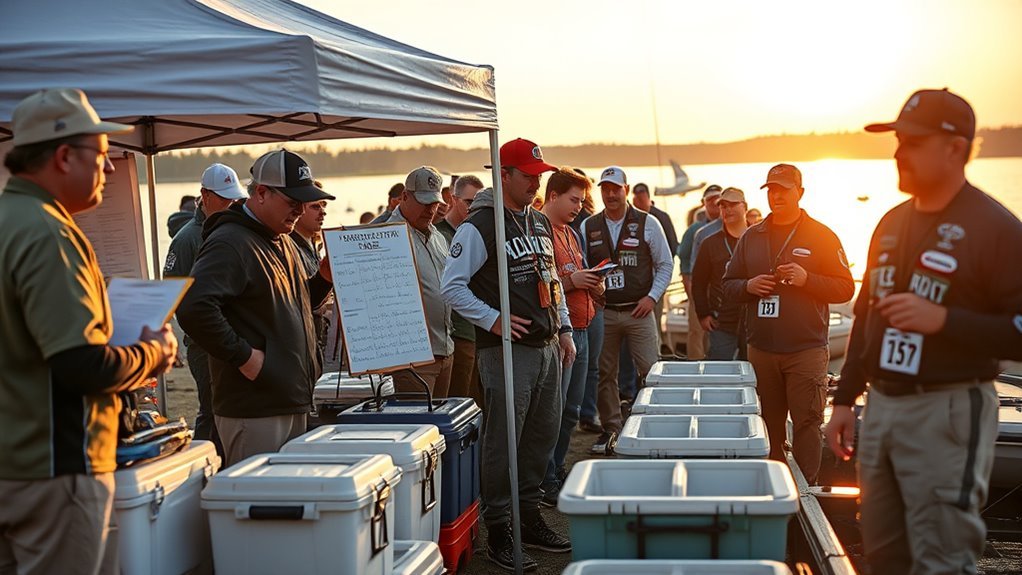
An ordinary recreational fishing tournament does not automatically need a Recreational Fishing Tournament License to Sell Fish. That license is required when a tournament plans to sell fish caught during the tournament.
Fish sold through a licensed tournament must go through a licensed Fish Dealer, and proceeds are restricted to qualifying charitable, religious, educational, civic, or conservation purposes rather than ordinary tournament expenses.
North Carolina also offers a Coastal Recreational Fishing License Exemption Permit for qualifying organized fishing events seeking an exemption from individual CRFL requirements. Required information must be submitted in writing at least 30 days before the event, and the permit is not a blanket exemption for any informal group fishing trip.
See the Division of Marine Fisheries recreational-license page for the current tournament-license and exemption-permit applications.
What Lifetime or Special Rules Apply to Non-Residents?
For frequent coastal visitors, North Carolina currently lists the adult nonresident Coastal Recreational Fishing Lifetime License at $652. The nonresident youth lifetime CRFL for ages 1–11 is $196, and the infant lifetime CRFL for children under age 1 is $131.
Do not assume North Carolina’s discounted disabled, senior, legally blind, or adult-care-home fishing licenses are available to out-of-state adults. The current fishing-license table lists those adult special-status products as resident-only.
There are, however, important residency exceptions. A nonresident student attending a university, college, or community college in North Carolina may purchase a resident license and must show valid student identification when purchasing from a Wildlife Service Agent.
Nonresident U.S. Armed Forces members stationed in North Carolina, including their spouses and children under 18, are treated as North Carolina residents for license-purchasing purposes. North Carolina residents serving on active duty outside the state also have separate military provisions.
Check your eligibility before buying because a qualifying residency rule can materially change the license products and prices available to you.
Common Situations: Charter Boats, Joint Waters, and Private Ponds
Charter coverage depends on the operator’s license. A blanket for-hire CRFL covers the individual coastal-license requirements of paying passengers. A non-blanket for-hire vessel license does not, so passengers aboard that type of operation need their own individual Coastal Recreational Fishing Licenses.
Ask the captain or booking company whether the trip operates under a blanket license before assuming your personal CRFL is covered. The N.C. Division of Marine Fisheries for-hire license guide explains the distinction.
Joint waters are simpler: either a Coastal Recreational Fishing License or a Wildlife Resources Commission inland fishing license satisfies the recreational fishing-license requirement there.
| Situation | License Needed? | Notes |
|---|---|---|
| Blanket-licensed coastal charter | Individual CRFL generally covered | Confirm blanket coverage with operator |
| Non-blanket coastal charter | Yes | Passenger needs individual CRFL |
| Joint waters | Yes | Either inland license or CRFL can satisfy license requirement |
| Qualifying private pond | No inland license | Pond must meet the state’s private-pond definition |
| July 4 Free Fishing Day | No | Other fishing regulations still apply |
Frequently Asked Questions
Can Non-Residents Buy Licenses Online From Out-Of-State Before Arrival?
Yes. Nonresidents can purchase through Go Outdoors North Carolina before arriving. Licenses can also be purchased through Wildlife Service Agents, by phone at 833-950-0575, or directly from the N.C. Wildlife Resources Commission. A $5 transaction fee applies to the total order.
Are There Senior or Military Discounts for Non-Resident Licenses?
North Carolina’s standard senior and adult disabled fishing licenses are generally resident-only. However, nonresident U.S. Armed Forces members stationed in North Carolina, along with their spouses and children under 18, are treated as residents for license-purchasing purposes. Other military exemptions can apply in specific circumstances.
Does Paying a Park or Access Fee Replace a North Carolina Fishing License?
No general North Carolina rule makes an ordinary park or access fee a substitute for the required fishing license. Unless a specific license exemption applies, anglers age 16 or older should have the license required for the water they are fishing.
Can Non-Residents Transfer Fishing Licenses to Another Person?
No. North Carolina fishing licenses are nontransferable. A Coastal Recreational Fishing License also cannot be bought, sold, lent, borrowed, assigned, or otherwise transferred to another individual.
What ID Should You Carry With a North Carolina Fishing License?
A person exercising privileges under an electronic or physical Wildlife Resources Commission license should carry picture identification showing the license-holder’s correct name, address, and date of birth and show it to a wildlife enforcement officer when requested.
Does a North Carolina Coastal Fishing License Cover Inland Waters?
No. The Coastal Recreational Fishing License covers coastal and joint waters but does not authorize fishing in inland waters. A Wildlife Resources Commission inland fishing license covers inland and joint waters but not coastal fishing waters.
Can Non-Residents Fish Free in North Carolina on July 4?
Yes. July 4 is North Carolina’s Free Fishing Day, and no fishing license is required in public waters, including coastal and trout waters. All other seasons, limits, gear restrictions, and fishing regulations remain in effect.
Do I Have to Report Fish I Keep in North Carolina?
You must report recreational harvest of flounder, red drum, spotted seatrout, striped bass, and weakfish when those fish are kept in the waters covered by North Carolina’s mandatory harvest-reporting law. Released fish are not included in this requirement.
Conclusion
For a North Carolina fishing trip in 2026, start by identifying your water type. Nonresidents currently pay $29 for a 10-day inland license, $56 for annual inland fishing, $15 for a 10-day Coastal Recreational Fishing License, or $40 for an annual coastal license. Either license works for the fishing-license requirement in joint waters, but inland and coastal licenses are otherwise not interchangeable.
Before fishing, buy the correct license through an official channel, carry the required identification, and check current seasons, size and creel limits, closures, and harvest-reporting rules for the species and waterbody you plan to fish.
