
Welding uses a noticeable amount of electricity. How much depends on the machine type, amperage, duty cycle, and run-time. Small household 110V MIGs typically draw 1-2 kW. Mid-range units pull 2-4 kW. Heavy industrial or three-phase systems can exceed 7-8 kW. Duty cycle controls how long you can weld at full output. It affects total kWh. Calculate cost by multiplying operating kW by hours and your rate. Below, find practical examples and savings tips.
Quick Answer
- Welding machines use 1-50 kWh per hour, but most fall in the 5-15 kWh range during operation.
- Power draw varies by type: small MIGs at 1-2 kW, industrial at over 7 kW.
- Duty cycle and amperage drive up costs; track run-time to estimate bills (e.g., ~$5.40/month for moderate use at $0.13/kWh).
- Save energy with efficient machines, proper maintenance, and matched settings.
How Welding Machines Consume Electricity
Welding machines draw power based on their design, duty cycle, and operating amperage. Consumption ranges from about 1,000-2,000 W for small household units to over 7,800 W for heavy industrial welders.
TIG systems are the most efficient. They use about 3-5 kWh. Common machines run 5-15 kWh per hour, depending on load.
Consumption rises with amperage and continuous duty. Higher current and longer active times increase energy draw. This pushes monthly kWh higher. For example, a 15 kW 3-phase welder used 20 minutes across 150 operations can total ~740.5 kWh per month.
To manage efficiency, monitor duty cycle, amperage, and arc time. Choose equipment that fits the task. Avoid oversizing.
Evaluate energy sources too. Single-phase vs. 3-phase supply and available voltage affect inverter performance and losses.
Tracking these helps predict costs. It maintains safety margins. It optimizes throughput without wasting electricity.
Typical Power Ranges by Welder Type
Power draw varies by welder type. Small 110V household MIGs pull about 1,000-2,000 W. Mid-range commercial units run 2,000-4,000 W. Heavy industrial or three-phase systems draw 4,000 W up to and beyond 7,800 W.
Select based on task size and available service. 110V units work for light repairs and hobby jobs. 240V commercial machines handle thicker materials and longer welds. Three-phase industrial welders support continuous, high-current work.
Compare ratings against your site capacity to avoid circuit overloads. Factor in welder efficiency. Modern inverters offer higher arc stability and lower input power for the same output than older transformer designs. This cuts operating cost per weld. See the American Welding Society’s resources on welder power requirements for more details.
Compare welder ratings to site capacity to prevent overloads, and prefer efficient inverter units to lower input power and operating cost.
Use nameplate wattage and typical draw to estimate supply needs and running cost. This matching ensures adequate performance. It avoids overspecifying equipment or stressing electrical setup.
Products Worth Considering
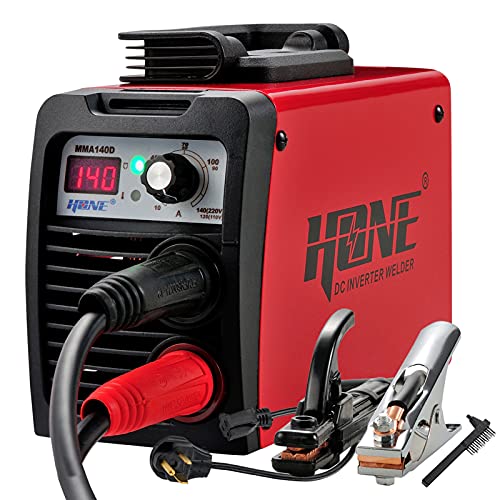
➠【Upgrade】For better using experience, we impove the duty cycle from 25%120A (110V) / 30%140A (220V) to 40%120A (110V) / 40%140A (220V)

More Powerful: Up to 205 amps with Hot Start & Arc Force,adopts IGBT Technology for more efficient and smoother arc quality. Weld continuously without interruption, significantly reducing the risk of welding rod sticking during the welding process. Compatible with most 6010, 6011, 6013 and 7018 welding rods,supports dual voltage (110V/220V). Ideal for welding stainless steel, mild steel, and other metal materials,delivering strong and durable weld joints

💪200A POWER & PORTABLE DESIGN: Weld metals up to 1/4" thick (0.06-0.2") including stainless steel, alloy steel, carbon steel, and copper. Compact size (8.6x4.1x5.5") and ultra-lightweight (5 lbs) with shoulder strap make it easy to carry for jobs anywhere – high altitude, indoors, or outdoors. Enjoy extended welding sessions without overheating, backed by a solid 60% duty cycle for professional results.
How Duty Cycle Affects Energy Use
Duty cycle defines the percentage of time a machine can run at full output in a 10-minute interval. Use it to predict operating energy by matching weld-on time to that percentage.
Duty cycle helps size workload and avoid overheating. A 60-80% machine handles longer continuous welds. It consumes more electricity during extended runs. Lower-duty machines draw less over a shift. They suit intermittent tasks.
Apply power management by planning weld sequences. Stagger jobs. Select a higher-capacity unit only when needed. For example, a 15 kW three-phase welder at rated output for 20 minutes monthly can yield high kWh totals. Match duty cycle and run-time to limit wasted energy and downtime.
- Duty cycle alignment with job demands prevents issues.
- It avoids shutdowns and lost time.
- It improves energy forecasts.
- It reduces unnecessary power draw.
- It protects equipment through proper management.
Products Worth Considering

TIG-225HF integrates advanced MOSFET inverter technology, allowing excellent arc stability and the most beautiful welds. Whether the material is stainless steel, alloy steel, low carbon steel, copper, iron, pig iron, cast iron, etc., the welding effect is absolutely ideal; the machine can be swiftly operated and can efficiently finish any tasks from home repairs or professional use. The new lightweight model design gives the machine an elegant structure and makes the machine very easy to carry.

Perfect Fit - The 4 gauge wire is cut to a precise length. The actual cable is cut to 6 Feet (72 Inches), then we add the battery cable lug and terminal, making the cable slightly longer. The tin-plated copper battery terminal lug size is 3/8".

Perfect Fit - The 2 gauge wire is cut to a precise length. The actual cable is cut to 3 Feet (36 Inches), then we add the battery cable lug and terminal, making the cable slightly longer. The tin-plated copper battery terminal lug size is 1/4".
Calculating Electricity Costs for Welding
Match duty cycle to job demands to limit wasted run-time. Then quantify what that run-time costs.
Calculate on-arc energy by measuring operating kW. Typical arc welding draws 5-7 kWh when active. Many machines range 5-15 kWh. Multiply on-arc kW by welding hours per billing period for kWh used.
Measure on-arc kW (typically 5-15 kW) and multiply by actual welding hours to calculate kWh consumed.
Apply your utility rate for cost analysis. For example, 9.6 kWh/week at $0.13/kWh equals about $5.40/month. Include only active welding time. Idle draw is minimal and often negligible in monthly totals.
For higher-amp, high-duty tasks, costs rise proportionally. Include those in estimates. Use welding efficiency to refine them. Better transfers cut required time and kWh per weld.
Track actual run-time and bills for calibration. This makes your analysis reflect real use, not theoretical maxima.
Products Worth Considering

Professional Ggs Flow Tester / Meter Peashooter Style
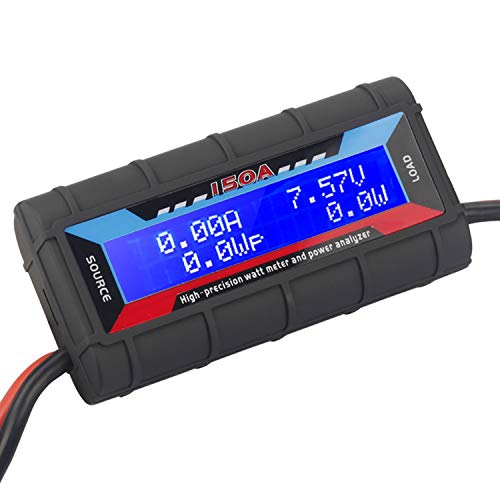
Bright blue backlit LCD display, easy reading. 12 gauge wire take higher volt and current. It is indispensable for analyzing, testing and troubleshooting any DIY DC power project. Very accurate in giving DC volt, ampere and wattage

1. Digital Multimeter:This power energy meter can measure and display voltage current active power energy frequency and power factor at the same time.with split current transformer,more convenient to install .
Factors That Change Welding Power Consumption
Several variables determine a welder’s power draw. Focus on amperage, process type, duty cycle, and material properties to predict it.
Most machines draw 5-15 kWh in operation. Extremes run 1-50 kWh. Higher amperage for thicker materials raises power. Higher duty cycle increases energy over time.
Welding techniques differ. TIG uses 3-5 kWh. MIG takes 6-10 kWh. Machine efficiency and controls affect real consumption. Modern units cut losses.
Material affects heat input. Denser metals need more energy for penetration. For costs, convert amperage and duty cycle to average kW. Multiply by hours used.
- Calculations that match reality build reassurance.
- Predictable ranges help planning.
- Bills become less surprising.
- Process selection gains confidence.
- Material thickness impacts draw clearly.
Energy-Saving Practices and Equipment Options
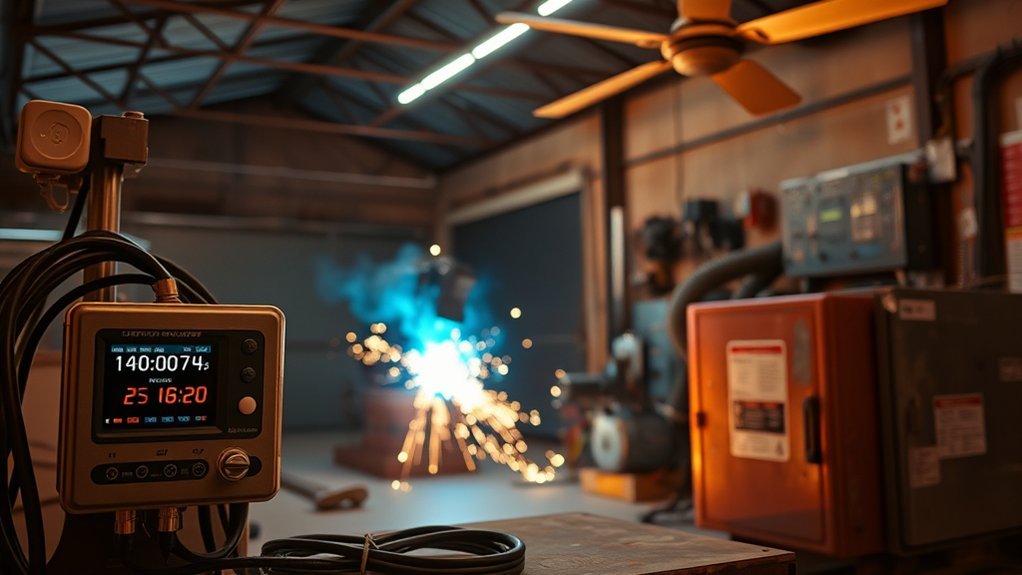
Optimize equipment and procedures to drop energy use. Choose efficient TIG machines (3-5 kWh) for detailed work. Keep gear serviced to prevent losses. Set amperage to match material thickness. Avoid overheating parts.
Prioritize machines with digital controls and inverter technology. They provide arc stability at lower input power. They reduce idle consumption. Check the U.S. Department of Energy’s guide on energy-efficient welding equipment for options.
Use maintenance practices like calibrated meters and clean channels. Tighten connections. Replace consumables on schedule. This preserves efficiency and stops drift that raises draw.
Adjust parameters: lower amperage, optimized duty cycles, correct speed. These reduce kWh per joint.
Consider power factor correction devices. They cut reactive power and lower charges.
Combine equipment selection, maintenance, and tuning. Operations use less electricity. This creates predictable cost savings.
Products Worth Considering

Wide Electrode Compatibility:Handles E6010,E6011,E6013,E7018 and more.Perfect for DIY,farm, maintenance,and light industrial projects

FIRST APP-CONTROLLED TIG WELDER: The ARCCAPTAIN TIG205 Pro welder, allows users to connect to a mobile APP by scanning a QR code on the welder. It supports multiple devices, real-time monitoring of welder status, multifunctional welding process selection, parameter adjustments, error code analysis, FAQs, and sharing of welding results for educational purposes. Join the ARCCAPTAIN welding community and ignite endless welding fun!

MULTI PROCESS: Experience the convenience of a high-quality, budget-friendly 3-in-1 welding machine that masterfully handles Gasless Flux Core MIG/Stick/Lift TIG(additional 10-25 lift TIG torch required). This unit caters to a wide range of welding applications and meets your various welding needs.
Environmental Impact of Welding Electricity Use
High electricity use in welding contributes to carbon emissions, depending on your power source. For grid-dependent shops, this means a larger footprint from fossil fuels.
Reduce impact by following efficiency tips like using inverters and matching machine size. Shift to renewable sources if possible. This cuts kWh and emissions without affecting weld quality.
Track consumption to spot waste. Small changes add up for greener operations.
Comparing Electric Welding to Other Power Sources
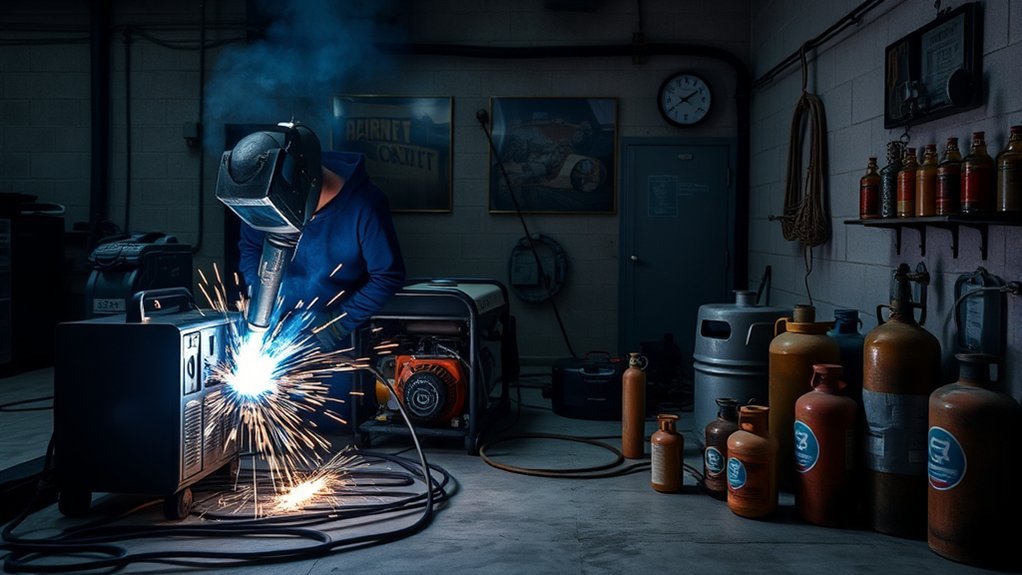
Compare electricity to diesel or propane. Electricity often gives lower operating costs per hour. Commercial electric welders draw 2,000-4,000 W. Fuel units add consumption and maintenance.
Trade portability and high-output for lower noise and upkeep with electric machines. They have minimal standby draw.
Assess jobsite power and duty cycle. Decide if lower energy cost or mobility matters more.
Products Worth Considering
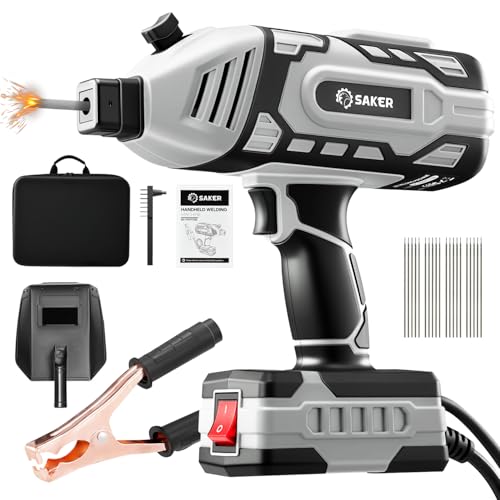
PORTABLE WELDER WITH ADVANCED IGBT INVERTER TECHNOLOGY: Saker 110V portable welder features advanced IGBT inverter technology, providing high no-load voltage and enhanced arc stability. This unit helps maintain consistent current output for improved welding performance and easier arc starting. The current adjustment function assists in achieving cleaner welds with reduced spatter, suitable for materials including carbon steel and iron.

【Saker Portable Welder with Advanced IGBT Inverter】Our Saker portable welder integrates cutting - edge IGBT inverter technology, This 110V welder ensures stable current and powerful welding performance. It effectively minimizes damage to carbon steel and iron while boosting overall efficiency and reliability. Designed for easy arc initiation and minimal spatter, it delivers smooth welds. Even beginners can achieve clean seams with our automatic current adjustment.

【Portable Welding Machine】:This lightweight Portable Handheld Welding Machine 110V revolutionizes mobility with advanced IGBT inverter technology, delivering stable arc performance and instant startup without preheating delays. Designed for precision welding with minimal spatter, its plug-and-play operation suits both professionals and beginners. As a true portable welder, it excels in tight spaces or outdoor projects. The small 9.8x9.4inch (Weight: 3.5lb) body and ergonomic handheld welder gun ensure fatigue-free operation
Electricity vs. Fuel Costs
Welding adds to operating costs. Electric use runs 5-15 kWh/hour. At $0.10-$0.13/kWh, that’s low per-hour and monthly (about $5.40/month for 9.6 kWh/week).
Electric welders draw little idle power. Duty cycle governs cost. Gas or diesel units face fuel price changes and storage costs. This reduces efficiency.
- Predictable bills ease planning.
- Avoid fuel price spikes.
- Lower idle draw helps.
- Less fuel storage hassle.
- Costs stay small compared to other loads.
Portability and Power Tradeoffs
Electric welders offer quiet, efficient shop work. But they need reliable supply and heavier setup. This limits field mobility.
Weigh portability against performance. Machines consume 5-15 kWh. High-end exceed 7,800 W. They need cabling or generators.
Gas or diesel provide remote capability. No mains needed. But they require fuel and maintenance.
Electric units cut operational cost and boost efficiency. Modern designs beat many fuel alternatives. Expect higher setup for electrical upgrades.
Choose based on site access, total ownership cost, and mobility.
Real-World Examples of Welding Energy Use
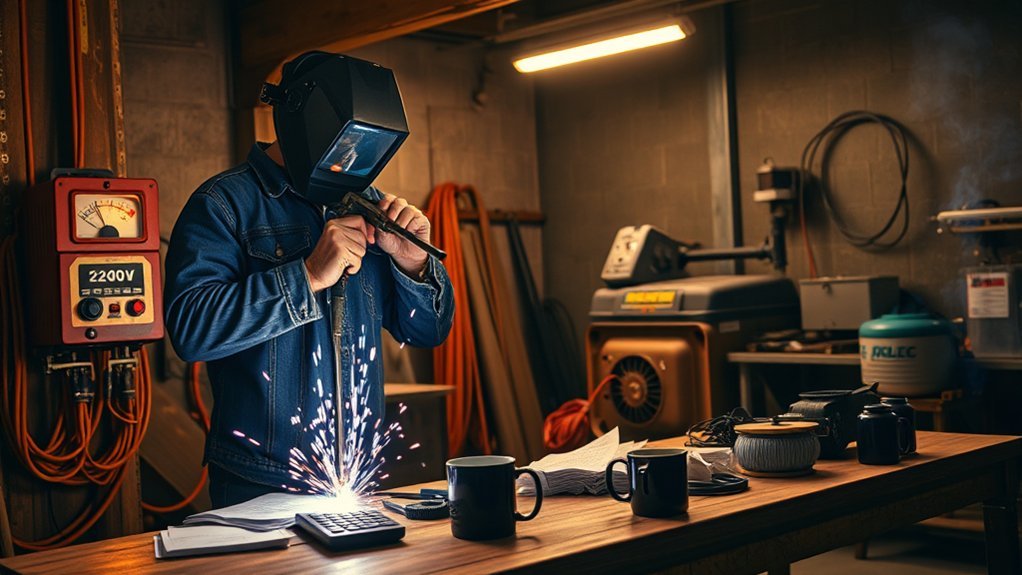
Duty cycle and machine type affect consumption. Real-world use varies. Machines draw 5-15 kWh. TIG units hit 3-5 kWh. MIG welders run 6-10 kWh. A 50 A welder at 230 V pulls about 11.5 kW at full load.
Calculate costs by multiplying kW by hours and rate. A 15 kW 3-phase unit for 20 minutes monthly uses ~740.5 kWh when duty high. Monitor runtime.
Use efficient techniques and machines to reduce draw. Hobbyists see modest bill increases (~$5.40/month) with moderate use. Industrial shops face larger draws.
Efficient techniques and energy-smart machine choices cut consumption—hobbyists see small bill bumps, shops face larger draws.
Base decisions on runtime, duty cycle, and process. Balance requirements, cycle, and efficiency. Optimize energy and cost without hurting weld quality.
- Precise work brings efficiency.
- High bills can frustrate.
- Measured savings build confidence.
- Heavy use raises concern.
- Optimized processes satisfy.
Frequently Asked Questions
Can Welding Machines Be Powered by Solar Panels?
Yes, you can. Panels feed an inverter and battery bank. Need high efficiency. Verify machine compatibility, sizing, and duty cycle for reliable operation.
Does Welding Increase Home Insurance Premiums?
Yes, if without proper safety. Insurer may raise premiums or deny coverage. Disclose activities. Document precautions. Use certified equipment. Consult broker.
Are Battery-Powered Welders as Strong as Mains Welders?
Battery welders match mains for many tasks. Compare specs: duty cycle, amperage, efficiency determine capability.
Does Welding Produce Electrical Interference With Electronics?
Yes, it causes interference (EMI/RFI). Upsets nearby devices. Shield gear. Increase distance. Use grounded cables. Apply filters or ferrites.
Can Welding Skills Reduce Overall Electricity Consumption?
Master skills to cut wasted arcs and preheat. Improves efficiency. Lowers consumption through technique, tuning, and consistent parameters.
Conclusion
Welders draw power like different engines. MIGs and stick use higher amps. TIGs are precise. Duty cycle limits energy pulse. Control electricity like the weld pool. Steady the arc and bill. Use duty cycles, efficient machines, good technique. Trim consumption without losing quality. Practical steps keep shop lights steady and costs predictable.
