
Last Updated: July 28, 2026 | Fact-Checked By: Relocation & Cost Analyst [VERIFY: add real author credentials]
For a single adult renting in Osaka in 2026, a realistic monthly budget ranges from ¥175,000 to ¥250,000 (roughly $1,100–$1,600 USD) [VERIFY: exchange rate] before income tax and social insurance deductions. Shared housing or a studio outside central wards can lower costs to ¥140,000, while a modern central 1LDK apartment in Chuo or Kita ward, frequent dining out, or private transport pushes monthly spending above ¥250,000.
Quick Answer: Osaka Monthly Budget Summary
Plan for ¥175,000–¥250,000 per month covering rent (¥65,000–¥90,000), utilities & mobile (¥18,000–¥27,000), food (¥35,000–¥55,000), local transit (¥8,000–¥13,000), and personal spending. Central ward apartments, National Health Insurance, pension, and resident taxes increase total cash requirements.
Key Takeaways
- Housing is the largest variable: Outside central Osaka City wards, studio rents drop by 25% to 35% compared to central Tokyo.
- Upfront lease costs are high: Initial move-in costs (key money, deposit, agency and guarantor fees) total 3.5x to 5x one month’s rent.
- Food budgets require balance: A realistic monthly food budget is ¥35,000–¥55,000 for one person combining home cooking and modest eating out.
- Transit passes are route-specific: Osaka Metro adult commuter passes cost ¥7,930–¥12,770 per month and cover a designated route rather than unlimited systemwide travel.
- Taxes increase in year two: Local resident tax (~10%) is billed a year in arrears, creating a second-year financial shock for new foreign workers.
Monthly Living Costs in Osaka

Your actual Osaka cost of living depends mainly on housing location, apartment size, commute length, and dining habits. The following figures represent operational planning ranges for single renters in 2026.
| Monthly budget | Housing profile | Estimated total | Best fit |
|---|---|---|---|
| Lean | Share house, subsidized dorm, or small older unit outside the central wards | ¥140,000–¥180,000 | Students, disciplined cooks, and budget-conscious residents |
| Typical renter | Studio (1R/1K) or compact 1LDK in Osaka City proper | ¥175,000–¥230,000 | Single working adult using subway transit and mixing home cooking with dining out |
| Comfortable or central | Modern 1LDK in a central ward (Kita, Chuo, Nishi), new building, or frequent leisure | ¥230,000–¥300,000+ | Professionals prioritizing central location, building amenities, and social spending |
Note: These baseline totals cover ordinary living expenses. They do not include income tax, local resident tax, National Health Insurance, pension contributions, major travel, or upfront lease move-in costs.
The Statistics Bureau of Japan’s 2025 survey recorded average monthly consumption spending of ¥173,042 for single-person households nationwide, including ¥44,659 for food and ¥13,333 for utilities. However, because national surveys include homeowners and subsidized tenants, private market renters in Osaka should use market lease averages rather than national survey housing figures.
A national household average provides a macro baseline, but your specific lease terms and transit route determine true monthly affordability.

This hardcover cookbook offers fast, approachable recipes designed for busy days and low-energy nights. Caroline Chambers focuses on simple, flavorful meals that help you get dinner on the table without overthinking it. It's a practical pick for home cooks who want quick weeknight inspiration and minimal-fuss cooking.

Come Eat offers 100 approachable recipes designed to make everyday cooking more enjoyable, nourishing, and sustainable. With a focus on flavorful meals and practical preparation, this hardcover cookbook is ideal for home cooks looking for inspiration for salads, sides, and main dishes. Author Melissa Ben-Ishay shares recipes that encourage consistent, feel-good eating without sacrificing taste.

The Eastpak Tranverz S is a compact wheeled suitcase designed to keep short trips and weekend travel organized with two main compartments and a convenient front pocket. Its dual-wheel system and telescopic handle make rolling smooth and stable, while the TSA-approved lock and compression straps help keep your belongings secure and in place. Built from a durable, water-resistant fabric blend, it offers dependable protection for travel on the go.
Osaka Rent Prices by Neighborhood
Rent varies significantly by ward, apartment layout (1R, 1K, 1LDK), building age, construction type (steel frame vs. concrete), and walking distance to the nearest station. Prime commercial hubs like Namba, Umeda (Kita Ward), and Honmachi (Chuo Ward) command higher rates than residential northern or southern wards.
According to data from the LIFULL HOME’S Osaka rental-market report published in late 2025, asking rents for single-person apartments (studios, 1K, 1DK, and compact 1LDK units) reflect these municipal benchmarks:
| Area or measure | Monthly rent benchmark | What it represents |
|---|---|---|
| Osaka City Average | ¥76,286 | Average listed asking rent across all city wards |
| Osaka City Contracted Rents | ¥65,998 | Average signed rent for properties receiving active inquiries |
| Central Six Wards | ¥89,552 | Average listed rent in Chuo, Kita, Nishi, Fukushima, Tennoji, and Naniwa Wards |
| Osaka Prefecture (Outside City) | ¥57,717 | Average listed rent in suburban municipalities (Suita, Toyonaka, Sakai) |
Move-In Costs for an Osaka Apartment
Monthly rent represents only part of your initial housing commitment. Traditional Japanese rental contracts require substantial upfront initial cash (*shoki hiyou*). In Osaka, landlords and management companies typically request security deposits, non-refundable key money (*reiki*), real estate agent commission, guarantor fees, fire insurance, lock replacement fees, and prepaid rent.
| Move-in Expense Item | Typical Cost Range | Refundable / Terms |
|---|---|---|
| Security Deposit (Shikikin) | 1 month rent (¥60,000–¥90,000) | Partially refundable (minus mandatory cleaning fees) |
| Key Money (Reiki) | 1–2 months rent (¥60,000–¥180,000) | Non-refundable gift to landlord |
| Agent Fee & Guarantor Fee | 1.5 months rent total | Non-refundable (Guarantor company mandatory for most foreign renters) |
| Insurance & Lock Exchange | ¥30,000–¥45,000 total | Mandatory 2-year fire insurance + lock cylinder replacement |
| Total Upfront Capital Required | 3.5x to 5x monthly rent | ¥250,000–¥450,000 initial liquid savings needed before receiving keys |
Warning: Always request a itemized initial estimate (*shoki hiyou mitsumori*) before paying holding fees. Foreign-friendly portals and share house operators often feature lower upfront costs, but verify whether monthly management fees or mandatory cleaning retainers alter the long-term total.
Utility and Internet Costs in Osaka
For a single resident in a standard 1K or 1LDK apartment, utilities average ¥12,000–¥22,000 per month combined for electricity, city gas, and municipal water. Seasonal spikes occur during peak summer cooling (July–August) and winter heating (December–February).
Home optical fiber internet (Flets Hikari, NURO, or SoftBank Hikari) costs roughly ¥4,000–¥6,000 per month, while mobile phone contracts on major networks (NTT Docomo, Au, SoftBank) or sub-brands (UQ Mobile, Y!Mobile, Rakuten Mobile) cost ¥2,000–¥5,000 per month depending on data tiers.
Pro Tip: Check whether your building has pre-installed fiber internet (*Hikari wiring*). Retrofitting dedicated fiber lines into older apartment structures can incur ¥15,000–¥30,000 in installation charges and contract lock-ins.
Food Costs in Osaka: Groceries vs Eating Out
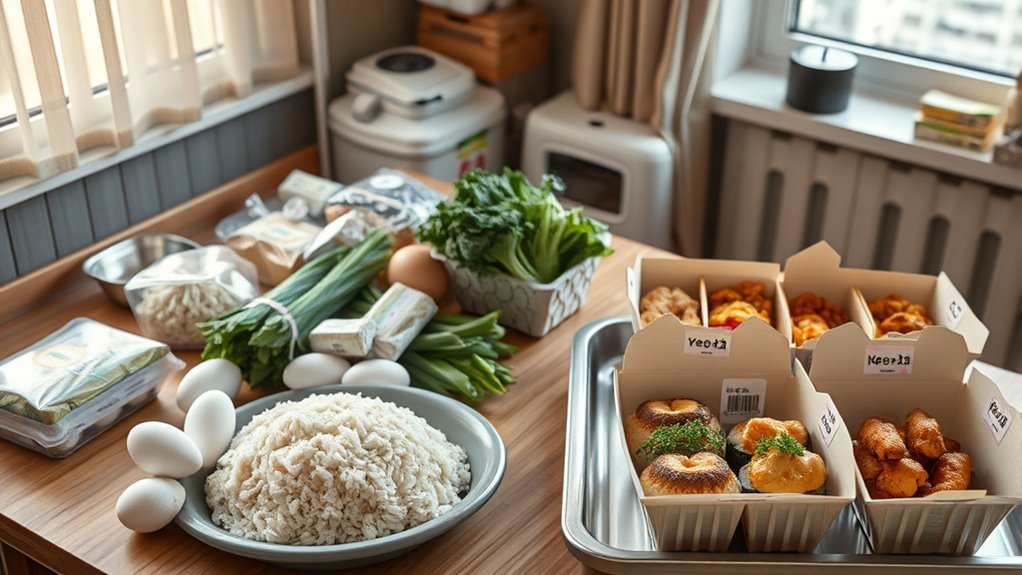
A realistic monthly food expenditure for one adult is ¥35,000–¥50,000. Osaka’s famous food culture (*kuidaore*) makes eating out accessible, but regular dining out rapidly increases living costs. The national single-person average recorded by official statistics stood at ¥44,659 per month for all food, including groceries, convenience store meals, and restaurant dining.
In Osaka, casual dining prices average near ¥1,000 for standard set lunches (*teishoku*), ¥700–¥900 for fast-food or ramen meals, and ¥2,500–¥4,000 per person for casual dinner and drinks at local izakayas.
| Food pattern | Monthly planning range | Typical habits |
|---|---|---|
| Home Cook / Budget | ¥30,000–¥40,000 | Supermarket shopping (Gyomu Super, Tamade), batch cooking, rare dining out |
| Balanced / Moderate | ¥40,000–¥55,000 | Home cooking plus bento lunches, cafe visits, and weekly restaurant meals |
| Frequent Dining Out | ¥60,000+ | Daily restaurant or convenience store meals, delivery apps, and frequent nightlife |
Transportation Costs in Osaka
Osaka’s extensive subway, JR, and private railway networks (Kintetsu, Hankyu, Hanshin, Nankai) make private car ownership unnecessary for most residents. According to the Osaka Metro official fare table, single adult fares range from ¥190 to ¥390 depending on distance bands.
One-month adult commuter passes (*teikiken*) cost ¥7,930 to ¥12,770 for Osaka Metro lines. Student commuter passes run ¥3,430–¥5,410. Commuter passes permit unlimited travel strictly between designated stations along your specific route; they do not cover non-designated lines or private rail transfers without additional pay-as-you-go IC card fares (ICOCA/Suica).
| Option | Current Osaka Metro cost | Best use |
|---|---|---|
| Single adult fare | ¥190–¥390 | Occasional weekend travel or varied destinations |
| One-month adult commuter pass | ¥7,930–¥12,770 | Daily fixed commute (5+ days per week) |
| One-month student pass | ¥3,430–¥5,410 | Enrolled students on pre-approved school transit routes |
Healthcare and Personal Care Costs in Osaka
Under Japan’s mandatory universal health insurance system, insured residents in Osaka pay 30% of covered medical costs at clinics and hospitals. Standard primary care outpatient visits cost between ¥1,500 and ¥3,500 per consultation, excluding specialized testing, X-rays, or blood work. Prescription drugs add a separate pharmacy co-pay of roughly ¥1,000–¥2,500.
For personal care items, toiletries, haircuts, and drugstore goods, single adults should reserve ¥5,000–¥15,000 per month.
Taxes, Health Insurance, and Pension
A complete financial plan must separate daily living costs from statutory payroll obligations and social insurance. Company employees (*shakai hoken* members) have health insurance, welfare pension (*kousei nenkin*), income tax, and resident tax withheld directly from salary.
Self-employed residents, freelancers, and students enrol in National Health Insurance (NHI) and National Pension directly. According to the Japan Pension Service, the statutory National Pension contribution is ¥17,920 per month for fiscal year 2026.
The Second-Year Resident Tax Trap: Municipal and prefectural resident tax (*juminzei* ~10%) is calculated on your previous calendar year’s local Japanese income. Foreign residents arriving in Osaka pay ¥0 resident tax during their first calendar year. However, a full 10% tax bill arrives in June of your second calendar year. Saving 10% of gross salary during year one prevents severe second-year financial shock.

Die With Zero offers a fresh perspective on personal finance by encouraging readers to use money intentionally to create memorable life experiences instead of simply accumulating wealth. Written by Bill Perkins, this book combines practical guidance with a motivating philosophy to help readers align spending, saving, and life goals for a more fulfilling future.

This heartfelt cookbook shares the kitchen wisdom of a Korean mom alongside 100 family recipes that bring comforting, authentic flavors to your table. Blending personal stories with practical guidance, it offers home cooks approachable ways to explore Korean cooking with confidence. The hardcover format and trusted editorial guidance make it a beautiful and reliable addition to any cookbook collection.

This ROCKBROS bicycle front frame bag gives riders convenient storage and easy phone access on every ride. It features a high-sensitivity TPU touchscreen window, waterproof construction, reflective details, and a secure multi-strap fit to help keep essentials organized and visible while cycling. Designed for phones up to 7 inches with slim cases, it also includes a hidden earphone hole and quick-release installation for everyday commuting and long-distance riding.
One-Time Moving and Setup Costs
Beyond initial lease cash, reserve funds for apartment setup. Unfurnished Japanese apartments rarely include fridges, washing machines, microwaves, light fixtures, or window curtains. Outfitting an unfurnished 1K apartment with basic appliances and furnishings costs roughly ¥100,000–¥200,000 using stores like Nitori, MUJI, or second-hand shops (*recycle shops*).
Sample Monthly Budgets for Osaka
| Expense | Lean renter | Typical renter | Central or comfortable |
|---|---|---|---|
| Rent | ¥55,000 | ¥75,000 | ¥110,000 |
| Utilities | ¥12,000 | ¥16,000 | ¥22,000 |
| Internet & Mobile | ¥6,000 | ¥9,000 | ¥11,000 |
| Food | ¥35,000 | ¥45,000 | ¥65,000 |
| Transport | ¥6,000 | ¥10,000 | ¥15,000 |
| Personal & Leisure | ¥20,000 | ¥35,000 | ¥50,000 |
| Total (Before Income Tax & NHI) | ¥134,000 | ¥190,000 | ¥273,000 |
How to Save Money in Osaka
Controlling housing, food, and transport costs delivers the largest savings impact when living in Osaka.
Cut Housing Costs
Consider outer municipal wards or neighboring cities along express train lines (e.g., Suita, Ibaraki, or Sakai). Moving 15 minutes outside central Umeda or Namba drops rent by ¥15,000–¥25,000 per month. Additionally, select apartments built 15+ years ago or located 10–12 minutes walk from stations to eliminate key money obligations.
Save on Transport
Use a bicycle for short daily trips. Osaka’s terrain is notably flat compared to Tokyo, making cycling cost-effective. For train travel, confirm whether your employer reimburses commuting expenses (*tsukin teataki*), as most full-time Japanese employers cover standard home-to-work transit passes.
Eat In More
Shop at discount supermarket chains like Gyomu Super, Super Tamade, or LIFE, especially during late-evening discount markdowns (*tsukimono* 20%–50% off cooked bentos after 7:00 PM). Cooking Japanese staples like rice, tofu, eggs, and seasonal vegetables significantly cuts food expenses.
Reduce Utility and Phone Costs
Switch mobile coverage from major carriers to MVNO providers (Rakuten Mobile, UQ Mobile, or Y!Mobile) to save ¥4,000 monthly. Choose apartments equipped with modern inverter air conditioners to lower summer electricity bills.
Keep an Emergency Buffer
Maintain an emergency fund of at least ¥300,000 liquid cash to cover unforeseen medical costs, apartment renewal fees (typically 1 month’s rent every 2 years), or unexpected move-out fees.
Frequently Asked Questions
How much does it cost to live in Osaka per month?
A single renter in Osaka requires ¥175,000 to ¥250,000 per month for baseline expenses including rent, utilities, food, transport, and mobile service. Central studio apartments, frequent restaurant dining, and private cars push expenses above ¥250,000. Income taxes and social security must be calculated separately.
Can you live in Osaka on ¥150,000 per month?
Yes, living on ¥150,000 per month is feasible only by securing a share house or older suburban studio (rent under ¥50,000), cooking all meals at home, and restricting paid entertainment and non-essential transport.
Can you live on $1,000 a month in Japan?
No, $1,000 USD (roughly ¥150,000 at typical exchange rates) [VERIFY] is generally insufficient for an independent private apartment lifestyle in Osaka once utilities, mobile plans, groceries, and mandatory National Health Insurance are paid.
How much income do you need to live comfortably in Osaka?
A net take-home salary of ¥230,000 to ¥300,000 per month enables a single adult to rent a modern apartment, dine out regularly, and maintain monthly cash savings.
Is Osaka cheaper to live in than Tokyo or the USA?
Yes, apartment rents in Osaka City average 25% to 35% lower than central Tokyo wards and up to 50% lower than major U.S. metropolitan centers, making overall baseline living costs noticeably more affordable.
Are utilities included in Osaka rent?
No, standard long-term apartment leases in Osaka exclude electricity, gas, water, and internet. Only furnished short-term apartments or share houses bundle utilities into a fixed monthly charge.
Conclusion
Osaka offers an attractive balance of modern infrastructure, vibrant culture, and lower housing costs compared to Tokyo. Achieving financial stability requires budgeting beyond basic rent. By accounting for initial lease setup fees (3.5x–5x rent), factoring in second-year local resident tax obligations, and selecting a transit-friendly ward, you can establish an accurate and comfortable 2026 living budget in Osaka.
Sources
- Statistics Bureau of Japan: 2025 One-Person Household Survey — Official national monthly consumption, food, and utility benchmarks.
- LIFULL HOME’S Osaka Rental Market Report — Osaka City and central ward single-apartment rental statistics.
- Osaka Metro Official Fare Schedule — Transit fare matrices and commuter pass rates.
- Osaka City Official Municipal Portal — National Health Insurance premium rules and resident tax guidelines.
- Japan Pension Service — Statutory FY2026 National Pension contribution parameters.
- Osaka City Living Guide for Foreign Residents — Municipal tax timing and local living procedures.

The Cuisinart Mini-Prep Plus Food Processor is a compact kitchen helper designed for quick chopping, grinding, and small-batch prep. Its powerful motor and reversible stainless steel blade make it easy to process herbs, vegetables, hard cheese, nuts, and more, while the lightweight design and dishwasher-safe parts simplify everyday use and cleanup.

This renter-friendly curtain rod bracket lets you hang curtains over outside-mounted vertical blinds without drilling, screws, or wall damage. It clips directly onto rectangular headrails for a fast, secure installation and fits curtain rods up to 1 inch in diameter. Ideal for apartments, condos, sliding glass doors, and rental homes, it offers a clean, damage-free way to add privacy and style in minutes.

This practical guide brings together traditional skills and self-sufficiency knowledge in one accessible reference. It helps readers learn time-tested home, craft, and survival techniques with clear guidance suited for beginners and hobbyists alike. Ideal for anyone interested in homesteading, DIY living, or preserving old-fashioned know-how.
