You’ll typically spend about ¥136,984 to ¥145,000 monthly on living costs in Tokyo excluding rent. Core non-rent expenses break down to food at roughly ¥39,000–¥44,000, utilities at ¥10,000–¥15,000 for a single studio, and transport/communications at ~¥19,000. Expect central one-bedroom rents to range from ¥140,000 to ¥180,000 (often higher in Chiyoda, Minato, and Shibuya), while outer wards run ¥50,000 to ¥90,000. Upfront move-in costs commonly equal 4 to 6 months’ rent. Use these figures to model accurate budget scenarios based on your location, apartment layout, and lifestyle needs.
Quick Answer
A single person living in Tokyo needs approximately ¥225,000 to ¥310,000 per month ($1,450–$2,000 USD) to live comfortably. This covers rent for a 1K apartment (¥60,000–¥140,000), groceries and dining (¥40,000), utilities/internet (¥18,000), transit (¥10,000), and mandatory health insurance/pension (¥20,000+). Upfront move-in fees require 4× to 6× one month’s rent.
Key Takeaways
- Non-Rent Baseline: A single person spends ~¥136,984/month on essentials before housing.
- Location Dictates Rent: Central wards (Minato, Shibuya) average ¥140,000–¥180,000+ for a 1K flat; outer wards (Nerima, Edogawa) cost ¥50,000–¥80,000.
- Upfront Cash Requirements: Moving into a rental requires 400,000–550,000 yen upfront for a ¥80,000 unit due to deposit, key money, and agent fees.
- Mandatory Taxes & Insurance: National Health Insurance and Pension add ¥20,000–¥35,000+ monthly to your baseline budget.
- Commuter Savings: Japanese companies traditionally subsidize public transit commuting costs (*Tsukyu-teiki*) between home and work.
At a Glance
| Target Audience | Single Expats, Students, & Families Relocating to Tokyo |
| Average Monthly Expense (Excl. Rent) | ¥136,984 – ¥145,000 (~$880 – $930 USD) |
| Average Rent (1BR / 1K) | ¥50,000–¥90,000 (Outer Wards) | ¥140,000–¥180,000 (Central Wards) |
| Upfront Moving Multiplier | 4× to 6× Monthly Rent (Deposit, Key Money, Brokerage, Insurance) |
Monthly Budget Breakdown for a Single Person
Wondering what you’ll actually spend each month in Tokyo? For a single person, build a practical monthly budget around clear line items. According to government data from the Statistics Bureau of Japan, baseline living expenses excluding rent average about ¥136,984 per month. Core spending breaks down as follows:
- Food & Groceries: ≈ ¥39,000 – ¥44,000 per month.
- Utilities (Electricity, Gas, Water): ≈ ¥10,000 – ¥15,000 for a standard 25 m² studio flat; larger 85 m² (915 sq ft) family apartments average ¥23,943–¥26,584.
- Transport & Communication: ≈ ¥19,000 (mobile phone, home fiber, and personal rail travel).
- Education & Recreation: ≈ ¥18,000.
- Miscellaneous & Personal Care: ≈ ¥31,000.
If you include rent, total monthly spending varies drastically by ward. A central 1-bedroom (1K/1DK) averages ¥171,812/month, while units outside the core center average ¥91,169/month. Modeling realistic budget scenarios yields:
- No-Rent Baseline: ¥136,984 / month
- Outer Ward Scenario: Baseline ¥136,984 + Rent ¥91,169 → Total ≈ ¥228,153 / month
- Central Ward Scenario: Baseline ¥136,984 + Rent ¥171,812 → Total ≈ ¥308,796 / month
Mandatory Health Insurance, Pension, and Taxes
A common oversight for newcomers is failing to factor in Japanese social security liabilities. All residents in Japan are legally required to enroll in the social insurance system. If you are self-employed or on a student visa, you will pay National Health Insurance (Kokumin Kenko Hoken) and National Pension (Kokumin Nenkin), which currently costs around ¥17,000 per month for the flat pension fee plus an income-based health premium (typically ¥8,000–¥15,000/month for average earners). Employees at Japanese companies usually split Social Insurance (Shakai Hoken) premiums 50/50 with their employer directly via payroll deduction.
Note: Municipal Resident Tax (*Juminzei*) is levied based on your previous calendar year’s income in Japan. During your first year living in Tokyo, you pay ¥0 in Resident Tax, but starting in Year 2, expect an additional 10% tax assessment deducted from your gross income.
Rent and Upfront Costs by Ward
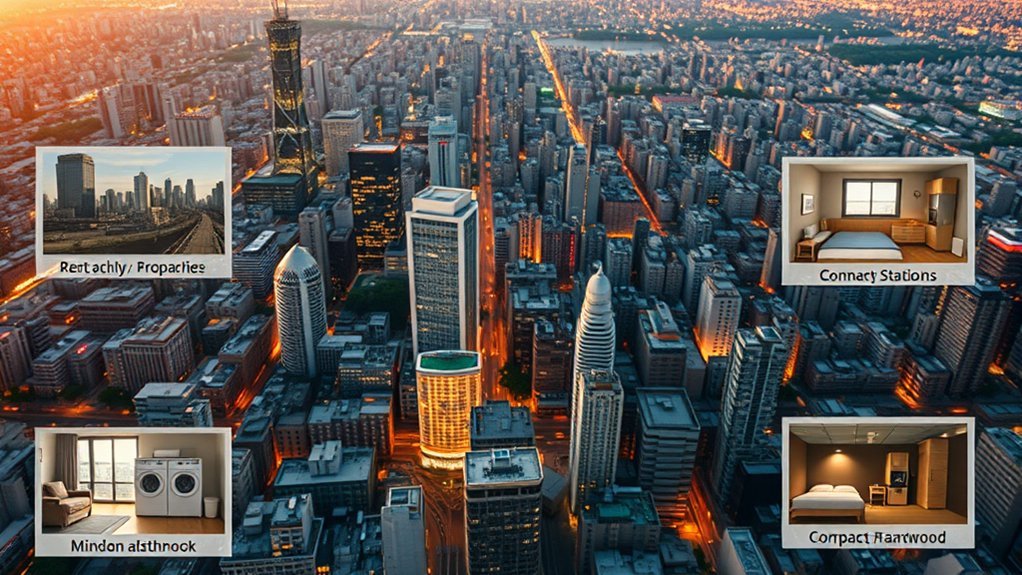
When searching for housing, compare ward-by-ward rents across Tokyo’s 23 special wards. Central wards like Minato, Shibuya, and Chiyoda command premium rates of ¥140,000–¥180,000+ for one-bedroom units (1K or 1DK). Conversely, outer wards such as Nerima, Katsushika, or Edogawa offer comfortable apartments for ¥50,000–¥90,000 per month.
Plan for substantial upfront move-in costs—including security deposits, key money (*reikin*), brokerage commissions, advance rent, and guarantor company fees. For an apartment renting at ¥80,000/month, prepare roughly 400,000 to 450,000 yen upfront, plus monthly building management fees (*kanri-hi*) of around ¥5,000–¥10,000.
Typical Upfront Expenses
How much initial capital do you need to secure a Tokyo rental? Expect upfront contractual fees equal to 4 to 5 times your monthly rent. On an ¥80,000 monthly rental, your move-in cost breakdown typically looks like this:
| Item | Typical Cost (80k Rent) | Notes |
|---|---|---|
| Security Deposit (*Shikikin*) | ¥80,000 | 1 month (refundable, minus cleaning) |
| Key Money (*Reikin*) | ¥80,000 | 1 month (non-refundable gratuity to landlord) |
| Brokerage Fee (*Choukai Tesuuryou*) | ¥88,000 | 1 month rent + 10% consumption tax |
| Advance Rent | ¥80,000 | Covers your first full month of occupancy |
| Guarantor Fee (*Hoshounin*) | ¥40,000 | 0.5 to 1 month rent (guarantee company) |
| Lock Change & Fire Insurance | ¥30,000 | Mandatory setup & safety fees |
Warning: Japanese standard residential lease contracts run for two years. Upon renewing your contract at the 24-month mark, most landlords charge a mandatory **Renewal Fee (*Koushinryou*)** equal to 1 month’s rent, plus a renewal administrative processing fee.
Ward-By-Ward Rent Breakdown
Tokyo housing prices shift significantly depending on proximity to major Yamanote Line stations and building age:
- Central Core (Minato, Chiyoda, Shibuya, Chuo): 1K/1DK studios range from ¥140,000 to ¥180,000+. Upfront move-in costs frequently exceed ¥600,000 to ¥800,000.
- Popular Urban Wards (Shinjuku, Setagaya, Nakano, Meguro): 1K units average ¥90,000 to ¥130,000.
- Affordable Outer Wards (Nerima, Adachi, Katsushika, Edogawa): Standard 25 m² units run ¥50,000 to ¥80,000, keeping initial move-in costs closer to ¥350,000–¥450,000.
Cost-Saving Strategies
To reduce monthly rent without sacrificing commute speed, target outer wards situated directly on efficient subway lines (such as the Toei Mita Line or Tokyo Metro Tozai Line). Seek listings marked “Zero Key Money” (礼金なし) to immediately shave one full month’s rent off your move-in bill. Additionally, look for apartments offering a “Free Rent” clause (1 month rent waived) or choose properties utilizing lower guarantor company plans.
Utilities, Internet, and Mobile Plans
Monthly utility expenses in Tokyo depend heavily on seasonal climate control (hot summers requiring AC and cold winters requiring heating). For a typical single-person studio (20–25 m²), basic utilities (electricity, gas, water) run ¥10,000 to ¥15,000 monthly. Larger 85 m² family residences average around ¥26,584 per month.
Mobile and home internet connectivity in Japan is fast and reliable:
- Mobile Plans: Major carriers (NTT Docomo, au, SoftBank) cost ~¥4,000 to ¥7,000/month for unlimited data. Budget MVNO carriers (UQ Mobile, Y!Mobile, ahamo, Rakuten Mobile) offer 20GB packages for ¥2,000 to ¥3,278/month.
- Home Internet: Pocket Wi-Fi routers cost ~¥3,500/month, while high-speed fiber optic broadband (*Hikari*) averages ¥4,500 to ¥5,500/month.
| Service | Typical Cost (¥/mo) | Notes |
|---|---|---|
| Electricity, Gas & Water (Single) | 10,000–15,000 | City gas is ~30% cheaper than LPG propane |
| Mobile Service | 2,000–3,812 | MVNO budget carrier vs. major tier-1 carrier |
| Fiber Internet Broadband | 4,000–5,000 | High-speed gigabit fiber connection |
Groceries, Eating Out, and Typical Food Prices
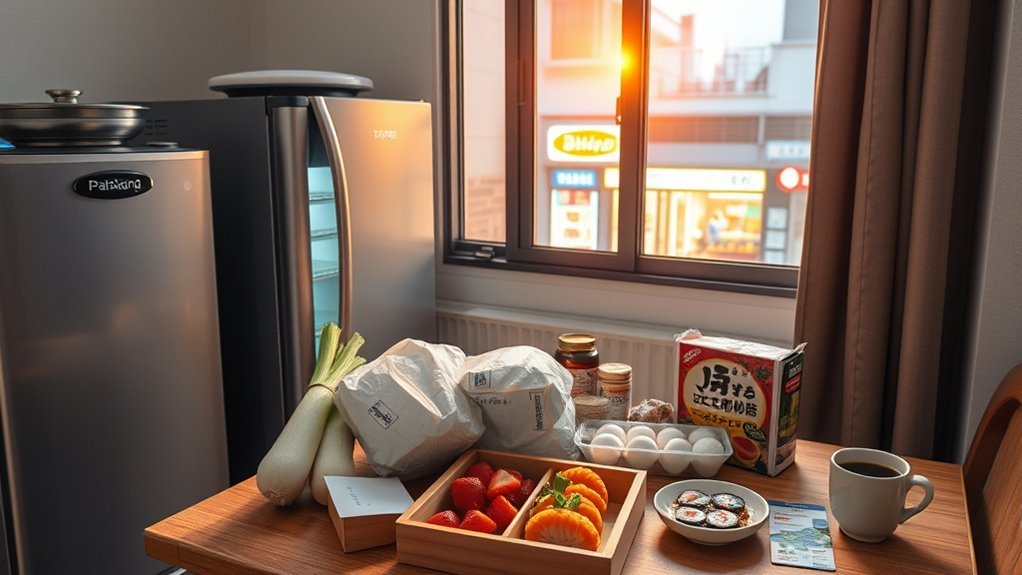
According to figures published by the Tokyo Metropolitan Government, food costs in Japan have adjusted due to recent global inflation, but cooking at home remains economical. Expect a single person’s monthly grocery bill to run between ¥30,000 and ¥40,000.
Typical grocery market prices in Tokyo:
- Milk: ~¥245 to ¥280 per 1-liter carton.
- White Rice: ~¥2,200 to ¥2,800 per 5kg bag.
- Eggs: ~¥280 to ¥350 per pack of 10 large eggs.
- Chicken Breast: ~¥90 to ¥120 per 100g.
- Beef (Local/Imported): ~¥250 to ¥450 per 100g.
Dining out in Tokyo is surprisingly affordable compared to other major international financial capitals. Fast-food chain meals (Gyudon bowls at Yoshinoya, Matsuya, or Sukiya) cost just ¥500–¥800. A standard lunch set (*Teishoku*) at a local eatery runs ¥900–¥1,400, while a mid-range dinner for two averages around ¥6,000–¥8,000. Convenience stores (*Konbini* like 7-Eleven, Lawson, and FamilyMart) offer complete bentos for ¥500–¥700.
Pro Tip: Visit Japanese supermarkets (such as Life, Seiyu, or Summit) after 7:00 PM. Fresh sashimi, prepared meals, and meats are marked down with discount stickers ranging from 20% to 50% off daily.
Transportation and Commuting Expenses
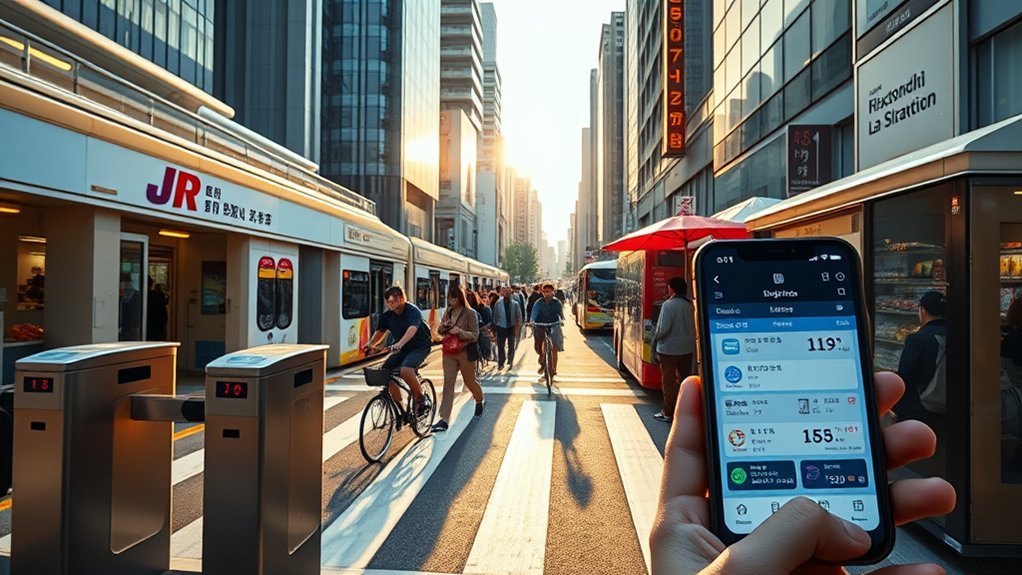
Tokyo boasts the world’s most extensive public transportation network, operated by Tokyo Metro, Toei Subway, and JR East. Base train fares start at ¥180 to ¥220 for single trips using IC Cards (Suica or Pasmo).
Fare Types and Costs
If you commute daily, purchasing a monthly commuter pass (*Teikiken*) between your home station and work station saves significant money over single pay-per-ride fares.
| Fare Type | Typical Price (¥) | Notes |
|---|---|---|
| Single Metro/JR Ride | 180 – 220 | Distance-based IC fare |
| Monthly Commuter Pass | 8,000 – 12,000 | Unlimited travel between two chosen stations |
| 24-Hour Tokyo Metro Pass | 800 | Best for multi-stop sightseeing days |
Monthly Pass Value
A monthly commuter pass between two stations approximately 20 minutes apart costs roughly ¥9,000 per month. If you make 40 individual trips per month at ¥220 per ride, single tickets total ¥8,800. However, the commuter pass allows unlimited free stopovers at any intermediate station along your designated route, providing extra value for leisure travel on weekends.
“In Japan, the vast majority of full-time employers fully reimburse their employees’ monthly public transit commuting costs (*Tsukyu-teiki*) as a tax-free benefit.”
Commuting Time Tradeoffs
Living further out on suburban train lines (such as the Odakyu, Chuo, or Den-en-toshi lines) can save you ¥40,000–¥60,000 per month in apartment rent. However, weigh these savings against peak-hour train congestion and a 45-to-60-minute daily commute each way.
Childcare, Education, and Family Costs
For families relocating to Tokyo, education and childcare represent substantial budget considerations. Public Japanese elementary and junior high schools charge zero tuition, requiring parents to pay only for school lunches (~¥4,500–¥6,000/month) and materials.
However, expat families choosing international private education face higher costs according to industry reports from MEXT (Ministry of Education):
- Private Preschool / Daycare: Public licensed daycare (*Ninsokai*) is subsidized based on income (¥20,000–¥50,000/month). Unlicensed or private international preschools cost ¥70,000 to ¥120,000 monthly.
- International Schools: Annual tuition at accredited international K-12 schools (such as ASIJ or BST) ranges from ¥2,200,000 to ¥3,500,000 per child, excluding capital levies, school busing, and enrollment fees.
One-Time Setup and Moving Expenses
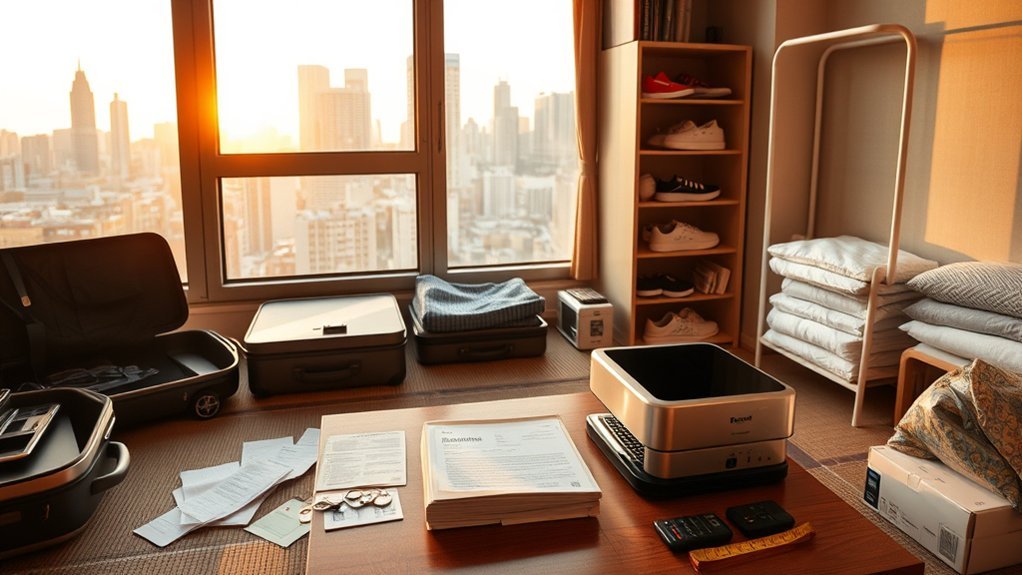
In addition to contractual real estate fees, factor in one-time initial setup costs when establishing your home in Tokyo:
- Furniture & Major Appliances: Expect to spend ¥80,000 to ¥150,000 for basic items (refrigerator, washing machine, microwave, mattress, and curtains). Most Tokyo apartments are leased completely unfurnished.
- Moving Companies (*Hikoshi*): Local intra-city moving services cost ¥30,000–¥60,000 during off-peak months, but surge to ¥80,000–¥150,000 during the peak Japanese moving season (March to April).
- Utensils & Household Goods: Shaving costs by shopping at Japanese 100-yen stores (Daiso, Seria, Can Do) keeps initial houseware setup under ¥15,000.
Tips to Reduce Living Costs in Tokyo
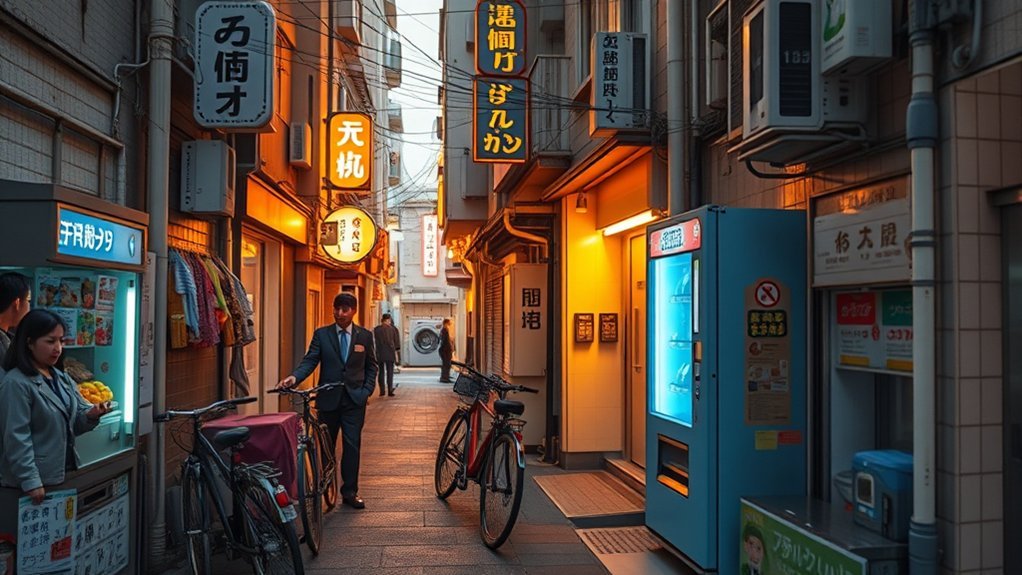
Staying within budget in Tokyo is straightforward once you optimize your recurring fixed expenses:
- Target Outer Wards: Renting in Nerima, Katsushika, or Edogawa saves up to 50% compared to central Minato or Shibuya.
- Eliminate Key Money: Filter real estate searches specifically for “Reikin Zero” properties to eliminate unnecessary upfront gifts to landlords.
- Shop at Local Discount Supermarkets: Avoid high-end department store basements (*Depachika*) for daily groceries. Shop at Gyomu Super, Hanamasa, Seiyu, or OK Store for wholesale prices.
- Switch to an MVNO Mobile Provider: Move away from tier-1 carriers to save ¥3,000 to ¥5,000 monthly on mobile phone bills.
Frequently Asked Questions
Can I live on $2,000 a month in Japan?
Yes. A monthly budget of $2,000 (roughly ¥300,000 to ¥310,000) is plenty for a single person to live comfortably in Tokyo. It easily covers a private 1K apartment in an outer ward (¥60,000–¥80,000), utilities, groceries, transit, health insurance, and leisure activities.
What is the average cost of housing in Tokyo?
Average housing in Tokyo ranges from ¥90,000 to ¥170,000 per month for standard one-bedroom (1K/1DK) units. Outer wards (such as Nerima or Edogawa) average ¥50,000 to ¥90,000, while central wards (Minato, Shibuya, Chiyoda) frequently exceed ¥140,000–¥180,000 per month.
Can you live in Japan with $1,000 a month?
Living in Tokyo on $1,000 (approx. ¥150,000) per month is extremely tight. Non-rent basic living expenses alone average ~¥136,984. To make $1,000 work, you would need to secure a shared house (*Share House*) room under ¥40,000/month and follow a strict frugal lifestyle.
What salary is needed to live comfortably in Tokyo?
A gross salary of ¥350,000 to ¥450,000 per month (~¥4.2M to ¥5.4M annually) provides a comfortable lifestyle for a single person in Tokyo. This income level leaves ample margin for a private central apartment, regular dining out, social activities, mandatory health insurance, and monthly savings.
Conclusion
Understanding Tokyo’s cost landscape is straightforward when broken down into fixed and variable components: rent serves as your largest anchor, utilities and groceries form a predictable monthly base, and public transit ties your daily routine together. By choosing your ward strategically, utilizing MVNO mobile plans, and cooking home meals, you can enjoy one of the world’s safest and most dynamic cities while keeping your financial plan firmly on track.
Sources
- Statistics Bureau of Japan (e-Stat) — Official Family Income and Expenditure Survey Statistics
- Tokyo Metropolitan Government — Official Tokyo Metropolitan Administration & Resident Services
- Tokyo Metro Official Transit Portal — Tokyo Subway Routes, Fares, and Commuter Pass Data
- MEXT (Ministry of Education, Culture, Sports, Science and Technology) — Japanese Education System & Tuition Statistics