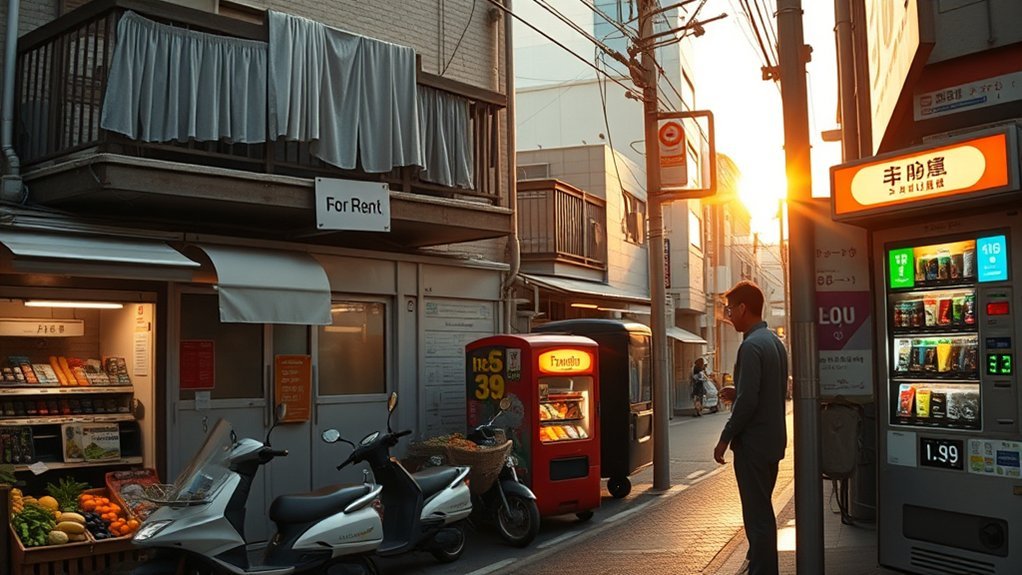
This guide explains the cost of living in Osaka in 2026, including rent, move-in fees, utilities, mobile service, groceries, dining, transport, insurance, pension, childcare, and realistic monthly budgets. Prices are planning benchmarks rather than guaranteed quotes, and your actual costs will depend on your household, neighborhood, lease, commute, and lifestyle.
Quick Answer: How Much Does It Cost to Live in Osaka in 2026?
For 2026, a single adult living in Osaka needs between ¥183,000 and ¥264,000 per month for core living expenses before taxes, pension, and health insurance. Total recurring monthly budgets break down as follows:
- Single person (outside center): ¥183,000–¥231,000/month (Rent: ~¥87,500)
- Single person (city center): ¥216,000–¥264,000/month (Rent: ~¥121,000)
- Family of four (outside center): ¥323,000–¥437,000/month (3-Bedroom Rent: ~¥130,400)
Key Takeaways
- A one-bedroom apartment averages about ¥120,750 in central Osaka (Kita, Chuo, Nishi wards) and ¥87,430 in surrounding residential districts.
- Standard utilities for an 85 m² apartment average roughly ¥20,650/month, home fiber broadband runs about ¥5,075, and a 10 GB+ mobile plan costs ~¥3,830.
- Traditional leases often require 4 to 6 months of rent upfront for deposits, key money (*reikin*), agent fees, and guarantor charges. Watch for Kansai-specific *shikibiki* non-refundable deposit terms.
- Flat geography makes bicycle commuting (*mamachari*) a popular way to eliminate the ¥7,930–¥12,770 monthly subway commuter pass.
- National Health Insurance, National Pension (¥17,920/mo in FY2026), and second-year municipal resident taxes are not included in basic living subtotals.
Cost of Living in Osaka: 2026 Price Snapshot
The figures below combine current official tariffs with Osaka price benchmarks published by Numbeo as of May 2026. Numbeo is crowdsourced, so its averages are best used as starting baselines. Always compare current apartment listings, utility plans, school fees, and transport routes before finalizing your relocation budget.
| Expense Category | Typical 2026 Benchmark |
| One-bedroom rent, city center | About ¥120,750 per month |
| One-bedroom rent, outside center | About ¥87,430 per month |
| Basic utilities for 85 m² (Electricity, Gas, Water) | About ¥20,650 per month |
| High-speed home internet (Fiber) | About ¥5,075 per month |
| Mobile plan with calls and 10 GB+ data | About ¥3,830 per month |
| Inexpensive restaurant set meal | About ¥1,000 |
| Osaka Metro single ride (1 to 5 zones) | ¥190–¥390 |
| National Pension contribution (Category I, FY2026) | ¥17,920 per month |
Rent is typically the largest monthly expense in Osaka: choosing an apartment outside central wards saves an average of ¥33,000 per month on a one-bedroom unit.
Housing and Rent Costs in Osaka
A one-bedroom apartment (1K or 1LDK) averages approximately ¥120,750 per month in the city center (such as Kita-ku around Umeda, Chuo-ku around Shinsaibashi/Namba, or Nishi-ku), with typical listings spanning ¥100,000 to ¥170,000. Outside the central core (such as Joto, Higashinari, Sumiyoshi, or Toyonaka), average rent drops to approximately ¥87,430 (ranging between ¥75,000 and ¥100,000).
For larger family housing, the price gap widens significantly. A three-bedroom apartment (3LDK) averages roughly ¥283,250 in central Osaka compared to ¥130,400 outside the center. Factors such as walking distance to the nearest subway station (under 7 minutes commands a premium), building construction type (reinforced concrete *RC* vs. lightweight steel), auto-lock security, and building age directly impact final monthly rent.
Upfront Move-In Costs and Kansai Rental Customs
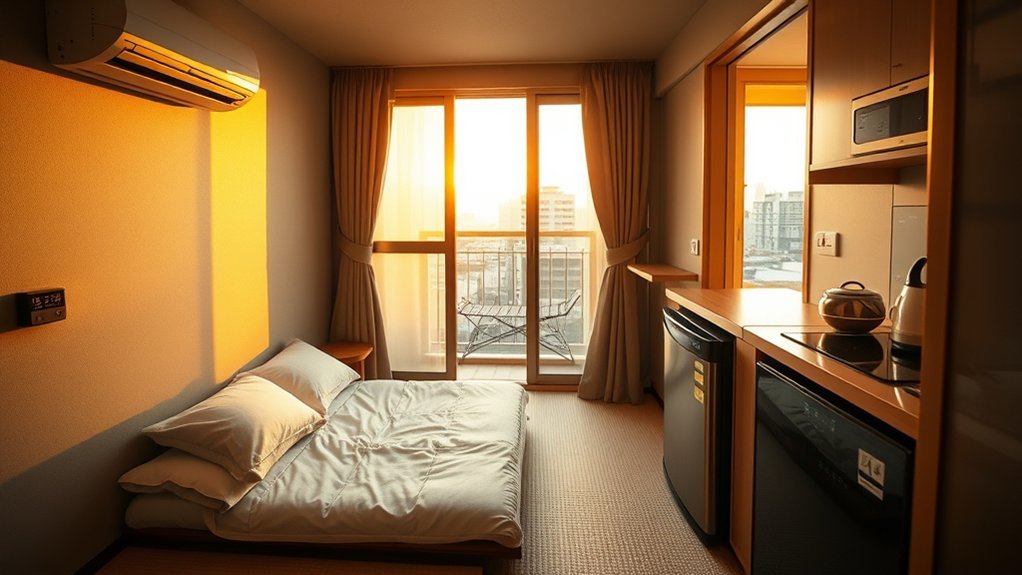
When leasing an unfurnished apartment in Japan through a standard 2-year contract, upfront costs are substantial. According to real estate guidelines from the Osaka Foundation of International Exchange, standard initial charges include:
- Security deposit (*Shikikin*): 1 to 2 months of rent. In the Kansai region, watch for agreements specifying Shikibiki—a contractual clause where a set portion of your deposit is automatically non-refundable upon move-out regardless of apartment condition.
- Key money (*Reikin*): 1 to 2 months of non-refundable “gift” money paid to the landlord.
- Real estate agency fee (*Chūkai Tesūryō*): Up to 1 month of rent plus consumption tax.
- Guarantor company fee (*Hoshō Gaisha*): 50% to 100% of one month’s total rent initially, plus a ~¥10,000 annual renewal fee.
- First month’s rent and management fee (*Kanrihi*): Paid in advance before receiving keys.
- Mandatory fire insurance & lock change: Typically ¥15,000–¥25,000 for insurance (2 years) and ¥15,000–¥30,000 for lock replacement.
Move-In Cost Warning: Moving into a conventional apartment in Osaka generally requires upfront cash equal to 4 to 6 months of rent (¥350,000–¥550,000 for a standard 1K). To minimize initial cash drain, look for “Zero-Zero” (*Zero-Reikin, Zero-Shikikin*) apartments, UR housing (*Urban Renaissance*, which charges no key money or agent fees), or furnished monthly rentals.
Utility, Internet, and Mobile Phone Expenses
Basic utilities—electricity, city gas, water, and municipal waste management—for a standard 85 m² apartment in Osaka average ¥20,650 per month (typical range: ¥15,000–¥24,300). For a single person in a compact 25–35 m² studio, monthly utilities generally range between ¥10,000 and ¥15,000.
Seasonal fluctuations are significant in Kansai. Intense summer humidity (July to September) requires continuous air conditioning, which can add ¥4,000–¥8,000 to monthly electric bills. In winter, older apartments with single-pane windows require supplemental heating.
For connectivity, high-speed fiber broadband (NTT FLET’S, au Hikari, or Nuro Hikari) costs an average of ¥5,075 per month, plus one-time installation charges (often rebated via multi-year contracts). Mobile service through major carriers (Docomo, au, SoftBank) costs ¥6,000–¥8,000/month, but switching to MVNO low-cost SIM providers (such as ahamo, LINEMO, povo, or UQ Mobile) brings mobile expenses down to ¥2,000–¥3,830 per month for 10 GB–20 GB with domestic voice calling.
Food and Grocery Costs in Osaka
Supermarket food prices in Osaka are moderately lower than central Tokyo. For home cooking, an individual adult should budget approximately ¥30,000 to ¥45,000 per month for groceries. Couples should plan ¥60,000–¥80,000, and a family of four typically spends ¥100,000–¥140,000.
| Staple Grocery Item | Average 2026 Price Range |
| Fresh milk (1 liter) | ¥220–¥240 |
| Japanese white rice (1 kg) | ¥700–¥800 (or ~¥3,200–¥3,800 for 5 kg bag) |
| Eggs (carton of 12) | ¥330–¥400 |
| Chicken breast fillets (1 kg) | ¥950–¥1,050 |
| Locally grown apples (1 kg / ~4 apples) | ¥520–¥600 |
| Tofu (300 g block) | ¥80–¥130 |
A basic weekly starter basket consisting of 1 liter of milk, 2 kg of rice, 12 eggs, 1 kg of chicken, and 1 kg of apples totals approximately ¥3,420–¥3,890.

Grocery Savings Tip: Shop at discount regional supermarket chains such as Super Tamade, Gyomu Super (bulk staples), or Life. Supermarkets discount prepared bento boxes and fresh meats by 20% to 50% every evening starting around 7:30 PM–8:00 PM.
Dining Out, Cafes, and Entertainment
Known as Japan’s kitchen (*Tenka no Daidokoro*), Osaka offers exceptionally affordable casual dining. Standard food and beverage benchmarks include:
- Teishoku (lunch set meal) or Ramen: ¥850–¥1,200.
- Casual street food (Takoyaki, 8 pcs / Okonomiyaki): ¥600–¥900.
- Mid-range 3-course dinner for two (without drinks): ¥4,500–¥6,000.
- Fast-food combo (Gyudon / Burger meal): ¥600–¥750.
- Cafe cappuccino or flat white: ¥450–¥550.
- Domestic draft beer (*Nama-biiru*, 0.5 L) at an Izakaya: ¥350–¥500.
For an active single resident who eats out 3 to 4 times per week and visits cafes on weekends, a monthly leisure and dining budget of ¥25,000 to ¥40,000 provides comfortable flexibility.
Transportation and Commuting Costs
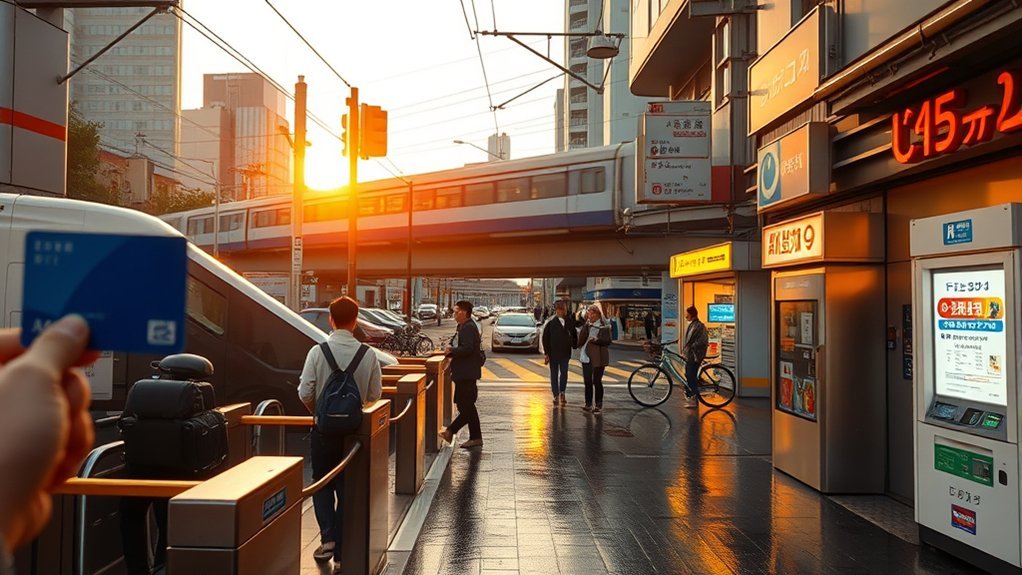
Osaka is served by the extensive Osaka Metro subway network, JR West lines, and private railways (Hankyu, Hanshin, Keihan, Kintetsu, and Nankai). Osaka Metro fares are calculated strictly by distance zones (IC card deductions match ticket fares exactly):
- Zone 1 (up to 3 km): ¥190
- Zone 2 (over 3 km to 7 km): ¥240
- Zone 3 (over 7 km to 13 km): ¥290
- Zone 4 (over 13 km to 19 km): ¥340
- Zone 5 (over 19 km): ¥390
Monthly adult commuter passes (*Tsūkin Teikiken*) cost ¥7,930 for Zone 1, ¥9,480 for Zone 2, ¥11,030 for Zone 3, ¥11,830 for Zone 4, and ¥12,770 for Zone 5. Check exact station-to-station fares on the official Osaka Metro Fare Schedule.
The Bicycle Advantage in Osaka: Because Osaka’s central business wards are flat and laid out on a grid, many residents commute entirely by city bicycle (*mamachari*). Mandatory crime-prevention bicycle registration (*Bōhan Tōroku*) costs only ¥600 one-time, and dedicated monthly municipal station bicycle parking costs approximately ¥1,500–¥2,500/month, saving over ¥60,000 annually compared to train passes.
Taxes, National Health Insurance, and Pension
Living costs in Japan extend beyond commercial expenses. Depending on your visa and employment contract, mandatory social contributions include:
National Health Insurance (NHI) vs. Social Insurance
Corporate employees are enrolled in Shakai Hoken (Social Insurance), where health insurance and welfare pension costs (~14–15% of gross salary) are split 50/50 with the employer and deducted directly from payroll. Self-employed workers, freelancers, and students enroll in municipal National Health Insurance (*Kokumin Kenkō Hoken*). In Osaka City, NHI premiums are calculated based on prior-year income, age, and household size via the official Osaka City NHI Premium Guidelines.
National Pension System (*Kokumin Nenkin*)
For independent Category I insured residents aged 20 to 59, the mandatory flat contribution rate for fiscal year 2026 is ¥17,920 per month, set by the Japan Pension Service. Qualifying low-income residents and students may apply for formal contribution exemptions.
Critical Budget Warning: Year-Two Resident Tax (*Jūminzei*): During your first calendar year residing in Japan, you do not pay municipal resident tax because it is assessed on the previous year’s domestic Japanese income. In June of your second year, Osaka City will begin billing resident tax at roughly 10% of taxable income (typically ¥15,000–¥30,000/month for average earners). New residents must set aside savings during Year 1 to absorb this inevitable second-year cost increase.
Monthly Budget Breakdowns & Childcare Policies
Average Net Salary in Osaka
The crowdsourced average monthly take-home salary in Osaka is approximately ¥311,500 net in mid-2026. Entry-level English teaching and hospitality roles typically pay ¥210,000–¥260,000 gross (¥175,000–¥215,000 net), whereas mid-career corporate, tech, and international business positions range from ¥350,000 to ¥650,000+ monthly.
Childcare and Education Subsidies (2026 Free Tuition Policy)
Private international preschools and bilingual kindergartens in Osaka cost ¥75,000–¥160,000 per month. However, under the Osaka City Fiscal-2026 Childcare Initiative, monthly tuition at authorized licensed daycare centers (*Ninkahoikuen*) is free for all enrolled children starting in September 2026, including first-born children aged 0 to 2 regardless of household income tier. Parents only pay for school meals, uniforms, extended care, and transport.
Comprehensive Monthly Budget Comparison
| Budget Line Item | Single (Outer Osaka) | Single (Central Osaka) | Family of 4 (Outer Osaka) |
| Rent (1K / 1LDK / 3LDK) | ¥87,500 | ¥121,000 | ¥130,400 |
| Utilities (Power, Gas, Water) | ¥12,000–¥16,000 | ¥12,000–¥16,000 | ¥25,000–¥35,000 |
| Home Fiber Internet | ¥4,500–¥5,100 | ¥4,500–¥5,100 | ¥4,500–¥5,100 |
| Mobile Phone Plan(s) | ¥3,000–¥3,900 | ¥3,000–¥3,900 | ¥7,000–¥10,000 |
| Public Transit / Subway Pass | ¥7,930 | ¥7,930 | ¥16,000–¥24,000 |
| Groceries & Home Food | ¥30,000–¥42,000 | ¥30,000–¥42,000 | ¥100,000–¥140,000 |
| Dining Out, Cafes & Leisure | ¥25,000–¥40,000 | ¥25,000–¥40,000 | ¥25,000–¥50,000 |
| Household Sundries & Personal | ¥10,000–¥18,000 | ¥10,000–¥18,000 | ¥20,000–¥40,000 |
| Estimated Core Subtotal | ¥179,930–¥221,430 | ¥213,430–¥254,930 | ¥327,900–¥434,500 |
Note: Subtotals exclude statutory payroll deductions (Income Tax, Resident Tax, Shakai Hoken / NHI, National Pension), long-distance bullet train travel, and one-time lease startup fees.
Practical Strategies to Lower Living Expenses in Osaka
- Target Non-Central Subway Stations: Look for housing 3 to 5 stops outside central hubs on the Tanimachi or Midosuji subway lines (such as Higashimikuni, Sekime, or Showacho) to save ¥30,000+/month on rent while maintaining a 15-minute commute.
- Adopt Bicycle Commuting: Use a registered city bicycle for intra-ward commuting to eliminate monthly subway pass costs entirely.
- Utilize Evening Supermarket Markdowns: Take advantage of time-discount stickers (*Waribiki*) on ready-to-eat meals, meat, and fish at grocery chains after 7:30 PM.
- Switch to MVNO Mobile Carriers: Moving from major network contracts to brands like LINEMO or ahamo cuts telecom bills from ~¥8,000 down to under ¥3,000/month.
- Bypass Key Money (*Reikin*): Filter property searches specifically for zero-key-money units or UR Housing developments to cut initial leasing cash requirements by 40% to 50%.
Frequently Asked Questions About Osaka Living Costs
What is a realistic monthly budget for one person in Osaka?
A single adult living in Osaka typically needs ¥180,000 to ¥225,000 per month outside the city center, or ¥215,000 to ¥260,000 in central wards like Kita or Chuo. This covers rent, utilities, high-speed internet, mobile service, transport, groceries, modest dining, and personal items, excluding taxes, pension, and health insurance.
How much does a one-bedroom apartment cost in central Osaka?
As of mid-2026, a one-bedroom apartment in central Osaka averages approximately ¥120,750 per month, with typical listings ranging between ¥100,000 and ¥170,000 depending on station proximity, building age, and structural materials.
What are average monthly utilities in Osaka?
Basic utilities (electricity, gas, water) for an 85 m² residence average about ¥20,650 per month. For a single person in a 1K or studio apartment, monthly utilities generally run between ¥10,000 and ¥15,000, peaking during hot summer months due to air conditioning.
Is an Osaka Metro commuter pass worth buying?
A 1-zone adult commuter pass costs ¥7,930 per month. At a standard single fare of ¥240, the pass breaks even after approximately 34 rides (17 working days). If your employer reimburses transit or you commute on the same route daily, it is cost-effective.
How much should I budget for groceries in Osaka?
Budget between ¥30,000 and ¥45,000 per month for one adult cooking primarily at home with Japanese staples (rice, chicken, tofu, local vegetables). Heavy reliance on imported foods, cheese, and convenience stores will raise this figure.
How much cash is required upfront to move into an Osaka apartment?
Traditional rental contracts require 4 to 6 months of rent upfront (¥350,000–¥550,000 for standard units) to cover deposit, key money (*reikin*), agent commissions, guarantor fees, fire insurance, and advance rent. Zero-key-money listings or UR housing lower these initial costs.
Are health insurance and pension included in basic monthly budgets?
No. The fiscal-2026 National Pension contribution is fixed at ¥17,920 per month for Category I insured individuals. National Health Insurance and municipal resident taxes vary based on prior-year income and household composition, adding roughly 15% to 25% to overall gross living costs.
Is licensed childcare free in Osaka in 2026?
Yes. Starting in September 2026, Osaka City provides free monthly tuition at authorized licensed daycare facilities for all enrolled children (including children aged 0 to 2, regardless of income). Parents remain responsible for meals, supplies, and transit fees.
Authoritative Sources and Official References
- Numbeo: Cost of Living in Osaka Benchmark (May 2026) — Crowdsourced pricing data for rental housing, consumer staples, dining, utilities, and wages.
- Osaka Metro Official Fare Table — Distance-based passenger fare rules and commuter pass pricing.
- Osaka Foundation of International Exchange (OFIX) — Foreign resident housing guide, lease terminology, security deposits, and agent fees.
- Osaka City National Health Insurance Division — Fiscal-2026 premium calculation methods and per-capita levy structure.
- Japan Pension Service (Nenkin) — Fiscal-2026 Category I National Pension contribution rates.
- Osaka City Childcare & Education Bureau — September 2026 comprehensive licensed daycare tuition waiver program.
Related Living & Relocation Guides
- Cost of Living in Tokyo: Complete Price Breakdown
- Moving to Osaka: Best Neighborhoods for Expats