

Nigeria’s monthly cost of living depends on your city and lifestyle, but housing and food will take most of your budget. In Lagos, a one-bedroom can cost ₦600,000 to ₦1.2 million a year, while Ibadan or Enugu may be far cheaper. A family of four may spend ₦150,000 to ₦250,000 on groceries, and monthly utilities can run ₦40,000 to ₦80,000, with transport and healthcare adding more. Keep going to see how far your money can stretch.
What Is the Cost of Living in Nigeria?
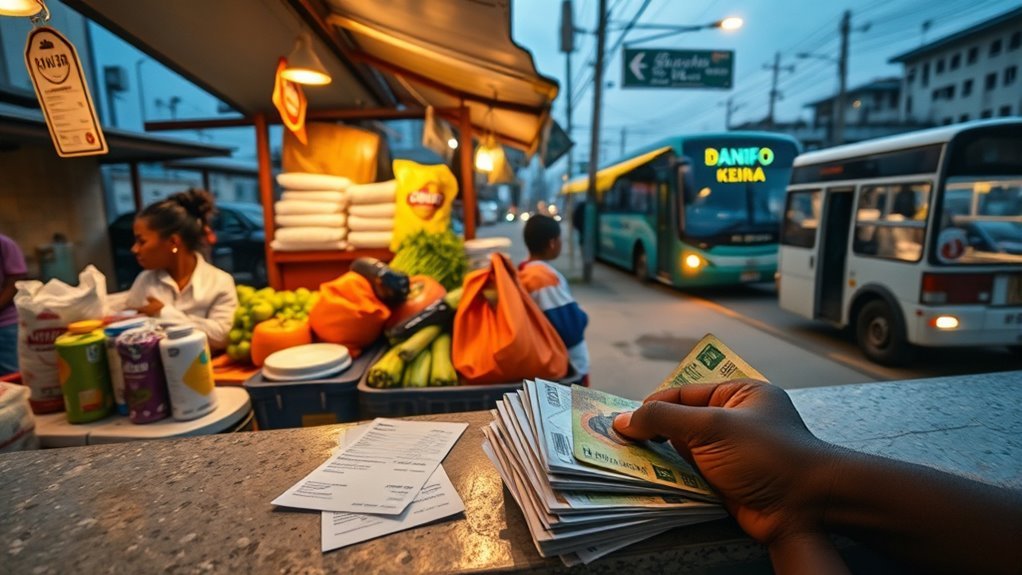
The cost of living in Nigeria varies widely by city and lifestyle, but for most households, housing and food take the biggest share of the budget. You can expect monthly expenses to reflect sharp economic factors, from exchange rates to fuel costs, and these pressures shape living standards across the country.
Nigeria’s cost of living shifts by city and lifestyle, with housing and food taking the biggest bite.
A family of four may spend about ₦150,000 to ₦250,000 on groceries alone, while utilities often add ₦40,000 to ₦80,000, plus generator fuel when power fails.
Transport stays relatively lower, with public fares around ₦200 to ₦500 per ride, though ride-hailing can reach ₦800.
For a single person, monthly costs average about $581.39; for a family of four, they climb to roughly $2,148.25 before rent. This isn’t luxury spending; it’s the baseline you must navigate if you want to protect your purchasing power and plan with confidence.
Housing Costs in Nigeria’s Major Cities
Housing is often the biggest expense after food, and in Nigeria the gap between cities can be dramatic. In Lagos, you may pay ₦600,000 to ₦1,200,000 monthly for a one-bedroom, with price swings driven by location, security, and housing amenities. Abuja’s upscale districts track closely, so you should expect similar pressure on your budget.
By contrast, Ibadan and Enugu give you more room to breathe, with comparable units often costing ₦250,000 to ₦400,000. Nationally, a standard two-bedroom flat averages about ₦460,000 a month, roughly $305, but rental trends vary sharply by neighborhood and demand.
You also need to plan for Nigeria’s advance-payment system, where landlords often request one to two years upfront. That means relocation isn’t just about finding rent; it’s about mobilizing capital fast.
If you want housing that supports freedom, compare cities carefully, then choose the one where your income can cover both rent and mobility.
Food Prices for a Monthly Budget
Food can take a large share of your monthly budget in Nigeria, especially if you cook at home and shop regularly. For a family of four, you’ll likely spend about ₦150,000 to ₦250,000 monthly on groceries, depending on location, season, and market access.
Strong grocery budgeting helps you track staples like rice, beans, yam, oil, and vegetables, while meal planning reduces waste and keeps your spending disciplined.
If you eat out, local bukas usually charge ₦1,200 to ₦2,500 per meal, so frequent purchases can stretch your budget fast. Mid-range restaurants cost far more, often ₦8,000 to ₦15,000 per meal, which can quickly limit your financial freedom.
In cities such as Kano or Enugu, local dishes may cost around ₦800. Rising fuel costs and supply chain issues keep pushing prices higher, so you need to compare markets, buy in bulk, and adapt fast.
Transportation, Utilities, and Healthcare Costs
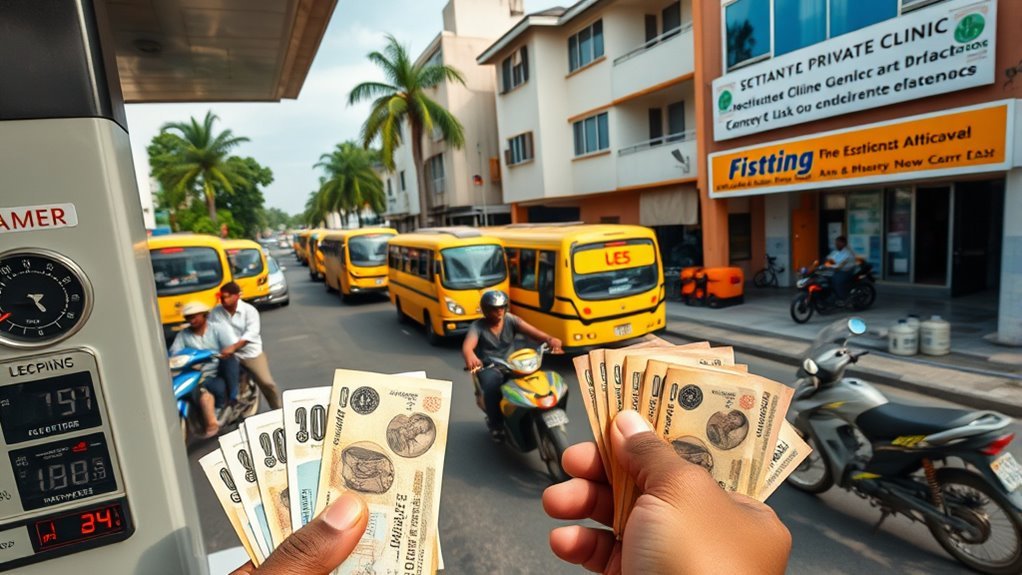
Transportation, utilities, and healthcare can quickly shape your monthly cost of living in Nigeria, and each one behaves differently depending on where you live and how often you use it.
You can keep commuting costs low with public transport, which usually runs from ₦200 to ₦500 per ride. If you need more speed and control, ride hailing often costs about ₦800 per trip. That choice adds up fast.
Utility bills are another major line item: an average household may pay ₦40,000 to ₦80,000 monthly, especially when power use rises.
For health, public consultations typically cost ₦2,000 to ₦5,000, while private visits range from ₦15,000 to ₦40,000. If you want steadier access to care, monthly health insurance can run from ₦50,000 to ₦150,000.
You should budget with precision, because these costs decide how much room you keep for freedom and stability.
Is Nigeria Affordable for Expats and Locals?
Whether Nigeria feels affordable depends largely on your income, location, and spending habits: for a family of four, monthly living costs average about US$2,148.25 excluding rent, while a single person typically spends around US$581.39.
If you earn in foreign currency, you’ll likely handle costs more easily than many locals, because inflation and naira volatility weaken local purchasing power.
In Lagos and Abuja, rent and daily expenses climb fast: a standard two-bedroom flat averages ₦460,000 a month, and luxury options can exceed $15,000 a year.
Food also weighs heavily, with family groceries often running ₦150,000 to ₦250,000 monthly. That makes the expat lifestyle more comfortable for some, but it doesn’t erase local challenges.
If you live rurally or earn locally, you’ll need sharper budgeting and stronger financial discipline.
Frequently Asked Questions
How Much Does It Cost to Live in Nigeria for a Month?
You’ll need roughly $581 monthly solo, or about $2,148 for a family of four, excluding rent. Add Essential Expenses like housing, food, and transport, then use Monthly Budgeting to match your freedom goals.
Is $10 USD a Lot in Nigeria?
No—$10 isn’t a lot in Nigeria. If you buy two bukka meals at ₦1,500 each, you’ve spent most of it. For affordable living, this currency comparison shows $10 covers transport or one clinic visit, not rent.
What Can I Cook With 2000 Naira in Nigeria for Dinner?
You can cook rice and beans, add tomatoes, onions, peppers, and afford chicken or fish. This budget supports Affordable meals through Budget cooking, and you’ll still serve a filling jollof rice or egusi soup dinner.
How Much Is Rent in Nigeria in US Dollars?
Rent prices in Nigeria vary widely: you’ll often pay about $305 monthly for a standard two-bedroom, while Lagos one-bedrooms run $705–$1,410. In cheaper cities, housing options can fall to $270–$435.
Conclusion
So, if you’re budgeting for Nigeria, you’ll quickly discover the national sport: making money disappear with impressive efficiency. Rent in major cities can chew through your income, food prices keep you guessing, and transport costs politely refuse to stay low. Still, with careful planning, you can live well enough. Just don’t expect your naira to stretch like magic—it’s more likely to perform a dramatic, expensive vanishing act.
