
Quick Verdict
As an Amazon Associate we earn from qualifying purchases. This post may contain affiliate links, at no extra cost to you.
Last updated: September 9, 2026. Product compatibility, dosing, and use-case claims were rechecked against current manufacturer guidance. Amazon ratings, review counts, prices, and availability can change.
Best Overall for Worn Automatics
Lucas Transmission Fix is the strongest broad pick here for worn, non-CVT automatic transmissions with fluid- or wear-related symptoms such as slipping, hesitation, rough shifting, heat, foaming, or minor seal seepage. Choose Lubegard Instant Shudder Fixx for torque converter shudder, Lubegard CVT Recharge & Protect for qualifying belt- or chain-driven CVTs, Sea Foam Trans Tune when varnish or sticky solenoids are the main concern, and Prolong Transmission Treatment when friction and metal-surface protection are the priority.
You rely on smooth, reliable shifting to protect drivability and reduce unnecessary transmission wear. The right transmission additive may help with certain fluid-related problems by modifying friction, cleaning varnish, supporting seal condition, or restoring depleted fluid performance.
The wrong additive can create new problems, especially when a transmission requires CVT fluid, DCT/DSG fluid, Ford Type F fluid, or another manufacturer-specific lubricant. Start by confirming your transmission type, checking the fluid level and condition, and matching the product to the symptom you actually have.
Key Takeaways
- Best broad worn-automatic treatment: Lucas Transmission Fix is a strong first choice for compatible non-CVT automatics with slips, rough shifts, heat, foaming, or minor leaks.
- Best shudder-specific treatment: Lubegard Instant Shudder Fixx targets torque converter lock-up shudder in compatible automatic transmissions.
- Best dedicated CVT pick: Lubegard CVT Recharge & Protect is specifically formulated for belt- or chain-driven CVTs that require CVT fluid.
- Best cleaner: Sea Foam Trans Tune focuses on varnish, sticky valve bodies, and sluggish shift solenoids in compatible automatic transmission fluids.
- Best metal-protection option: Prolong Transmission Treatment focuses on reducing friction and protecting metal surfaces in manufacturer-listed manual and automatic applications.
- Big limit: no additive can repair broken gears, burned clutch packs, failed electronics, severe leaks, or badly damaged internal parts.
Compatibility Warning: Do not add a transmission treatment until you confirm the exact fluid specification and transmission type. Many additives are not suitable for CVT, DCT, DSG, or certain Ford Type F applications. Overfilling can also cause foaming, leaks, poor shifting, and other transmission problems.
Best Transmission Additives Compared
This is a use-case comparison rather than a universal ranking. Match the transmission type first, then choose the product that best fits the symptom.
| Product | Best For | Transmission Type | Key Feature |
|---|---|---|---|
| Prolong Transmission Treatment | Metal protection and friction control | Manufacturer lists manual and automatic; confirm required lubricant | Anti-friction metal treatment |
| Lucas Transmission Fix | Worn non-CVT automatics | Automatic and light-duty manual; not CVT/DCT | Slip, rough-shift, heat, foaming, and seal-leak support |
| Hot Shot’s Secret Shift Restore | Cleaning and conditioning | Manufacturer-listed for automatic and CVT | Ester-based cleaner and protectant |
| Lubegard Platinum | ATF friction support | Automatic ATF; not CVT; excludes 1986-and-earlier Ford Type F | ATF friction and additive-chemistry support |
| Lubegard Instant Shudder Fixx | Torque converter shudder | Automatic; not CVT/DCT; excludes 1986-and-earlier Ford Type F | Concentrated friction modifier |
| Lubegard CVT Recharge & Protect | CVT fluid maintenance | Belt- or chain-driven CVT that requires CVT fluid | Belt, chain, pulley, wear, and fluid support |
| Sea Foam Trans Tune | Sticky solenoids and varnish | Compatible petroleum/mineral-based automatic transmission fluids | Petroleum-based cleaner and conditioner |
| K&W Trans-X | High-mileage leak and slip support | High-mileage automatic; not CVT fluid | Seal, leak, and shift-quality support |
Top Picks
| Category | Product | Primary Use |
|---|---|---|
| 🏆 Best Metal Protection | Prolong Transmission Treatment | Friction and metal-surface protection |
| 🏆 Best Overall for Worn Automatics | Lucas Transmission Fix | Worn non-CVT automatics |
| 🚀 Best Restore & Clean | Hot Shot’s Secret Shift Restore | Automatic/CVT cleaning and conditioning |
| ⭐ Best ATF Friction Support | Lubegard Platinum | Compatible automatic ATF systems |
| 🔧 Best Shudder Fix | Lubegard Instant Shudder Fixx | Torque converter shudder |
| 🔰 Best CVT Specialist | Lubegard CVT Recharge & Protect | Belt- or chain-driven CVT fluid support |
| 🎨 Best Solenoid Cleaner | Sea Foam Trans Tune | Varnish and sticky solenoids |
| 💼 Best High-Mileage Leak Support | K&W Trans-X | High-mileage automatic leaks and slipping |
How We Picked These Additives
You need an additive that matches your transmission type, fluid specification, symptom, and maintenance goal, so compatibility came first. A strong product can still be the wrong choice if your vehicle uses CVT fluid, DCT/DSG fluid, Ford Type F fluid, or another manufacturer-specific service procedure.
We then compared the intended formulation and use case. Some products work mainly as friction modifiers, some focus on metal-surface protection, some clean varnish and sticky residue, and others target seal condition or depleted fluid chemistry. We prioritized current manufacturer compatibility statements, dosing guidance, realistic limitations, and the specific symptoms each formula is designed to address.
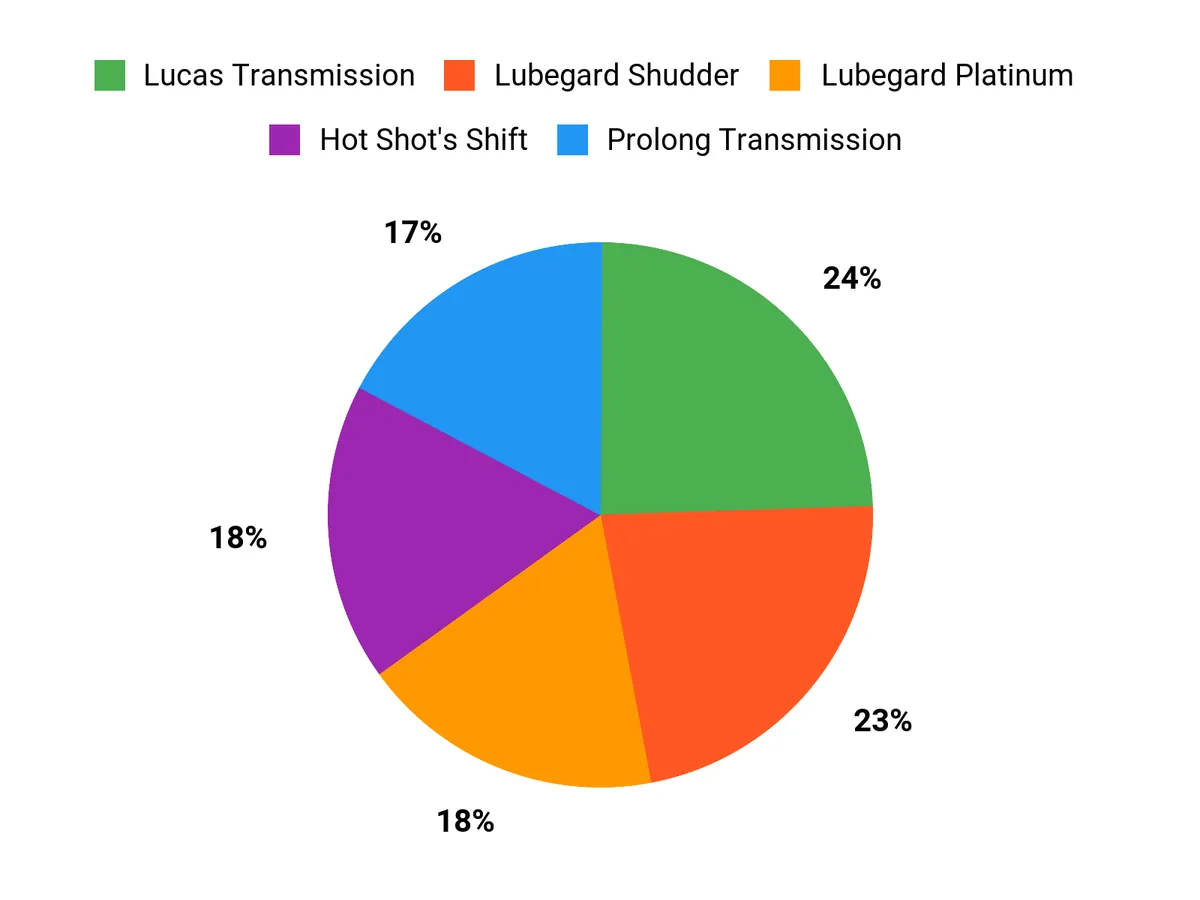
This is an editorial comparison based on current manufacturer information and buyer-use-case fit, not a claim of independent laboratory or hands-on durability testing. Customer-feedback graphics are included as general context, but their underlying review sample and methodology have not been independently verified.
Finally, we considered ease of use, bottle size, dosing demands, fluid-level management, and how clearly each product explains what it can and cannot do. Additives may improve certain fluid-related drivability problems, but they should not replace diagnosis when the transmission has grinding, delayed engagement, total gear loss, burnt fluid, metal debris, or major leakage.
Pro Tip: If the fluid is very dark, smells burnt, or contains metal debris, diagnose the transmission before adding a treatment. A correct fluid service, filter service, scan-tool diagnosis, or shop inspection may matter more than an additive.
Verification note: Compatibility, dosing, exclusions, and main use-case claims were rechecked against current manufacturer guidance on September 9, 2026. Amazon ratings, review totals, prices, and availability were intentionally not treated as fixed facts because they can change.
A transmission additive works best when you treat it as a targeted fluid-maintenance tool, not a mechanical rebuild in a bottle. Match the formula to the transmission type, required fluid, and symptom before adding anything.
Before You Buy
- Confirm whether your vehicle uses a conventional automatic, manual, CVT, DCT, DSG, or a special fluid such as Ford Type F.
- Check the exact OEM fluid specification rather than assuming every transmission additive is interchangeable.
- For a CVT, use a CVT-specific product or a formula whose manufacturer explicitly lists CVT compatibility.
- Check fluid condition, total capacity, and current level before dosing. Some additives displace transmission fluid.
- Do not overfill the transmission.
- If the vehicle is under warranty or uses a sealed/service-procedure-sensitive transmission, check the manufacturer’s service guidance before adding an aftermarket treatment.
- Do not expect an additive to repair broken gears, failed clutches, major leaks, burnt fluid, damaged hard parts, or electrical faults.
- Check the current Amazon listing before buying because package details, price, and availability can change.
How to Choose the Right Transmission Additive
| Your Symptom | Likely Additive Type | Best Match Here | When to Skip Additives |
|---|---|---|---|
| Torque converter lock-up shudder | Targeted friction modifier | Lubegard Instant Shudder Fixx | If the vehicle has a CVT, DCT, or 1986-and-earlier Ford Type F application |
| Slipping or rough shifts in a worn automatic | Friction, fluid, and seal support | Lucas Transmission Fix or K&W Trans-X | If clutches are burned, gears are missing, or the transmission has major mechanical damage |
| CVT hesitation, noise, shudder, or degraded-fluid symptoms | CVT-specific fluid supplement | Lubegard CVT Recharge & Protect | If the belt, chain, pulley, pump, or valve body is mechanically damaged |
| Sticky solenoids or varnish-related delay | Cleaner/conditioner | Sea Foam Trans Tune or Hot Shot’s Secret Shift Restore | If a diagnostic scan shows a failed electrical component or pressure-control fault |
| Notchy manual shifting or friction/wear concern | Metal-surface protection | Prolong Transmission Treatment | If the clutch, synchronizers, linkage, or internal gears need mechanical repair |
Transmission Additive Compatibility Chart
| Product | Automatic | Manual | CVT | DCT/DSG | Main Caution |
|---|---|---|---|---|---|
| Prolong Transmission Treatment | Yes, manufacturer-listed | Yes, manufacturer-listed | Not specifically listed | Not specifically listed | Use only when compatible with the exact required transmission fluid or gear oil. |
| Lucas Transmission Fix | Yes | Yes, light-duty manual | No | No | Manufacturer does not recommend it for CVT or dual-clutch transmissions. |
| Hot Shot’s Secret Shift Restore | Yes | Not listed | Yes | Not specifically listed | Product displaces an equal amount of fluid; maintain the correct fluid level. |
| Lubegard Platinum | Yes, compatible ATF | No | No | Not specifically listed | Not for CVT or 1986-and-earlier Ford Type F applications. |
| Lubegard Instant Shudder Fixx | Yes, compatible ATF | No | No | No | Not for CVT, DCT, or 1986-and-earlier Ford Type F applications. |
| Lubegard CVT Recharge & Protect | CVT-specific only | No | Yes | No | Use only in belt- or chain-driven CVTs that require CVT fluid; do not overfill. |
| Sea Foam Trans Tune | Yes, compatible petroleum/mineral-based ATF systems | Not listed | Not specifically listed | Not specifically listed | Use only with compatible conventional or synthetic petroleum/mineral-based automatic transmission fluids. |
| K&W Trans-X | Yes, high-mileage automatic | Not listed | No | Not specifically listed | Manufacturer states that it is not compatible with CVT transmission fluids. |
Prolong Transmission Treatment

Prolong Transmission Treatment is best when your main goal is friction control and metal-surface protection. Prolong currently describes it for standard/manual and automatic transmissions, where its anti-friction treatment is designed to interact with metal surfaces as the transmission fluid or gear oil circulates.
This is not the most targeted cleaner, stop-leak, or shudder treatment in the lineup. Pick it when surface protection and smoother operation are the priority. Because the manufacturer does not specifically list CVT or DCT/DSG applications on its current product page, do not assume compatibility with those transmission types.
Customer Feedback Snapshot
The sentiment snapshot suggests generally positive feedback around shift feel and responsiveness in some older transmissions. The underlying review sample, collection date, and methodology have not been independently verified, so treat the chart as anecdotal context rather than proof that the additive will solve a specific transmission problem.
Overall Sentiment: Positive in the existing article snapshot

Problem Solving Ability
Best suited to friction-, wear-, and metal-surface-related concerns in otherwise serviceable manufacturer-listed transmissions. It is not a repair for broken gears, damaged synchronizers, severe clutch failure, or other internal mechanical damage.
Storage
Keep the bottle sealed at room temperature and away from unnecessary heat or direct sunlight. Follow the product label and safety data sheet for storage and disposal instructions.
Key Benefits
- Designed to create a protective layer on transmission metal surfaces
- Manufacturer positions it to reduce potentially damaging friction and heat
- Promotes smoother manual shifting and automatic-transmission responsiveness
- Useful when friction and metal-surface protection are the main maintenance goals
✔ Pros
- Focused on friction and metal-surface protection
- Manufacturer lists manual and automatic transmissions
- Useful when you do not need a leak- or shudder-specific formula
✘ Cons
- Not a dedicated stop-leak or torque-converter-shudder treatment
- Won’t repair damaged gears, clutches, or synchronizers
- CVT and DCT/DSG compatibility is not specifically listed on the current manufacturer page
Check Product Details on Amazon
Lucas Transmission Fix

Lucas Transmission Fix is the best broad pick here for worn conventional automatic transmissions that show fluid- or wear-related slipping, hesitation, rough shifting, heat, foaming, or seal leakage. Lucas also lists it for light-duty manual transmissions to improve shifting ease. It makes the most sense when the transmission still operates and the symptoms do not point to catastrophic internal damage.
Do not use it in CVT or dual-clutch transmissions, including DCT/DSG applications. If your owner’s manual calls for CVT fluid or dedicated dual-clutch fluid, choose a product specifically approved for that transmission instead.
Customer Feedback Snapshot
The sentiment snapshot suggests generally positive feedback around shifting, noise, and day-to-day drivability in some worn transmissions. The underlying review sample and methodology have not been independently verified, and owner reports cannot establish the mechanical cause of a transmission problem.
Overall Sentiment: Positive in the existing article snapshot

Problem Solving Ability
Best suited to fluid- and wear-related symptoms such as slipping, hesitation, rough shifts, heat, foaming, and seal leakage in compatible transmissions. It is not a repair for broken gears, burned clutch packs, failed hard parts, or electrical control faults.
Storage
Keep the bottle sealed at room temperature and away from unnecessary heat or direct sunlight. Follow the product label and safety data sheet for storage and disposal instructions.
Key Benefits
- Designed to address slipping, hesitation, and rough shifting in worn compatible transmissions
- Manufacturer also positions it for seal-leak problems
- Designed to lower operating temperature and reduce foaming
- Good broad option for worn or high-mileage non-CVT automatic transmissions
✔ Pros
- Best broad pick for worn non-CVT automatics
- Targets several common fluid- and wear-related symptoms
- Also manufacturer-listed for light-duty manual transmissions
✘ Cons
- Not recommended for CVT or dual-clutch transmissions
- Can’t repair burned clutches or broken internal parts
- A targeted shudder or cleaning formula may make more sense for a narrow symptom
Hot Shot’s Secret Shift Restore

Hot Shot’s Secret Shift Restore is a cleaner-plus-protectant that the manufacturer currently recommends for automatic and CVT transmissions. It targets gum, varnish, hesitation, rough operation, excessive noise, heat, and inconsistent shifting associated with degraded fluid performance or sticky deposits.
This is one of the more relevant choices when you want cleaning action and lubrication support in the same formula. The manufacturer recommends approximately 1.5 ounces per quart of transmission fluid and states that the product displaces an equal amount of fluid, so check capacity and fluid level before adding it.
Customer Feedback Snapshot
The sentiment snapshot suggests generally positive feedback around smoother operation after the additive circulates. The review sample behind the chart has not been independently verified, so treat it as anecdotal context rather than evidence that deposits are the true cause of a particular shifting problem.
Overall Sentiment: Positive in the existing article snapshot

Problem Solving Ability
Best suited to deposit- and stiction-related symptoms such as erratic shifting, hesitation, noise, overheating, or rough operation in manufacturer-listed automatic and CVT applications. It is unlikely to solve severe mechanical wear, failed clutches, broken hard parts, or an electrical control fault.
Storage
Keep the bottle sealed at room temperature and away from unnecessary heat or direct sunlight. Follow the product label and safety data sheet for storage and disposal instructions.
Key Benefits
- Designed to dissolve gum, varnish, and additive residue on transmission components
- Provides lubricity and metal-surface protection
- Manufacturer lists it for automatic and CVT transmissions
- Can be added during a fresh fluid change or during the current service interval as directed
✔ Pros
- Combines cleaning and lubrication support
- Manufacturer-listed for automatic and CVT transmissions
- Good fit when varnish or stiction is suspected
✘ Cons
- Not listed as a manual-transmission treatment
- Requires careful fluid-level management because it displaces fluid
- Won’t solve failed electronics or broken internal parts
Check Product Details on Amazon
Lubegard Platinum

Lubegard Platinum is a specialist automatic transmission fluid protectant for drivers who want friction support, smoother shifts, and help restoring depleted ATF additive performance. Lubegard says it can be added to compatible ATF as a protectant or supplement while using the correct base fluid for the application.
It is not for CVT fluid, and Lubegard excludes Ford Type F applications from 1986 and earlier. DCT/DSG systems often require specialized fluids, so do not assume compatibility unless the exact fluid and service requirements support it. Lubegard’s normal treatment rate is 1 ounce per quart of ATF, without overfilling.
Customer Feedback Snapshot
The sentiment snapshot suggests generally positive feedback around smoother shifts, shudder, and transmission noise in some compatible ATF applications. The underlying review sample has not been independently verified, so the chart should be treated as anecdotal context.
Overall Sentiment: Positive in the existing article snapshot

Problem Solving Ability
Best suited to torque-converter shudder, harsh shifting, foaming, noise, or friction instability associated with fluid chemistry in compatible ATF systems. It cannot repair broken bands, severely worn clutch packs, damaged hard parts, or failed electrical solenoids.
Storage
Keep the bottle sealed at room temperature and away from unnecessary heat or direct sunlight. Follow the product label and safety data sheet for storage and disposal instructions.
Key Benefits
- Designed to support friction characteristics in compatible automatic transmission fluids
- Targets shudder, slipping, noise, and shift quality tied to fluid performance
- Designed to help control foaming and thermal stress
- Useful for technicians and DIY maintenance when the exact ATF application is compatible
✔ Pros
- Strong ATF-specific friction and heat support
- Useful after a compatible ATF service
- Targets several fluid-chemistry-related symptoms
✘ Cons
- Not for CVT or 1986-and-earlier Ford Type F applications
- Requires the correct base ATF
- DCT/DSG compatibility should not be assumed
Check Product Details on Amazon
Lubegard Instant Shudder Fixx

Lubegard Instant Shudder Fixx is the most focused product in this roundup. The 2-ounce treatment is formulated specifically for torque converter lock-up shudder in compatible automatic transmissions, making it a targeted option when the main symptom is converter shudder rather than a leak, varnish, or broad wear problem.
Do not use it in CVT, DCT, or Ford Type F applications from 1986 and earlier. Lubegard describes it as an instant shudder treatment and points to its ATF protectants for longer-term benefits. If shudder returns or worsens, diagnose the underlying cause rather than repeatedly adding treatment.
Customer Feedback Snapshot
The sentiment snapshot suggests generally positive owner feedback around torque converter shudder. The underlying review sample has not been independently verified. Recurring or severe shudder can also come from converter, clutch, fluid-pressure, or control-system problems that need diagnosis.
Overall Sentiment: Positive in the existing article snapshot

Problem Solving Ability
Best suited to torque converter lock-up shudder in compatible automatic transmissions. It is intentionally narrow in scope and cannot repair a failing torque converter, broken gears, severely worn clutches, or electronic control faults.
Storage
Keep the tube sealed in a cool, dry place until use. Follow the label and safety data sheet for storage and disposal instructions.
Key Benefits
- Specifically formulated for torque converter lock-up shudder
- Compact 2-ounce treatment tube
- Compatible with conventional or synthetic ATF in qualifying applications
- Manufacturer describes it as useful for identifying whether a shudder problem may be fluid-related
✔ Pros
- Very targeted for torque converter shudder
- Small treatment is easy to add
- Useful when the symptom is specifically lock-up shudder
✘ Cons
- Not for CVT, DCT, or 1986-and-earlier Ford Type F applications
- Too narrow for leaks or varnish cleaning
- Recurring shudder can indicate a deeper converter, clutch, hydraulic, or control problem
Lubegard CVT Recharge & Protect
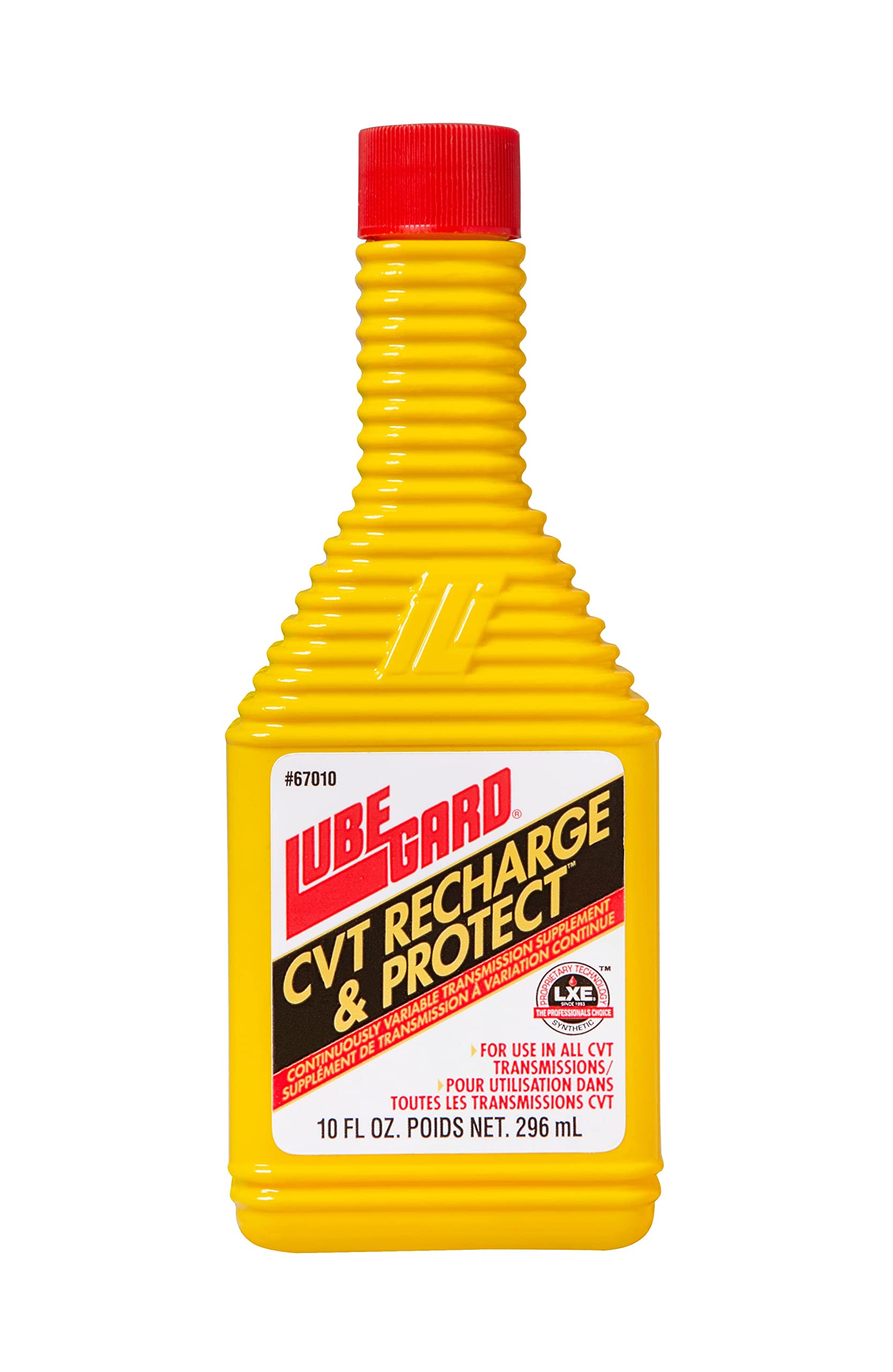
Lubegard CVT Recharge & Protect is the dedicated CVT pick here. Lubegard specifies it for belt- or chain-driven CVTs that call for CVT fluid, with support for belt or chain traction, pulleys, fluid pressure and flow, anti-shudder performance, wear protection, and heat stability.
Use it only in qualifying CVT systems and follow the dosing instructions carefully. Lubegard recommends 1 ounce per quart of total capacity, says not to exceed 2 ounces per quart, and warns not to overfill. The manufacturer says full results can take up to 150 miles.
Customer Feedback Snapshot
The sentiment snapshot suggests generally positive feedback around smoother acceleration, hesitation, and operating noise in some CVTs. The review sample behind the chart was not independently verified. Correct CVT fluid, proper fluid level, and the condition of the belt or chain, pulleys, pump, and valve body remain critical.
Overall Sentiment: Positive in the existing article snapshot

Problem Solving Ability
Best suited to CVT symptoms associated with worn or degraded fluid, including noise, shudder, hesitation, foaming, and heat-related performance loss. It is not a repair for a damaged belt or chain, pulley assembly, pump, valve body, bearing, or other failed internal component.
Storage
Keep the bottle sealed at room temperature and away from direct sunlight. Follow the label and safety data sheet for storage and disposal instructions.
Key Benefits
- Specifically formulated for belt- or chain-driven CVTs that require CVT fluid
- Designed to reduce noise and enhance anti-shudder performance
- Helps protect belts or chains, pulleys, and other components from excessive wear
- Supports fluid pressure, flow, and heat stability when used as directed
✔ Pros
- Best dedicated CVT option here
- Supports belt/chain, pulley, pressure, and fluid performance
- Clear manufacturer dosing guidance
✘ Cons
- Only for qualifying CVT systems that require CVT fluid
- Needs careful dosing and fluid-level control
- Won’t repair internal CVT hardware damage
Check Product Details on Amazon
Sea Foam Trans Tune

Sea Foam Trans Tune is the best cleaner here for sticky varnish, sluggish valve bodies, and shift solenoids affected by deposits. Sea Foam describes it for conventional and synthetic petroleum- or mineral-based automatic transmission fluids, where it can be used as a cleaner, conditioner, or pre-flush treatment.
This is not presented here as a CVT-specific or dedicated stop-leak product. Choose it when gum, varnish, moisture, or sticky internal components are the suspected problem and the transmission fluid is compatible. Sea Foam directs users to add 16 ounces without exceeding the manufacturer’s fluid-level recommendation. As a pre-flush cleaner, it recommends at least 30 miles of circulation before changing the fluid.
Customer Feedback Snapshot
The sentiment snapshot suggests generally positive feedback around shifting when varnish or sticky components are suspected. The underlying review sample has not been independently verified, and improvement after cleaning does not prove that a transmission is mechanically healthy.
Overall Sentiment: Positive in the existing article snapshot

Problem Solving Ability
Best suited to cleaning-related problems involving sticky varnish around valve bodies, shift solenoids, and other transmission-fluid components. It is not a replacement for repairs needed for broken mechanical parts, severely worn clutches, failed pressure components, or electrical failures.
Storage
Keep the can sealed at room temperature and away from direct sunlight. Follow the label and safety data sheet for storage and disposal instructions.
Key Benefits
- Designed to dissolve varnish and gum in automatic transmission fluid systems
- Targets sticky valve bodies and shift solenoids
- Compatible with conventional and synthetic petroleum/mineral-based automatic transmission fluids
- Can be used as a pre-flush cleaner or left in for the fluid interval when used as directed
✔ Pros
- Best option here for varnish and sticky solenoids
- Can be used as a cleaner, conditioner, or pre-flush
- Clear 16-ounce manufacturer use guidance
✘ Cons
- Not a dedicated stop-leak product
- Not presented by the manufacturer as a CVT-specific treatment
- Won’t repair mechanical, hydraulic, or electrical failures
K&W Trans-X

K&W Trans-X High Mileage Automatic Transmission Treatment is aimed at vehicles with 75,000 miles or more and is marketed for leak, slip, and shift-quality problems in aging automatic transmissions. It is a practical option when minor leakage or high-mileage wear is part of the complaint and the transmission otherwise remains serviceable.
CRC specifically states that the product is not compatible with CVT transmission fluids. Treat it as high-mileage support rather than a substitute for repairing a failed seal, cooler line, case, clutch pack, or other damaged component.
Customer Feedback Snapshot
The sentiment snapshot suggests generally positive feedback around leakage and shifting in some older automatic transmissions. The underlying review sample has not been independently verified. A large leak, repeatedly low fluid level, or internal transmission wear still needs diagnosis and repair.
Overall Sentiment: Positive in the existing article snapshot

Problem Solving Ability
Best suited to high-mileage automatic transmissions with minor leak, slip, or shift-quality complaints. It is not compatible with CVT transmission fluid and cannot repair major mechanical failures such as broken gears, severely worn clutch packs, cracked housings, or failed electronic controls.
Storage
Keep the bottle sealed at room temperature and away from direct sunlight. Follow the label and safety data sheet for storage and disposal instructions.
Key Benefits
- Manufacturer markets it to stop and help prevent transmission leaks
- Targets slipping and rough shift quality in high-mileage automatics
- Specifically developed for vehicles with 75,000 miles or more
- Simple treatment option when the transmission is otherwise serviceable
✔ Pros
- Focused on high-mileage automatic transmissions
- Targets leaks, slips, and shift quality
- Current manufacturer page lists the product as active
✘ Cons
- Not compatible with CVT transmission fluids
- Not a substitute for repairing a major leak
- Cannot correct severe internal or electronic failure
Check Product Details on Amazon
When Should You See a Mechanic?
Use an additive only when the transmission type and fluid are compatible and the symptom reasonably appears fluid-related. If you have delayed engagement, burnt-smelling fluid, visible metal debris, a transmission warning light, grinding, total gear loss, repeated overheating, or a large leak, get a diagnosis before adding a treatment.
A scan tool can reveal electrical solenoid faults, pressure-control issues, sensor problems, and transmission-control codes that no additive can repair. Severe slipping can also indicate worn clutch packs or hydraulic-pressure loss. In those cases, adding more treatment may delay the repair rather than solve the problem.
Frequently Asked Questions
Do transmission additives really work?
They can help with the right fluid-related problem. Depending on the formula, an additive may target shudder, varnish, sticky solenoids, rough shifts, minor seal leakage, friction instability, or degraded fluid performance. It will not rebuild broken gears, burned clutches, failed electronics, or severely damaged internal parts.
What is the best transmission additive for slipping?
For a worn non-CVT automatic transmission, Lucas Transmission Fix is the broadest slipping-focused option in this lineup. K&W Trans-X is another relevant choice when the vehicle is high-mileage and minor leakage is also part of the problem. Severe or rapidly worsening slipping needs diagnosis.
What is the best additive for torque converter shudder?
Lubegard Instant Shudder Fixx is the most targeted choice here for torque converter lock-up shudder in compatible automatic transmissions. Do not use it in CVT, DCT, or 1986-and-earlier Ford Type F applications.
Can I use a regular transmission additive in a CVT?
Do not assume a regular ATF additive is safe for a CVT. Use a CVT-specific product or a formula whose manufacturer explicitly lists CVT compatibility, then confirm the vehicle’s required fluid. Lubegard CVT Recharge & Protect is the dedicated CVT pick here, while Hot Shot’s Secret Shift Restore is also manufacturer-listed for automatic and CVT transmissions.
How do I choose the right additive?
Start with the transmission type and required fluid, then match the symptom. Use a shudder-specific friction modifier for compatible torque converter shudder, a CVT formula for qualifying CVTs, a cleaner for varnish or sticky solenoids, and a seal-focused high-mileage treatment only when leakage is part of the issue.
How long does it take for a transmission additive to work?
It depends on the formula and the cause of the symptom. A targeted friction modifier may affect a fluid-related shudder relatively quickly, while Lubegard says its CVT Recharge & Protect can take up to 150 miles to show full results. Follow the product label and diagnose symptoms that persist or worsen.
Can an additive stop a transmission leak?
Some high-mileage or seal-focused treatments are marketed to help with seal leakage, but results depend on the cause and severity. An additive will not repair a cracked case, damaged pan, failed cooler line, badly torn seal, or other major leak.
Should I change transmission fluid before using an additive?
Follow the vehicle and additive manufacturer’s instructions. Some treatments can be added during the existing fluid interval, while others work well with a fresh fluid service. If the fluid smells burnt or contains metal debris, diagnose the transmission before adding a treatment.
Customer Preferences
The main decision should be transmission type first and symptom second. Prolong Transmission Treatment fits friction and metal-surface protection in manufacturer-listed manual and automatic applications. Lucas Transmission Fix fits worn conventional automatics with slipping, hesitation, rough shifts, or seal leakage. Hot Shot’s Secret Shift Restore fits cleaning and conditioning in manufacturer-listed automatic and CVT applications. Lubegard Platinum fits compatible ATF systems needing friction and additive-chemistry support. Lubegard Instant Shudder Fixx targets torque converter shudder. Lubegard CVT Recharge & Protect is the dedicated belt/chain CVT formula. Sea Foam Trans Tune targets varnish and sticky components in compatible automatic transmission fluids, while K&W Trans-X targets high-mileage automatic-transmission leaks, slipping, and shift quality.
Also compare dosing, fluid displacement, OEM fluid specifications, transmission capacity, and whether the symptom points to a fluid problem or a mechanical, hydraulic, or electrical fault. If compatibility is uncertain, verify it before adding any treatment.
Wrapping Up
This lineup covers several different transmission-additive jobs: metal-surface and friction protection, automatic transmission fluid support, varnish cleaning, torque converter shudder treatment, CVT-specific fluid support, and high-mileage leak or slip treatment.
Use transmission type, required fluid, and the actual symptom as your primary decision points. A CVT-specific product belongs in a qualifying CVT, a shudder-focused formula makes sense for compatible torque converter vibration, a cleaner fits sticky varnish or solenoid-related symptoms, and a seal-focused treatment makes sense only when leakage is part of the problem.
Follow the manufacturer’s dosing instructions, keep the fluid at the correct level, and consider a proper fluid service or professional diagnosis if symptoms persist. Transmission additives can be useful maintenance or troubleshooting tools when used correctly, but they are not guaranteed repairs for mechanical or electrical failure.
Final Recommendation
For a worn non-CVT automatic, start with Lucas Transmission Fix. Choose Prolong Transmission Treatment when friction and metal-surface protection are the priority in a compatible manual or automatic transmission. Choose Hot Shot’s Secret Shift Restore when cleaning and conditioning are needed in a manufacturer-listed automatic or CVT application. Use Lubegard Platinum for compatible ATF friction support, Lubegard Instant Shudder Fixx for torque converter shudder, Lubegard CVT Recharge & Protect for a qualifying belt- or chain-driven CVT, Sea Foam Trans Tune for varnish and sticky components in compatible automatic transmission fluid, and K&W Trans-X when a high-mileage automatic also has leak or slipping concerns.
| Product Name | Image | Compatibility | Key Highlights | Recommended Uses |
|---|---|---|---|---|
| Prolong Super Lubricants PSL15000 Transmission Treatment, 8 oz |
|
Manufacturer-listed manual and automatic; confirm exact fluid requirements |
|
|
| Lucas Oil Transmission Fix, 24 oz |
|
Automatic and light-duty manual; not CVT/DCT |
|
|
| Hot Shot’s Secret Shift Restore 32 fl oz |
|
Manufacturer-listed for automatic and CVT |
|
|
| Lubegard 63010 Platinum Automatic Transmission Fluid Protectant, 10 oz |
|
Compatible automatic ATF; not CVT; excludes 1986-and-earlier Ford Type F |
|
|
| Lubegard 19610 Instant Shudder Fixx |
|
Automatic ATF; not CVT/DCT/1986-and-earlier Ford Type F |
|
|
| Lubegard 67010 CVT Recharge & Protect, 10 fl. oz. |
|
Belt- or chain-driven CVT that requires CVT fluid |
|
|
| Sea Foam Trans Tune |
|
Compatible petroleum/mineral-based automatic transmission fluids |
|
|
| K&W Trans-X High Mileage Automatic Transmission Treatment |
|
High-mileage automatic; not compatible with CVT transmission fluid |
|
|
Sources
- Prolong Transmission Treatment — manual/automatic use and anti-friction metal-treatment positioning.
- Lucas Oil Transmission Fix — automatic/light-duty manual use and CVT/DCT exclusions.
- Hot Shot’s Secret Shift Restore — automatic/CVT use, cleaning claims, dosing, and fluid-displacement guidance.
- Lubegard Platinum ATF Protectant — ATF use, dosing, CVT exclusion, and 1986-and-earlier Ford Type F caution.
- Lubegard Instant Shudder Fixx — torque converter shudder use and CVT/DCT/1986-and-earlier Type F exclusions.
- Lubegard CVT Recharge & Protect — belt/chain CVT use, dosing, wear protection, and anti-shudder guidance.
- Sea Foam Trans Tune Help Center — varnish, solenoid, moisture, fluid compatibility, dosing, and pre-flush guidance.
- CRC K&W Trans-X High Mileage Automatic Transmission Treatment — high-mileage use, leaks, slipping, product status, and CVT incompatibility guidance.