

Planning a move to Tucson requires evaluating housing, transit, summer air conditioning, groceries, healthcare, and tax rates. As of mid-2026, Tucson’s overall price level is 3.1% below the national average. A single adult with no children needs a minimum gross income of $44,456 per year ($3,705/month) to cover basic necessities under MIT’s Living Wage model, while average market rent sits at $1,425 per month according to Zillow. This guide breaks down exact 2026 local prices and provides direct planning baselines.
Quick Answer
As of July 2026, Tucson is modestly cheaper than the U.S. overall. A single adult with no children needs about $44,456 a year before taxes under MIT’s basic-needs model ($3,114/month after tax). Zillow reports average rent of $1,425, while Tucson’s typical home value is about $325,520. Your actual budget depends heavily on housing choice and car reliance.
Key Takeaways
- Tucson’s latest overall price-level index is 3.1% below the U.S. average, making it substantially more affordable than Phoenix or coastal metros.
- MIT estimates that one adult with no children needs $44,456 before taxes ($37,370 after tax) for basic needs.
- Zillow’s average Tucson rent was $1,425 in June 2026, roughly 27% below the U.S. average rent of $1,965.
- A single adult’s modeled food budget is about $342 per month, while transportation is about $680 per month.
- Sun Tran, Sun Link, Sun Van, Sun Express, Sun Shuttle, and Sun On Demand currently remain 100% fare-free.
Note: These figures are planning benchmarks, not personalized financial advice. Debt payments, insurance, childcare, medical conditions, savings goals, pets, and lifestyle choices can raise or lower the income you need.
Cost of Living Snapshot for Tucson, AZ

Tucson is generally less expensive than the United States as a whole and provides a cost advantage compared to nearby Phoenix. The latest available Regional Price Parity data for the Tucson metro area, produced by the U.S. Bureau of Economic Analysis and published through the Federal Reserve Bank of St. Louis, gives Tucson a 2024 index of 96.896.
An index of 100 equals the national price level. Tucson’s score therefore means that its overall price level was approximately 3.1% below the U.S. average. Housing rents had a separate index of 91.765, or about 8.2% below the national level in that dataset. By comparison, metro Phoenix sits closer to the national average, making Tucson one of the more accessible larger metros in the Southwest.
Tucson’s overall price level was about 3.1% below the national level in the latest available BEA comparison, while MIT’s 2026 basic-needs income estimate for one adult is $44,456 before tax.
The MIT Living Wage Calculator for Tucson, updated February 15, 2026, estimates that one adult with no children needs $37,370 in annual after-tax income to meet basic needs. After estimated taxes of $7,086, the required annual income rises to $44,456 before tax.
| Single-Adult Benchmark | Annual | Monthly |
|---|---|---|
| Basic expenses after tax | $37,370 | $3,114 |
| Estimated taxes | $7,086 | $591 |
| Required income before tax | $44,456 | $3,705 |
A living-wage estimate covers modeled basic needs. It does not include major debt repayment, frequent travel, luxury purchases, substantial retirement contributions, or a large emergency fund. Someone seeking a more comfortable lifestyle should build a margin above the basic-needs figure.
Housing: Renting vs. Buying in Tucson

Housing is usually the largest adjustable part of a Tucson budget. According to Zillow’s Tucson housing data, average rent was $1,425 on June 30, 2026. The national average on the same date was $1,965, making Tucson’s average about 27% lower by that measure.
MIT’s basic-needs model uses a smaller one-adult housing allowance of $11,664 per year, or $972 per month. These figures are not contradictory: Zillow measures observed market rent across all unit sizes, while MIT builds a minimum-needs baseline using studio/1-bedroom studio methodologies.
Note: A person paying Tucson’s $1,425 average rent would spend about $453 more per month than the housing amount in MIT’s single-adult baseline. That difference should be added to your personal after-tax spending plan.
What Renters Should Include
The advertised rent is only the starting point. Before signing a lease, check whether the following costs are included or billed separately:
- Electricity, water, sewer, trash, and internet
- Application and screening fees
- Security and pet deposits
- Monthly pet rent
- Parking or storage fees
- Renters insurance
- Move-in charges and utility deposits
Apartment rents can differ substantially by unit size, building age, condition, amenities, and proximity to the University of Arizona or major employment hubs. Compare several current listings that match your actual bedroom count rather than relying only on a citywide average.
What Buyers Should Include
Zillow placed Tucson’s typical home value at approximately $325,520 on June 30, 2026. A home’s purchase price does not show its complete monthly cost. Buyers should calculate:
- Principal and interest based on current mortgage rates
- Property tax and homeowners insurance
- Mortgage insurance when applicable
- HOA dues
- Repairs, maintenance, and appliance replacement
- Higher utility use in a larger single-family home
- Closing costs and down payment requirements
Renting generally offers lower up-front costs and easier relocation. Buying may make sense for someone who plans to remain in Tucson for several years, has stable income, and can afford maintenance without relying on credit.
Pro Tip: Compare the full monthly cost of ownership with rent, not just the mortgage payment. Taxes, insurance, HOA dues, and summer cooling maintenance can materially change the result.
Monthly Utilities and Telecom Expenses

Tucson’s hot summers make electricity one of the most variable household costs. Tucson Electric Power reported that its average residential electric bill was about $140 per month in 2025. Individual bills can spike to $250–$350+ during June–September in larger or poorly insulated homes.
Current Tucson Water residential rates, effective July 6, 2026, produce an average monthly bill of about $47.81 for 7 CCF of use and $65.24 for 10 CCF inside city limits. One CCF equals 748 gallons.
| Item | Planning Amount | Basis |
|---|---|---|
| Electricity | About $140/month | TEP’s 2025 residential average (higher in summer) |
| Water at 7 CCF | $47.81/month | Current incorporated-area bill |
| Water at 10 CCF | $65.24/month | Current incorporated-area bill |
| Internet and mobile | About $155/month | MIT single-adult allowance |
Sewer, trash, and other municipal charges may appear separately or may be included in rent. Ask the landlord or utility provider for a recent billing history for the exact property whenever possible.
Warning: Do not build your annual utility budget from a mild winter month. Tucson cooling costs rise sharply in summer, especially in older homes, top-floor apartments, and properties with inefficient A/C systems.
Grocery and Everyday Food Prices
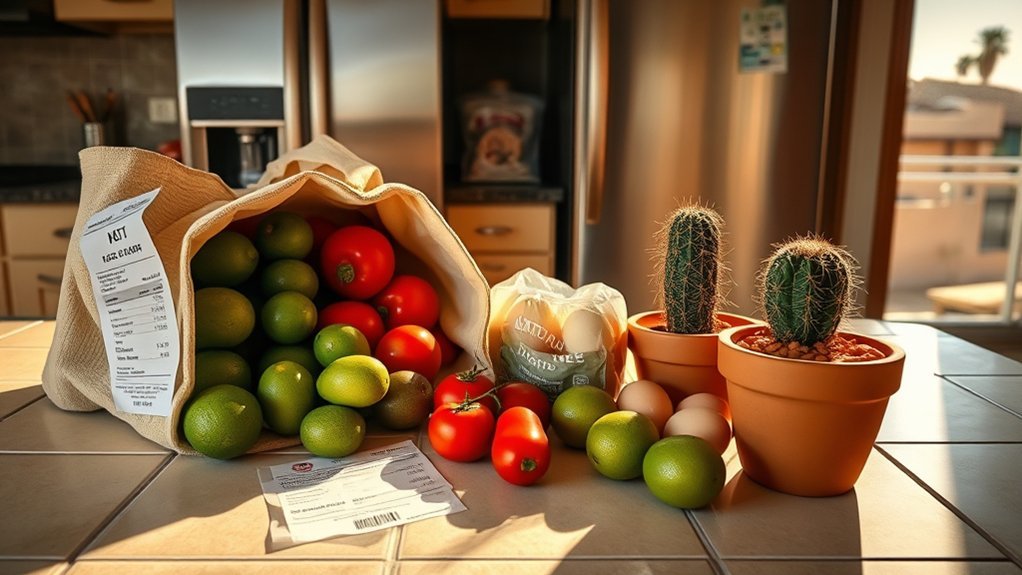
MIT’s 2026 Tucson model assigns one adult $4,101 per year for food. That works out to approximately $342 per month or $79 per week. This covers a basic grocery budget rather than frequent dining out.
The USDA’s monthly food plans show that an adult’s food-at-home cost varies by age, sex, and diet choices. Current adult estimates span roughly $270 to $477 per month across low-cost to liberal plans.
Typical Grocery Costs for One Adult
| Budget Measure | Amount |
|---|---|
| MIT annual food allowance | $4,101 |
| MIT monthly equivalent | About $342 |
| MIT weekly equivalent | About $79 |
| Broad USDA adult-plan range | About $270–$477 monthly |
Grocery spending is best managed by tracking actual monthly store receipts rather than relying solely on static item lists:
- Build core meals around pantry staples and regional produce.
- Compare unit prices (per ounce or pound) across local supermarkets.
- Separate restaurant and takeout spending from your grocery allowance.
- Track food waste over 30 days to calibrate your true monthly requirement.
Weekly Meal Budget
A single adult following MIT’s baseline starts with about $79 per week for groceries. Someone who buys prepared meals or organic items should adjust upward.
For households with multiple residents, expenses scale efficiently. MIT’s 2026 model estimates $7,519 annually for two adults with no children, equal to about $627 per month for the household.
Pro Tip: Save four weeks of grocery and dining receipts. Your actual average will provide a more reliable planning figure than citywide macro estimates.
Healthcare and Transportation Costs
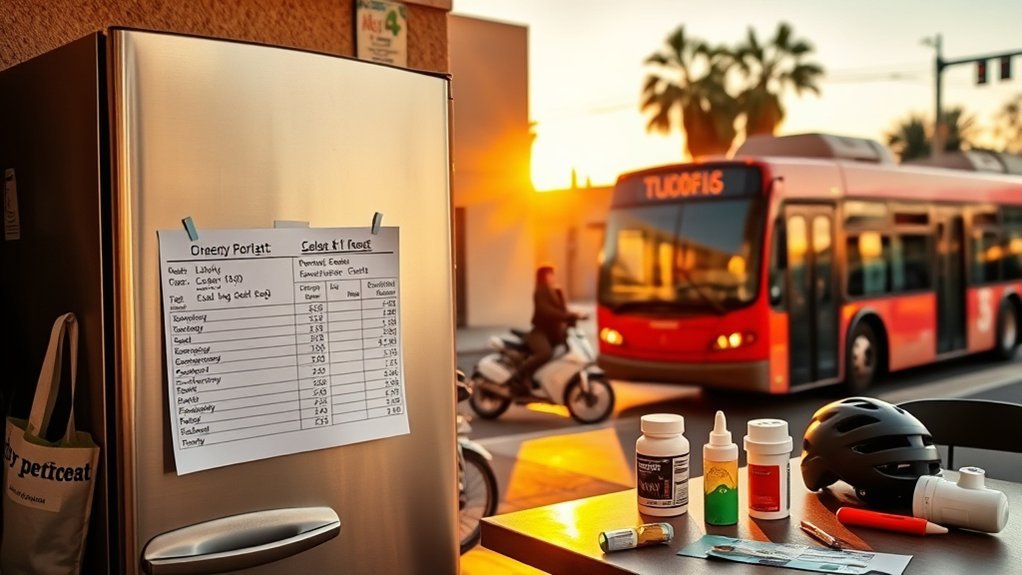
MIT’s Tucson model assigns a single adult $2,715 per year for medical needs and $8,158 for transportation. The monthly equivalents are approximately $226 for medical costs and $680 for transportation.
Medical spending varies based on employer insurance subsidies, deductibles, and individual needs. Transportation expenses depend on vehicle choice, insurance rates, fuel use, and daily commute distance.
Healthcare Price Breakdown
| Medical Budget | Amount |
|---|---|
| MIT annual single-adult estimate | $2,715 |
| Monthly equivalent | About $226 |
Use this as a starting figure and adjust based on your specific health plan premium, out-of-pocket maximum, and ongoing prescriptions in Arizona.
Transportation Cost Drivers
A vehicle budget in Tucson should account for all recurring vehicle costs:
- Auto loan or lease payments
- Auto insurance premiums
- Fuel and charging costs
- Annual vehicle registration
- Routine maintenance (oil, tires, air filters)
- Unscheduled repairs and tire replacement due to summer heat
Fuel prices fluctuate. Consult AAA’s live Arizona fuel price tracker when finalizing a commuting budget.
Residents using public transit can save significantly. Sun Tran confirms that all transit rides remain 100% fare-free across Sun Tran, Sun Link streetcar, Sun Van, Sun On Demand, Sun Express, and Sun Shuttle under city council authorization.
Note: Fare-free transit is convenient near the University of Arizona and central corridors, but Tucson is geographically spread out. Check route coverage before eliminating vehicle expenses entirely.
Budgeting for Care and Travel
- List fixed monthly health insurance premiums and prescriptions.
- Set aside monthly savings for deductibles and dental/vision care.
- Calculate expected monthly driving mileage and fuel consumption.
- Include fixed vehicle costs (insurance, registration, maintenance).
- Establish a vehicle repair fund for tire and battery replacement.
- Determine if fare-free transit fits your daily commuting routes.
Goods, Services, and Entertainment Expenses

MIT places miscellaneous non-housing expenses into “civic” and “other” categories. For a single Tucson adult, the 2026 model assigns $3,876 annually to civic needs and $4,992 to other expenses. Combined, these total $8,868 per year, or about $739 per month.
| Category | Annual | Monthly |
|---|---|---|
| Civic | $3,876 | $323 |
| Other | $4,992 | $416 |
| Combined | $8,868 | $739 |
These categories cover clothing, personal care, household supplies, recreation, subscriptions, and everyday maintenance items.
Differentiate between essential goods and discretionary entertainment to keep monthly spending aligned with your goals.
Recommended Salary by Household Type

Income requirements increase significantly with dependents. The following benchmarks come from MIT’s Tucson calculator updated February 15, 2026.
| Household | Living Wage | Required Income Before Tax |
|---|---|---|
| 1 adult, no children | $21.37/hour | $44,456/year |
| 1 adult, 1 child | $37.39/hour | $77,775/year |
| 1 adult, 2 children | $48.45/hour | $100,774/year |
| 2 adults, 1 working, no children | $29.79/hour | $61,960/year |
| 2 adults, both working, no children | $14.89/hour each | $61,960 household total |
| 2 adults, both working, 1 child | $21.55/hour each | $89,664 household total |
The U.S. Census Bureau reports a Tucson median household income of $57,073 (2020–2024 period). This sits above the single-adult benchmark but below family living wage thresholds.
The City of Tucson’s minimum wage is $15.45 per hour throughout 2026. At 2,080 annual hours, this equals $32,136 before tax.
Warning: MIT’s living wage represents a basic-needs baseline. Add savings, debt service, retirement, and travel allowances to determine your comfortable salary target.
Sample Monthly Budget for One Adult
This table converts MIT’s annual baseline into monthly spending targets for a single adult with no children.
| Expense Category | Monthly Amount |
|---|---|
| Housing | $972 |
| Food | $342 |
| Medical | $226 |
| Transportation | $680 |
| Civic | $323 |
| Internet and mobile | $155 |
| Other necessities | $416 |
| Total after-tax expenses | $3,114 |
| Estimated taxes | $591 |
| Gross monthly income target | $3,705 |
Note: The $972 housing baseline sits below Zillow’s $1,425 market rent average. A tenant paying $1,425 should add $453 per month to this expense target.
Taxes and Often-Missed Costs
Sales tax in Tucson requires careful planning. According to the Arizona Department of Revenue, Tucson’s municipal retail transaction privilege tax (TPT) rate is 2.6%. When combined with Arizona’s 5.6% state sales tax and Pima County’s 0.5% tax, the total combined sales tax rate at checkout in Tucson is approximately 8.7%.
Be sure to budget for additional non-monthly expenses:
- Relocation costs and deposits
- Utility connection fees
- Initial furniture and home setup
- Renters or homeowners insurance
- Auto registration and vehicle maintenance
- Medical deductibles and out-of-pocket costs
- Pet deposits and monthly pet rent
- Summer utility surges
Allocating 1/12th of expected annual irregular costs into a dedicated monthly savings fund helps maintain budget stability year-round.
Frequently Asked Questions
What is the cost of living in Tucson per month?
MIT’s 2026 basic-needs model estimates about $3,114 in monthly after-tax expenses for one adult with no children. The required gross income is about $3,705 per month, or $44,456 per year. A person paying average market rent may need more.
How much salary do you need to live comfortably in Tucson?
One adult with no children needs about $44,456 before tax for modeled basic needs. Comfortable living usually requires more because MIT’s figure does not represent every debt payment, savings goal, vacation, luxury purchase, or emergency.
How much does independent living cost in Tucson?
A single adult can use MIT’s $3,114 monthly after-tax baseline as a starting point. Replace its $972 housing allowance with the rent and utility costs of the actual home being considered, then add debt payments and savings goals.
Is rent expensive in Tucson?
Zillow reported average Tucson rent of $1,425 in June 2026, compared with a national average of $1,965. Tucson is therefore relatively affordable by that comparison, although individual units may cost much more or less.
How much are utilities in Tucson?
TEP reported an average residential electric bill of about $140 per month in 2025. Current city water examples range from $47.81 at 7 CCF to $65.24 at 10 CCF. Internet, mobile service, sewer, trash, and summer cooling can raise the total.
Is public transportation free in Tucson?
Yes. Sun Tran states that Sun Tran, Sun Link, Sun Van, Sun On Demand, Sun Express, and Sun Shuttle rides currently remain fare-free at the direction of Tucson’s mayor and council.
Is Tucson’s cost of living above or below the U.S. average?
The latest available BEA-derived Regional Price Parity gives Tucson an index of 96.896 for 2024. That places the metro area’s overall price level approximately 3.1% below the national level.
Conclusion
Tucson offers a moderate cost advantage compared to national baselines and neighboring Phoenix, with MIT’s 2026 basic-needs model setting a $44,456 single-adult pre-tax benchmark and Zillow reporting $1,425 average rent.
To construct an accurate personal budget, start with the $3,114 monthly after-tax baseline, adjust for actual market rent and summer cooling expenses, and include local checkout taxes and vehicle costs.
Sources
- MIT Living Wage Calculator for Tucson — living-wage rates, household income requirements, and expense categories updated February 15, 2026.
- Federal Reserve Bank of St. Louis: Tucson Regional Price Parity — U.S. Bureau of Economic Analysis price-level comparison.
- Zillow Tucson Housing Market — June 2026 average rent, home value, and housing-market figures.
- Tucson Electric Power — reported 2025 average residential electricity bill.
- City of Tucson Water — residential water rates and sample bills effective July 6, 2026.
- Sun Tran Fares and Passes — current fare-free status for Tucson transit services.

1 thought on “Cost of Living in Tucson, AZ: Monthly Budget Breakdown”
Pingback: Average Living Cost In Dubai: Prices, Rent & Salary Guide