
You’ll typically pay about $350–$400 to buy a 125‑cu‑ft MIG welding cylinder, with refills around $60–$70 each; smaller 80‑cu‑ft and 40‑cu‑ft cylinders cost less up front (~$290–$320 and $230–$260) but need refilling more often. Gas mix (75% Ar/25% CO2, pure Ar, or straight CO2) affects performance and consumption. For cost-efficiency match tank size to your runtime and refill access, and keep reading for refill, vendor and usage tips.
The Types of Gases Used in MIG Welding
Three common shielding options cover most MIG jobs: a 75% argon/25% CO2 mix for mild steel, pure argon for non‑ferrous metals like aluminum, and straight CO2 when deep penetration is needed.
You’ll choose gas mixtures based on welding applications: the 75/25 blend gives stable arc characteristics and improved bead appearance on carbon steels, while CO2’s reactivity increases penetration for thicker sections.
Pure argon delivers a stable, clean arc for aluminum and other non‑ferrous alloys, reducing spatter and oxidation.
You should weigh performance against operational cost and refill frequency when specifying cylinder fills. Proper selection directly influences weld strength, heat input, and appearance, so match the shielding composition to joint design, base metal, and positional requirements for predictable results.
Products Worth Considering
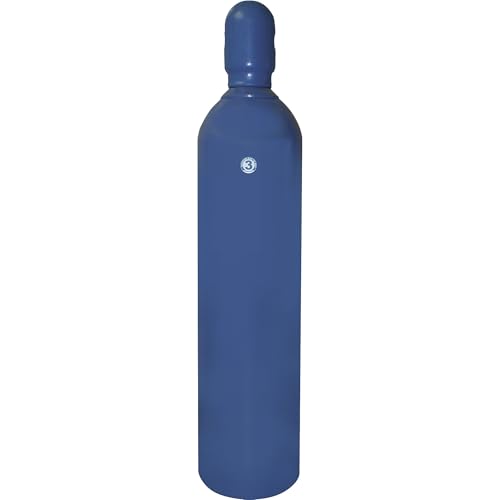
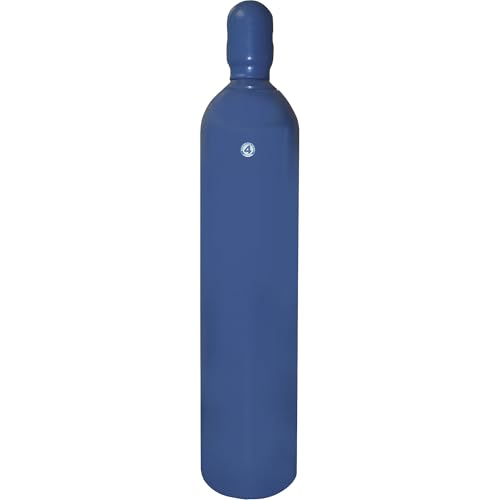

APPLICATION: The ARCCAPTAIN gas pressure regulator can be used with argon, helium, and carbon dioxide gas tanks.
How Tank Size Affects Price and Value
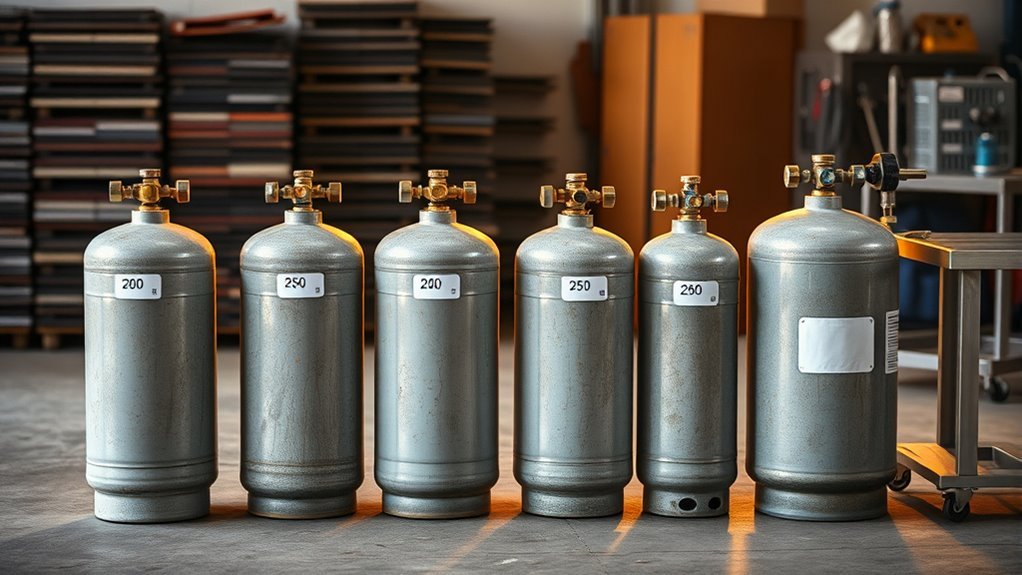
Shielding gas choice affects weld quality, but tank size determines how economically you deliver that gas over time. You’ll evaluate tank efficiency and cost comparison when choosing capacity: larger cylinders lower cost per hour and reduce refill frequency, while smaller tanks raise per-hour costs despite lower upfront price.
- 125 CF tanks: higher initial cost but superior tank efficiency and fewer refills, improving long-term value.
- 80 CF tanks: similar refill expense to 125 CF, offering a balance of upfront cost and operational economy.
- 40 CF and smaller: cheaper to buy but demand frequent refills and higher labor-related costs per welding hour.
You should choose capacity based on projected runtime, refill logistics, and total ownership cost.
Products Worth Considering
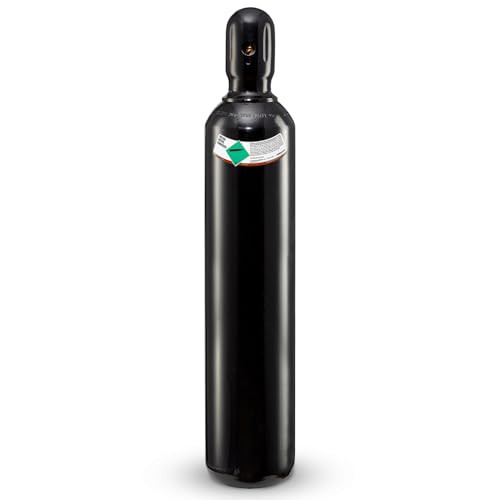
Welding Gas to Your Door - Get PrimeWeld's industrial grade Argon welding gas delivered right to your door. We offer different mixtures for any application, and you can purchase a tank without worrying about costly rental fees or wasted trips out to your local welding supply shop.
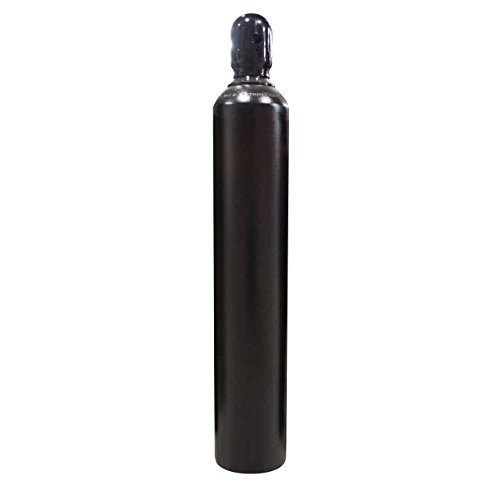
All HP cylinders come with a 10 year hydrotest date stamped.

Welding Gas to Your Door - Get PrimeWeld's industrial grade Argon welding gas delivered right to your door. We offer different mixtures for any application, and you can purchase a tank without worrying about costly rental fees or wasted trips out to your local welding supply shop.
Typical Refill and Purchase Costs by Cylinder Size
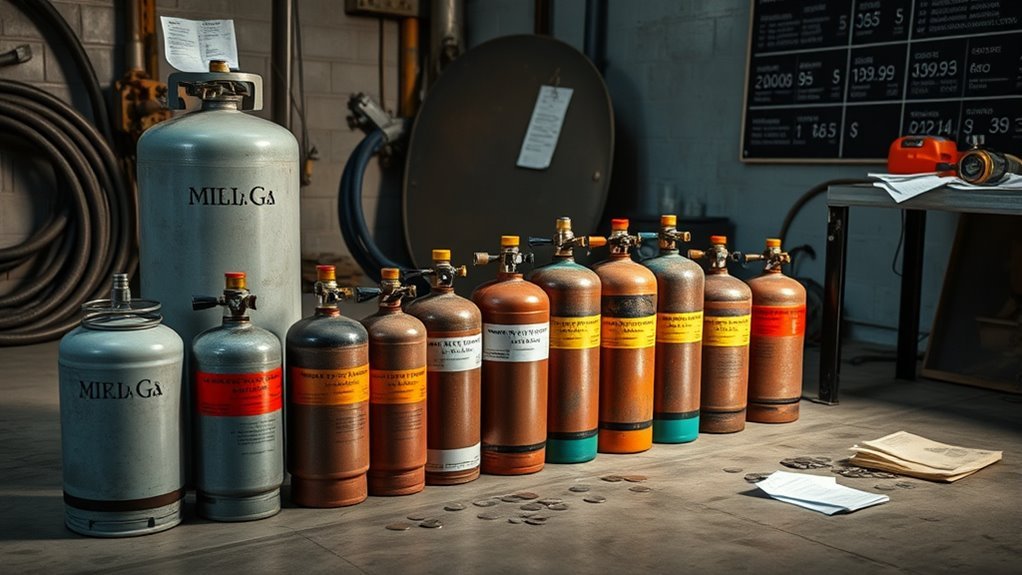
Because tank size directly affects both upfront expense and ongoing refill frequency, you’ll want to compare purchase and refill costs side-by-side when budgeting for MIG welding gas. You’ll find 40 CF, 80 CF, and 125 CF sizes balance initial cost, refill schedules, and cylinder maintenance needs differently. Smaller 40 CF tanks cost less to buy (~$230–$260) and refill (~$60) every six months. Popular 80 CF tanks (~$290–$320) refill for about $70 every two months. Larger 125 CF tanks cost more to buy (~$350–$400) but refill (~$70) every three months, yielding better per-hour economics for heavy use.
| Size | Purchase ($) | Typical Refill & Interval |
|---|---|---|
| 40 CF | 230–260 | $60 — every 6 months |
| 80 CF | 290–320 | $70 — every 2 months |
| 125 CF | 350–400 | $70 — every 3 months |
Products Worth Considering

All HP cylinders come with a 10 year hydrotest date stamped.
All HP cylinders come with a 10 year hydrotest date stamped.
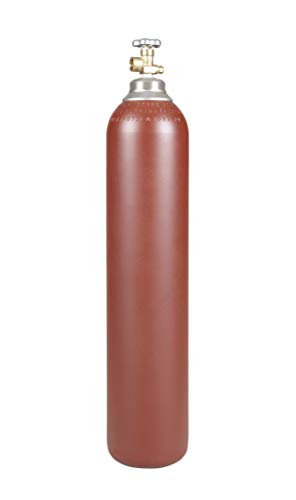
80 CU FT INERT GAS CYLINDER - Mid-size steel cylinder for professional welding, HVAC, beverage, and industrial applications. 2015 PSI service pressure. 7" diameter x 31" height, 47 lb tare weight. Letter designation: Q. Ideal balance of capacity and portability for commercial operations and serious hobbyists
Calculating Real Cost: Tank Price, Refills, and Usage
When you budget for a 125 CF MIG cylinder (75/25 Argon/CO2), count both the upfront purchase—typically $350–$400—and recurring refill costs of about $70 every three months, which add roughly $280 a year; together they produce a first-year outlay near $640.
You’ll evaluate ongoing cost per hour by combining tank capacity, typical flow rates, and job hours, factoring gas efficiency and occasional HAZMAT or supplier surcharges.
Prioritize welding safety with proper regulators, leak checks, and secure storage—these reduce waste and liability.
Consider larger cylinders if your utilization is high; labor-driven refill fees make them more economical annually.
Track usage, refill frequency, and per-refill variance to forecast total cost of ownership accurately.
- Calculate hourly gas consumption.
- Include refill and surcharge variability.
- Compare cylinder sizes for ROI.
Products Worth Considering

Comes with a CGA-580 valve for Argon, Nitrogen, Argon/CO2, Helium

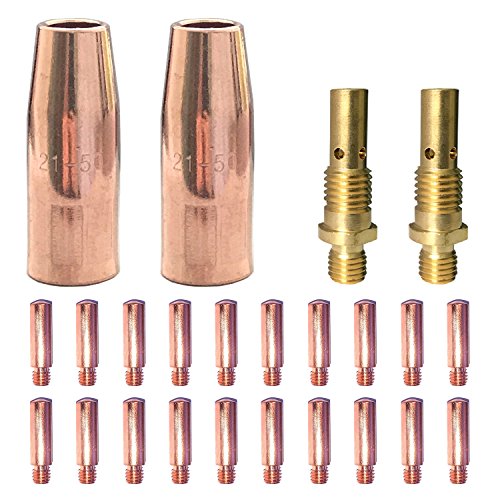
Mig Welding gun accessory 0.030" kit tip-nozzle-diffuser with contact tip,gas nozzle,gas diffuser for Lincoln Magnum 100L & Tweco Mini/#1.
Where to Buy, Refill, or Exchange Welding Cylinders
When you need a MIG gas cylinder, check local gas suppliers first for full-service options and refill plans that can affect long‑term cost.
Big-box retailers and online cylinder vendors may sell or ship bottles outright, but watch for lease-only policies, HAZMAT fees, and refill restrictions that can limit future service.
Compare availability of 125 CF versus larger 300 CF bottles to balance upfront purchase against refill frequency and total operating cost.
Products Worth Considering

Welding Gas to Your Door - Get PrimeWeld's industrial grade 75 %Argon 25% CO2 gas cylinder delivered right to your door. We offer different mixtures for any application, and you can purchase a tank without worrying about costly rental fees or wasted trips out to your local welding supply shop.

All HP cylinders come with a 10 year hydrotest date stamped.

CGA580 Inlet Connection: Welding gas regulators connects easily to argon and Co2 tanks, note that a CGA-320 adapter is required for use with Co2 cylinders. This product comes standard with the CGA-580 connector only
Local Gas Suppliers
If you need a refill or a replacement, local gas suppliers typically lease cylinders and offer standard sizes (40, 80, 125 CF) rather than selling tanks outright.
So you’ll usually be choosing between refilling a customer-owned bottle, exchanging a leased cylinder, or renting one from the shop.
Use local suppliers to compare leasing options, refill costs (about $60 for 40 CF, $70 for 125 CF), and HAZMAT fees that can inflate total expense.
Note many shops restrict filling customer-owned bottles; plan accordingly.
- Inspect pricing: compare refill vs exchange and factor HAZMAT fees.
- Confirm policy: some suppliers won’t fill customer-owned cylinders.
- Negotiate: smaller welding supply houses often beat large-chain rates.
Big-Box Retailers
Although big-box stores like Home Depot and Lowe’s provide convenient access to welding cylinders, they typically offer a narrower selection and less competitive pricing than specialty gas suppliers.
You’ll appreciate the big box advantages: convenient locations, occasional exchange programs, and partnerships with local gas vendors that can simplify refills.
Expect retail limitations: fewer gas-mixture options (often limited to common 75/25 blends), variable availability of refill services, and higher outright purchase prices compared with leasing from specialized suppliers.
Check for rental fees, deposits, or exchange requirements before committing, since these add measurable cost.
For predictable operating costs, compare total outlay — purchase price plus fees — against local supplier lease or direct-refill options before choosing a big-box route.
Online Cylinder Vendors
Because online vendors combine wide selection with delivery convenience, they’re an efficient option for buying, refilling, or exchanging MIG welding cylinders. You can use online ordering to purchase full 125CF C25 bottles—Primeweld lists units around $369 with free delivery—avoiding local stock limits.
Perform vendor comparison to weigh purchase vs. refill costs and HAZMAT fees.
- Compare prices: online purchase vs. local refill ($90 average for 125CF) and HAZMAT surcharges.
- Check refill policies: large chains (Northern Tool, AirGas) may charge more; some local suppliers only refill their own tanks.
- Logistics: larger tanks face refill scarcity; online vendors solve availability but add shipping or handling considerations.
Use vendor comparison data to choose the most cost-effective route for your workflow.
Tips to Reduce Your Welding Gas Expenses
When you want to lower your welding gas bills, start by choosing the right cylinder size and supply method: larger tanks like 125 CF give a lower cost per refill and reduce purchase frequency, leasing can cut upfront expense and often includes refills, and buying online or in bulk can secure better unit pricing. You should compare local refill rates (some 125 CF refills hit $65) and consider gas cylinder leasing for predictable costs. Evaluate alternative processes—self-shielded flux-cored or stick welding—to eliminate shielding gas where suitable. Use bulk purchases, online vendors, or supplier contracts to lock in lower per-refill pricing and quantify savings per hour to track welding cost saving.
| Action | Benefit |
|---|---|
| Larger cylinder | Lower unit cost |
| Lease tanks | Lower upfront |
| Bulk refills | Discounted price |
| Process change | No gas needed |
| Supplier compare | Best rate found |
Frequently Asked Questions
Can I Transport a MIG Gas Cylinder in a Regular Car Trunk?
Yes — you can, but you must secure the cylinder upright, valve protected, and ventilate the trunk; follow transport safety procedures and cylinder regulations, including proper restraints, labeling, and local hazardous-transport rules to prevent leaks or damage.
Are There Rental Options for Welding Cylinders and Regulators?
Like a steady heartbeat, you can rent welding cylinders and regulators; suppliers offer rental agreements with clear terms, and you’ll perform cost comparisons for daily, weekly, or monthly rates to match project duration and budget.
Do Cylinder Exchange Programs Require Ownership Proof?
Generally, you don’t need cylinder ownership to use exchange programs; exchange policies typically accept swapped cylinders under provider custody, but you’ll need ID, account setup, or billing info to satisfy custody, liability, and tracking requirements.
How Long Do Regulators and Hoses Typically Last?
Regulators typically last 5–15 years depending on use and regulator lifespan; hoses last 3–7 years with proper hose maintenance, regular inspections, leak tests, and replacing when cracked, hardened, or after severe impact or chemical exposure.
Are There Safety Certifications to Check on Used Cylinders?
Absolutely — you’ve got to check certifications: look for up-to-date safety regulations stamps, DOT/TPED marks and a documented cylinder inspection date; if any label’s missing or damaged, don’t use it — it’s noncompliant and unsafe.
Conclusion
You now know which gases suit your projects, how cylinder capacity changes value, and what refill versus purchase costs mean for your shop. Factor tank price, refill frequency, and consumption to compute true hourly gas cost. Buy or swap where certifications and price transparency line up, and consider bulk or lease options to cut expense. Keep maintenance tight and monitor flow rates — it’ll save you dollars and headaches when push comes to shove.
