
California Airbnb prices vary too much for one statewide number to describe every trip. For 2026 planning, AirDNA market pages updated September 5, 2026 report trailing-12-month average daily rates of about $218 in Los Angeles, $229 in San Francisco, $244 in Santa Monica, $317 in San Diego, and much higher figures in resort markets such as South Lake Tahoe and Malibu. These are cross-platform short-term-rental benchmarks, not Airbnb-only quotes, and your final Airbnb checkout cost also depends on dates, property size, cleaning and other host fees, Airbnb service-fee structure, discounts, and local taxes.
Last updated: September 7, 2026. Market benchmarks reflect AirDNA data through August 2026; Airbnb fee and price-display guidance was rechecked.
Quick Answer
In 2026, California Airbnb costs vary sharply by destination. AirDNA’s September 5 market update shows ADRs of about $218 in Los Angeles, $229 in San Francisco, $317 in San Diego, $502 in South Lake Tahoe, and $962 in Malibu. AirDNA ADR includes cleaning fees but excludes guest service fees and taxes, so use it as a market benchmark rather than an Airbnb checkout quote.
Key Takeaways
- There is no reliable single statewide Airbnb price because California markets, property sizes, and travel dates differ sharply.
- Market ADR is a benchmark, not a guaranteed quote for your dates or a specific Airbnb listing.
- AirDNA ADR includes cleaning fees but excludes guest service fees and taxes, so it is not the same as an Airbnb checkout total.
- Compare the total price for the entire stay, not only the large nightly number shown in search results.
- Hosts must check city rules before listing because short-term rental laws vary across California.
Average Airbnb Nightly Cost in California (2026)

A statewide average can hide more than it explains. California includes dense cities, beach communities, desert resorts, ski destinations, small inland towns, private rooms, studios, and large luxury homes. A better approach is to compare the exact city, property type, guest count, and dates you need.
The figures below are trailing-12-month average daily rates reported on AirDNA market pages updated September 5, 2026 with completed data through August 2026. AirDNA tracks short-term-rental activity across Airbnb, Vrbo, and Booking.com, so these are cross-platform market benchmarks rather than Airbnb-only quotes. AirDNA defines ADR as revenue per booked night; it includes cleaning fees but excludes guest service fees and taxes.
| California market | Average daily rate | Occupancy | What the figure means |
|---|---|---|---|
| Los Angeles | $218 | 68% | Large urban market with wide neighborhood and property-size differences |
| San Francisco | $229 | 74% | Urban pricing with strong location and regulation effects |
| Santa Monica | $244 | 71% | Coastal market where legal home-sharing rules limit the type of available stay |
| San Diego | $317 | 65% | Beach and city demand; coastal neighborhoods can cost much more than inland areas |
| Palm Springs | $426 | 53% | Pool homes, group stays, events, and seasonal desert demand lift ADR |
| Big Bear Lake | $399 | 36% | Cabins and larger homes raise ADR while demand changes sharply by season |
| South Lake Tahoe | $502 | 51% | Ski, summer, holiday, and large-group demand create major date swings |
| Malibu | $962 | 52% | Luxury coastal inventory makes the market average unusually high |
Data note: AirDNA refreshes these market pages monthly. Because provider coverage, de-duplication, and trailing-12-month calculations can change at each refresh, treat these figures as a current market snapshot rather than a fixed official Airbnb price.
A California market average is a starting point. Your exact dates, bedrooms, guest count, neighborhood, and stay length usually matter more than the statewide label.
What Is Included in the Airbnb Price?
The large number in a market report is not always the same as the total you pay at checkout. Airbnb explains that a reservation total can include the host’s nightly price, cleaning or pet fees, Airbnb service fees, and local taxes. For U.S. guests, Airbnb displays a fee-inclusive total price before taxes on listings, while applicable taxes are shown before booking in the price breakdown.
| Cost item | How it affects your stay |
|---|---|
| Nightly price | Multiplied by the number of nights and changed by dates, demand, and guest count |
| Cleaning fee | Usually charged once per reservation, so it has a larger per-night effect on short stays |
| Other host fees | May include pet, extra-guest, resort, linen, management, or community fees when allowed and disclosed |
| Airbnb service fee | Airbnb currently uses split-fee and single-fee structures. Under split-fee bookings, the guest service fee generally ranges from 14.1% to 16.5% of the booking subtotal. Under the single-fee structure, the fee is deducted from the host payout; most hosts on that structure pay 15.5%, while Airbnb says other hosts typically pay 14% to 16% |
| Local taxes | Transient occupancy and tourism assessments vary by city and county. For example, San Francisco imposes a 14% transient occupancy tax on stays of less than 30 days, and its Tourism Improvement District assessment is 2% to 2.25% where applicable |
Pro Tip: Enter your exact dates and guest count, then compare the full-stay total across several listings. Divide that total by the number of nights only if you need a true all-in nightly comparison.
A Simple All-In Cost Example
Suppose a three-night stay has a $250 base nightly price and a $150 cleaning fee. The host-set subtotal would be $900 before any Airbnb guest service fee or local tax. If that listing uses a split-fee structure and the guest service fee were 15% for that reservation, the service fee would add $135, bringing the pre-tax total to $1,035. This is only an illustration; the actual fee percentage, discounts, host fees, and taxes depend on the listing and booking.
Note: Airbnb currently says split-fee guest service fees generally range from 14.1% to 16.5% of the booking subtotal. Its single-fee structure is deducted from the host payout, with most hosts on that structure paying 15.5%. Airbnb also says hosts using property-management software who have not yet moved to the single fee are scheduled to switch on October 13, 2026. Airbnb’s service-fee guide explains both structures.
AirDNA ADR vs. the Airbnb Checkout Total
AirDNA ADR is useful for comparing markets, but it is not a quote for a specific Airbnb stay. AirDNA’s ADR methodology includes cleaning fees in revenue per booked night while excluding guest service fees. Airbnb’s guest-facing total can also include other host fees and taxes, which is why the number you see at checkout can be higher than a market ADR.
For U.S. guests, Airbnb’s price-display rules require a fee-inclusive total price before taxes on listings, with applicable taxes shown before booking. This makes the full-stay total more useful than comparing base nightly prices alone.
How Property Type Affects Nightly Rates
Entire homes usually cost more than private rooms because guests receive more space, privacy, bedrooms, kitchens, parking, and outdoor areas. However, a small studio in a prime coastal neighborhood can cost more than a larger home farther inland.
Entire Home Premiums
Whole-home pricing rises quickly with bedroom count and maximum occupancy. A two-bedroom property may work well for a couple or small family, while a four- or five-bedroom home spreads a high total across a larger group. Compare both the total stay price and the cost per guest.
For one or two travelers, a private room, guest suite, or compact apartment can be the better value. For a family or group, an entire home may cost less per person even when the nightly total is much higher.
Unique Stay Price Variance
Cabins, tiny homes, villas, beachfront homes, desert pool properties, and architect-designed stays do not fit a dependable statewide rate. Their prices depend on location, size, views, privacy, design, and how scarce similar listings are for the selected dates.
Do not pay a novelty premium without checking practical details such as heating or air conditioning, road access, parking, Wi-Fi, kitchen facilities, cancellation terms, and recent guest reviews.
Regional Price Differences: LA, Bay Area, Coast, Desert, and Mountains
California’s regional spread is large. Los Angeles, San Francisco, and Santa Monica currently sit near $218 to $244 in market ADR, while San Diego averages $317. Resort and large-home markets can be much higher: Palm Springs averages $426, Big Bear Lake $399, South Lake Tahoe $502, and Malibu $962. If your Tahoe search crosses the state line, compare the Nevada Airbnb cost guide as well.
These averages do not mean every listing in Malibu costs four figures or every Los Angeles stay costs $229. Luxury inventory can pull an average upward, while private rooms, smaller units, less central neighborhoods, and longer-stay discounts can pull an individual quote downward.
Note: Santa Monica permits regulated home-sharing but prohibits unhosted short-term vacation rentals in residential housing. A high number of online listings does not mean every property type is legal or available for a typical whole-home vacation stay.
Seasonality and Monthly Rate Trends
California does not share one statewide peak month. Beach destinations often rise during warm-weather travel and holidays. Ski destinations can surge around winter storms, weekends, and school breaks, then rise again for summer lake trips. Palm Springs can be expensive during major events and comfortable-weather months, while its hottest periods may behave differently.
Urban markets such as Los Angeles and San Francisco tend to have steadier year-round demand than strongly seasonal mountain markets. Events, conventions, concerts, festivals, school breaks, wildfire conditions, road closures, and severe weather can still change rates quickly.
Check at least three date options before booking: your preferred dates, a midweek alternative, and a nearby shoulder-season week. This shows whether the destination is expensive in general or only expensive for one high-demand period.
Amenities That Affect Rates and Value
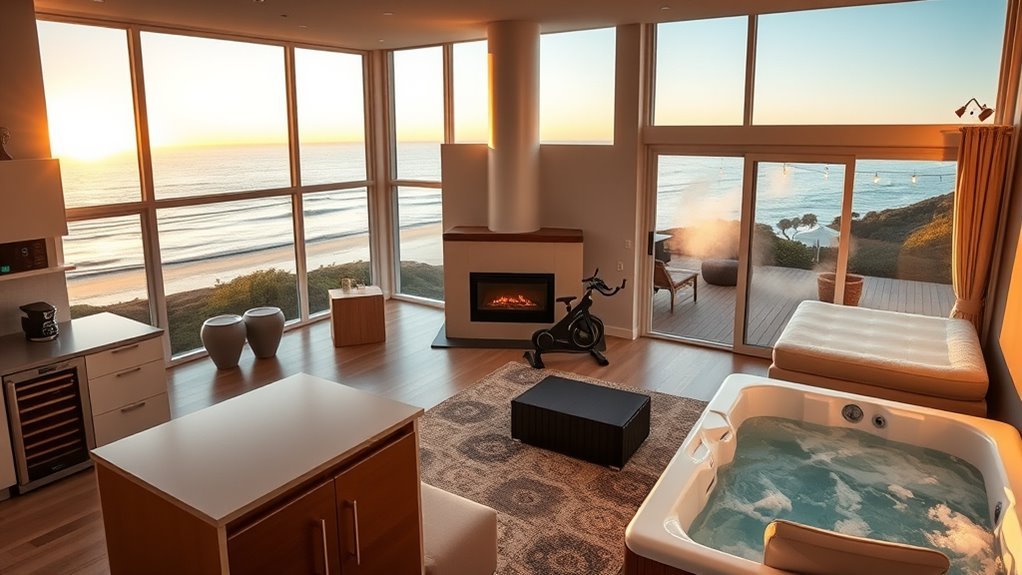
Water views, direct beach access, pools, hot tubs, EV chargers, pet-friendly policies, parking, air conditioning, and enough beds for a group can raise a listing’s price. There is no reliable statewide rule that a waterfront location adds exactly $100, a hot tub adds $50, or pet access adds $30 per night.
The value of an amenity depends on the market and dates. A hot tub may matter more for a winter cabin than a city studio. Air conditioning can be essential in the desert but less important in a mild coastal neighborhood. Parking can be highly valuable in dense areas where street parking is difficult.
Hosts should compare similar nearby properties with and without the amenity before investing. Travelers should decide which features they will actually use rather than paying for a long list of extras.
Booking Patterns, Lead Times, and How They Change Pricing
There is no verified 32-day booking rule for all of California. Lead time changes by destination, property size, event calendar, season, and trip type. Large holiday homes often book earlier than small urban units, while last-minute gaps can appear close to check-in.
Use a simple comparison process:
- Search your exact dates and guest count.
- Check the same area one or two weeks earlier or later.
- Compare a weekend stay with a Sunday-to-Thursday stay.
- Review the full price breakdown and cancellation policy.
- Recheck the market before the free-cancellation deadline if your booking allows it.
Booking early can improve selection for holidays, events, large groups, and rare properties. Waiting can sometimes produce discounts on unsold dates, but it also risks losing the best location or property type.
Current California Airbnb Market Benchmarks: Lower to Higher ADR
Instead of inventing statewide budget, midrange, and luxury bands, use the current market ADRs as a reality check. In the September 5 AirDNA refresh, Los Angeles ($218), San Francisco ($229), and Santa Monica ($244) are the lower-ADR markets in this eight-market sample. San Diego ($317), Big Bear Lake ($399), and Palm Springs ($426) sit higher, while South Lake Tahoe ($502) and Malibu ($962) are the highest.
These are market-wide booked-night averages across multiple short-term-rental platforms. They do not mean a private room in Malibu will cost $962 or that every Los Angeles listing will cost $218.
How Travelers Should Use Market ADR
Use ADR to judge whether a destination is broadly lower- or higher-priced, then compare the fee-inclusive full-stay total for your exact dates. A one-night stay with a large cleaning fee can cost more per night than a listing with a higher base rate and a smaller one-time fee. Also check bed count, parking, kitchen access, neighborhood, and cancellation flexibility.
How Hosts Should Interpret ADR Benchmarks
For hosts, there is no credible statewide table that defines entry-level, typical, top 25%, and best-in-class performance with one set of ADR and occupancy numbers. Build a local comp set using the same neighborhood, property type, bedroom count, guest capacity, amenities, review quality, and availability pattern.
Track ADR, occupancy, and RevPAR together. A higher nightly rate is not automatically better if occupancy falls enough to reduce total revenue. Likewise, filling every night at a low price can weaken earnings and increase operating workload.
How Hosts Should Set and Optimize Nightly Rates
Start with comparable local listings, not a single statewide target. Review nearby properties that match your bedroom count, guest capacity, property type, amenities, and review level. Compare their guest-facing total for real dates, not only their calendar’s base price.
Airbnb’s Smart Pricing tool can adjust rates using demand signals while allowing the host to set a minimum and maximum. Hosts can also use manual pricing or third-party tools, but every system needs a realistic price floor, event review, minimum-stay strategy, and regular performance checks.
- Set weekday, weekend, holiday, and event rates separately when demand differs.
- Use weekly or monthly discounts only after calculating cleaning, utilities, supplies, wear, and platform fees.
- Preview what the guest pays before taxes so fees do not make the listing uncompetitive.
- Review ADR, occupancy, RevPAR, booking pace, and net income rather than gross revenue alone.
- Check local permits, primary-residence rules, annual night limits, safety requirements, and lodging taxes.
Warning: California short-term rental rules are local. Los Angeles limits home-sharing eligibility to primary residences and requires registration, Santa Monica prohibits unhosted short-term vacation rentals in residential housing, and Palm Springs requires a Vacation Rental Registration Certificate and amended its vacation-rental rules through Ordinance No. 2133 adopted July 8, 2026. Confirm the current city and county requirements before listing or underwriting a property.
Note: Revenue examples are general market information, not financial, legal, or tax advice. Profit depends on mortgage or rent, insurance, utilities, cleaning, maintenance, permits, taxes, platform fees, vacancies, and local operating restrictions.
Traveler Tactics to Find Cheaper Nights and Better Value

You can lower the cost without choosing a poor-quality stay. The biggest savings usually come from changing dates, neighborhood, property type, or stay length rather than chasing a single statewide booking window.
| Tactic | Why it can work |
|---|---|
| Compare full-stay totals | Reveals cleaning, service, and other host fees that change the real cost |
| Try midweek dates | Sunday-to-Thursday demand can be lower than Friday and Saturday demand |
| Use flexible-date search | Shows whether one event or holiday is driving a temporary price spike |
| Search outside the tourist core | A short drive or transit trip can reduce the location premium |
| Compare stay lengths | A cleaning fee is spread across more nights, and hosts can offer weekly discounts for 7+ nights and monthly discounts for 28+ nights |
| Check private rooms and guest suites | Smaller spaces can be much cheaper for solo travelers and couples |
| Verify the cancellation policy | A slightly higher flexible rate may be safer than a nonrefundable bargain |
Frequently Asked Questions
What is a good price per night for an Airbnb in California?
A good price depends on the city, dates, property size, and included fees. Current market ADRs are about $218 in Los Angeles, $317 in San Diego, $502 in South Lake Tahoe, and $962 in luxury-heavy Malibu. Compare the total stay price with similar nearby listings for your exact dates.
Why is the Airbnb total higher than the nightly rate?
The reservation can include the nightly price, cleaning and other host fees, Airbnb service fees, and local lodging taxes. Always enter your dates and guest count and review the complete price breakdown before booking.
What is the 75-55 rule for Airbnb?
It is not an official Airbnb rule, and online sources define it in conflicting ways. Some hosts use 75 and 55 as informal occupancy or pricing targets. Do not treat it as a universal standard; use local comps, seasonality, booking pace, costs, and RevPAR instead.
Is Airbnb profitable in California?
It can be, but gross revenue does not prove profit. Hosts must subtract housing costs, cleaning, utilities, insurance, maintenance, platform fees, taxes, permits, and vacancy. Local laws can also limit where and how often a property may operate.
What is the best California Airbnb market in 2026?
There is no single best market. A strong market for a traveler may offer lower total prices, while a host must weigh ADR, occupancy, RevPAR, property costs, local rules, seasonality, and operating expenses. Santa Monica, for example, has strong demand but prohibits unhosted vacation rentals in residential housing.
When is Airbnb cheapest in California?
The cheapest period depends on the destination. Try midweek dates, avoid major events and school holidays, compare shoulder-season weeks, and search nearby neighborhoods. Mountain, beach, desert, and urban markets have different demand patterns.
Does Airbnb show the total price before booking in California?
For guests in the United States, Airbnb displays a fee-inclusive total price before taxes on listings. Applicable taxes are shown before booking in the price breakdown, although a tax that Airbnb does not collect may not be included in the displayed total.
Are cleaning fees included in AirDNA’s average daily rate?
Yes. AirDNA includes the cleaning fee in ADR by spreading that revenue across booked nights. Guest service fees and taxes are not part of the ADR benchmark, so an Airbnb checkout total can be higher.
How current are these California Airbnb price benchmarks?
The market table uses AirDNA pages updated September 5, 2026 and reflecting completed short-term-rental data through August 2026. AirDNA refreshes market pages monthly, so individual figures can change as new reservations and listing data enter the trailing-12-month calculation.
Conclusion
California Airbnb costs cannot be reduced to one dependable statewide average. In AirDNA’s September 5, 2026 refresh, this eight-market sample ranges from a $218 ADR in Los Angeles to $502 in South Lake Tahoe and $962 in luxury-heavy Malibu. For your trip, compare at least three fee-inclusive full-stay totals using the same dates and guest count, then weigh location, cancellation terms, and amenities. Hosts should price from close local comps and confirm permits, taxes, service-fee structure, and operating rules before relying on projected revenue.
Sources
- AirDNA: Los Angeles Market Data — September 5, 2026 update with August 2026 ADR and occupancy.
- AirDNA: San Francisco Market Data — September 5, 2026 update with August 2026 ADR and occupancy.
- AirDNA: Santa Monica Market Data — September 5, 2026 update with August 2026 ADR and occupancy.
- AirDNA: San Diego Market Data — September 5, 2026 update with August 2026 ADR and occupancy.
- AirDNA: Palm Springs Market Data — September 5, 2026 update with August 2026 ADR and occupancy.
- AirDNA: Big Bear Lake Market Data — September 5, 2026 update with August 2026 ADR and occupancy.
- AirDNA: South Lake Tahoe Market Data — September 5, 2026 update with August 2026 ADR and occupancy.
- AirDNA: Malibu Market Data — September 5, 2026 update with August 2026 ADR and occupancy.
- AirDNA: Where Its Data Is Sourced — explains Airbnb, Vrbo, and Booking.com coverage, de-duplication, and reservation detection.
- AirDNA: How ADR Is Calculated — explains that ADR includes cleaning fees and excludes guest service fees.
- Airbnb: How Pricing Works for Homes — explains nightly prices, host fees, service fees, and local taxes.
- Airbnb: Service Fees — current split-fee and single-fee ranges.
- Airbnb: 2026 Service-Fee Transition — explains the October 13, 2026 transition for property-management-software hosts not yet on the single fee.
- Airbnb: Pricing Display in the United States — explains fee-inclusive total-price display for U.S. guests.
- San Francisco Treasurer: Transient Occupancy Tax — current 14% TOT and Tourism Improvement District assessment information.
- Los Angeles City Planning: Home-Sharing — current registration and primary-residence requirements.
- City of Santa Monica: Housing Protection — explains the ban on unhosted short-term vacation rentals and rules for home-sharing.
- City of Palm Springs: Vacation Rentals — current certificate program and the July 8, 2026 Ordinance No. 2133 update.