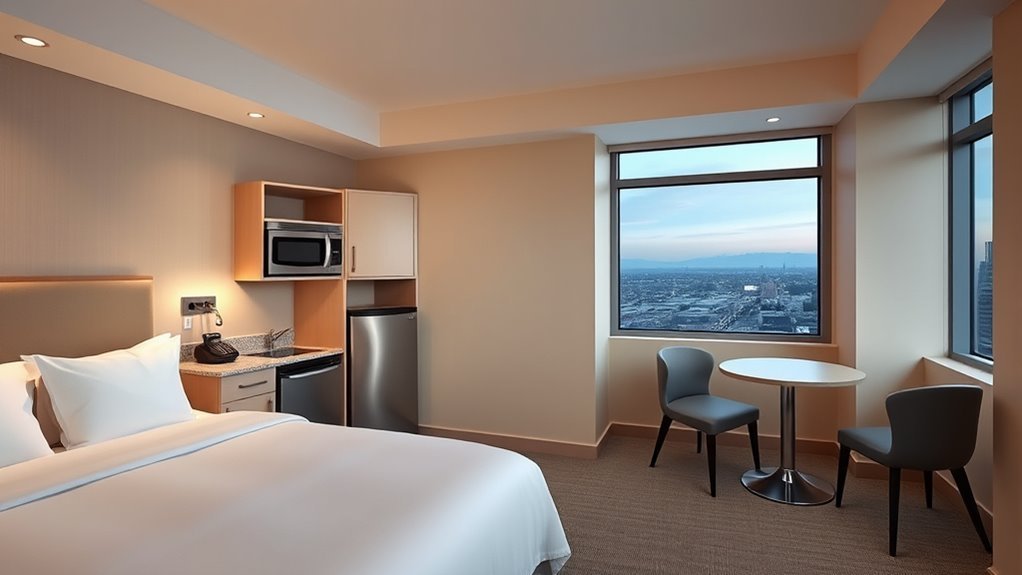
Hotel rooms with kitchens can make family trips and longer stays easier, but there is no authoritative national average specifically for kitchen-equipped rooms. Prices depend on the city, dates, room layout, kitchen type, and length of stay. The latest full-year industry benchmark put the average U.S. hotel room at $160.54 in 2025, while major markets such as New York averaged much more. Kitchen suites may carry a premium, although weekly rates, included breakfast, and lower meal costs can offset it.
Quick Answer
For 2026 planning, budget roughly $150 to $300 or more per night for a U.S. hotel room with a kitchen. Treat that as a broad search range, not a national average. Lower-cost markets and weekly rates may fall below it, while major cities, resorts, and event dates can exceed $300.
Key Takeaways
- No reliable nationwide dataset reports a separate average rate for hotel rooms with kitchens.
- Compare the total stay price, not just the advertised nightly rate.
- Confirm whether the room has a kitchenette or a full kitchen and which appliances, cookware, and dishes are provided.
- A kitchen saves money only when the difference in room price is lower than the food and convenience savings you will actually use.
- Weekly rates, complimentary breakfast, laundry access, parking, and cancellation terms can matter as much as the kitchen itself.
Understanding the Cost of Family-Friendly Hotel Rooms With Kitchens
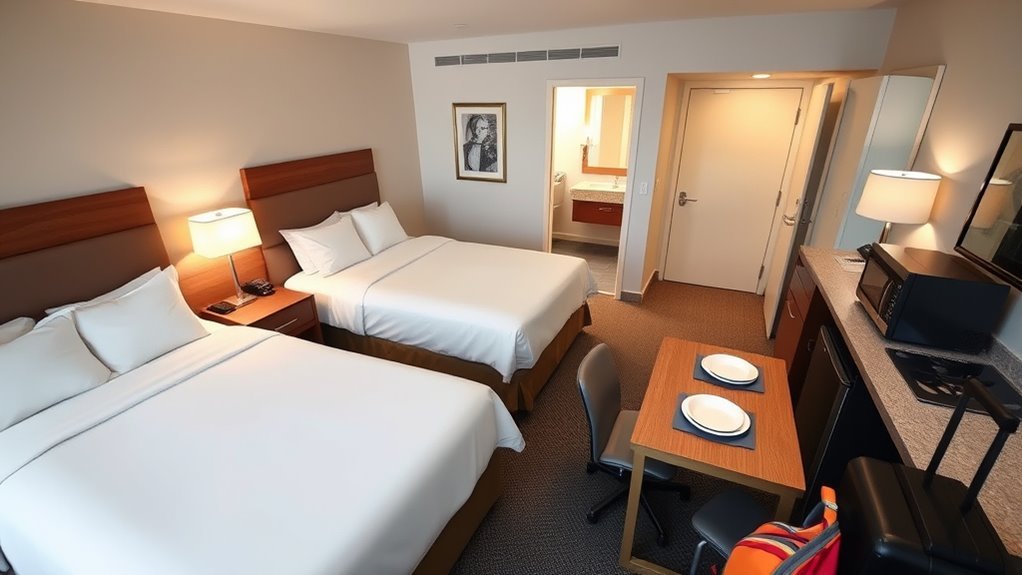
Around $150 to $300 or more per night is a reasonable starting range for trip planning, but it should not be presented as a published U.S. average. Kitchen-equipped rooms are not tracked as a separate category in the major national hotel-performance reports.
For context, CoStar reported a 2025 U.S. average daily rate of $160.54 across all hotel types. New York City averaged $333.71, showing why a single nationwide kitchen-room figure is not very useful.
The most reliable estimate is the price for your exact destination, dates, occupancy, and room type. Search several properties, select the number of adults and children, and compare the final stay total.
The only useful “average” is the one calculated from comparable rooms for your exact city, dates, family size, and kitchen requirements.
Use this formula when comparing options:
Effective nightly cost = total lodging charge + taxes + selected extras + estimated food cost + transportation cost, divided by the number of nights.
This method accounts for expenses that a basic room-rate comparison misses. A suburban kitchen suite may be cheaper but require daily parking and driving. A downtown property may cost more per night but include breakfast and eliminate rental-car costs.
Key Features Affecting Family-Friendly Hotel Pricing
The word kitchen can describe very different facilities. Before comparing prices, identify which setup the room actually provides.
| Room Type | Common Features | Best For |
|---|---|---|
| Standard room | Mini-fridge, coffee maker, and sometimes a microwave | Short stays and simple snacks |
| Kitchenette | Small refrigerator, microwave, sink, and possibly a compact cooktop | Breakfast, reheating meals, and light preparation |
| Full kitchen | Full-size refrigerator, cooktop, microwave, sink, and often a dishwasher, cookware, and dishes | Families, special diets, and longer stays |
| One- or two-bedroom suite | Kitchen plus separate living and sleeping spaces | Different sleep schedules and larger families |
Other price drivers include:
- Number of beds and bedrooms: A studio with one bed and a sleeper sofa may cost less than a true two-bedroom suite.
- Maximum occupancy: Do not assume that a large room legally accommodates a large group.
- Breakfast: Complimentary breakfast may reduce both cost and morning preparation time.
- Laundry: On-site laundry can reduce luggage needs during a long stay, although machines may be paid or complimentary.
- Housekeeping: Extended-stay hotels may clean less often than conventional hotels.
- Parking and transportation: A lower room rate can be erased by daily parking, tolls, fuel, or rideshare costs.
- Cancellation terms: A prepaid rate may be cheaper but less useful when family plans change.
Seasonal Demand and Hotel Rates: What to Expect
Hotel prices respond to demand for a specific property and date. Summer vacations, school breaks, conventions, festivals, sports events, and holiday weekends can raise rates. However, there is no reliable national rule that kitchen-equipped rooms cost a fixed percentage more on weekends.
In leisure destinations, Friday and Saturday may be the most expensive nights. In business districts, weekends can sometimes be cheaper than Tuesday or Wednesday. Airport and medical-district hotels may follow different patterns.
CoStar and Tourism Economics raised their 2026 U.S. hotel outlook on June 1, 2026 after stronger group and transient demand during the first four months of the year. That broader trend does not predict the price of an individual kitchen suite, but it reinforces the need to search exact dates rather than depend on a fixed annual estimate.
Pro Tip: Search the same property across two or three date combinations. Moving a trip by one day can sometimes avoid a convention, concert, school-break rush, or minimum-stay rule.
Booking early can improve selection, especially when you need two bedrooms, multiple beds, an accessible kitchen, or a specific appliance. It does not guarantee the lowest price, so use a flexible or refundable rate when the price difference is reasonable and check the rate again before the cancellation deadline.
Price Comparison for Hotels With Kitchen Facilities
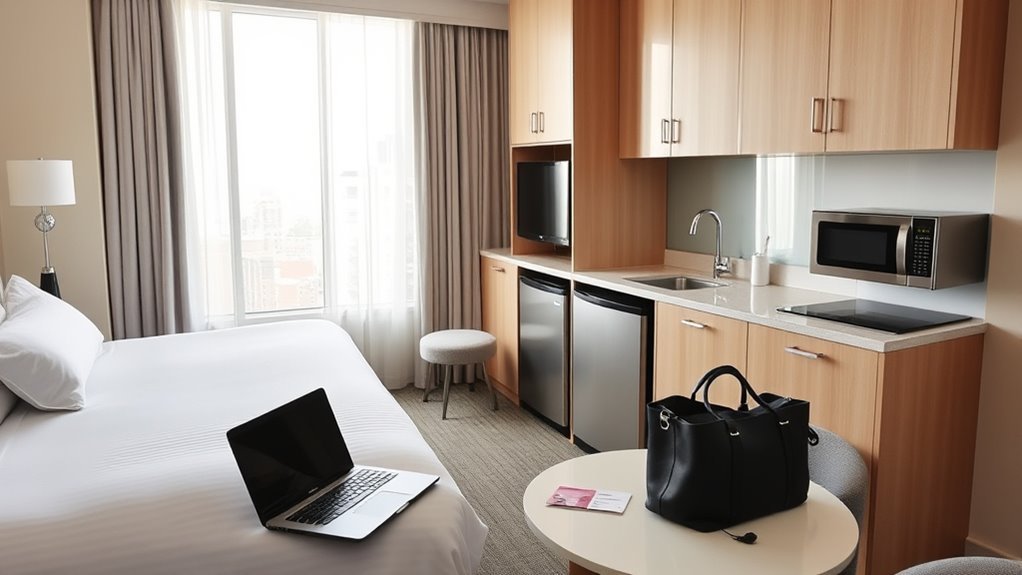
A kitchen room is not automatically cheaper or more expensive overall. Its value depends on the room premium and how often your family will use the kitchen.
Consider this hypothetical three-night comparison for a family:
| Example Expense | Standard Room | Kitchen Suite |
|---|---|---|
| Room rate per night | $175 | $225 |
| Estimated food per day | $120 | $55 |
| Illustrative daily total | $295 | $280 |
This is an example, not a national cost estimate. A family that plans to eat every meal out may gain little from the kitchen. A family preparing breakfast and dinner, packing lunches, storing infant food, or managing allergies may receive much more value.
Calculate your own break-even point:
Maximum worthwhile kitchen premium = expected restaurant spending without a kitchen minus expected grocery and prepared-food spending with a kitchen.
If the kitchen suite costs $50 more per night but you realistically expect to reduce food spending by $65, the suite is ahead by $15 before considering convenience. If you expect to save only $20, the standard room remains $30 cheaper.
Note: Include food you would have purchased anyway. Buying large packages, condiments, cooking oil, storage bags, and ingredients that go unused can reduce the apparent savings.
What Can You Expect From Extended-Stay Hotels?
Extended-stay hotels are designed for guests who want more living space and the ability to prepare food. Common features include a kitchen or kitchenette, workspace, guest laundry, a market or pantry, and rates structured for longer visits.
Official brand descriptions provide useful examples:
- Residence Inn by Marriott advertises suites with separate living, working, and sleeping areas plus full kitchens.
- Homewood Suites by Hilton lists full-size refrigerators, dishwashers, microwaves, and stovetops in its in-suite kitchens.
- Candlewood Suites lists full-size refrigerators, microwaves, stovetops, and dishwashers in its equipped kitchens.
- Hyatt House offers apartment-style rooms and suites, with full kitchens available in qualifying room types.
These are brand-level descriptions, not guarantees for every room. A property may offer both standard rooms and kitchen suites, and individual appliances can vary. Open the exact room description or contact the hotel before booking.
Housekeeping may also differ from a conventional hotel. Some extended-stay properties provide a full cleaning once a week, with lighter service or towel exchange available on other days. Ask whether additional cleaning is complimentary or charged.
Must-Have Amenities in Hotels With Kitchens
A useful hotel kitchen needs more than a microwave and mini-fridge. Check the room listing for the following items:
- Refrigerator size: Confirm whether it is a mini-fridge or a full-size refrigerator and whether it has a usable freezer.
- Cooking surface: Look for a stovetop or cooktop and ask how many burners it has.
- Microwave: Useful for reheating meals, preparing simple food, and sterilizing certain travel items when manufacturer instructions permit.
- Cookware: Confirm that pots, pans, cooking utensils, and a can opener are included.
- Dishes and cutlery: Check whether enough place settings are supplied for your family.
- Dishwasher or washing supplies: A dishwasher is convenient, but dish soap, a sponge, and a drying rack may be sufficient.
- Counter and dining space: A kitchen can be difficult to use when there is nowhere to prepare or serve food.
- Coffee maker, toaster, or kettle: These appliances are common but not universal.
- Grocery access: Check the distance to a supermarket and whether grocery delivery can reach the hotel.
- Laundry: On-site laundry can be valuable for families and longer stays.
Warning: Do not bring a hot plate, portable burner, air fryer, or other cooking appliance unless the hotel expressly permits it. Unauthorized appliances can create fire, ventilation, and insurance risks.
Follow basic food-safety practices even during a short stay. The USDA advises refrigerating perishable leftovers within two hours, or within one hour when the surrounding temperature is above 90°F. Use a food thermometer when cooking meat, poultry, seafood, or egg dishes.
Families with young children should also check whether pan handles, glassware, knives, cleaning products, and the cooktop can be kept out of reach.
Watch Out for These Additional Charges
Since May 12, 2025, the FTC Rule on Unfair or Deceptive Fees has required businesses advertising short-term lodging to display the total price, including mandatory charges they know and can calculate upfront.
This means a required resort or cleaning fee generally must be included in the prominently displayed total. Government taxes, optional products, and charges that depend on choices made during booking can be disclosed separately, but the final payment amount must be shown before payment.
You should still review the complete price breakdown and hotel policies. The displayed room total may not include optional parking, pet charges, trip protection, room upgrades, restaurant purchases, or damage-related charges.
Mandatory Resort and Destination Fees
A mandatory resort, destination, amenity, or facility fee should be included in the upfront total price when it can be calculated. A hotel may itemize that fee, but the itemized amount should not be more prominent than the total.
Check what the fee covers. It may include services such as internet access, fitness facilities, local calls, recreational equipment, or transportation. Do not assume that you can decline the fee because you will not use the services.
Cleaning and Housekeeping Charges
A mandatory cleaning fee should also be included in the displayed total. However, an optional request for extra housekeeping, dishwashing, or mid-stay deep cleaning may carry a separate charge.
Ask these questions before booking a longer stay:
- How often is full housekeeping provided?
- Are towel and linen exchanges available between cleanings?
- Is there a charge for extra housekeeping?
- Must guests wash dishes before checkout?
- Are there charges for excessive cleaning, smoking, or damage?
Parking, Wi-Fi, Deposits, and Pet Charges
Parking may be optional and therefore may not appear in the first room total. Check whether the charge is nightly, per entry, or valet-only. Also verify vehicle-height limits and in-and-out privileges.
Wi-Fi is included at many extended-stay hotels, but premium-speed access may cost extra. Resort properties may include basic internet within a mandatory fee.
A hotel may also place an incidental authorization hold on your credit or debit card. This is not necessarily a fee, but it can temporarily reduce your available balance. Ask about the amount and how long the release normally takes after checkout.
Pet-friendly does not mean pet stays are free. Review the pet fee, number and size limits, cleaning policy, and whether the charge applies per night or per stay.
Warning: A debit-card incidental hold can affect money needed during the trip. Contact the property directly when the amount is not clearly stated.
Strategies to Save on Family Hotel Stays With Kitchens
Use the following process to find genuine savings:
- Search with the correct occupancy. Enter every adult and child so taxes, occupancy restrictions, and available room types are accurate.
- Compare the total stay price. Divide the final lodging total by the number of nights rather than comparing headline nightly rates.
- Request weekly or long-stay pricing. The best extended-stay rate may not appear under the default flexible-rate search.
- Check one day earlier and later. A small date change may avoid a high-demand night.
- Value included breakfast realistically. It saves money only when your family will use it.
- Check grocery access. A kitchen is less useful when supplies require an expensive taxi ride or delivery fee.
- Plan a few simple meals. Breakfast, sandwiches, pasta, salads, reheated prepared food, and packed snacks require fewer ingredients and less cleanup.
- Join the hotel loyalty program. Member rates, points, free Wi-Fi, and flexible checkout may improve the total value.
- Compare refundable and prepaid rates. A small refundable-rate premium can protect a family trip from costly changes.
- Recheck before the cancellation deadline. Rates may fall after booking, allowing you to cancel and reserve the lower rate when the terms permit.
Pro Tip: Photograph or screenshot the exact room description, kitchen features, rate terms, and total price. This gives you a clear reference if the assigned room does not match the booking.
The Impact of Location on Kitchen-Equipped Hotel Pricing
Location often affects price more than the presence of a kitchen. Major urban centers, beach destinations, national-park gateways, convention districts, and event markets can command high rates when demand is strong.
Suburban, airport, medical-district, and highway properties may offer more space or free parking at a lower room rate. The trade-off is transportation. Calculate the cost and time needed to reach attractions, work sites, hospitals, or family members.
Use a simple location comparison:
- Central property: Higher room rate, but possibly no rental car, tolls, fuel, or daily parking.
- Suburban property: Lower room rate and larger suite, but possible driving, parking, and commuting costs.
- Resort property: Convenient amenities, but potential resort charges, expensive groceries, and limited off-site dining.
- Airport property: Useful for an early flight, although food shopping and attractions may be less convenient.
Also check neighborhood access to supermarkets, pharmacies, public transit, playgrounds, and urgent-care facilities. These details can matter more to a family than saving a few dollars on the room itself.
2026 Outlook for Family-Friendly Hotels With Kitchens
Kitchen-equipped accommodations remain a core feature of major extended-stay brands. Residence Inn, Homewood Suites, Candlewood Suites, and Hyatt House continue to market apartment-style layouts, cooking facilities, laundry access, and spaces designed for longer visits.
Broader U.S. hotel demand strengthened during the first part of 2026, leading CoStar and Tourism Economics to raise their industry forecast in June. Local events and group travel can therefore create sharp rate differences even when nationwide growth appears moderate.
Price transparency has also changed. Mandatory lodging fees should now be incorporated into the displayed total under the FTC rule, making comparison easier. Travelers must still review taxes, optional parking, pet charges, cancellation rules, and incidental-deposit policies.
The best-value kitchen room is not necessarily the one with the lowest nightly rate. It is the room that meets your space, meal, location, and cancellation needs at the lowest all-in trip cost.
Expect hotels to continue competing through room layouts, breakfast, laundry, loyalty benefits, grocery access, and longer-stay pricing. Because these features differ by property and room type, direct verification remains more reliable than relying on a brand name alone.
Frequently Asked Questions
Do most hotel rooms have kitchens?
No. A refrigerator, microwave, or coffee maker does not make a standard room a full kitchen. Full kitchens are most common in extended-stay, apartment-style, and residential-suite hotels. Use filters such as “in-room kitchen,” then confirm the exact room description.
What is the difference between a kitchenette and a full kitchen?
A kitchenette usually has limited appliances, such as a mini-fridge, microwave, sink, and possibly a small cooktop. A full kitchen generally has a larger refrigerator, cooktop, microwave, sink, food-preparation space, and often a dishwasher, cookware, dishes, and utensils.
Are hotels with kitchens cheaper overall?
Sometimes. The room may cost more, but preparing meals, storing leftovers, using complimentary breakfast, or booking a weekly rate can reduce the total trip cost. Compare the kitchen-room premium with the food and convenience savings your family will actually use.
Do hotel kitchens provide pots, pans, and dishes?
Many extended-stay kitchens do, but the quantity and selection vary. Confirm cookware, utensils, knives, dishes, glasses, a can opener, dish soap, and place settings before arrival. Some properties lend specialty appliances or additional kitchen items from the front desk.
Can I bring my own cooking appliance?
Only when the hotel permits it. Portable burners, hot plates, toaster ovens, air fryers, and similar appliances may violate fire or room-use policies. Use the installed equipment and contact the property before bringing anything that produces heat.
Are mandatory hotel fees included in the displayed price?
Under the FTC rule effective May 12, 2025, known and calculable mandatory lodging charges generally must be included in the prominently displayed total price. Government taxes and optional items may be shown separately, but the final amount must be disclosed before payment.
Which city has the cheapest five-star hotels?
No city is consistently cheapest. Las Vegas sometimes offers competitive luxury base rates, but resort charges, conventions, weekends, and major events can change the total dramatically. Compare the same dates and rating standard across several destinations before drawing a conclusion.
Conclusion
Hotel rooms with kitchens can offer strong value for families, longer stays, special diets, and travelers who prefer flexible meal times. However, there is no dependable nationwide $220 average or guaranteed daily food saving.
Start with a broad $150 to $300-plus planning range, then search your exact dates. Confirm the kitchen type, appliances, cookware, beds, occupancy, housekeeping, parking, deposits, and cancellation terms. Finally, compare the all-in lodging, food, and transportation cost rather than the room rate alone.
A kitchen suite is worthwhile when it provides the space and meal flexibility you need without raising the complete trip cost beyond the value you receive.
Sources
- CoStar: 2025 U.S. Hotel Performance — national and major-market average daily rate context.
- Federal Trade Commission: Rule on Unfair or Deceptive Fees FAQs — current total-price requirements for short-term lodging.
- Residence Inn by Marriott — official description of suites and full kitchens.
- Homewood Suites by Hilton Fact Sheet — official kitchen appliance and suite information.
- IHG Candlewood Suites — official extended-stay kitchen, room, laundry, and amenity information.
- USDA Food Safety and Inspection Service — safe storage and handling of leftovers.