
Washington, D.C. does not have one permanent average 4-star hotel cost for 2026. Room prices change by stay date, neighborhood, event schedule, room type, occupancy, cancellation policy, and booking platform. The most useful approach is to compare current platform averages, add the District’s lodging tax when it is not already included, and then check live prices for your exact dates.
Quick Answer
As of July 28, 2026, two major booking platforms showed average 4-star rates of $257 and $294 per night in Washington, D.C. A practical room-rate budget is therefore $260–$300. If tax is excluded, the District’s 15.95% lodging tax raises that to roughly $301–$348 before optional parking, meals, and transportation.
Key Takeaways
- Current platform snapshots place a typical 4-star room near $257–$294 per night, but live prices can be much lower or higher.
- Washington, D.C.’s transient-accommodation tax is 15.95% through September 30, 2027.
- Major events, conventions, government activity, and the 2026 America 250 calendar can override normal seasonal patterns.
- A “4-star” label is platform-specific and is not the same designation as AAA Four Diamond.
- Compare the final total, cancellation terms, parking, breakfast, room occupancy, and transit access rather than choosing by nightly rate alone.
Current Average Cost of 4-Star Hotels in Washington, D.C. (2026)
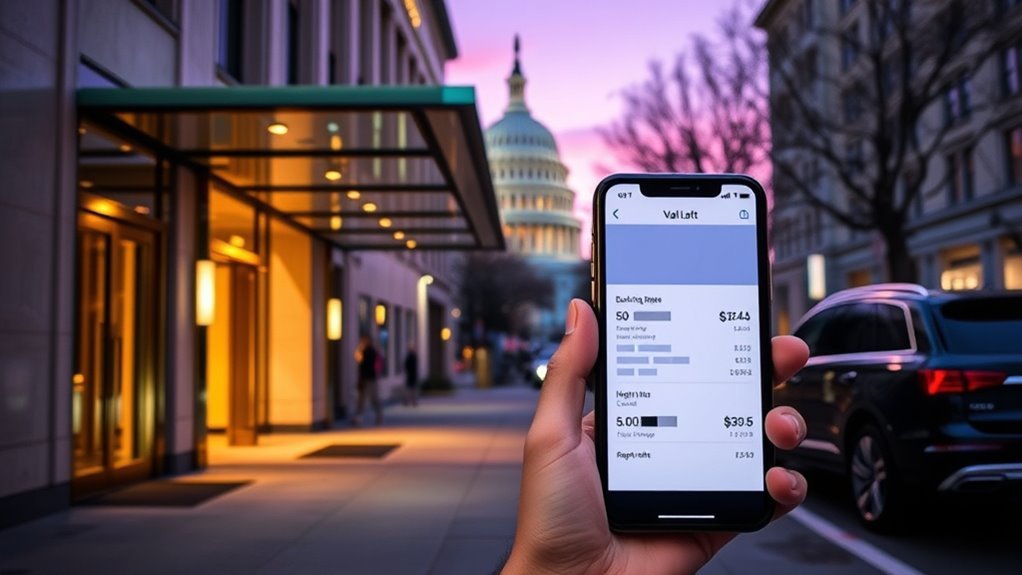
Current booking-platform data offers a more reliable starting point than the previously quoted $210 figure. On July 28, 2026, Booking.com’s Washington 4-star hotel page displayed an average of about $257 per night. KAYAK’s 4-star Washington page displayed approximately $294 per night.
Neither number should be treated as a guaranteed citywide rate. The platforms may use different properties, dates, room inventories, geographic boundaries, and averaging methods. Their $37 difference illustrates why a planning range is more honest than one exact figure.
| Price reference | Displayed amount | How to use it |
|---|---|---|
| Booking.com 4-star average | About $257 per night | A current platform snapshot, not a guaranteed rate |
| KAYAK 4-star average | About $294 per night | A second benchmark using different inventory and methodology |
| Practical planning range | $260–$300 per night | Use before adding any tax that the displayed price excludes |
Note: Hotel prices are dynamic. The same room can change price several times as inventory, cancellations, event demand, and the stay date change. Always confirm the final total for your exact dates and number of guests.
What a 4-Star Hotel Really Costs After Tax
The advertised room rate is not always the amount charged to your card. The D.C. Office of Tax and Revenue states that the District’s total sales and use tax on transient accommodations is 15.95% through September 30, 2027.
Under the Federal Trade Commission’s hotel-fee rule, calculable mandatory fees must generally be included in the prominently displayed total price. Government taxes and genuinely optional services may still be added later, but the final amount must be disclosed before payment.
| Displayed room rate | 15.95% tax | Estimated total after tax |
|---|---|---|
| $200.00 | $31.90 | $231.90 |
| $257.00 | $40.99 | $297.99 |
| $294.00 | $46.89 | $340.89 |
| $350.00 | $55.83 | $405.83 |
These examples assume that tax is not already included. Do not add it twice. Parking, breakfast, room service, upgraded WiFi, pet charges, and optional late checkout may increase the total further.
A $294 room becomes approximately $340.89 after Washington, D.C.’s 15.95% lodging tax, before optional parking, meals, and transportation.
Key Factors That Affect Hotel Pricing in D.C.
Washington hotel pricing responds to more than ordinary tourist seasons. Government meetings, conventions, school trips, museum exhibitions, sporting events, protests, ceremonies, and National Mall programming can all affect availability on particular dates.
Location and Proximity to Attractions
Hotels near the National Mall, White House, convention center, Union Station, and major office districts may charge a convenience premium when demand is strong. A higher central-room rate can still provide better overall value when it reduces rideshare, parking, and commuting costs.
Before paying more for location, check the walking route and public-transit connection rather than relying only on the neighborhood name. The WMATA Trip Planner can help compare travel times from the hotel to the places you plan to visit.
Seasonal and Event Demand
There is no reliable rule that June is always the most expensive month or August is always the cheapest. Current platforms disagree because they use different inventory and search windows. KAYAK’s current 4-star page identifies December as its lowest-priced month and February as its highest, while general hotel pages have shown different seasonal patterns.
Normal trends are even less dependable in 2026. Destination DC describes a year-long America 250 program, while the official DC250 events calendar lists citywide gatherings throughout the year. Large events can create short periods of high demand even within a month that is usually considered affordable.
Warning: Do not rely on a citywide “cheap month” when your dates overlap with a major convention, National Mall event, graduation, sports weekend, or federal ceremony. Check your exact dates before making transportation or flight plans.
Booking Timing Strategies
A booking platform may identify a historical “best” lead time, but no number guarantees the lowest price for every hotel. A more practical strategy is to begin comparing rooms two to three months before the stay, reserve a competitively priced refundable option, and periodically recheck the same room category.
- Search with exact occupancy: A rate for one adult may not apply to a family of four.
- Compare identical room types: Do not compare a prepaid standard room with a refundable suite.
- Check the cancellation deadline: Note the local hotel time, not only the calendar date.
- Recheck after booking: If a refundable rate falls, reserve the better option before canceling the original.
- Compare the final total: Include tax, mandatory charges, parking, and breakfast.
How Location Impacts 4-Star Hotel Pricing in D.C.
The best neighborhood is not automatically the one closest to the National Mall. It is the location that minimizes the combined cost of the room, transportation, parking, and time for your particular itinerary.
| Area | Potential advantage | Cost consideration |
|---|---|---|
| Downtown, Penn Quarter, and National Mall area | Walkable access to monuments, museums, offices, and entertainment | Strong event demand and expensive parking can raise the total |
| Dupont Circle and Logan Circle | Dining, neighborhood atmosphere, and useful transit connections | Popular weekends can still be costly |
| Georgetown | Historic setting, shops, restaurants, and waterfront access | Compare bus, walking, taxi, or rideshare needs because rail access is less direct |
| Capitol Hill and Union Station | Useful for the Capitol, rail travel, and eastern National Mall sites | Government and event schedules can cause sharp date-specific changes |
| Southwest, The Wharf, and Navy Yard | Waterfront dining, entertainment, and access to southern Mall attractions | Concerts, games, and waterfront events may increase rates |
| Arlington or Alexandria, Virginia | A broader hotel supply and possible savings on selected dates | Compare commute time, local tax, parking, and late-night transportation |
Many Smithsonian museums offer free general admission, although some locations require free timed-entry passes. Staying near a convenient Metro station may therefore save more than paying a premium solely to be within a few blocks of one attraction. You can review current admission and pass requirements on the Smithsonian’s official visitor page.
Are 4-Star Hotels Really Worth It?
A 4-star hotel can be worth the higher price when its location, room design, service, and included amenities replace expenses you would otherwise pay separately. However, the star label alone does not guarantee a particular guest score, cancellation policy, room size, pool, restaurant, or breakfast.
Hotel classifications also vary. A booking platform’s 4-star category is not the same as the independently inspected AAA Four Diamond designation. AAA describes Four Diamond properties as offering upscale surroundings, modern amenities, and attentive service, but a hotel may appear as 4-star on a booking site without holding that AAA designation.
A 4-star hotel is more likely to provide good value when:
- You will use an included fitness center, pool, lounge, kitchen, or laundry facility.
- The location eliminates daily parking or rideshare expenses.
- A larger room or suite allows your group to book fewer rooms.
- The selected rate includes breakfast, credits, or flexible cancellation that you genuinely need.
- You value staffed service and common areas enough to justify the difference from a simpler hotel.
A well-located 3-star hotel may be the better choice when you will spend little time on the property and do not need the additional amenities.
Seasonal Trends: When to Book Your 4-Star Stay
Washington’s hotel demand changes throughout the year, but event dates matter more than broad seasonal labels. Spring can attract visitors for blossoms, school trips, and outdoor sightseeing. Summer combines heat with family travel, conferences, and major National Mall programming. Fall brings meetings, university activity, and comfortable sightseeing weather. Winter may offer value outside major ceremonies, holidays, and government events.
| Period | Common demand drivers | Booking approach |
|---|---|---|
| Spring | Festivals, school travel, ceremonies, and pleasant weather | Reserve early for specific festival or ceremony dates |
| Summer | Family travel, National Mall events, sports, and America 250 programming | Check the event calendar instead of assuming every August date is cheap |
| Fall | Conventions, business travel, university events, and sightseeing | Compare weekday and weekend totals separately |
| Winter | Holidays, ceremonies, government events, and lower leisure demand on selected dates | Look for refundable offers outside major event periods |
Current KAYAK data identifies December as the least expensive month in its 4-star sample, but another platform or a different search date may produce a different result. Treat that trend as a place to begin searching, not a promise.
Best Times for Discounted 4-Star Hotel Rates
The best discount usually comes from combining flexible dates with a quiet event calendar, not from choosing one supposedly cheapest month or weekday.
Off-Peak Travel Periods
December and late-summer dates appear as lower-priced periods in some current platform datasets, but individual event weekends can reverse those trends. Search several arrival dates before and after your preferred stay and compare the same room type across each result.
For a three-night trip, moving the stay by one day can sometimes save more than switching to a lower hotel category. It may also change the cancellation deadline or whether breakfast is included, so review the rate details carefully.
Last-Minute Booking Deals
Last-minute discounts exist when a hotel has unsold inventory, but extremely low advertised prices are usually isolated deal floors rather than representative 4-star averages. A low price may apply to one property, one room, one occupancy level, or a nonrefundable booking.
Current platform data demonstrates the risk of generalizing from a low deal: KAYAK recently displayed a much lower individual-property price while its overall 4-star average remained around $294. Booking.com’s displayed average for a same-evening stay was substantially higher than its general 4-star average.
Warning: Last-minute searching is risky for families, accessible-room needs, adjoining rooms, large events, and nonflexible travel. The cheapest remaining room may not meet your occupancy, bedding, or cancellation requirements.
Weekday vs. Weekend Rates
Washington does not always follow the leisure-destination pattern of cheaper weekdays and more expensive weekends. Government, corporate, and convention demand can make certain weekdays expensive, while major leisure events can raise weekend prices.
In KAYAK’s current 4-star snapshot, Sunday was the lowest-priced day and Friday was the highest. That differs from the article’s previous claim that Saturday was reliably cheaper than Tuesday, showing why travelers should search their exact dates rather than depend on a permanent weekday rule.
Which Amenities Justify Higher Prices?

An amenity justifies a higher rate only when it provides value during your trip. A kitchen may matter more to a family staying for a week, while a seasonal pool may matter more during a summer weekend. Verify availability directly because pools, lounges, housekeeping schedules, and other services can change.
| Hotel example | Verified amenity examples | When it may add value |
|---|---|---|
| ROOST White House | Residential-style accommodations, equipped kitchens, laundry features, bike share, and pet amenities | Longer stays, families, pets, or travelers who want to prepare meals |
| The Poppy Georgetown Guesthouse | Guesthouse setting, garden spaces, welcome amenities, and pet-friendly accommodations | Travelers who prefer a smaller property and neighborhood atmosphere |
| Arlo Washington DC | Seasonal rooftop pool, 24-hour fitness center, lounge areas, and food-and-beverage options | Summer stays or travelers who expect to use the hotel’s common spaces |
| AKA White House | One-bedroom, two-bedroom, and penthouse serviced residences with apartment-style layouts | Extended stays, groups, or guests needing separate living and sleeping areas |
Live prices and guest-review scores are intentionally not included in this table because they change frequently. Check each hotel’s current room details, policies, and final total for your stay.
Tips for Finding Affordable 4-Star Hotels
Finding an affordable 4-star hotel requires comparing equivalent offers rather than sorting only by the first nightly rate displayed.
The cheapest room is not always the lowest-cost stay. A slightly higher rate can cost less overall when it includes breakfast, avoids parking, fits the whole group, or allows free cancellation.
- Search several date combinations: Compare arriving one day earlier or later.
- Use exact guest counts: Include every adult and child so the room is legal and suitable for the group.
- Compare final totals: Check tax, mandatory fees, and the total for the complete stay.
- Review cancellation terms: A prepaid rate may save money but creates risk when plans are uncertain.
- Check parking before booking: Parking can erase the savings from a lower room rate.
- Compare breakfast costs: Included breakfast may be valuable for a family but less useful for a solo traveler.
- Check official hotel rates: Direct-booking packages or member rates may differ from third-party offers.
- Use loyalty benefits carefully: Compare the cash value of points, credits, upgrades, and late checkout with the price difference.
- Consider apartment-style hotels: A kitchen or laundry facility can reduce meal and clothing costs during a longer stay.
- Keep records: Save the confirmation, cancellation deadline, room description, taxes, and included benefits.
Pro Tip: Reserve a good refundable rate when you find one, then recheck the same hotel and room type. Secure any genuinely better refundable offer before canceling the original reservation.
How to Build a Realistic Hotel Budget
Calculate the full stay instead of multiplying the headline room rate and stopping there. A useful formula is:
Room total + lodging tax + optional parking + meals not included + local transportation + optional hotel services = realistic accommodation budget
For example, a three-night stay at a displayed rate of $294 per night would produce the following estimate when the displayed price excludes D.C. tax:
| Budget item | Amount |
|---|---|
| Room rate: $294 × 3 nights | $882.00 |
| D.C. lodging tax at 15.95% | $140.68 |
| Hotel subtotal before optional extras | $1,022.68 |
This example does not include parking, food, transportation, pet charges, or optional services. If the booking page already includes tax or other charges in its displayed final total, use that amount instead of adding them again.
Why Choose 4-Star Hotels Over Other Categories?
A 4-star hotel often occupies the middle ground between a straightforward full-service property and a top-tier luxury hotel. It may provide upgraded design, more common areas, additional food-and-beverage service, or better-equipped rooms without charging for every feature associated with the highest luxury category.
| Category | Typical reason to choose it | What to verify |
|---|---|---|
| 3-star | Lower cost with the core services needed for sightseeing or business | Room size, breakfast, housekeeping, and location |
| 4-star | A balance of comfort, design, service, location, and amenities | Which amenities are actually included and available |
| 5-star or top luxury | Highly personalized service, premium facilities, or a special-occasion experience | Taxes, dining costs, parking, spa charges, and whether the added service matters to you |
Star categories are not perfectly standardized across every website. Compare the actual room, services, location, and policies rather than assuming that every property with the same star count provides an identical experience.
Future Trends for 4-Star Hotel Pricing Beyond 2026
Hotel prices will continue to respond to demand, operating costs, new hotel supply, major events, and automated revenue-management systems. These factors do not support a dependable claim that rates will rise by a specific percentage.
Economic Influences on Pricing
Labor, insurance, utilities, maintenance, renovation, financing, and food costs can influence room prices. At the same time, additional hotel supply or weaker demand can limit increases. The effect will differ by property, neighborhood, weekday, and event calendar.
Washington is especially sensitive to government activity, conventions, ceremonies, international travel, and major citywide events. The 2026 America 250 program demonstrates how an unusually large event schedule can disrupt historical pricing patterns.
Technological Advancements Impacting Rates
Hotels and booking platforms use revenue-management technology to adjust prices as demand and inventory change. Better forecasting may make pricing more responsive, but it does not guarantee lower or more stable rates for travelers.
Consumers should benefit from clearer comparison shopping under the FTC’s fee rule because mandatory, calculable hotel charges must be included in the prominently displayed total. Taxes and optional additions can still affect the final payment, so reviewing the checkout screen remains essential.
Sources
- Booking.com: 4-Star Hotels in Washington, D.C. — current platform average and date-specific price context
- KAYAK: Washington, D.C. 4-Star Hotels — current average, seasonal snapshot, weekday trends, and recent deal floor
- D.C. Office of Tax and Revenue — current 15.95% transient-accommodation tax period
- Federal Trade Commission: Rule on Unfair or Deceptive Fees FAQ — hotel total-price and mandatory-fee disclosure requirements
- AAA Diamond Program — Four Diamond inspection criteria and distinction from ordinary platform star labels
- Destination DC: America’s 250th in 2026 — year-round events that may influence hotel demand
Frequently Asked Questions
How much does a 4-star hotel cost per night in Washington, D.C.?
As of July 28, 2026, current platform averages were approximately $257 on Booking.com and $294 on KAYAK. A practical planning range is about $260–$300 per night before any lodging tax that the displayed price excludes.
Is $210 still an accurate average for a Washington, D.C. 4-star hotel?
It is not a reliable current benchmark. Two current major-platform snapshots are substantially higher, and the earlier $210 figure also conflicted with the article’s claim that the lowest monthly average was $220.
What is the Washington, D.C. hotel tax?
The District’s transient-accommodation tax is 15.95% through September 30, 2027. A $300 room would cost approximately $347.85 after that tax if the displayed price does not already include it.
What is the cheapest month for a 4-star hotel in Washington, D.C.?
There is no guaranteed cheapest month. KAYAK’s current 4-star dataset identifies December, while general hotel datasets may identify other months. Major events can make an otherwise inexpensive period costly.
How far in advance should I book?
Begin comparing rooms about two to three months ahead for an ordinary trip and earlier for major events or special room requirements. A refundable reservation lets you secure a reasonable rate while continuing to monitor prices.
Are 4-star hotels cheaper on weekdays or weekends?
It depends on the date. Government and convention demand can raise weekday rates, while tourism, sports, and festivals can raise weekends. Current KAYAK 4-star data shows Sunday as its lowest-priced day and Friday as its highest, but that pattern can change.
Is a 4-star hotel the same as an AAA Four Diamond hotel?
No. Booking websites apply their own star classifications, while AAA Four Diamond is a separate designation based on professional inspections of cleanliness, comfort, amenities, service, cuisine, and consistency.
Can last-minute booking save money?
It can when hotels have unsold rooms, but it can also leave only expensive or unsuitable inventory. Last-minute booking is especially risky for families, accessible rooms, adjoining rooms, and stays during major events.
Conclusion
For a Washington, D.C. 4-star hotel in 2026, use approximately $260–$300 per night as a current room-rate planning range rather than relying on the outdated $210 estimate. When tax is not included, that becomes roughly $301–$348 per night before optional expenses. Compare exact dates, final totals, cancellation terms, neighborhood transportation, parking, and amenities to determine which hotel provides the best overall value.