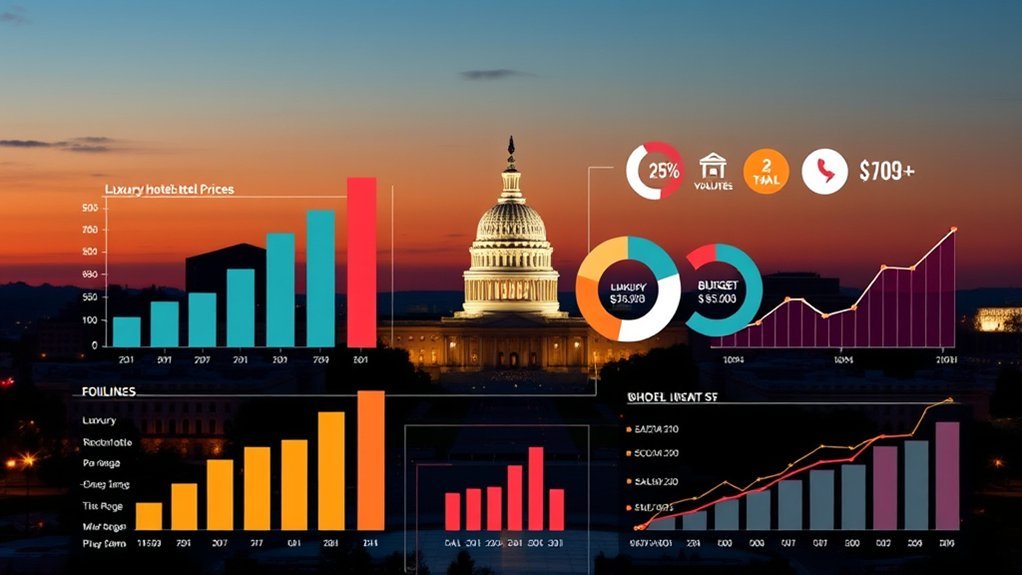
Washington, D.C. hotel prices in 2026 vary widely by season, neighborhood, room type, and major events. A shared hostel bed may cost less than $100, while a standard private hotel room often falls between about $180 and $360 before tax. Luxury rooms can cost $300 to $700 or more, especially during busy spring and fall dates.
Quick Answer
For a private Washington, D.C. hotel room in 2026, a practical base-rate budget is about $180 to $360 per night. Add the District’s 15.95% lodging tax, plus optional costs such as parking or breakfast. Spring and early fall are usually expensive, while selected winter and late-summer dates may offer better value.
Key Takeaways
- A standard private room commonly requires a base-rate budget of roughly $180 to $360 per night, but special-event dates can be much higher.
- Washington, D.C. applies a 15.95% tax to transient accommodations through September 30, 2027.
- The city’s hotel rates normally peak from March through June and again from September through October.
- Prices below $100 often refer to shared hostel beds, limited promotions, or properties outside the most convenient areas.
- Compare the total price, room type, cancellation terms, parking, breakfast, and transit access before booking.
Average Hotel Prices in Washington, D.C. for 2026
There is no single Washington, D.C. hotel price that applies throughout 2026. Rates change daily according to demand, conventions, government activity, holidays, room inventory, and how close the stay is to major attractions.
A current booking-market snapshot can help with planning, but it should not be treated as a guaranteed annual average. Recent Expedia price-trend data for Washington hotels showed monthly base-rate estimates ranging from less than $200 on lower-demand dates to more than $350 during stronger months. The figures excluded taxes and were based on recently viewed properties, so your search may produce different results.
| Accommodation type | Practical 2026 base-rate range | What to expect |
|---|---|---|
| Shared hostel bed | About $40–$100 | Shared sleeping and bathroom areas; prices may be per person. |
| Budget private room | About $120–$220 | Basic hotel, private hostel room, limited-service property, or less central location. |
| Mid-range hotel | About $180–$320 | Private room, reliable amenities, and reasonable access to Metro or central attractions. |
| Upscale or luxury hotel | About $300–$700+ | Premium location, larger rooms, upgraded service, dining, lounges, or suites. |
Note: These are planning ranges, not guaranteed averages. Always confirm whether a low price is for one hostel bed, a private room, a nonrefundable booking, or a room with restricted occupancy.
How Much a Three-Night D.C. Stay Can Cost
The advertised nightly price is not always the final amount. Washington, D.C. currently applies a 15.95% sales and use tax to transient accommodations. The rate is scheduled to remain in effect through September 30, 2027.
For example, a three-night stay with a displayed pre-tax total of $225 per night would cost:
- Room subtotal: $225 × 3 nights = $675
- D.C. lodging tax: $675 × 15.95% = approximately $107.66
- Total after lodging tax: approximately $782.66
That calculation does not include optional parking, breakfast, room upgrades, pet charges, early check-in, late checkout, or incidental deposits.
A Useful Official Benchmark
The General Services Administration’s FY2026 lodging allowances provide a helpful seasonal reference for federal travel. They are reimbursement limits rather than hotel-market averages, and taxes are excluded.
| 2026 stay month | GSA lodging allowance |
|---|---|
| January–February | $196 per night |
| March–June | $276 per night |
| July–August | $183 per night |
| September | $275 per night |
The GSA figures reinforce the city’s normal spring and early-fall demand pattern, but they do not guarantee that a traveler will find a room at or below the allowance.
Seasonal Trends: Booking for the Best Rates
According to Destination DC’s May 2026 hotel research, hotel occupancy and average daily rates generally reach their highest levels from March through June and again from September through October.
Spring tourism and fall business travel normally create D.C.’s strongest hotel demand, although a major convention, national celebration, graduation, or government event can override the usual pattern.
Booking Timing Insights
There is no booking window that wins for every hotel. A property may lower prices to fill empty rooms, or it may raise them as availability disappears. The safest strategy is to combine flexibility with repeated price checks.
- Reserve a refundable rate early: This protects you from a sellout while allowing you to keep shopping.
- Set a price alert: Monitor the same room type and cancellation policy rather than comparing unrelated offers.
- Check again 8–14 days before arrival: The 2026 Hotels.com Hotel Price Index identified this as the average U.S. savings window in its booking data.
- Recheck close to arrival: A last-minute reduction is possible when rooms remain unsold, but waiting is risky during major events.
- Rebook only when the full terms are better: Compare taxes, mandatory fees, breakfast, parking, cancellation rules, and room type.
Pro Tip: Take a screenshot of the room description and total price before completing the booking. It can help if the room type, included benefits, or cancellation terms are later disputed.
Seasonal Price Variations
- January and February: Often provide better base rates, except around inaugurations, conferences, holidays, or other major events.
- March through June: Cherry-blossom travel, school trips, conventions, graduations, and mild weather commonly increase demand.
- July and August: Heat and humidity can reduce ordinary business demand, but July 4 celebrations and special events can produce sharp temporary increases.
- September and October: Conferences, business travel, and pleasant weather often push rates upward again.
- November and December: Selected weekends may offer value, while holidays and special events can create local spikes.
Day-of-Week Pricing Trends
The day you begin your stay may matter more than the day you make the reservation. Hotels.com’s 2026 U.S. data found that travelers starting a hotel stay on Sunday paid less on average than travelers starting on Friday. This is a broad national pattern, not a guarantee for every Washington hotel.
Business-oriented areas may become less expensive on selected weekends, while leisure-heavy neighborhoods can become more expensive. Search several combinations, such as Sunday through Wednesday, Thursday through Sunday, and a full-week stay, before deciding.
Budget Stays Under $100: What That Price Usually Buys
You may find Washington accommodations below $100, but the offer often comes with an important tradeoff. It may be a shared hostel bed, a private room with a shared bathroom, a nonrefundable promotion, or accommodation outside the most convenient tourist area.
A price below $100 can be genuine, but verify that it represents the entire private room rather than one bed or one guest.
- Duo Housing: Primarily a hostel-style option. The lowest advertised price may be for a dormitory bed rather than a private hotel room.
- HighRoad Washington DC: A hostel in the Adams Morgan area with shared and private accommodation. Compare bathroom arrangements and per-person pricing.
- The Big Bright 1 BR at U/Shaw + 14th: This name describes a vacation-rental listing rather than a conventional hotel. Listing names, cleaning charges, availability, and host rules may change.
- Tabard Inn: A historic boutique inn near Dupont Circle. It should not be described as reliably available for $100 because rates depend on the date and room category.
When reviewing a sub-$100 offer, check whether linens, towels, breakfast, lockers, taxes, and mandatory charges are included. Also confirm whether the bathroom is private and whether the property has an elevator, front desk, luggage storage, or quiet hours.
Mid-Range Hotel Costs: What to Expect
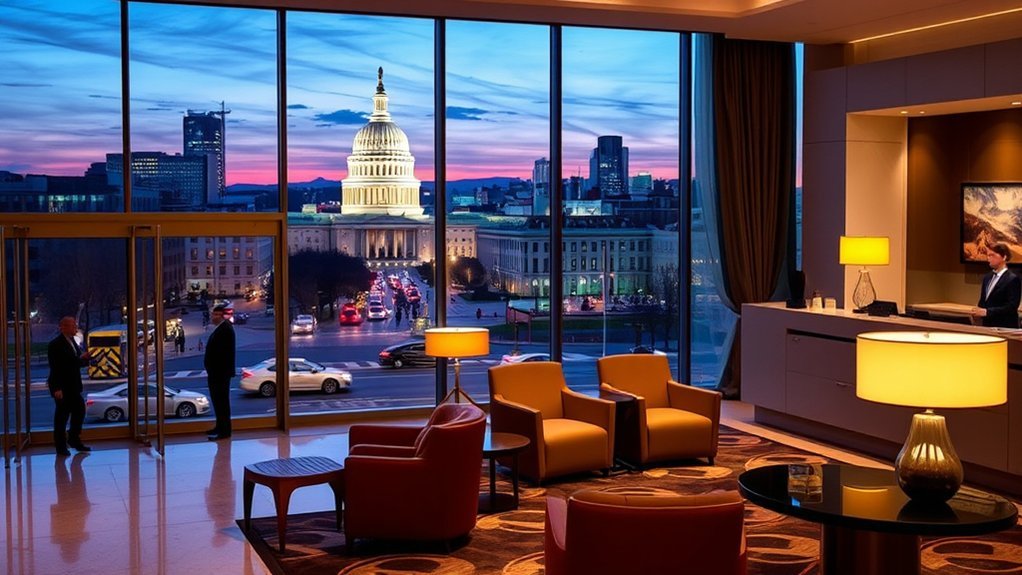
A mid-range Washington hotel commonly costs about $180 to $320 per night before lodging tax. The best value is not always the lowest room rate. A hotel near Metro, with breakfast or no parking requirement, may cost less overall than a cheaper property that requires daily rideshares or paid parking.
citizenM Washington DC NoMa is an example of a compact, modern hotel that may suit travelers who value technology and public-transit access over a large room. The Dupont Circle Hotel is generally positioned above basic mid-range accommodation, but it may become competitive when a promotion is available.
Common mid-range features include:
- private bathroom;
- Wi-Fi;
- air conditioning;
- 24-hour reception;
- fitness room;
- on-site breakfast or a nearby café;
- Metro access within walking distance.
Do not assume breakfast, parking, bottled water, late checkout, or daily housekeeping is included. Read the rate description before payment.
Is Luxury Hotel Pricing Worth It?
A luxury hotel may be worthwhile when its location, service, room size, or included benefits replace other trip expenses. It is less worthwhile when you will spend most of the day sightseeing and use few of the premium facilities.
Unique Amenities Offered
Luxury properties may provide:
- Personalized service: Concierge assistance, luggage handling, turndown service, and help with dining or transportation.
- Premium facilities: Full-service restaurants, lounges, spas, upgraded fitness facilities, and meeting spaces.
- Larger or better-equipped rooms: Improved bedding, work areas, robes, premium bath products, or separate sitting rooms.
- Club-level benefits: Some packages include breakfast, refreshments, lounge access, or evening service.
These amenities are not universal. For example, breakfast or lounge access at Fairmont Washington may depend on booking a Fairmont Gold room or a qualifying offer rather than the hotel’s least expensive room.
Location Benefits Explored
A premium location can reduce transportation time and make short trips more enjoyable. Georgetown works well for waterfront walks, shopping, and dining, but it does not have a Metrorail station in the center of the neighborhood. West End and Dupont Circle can provide easier Metro access while remaining close to Georgetown.
Before paying more for location, map the hotel to the places you will actually visit. A hotel near the White House may be convenient for downtown meetings but less convenient for an event in NoMa, Navy Yard, or outside the District.
Cost-Saving Hotel Booking Tips for D.C.
- Compare the all-in total: Use the total before government tax, not a small crossed-out nightly rate.
- Search flexible dates: Moving the trip by one or two nights can avoid a convention or special event.
- Try a Sunday start: National 2026 booking data found lower average prices for stays beginning on Sunday, although individual D.C. hotels may differ.
- Book refundable first: Lock in an acceptable option, then monitor for a better price.
- Check direct-booking benefits: A hotel’s direct rate may include better cancellation terms, loyalty credit, breakfast, or Wi-Fi.
- Price the whole room: Families should compare occupancy limits and bed types. A cheap room that cannot accommodate everyone has no value.
- Consider Metro access: Avoiding a car may remove hotel parking charges and reduce driving stress. Use the official WMATA maps and schedules to evaluate the route.
- Check nearby Virginia or Maryland: Arlington, Alexandria, Bethesda, and other connected areas may provide alternatives, but compare travel time and local taxes.
- Use loyalty points carefully: Compare the cash rate with the points required instead of assuming an award night is a good redemption.
- Avoid paying for unused benefits: A club lounge, breakfast package, or parking bundle only saves money when you will use it.
Popular Hotel Neighborhoods and Price Ranges
Neighborhood averages change too quickly to support a permanent price list. A more reliable approach is to compare each area by convenience, atmosphere, transit, and typical cost tendency.
| Area | Best for | Cost tendency | Important tradeoff |
|---|---|---|---|
| Downtown and Penn Quarter | First-time sightseeing, museums, business travel | Moderate to high | Central convenience can raise room and parking prices. |
| Dupont Circle | Dining, nightlife, Metro access | Moderate to high | Not every property is within an easy walk of the National Mall. |
| Georgetown | Shopping, waterfront, restaurants, luxury stays | High | No Metrorail station in central Georgetown. |
| Shaw and U Street | Restaurants, music, nightlife | Moderate | Street noise and weekend activity vary by block. |
| Capitol Hill | Capitol visits, government business, Eastern Market | Moderate to high | A very low listing may be a hostel bed, including offers associated with Duo Nomad. |
| NoMa and Union Market | Modern hotels, food halls, Red Line access | Budget to moderate | Less walkable to the western National Mall attractions. |
| Arlington or Alexandria | Airport access, longer stays, suburban alternatives | Sometimes lower | Add commute time and verify weekend Metro service. |
Common Fees and Taxes When Booking Hotels
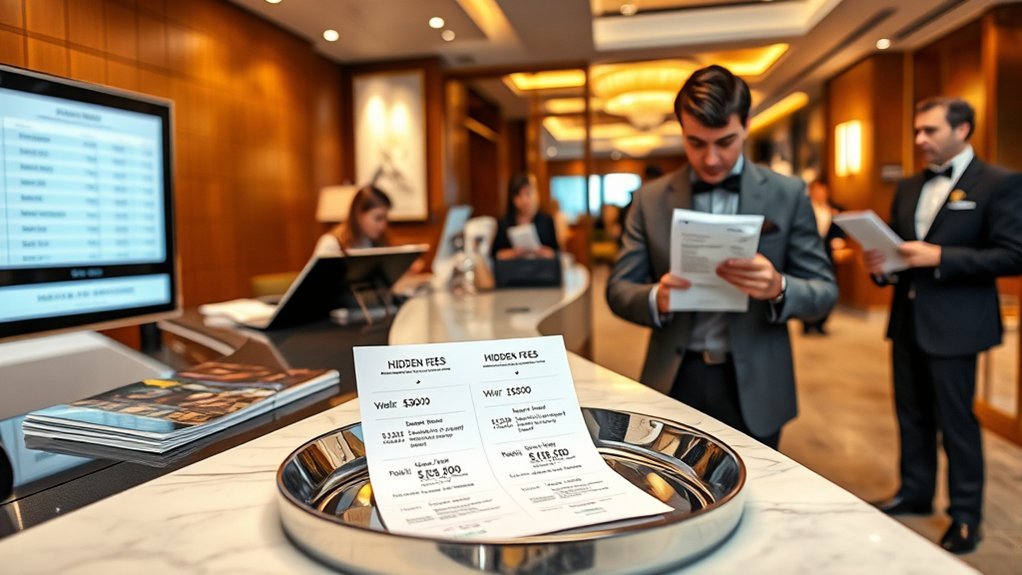
Since May 12, 2025, the FTC Rule on Unfair or Deceptive Fees has required sellers of short-term lodging to display the total price including calculable mandatory charges more prominently than other pricing information.
This means a required resort, destination, facility, or cleaning fee should generally be included in the displayed total rather than revealed only at checkout. The seller may still show an itemized breakdown.
The displayed total can still exclude:
- government taxes, including D.C.’s 15.95% lodging tax;
- optional parking;
- optional breakfast or room upgrades;
- pet charges that apply only when bringing a pet;
- early check-in or late-checkout charges;
- charges caused by guest behavior, such as damage or minibar use;
- refundable incidental deposits or card holds.
Warning: “Total price” may mean the total before government taxes. Open the final price breakdown and confirm the tax, parking policy, deposit, cancellation deadline, occupancy limit, and included benefits before submitting payment.
Parking deserves special attention. A lower room rate may lose its advantage when the hotel charges for overnight parking. Travelers who plan to visit the National Mall and central neighborhoods may save by staying near Metro and leaving the car at home.
Best Luxury Hotels in D.C.
Washington has many luxury hotels, but the best one depends on your itinerary and preferred style. The following properties from the original comparison remain useful examples, although their nightly prices and packages should be checked directly for your dates.
- The Ritz-Carlton, Washington, D.C.: Located in the West End, with access to Dupont Circle, Foggy Bottom, and Georgetown. Consider it for traditional luxury and full-service facilities.
- Fairmont Washington, D.C., Georgetown: Near the West End and Georgetown. Fairmont Gold packages may add lounge access and other benefits, but inclusions depend on the selected offer.
- The St. Regis Washington, D.C.: A historic luxury property near the White House suited to travelers seeking formal service and a central downtown location.
Compare the value of each property using the same criteria:
- all-in price after tax;
- room size and bed type;
- breakfast or lounge access;
- parking or transportation costs;
- distance from your main activities;
- cancellation deadline;
- loyalty benefits or resort credits;
- check-in, checkout, and housekeeping policies.
Frequently Asked Questions
How much does a hotel cost per night in Washington, D.C.?
A practical 2026 budget for a standard private hotel room is about $180 to $360 per night before tax. Budget rooms may fall below that range, while luxury hotels, suites, and high-demand event dates can cost $300 to $700 or more.
How much should I budget for a three-night D.C. hotel stay?
At a pre-tax rate of $225 per night, three nights cost $675 before tax and approximately $782.66 after D.C.’s 15.95% lodging tax. Parking, breakfast, upgrades, and other optional services can raise the final total.
What is the Washington, D.C. hotel occupancy forecast for 2026?
There is no single verified 72% citywide forecast supporting that claim. Current Destination DC data instead points to strong demand from tourism, national events, and conventions, with the normal occupancy and rate peaks occurring from March through June and September through October.
Are hotels in Washington expensive?
Washington can be expensive during spring tourism, fall conventions, and major national events. However, travelers can reduce costs by changing dates, staying near Metro, comparing suburban properties, choosing a hostel or limited-service hotel, and checking refundable rates repeatedly.
What happened to the $150 hotel room?
A private room near central attractions for $150 is less dependable than it once was, but it has not disappeared. It may still be available during lower-demand periods, through a promotion, at a limited-service property, or outside the most expensive neighborhoods.
Is Sunday the cheapest day to book a D.C. hotel?
The stronger 2026 evidence concerns the day the stay begins, not the day the reservation is made. Hotels.com found that U.S. stays starting on Sunday cost less on average than stays starting on Friday, but individual Washington hotels and event dates can follow different patterns.
Conclusion
For most travelers, a sensible 2026 Washington, D.C. hotel budget is about $180 to $360 per night before tax for a standard private room. Add the District’s 15.95% lodging tax and any optional parking, meals, or upgrades when calculating the real trip cost.
Spring and early fall are normally the most expensive periods, although major events can raise prices at any time. Compare identical room types, reserve a refundable option, recheck prices, and consider Metro access before choosing the lowest advertised rate. A slightly more expensive hotel can provide better overall value when it includes useful benefits or reduces transportation costs.
Sources
- Destination DC Research — current hotel inventory, tourism statistics, and D.C. hotel seasonality.
- D.C. Office of Tax and Revenue: Taxable and Non-Taxable Services — the current 15.95% transient-accommodation tax.
- Federal Trade Commission Fee Rule FAQ — total-price and mandatory-fee requirements for short-term lodging.
- GSA FY2026 Washington, D.C. Per Diem Rates — official federal lodging-allowance benchmarks by month.
- Hotels.com 2026 Hotel Price Index — U.S. booking-window and Sunday check-in findings.
- Expedia Washington Hotel Price Trends — current marketplace price estimates and monthly variation.