

Car welding cost typically starts around $100–$350 for a small exhaust, hanger, tab, or bracket weld; many localized body and rust repairs fall around $250–$1,500; and structural, aluminum, frame-rail, unibody, or extensive corrosion work can reach $1,500–$5,000 or more. These are broad U.S. planning ranges, not guaranteed quotes. The final bill depends on the damaged part, rust removal, access, fabrication, vehicle measuring, OEM-required joining methods, corrosion protection, paint, electronic scans, and calibration.
Last updated: August 10, 2026 — pricing ranges, repair-scope guidance, safety references, and source links reviewed.
Quick Answer
Plan on roughly $100–$350 for a small accessible exhaust, hanger, tab, or bracket weld; $250–$1,500 for many localized body or rust repairs; and $1,500–$5,000 or more for structural, aluminum, frame-rail, unibody, or extensive corrosion work. The final bill depends on rust removal, access, fabrication, OEM-required joining methods, corrosion protection, paint, vehicle measuring, electronic scans, and calibration—not just minutes spent welding.
Key Takeaways
- Simple, accessible exhaust or bracket welds may cost about $100–$350, while localized body or cut-and-patch rust work commonly starts in the hundreds.
- Major structural repairs can reach $1,500–$5,000 or more once measuring, fabrication, parts, refinishing, and corrosion protection are included.
- The vehicle maker’s repair manual determines whether a part may be welded and which joining method must be used.
- Frame, unibody, suspension-mount, restraint-system, aluminum, hybrid, and EV repairs belong with trained collision professionals.
- Accident-related welding may be insured, but gradual rust, wear, maintenance, and poor prior repairs are generally not covered.
At a Glance
| Time Required | About 1–3 hours for a simple accessible weld; one to several days for cutting, fabrication, structural work, corrosion protection, and refinishing |
| Difficulty | Moderate for limited non-structural work; advanced and safety-critical for frame, unibody, suspension, aluminum, and high-strength steel |
| Tools Needed | Vehicle-specific repair information, correct welder and filler, extraction and PPE, measuring equipment, fabrication tools, fire protection, and corrosion-restoration materials |
| Cost | About $100–$1,500 for many small and localized repairs; $1,500–$5,000+ for extensive structural, aluminum, or corrosion work |
Common Auto Welding Methods and Their Cost Impact

Modern car repair involves more than choosing between MIG, TIG, and stick welding. The correct attachment method depends on the vehicle’s material, joint design, crash structure, and manufacturer instructions.
I-CAR advises repairers to check current vehicle-specific OEM procedures before repairing high-strength or ultra-high-strength steel. A method that is acceptable on one model may be prohibited on another.
- Steel GMA welding: Often called MIG welding, this is common for approved steel plug welds, butt joints, and some sectioning procedures.
- Squeeze-type resistance spot welding: This may be required to reproduce factory spot welds while limiting the heat-affected area.
- MIG brazing: Some manufacturers specify silicon-bronze brazing for particular joints. It should not be substituted where the repair manual does not allow it.
- Weld bonding and mechanical fastening: Modern repairs may combine welding with structural adhesive, rivets, or other fasteners.
- Aluminum GMA welding: Aluminum requires dedicated equipment, correct filler wire, contamination control, and technician training.
- TIG welding: TIG can be useful for certain thin, stainless, aluminum, custom, or off-vehicle parts, but it is not the default method for most collision joints.
- Stick welding: Stick has limited automotive applications and is generally not the correct choice for thin modern body structures or corrosion-damaged sheet metal.
I-CAR’s attachment-method guidance explains why GMA welding, resistance spot welding, MIG brazing, bonding, and vehicle-maker instructions all matter in current collision repair.
Warning: Do not weld over rust or assume every cracked part is repairable. Control arms, suspension mounts, frame rails, crumple zones, seat-belt anchorages, airbag-related structures, and ultra-high-strength steel should be welded only when a vehicle-specific OEM procedure permits it.
Products Worth Considering

Multi Use- They can darken to between level #3 and #11. This means that the T TOVIA Auto Darkening Welding Helmet are ideal for all sorts of welding applications including gas welding, plasma, MIG, TIG, and more. They provide a high degree of protection.

Direct replacement for Hobart Welder,15ft 100 Amp Hobart H100S4-10/245926 replacement
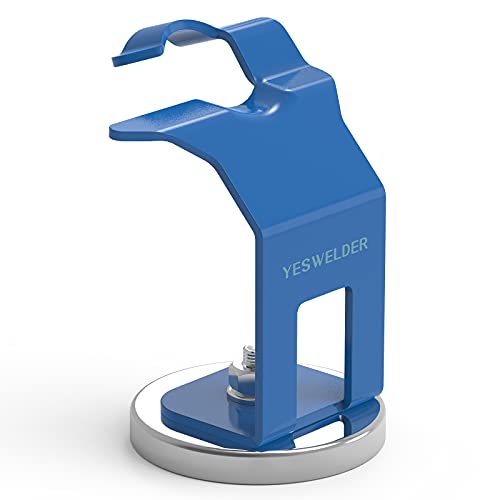
Durable Welding Gun Holder: This steel welding torch holder weighs 1.7lb with simple overall shape. It shows durable blue paint finish, and the base is electroplated and polished to reduce the surface roughness and look bright and smooth.
Factors That Drive Car Welding Prices

The welding arc may run for only a few minutes, yet preparation and restoration can take hours. These factors usually have the greatest effect on the estimate:
- Visible and hidden damage: A small surface hole may reveal a much larger corroded area after the shop removes paint, undercoating, seam sealer, or trim.
- Access and disassembly: Seats, carpet, fuel lines, wiring, exhaust parts, glass, interior panels, batteries, and nearby electronics may need protection or removal.
- Metal type and strength: Mild steel, high-strength steel, ultra-high-strength steel, stainless steel, and aluminum require different repair limits, equipment, wire, gas, and heat control.
- Metal fabrication: A ready-made replacement panel is usually faster to install than a patch that must be measured, shaped, trimmed, and fitted by hand.
- Structural measuring and alignment: Frame and unibody repairs may require a measuring system, anchoring, pulling, fixtures, and verification before welding begins.
- Approved attachment method: Resistance spot welding, MIG brazing, weld bonding, test welds, and mixed-material repairs can require specialized equipment and training.
- Corrosion restoration: Primer, seam sealer, cavity wax, undercoating, and refinishing protect the repaired metal from rust and may add substantial labor.
- Electronic procedures: Collision repairs may require pre- and post-repair scans, fault diagnosis, steering-angle initialization, or ADAS calibration.
- Local labor and shop minimums: Rates vary by region, facility type, certification, overhead, and whether the work is performed at a collision center, mechanical shop, exhaust shop, or mobile-welding service.
Products Worth Considering

Multipurpose Fit: Repairs at least 98% of the plastics on the market. Suitable for repairing: bumper, dashboard, lamp holder, plastic ring, radiator, spoiler, handles, headlights, plastic wings, car and motorcycle plastic device, etc

220W Rapid Heating:The plastic welding machine has a power of 220 watts and a 110V-US plug, which has higher output current and faster heating speed. Using heat to embed nails or plastic rods into plastic will not cause damage to the car or plastic surface, and is very sturdy. Not only are there two repair methods to choose from: welding rods and hot nails, but there is also an overheat protection device to ensure your safety

UL CERTIFIED: Our Plastic Welder, the factory, and the process have been tested, approved, and Certified by Underwriters Laboratories (UL). Safety is our number one priority
How Shops Turn Welding Time Into a Quote
A 2025 Collision Advice and CRASH Network survey reported a median non-DRP body labor rate of $67 per hour, but a complete welding estimate also includes operations beyond welding time, and local rates may be much higher.
For broader context, Angi’s May 2026 welding-cost data lists many professional welding services at about $60–$125 per hour and notes that small jobs may have minimum service charges. Those figures are general welding benchmarks, not caps for collision or structural repairs. A vehicle estimate may separately account for teardown, frame measuring, setup, fabrication, test welds, body labor, refinishing, shop supplies, scans, alignment, and calibration.
That is why multiplying a few minutes of visible welding by an hourly rate rarely predicts the final invoice. Compare the operations included in the estimate rather than the arc-on time alone.
Typical Car Welding Cost by Repair Type

There is no single national price book for “car welding.” The following figures are broad planning ranges for common U.S. situations, not guaranteed quotes. Paint, replacement panels, taxes, towing, extensive teardown, hidden corrosion, and electronic calibration can increase the total.
| Repair Type | Planning Range | What the Price May Include |
|---|---|---|
| Accessible exhaust crack, hanger, or simple non-structural bracket | $100–$350 | Cleaning, setup, welding, and a basic inspection; replacement exhaust parts cost extra |
| Small non-structural sheet-metal patch | $250–$750 | Cutting to sound metal, making a small patch, welding, and grinding; finish work may be separate |
| Rocker, wheel-arch, floor, or body rust cut-and-patch | $500–$1,500 per area | Rust removal, fabrication or panel section, welding, seam sealing, corrosion treatment, and possible refinishing |
| Floor pan, rocker reinforcement, or crossmember section | $800–$2,500+ | Disassembly, measuring, replacement metal, structural joining, corrosion protection, and possible refinishing |
| Frame-rail or unibody structural repair | $1,500–$5,000+ | OEM research, measuring, anchoring, pulling, sectioning or replacement, test welds, refinishing, scans, alignment, and calibration |
| Aluminum panel or approved aluminum structural repair | $500–$2,500+ | Dedicated tools, contamination control, specialized welding equipment, material-specific procedures, and refinishing |
Price Note: These figures are budgeting ranges, not an official national tariff. The same visible hole can produce very different estimates depending on how far corrosion extends, whether structural metal must be replaced, and whether the quote includes paint, corrosion protection, measuring, scans, alignment, or calibration.
A rust hole rarely shows the full extent of the damage. Once the technician cuts back to solid metal, the patch may become larger, nearby mounting points may need replacement, and the original estimate may need a supplement.
Pro Tip: Ask whether the estimate is for welding only or for a finished repair. A low quote may exclude disassembly, replacement metal, paint, seam sealer, cavity wax, undercoating, scans, calibration, tax, and reassembly.
DIY vs. Professional Car Welding

DIY welding can save labor on a removable, non-structural part when the person already has suitable equipment and proven welding skill. It is a poor place to learn when the repair affects crash performance, steering, suspension, seat-belt mounts, fuel-system protection, battery protection, or occupant safety.
A proper setup may require more than a welder and helmet. Depending on the repair, it can include shielding gas, correct wire or filler, metal-forming tools, extraction, a fire extinguisher, fire-resistant blankets, vehicle measuring equipment, test coupons, corrosion products, and refinishing equipment.
Professional repair is the safer choice when the work involves:
- Frame rails, unibody structures, crumple zones, crossmembers, or suspension mounting points.
- High-strength or ultra-high-strength steel.
- Aluminum or mixed-material construction.
- Airbag, seat-belt, sensor, wiring, fuel, or brake-system areas.
- Hybrid or electric-vehicle high-voltage components.
- Damage that changed panel gaps, wheel alignment, steering position, or vehicle dimensions.
- Any part for which the manufacturer does not publish an approved welding procedure.
Warning: Automotive welding can ignite carpet, seam sealer, fuel vapors, undercoating, sound insulation, and hidden debris. Coated or contaminated metals can also release hazardous fumes. Follow applicable ventilation, fire-prevention, and worker-protection requirements. Do not rely on an open garage door as the only fume-control measure.
Hybrid and electric vehicles add high-voltage risks. NHTSA recommends EV service by qualified technicians with specialized high-voltage training. The exact 12-volt and high-voltage depowering procedure must come from the vehicle manufacturer.
Products Worth Considering
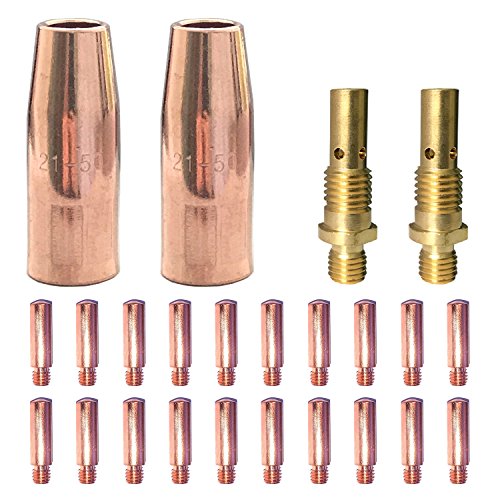
Mig Welding gun accessory 0.035" kit with contact tip,gas nozzle,gas diffuser for Lincoln Magnum 100L & Tweco Mini/#1.
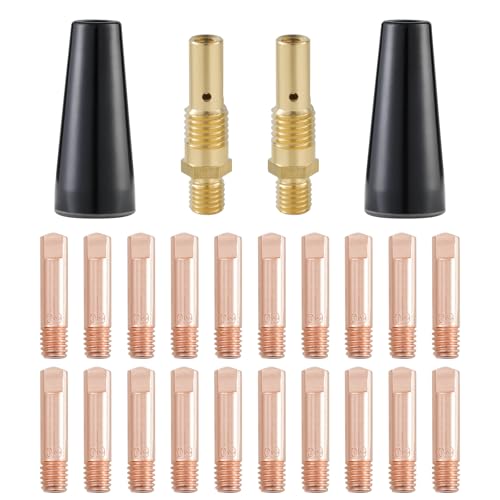
Package Including 20 x .035" (0.9mm) contact tips, 2 x flux core gasless nozzles, 2 x gas diffusers

Spiral design: Features a durable spiral design specifically engineered for effective residue removal, ensuring thorough cleaning and superior welding performance.
How to Get an Accurate Car Welding Quote

Photos can help a shop decide whether the job fits its equipment, but a firm structural or rust-repair estimate often requires an in-person inspection. Use these steps to get quotes that are easier to compare:
- Provide the VIN: The VIN helps the shop locate the correct body-construction and repair information.
- Identify the exact area: Send wide photos, close-ups, underbody views, and pictures of both sides of the metal when accessible.
- Describe the cause: State whether the damage came from a collision, fatigue crack, failed prior repair, exhaust failure, or gradual corrosion.
- Ask whether teardown is required: Rust and collision damage may continue behind trim, undercoating, reinforcements, or overlapping panels.
- Request the OEM procedure: For structural work, ask which manufacturer repair procedure and joining method the shop plans to follow.
- Ask what the price includes: Confirm parts, fabrication, measuring, setup, test welds, corrosion protection, paint, scans, calibration, tax, and reassembly.
- Check qualifications: Look for technicians trained in automotive welding and a facility equipped for the vehicle’s materials and attachment methods.
- Get the warranty in writing: Ask what is covered, how long it lasts, and whether rust-through or finish failure is excluded.
Compare the scope of work rather than choosing the lowest number. One estimate may cover only the weld, while another may include the complete repair and protection needed to keep the metal from corroding again.
If the damage is specifically on a pickup or commercial-style chassis, see our truck frame welding cost guide. For vehicles and repair pricing in Britain, use our separate UK car welding cost guide rather than applying U.S. dollar ranges.
What a Complete Repair Estimate Should Include
A thorough estimate may list more operations than expected. That is not automatically padding; many steps are necessary to restore strength, corrosion resistance, appearance, and electronic operation.
- Damage diagnosis and vehicle measuring.
- OEM repair-procedure research.
- Battery, restraint-system, and high-voltage depowering when required.
- Removal and protection of trim, wiring, fuel lines, glass, interior material, and nearby components.
- Cutting back to sound metal.
- Replacement-panel fitting or patch fabrication.
- Welding-machine setup and test welds.
- Approved welding, brazing, bonding, riveting, or mixed attachment.
- Weld inspection and permitted dressing or grinding.
- Primer, seam sealer, cavity wax, undercoating, and other corrosion protection.
- Body filler, paint preparation, color, and clear coat when required.
- Reassembly, water-leak checks, scans, calibration, alignment, or road testing.
Note: Grinding a weld smooth is not always appropriate. Some OEM procedures limit how a weld may be dressed because excessive grinding can reduce joint strength. The finished appearance should follow the repair manual rather than a blanket rule that every weld must disappear.
When Welding Is Unsafe or Not Worth It
Not every damaged or rusted part should be welded. Replacement—or retiring the vehicle—may be safer or more economical when:
- Corrosion extends into several layers, reinforcements, suspension mounts, or seat-belt anchorages.
- The remaining metal is too thin to produce a reliable joint.
- The manufacturer prohibits straightening, heating, sectioning, or welding the material.
- The required replacement part or attachment method is unavailable.
- Previous repairs have distorted, overheated, or weakened the area.
- Structural dimensions cannot be restored within specification.
- The shop lacks the equipment or training required for aluminum, ultra-high-strength steel, adhesives, or high-voltage systems.
- The repair cost approaches or exceeds the vehicle’s safe post-repair value.
Severe frame corrosion can spread beyond the section visible from beneath the car. A welded cover plate over weakened metal may hide damage without restoring the original load path. The repair must reach sound material and follow an approved design.
Insurance, Inspection, and Resale
Insurance Coverage
Insurance coverage depends on why the welding is needed. Collision coverage may pay for repairs caused by contact with another vehicle or object, while comprehensive coverage may apply to certain non-collision events. Gradual rust, normal wear, maintenance, and mechanical deterioration are generally not covered. The deductible, vehicle value, policy language, and insurer’s damage assessment also affect payment.
The California Department of Insurance, for example, explains that comprehensive coverage does not cover mechanical breakdown, normal wear and tear, or maintenance. Contact the insurer before authorizing work when a claim may apply.
Inspection and Registration
Structural-repair acceptance varies by state, vehicle type, and inspection program. An OEM-compliant welded repair may be permitted, while a temporary patch, deteriorated frame, or unsafe prior repair may fail inspection. Pennsylvania’s passenger-car and light-truck inspection rules, for example, require the frame to remain in solid condition and allow rejection for cracked, rotted, broken, deteriorated, or dangerous frame components.
Check the rules where the vehicle is registered rather than relying on a nationwide yes-or-no answer.
Resale Value
A documented professional repair usually supports buyer confidence better than an undocumented or visibly poor weld. Even so, prior structural damage can reduce market value because buyers may worry about crash performance, corrosion, alignment, and future repairs.
Keep the written estimate, final invoice, repair procedure, alignment or measuring report, calibration records, warranty, and progress photos. A clean finish alone does not prove that the underlying structure was restored correctly.
Repair businesses must also avoid knowingly disabling safety equipment installed to comply with federal motor-vehicle safety standards. NHTSA’s 49 U.S.C. 30122 “make inoperative” guidance explains how this restriction applies to manufacturers, distributors, dealers, and motor-vehicle repair businesses.
Frequently Asked Questions
How much does car welding cost?
A small accessible exhaust, hanger, tab, or bracket weld may cost about $100–$350. Many localized body or rust repairs fall around $250–$1,500, while structural, aluminum, frame-rail, unibody, or extensive corrosion work can reach $1,500–$5,000 or more. Use these as planning ranges only because teardown, hidden rust, fabrication, paint, measuring, scans, alignment, and calibration can change the quote.
How much does it cost to weld a car frame?
Frame-rail or unibody structural work commonly starts around $1,500 and can reach $5,000 or more when the repair requires measuring, straightening, section replacement, fabrication, corrosion protection, refinishing, scans, alignment, or calibration. Some damaged structures cannot be safely welded at all, so the vehicle-specific OEM repair procedure must be checked before pricing the repair.
Will welding affect my car’s resale value?
It can. A neat, documented, OEM-compliant repair is less damaging to buyer confidence than an undocumented patch, but prior structural damage may still reduce the vehicle’s market value. Keep invoices, measuring reports, calibration records, warranties, and repair photos.
Is welded bodywork covered by car insurance?
It may be covered when welding is part of repairing a covered collision or comprehensive loss. Welding needed because of gradual rust, wear, maintenance, or an old defective repair is generally not covered. Confirm the cause of loss, deductible, repair authorization, and policy exclusions with the insurer.
How long should a welded car repair last?
A properly designed repair can last for the remaining service life of the vehicle, but no universal lifespan applies. Durability depends on sound base metal, the approved joint, correct heat control, weld quality, load, drainage, seam sealing, cavity protection, and ongoing corrosion exposure.
Can welding damage airbags, sensors, or vehicle electronics?
Yes. Welding current, heat, sparks, component removal, and work near sensor mounts can damage electronics or create faults. The technician should follow the exact OEM depowering procedure, protect wiring and modules, place the work lead correctly, and perform required scans or calibrations. A generic battery-disconnection rule is not sufficient for every vehicle.
Are welded structural repairs legal for inspection and registration?
They may be, but requirements vary by state and vehicle type. The repair may need to follow manufacturer procedures, restore the frame to a safe condition, and pass the applicable inspection. A temporary patch or repair over severely deteriorated metal can be rejected.
Can a rusted car frame always be welded?
No. Welding is possible only when the corrosion can be removed back to sound metal and an approved repair restores the original load path. Extensive rust around suspension mounts, crossmembers, reinforcements, or multiple frame layers may make replacement or vehicle retirement safer.
Does a car welding quote include paint and rust protection?
Not necessarily. Some welders quote only cutting, fitting, and welding. Ask whether the price includes primer, seam sealer, cavity wax, undercoating, body filler, color, clear coat, blending, and protection on the back of the repair.
Can I drive a car with a cracked or rusted frame?
Do not assume it is safe. A damaged frame or unibody can affect steering, suspension location, braking stability, crash protection, and component retention. Have the vehicle inspected before driving it; towing is the safer option when the structure, suspension mounts, or body mounts are compromised.
Conclusion
Car welding can cost around $100–$350 for a small accessible weld, roughly $250–$1,500 for many localized body or rust repairs, and $1,500–$5,000 or more for extensive frame, unibody, rocker, floor, aluminum, or corrosion work. The most important question is not which welding process is cheapest. It is whether the damaged part is repairable, which attachment method the manufacturer requires, and what work is included after the weld is complete.
Get an itemized inspection from a shop equipped for the vehicle’s materials and structure. Confirm that the estimate covers sound-metal preparation, measuring, fabrication, corrosion protection, paint, scans, calibration, and a written warranty. For structural, suspension, restraint-system, fuel-system, hybrid, or EV repairs, professional OEM-compliant work is the safer choice.
Sources
- I-CAR — Steel Repairability — supports the need to follow current OEM material and vehicle-specific repair procedures.
- I-CAR — Collision Repair Attachment Methods — explains GMA welding, aluminum welding, resistance spot welding, MIG brazing, and modern joining requirements.
- OSHA — 29 CFR 1910.252 Welding Requirements — supports ventilation, coated-metal, fume, fire-prevention, and general welding-safety guidance.
- NHTSA — Electric and Hybrid Vehicle Safety — supports qualified-technician and high-voltage service guidance.
- NHTSA — 49 U.S.C. 30122 Make-Inoperative Guidance — explains the federal restriction on repair businesses knowingly making required safety equipment inoperative.
- California Department of Insurance — Automobile Insurance Guide — supports collision, comprehensive, wear, maintenance, and mechanical-breakdown coverage distinctions.
- Pennsylvania Department of Transportation — Vehicle Inspection Regulations — provides an official example of frame-condition inspection requirements.
- Repairer Driven News — Collision Advice/CRASH Network 2025 Survey Reporting — supports the cited $67 median non-DRP body labor rate and notes geographic variation.
- Angi — 2026 Welding Cost Data — provides a current general welding labor and small-project benchmark used only as context, not as a structural collision-repair price cap.
