
What’s in This Article
- How Much Does a Welding Helmet Cost in 2026?
- Budget-Friendly Welding Helmets
- Mid-Range Welding Helmets
- Premium Welding Helmets
- Factors Influencing Welding Helmet Costs
- Popular Welding Helmet Brands and Their Prices
- Features and Specifications That Affect Pricing
- Discounts and Savings Opportunities
- Comparing Passive and Auto-Darkening Helmets
- How to Choose the Right Welding Helmet for Your Budget
- Frequently Asked Questions
By Logan Barrett · Last updated: August 10, 2026
In the U.S. market, a welding helmet can cost about $50 for a basic passive model to $2,500 or more for a powered-air respirator (PAPR) welding system. Most hobby and general-shop buyers will spend far less than the specialty ceiling. The price rises with auto-darkening optics, viewing area, sensor and control features, headgear comfort, brand, and respiratory integration.
Quick Answer
Expect roughly $50–$90 for many basic passive helmets, about $100–$250 for entry and mid-range auto-darkening helmets, roughly $250–$800 for premium non-respiratory helmets, and about $1,500–$2,500+ for many PAPR-integrated systems. Retail prices change by model, seller, graphics, bundles, and promotions, so treat these as 2026 shopping ranges rather than fixed list prices.
| Price Tier | Typical 2026 Range | What You Usually Get | Best Fit |
|---|---|---|---|
| Basic passive | About $50–$90 | Fixed shade lens, simple shell, basic headgear | Occasional welding, students, backup hood |
| Entry/mid auto-darkening | About $100–$250 | ADF lens, adjustable weld shade on many models, grind/cut modes on some models | Hobbyists and regular shop use |
| Premium auto-darkening | About $250–$800 | Larger viewing area, better optics, more controls, higher-end headgear | Frequent and professional welding |
| PAPR / specialty system | About $1,500–$2,500+ | Helmet plus powered respiratory protection and related components | Jobs requiring compatible respiratory protection |
Key Takeaways
- Basic passive helmets are usually the least expensive because they use a fixed shade and no auto-darkening electronics.
- Auto-darkening filters switch from a light state to a darker welding shade when their sensors detect an arc; better optics and controls usually increase cost.
- Premium helmets often add larger viewing areas, clearer optics, more stable headgear, and more process controls.
- Check the helmet’s safety marking and the shade requirements for your welding process and amperage before comparing price or style.
- Cover lenses, batteries, sweatbands, headgear, and PAPR filters can materially increase long-term ownership cost.
How Much Does a Welding Helmet Cost in 2026?
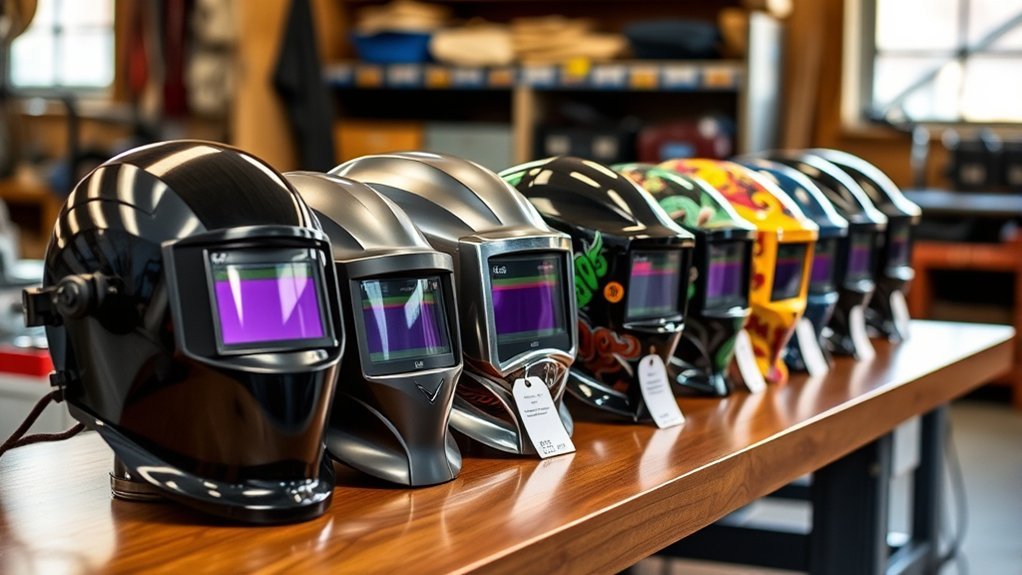
Welding helmet prices cover a much wider range than the original $45–$900 summary suggested. A live August 2026 market check found basic conventional helmets around the $50 range, premium auto-darkening helmets in the several-hundred-dollar range, and complete PAPR welding systems above $2,000. One large welding retailer currently lists conventional and specialty helmet products from roughly the mid-$40s into the high-$2,000s.
The lens and protection system drive much of that spread. Passive helmets use a fixed shade lens. Auto-darkening filters (ADFs) stay in a lighter state before the arc and switch to a darker welding shade when sensors detect the arc. PAPR packages add a powered blower, filters, battery, hose, and compatible headtop, so their total system cost is much higher.
Current manufacturer examples also show why price alone is a weak comparison. Miller’s Digital Infinity line lists a 13.4 sq. in. viewing area, four arc sensors, weld shades 8–13, cut shades 5–8, grind mode, sensitivity control, and delay control. ESAB’s Sentinel A60 lists a 4.65 x 2.8 in. viewing area and shade 5–13. Optrel’s Panoramaxx family adds panoramic optics and model-specific shade ranges and controls.
How these ranges were built: this update cross-checked current retailer pricing with manufacturer specifications rather than treating old model prices as permanent. See the current welding-helmet market range, Miller Digital Infinity specifications, ESAB helmet specifications, and Optrel Panoramaxx specifications.
Warning: Do not choose a welding helmet by price alone. Select a helmet and filter shade that are appropriate for the process and arc current, and use required primary eye protection where the hazard calls for it.

The DeLonghi Water Filter helps reduce scale buildup and unwanted impurities that can affect your coffee machine's performance and taste. Its active carbon and ion-exchange technology helps improve brew consistency, maintain flavor, and reduce the need for frequent descaling. Designed as an OEM authorized replacement part, it fits select DeLonghi models for reliable everyday maintenance.

This hardcover book celebrates the art of gathering with inspiring table settings, thoughtful traditions, and practical ideas for hosting memorable meals. Written by Shea McGee, it offers beautiful design inspiration alongside approachable guidance for creating warm, welcoming spaces for family and friends. It's a charming resource for anyone who loves entertaining, home styling, and making everyday moments feel special.

This daily devotional helps parents pray purposefully for their children through a full year of Scripture readings, reflections, and guided prayer prompts. Written to encourage faithful family discipleship, it offers practical, biblically grounded support for parents who want to shape their prayers around God's Word. A foreword by Sinclair B. Ferguson adds trusted theological insight and encouragement.
Budget-Friendly Welding Helmets
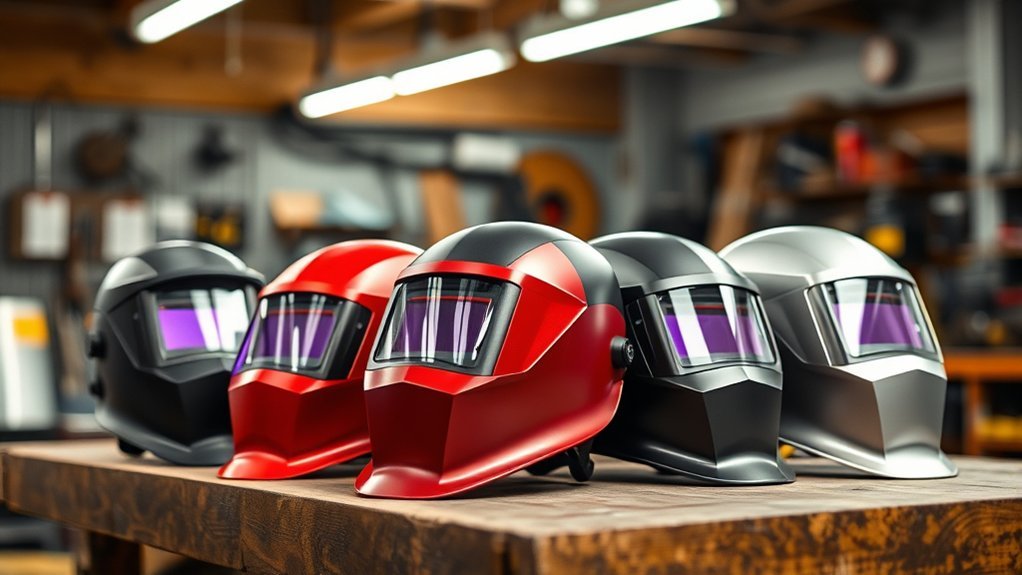
If you’re looking for budget-friendly welding helmets, passive helmets from established brands are still among the easiest options to price. In an August 2026 check, several Jackson and Lincoln passive models were listed from the mid-$50s to around $90, depending on the seller and exact shell.
That price tier can suit students, occasional welders, and anyone who wants a simple backup hood. A low price is not a reason to relax the safety check: confirm the fixed shade, shell and lens condition, fit, applicable safety marking, and whether that shade is suitable for your process and amperage.
Affordable Options Available Today
These examples are current retail observations, not guaranteed prices. They are included to show where named passive helmets sit in the 2026 market.
| Helmet Model | Observed 2026 Price |
|---|---|
| Jackson Shadow HSL-1 Shade 10 | About $55 |
| Jackson Halo X HLX 100 | About $82–$89 |
| Lincoln VIKING Industrial Passive Shade 11 | About $72–$88 |
| Jackson Huntsman 930P | About $74 |
| Jackson Shadow HSL 100 | About $57–$72 |
Prices can move with stock and promotions. Confirm the live seller price and the manufacturer’s safety information before buying.
Features of Budget Helmets
Budget passive helmets are mechanically simple: a shell, a fixed shade filter, cover lenses, and adjustable headgear. That simplicity means no ADF battery, sensors, sensitivity control, or delay setting to pay for.
Fixed-shade helmets can be a good value when one shade fits the work you actually do. However, there is no universal “all-purpose” shade for every process and current level. OSHA’s welding guidance lists different minimum shade numbers by process and amperage, so match the lens to the job rather than assuming the included shade is correct for everything.
For current retail examples, see Jackson helmet listings and the Lincoln VIKING Industrial Passive listing.
Mid-Range Welding Helmets
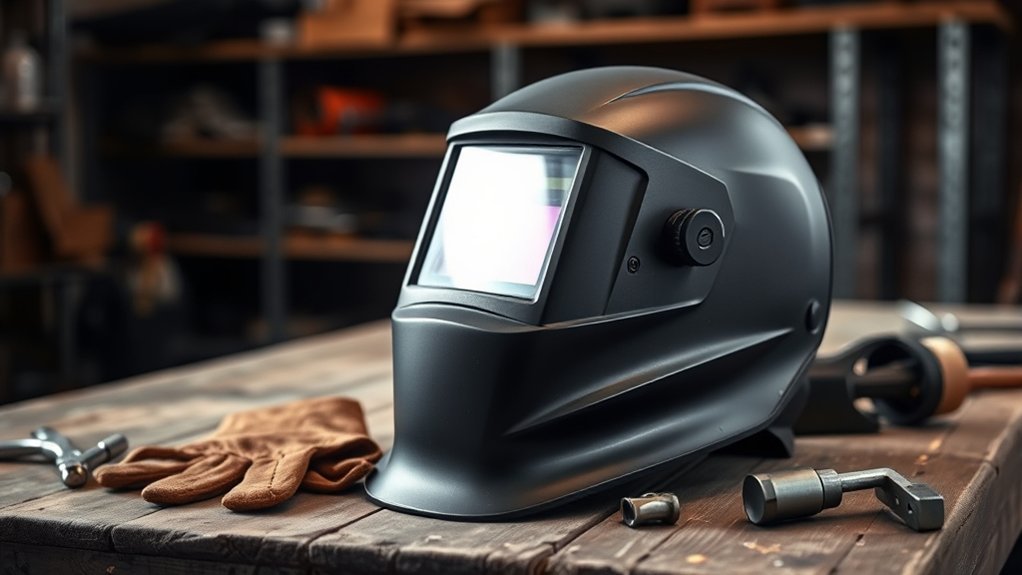
For many buyers, the practical middle of the market is roughly $100 to $250. This is where you begin to see more auto-darkening helmets with adjustable weld shades, grind or cut modes, sensitivity and delay controls, and improved headgear.
Current listings show why “mid-range” should describe capability as well as price. A helmet near the low end may focus on a smaller ADF and basic controls, while a model near $200 can add a wider view, more sensors, or more comfortable headgear.
If you weld regularly, spend first on the features that affect every arc start: reliable ADF response for your process, a usable viewing area, comfortable headgear, and controls you can adjust without fighting the helmet. Graphics and cosmetic finishes should come later.
This range is often the best value for hobbyists and general fabrication because it buys the convenience of auto-darkening without automatically moving into premium-brand pricing.
Pro tip: If you weld several hours each week, prioritize headgear stability, lens clarity, and low-amp TIG performance over cosmetic graphics.
Premium Welding Helmets
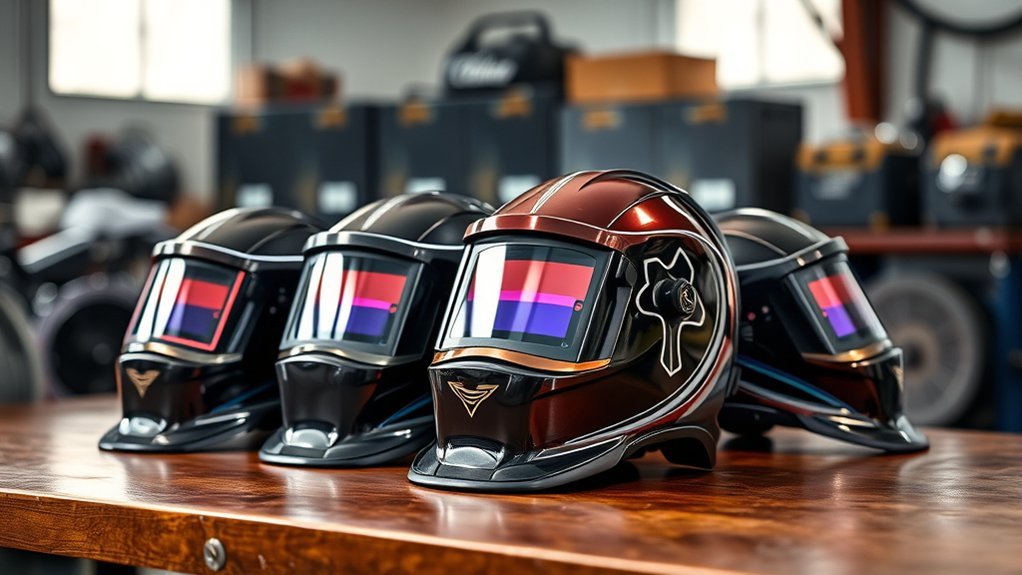
Premium non-respiratory welding helmets commonly sit around $250 to $800 in current 2026 listings, although exact prices vary by model and seller. Examples in this tier include higher-end lines from Lincoln Electric, Miller, 3M Speedglas, ESAB, and Optrel.
The extra cost usually buys a combination of larger or more advanced optics, clearer light states, more arc sensors, process modes, sensitivity and delay controls, and better-balanced headgear. For example, Miller lists a 13.4 sq. in. viewing area and four arc sensors on current Digital Infinity models, while ESAB lists a 4.65 x 2.8 in. viewing area and shade 5–13 on the Sentinel A60.
PAPR systems are a separate cost class. Current complete systems from major brands commonly list well above $1,500 and can exceed $2,400. Those packages include respiratory components in addition to the welding headtop, so comparing their price directly with a normal ADF helmet is misleading.
A premium helmet is easiest to justify when you weld frequently enough to benefit from better visibility, headgear comfort, and process controls on every job. If you weld only occasionally, those advantages may not repay the price difference.
Factors Influencing Welding Helmet Costs
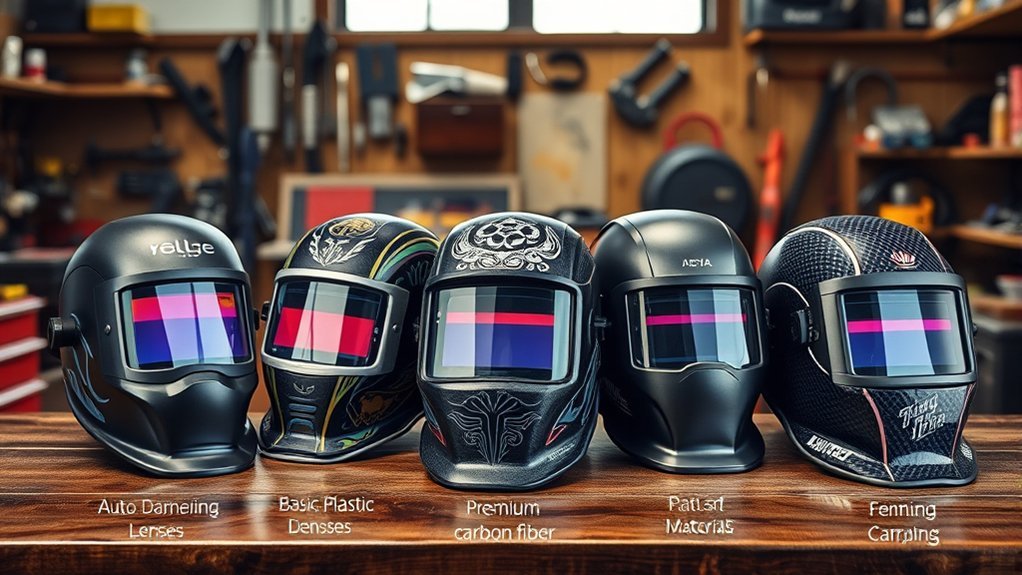
The cost of a welding helmet depends on more than brand name. Compare the protection system, lens performance, comfort, and cost of replacement parts before you choose.
- Lens type: Passive fixed-shade helmets are usually cheaper than auto-darkening helmets.
- Shade capability: ADFs with multiple weld, cut, and grind settings usually cost more than a single fixed shade.
- Arc sensors and controls: More sensors plus sensitivity and delay controls can improve flexibility in difficult positions and changing conditions.
- Viewing area and optics: Larger or more advanced lenses tend to increase cost.
- Headgear and balance: Better support, adjustment, and weight distribution matter more during long welding sessions.
- Respiratory integration: PAPR-compatible systems add blower, filtration, battery, hose, seals, and related components, which can move the price into four figures.
- Replacement parts: Cover lenses, batteries, sweatbands, headgear, and PAPR filters affect total ownership cost.
Usage matters too. A cheap helmet can become poor value if uncomfortable headgear, scratched cover lenses, or weak fit make you replace parts—or the entire helmet—sooner than expected.
Popular Welding Helmet Brands and Their Prices
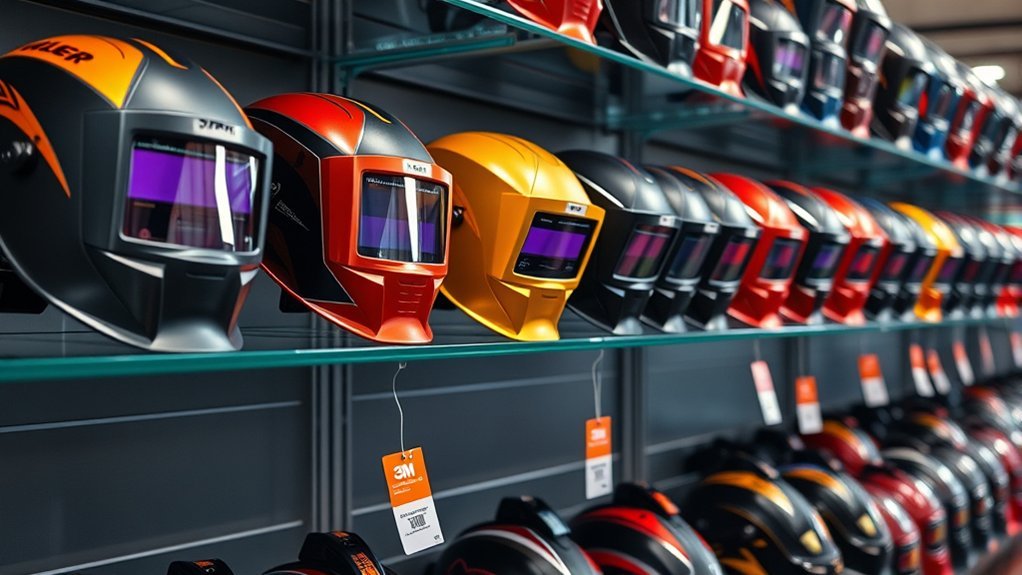
Major brands cover different parts of the market, and several span more than one price tier. Jackson Safety and Lincoln Electric sell passive and auto-darkening options. Miller, ESAB, Optrel, and 3M Speedglas are prominent in higher-spec auto-darkening and specialty protection.
Brand alone does not tell you what a helmet is worth. Compare the exact lens, viewing area, shade range, controls, headgear, warranty, replacement-part availability, and whether the model is a standard helmet or part of a respiratory system.

This hardcover edition by Eric Metaxas offers a compelling look at the origins of the United States during the Colonial Period. It blends historical narrative with engaging storytelling, making it appealing for readers interested in American history, early nation-building, and the ideas that shaped the country. A strong choice for history enthusiasts, students, and anyone exploring the foundations of the nation.

Aegend Swim Goggles are designed to help swimmers enjoy a clear, comfortable, and secure fit in the pool. Built for adults and youth, they aim to reduce leaking and provide full eye protection for training, recreation, and water sports. Their versatile design makes them a practical choice for men and women looking for dependable swim eyewear.

This hardcover cookbook offers fast, approachable recipes designed for busy days and low-energy nights. Caroline Chambers focuses on simple, flavorful meals that help you get dinner on the table without overthinking it. It's a practical pick for home cooks who want quick weeknight inspiration and minimal-fuss cooking.
Budget-Friendly Helmet Options
If you’re looking for budget-friendly welding helmets, current passive examples include the Jackson Shadow HSL-1, Jackson Huntsman 930P, Jackson Halo X HLX 100, and Lincoln VIKING Industrial Passive. These are mechanically simple choices that avoid the cost of auto-darkening electronics.
They can make sense for students, occasional welding, or backup use. The trade-off is that a fixed shade gives you less flexibility when you change process or amperage.
Premium Helmet Features
Premium helmets compete on more than brand reputation. Miller’s current Digital Infinity specifications include four arc sensors, a 13.4 sq. in. viewing area, weld shades 8–13, cut shades 5–8, grind mode, sensitivity control, and delay control. Optrel’s Panoramaxx line focuses on panoramic visibility with model-specific ShadeTronic and Crystal Lens options. ESAB’s current Sentinel A60 lists a 4.65 x 2.8 in. viewing area and shade 5–13.
These measurable differences are more useful than vague labels such as “professional grade.” Choose the features that solve your actual visibility, process, and comfort needs.
High-Tech Welding Solutions
At the high end, technology can include advanced ADF optics, more arc sensors, automatic sensitivity features, memory settings, external grind controls, large viewing fields, and integration with powered respiratory protection.
- Miller Digital Infinity: Large 13.4 sq. in. viewing area, four sensors, multiple modes, and model-specific digital controls.
- Lincoln VIKING 3350 / 3350 ADV: Premium 4C optics and comfort-focused headgear in current product families.
- Optrel Panoramaxx: Panoramic-view helmet family with model-specific automatic shade and Crystal Lens options.
- 3M Speedglas: Professional welding headtops and systems, including options designed to work with respiratory protection.
- ESAB Sentinel: Premium auto-darkening line with true-color optics and large viewing areas on current models.
Those features explain why two auto-darkening helmets can differ by hundreds of dollars even though both darken when an arc starts.
Features and Specifications That Affect Pricing
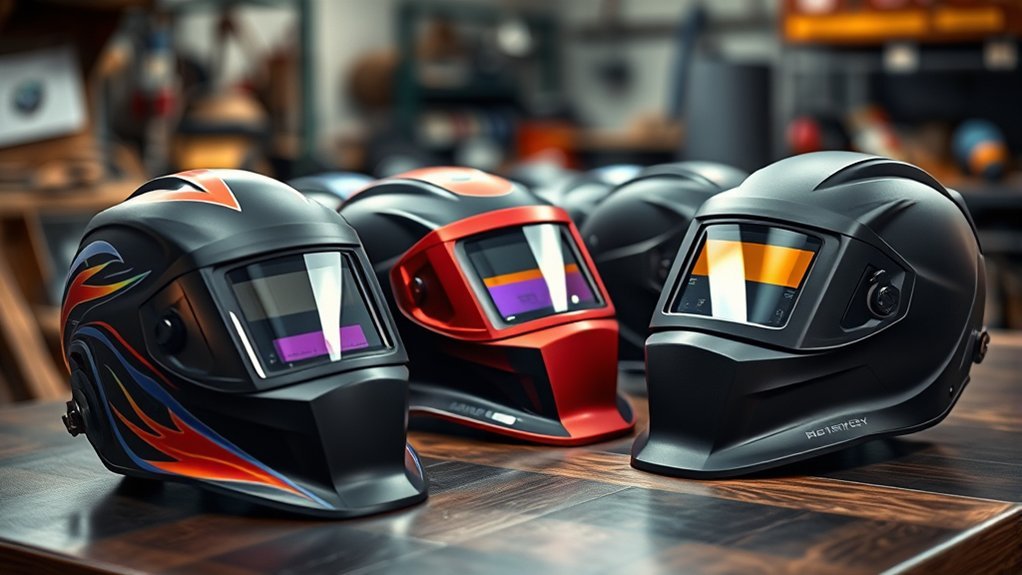
Several features can raise the price of a welding helmet. Auto-darkening technology, larger viewing areas, more sensors, advanced optics, and respiratory integration create the biggest jumps.
Do not assume every ADF uses the same shade range. Current premium examples vary: Miller Digital Infinity models use a 2.5 light state with weld shades 8–13 and cut shades 5–8, while ESAB Sentinel A60 lists shade 5–13. The correct setting still depends on the welding or cutting process and arc current.
Comfort affects price too. A helmet with stable headgear, balanced weight, easy-to-reach controls, and readily available replacement parts can be worth more during long sessions than a cheaper helmet with a bigger spec sheet.
| Feature | Typical Price Impact | Why It Matters |
|---|---|---|
| Auto-darkening lens | High | Lets you position with the hood down before the arc |
| Multiple shade/mode controls | Moderate | Supports more welding, cutting, or grinding situations |
| Large or advanced optics | High | Improves field of view and visual detail |
| Ergonomic headgear | Moderate | Improves stability and comfort during long sessions |
| PAPR integration | Very high | Adds powered respiratory components and consumables |
Discounts and Savings Opportunities
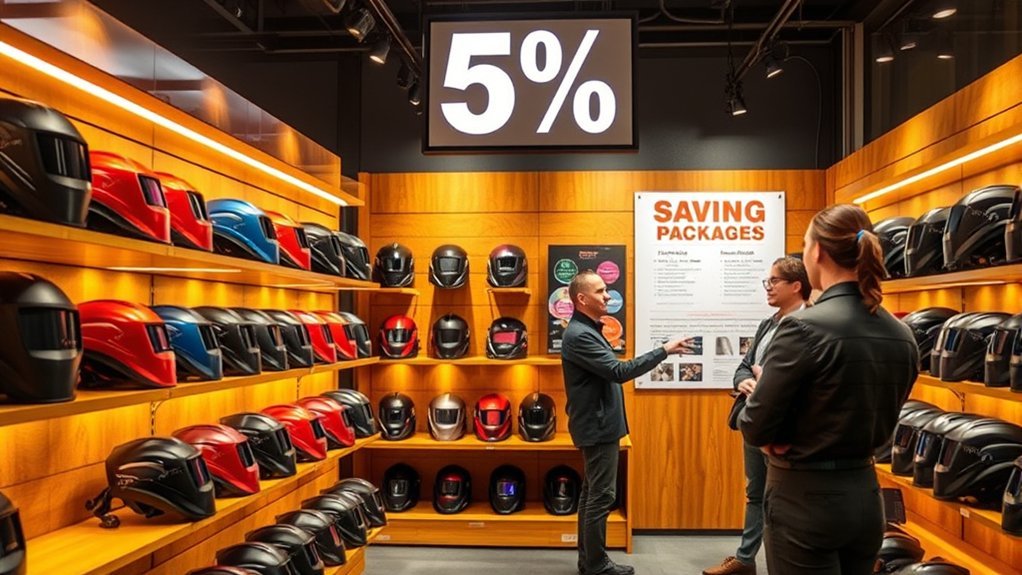
Welding helmet prices move with rebates, graphics, bundles, stock, and seller promotions. That is why a current price check is more useful than treating an old MSRP as permanent.
Compare total value, not only the checkout price. A slightly higher-priced helmet can cost less over time if it includes extra cover lenses, uses easy-to-find batteries, has replaceable headgear, or comes with a stronger warranty.
- Compare the exact model number, not just the product-family name.
- Check whether a rebate is manufacturer-funded and still active on your purchase date.
- Compare included cover lenses, bags, lights, or other accessories only if you would otherwise buy them.
- Review shipping and return costs before calling one seller cheaper.
- Check the warranty separately for the shell, ADF, headgear, and respiratory components where applicable.
Fit is part of value. A helmet that will not stay balanced or comfortable on your head is a poor bargain even when the purchase price is low.
Comparing Passive and Auto-Darkening Helmets
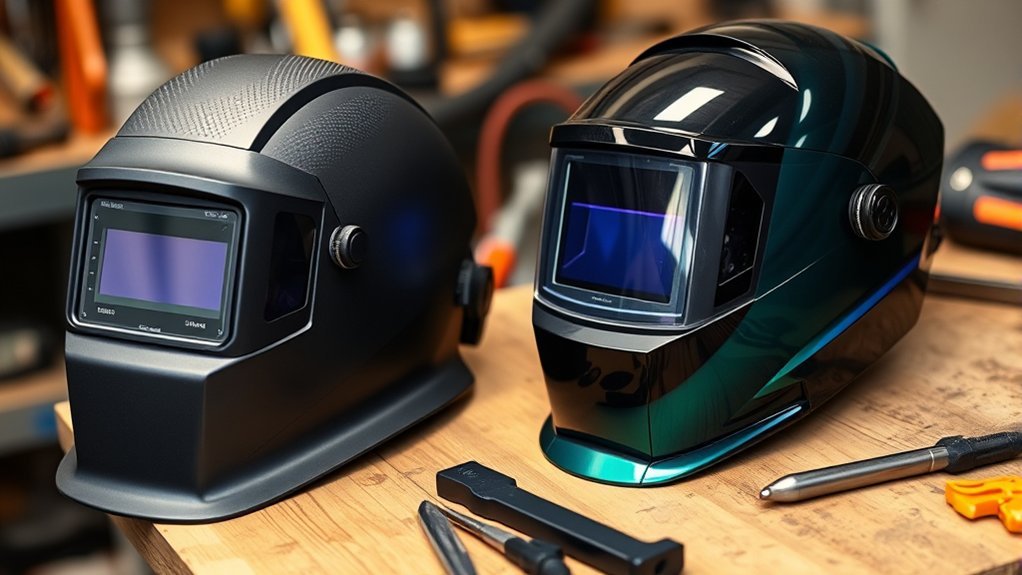
Passive and auto-darkening helmets can both be appropriate when they meet applicable safety requirements and use the correct shade for the job. The main difference is how you see before and between welds.
A passive helmet uses a fixed dark filter, so you normally raise the hood to position the work and lower it before striking the arc. An auto-darkening filter stays lighter before the arc and switches to its selected dark welding shade when sensors detect the arc.
| Feature | Passive Helmets | Auto-Darkening Helmets |
|---|---|---|
| Shade behavior | Fixed shade | Light state before arc; darker weld shade when triggered |
| Positioning | Often requires lifting/lowering the hood | Lets you position with the hood down |
| Typical purchase cost | Lower | Moderate to high |
| Maintenance | Simple; no ADF electronics | May require batteries and ADF-specific parts |
| Best fit | Simple, consistent work and tight budgets | Frequent starts, varied processes, and regular welding |
Choose passive when simplicity and low cost matter most and the fixed shade suits the work. Choose auto-darkening when visibility before the arc, repeated starts, and process flexibility matter enough to justify the added cost.
How to Choose the Right Welding Helmet for Your Budget
Start with safety and process, then work backward to price. The required filter shade changes with the welding or cutting process and arc current. OSHA’s guidance, for example, lists different minimum protective shades for SMAW, GMAW/FCAW, GTAW, plasma welding, and plasma cutting. Do not buy a helmet first and assume one shade setting covers every job.
Next, decide how often you weld. For occasional repairs, a correctly selected passive helmet can be the lowest-cost answer. For frequent tacking, fabrication, or process changes, an auto-darkening helmet can save repeated hood lifting and make joint positioning easier.
Then compare the cost drivers that affect daily use: viewing area, ADF shade range, sensor count, sensitivity and delay control, low-amp TIG suitability, headgear comfort, warranty, and replacement-part availability.
Finally, budget for ownership. Cover lenses are consumables, batteries may need replacement, headgear and sweatbands wear, and PAPR systems add filters and battery-related costs.
For U.S. safety guidance, review OSHA’s welding eye-protection shade tables. The current U.S. consensus eye-and-face protection standard is ANSI/ISEA Z87.1-2025.
Note: If you weld TIG at low amperage, confirm the ADF’s low-amp TIG rating or sensitivity in the manufacturer’s specifications before you buy.
Frequently Asked Questions
How Much Should I Spend on a Welding Helmet?
For occasional welding, many buyers can start around $50–$90 for a basic passive helmet. If you want auto-darkening convenience, a practical shopping range is roughly $100–$250. Frequent welders may benefit from $250–$800 premium models, while PAPR-integrated systems commonly cost $1,500 or more.
How Much Does an Auto-Darkening Welding Helmet Cost?
Current 2026 listings put entry and mid-range auto-darkening helmets around $100–$250, while premium models can rise to roughly $800. Complete PAPR systems that include an auto-darkening welding headtop can exceed $2,000.
How Often Should I Replace My Welding Helmet?
There is no single replacement interval for every welding helmet. Replace or service it when the shell is cracked, the headgear will not hold position, the viewing components are damaged beyond normal cover-lens replacement, or the auto-darkening filter fails the manufacturer’s checks. Follow the model’s inspection and maintenance instructions.
Are There Any Warranties for Welding Helmets?
Yes. Many manufacturers offer warranty coverage, but the term can differ for the shell, auto-darkening filter, headgear, and respiratory components. Check the exact model’s warranty rather than assuming one warranty applies to the whole product family.
Can I Use a Welding Helmet for Other Tasks?
Only if the helmet and lens are designed for that task. Some auto-darkening helmets include cut or grind modes, but grinding also creates flying-particle hazards. Follow the manufacturer’s instructions and use any required primary eye protection under the helmet.
What Safety Certifications Should I Look For?
In the United States, look for appropriate ANSI/ISEA Z87.1 markings and verify the helmet’s documentation for the exact model. ANSI/ISEA Z87.1-2025 is the current consensus standard. OSHA also requires filter shade selection appropriate to the welding or cutting process and arc current.
How Do I Clean and Maintain My Welding Helmet?
Follow the manufacturer’s cleaning instructions. In general, keep cover lenses clear, replace scratched or damaged covers, inspect the shell and headgear, keep ADF sensors unobstructed, and avoid cleaners or solvents that the manufacturer says can damage the lens or shell.
Is a Cheap Welding Helmet Safe Enough?
Price alone does not determine safety. A lower-cost helmet can be suitable if it has the appropriate safety marking, uses the correct filter shade for the job, fits securely, and is in good condition. Avoid products with unclear markings or missing documentation, especially when the seller does not identify the exact model or applicable standard.
Conclusion
For most shoppers, welding helmet cost is easiest to understand in four bands: roughly $50–$90 for basic passive helmets, $100–$250 for entry and mid-range auto-darkening models, $250–$800 for premium non-respiratory helmets, and $1,500–$2,500+ for many PAPR systems.
Spend first on the safety marking, correct shade capability, ADF performance for your process, viewing area, and headgear comfort. Then compare extras such as graphics, memory settings, external controls, and bundled accessories.
If two helmets fit your work equally well, compare the replacement lenses, batteries, headgear, warranty, and other consumables before deciding which one is actually cheaper to own.

Q-tips Original Cotton Swabs are a versatile everyday essential for home, beauty, and first aid tasks. Made with 100% cotton and soft tips at both ends, they provide gentle care for sensitive skin while helping with makeup touch-ups, small cleaning jobs, and hard-to-reach spaces. Their trusted quality and recyclable packaging guidance make them a practical choice for daily use.

Caffè Borbone Miscela Rossa delivers an intense dark roast espresso experience with rich notes of dark chocolate and caramel. These Nespresso Original compatible pods are crafted from premium Robusta beans and sealed to preserve aroma, body, and crema for convenient ristretto, espresso, or lungo brewing.

This retractable car window shade helps block UVA and UVB rays to make rides more comfortable and protected for passengers. It includes a White Hot heat alert that turns white when the car is too hot, plus dual installation options for a secure fit in many vehicles. The safe-view mesh supports visibility while helping reduce glare, and the easy one-push retraction makes it simple to use when needed.
